Discover five fascinating North American plants connected to ancient Indigenous traditions, sacred rituals, and traditional medicine. Explore their appearance, historical locations, cultural significance, cognitive effects, and the truth behind claims of extinct botanical knowledge.


Long before modern neuroscience introduced the term nootropic, Indigenous communities across North America had developed sophisticated relationships with plants that influenced perception, supported traditional healing, provided nourishment, and occupied important places in spiritual life.
These relationships were not simply early experiments in natural pharmacology. Plants were embedded in cultural traditions, ceremonies, oral histories, and understandings of the relationship between human beings and the natural world. Certain species were associated with dreams, visions, protection, healing, or spiritual knowledge. Others supplied valuable seeds and beverages that helped communities sustain themselves and organize collective activities.
Today, interest in ancient nootropics, natural cognitive enhancers, ethnobotany, and traditional plant medicine has renewed attention to these botanical histories. Yet an important distinction often disappears in popular articles: a plant associated with visions or spiritual knowledge is not necessarily a nootropic, and a plant whose traditional use disappeared is not necessarily biologically extinct.
The history of North American plants reveals several different kinds of loss. Some domesticated varieties disappeared from cultivation. Some Indigenous medicinal practices were suppressed or inadequately documented during colonization. Some plants remain alive but face ecological pressures. Others survive as wild species even though the ancient agricultural systems that once depended on them have vanished.
This article explores five plants that illuminate these overlapping histories: sacred datura, peyote, yaupon holly, black cohosh, and marshelder, an ancient seed crop whose domesticated form is no longer cultivated.
An important historical clarification: There is insufficient evidence to identify five North American plants that were simultaneously mythological, genuinely nootropic, and completely extinct. The plants discussed here are therefore presented according to what botanical, archaeological, and ethnobotanical evidence actually supports. Several remain extant, and their cultural histories should not be confused with proof of a specific ancient myth.
A nootropic is generally understood as a substance intended to support aspects of cognition, such as memory, attention, learning, or mental performance. In contemporary discussions, the term covers a wide range of substances, from caffeine to experimental compounds investigated for neurological effects.
However, applying this modern terminology to ancient plants requires caution.
A plant that produces hallucinations does not automatically improve memory. A traditional medicine used for pain does not necessarily enhance concentration. A sacred plant used in a ceremony may have cultural or spiritual significance that cannot be reduced to its chemical effects.
Ethnobotany—the study of relationships between people and plants—offers a more useful starting point. Archaeobotany adds another dimension by examining seeds, pollen, plant fragments, and other botanical remains recovered from archaeological sites.
Research on North American plant domestication demonstrates that Indigenous communities developed agricultural systems involving multiple native crops thousands of years before European colonization. Other research has documented the ceremonial and medicinal uses of plants across different regions.
These findings reveal substantial botanical knowledge, although the historical evidence varies considerably between species.
Reference: Research on ancient North American plant domestication.
With this distinction established, five plants provide a compelling picture of the relationship between botanical resources, cultural memory, and ancient North American traditions.
Scientific name: Datura wrightii
Common names: Sacred datura, western jimsonweed, thorn apple
Historical range: Southwestern United States and northern Mexico, including parts of California, Arizona, New Mexico, and Texas
Extinction status: Not extinct
Traditional significance: Ceremonial practices, medicinal traditions, and altered states of consciousness in certain Indigenous communities
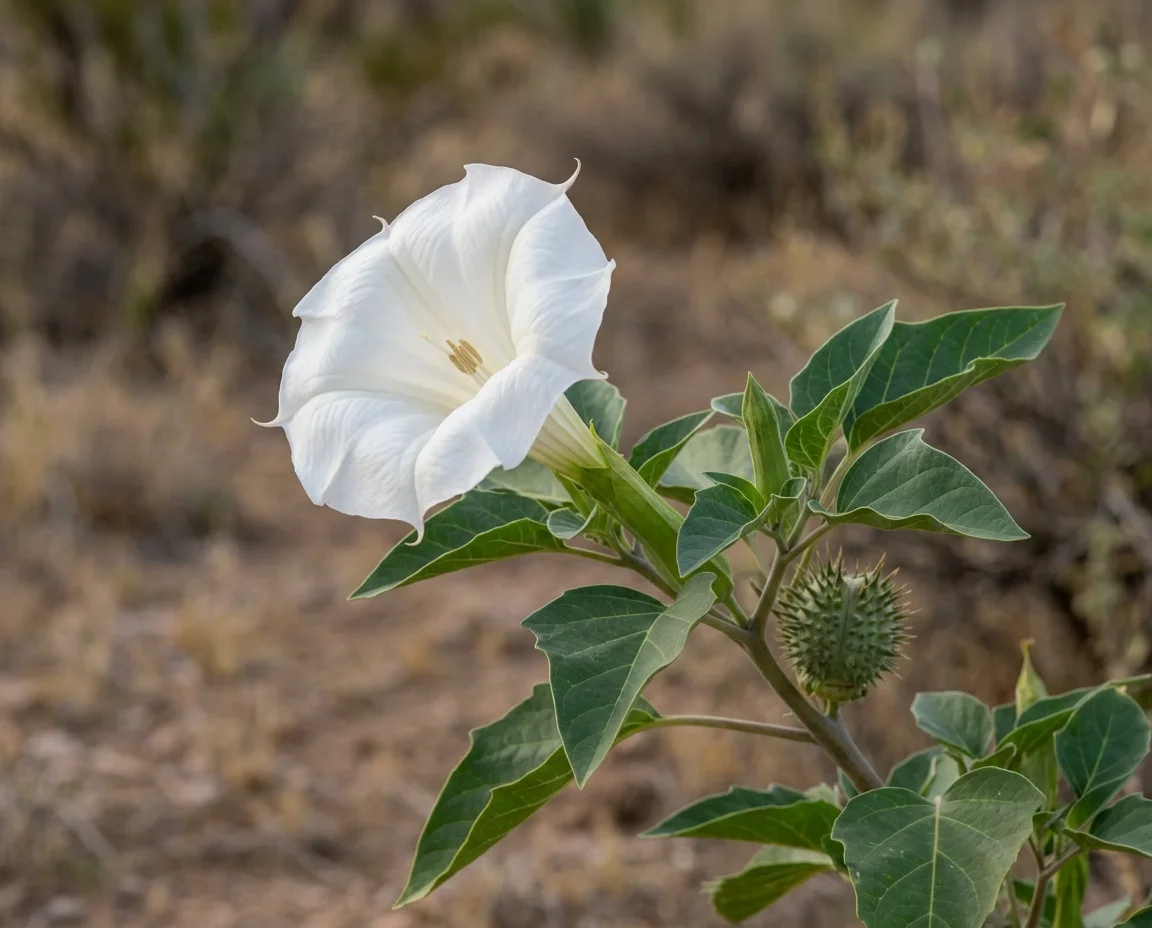
Sacred datura is a striking flowering plant that can appear almost otherworldly when it blooms after sunset.
It typically grows as a spreading herbaceous perennial, producing broad, irregularly shaped leaves and large, trumpet-shaped flowers. The blossoms are usually white, sometimes with a subtle lavender tint, and can measure several inches across. Their long floral tubes open into broad, flaring petals that create an unmistakable silhouette.
Its fragrance, especially noticeable in the evening, attracts certain nocturnal pollinators. After flowering, the plant develops distinctive spiny seed capsules. These rounded, prickly fruits explain the common name thorn apple.
The contrast between the elegant flowers and the defensive-looking fruit has helped make datura visually memorable. Yet its beauty conceals considerable danger: the plant contains potent tropane alkaloids that can cause severe poisoning, delirium, seizures, cardiovascular complications, and death.
Datura wrightii is native to the southwestern United States and northern Mexico. It grows in suitable habitats that include disturbed ground, grasslands, desert margins, and other relatively open environments.
Its historical distribution overlaps with regions inhabited by numerous Indigenous peoples, including communities in California and the Southwest. However, its use differed between cultures, and it would be inaccurate to suggest that every Indigenous community in this region treated the plant in the same way.
The North Carolina Extension Gardener Plant Toolbox identifies the species as native to parts of the southwestern United States and Mexico and documents its traditional ceremonial and medicinal significance.
Reference: Sacred Datura — North Carolina Extension Gardener Plant Toolbox.
Historical accounts associate datura with certain ceremonial practices and traditional medicinal applications. In some cultural settings, its effects on consciousness were central to its ritual significance.
From a modern pharmacological perspective, its active compounds affect neurotransmitter systems, particularly muscarinic acetylcholine receptors. This can disrupt memory, attention, awareness, and perception.
These effects explain why datura has been discussed in histories of psychoactive plants, but they do not establish that it improves cognition. Indeed, its toxicity makes it particularly dangerous, and its effects are unpredictable.
It is therefore more accurate to describe sacred datura as a historically significant psychoactive plant than as a nootropic.
The plant has ceremonial associations in some Indigenous traditions, but establishing a specific myth requires evidence from the particular community and historical source involved.
Indigenous oral traditions are diverse. Stories about plants may explain relationships with spirits, ancestors, animals, landscapes, or cultural responsibilities. Not every sacred plant has a single universally recognized origin myth, and some knowledge is intended to remain within the community.
Historical research has documented datura’s ceremonial use across a broad region of North America. Archaeological evidence associated with prehistoric datura use, including distinctive pottery forms resembling its spiny fruits, has contributed to investigations of historical plant-related practices. Such artifacts support the study of ancient botanical traditions, although they do not prove that a particular myth existed.
Reference: Ceramic Evidence for Prehistoric Datura Use in North America.
There is no sound basis for assigning Datura wrightii to one universal North American mythological event. Its documented ceremonial associations are better understood within particular cultural traditions.
The wider historical significance of datura lies in the way some communities incorporated plants into carefully structured spiritual practices. These traditions cannot be adequately explained by focusing exclusively on the chemical compounds responsible for altered perception.
No. Sacred datura remains a living species in its native range and is also cultivated elsewhere.
Its inclusion in this article illustrates an important distinction: the disappearance or transformation of traditional practices does not mean that the plant itself has become extinct.
Key takeaway: Sacred datura is important to the history of psychoactive plants and Indigenous ceremonial traditions, but it is neither extinct nor a proven cognitive enhancer. It is poisonous and should never be consumed as a self-experiment.
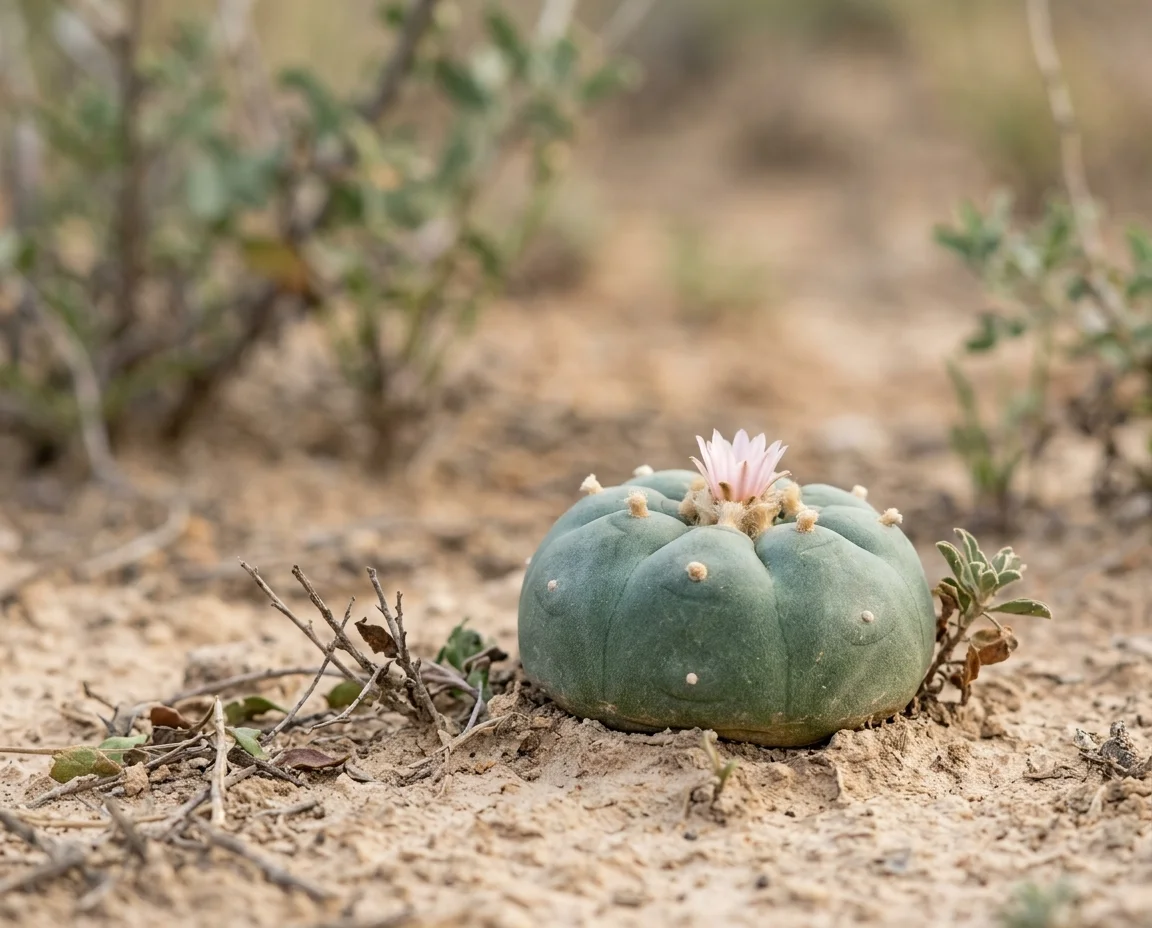
Scientific name: Lophophora williamsii
Common names: Peyote, mescal button
Historical range: Northern Mexico and southern Texas, particularly the Tamaulipan thornscrub region
Extinction status: Not extinct; some populations face conservation pressures
Traditional significance: Sacred ceremonial use, spiritual practice, and altered states of consciousness
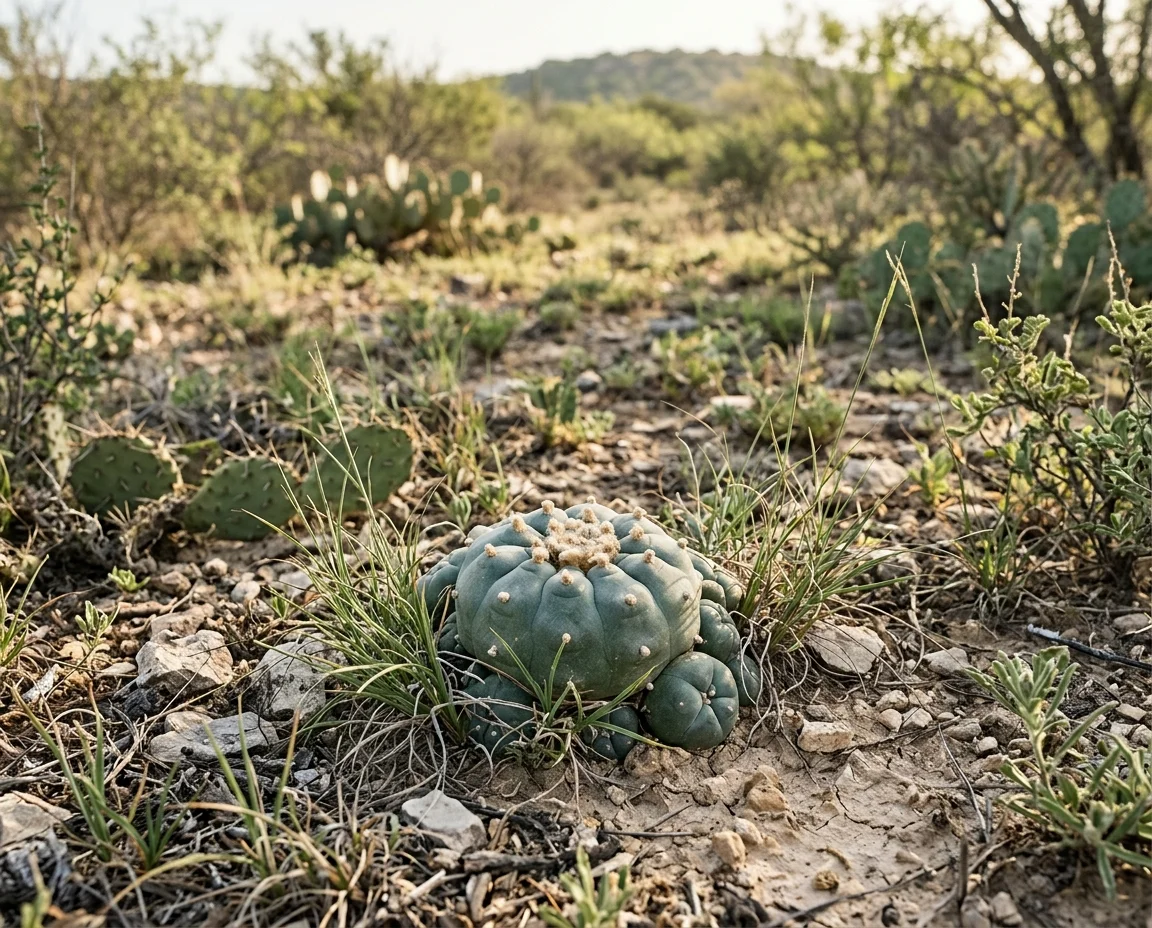
Peyote looks very different from the towering cacti commonly associated with the American Southwest.
It is a small, rounded cactus that generally grows close to the ground. Its blue-green to gray-green body has rounded ribs or low, rounded sections, with tufts of fine, pale hairs rather than the prominent spines found on many other cacti.
The plant may produce delicate pink or whitish flowers from its crown. Its small fruits contain seeds, while much of its stem remains below or close to the soil surface.
Because it grows slowly, peyote can take years to reach maturity. Its appearance may be modest, but its cultural importance has extended across generations.
Peyote is native to parts of northern Mexico and southern Texas. Its distribution is associated with dry, scrubby landscapes rather than the entire North American continent.
Indigenous peoples in Mexico have long-standing relationships with the plant. During the nineteenth century, peyote-related ceremonial practices also spread among several Indigenous communities in the United States, including some peoples of the Great Plains.
These traditions developed through particular histories of cultural exchange and religious practice. They should not be treated as one uniform tradition shared by every Native American nation.
The Texas State Historical Association documents the history of peyote use among Indigenous peoples and the expansion of related practices during the nineteenth century.
Reference: Peyote — Texas State Historical Association.
Peyote contains mescaline, a psychedelic compound that acts primarily through serotonin receptors, including the 5-HT2A receptor. Its effects can include changes in perception, emotional experience, attention, and the sense of time.
Within some ceremonial traditions, these experiences have been understood in spiritual, communal, or healing contexts. The meaning of a ceremony, however, cannot be reduced to the pharmacology of mescaline.
From a contemporary scientific perspective, peyote is not an established nootropic. Its psychedelic effects do not demonstrate that it improves memory, intelligence, or sustained attention.
Research into psychedelic substances has expanded in recent years, but findings concerning one substance, dose, or clinical setting cannot automatically be applied to peyote or to Indigenous ceremonial practice.
Peyote is associated with Indigenous spiritual traditions, particularly those in northern Mexico, but its history should not be simplified into a single pan-Native American myth.
Some traditions connect the plant with sacred landscapes, spiritual relationships, or ceremonial journeys. The precise narratives and interpretations vary among communities, and historical records do not always preserve Indigenous perspectives accurately.
The concept of a sacred plant is also different from the concept of a fictional or mythological plant. A living plant may have a central role in a religious tradition without being described as a supernatural substance in an origin story.
A more defensible account of peyote focuses on its place in Indigenous religious history, rather than attributing an unverified mythological episode to it.
Peyote has played important roles in ceremonies that communities understand as spiritually significant. However, it would be misleading to invent a specific legendary battle, creation event, or encounter with a deity without a reliable source tied to the relevant tradition.
Its documented cultural history is significant enough without adding unsupported claims.
Academic research has examined peyote’s historical significance, the growth of peyote-related religious movements, and the environmental pressures affecting the plant and its habitats.
Reference: Academic research on peyote.
No. Peyote survives in the wild, but conservation concerns affect some populations. Habitat disturbance, development, and overharvesting can threaten local populations, particularly when slow-growing plants are removed faster than they can regenerate.
Its future depends on habitat protection, responsible conservation, and respect for the Indigenous communities whose religious traditions remain connected to the plant.
Key takeaway: Peyote is a living sacred cactus with a substantial Indigenous ceremonial history. It is not an extinct plant, and its psychoactive properties should not be confused with established cognitive-enhancement benefits.
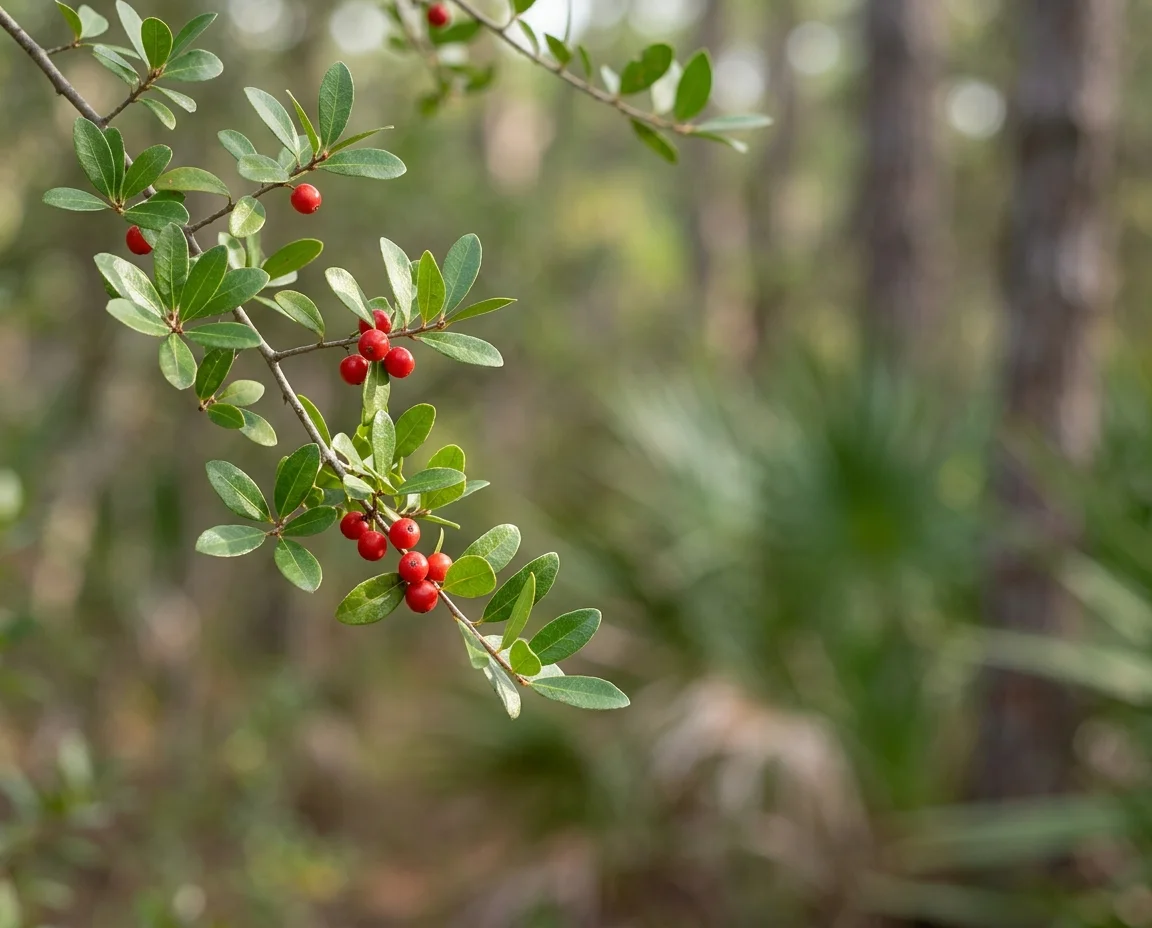
Scientific name: Ilex vomitoria
Common names: Yaupon holly, cassina
Historical range: Southeastern United States, including coastal areas and parts of the Atlantic and Gulf coastal plains
Extinction status: Not extinct
Traditional significance: Caffeinated beverages, communal gatherings, and certain ceremonial practices
Yaupon holly is an evergreen shrub or small tree with dense branching, small oval leaves, and smooth grayish bark. Female plants may produce clusters of bright red berries, although the plant’s small flowers are comparatively inconspicuous.
It is a member of the holly family, Aquifoliaceae. Its foliage remains green throughout much of the year, and it can grow in coastal environments, woodland edges, and other suitable habitats.
Unlike sacred datura, yaupon holly is not primarily associated with hallucinations. Its historical importance comes partly from its caffeine-containing leaves, which could be used to prepare stimulating beverages.
Yaupon holly is native to the southeastern United States. Its natural range includes portions of the Atlantic and Gulf coastal regions, with populations occurring in states such as North Carolina, South Carolina, Georgia, Florida, Alabama, Mississippi, Louisiana, and Texas.
Its range overlaps with the historical territories of numerous Indigenous peoples. Different communities had different uses for local plants, so the existence of yaupon holly in a region does not establish that every group prepared or consumed it.
Archaeological research has identified evidence of ancient stimulant beverages in parts of the American Southwest and Mexican Northwest. Chemical analyses of pottery residues have revealed compounds associated with caffeinated plants, including holly and cacao. Such findings provide evidence of historical beverage consumption and cultural exchange, although the plant used in a particular vessel must be identified from the chemical and archaeological evidence rather than assumed.
Reference: Ritual Drinks in the Pre-Hispanic US Southwest and Mexican Northwest.
Yaupon holly leaves contain caffeine, a stimulant that can temporarily increase alertness and reduce the perception of fatigue. Caffeine works largely by blocking adenosine receptors, which are involved in signaling sleep pressure.
This provides a plausible pharmacological explanation for why caffeinated beverages have been useful in many societies. However, it does not mean that every traditional use of yaupon holly was intended to enhance cognition.
Indigenous communities in the Southeast prepared beverages from the plant, and historical accounts describe its role in particular social and ceremonial settings. Some accounts also associate yaupon-based drinks with purification rituals.
Historical terminology surrounding these beverages can be misleading. European observers sometimes used labels that reflected their own interpretations of unfamiliar Indigenous ceremonies. Modern researchers therefore need to distinguish direct evidence of plant use from the assumptions of historical writers.
Yaupon holly has a place in the broader history of Indigenous ceremonial life, but claims that it appeared in a specific mythological narrative need to be verified against sources associated with that community.
Its importance is particularly relevant to the history of sacred beverages, communal gatherings, and Indigenous ecological knowledge. It would be inaccurate to claim that the plant had one universal mythological identity throughout North America.
The evidence supports discussing yaupon holly in the context of certain ceremonial beverages and historical social practices. It does not justify assigning it a single legendary event shared by all Indigenous peoples.
Archaeological studies of ancient caffeinated beverages show that plant-based stimulants could be part of organized gatherings and long-distance exchange networks. Yet a chemically identified beverage does not, on its own, reveal the exact ceremony or story associated with it.
This distinction matters because a careful account of the archaeological evidence is more informative than an invented myth.
No. Yaupon holly is still found in the southeastern United States and is also cultivated as an ornamental shrub.
Its history illustrates how a plant can become less prominent in mainstream food and beverage culture even while surviving in nature. Renewed interest in native plants has also encouraged people to explore its historical role as a regional source of caffeine.
Key takeaway: Yaupon holly offers a well-grounded connection between native North American plants, caffeine, communal traditions, and archaeological research. It is neither extinct nor a demonstrated treatment for cognitive disorders.
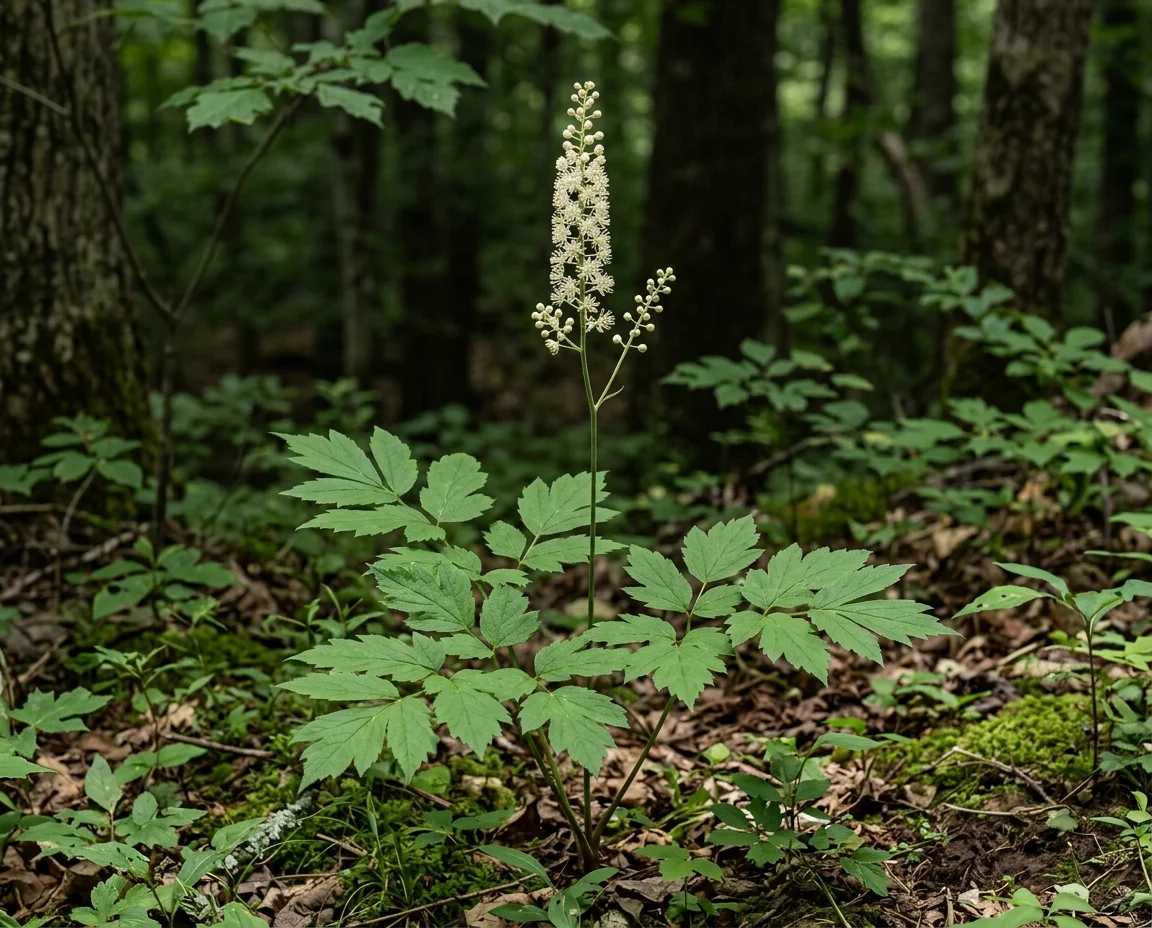
Scientific name: Actaea racemosa, also known historically as Cimicifuga racemosa
Common names: Black cohosh, black snakeroot
Historical range: Eastern North America, particularly deciduous woodlands of the Appalachian region and surrounding areas
Extinction status: Not extinct
Traditional significance: Indigenous medicinal traditions and later use in Western herbal medicine
Black cohosh is a woodland perennial that grows from a dark, thick underground rhizome. During the growing season, it produces large compound leaves with multiple toothed leaflets.
Its most recognizable feature is a tall flowering stalk covered in numerous small, creamy-white flowers. The flowers form elongated clusters that rise above the foliage, giving the plant a distinctive appearance in shaded woodland environments.
Unlike datura and peyote, black cohosh is not primarily known as a hallucinogenic plant. Its historical significance comes from its traditional medicinal applications and the chemical compounds found in its roots and rhizomes.
Black cohosh is native to eastern North America and is associated with deciduous forests, woodland edges, and shaded slopes. It is particularly associated with the Appalachian region, although its distribution extends into other parts of the eastern United States.
Indigenous peoples developed detailed knowledge of plants in these environments, including which roots, leaves, and barks could be used in particular preparations.
Historical records attribute various medicinal applications to black cohosh among several Indigenous communities. However, these records were often written by outsiders and do not always explain the cultural context, preparation methods, or limits of the original knowledge.
A 2024 ethnobotanical study examining Alexander von Humboldt’s early nineteenth-century notes on North American plants discusses historical documentation of useful native species and the ways Indigenous botanical knowledge was recorded.
Reference: Plants of the USA: Recordings on Native North American Useful Species.
Traditional accounts describe black cohosh as a medicinal plant used for several complaints, including pain, rheumatic symptoms, and certain respiratory or fever-related conditions.
Its roots and rhizomes contain multiple bioactive compounds, and modern research has investigated extracts for specific health applications. Nevertheless, traditional use does not establish that every reported benefit is effective, and evidence for one preparation cannot be assumed to apply to every commercial supplement.
Black cohosh is especially discussed in contemporary herbal medicine in relation to menopausal symptoms. The quality and consistency of evidence vary, and potential adverse effects and product quality remain important considerations.
There is no established basis for classifying black cohosh as a nootropic or claiming that it enhances memory or intelligence.
The available evidence more clearly establishes black cohosh’s medicinal history than a specific mythological narrative.
Its cultural significance should not be diminished simply because a particular origin myth has not been identified in the sources discussed here. Indigenous botanical knowledge includes practical, spiritual, ecological, and social dimensions, and not every plant is associated with a surviving written story.
It is also important not to invent a legend merely to make a medicinal plant fit a mythology-focused headline.
No specific major mythological event can be confidently attributed to black cohosh on the basis of the historical references cited here.
Its better-documented role is in traditional medicine and the transmission of plant knowledge. This history illustrates how Indigenous knowledge could become embedded in later herbal medicine while the original knowledge holders received insufficient recognition.
No. Black cohosh remains a living North American species. However, habitat quality, collection practices, and local ecological conditions can affect individual populations.
Its continued existence also demonstrates why botanical extinction and cultural loss should be considered separately. A plant can survive even when some traditional practices become less widely documented or understood.
Key takeaway: Black cohosh represents the medicinal side of North American ethnobotany. Its traditional uses are historically important, but it should not be presented as an extinct mythological nootropic or as a proven cognitive enhancer.
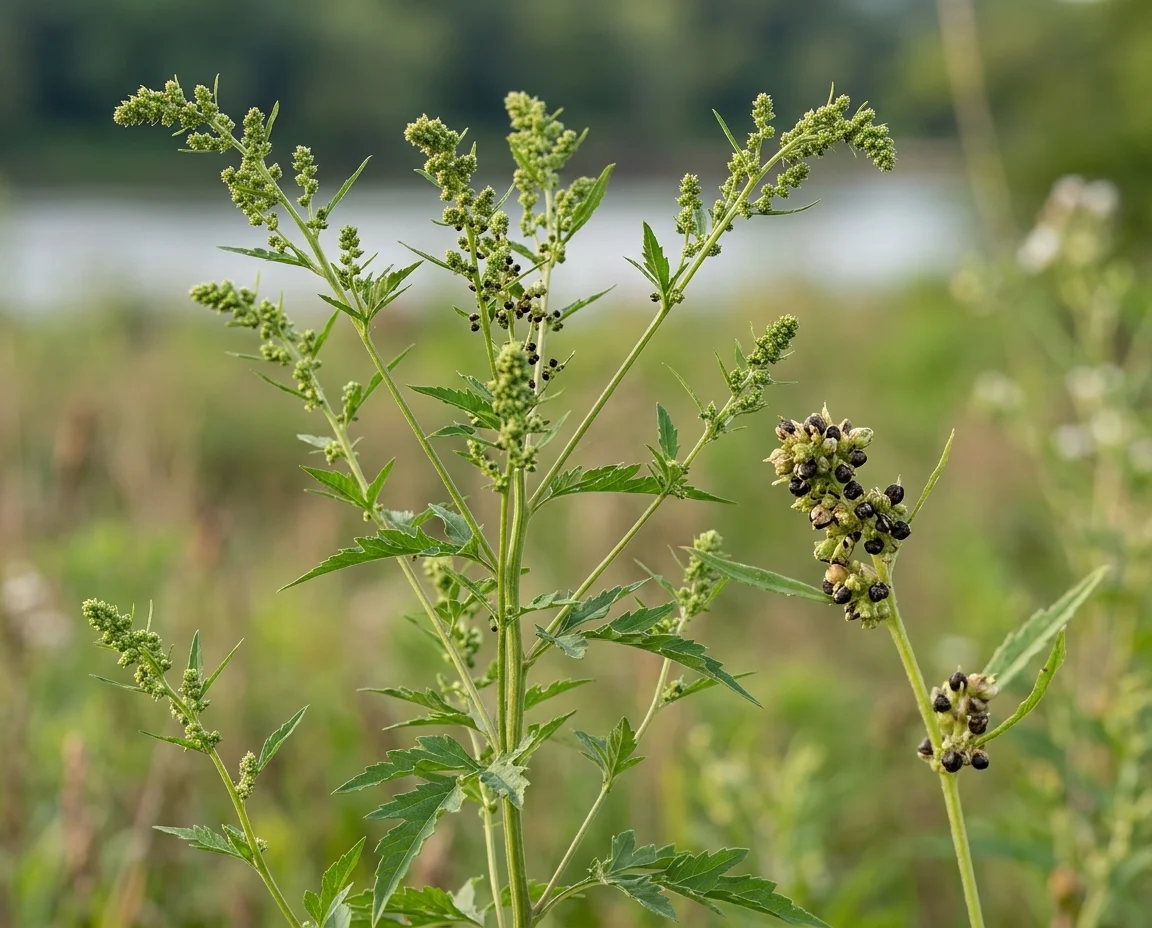
Scientific name: Iva annua
Common names: Marshelder, sumpweed
Historically cultivated form: Iva annua var. macrocarpa
Historical range: Eastern and central North America, with important archaeological evidence from the Illinois Valley and other eastern woodland regions
Extinction status: The species survives in the wild, but its ancient domesticated form is no longer cultivated as a traditional crop
Traditional significance: Food production, seed harvesting, and prehistoric Indigenous agriculture
Marshelder is an annual herbaceous plant belonging to the sunflower family, Asteraceae. It can grow to around five feet tall, producing branching stems, green leaves, and clusters of small, inconspicuous flower heads.
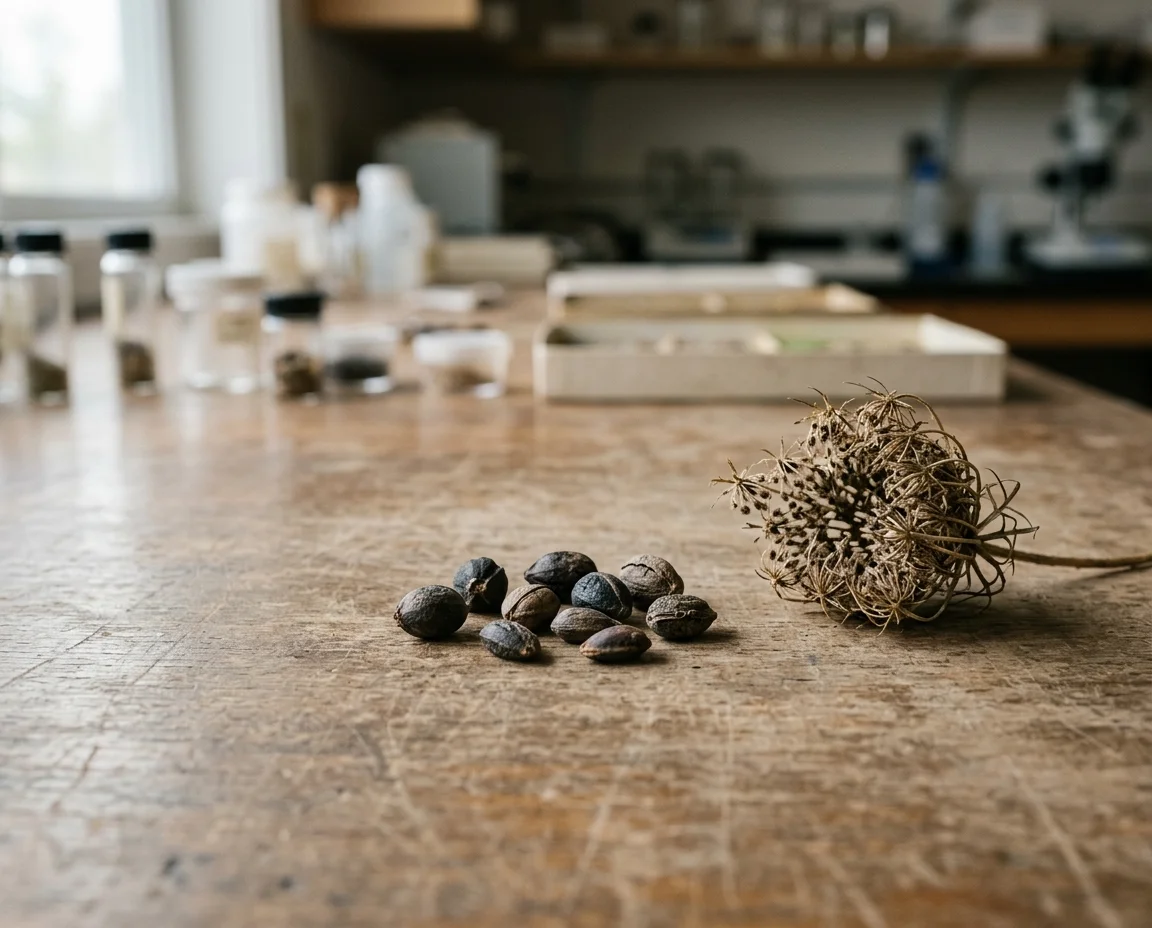
Unlike plants cultivated for large, colorful flowers, marshelder is primarily significant for its seeds. The seeds, technically called achenes, develop in clusters and can be harvested when mature.
The wild plant produces relatively small seeds. Archaeological specimens, however, have revealed much larger seeds associated with ancient cultivation. These differences provide evidence that Indigenous farmers selected plants with desirable characteristics over generations.
This is one of the most intriguing aspects of marshelder’s history: the plant’s past cannot be understood solely by looking at modern wild populations. Archaeological remains preserve evidence of a domesticated form that was once an important part of regional food systems.
Wild Iva annua occurs across much of the eastern and central United States, extending south into Mexico. Archaeological evidence indicates that Indigenous communities harvested and cultivated the plant in parts of eastern North America thousands of years ago.
One important archaeological location is Napoleon Hollow in west-central Illinois, in the lower Illinois River Valley. Researchers recovered carbonized marshelder seeds from a Late Archaic archaeological context, providing evidence of early domestication.
The plant was part of what archaeologists call the Eastern Agricultural Complex: a group of native plants cultivated by Indigenous societies before maize became a dominant crop in many eastern North American agricultural systems.
The complex included crops such as sunflower, goosefoot, marshelder, and certain native squashes. Their importance challenges the outdated idea that sophisticated agriculture in eastern North America began only after the arrival of maize.
Research published in Proceedings of the National Academy of Sciences documented evidence for the early formation of this Indigenous crop complex, including domesticated marshelder remains dated to approximately 4,400 calibrated years before present at Napoleon Hollow.
Reference: Initial Formation of an Indigenous Crop Complex in Eastern North America.
Marshelder’s primary established value was nutritional rather than psychoactive.
Its seeds were useful because they provided concentrated food energy. Archaeological and botanical research indicates that the seeds contained substantial oil, making the plant a potentially valuable source of dietary fat and other nutrients.
The ability to harvest and store seeds also had practical advantages. Seeds could be collected during the appropriate season, processed, and used as part of a broader food economy.
Marshelder therefore demonstrates an important point about ancient botanical knowledge: a plant did not need to change consciousness or produce a medicinal effect to be culturally important. Reliable nutrition, seasonal harvesting, and the ability to store food could support communities and make agricultural systems more resilient.
There is no convincing evidence that marshelder was a nootropic, that it was used to induce visions, or that it produced cognitive-enhancing effects.
The archaeological evidence discussed here establishes marshelder’s role in prehistoric agriculture, not a specific mythological narrative.
No particular Indigenous creation story, deity, or legendary event can be confidently attributed to marshelder using the sources cited in this article.
This does not mean that the plant lacked cultural significance. Cultivation itself can involve inherited knowledge, seasonal practices, social responsibilities, and relationships with particular landscapes. However, these dimensions should not be turned into a fictional myth when the historical evidence does not establish one.
Marshelder’s story is compelling precisely because it shows how much can be learned from archaeological evidence even when a written narrative is unavailable.
There is no verified major mythological event that can be linked specifically to marshelder on the basis of the archaeological research discussed here.
Its more clearly established historical importance lies in the development of Indigenous agriculture. The crop provides evidence of experimentation, selection, and plant management long before European colonization.
For thousands of years, communities across eastern North America gathered, cultivated, processed, and stored native plant foods. Marshelder was one element of that wider agricultural history.
The precise reasons for the disappearance of marshelder as a cultivated crop remain uncertain. Researchers have investigated the development and eventual abandonment of several crops within the Eastern Agricultural Complex, including marshelder, goosefoot, and other native seed plants.
Over time, maize agriculture became increasingly important in many communities. Changes in food production, settlement patterns, crop preferences, and agricultural practices may have contributed to the decline of earlier crops.
However, it would be too simplistic to attribute marshelder’s disappearance to one event or a single cultural decision. Different communities followed different agricultural trajectories, and the archaeological record does not reveal every reason why a crop ceased to be cultivated.
The distinction between a lost crop and an extinct species is especially important here. Wild marshelder survives today, even though its ancient domesticated form is no longer part of a widely maintained agricultural tradition.
Research on the lost crops of eastern North America continues to examine how these agricultural systems developed and why some cultivated forms disappeared from use.
Reference: The Sleeping Crops of Eastern North America: A New Synthesis.
No. Wild marshelder still exists.
Its ancient cultivated form, however, represents a lost agricultural tradition. The plant’s history is therefore relevant to the study of crop domestication, biodiversity, food security, and Indigenous agricultural knowledge—not to the history of proven nootropics.
Key takeaway: Marshelder is the strongest example in this article of a lost North American crop tradition. Its story reveals sophisticated Indigenous agriculture, but there is no reliable evidence that it was a mythological nootropic.

The five plants discussed here reveal different dimensions of the relationship between people and botanical resources.
Sacred datura illustrates how a toxic psychoactive plant could become associated with particular ceremonial traditions. Peyote demonstrates the enduring importance of a sacred cactus in Indigenous religious history. Yaupon holly shows how native plants could provide caffeine for beverages used in social and ceremonial settings. Black cohosh highlights the depth of Indigenous medicinal knowledge and the historical problems surrounding its documentation. Marshelder provides archaeological evidence of ancient agricultural innovation and the disappearance of a cultivated crop.
These are not five examples of extinct nootropics. They represent five distinct botanical histories.
The differences matter because modern interest in ancient plants sometimes encourages sensational claims. An herb associated with a spiritual ceremony becomes a supposed brain enhancer. A lost agricultural variety becomes an extinct species. A traditional practice is assigned to an invented mythological event.
Such interpretations may attract attention, but they obscure the historical evidence.
A more meaningful understanding begins with the plants themselves: their biology, distribution, ecological roles, traditional uses, and the archaeological or historical records that document their significance.

Historical ethnobotany can help researchers identify questions worth investigating, but traditional use is a starting point rather than proof of efficacy.
A plant’s chemical composition may suggest possible biological effects. Laboratory experiments can identify interactions with receptors, enzymes, or other biological targets. Controlled human studies are then needed to determine whether a preparation has meaningful benefits, what risks it carries, and which people should avoid it.
These stages are not interchangeable.
For example, caffeine in yaupon holly has a well-established stimulant effect, but that does not establish every traditional claim about the plant. The psychoactive properties of datura and peyote do not demonstrate improvements in memory or intelligence. Historical uses of black cohosh do not establish that it can treat every condition attributed to it in older records.
Marshelder makes a different contribution: it shows that ancient Indigenous knowledge included selective breeding, seasonal resource management, and food production. These practices remain relevant to discussions about crop diversity and sustainable agriculture.
In each case, responsible research requires attention to both scientific evidence and cultural context.
The word extinct has a specific biological meaning. It refers to the disappearance of a species when no living individuals remain anywhere.
That definition differs from several other situations:
These categories should not be treated as interchangeable.
For plants such as peyote, conservation also involves questions of cultural rights and access. A species can be threatened by environmental pressures while remaining essential to the religious practices of communities that have maintained relationships with it for generations.
Similarly, the history of Indigenous medicine requires careful attention to who originally developed the knowledge and how later researchers recorded it. Historical botanical records sometimes overlooked Indigenous contributions or failed to provide adequate cultural context.
Reference: Journal of Ethnobiology and Ethnomedicine.
Protecting botanical diversity therefore means more than preserving individual plants. It can also involve conserving habitats, acknowledging Indigenous expertise, and supporting the communities that continue to maintain traditional ecological knowledge.
The story of North America’s ancient plants is not a simple tale of five miraculous herbs that disappeared from the world.
It is a more complex history of Indigenous innovation, spiritual traditions, traditional medicine, changing agricultural systems, and the challenges of preserving knowledge across generations.
Sacred datura and peyote show how plants can occupy important places in ceremonial life. Yaupon holly reveals the historical significance of native caffeinated beverages. Black cohosh demonstrates how Indigenous medicinal knowledge entered wider botanical literature, sometimes without adequate recognition. Marshelder offers tangible archaeological evidence of an ancient agricultural system whose cultivated forms eventually fell out of use.
None of these stories requires exaggerated claims about supernatural powers or scientifically unproven cognitive benefits.
The real discovery is that North America’s Indigenous communities developed sophisticated relationships with plants long before modern pharmacology and neuroscience existed. Archaeology and ethnobotany continue to reveal the depth of that knowledge, while also showing how much remains uncertain or underdocumented.
Understanding these plants responsibly means recognizing both what the evidence establishes and what it cannot yet tell us. That approach offers a more accurate history of ancient North American botanical knowledge—and a stronger foundation for future research into plant biology, conservation, and human culture.
There is insufficient reliable evidence to identify five plants that meet all three descriptions: mythological, nootropic, and extinct. The plants in this article illustrate documented connections to ceremonial practice, traditional medicine, caffeine, or ancient agriculture. Only marshelder’s ancient domesticated form represents a lost crop tradition among these examples; the wild species survives.
Sacred datura and peyote are both associated with altered states of consciousness in certain Indigenous traditions. Their effects and cultural contexts are different, and neither should be assumed to enhance memory or intelligence. Datura is particularly dangerous because its effects can include severe poisoning and delirium.
Indigenous communities developed extensive botanical knowledge, but it would be inaccurate to assume that every traditional remedy was intended to improve memory. Some plants were used for nourishment, pain relief, other medicinal purposes, or ceremonial practice. Specific claims about cognitive enhancement require evidence tied to the plant, preparation, and cultural context.
No. Peyote survives in northern Mexico and southern Texas. However, some populations face conservation pressures associated with habitat changes, development, and harvesting.
Marshelder was an important seed crop in prehistoric eastern North America. Its seeds provided food energy, and archaeological remains indicate that ancient communities cultivated a larger-seeded form. The wild plant survives, but its ancient domesticated form is no longer cultivated as a traditional crop.
Some of these plants have documented ceremonial or spiritual associations. However, the evidence cited here does not establish a specific mythological event for every plant. Indigenous peoples have diverse oral traditions, and claims about individual stories should be supported by sources connected to the relevant community.
This article does not recommend using these plants as cognitive supplements. Datura is highly toxic, peyote has powerful psychoactive effects and specific cultural and legal considerations, and black cohosh is not an established nootropic. Yaupon holly contains caffeine, but ordinary stimulant effects are not evidence of a treatment for cognitive disorders. Marshelder is discussed here as a historical food crop, not as a brain-enhancement product.