J.K. Rowling is not a celebrity known for posting gym routines, promoting protein powders or publishing a daily supplement stack. That fact is important.
Search online for “J.K. Rowling supplements” and it is easy to find pages that appear to promise a definitive list of vitamins or wellness products associated with the Harry Potter author. But when the claim is traced back to primary sources, the picture becomes much less certain.


J.K. Rowling is one of the world’s best-known contemporary authors.
Born Joanne Rowling in 1965, she grew up in Gloucestershire and Wales and developed an interest in writing from childhood. According to her official biography, she wrote her first story at six and her first “novel” at eleven. She later studied French and Classics at Exeter University.
The idea that changed her life arrived in 1990.
While travelling by train from Manchester to London, Rowling conceived the basic idea of a boy who attended a school for wizards. She later spent years developing the story and completed the manuscript for the first Harry Potter novel in 1995.
The publishing story that followed became one of the most remarkable success stories in modern literature.
Harry Potter and the Philosopher’s Stone appeared in Britain in 1997. Six more books followed over the next decade, ending with Harry Potter and the Deathly Hallows in 2007.
The books became an international publishing phenomenon.
Rowling’s official site currently says the series has sold more than 600 million copies in 85 languages, while the eight original Harry Potter films became global blockbusters.
Forbes currently lists Rowling as a billionaire, with the Harry Potter franchise remaining the principal source of her wealth. The publication reported that the eight films had generated almost $7.7 billion at the global box office.
Her work has also expanded well beyond the original series.
She has written the Cormoran Strike crime novels under the pseudonym Robert Galbraith, as well as adult and children’s books including The Casual Vacancy, The Ickabog and The Christmas Pig. She also co-created the stage production Harry Potter and the Cursed Child and worked as a screenwriter on the Fantastic Beasts films.
Her career therefore provides an interesting context for discussing wellness.
Rowling’s professional life has involved long periods of intensive writing and creative concentration rather than the highly visible physical preparation associated with actors or professional athletes.

There is no well-documented J.K. Rowling fitness comeback comparable to the transformation stories frequently reported about actors preparing for superhero roles.
This is another area where celebrity-health articles can become misleading.
There are online claims about Rowling’s weight, diet and lifestyle, but reliable primary sources do not establish a major fitness transformation or a specific training program that she has publicly followed.
Her official website describes her happiest moments as those spent in her writing room, creating stories.
That does not mean Rowling does not exercise or pay attention to her health.
It simply means there is insufficient evidence to construct a detailed celebrity workout program around her.
Her public career tells us something else that is more useful.
Writing a multi-million-word body of fiction, managing publishing commitments, developing charitable organizations and continuing to produce books over several decades requires sustained concentration and a demanding professional routine.
That makes questions about nutrition and everyday energy understandable.
But it does not justify attaching a particular supplement to Rowling without evidence.

No verified six-supplement stack has been publicly established.
This is the most important finding from the research.
Searches for interviews, articles, videos and other online material did not produce a credible primary source in which Rowling lists six supplements she personally takes or recommends.
Her official website contains extensive material about her writing process, books and public work, including a three-part “On Writing” series, but it does not provide a personal supplement regimen.
That matters because there is a substantial difference between:
“J.K. Rowling takes magnesium.” and “Magnesium is a commonly discussed supplement that may be relevant to people interested in sleep, muscle function and nutritional adequacy.”
The first is a claim about a real person’s private health behavior.
The second is an evidence-based nutrition statement.
Without a direct source, the first should not be published as fact.

Vitamin D is one of the most widely discussed supplements in modern wellness—and one of the easiest to misunderstand.
It is tempting to describe vitamin D as an “energy vitamin,” particularly in articles about busy celebrities and professionals.
That is not quite how it works.
Vitamin D is a fat-soluble vitamin involved in calcium absorption, bone health, muscle function and several other physiological processes. The National Institutes of Health’s Office of Dietary Supplements identifies its role in maintaining adequate calcium and phosphate concentrations and supporting normal bone mineralization.
There is no verified evidence that Rowling uses a particular vitamin D brand.
Vitamin D supplements are manufactured by numerous pharmaceutical, nutrition and supplement companies.
Common forms include vitamin D3, or cholecalciferol, and vitamin D2, or ergocalciferol.
The choice of product and dose should depend on individual nutritional requirements rather than celebrity association.
Vitamin D is important for:
The biggest potential benefit from supplementation generally occurs when someone has inadequate vitamin D intake or low vitamin D status.
That is why a high-dose vitamin D capsule should not automatically be considered better than a standard supplement.
Most people will not notice an immediate “boost” after taking vitamin D.
Its role is more fundamental.
Adequate vitamin D status helps maintain normal physiological processes that support bones and muscles. For someone who spends much of the day indoors—whether working in an office, writing at home or using a computer—that nutritional question can be relevant.
But sunlight exposure, dietary intake and individual circumstances all matter.
Vitamin D supplementation is therefore better considered as a way of correcting or preventing inadequate intake when appropriate, not as a shortcut to productivity.

Magnesium has become one of the most popular minerals in the wellness industry.
It is marketed for sleep, relaxation, muscle recovery, digestion and stress management.
Some of those claims are supported by established physiology; others are much stronger in marketing language than in clinical evidence.
The NIH describes magnesium as a mineral involved in more than 300 enzyme systems and numerous processes, including energy production, protein synthesis, muscle and nerve function, blood-glucose regulation and normal heart rhythm.
Again, no particular magnesium brand has been verified as a J.K. Rowling product.
Consumers will encounter several forms, including:
These forms are not interchangeable in every respect.
The NIH notes that the body’s absorption of magnesium varies according to the form, with several forms—including citrate, lactate, chloride and aspartate—generally showing greater bioavailability than magnesium oxide.
Magnesium contributes to:
It is also involved in the body’s handling of calcium and potassium.
This is one of the most popular reasons people buy magnesium.
Research into magnesium and sleep is ongoing, but the evidence does not justify describing magnesium as a guaranteed sleep treatment.
A person who is deficient may have a different response from someone who already obtains sufficient magnesium from food.
Magnesium’s importance is largely invisible.
It is not comparable with caffeine, where the effect can be felt within a relatively short period.
Instead, it contributes to normal physiological processes throughout the day.
Food sources include nuts, seeds, legumes, whole grains and leafy green vegetables.
For someone with a varied diet, food can often make a substantial contribution toward magnesium requirements.
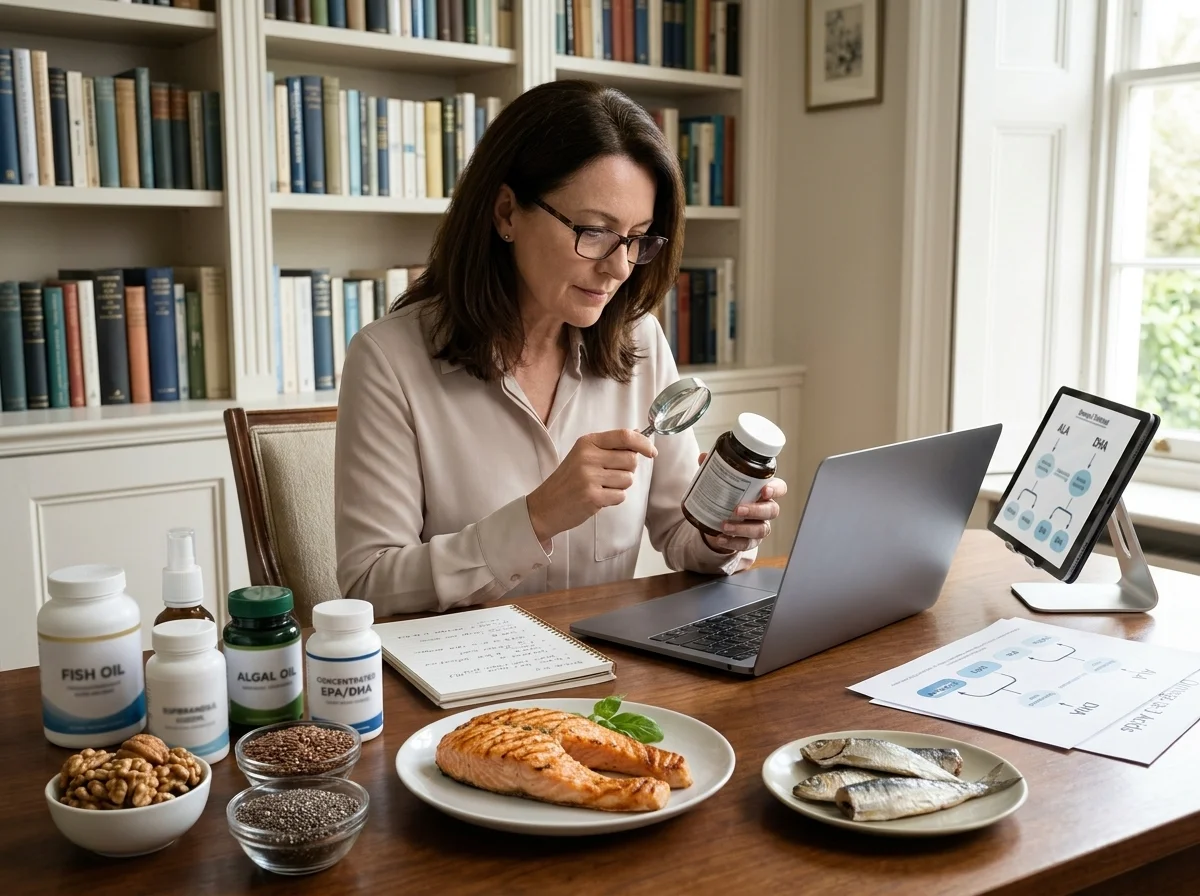
Omega-3 supplements occupy a different category because they are not vitamins or minerals.
The term refers to a group of polyunsaturated fatty acids, including ALA, EPA and DHA.
EPA and DHA are particularly associated with fish and seafood, while ALA is found in plant foods such as flaxseed, chia seeds and walnuts.
No credible source establishes a particular omega-3 brand as one used by Rowling.
Commercial products include:
The label matters.
A bottle that says “1,000 mg fish oil” does not necessarily provide 1,000 mg of EPA and DHA.
Consumers should look at the actual amounts of EPA and DHA.
Omega-3 fatty acids have been extensively studied for cardiovascular health and other physiological outcomes.
The NIH notes that EPA and DHA are important long-chain omega-3 fatty acids and that seafood is a major dietary source.
For people who regularly eat oily fish such as salmon, sardines, herring or mackerel, dietary intake may already be significant.
Omega-3 is not normally something a person takes for an immediate sensation.
Its potential value is nutritional and long-term.
For someone who rarely eats fish, an omega-3 supplement may be one way to increase EPA and DHA intake.
For someone who eats seafood regularly, supplementation may be less important.
This is precisely why a celebrity supplement routine cannot be copied without considering the underlying diet.

Vitamin B12 is particularly relevant to people interested in energy and concentration because deficiency can produce symptoms that affect everyday functioning.
But once again, “B12 gives you energy” is an oversimplification.
Vitamin B12 is required for normal red-blood-cell formation, DNA synthesis and nervous-system function. The NIH also notes that B12 participates in the metabolism of proteins and contributes to normal neurological function.
There is no verified J.K. Rowling B12 brand.
B12 products come in several forms and are sold by numerous manufacturers.
They can be found as:
B12 deserves particular attention among people who eat little or no animal food, because naturally occurring B12 is found primarily in animal-derived foods.
Older adults and people with certain gastrointestinal conditions may also have difficulty absorbing B12.
Some medications can interfere with B12 absorption as well.
When someone has a B12 deficiency, correcting it can be important for normal neurological and blood-cell function.
But someone who already has adequate B12 should not expect increasingly large doses to provide unlimited mental energy.
That is a useful distinction for anyone searching for a “focus supplement.”
B12 is essential.
It is not a magic productivity drug.
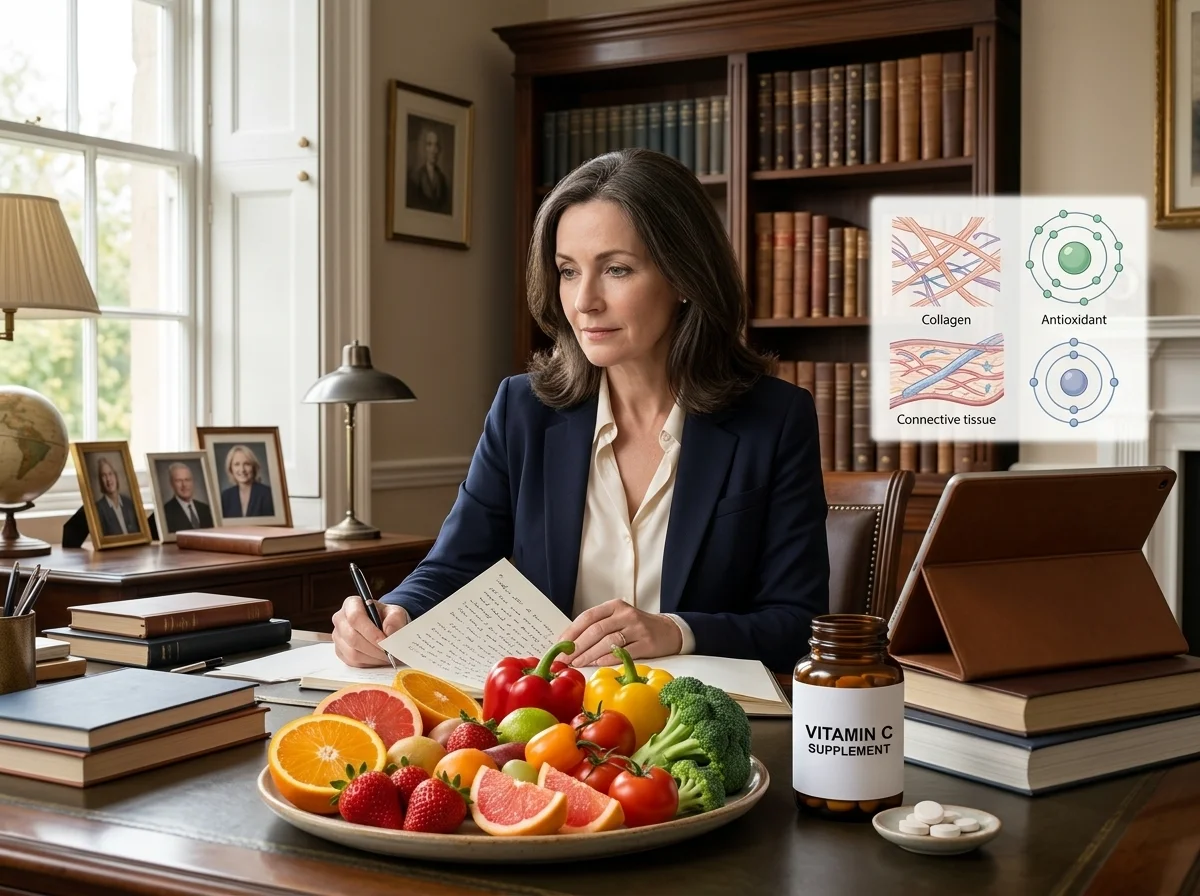
Vitamin C is another familiar name on supplement shelves.
It is also one of the easiest nutrients to obtain through ordinary food.
Citrus fruits, berries, peppers, tomatoes, broccoli and several other fruits and vegetables contain vitamin C.
There is no evidence that Rowling has endorsed a particular vitamin C manufacturer.
The market includes everything from inexpensive generic tablets to premium formulations combined with minerals, bioflavonoids or other ingredients.
There is no reason to assume that the most expensive product is automatically superior.
Vitamin C is required for collagen production and contributes to normal connective-tissue function.
It also acts as an antioxidant and supports normal immune function.
The nutrient is involved in the absorption of non-heme iron, meaning the form of iron primarily found in plant foods.
Vitamin C is less about feeling different and more about meeting a basic physiological requirement.
A person eating a diet rich in fruits and vegetables may already consume substantial quantities.
Supplementation can become more relevant when dietary intake is limited.
And although vitamin C is associated with immunity in marketing, taking large doses should not be portrayed as a guarantee against getting sick.
Good nutrition is a system, not a single capsule.

Calcium completes the six-nutrient list.
It is particularly important because bones are living tissue, not an inert structure that simply remains unchanged throughout adulthood.
Calcium also has roles in muscle contraction, nerve signaling and blood clotting.
The NIH identifies calcium as the most abundant mineral in the body, with the overwhelming majority stored in bones and teeth.
No verified source identifies a calcium supplement used or recommended by Rowling.
Common formulations include calcium carbonate and calcium citrate.
The appropriate choice depends partly on diet, tolerance and individual circumstances.
Calcium contributes to:
That makes calcium particularly relevant to long-term skeletal health.
Again, calcium is not an “energy booster.”
Its contribution is structural and physiological.
Adequate calcium helps maintain normal bones and teeth while supporting other important biological functions.
Food sources include dairy products, fortified plant milks, calcium-set tofu, some leafy vegetables and certain fish eaten with their bones.
For someone already consuming enough calcium, supplementation may not be necessary.
The more closely you examine Rowling’s public record, the less it resembles the typical celebrity wellness story.
There is no verified morning routine involving six pills.
There is no confirmed “Harry Potter author supplement stack.”
There is no reliable evidence that she attributes her productivity to a particular vitamin brand.
Instead, her public story is about work and persistence.
Rowling describes writing the first Harry Potter novel while dealing with major changes in her personal circumstances. She had moved to Edinburgh with her young daughter and continued working on the manuscript while caring for her. Her official biography describes her writing in cafés around the city while her daughter slept in a pram.
That is a much more interesting story than a list of supplements.
The author who eventually created one of the world’s most commercially successful literary franchises began with limited resources, an unfinished manuscript and a young child.
Her success did not come from a proprietary vitamin formula.

There is a useful connection between nutrition and Rowling’s career even without inventing a supplement routine.
Long periods of concentrated work require sustainable habits.
Writers, developers, designers, students, entrepreneurs and other desk-based professionals often spend hours sitting and working with screens.
That creates a different set of wellness challenges from those faced by professional athletes.
The priority is usually not maximizing explosive power.
It is maintaining:
Supplements can occasionally help fill nutritional gaps.
They cannot compensate for consistently poor sleep or an inadequate diet.
Rowling’s own writing advice provides an interesting parallel. On her official website, she has rejected rigid lists of “must-dos” and instead emphasized reading and the realities of developing as a writer.
That philosophy also makes sense in wellness.
There is no universal six-supplement formula.
| Claim | Evidence status |
|---|---|
| J.K. Rowling has a six-supplement daily stack | Not verified |
| Rowling has publicly recommended six vitamins | Not verified |
| Rowling endorses a specific supplement company | Not verified |
| Rowling’s health routine is extensively documented | No |
| Vitamin D is an essential nutrient | Established |
| Magnesium is involved in hundreds of biochemical reactions | Established |
| Omega-3s include EPA and DHA | Established |
| Vitamin B12 supports normal blood and neurological function | Established |
| Vitamin C contributes to collagen production and immune function | Established |
| Calcium supports bones, muscles and nerve signaling | Established |
This distinction is important for readers and publishers.
A celebrity’s name can generate enormous search traffic, but search traffic is not a substitute for evidence.

Even when a celebrity has publicly disclosed a supplement routine, copying it exactly is rarely the most sensible approach.
Nutritional requirements depend on:
Two people can eat very different diets and require completely different supplementation strategies.
Someone who eats salmon several times a week does not have the same omega-3 intake as someone who never eats fish.
Someone who consumes dairy or fortified alternatives regularly has a different calcium intake from someone who avoids them.
A person who spends significant time outdoors may have different vitamin D exposure from someone who works indoors.
And someone following a vegan diet needs to pay particular attention to B12 because natural dietary sources are limited.
The supplement should therefore follow the nutritional problem—not the celebrity.
The internet loves a neat list.
Six supplements.
Six benefits.
One famous person.
But J.K. Rowling’s public record does not support that story.
She is one of the most successful authors of the modern era, creator of the Harry Potter books, author of the Strike novels and a major philanthropist. Her books have sold more than 600 million copies worldwide, and her fictional universe has expanded into films, stage productions, digital publishing and television.
What the available evidence does not show is a verified six-supplement regimen personally recommended by Rowling.
That is why vitamin D, magnesium, omega-3, vitamin B12, vitamin C and calcium should be discussed here as evidence-based nutrients relevant to general health, not as products that Rowling has personally endorsed.
The difference may sound subtle.
Editorially, it is enormous.
A reliable health article should tell readers what is known, what is uncertain and where the evidence stops.
For J.K. Rowling, the strongest evidence is about her writing career—not her supplement cabinet.
And perhaps that is fitting.
The story of Rowling’s career has never really been about shortcuts. It is about turning an idea conceived on a delayed train into a seven-book series, continuing to write through difficult personal circumstances, and building a literary world that ultimately reached hundreds of millions of readers.
Supplements can help correct nutritional gaps.
They cannot write seven novels.
They cannot replace sleep.
They cannot create discipline.
And they certainly cannot reproduce the years of work behind one of the biggest publishing achievements of the modern era.
For anyone interested in improving everyday health, the better starting point is still the same: a varied diet, adequate sleep, regular physical activity and supplements chosen for an identifiable nutritional need rather than a celebrity’s name.
This article does not claim that J.K. Rowling personally takes or recommends vitamin D, magnesium, omega-3, vitamin B12, vitamin C or calcium. Searches of available primary and reputable secondary sources did not establish a verified six-supplement regimen. The six nutrients are discussed for their established nutritional roles and because they are commonly searched in celebrity wellness contexts. Supplement needs vary between individuals, and people taking supplements—particularly at high doses or alongside medication—should consult an appropriately qualified healthcare professional.