When Andrew Huberman talks about supplements, the conversation rarely starts with a brightly coloured bottle or a promise of instant transformation. His approach is usually more methodical: identify a physiological problem, look at the evidence, decide whether nutrition and behaviour can address it first, and only then consider a supplement.
That distinction matters.
The internet is full of lists promising the “best supplements for men,” “best supplements for muscle growth,” “best supplements for brain health” and increasingly, “Andrew Huberman supplements.” But Huberman himself has repeatedly argued for a more rational approach to supplementation rather than simply collecting pills and powders.
His supplement discussions have covered everything from creatine and omega-3 fatty acids to magnesium, vitamin D, apigenin, L-theanine, amino acids and a long list of more specialised compounds. Some have strong evidence for particular uses; others have more limited or mixed research.
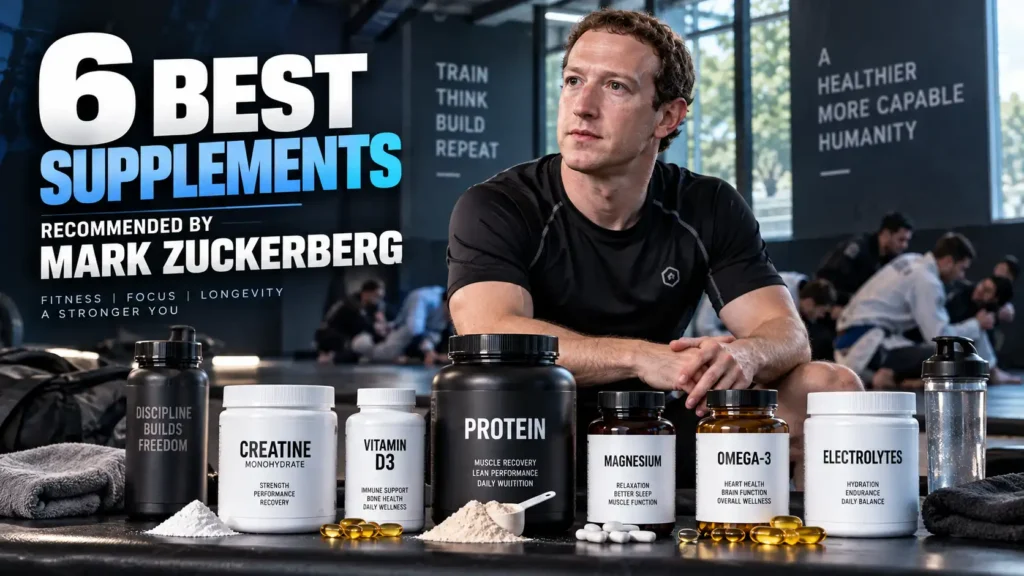
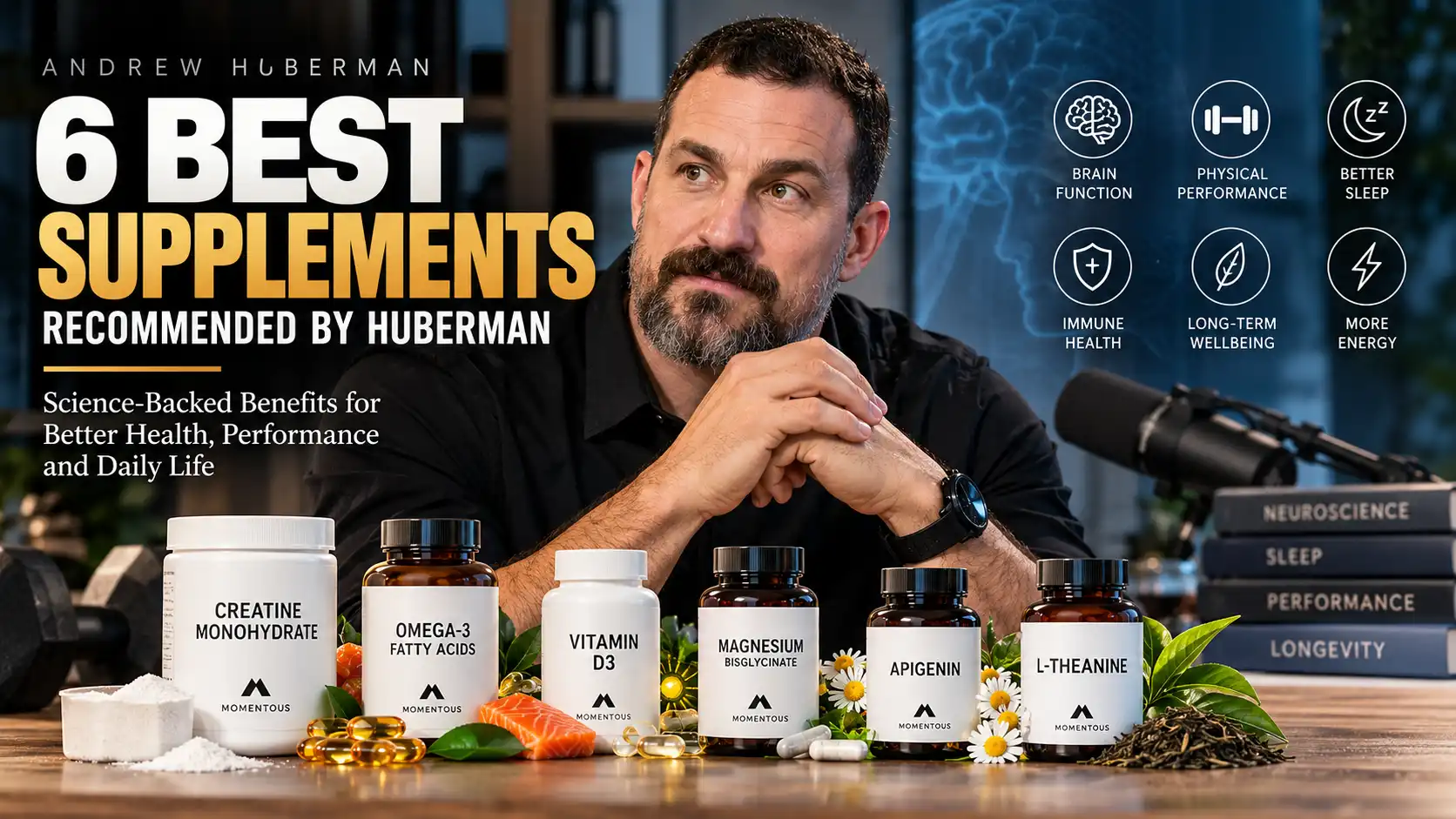
Among the most consistently discussed are six that fit into the major areas Huberman focuses on: physical performance, brain function, recovery, sleep and general health.
They are creatine monohydrate, omega-3 fatty acids, vitamin D3, magnesium, apigenin and L-theanine.
This isn’t a prescription, nor is it a claim that everyone should take all six. Instead, it is a closer look at why these supplements appear in Huberman’s discussions, what the science actually says, what companies such as Momentous offer in these categories, and what difference they could realistically make in everyday life.
Andrew Huberman is not simply an internet fitness personality.
He is a neuroscientist and associate professor at Stanford University School of Medicine, where he has worked in neurobiology and ophthalmology. His research has examined areas including visual perception, neural plasticity, stress, resilience, brain development and the biological mechanisms that influence behaviour.
According to Stanford, Huberman has published more than 75 peer-reviewed papers and has received honours including the Cogan Award, the Pew Biomedical Scholar Award and the McKnight Neuroscience Scholar Award.
He launched the Huberman Lab podcast in 2021, turning a relatively specialised scientific background into a mass-media platform covering neuroscience, sleep, exercise, nutrition, stress, focus, hormones and health.
The scale of that audience has changed his role. Huberman is now one of the most recognisable science communicators in the health and performance space, with the Huberman Lab website describing the podcast as regularly ranked among the world’s leading health podcasts.
In September 2026, his profile moved into another phase with the release of his first major book, Protocols: An Operating Manual for the Human Body. The book focuses on practical, science-based approaches to areas such as brain function, mood, energy, physical health and performance.
That broader context is important when looking at his supplement recommendations. Supplements are only one part of his system.
Sleep, exercise, sunlight, nutrition, stress management and circadian timing generally come first.
The phrase “fitness comeback” gets attention because celebrity fitness stories are often built around dramatic before-and-after transformations.
Huberman’s story is different.
There is no major documented comeback in which he disappeared from training and then returned after a dramatic physical transformation. Instead, recent coverage shows him continuing to train seriously.
A September 2026 Men’s Health profile documented Huberman’s home gym and described him training with specialist resistance equipment. The publication also reported that he weighs around 225 pounds and continues to maintain a substantial strength-training routine.
In an earlier interview with GQ, Huberman described doing hard weight training several times a week, with sessions generally lasting around an hour. He also discussed using cardiovascular exercise or other movement on days away from resistance training.
That consistency is arguably more interesting than a dramatic comeback.
Huberman’s philosophy tends to centre on maintaining physical capacity rather than chasing short-lived transformations. Resistance training, cardiovascular fitness, sleep and nutrition provide the foundation. Supplements are intended to support particular parts of that system.
And that brings us to the six supplements most relevant to his discussions.
If there is one supplement that sits particularly close to the intersection of Huberman’s interests in muscle, strength, exercise and the brain, it is creatine.
Creatine is naturally produced by the human body and is also obtained from food, particularly animal-based foods. It plays an important role in the phosphocreatine system, which helps regenerate ATP — the immediate energy currency used by cells.
For athletes and gym-goers, that matters because high-intensity exercise places substantial demands on rapid energy production.
Huberman has discussed creatine repeatedly on the Huberman Lab podcast and has personally described taking it.
In one episode focused on concentration, he discussed using approximately five grams of creatine monohydrate per day and explained that his interest wasn’t limited to muscle performance. He also highlighted the role of creatine in supporting the brain’s energy systems.
In other episodes, Huberman has discussed adjusting intake according to body size, with larger individuals potentially using more than the conventional five-gram figure.
The most established reason to use creatine is physical performance.
Creatine supplementation can increase muscle creatine stores, helping support rapid ATP regeneration during demanding exercise. This is one reason creatine monohydrate has become one of the most researched sports supplements in the world.
The evidence is not limited to bodybuilding.
Research has also investigated creatine and cognition. A 2024 systematic review and meta-analysis examined 16 randomised controlled trials involving 492 participants and evaluated outcomes including memory, executive function, attention and information-processing speed.
The findings suggest potential cognitive benefits, although the evidence is not uniform across every cognitive measure or population.
That nuance is worth keeping.
Creatine is not a magic “brain booster,” and it certainly should not be marketed as one. The evidence for muscle performance is considerably stronger than the evidence for making a healthy person dramatically smarter.
The everyday benefit is more likely to be indirect.
If someone trains regularly, improved training capacity can contribute to better strength and muscle development over time.
For older adults, preserving muscle and strength becomes increasingly important because muscle mass is closely connected to physical independence.
For people who consume little or no meat, creatine supplementation is also particularly interesting because dietary creatine intake can be lower.
Huberman has specifically discussed this point in relation to people who don’t consume significant amounts of animal products.
There is also a practical advantage: creatine is relatively inexpensive, easy to mix into water or another drink and does not need to be taken immediately before or after training to work.
Momentous is one of the companies closely associated with Huberman’s supplement discussions. Huberman Lab has an official partnership with the company, and Momentous maintains a dedicated range of products discussed in Huberman Lab content.
Its creatine product uses creatine monohydrate, the form with the largest research base.
Momentous says its products are manufactured in the United States and produced at facilities certified and audited by NSF, with additional testing standards including NSF Certified for Sport for qualifying products.
That does not make a supplement universally necessary. It simply means the company places considerable emphasis on sourcing, testing and manufacturing standards.
Creatine is perhaps the clearest example of a supplement where the marketing noise is actually louder than the science.
The evidence for supporting strength and high-intensity exercise is substantial. Cognitive benefits are promising but more complicated.
For someone interested in muscle preservation, strength training or athletic performance, creatine is considerably more relevant than many of the fashionable “biohacking” products appearing on social media.
Omega-3 fatty acids are another recurring part of Huberman’s discussions about brain and physical health.
The three major omega-3 fats are ALA, EPA and DHA.
ALA is found primarily in plant foods such as flaxseed, chia seeds and certain vegetable oils. EPA and DHA are found in seafood and some supplements.
The distinction matters because the body converts ALA into EPA and DHA only in relatively small amounts.
Huberman has discussed EPA and DHA in the context of brain health, cardiovascular health, mood and inflammation. His supplementation discussions have also highlighted the importance of getting sufficient omega-3 intake rather than assuming every diet automatically provides it.
EPA and DHA are incorporated into cell membranes throughout the body.
The brain is particularly rich in DHA, which is one reason omega-3 fatty acids have attracted so much attention in neuroscience and nutrition research.
Omega-3s are also involved in signalling processes and inflammatory pathways.
That doesn’t mean taking fish oil automatically prevents disease or transforms cognitive performance. The science is much more nuanced.
The NIH notes that EPA and DHA are the long-chain omega-3 fatty acids most extensively studied, while ALA is the essential omega-3 that must come from food because the body cannot manufacture it.
For someone who regularly eats oily fish, supplementation may not be necessary.
For someone who rarely eats seafood, however, obtaining EPA and DHA through supplementation can be a practical alternative.
This is particularly relevant for people who follow vegetarian or vegan diets.
Algae-derived omega-3 supplements can provide DHA and, depending on the product, EPA without relying on fish oil.
For everyday life, the potential role is less about feeling an immediate effect and more about meeting nutritional requirements consistently.
You generally don’t “feel” omega-3 working.
That’s actually one of the most important lessons when evaluating supplements: not every useful nutrient produces a noticeable sensation.
Momentous offers both conventional and plant-based omega-3 options. Its current product information describes an omega-3 formula designed around EPA and DHA, while its vegan omega-3 provides an alternative source.
The company also emphasises purity and testing.
Again, the brand is less important than understanding what is actually inside the capsule. When comparing omega-3 supplements, look at the amount of EPA and DHA rather than simply the headline number saying “1,000 mg fish oil.”
A capsule containing 1,000 mg of fish oil does not necessarily contain 1,000 mg of EPA plus DHA.
Omega-3 is a classic example of a supplement that makes the most sense when it fills a dietary gap.
If a person’s diet already supplies plenty of EPA and DHA, adding more may offer limited additional value. If dietary intake is low, supplementation can be a practical way to increase intake.
Vitamin D is unusual because it behaves more like a hormone than a conventional dietary vitamin.
The body can produce vitamin D when skin is exposed to UVB radiation, while smaller amounts come from foods and supplements.
Huberman has discussed vitamin D in relation to health, sunlight and hormonal physiology. In a conversation with Dr. Rhonda Patrick, he described taking vitamin D while also emphasising the importance of sunlight.
That distinction is particularly relevant because taking vitamin D is not equivalent to getting sunlight.
Sunlight has biological effects beyond vitamin D production.
Huberman has repeatedly discussed morning light exposure as part of circadian regulation, which is a separate physiological pathway from vitamin D.
Vitamin D is essential for calcium absorption and normal bone mineralisation.
It also plays roles in muscle function, immune regulation and cellular processes.
The NIH identifies blood 25-hydroxyvitamin D, or 25(OH)D, as the main marker used to assess vitamin D status.
For most people, a blood concentration of at least 20 ng/mL is considered adequate for bone and overall health, while levels below 12 ng/mL are associated with deficiency.
That is why blindly taking large amounts of vitamin D is not necessarily a good strategy.
More is not automatically better.
Vitamin D is fat soluble, meaning the body can store it. Excessive supplementation can produce toxicity.
Someone with inadequate vitamin D may benefit from correcting that deficiency, particularly for bone health.
But a person who already has adequate vitamin D should not assume that taking increasingly large doses will produce increasingly large benefits.
This is one reason blood testing can be useful when supplementation is substantial or long term.
Lifestyle also matters.
Sunlight exposure, diet, body composition, geography and individual biology all influence vitamin D status.
Momentous currently sells vitamin D3 products, including 2,000 IU and 5,000 IU formulations.
Its D3 products are positioned around daily vitamin D support, with the company also offering a vegan D3 option.
However, the existence of a 5,000-IU product does not mean everyone should take 5,000 IU every day.
Dose should depend on individual needs, dietary intake, sun exposure and, where appropriate, bloodwork and medical advice.
Vitamin D is valuable when there is a genuine need for it.
It should not be treated as a substitute for a healthy lifestyle or as a shortcut to better health.
For people who spend most of their lives indoors, have limited sun exposure or have demonstrated low vitamin D status, it can be a particularly relevant nutrient to discuss with a healthcare professional.
Magnesium is one of the less glamorous supplements on this list.
It doesn’t have the celebrity appeal of creatine or the futuristic marketing attached to some nootropics.
Yet biologically, magnesium is involved in hundreds of processes throughout the body.
Huberman has discussed several forms of magnesium, particularly magnesium threonate and magnesium bisglycinate, in the context of sleep and relaxation.
In his sleep discussions, he has described magnesium as one of the tools that may help people transition into sleep more effectively.
According to the NIH, magnesium is involved in more than 300 enzyme systems.
It contributes to muscle and nerve function, energy production, protein synthesis, blood glucose regulation and normal heart rhythm.
The recommended intake for adult men aged 31–50 is around 420 mg per day from all sources.
But that number doesn’t mean everyone should take a 420 mg magnesium supplement.
Food counts too.
Nuts, seeds, legumes, whole grains and leafy green vegetables can all provide magnesium.
Sleep is where Huberman’s magnesium discussions become particularly interesting.
He has discussed magnesium bisglycinate and magnesium threonate as options people sometimes use 30–60 minutes before bedtime.
He has also discussed combining magnesium with apigenin and L-theanine as part of a broader sleep strategy.
However, sleep supplements should not be viewed as substitutes for basic sleep hygiene.
If someone is sleeping five hours a night because they are working late and staring at a phone until 2 a.m., magnesium is unlikely to fix the underlying problem.
For someone whose diet is low in magnesium, improving intake may support normal muscle and nervous-system function.
For some people, a suitable magnesium supplement may also become part of a nighttime routine.
But magnesium has a very practical limitation: too much supplemental magnesium can cause diarrhoea, nausea and abdominal cramping.
The NIH places the upper limit for magnesium from supplements and medications at 350 mg per day for adults, separate from magnesium naturally obtained from food.
People taking certain antibiotics, osteoporosis medications or other drugs should also be aware of possible interactions.
Momentous currently sells magnesium bisglycinate and magnesium L-threonate.
The company has also developed sleep products that combine magnesium with L-theanine and apigenin.
The important point is to distinguish between the amount of the entire compound and the amount of elemental magnesium listed on the label.
Magnesium is a foundational nutrient, not a miracle sleep drug.
If dietary intake is sufficient, supplementation may not add much.
But for people with inadequate intake or specific reasons to use it, magnesium can have a useful place in a broader sleep and recovery routine.
Apigenin is probably the least familiar name on this list.
It is a naturally occurring flavonoid found in several plants, including chamomile.
Huberman has discussed apigenin specifically in relation to sleep.
The idea is straightforward: when the brain remains highly active at night, falling asleep can become difficult. Apigenin has been investigated for its potential calming effects and its interaction with pathways involved in neuronal activity.
Huberman has discussed 50 mg of apigenin as part of his sleep protocol.
But this is where careful language matters.
The research base for apigenin is not nearly as extensive as the evidence for creatine.
That doesn’t mean it is useless. It means the level of certainty should be different.
The potential benefit is primarily at night.
Imagine finishing work at 10 p.m. and continuing to mentally replay emails, deadlines, conversations and tomorrow’s responsibilities.
The problem isn’t necessarily that you’re physically energetic.
Your brain simply hasn’t shifted into a state conducive to sleep.
Apigenin is discussed as one possible tool for helping that transition.
If it works for an individual, the benefit could be indirect but meaningful: falling asleep more easily can mean more total sleep, better recovery and improved alertness the following morning.
Momentous currently sells apigenin in a 50 mg capsule.
Its product information describes apigenin as a plant-derived flavonoid intended to support relaxation and sleep.
The company also offers it alongside magnesium and L-theanine, reflecting the combination frequently discussed in Huberman Lab’s sleep content.
Sleep supplements are not automatically harmless because they come from plants.
Apigenin can interact with biological pathways, and individual responses differ.
Anyone taking medication or dealing with a medical condition should discuss supplements with a qualified healthcare professional.
Apigenin is best viewed as a targeted sleep-support compound rather than a general health supplement.
It may be interesting for people struggling with nighttime relaxation, but the evidence is considerably less mature than the evidence supporting creatine or correcting vitamin D deficiency.
L-theanine is an amino acid naturally found in tea leaves.
Unlike caffeine, it isn’t a stimulant.
Instead, it has been investigated for relaxation, stress, attention and sleep.
Huberman has discussed L-theanine both independently and in combination with other sleep-support supplements.
It is particularly interesting because its effects are not simply about making someone sleepy.
The concept is closer to calm alertness.
The evidence has become more interesting in recent years.
A 2025 systematic review and meta-analysis examined 19 studies involving 897 participants and found that L-theanine was associated with improvements in subjective sleep onset, daytime dysfunction and overall subjective sleep quality.
A separate 2026 systematic review of randomised trials also reported potential benefits for aspects of attention, stress and cognition.
But researchers continue to point out limitations, including differences between studies and uncertainty about ideal dosing.
So again, L-theanine is promising rather than proven to be a universal solution.
There are two obvious scenarios.
The first is daytime stress.
Someone may want to feel calmer without feeling sedated or mentally slowed down.
The second is nighttime relaxation.
Huberman has discussed L-theanine as part of his sleep toolkit, particularly when combined with magnesium and apigenin.
Momentous currently sells a 200 mg L-theanine capsule and describes it as supporting relaxation, mental clarity and a calm state without drowsiness.
This is an important point that can easily disappear in supplement marketing.
L-theanine occurs naturally in tea.
Someone who enjoys tea may already be consuming it through food and beverages.
The question is therefore not simply “Does L-theanine work?”
The more useful question is:
Do you need concentrated supplementation to achieve the effect you want?
For some people, perhaps.
For others, tea, adequate sleep and good stress management may be sufficient.
L-theanine is an interesting bridge between sleep and cognitive performance.
It may help support relaxation without the heavy sedative feeling associated with some sleep products, although individual responses vary.
One detail readers should understand before buying anything is the relationship between Andrew Huberman and Momentous.
Huberman Lab has an official partnership with Momentous, and Huberman has explained that the partnership was partly intended to provide a central location for supplements discussed on the podcast.
That relationship should not be hidden from readers.
It also shouldn’t automatically invalidate the underlying science.
The right way to evaluate a supplement is to separate three questions:
Does the ingredient have evidence behind it?
Does the specific product contain an appropriate amount and form?
Does the individual actually need it?
Those are three different questions.
Momentous says its products undergo third-party testing and are manufactured at U.S. facilities certified and audited by NSF.
Its current catalogue includes creatine, omega-3, vitamin D3, magnesium, L-theanine and apigenin, among many other products.
That makes the company particularly relevant when discussing Huberman’s supplement ecosystem, but readers should still evaluate products independently rather than assuming a celebrity or scientist’s association makes a product automatically necessary.
At first glance, creatine, vitamin D, magnesium, omega-3, apigenin and L-theanine don’t appear to have much in common.
They actually cover six different aspects of health.
Creatine is strongly associated with physical performance and muscle energy, with growing interest in brain function.
Omega-3 provides EPA and DHA, fatty acids involved in cellular and neurological processes.
Vitamin D3 helps maintain normal calcium metabolism and bone health and plays other biological roles.
Magnesium contributes to hundreds of biochemical reactions and is particularly relevant to normal muscle and nerve function.
Apigenin is primarily discussed in Huberman’s work as a sleep-support compound.
L-theanine is being studied for relaxation, attention, stress and sleep.
That is very different from swallowing six supplements simply because an influencer recommends them.
The better strategy is to start with the goal.
Are you trying to improve strength?
Look at training, protein, sleep and possibly creatine.
Are you rarely eating foods containing EPA and DHA?
Consider dietary omega-3 sources or supplementation.
Are you concerned about vitamin D?
Test before blindly escalating the dose.
Are you struggling to sleep?
Start with sleep timing, morning light, caffeine timing, exercise and environment before reaching for a supplement.
This is broadly consistent with the more rational framework Huberman describes in his supplementation discussions.
There is no universal answer.
That is actually the most scientifically honest conclusion.
A supplement can be useful without being necessary for everyone.
Creatine is supported by a particularly strong evidence base for exercise performance. Omega-3 supplementation can be useful when dietary EPA and DHA intake is low. Vitamin D is particularly relevant when intake or blood levels are inadequate. Magnesium can help fill dietary gaps, while apigenin and L-theanine occupy a more specialised position around sleep and relaxation.
But supplements should not be allowed to overshadow the basics.
Huberman’s own public routine illustrates that point.
His fitness approach includes resistance training, cardiovascular activity and recovery. His broader health philosophy places considerable emphasis on sunlight, sleep, nutrition and behavioural routines.
That may be the more important lesson hidden behind the supplement lists.
The bottle is rarely the whole story.
The fascination with Huberman’s supplement stack says something about modern health culture.
People want the shortcut.
They want the capsule that improves focus, the powder that builds muscle, the tablet that produces better sleep and the formula that slows ageing.
Biology rarely works that neatly.
The most effective health habits tend to be repetitive and surprisingly ordinary: sleeping consistently, exercising, eating enough protein and micronutrients, maintaining cardiovascular fitness, getting appropriate daylight exposure, managing stress and avoiding behaviours that undermine health.
Supplements can fill gaps.
They can sometimes provide meaningful performance advantages.
They can also be useful tools for specific problems.
But they cannot compensate indefinitely for poor fundamentals.
That is perhaps the most useful way to interpret Andrew Huberman’s supplement recommendations in 2026.
Rather than asking, “What six supplements does Andrew Huberman take?”, a better question is:
“Which of the problems these supplements are intended to address actually applies to me?”
For one person, the answer may be creatine.
For another, it may be vitamin D.
For someone else, none of them may be necessary.
And that is precisely why the science matters.
Andrew Huberman’s supplement discussions have helped push creatine, magnesium, omega-3 fatty acids, vitamin D, L-theanine and apigenin into mainstream conversations about health and performance.
But these six supplements are not a universal prescription.
Creatine has some of the strongest evidence for strength and exercise performance. Omega-3s can be useful when dietary EPA and DHA intake is limited. Vitamin D is important when levels are inadequate. Magnesium plays a fundamental role in normal physiology and may have a place in sleep routines. L-theanine has emerging evidence for relaxation, attention and sleep, while apigenin remains a more specialised and less extensively studied option.
The common thread is not a particular brand or a glamorous biohacking routine.
It is the idea of matching an intervention to a specific physiological need.
That is ultimately a much more useful way to think about supplements — and a far more realistic way to understand what Andrew Huberman actually talks about.