Jon Jones has spent much of his career making the extraordinary look routine.
From becoming the youngest UFC champion in history to winning titles in two weight divisions, Jones built his reputation around a combination of unusual reach, wrestling, timing, athleticism and an ability to make tactical adjustments inside the cage. But one of the more interesting chapters of his career happened away from fight night: the transformation that took him from a light-heavyweight champion to a genuine UFC heavyweight.


If there is one supplement that makes obvious sense in the Jon Jones fitness story, it is protein.
Jones specifically discussed protein powder when speaking about the supplements he was taking during his career. In a conversation about his supplement use, he described his routine as relatively basic and mentioned protein powder alongside fish oil, a liver-related product, grape-seed extract and men’s multivitamins.
His association with GAT Nutrition makes the connection even more concrete.
In 2015, GAT signed Jones to an athlete sponsorship deal. Contemporary reporting described GAT as a sports-nutrition company and noted that Jones would represent the brand as he returned to UFC competition.
Jones later explained that, after beginning his relationship with GAT, the products he was using included the company’s protein powders and amino-acid products.
Protein is hardly a secret weapon, but that is precisely the point.
For an athlete training several times a week, protein supplies amino acids required for muscle protein synthesis and helps support the maintenance and development of lean tissue. The International Society of Sports Nutrition has concluded that most exercising individuals can support muscle building and maintenance with approximately 1.4–2.0 grams of protein per kilogram of body weight per day, depending on the individual’s goals and circumstances.
Protein powder is simply a convenient way of reaching that target.
It does not magically create muscle. The training stimulus still has to be there.
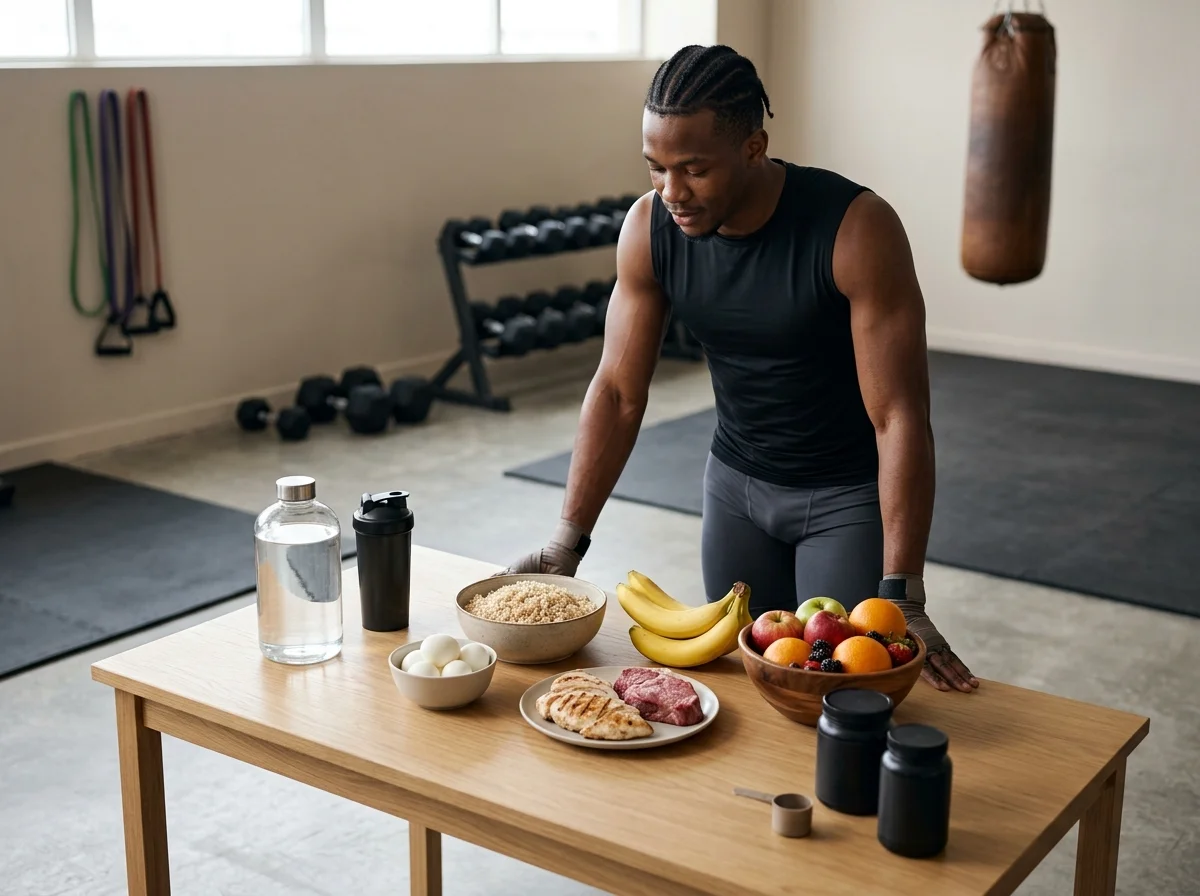
For Jones, however, protein became particularly relevant during his move to heavyweight. BBC Sport reported that his physical transformation was built around substantially increased calories and a diet featuring large quantities of meat, eggs, rice and oatmeal.
For someone who is not a professional fighter, protein powder can have a much less dramatic role.
A shake can make it easier to hit a daily protein target when breakfast is rushed, after a gym session or when cooking a full meal is inconvenient.
The key is to treat protein powder as food convenience rather than a performance shortcut.
Jones’s heavyweight transformation is also a useful reminder of something often lost in supplement marketing: supplements sit on top of calories, food quality, training and recovery. They do not replace them.

Before protein powder became an everyday staple of the fitness industry, amino-acid supplements were already a familiar part of bodybuilding and athletic nutrition.
Jones specifically mentioned amino acids when discussing his supplements, and his relationship with GAT included products in this category. A contemporary Fighters Only feature on Jones’s training routine identified GAT Amino GT as his intra-workout supplement and described it as an amino-acid formula intended to support training and recovery.
That makes Amino GT one of the clearest historically documented products connected with Jones.
Amino acids are the building blocks of protein.
Nine of them are considered essential because the body cannot produce them in sufficient quantities and they must come from food. Branched-chain amino acids — leucine, isoleucine and valine — have received particular attention in sports nutrition because of their relationship with muscle protein synthesis.
But there is an important distinction between amino acids as nutrients and amino-acid supplements as products.
If a person’s overall protein intake is already sufficient, adding an amino-acid product does not automatically produce dramatic additional muscle growth.
That is why the context matters.
For a fighter training multiple disciplines — wrestling, striking, grappling, strength work and conditioning — supplementation may be used for convenience around a demanding schedule. But the underlying nutritional foundation remains total protein intake and overall diet.
The historical GAT material is especially interesting because it shows how Jones’s supplement routine was marketed during his return to the UFC.
Fighters Only described a three-part GAT setup around Jones:
That is essentially a snapshot of the supplement culture surrounding Jones during that period rather than proof that he has followed the same routine throughout his entire career.
For an ordinary gym-goer, the benefit is mostly about convenience.
If someone already eats enough high-quality protein, an amino-acid supplement may not be necessary. If dietary protein is inconsistent, improving the diet itself generally makes more sense than building an increasingly complicated supplement stack.
Jones’s story demonstrates an important principle: the simpler the foundation, the easier it is to understand what a supplement is actually adding.

Among the products most directly associated with Jones’s training period is GAT PMP, a pre-workout supplement.
The Fighters Only feature on Jones specifically identified GAT PMP as his pre-workout and described it as part of the training stack he was using.
GAT Sport still operates as a sports-nutrition company, although the brand has evolved since the period of Jones’s sponsorship. Its current product range includes pre-workouts, creatine, amino products and other performance supplements. The company says its products are manufactured under cGMP standards and undergo third-party testing.
The current version of PMP is marketed around workout intensity, focus and pumps. Its formula includes ingredients such as citrulline, beta-alanine, N-acetyl-tyrosine, L-theanine and agmatine, with stimulant and stimulant-free versions available.
Pre-workout supplements generally attempt to solve one problem:
How do I feel ready to train when I don’t feel ready to train?
That can mean caffeine for alertness, ingredients intended to support blood flow, compounds associated with muscular endurance or simply a psychological routine that signals the start of a workout.
Caffeine is one of the better-studied performance ingredients. The International Society of Sports Nutrition reports that caffeine can improve several aspects of exercise performance, with commonly studied effective doses in the range of roughly 3–6 mg per kilogram of body weight. Individual response varies, and higher doses increase the likelihood of side effects.
A professional fighter’s training environment is very different from that of an office worker who goes to the gym three times a week.
Current GAT Sport PMP information, for example, carries warnings concerning stimulant use, medications and certain health conditions.
That is particularly relevant to competitive athletes.
A supplement that feels powerful is not necessarily a supplement that belongs in every athlete’s routine. Fighters also have to think about prohibited substances, contamination and testing protocols.
The US Anti-Doping Agency has repeatedly emphasized the risk associated with dietary supplements and has pointed athletes toward third-party certification programs such as NSF Certified for Sport as one way of reducing — though not eliminating — contamination risk.
For recreational athletes, the practical effect of a pre-workout is usually increased alertness and readiness.
For some people, that means a better early-morning gym session.
For others, it can mean difficulty sleeping if taken too late.
And that second point matters. A supplement that gives you 60 minutes of extra energy but disrupts your sleep can become counterproductive.

Fish oil is one of the more intriguing items in Jones’s own description of his supplement routine.
In his conversation with Joe Rogan, Jones described his supplement use as fairly basic and specifically mentioned fish oil. He did not identify a particular fish-oil manufacturer in the available transcript.
That distinction is important.
It would be misleading to attach a modern fish-oil brand to Jones simply because the ingredient appears in his historical routine.
Fish-oil supplements typically provide the omega-3 fatty acids EPA and DHA.
These fats have been studied extensively for their roles in cardiovascular health and other biological processes. But supplement marketing often gets ahead of the evidence.
Fish oil is not a magic recovery capsule.
Its value depends on diet, individual nutritional needs, the amount consumed and the reason for taking it.
Combat sports place unusual physical demands on the body.
A fighter may combine high-intensity conditioning, strength training, technical practice and sparring throughout the same training week. That makes recovery a constant concern.
Omega-3 fatty acids have therefore attracted interest among athletes, although the exact effect of supplementation on performance and recovery depends on the context and remains an active research area.
For the average person, the bigger nutritional picture matters more.
Fatty fish such as salmon, sardines and trout can provide EPA and DHA alongside protein and other nutrients. A supplement is a convenience, not a replacement for a balanced diet.
Fish oil is less likely to produce the noticeable sensation associated with caffeine or a pre-workout.
You don’t take it and suddenly feel stronger.
Its potential role is much more about filling a nutritional gap.
That makes it particularly different from the products usually promoted as “performance supplements.”
And again, Jones’s own comment is historical rather than a current public prescription for everyone.

Another supplement Jones mentioned in his conversation with Joe Rogan was a basic men’s multivitamin. He described his supplement routine as relatively uncomplicated and listed multivitamins alongside protein powder, fish oil and other basic products.
No specific brand was identified in the available source.
That makes it impossible to responsibly claim that Jones recommends a particular men’s multivitamin today.
What can be said is that multivitamin use formed part of the basic supplement category he described at the time.
A multivitamin provides a combination of vitamins and minerals.
The National Institutes of Health notes that multivitamin/mineral supplements can increase nutrient intake and may help people reach recommended amounts when their diet does not provide enough of particular nutrients. At the same time, the NIH emphasizes that multivitamins cannot replace a varied diet.
That is a more realistic way to think about them.
A multivitamin is nutritional insurance for some people, not a substitute for vegetables, fruit, whole grains, protein sources and healthy fats.
Athletes can have unusually high nutritional demands.
Weight cuts, intense training schedules, travel and restricted diets can complicate food intake.
But “more vitamins” does not automatically mean “better performance.”
In fact, the NIH warns that some multivitamins can push certain nutrients above recommended levels, depending on the formulation and what else a person is taking.
This is especially relevant when people combine multiple supplements without checking their ingredient lists.
Unlike a stimulant, a multivitamin is unlikely to produce an immediate sensation.
Its purpose is much more basic: helping fill potential micronutrient gaps.
If someone already eats a varied, nutrient-rich diet and has no deficiency, the practical benefit may be limited.
That is why the phrase “basic supplement” is more appropriate here than “performance enhancer.”

The newest and most direct commercial connection between Jon Jones and a supplement company is Ketone-IQ.
This is where the Jones supplement story moves from a historical sponsorship to a current business relationship.
Ketone-IQ’s own website identifies Jones as its Chief Performance Officer and features his endorsement of the product. The company says Jones became involved as a co-owner, and its current team page lists him alongside other high-profile athletes and performance figures.
The product is based around exogenous ketones.
Unlike protein powder or a multivitamin, Ketone-IQ is marketed primarily as a source of rapidly available ketones intended to support energy and mental focus.
The company says its ketones are produced through a fermentation process and that its products are NSF Certified for Sport and WADA compliant.
Ketones are compounds the body can produce when carbohydrate availability is reduced and the body increases its reliance on fat.
They can also be consumed directly through exogenous ketone products.
The idea behind Ketone-IQ is simple: instead of waiting for the body to produce large amounts of ketones, the product provides them directly.
Jones has publicly praised the product, saying it makes him feel mentally clearer and that he believes it improves his cardio performance. Those are Jones’s personal statements, not independent proof that the product produces the same effects in every user.
This is where the story becomes more interesting.
Research on exogenous ketones is promising in some areas but far from settled.
A 2026 systematic review covering 26 controlled studies found that ketone supplementation consistently raised blood beta-hydroxybutyrate levels but produced mixed results for actual athletic performance. Some studies reported improvements, while others found no benefit or even impaired performance. The researchers concluded that the evidence does not yet support a definitive claim that ketone supplementation improves athletic performance across the board.
Earlier systematic reviews reached similar conclusions.
One review of randomized controlled trials found that only three of 16 performance outcomes favored ketone supplementation, while 10 showed no meaningful difference and three were negative.
So the honest takeaway is not that ketones are a miracle fuel.
It is that they are an emerging area of sports nutrition with genuine scientific interest and mixed evidence.
This is perhaps where the product differs most from the older GAT products associated with Jones.
Ketone-IQ is marketed not only to athletes but also to people who want sustained focus during work, study or long days. The company currently offers versions with and without caffeine and describes uses ranging from morning routines to workouts and afternoon energy slumps.
For someone interested in productivity as much as exercise, that positioning is significant.
But expectations should remain realistic.
The product may be interesting; the evidence should still be judged independently from celebrity endorsements.

The most revealing part of the Jon Jones supplement story is not actually the supplements.
It is how little of his transformation depended on them.
When Jones moved toward heavyweight, BBC Sport reported that he consumed roughly 5,000 calories a day and deliberately increased his body weight over a period of years. His diet centered heavily on conventional foods — red meat, eggs, rice, oatmeal, avocado and fruit — while weight training helped him add size and strength.
That is a useful corrective to the modern supplement obsession.
Jones did not become a heavyweight because of a scoop of powder.
He built a heavyweight body through food, progressive training and time.
The supplements sat around that system.
That distinction matters because supplement advertising often reverses the order. It presents the powder as the engine and training as the supporting actor.
For elite athletes, the reality is usually the opposite.

Jones’s career trajectory makes the nutrition question particularly fascinating.
His final light-heavyweight fight came in February 2020, when he successfully defended his championship against Dominick Reyes. He then vacated the title and spent the following years preparing for heavyweight competition.
That was not a normal comeback.
Jones was not simply trying to regain his old form.
He was building a different athlete.
He told BBC Sport that he had increased his weight from approximately 220 pounds to around 250 pounds during the three-year period. His training included heavy lifting, and his nutritional plan was designed to support the additional body mass.
The payoff came at UFC 285.
Jones submitted Ciryl Gane in the opening round and became the UFC heavyweight champion.
Nearly two years later, he returned to Madison Square Garden for UFC 309 and stopped Stipe Miocic with a spinning back kick in the third round. The victory extended Jones’s UFC record for title-fight wins to 16.
Jones ultimately retired from the UFC in June 2025, ending a career that had included championships at both light heavyweight and heavyweight.
There is a temptation to look at an athlete like Jon Jones and ask for the one supplement that explains the physique.
There isn’t one.
Protein helps meet protein requirements.
Amino acids provide building blocks for protein.
Pre-workout products can influence energy, focus and training readiness.
Fish oil provides omega-3 fatty acids.
Multivitamins can help fill certain micronutrient gaps.
Ketone products provide an alternative energy substrate and are being studied for potential cognitive and athletic applications.
But none of these replaces sleep, calories, training, hydration or recovery.
That is particularly important for people searching online for the “Jon Jones workout routine” or “Jon Jones diet.”
The most useful lesson from Jones’s career is not to copy a professional fighter’s entire supplement cabinet.
It is to understand the hierarchy.
Food first. Training second. Recovery alongside both. Supplements where they solve a specific problem.
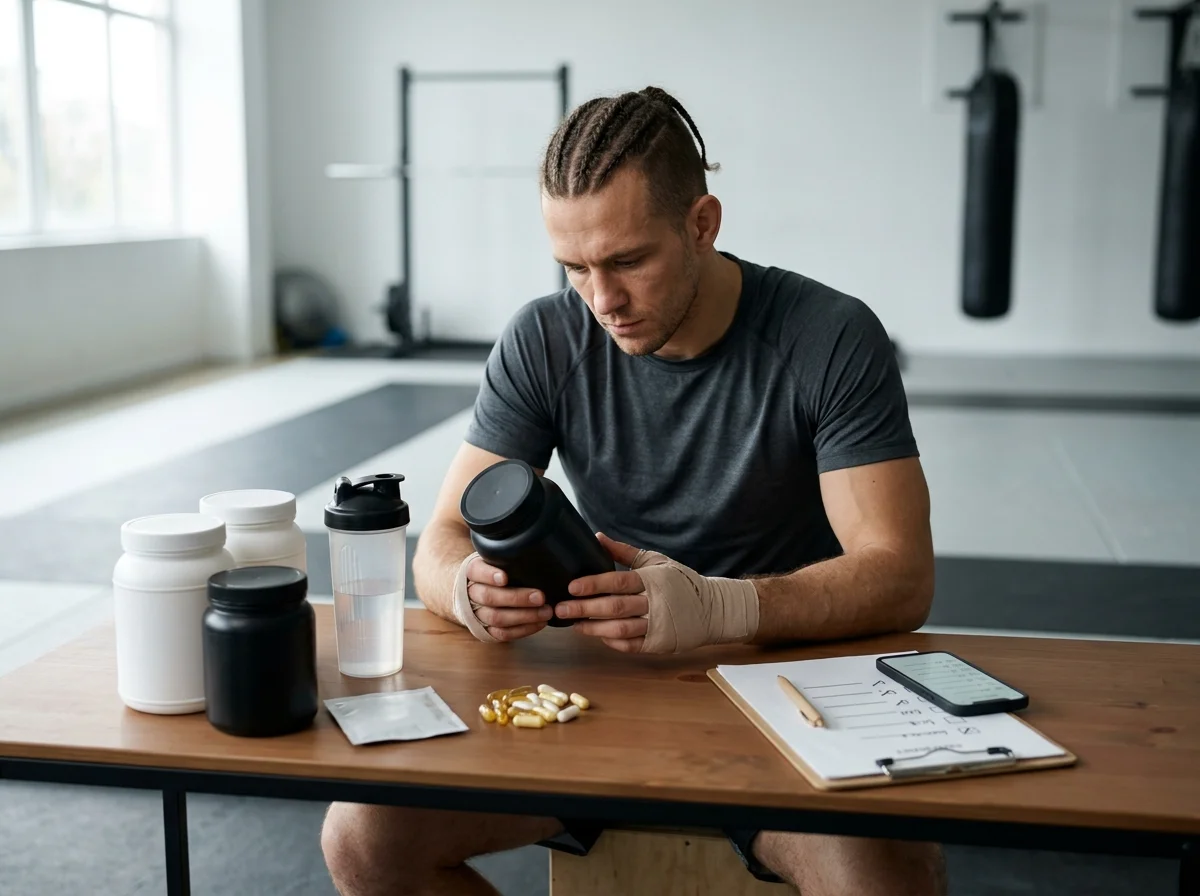
Not necessarily.
This is one of the most important points for anyone searching for celebrity supplement recommendations.
Jones is a professional combat athlete who has trained under elite coaches and medical supervision. His nutritional requirements are not necessarily comparable with those of a recreational gym-goer.
Some pre-workouts contain substantial amounts of caffeine or other stimulants. Multivitamins can contain high levels of particular nutrients. Supplements can also interact with medications or create problems for athletes subject to anti-doping rules.
Jones himself learned the importance of supplement scrutiny the hard way.
During his career, he faced a major anti-doping controversy involving a sexual-performance product. He later acknowledged that he should have taken the rules more seriously and had his products tested. Reporting at the time documented his concern about identifying exactly what he had consumed.
The lesson is straightforward:
Never assume that a supplement is safe for competition simply because it is sold legally.
Competitive athletes should check the rules that apply to their sport and consider third-party certification.
| Supplement/Product | Jones connection | Company | Main purpose |
|---|---|---|---|
| Protein powder | Publicly discussed; GAT products associated with him | GAT Nutrition/GAT Sport | Convenient protein intake |
| Amino acids | Publicly discussed; GAT Amino GT documented | GAT Nutrition/GAT Sport | Amino-acid supplementation |
| GAT PMP | Historically identified as Jones’s pre-workout | GAT Sport | Training energy, focus and pumps |
| Fish oil | Jones publicly mentioned using it | Brand not identified publicly | Omega-3 intake |
| Men’s multivitamin | Jones publicly mentioned using one | Brand not identified publicly | Micronutrient intake |
| Ketone-IQ | Current business/performance partnership and Jones endorsement | Ketone-IQ / Health Via Modern Nutrition | Exogenous ketones, energy and focus |
The table deliberately separates documented association from current recommendation. There is no reliable evidence that Jones currently tells the public to buy all six products as a single daily stack.
Jon Jones’s supplement history is more nuanced than the typical celebrity fitness list.
The fighter has openly discussed using basic supplements such as protein powder, fish oil and multivitamins. During his GAT sponsorship, specific products including PMP, Amino GT and Supertein were associated with his training routine. Today, his most visible supplement-business relationship is with Ketone-IQ.
But the most important part of the story happened outside the supplement aisle.
Jones’s move from light heavyweight to heavyweight required years of preparation, a dramatic increase in calories and a serious strength-training program. BBC Sport’s reporting on his transformation makes that clear: the foundation was food and training, not a secret powder.
That may be the most useful lesson for anyone inspired by his fitness journey.
The professional athlete’s supplement cabinet can be interesting.
The professional athlete’s discipline is harder to package — and far more important.
Editor’s note: The phrase “recommended by Jon Jones” is used in this article for search relevance, but readers should distinguish between supplements Jones has personally mentioned, products historically associated with him through sponsorships, and products he currently endorses. Celebrity use is not the same thing as medical or nutritional advice. Individual supplement choices should be based on diet, training goals, medications, health status and, for competitive athletes, applicable anti-doping rules.
Publicly available interviews have linked Jones with protein powder, fish oil, amino acids, a liver-related supplement, grape-seed extract and men’s multivitamins. His historical relationship with GAT also linked him with products such as PMP, Amino GT and Supertein. More recently, he became closely associated with Ketone-IQ.
Jones publicly said he used protein powder and later discussed using GAT protein products. A Fighters Only profile specifically listed GAT Supertein as his post-workout protein product during that period.
Yes. A historical Fighters Only feature identified GAT PMP as Jones’s pre-workout during his GAT-sponsored period.
There is not enough reliable evidence in the sources reviewed to state that creatine is a confirmed part of Jones’s current supplement routine. GAT Sport sells creatine today, but the existence of a GAT product does not establish that Jones uses it.
Ketone-IQ is the clearest current commercial supplement association. Ketone-IQ identifies Jones as a co-owner and Chief Performance Officer and features his statements about the product.
No. Supplements can help address specific nutritional or performance needs, but muscle growth fundamentally depends on appropriate training, adequate energy intake, sufficient protein and recovery.
There is no evidence supporting that conclusion. Jones’s heavyweight transformation involved a long-term nutrition and strength-training program, and his own comments emphasized the large increase in calories and food intake.