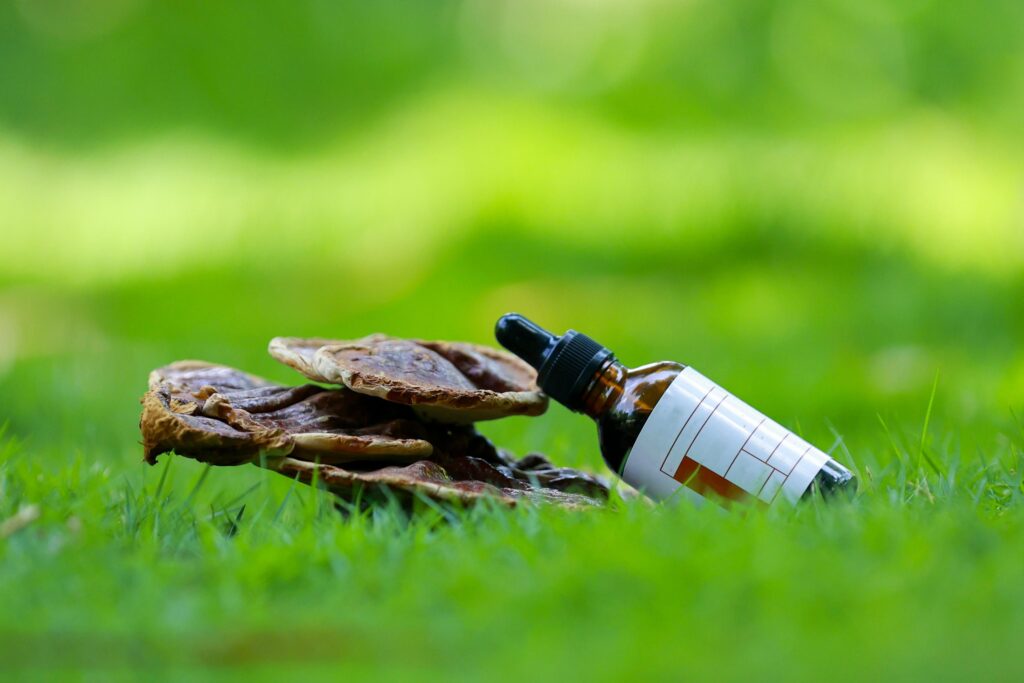
Chaga mushroom has an unusual appearance and an even more unusual reputation. Instead of looking like the typical mushroom you would find in a grocery store, Chaga grows as a hard, black, charcoal-like mass on birch trees. It has been used traditionally across Siberia, Russia, Northern Europe, and other cold regions for centuries, usually as a tea or water extract.
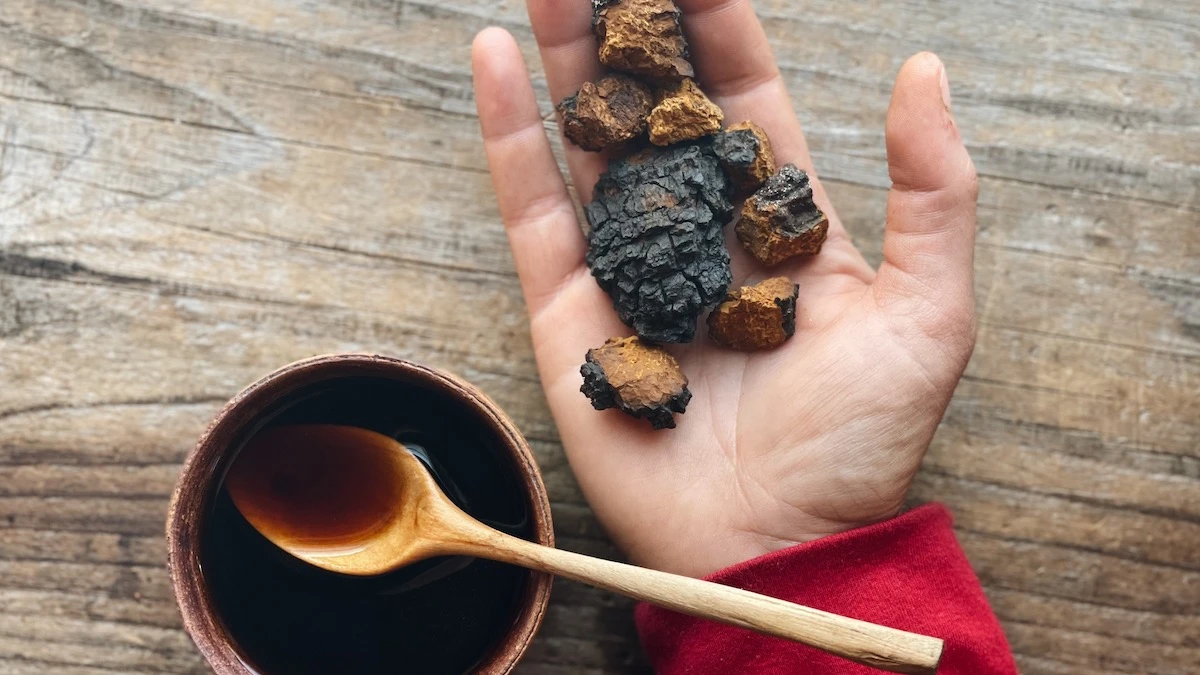
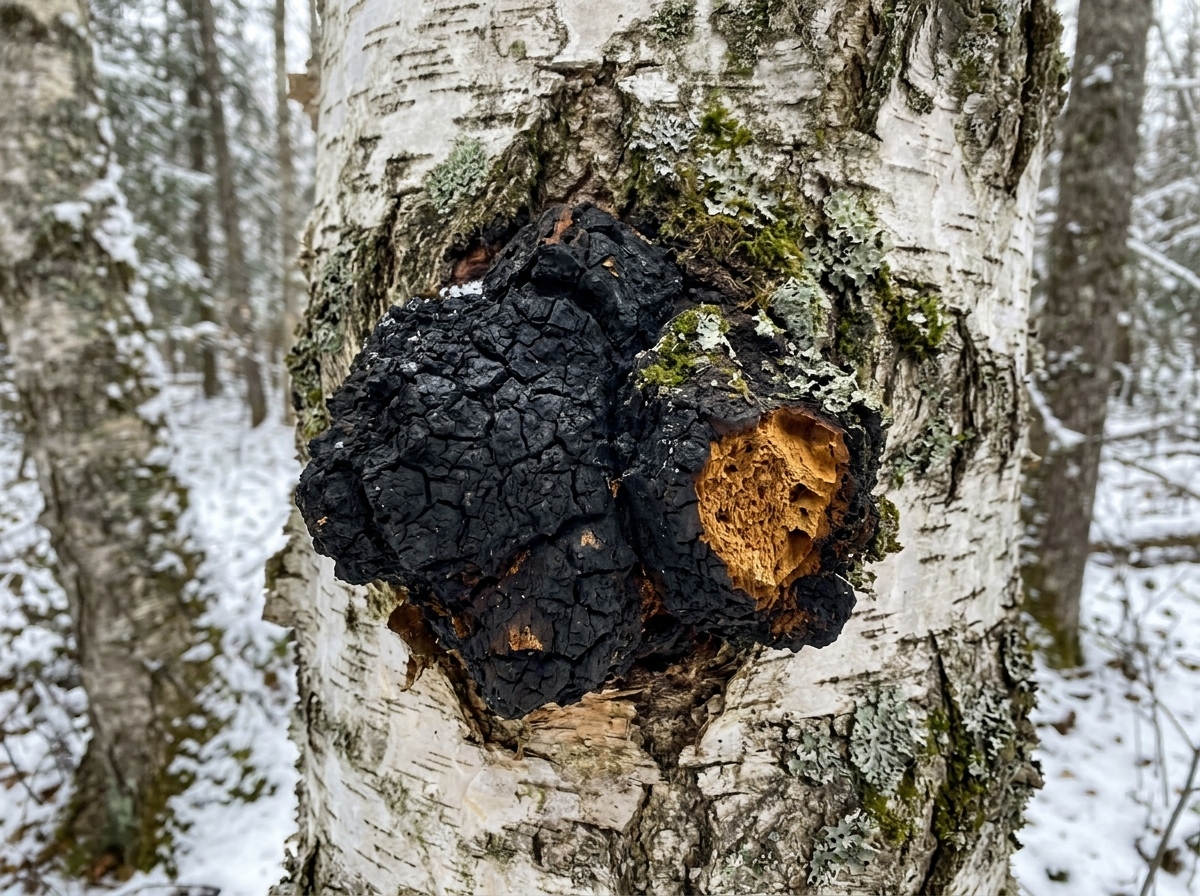
Chaga is a medicinal fungus scientifically known as Inonotus obliquus.
It belongs to the family Hymenochaetaceae and is a parasitic fungus that commonly grows on birch trees in cold and boreal regions of the Northern Hemisphere. It is found across parts of Russia and Siberia, Northern Europe, Scandinavia, Canada, Alaska, and other northern regions.
The part traditionally collected is not a conventional mushroom cap.
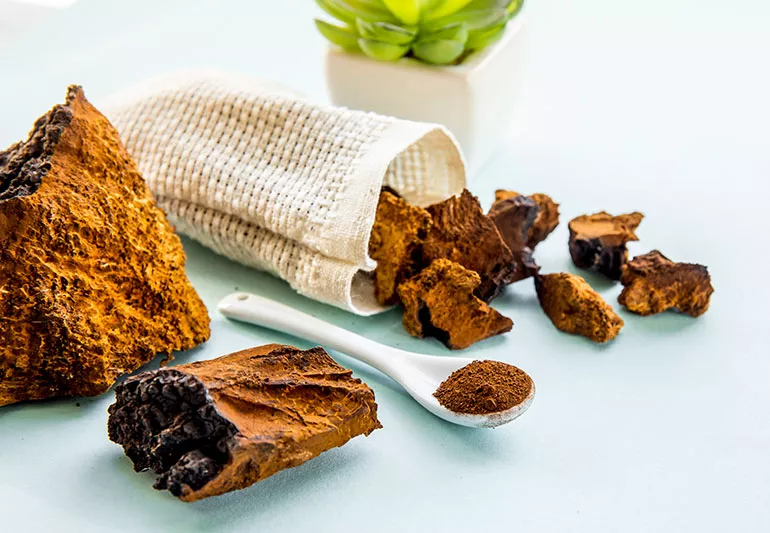
Instead, Chaga produces a hardened structure called a sterile conk or sclerotium. From the outside, it looks almost like burnt wood or a piece of charcoal. Inside, it is generally brown to golden-brown.
The dark color comes partly from its high concentration of melanin and other compounds. Researchers have identified several classes of potentially bioactive substances in Chaga, including:
These compounds are believed to contribute to many of the biological effects researchers have observed in laboratory studies.
One reason Chaga has become popular in the nootropics and functional-mushroom world is that it is not simply marketed for one outcome.
Instead, it is positioned as a broad wellness ingredient that may support the body’s antioxidant defenses, immune function, inflammatory balance, and metabolic health.
That broad reputation is rooted partly in traditional use and partly in modern laboratory research.
But it is important to remember that a mushroom containing many interesting compounds does not automatically mean that taking a concentrated extract will produce a clinically meaningful benefit.
Chaga naturally prefers cold climates and birch forests.
Some of the best-known natural regions include:
Research reviews describe Chaga as primarily associated with birch trees in northern regions of Europe, Asia, and North America.
Siberia has an excellent reputation in the Chaga market because of its long history of traditional use and extensive birch forests.
However, saying “Siberian Chaga is automatically the best Chaga” would be too simplistic.
Quality depends on much more than geography.
For example, a high-quality Chaga supplement should ideally tell you:
There is another important point.
Wild Chaga grows very slowly.
A recent review notes that Chaga can grow only around 1 to 2 cm per year, meaning large naturally occurring specimens may have taken many years to develop.
That makes sustainable sourcing extremely important.
There is no scientific ranking that proves one country produces the world’s “best” Chaga.
For traditional wild Chaga, Russia/Siberia, Scandinavia, and parts of North America are important sources.
For supplements, however, the quality of the finished product matters more than the flag on the bottle.
A well-tested Chaga cultivated in Europe may be a better purchase than poorly tested wild Chaga from Siberia.
That is why third-party testing, accurate labeling, and active-compound standardization should carry more weight than marketing phrases such as “pure Siberian Chaga.”

There is no single person who discovered Chaga.
Humans were using the fungus long before modern mycology existed.
Historical records indicate that Chaga has been used in folk medicine across Russia, Siberia, Northern Europe, and other regions for centuries. Some reviews trace medicinal use to at least the 16th century, while older folk traditions may extend much further back.
In Siberia, Chaga was traditionally prepared as a tea, infusion, or water extract.
It was used for a variety of purposes involving the stomach, liver, heart, infections, and general health. These traditional uses were observations rather than controlled clinical trials, so they should not be confused with modern medical evidence.
One event that helped introduce Chaga to a much wider international audience was its appearance in Aleksandr Solzhenitsyn’s novel Cancer Ward.
Solzhenitsyn described the use of Chaga tea in the Soviet Union, and the reference contributed to growing Western curiosity about the mushroom.
During the second half of the 20th century, scientists began examining Chaga’s chemistry more closely.
Researchers identified polysaccharides, triterpenoids, polyphenols, melanin, and other compounds with potentially useful biological activity.
Then the functional-mushroom industry arrived.
Chaga began appearing in:
The internet accelerated its popularity even further.
Today, Chaga is marketed as a “super mushroom,” “antioxidant powerhouse,” and sometimes even a longevity supplement.
Some of those descriptions are based on genuine biochemical research.
Others go far beyond the evidence.

Antioxidant activity is one of the better-established findings from laboratory research on Chaga.
Chaga contains polyphenols, melanin-related compounds, and other substances that can interact with oxidative processes.
Researchers have found antioxidant activity in different Chaga extracts, which is one reason the mushroom has attracted attention in healthy-aging research.
But there is an important distinction:
A supplement showing antioxidant activity in a laboratory test does not automatically mean it prevents aging or disease in humans.
The human body has its own complex antioxidant systems, and laboratory antioxidant scores don’t directly translate into longer life or better health.
So antioxidant potential is promising, but not proof of a disease-prevention effect.
Chaga contains polysaccharides and beta-glucans that can interact with immune pathways.
Laboratory studies suggest that Chaga extracts may influence immune-cell signaling and inflammatory responses.
This is one reason Chaga is commonly marketed for immune support.
However, “supports immunity” is much more defensible than saying Chaga boosts the immune system.
The immune system is complicated.
More immune activity isn’t always better. In some situations, excessive immune activation can be harmful.
Therefore, Chaga should be viewed as a potential immune-modulating ingredient rather than a simple immune booster.
Inflammation is another major area of Chaga research.
Laboratory studies have found that compounds in Chaga can influence several pathways involved in inflammatory signaling.
Reviews of the literature describe anti-inflammatory activity among the major biological properties observed in Chaga extracts.
This could eventually become useful in the development of new therapeutic compounds.
But that does not mean taking Chaga capsules treats arthritis, inflammatory bowel disease, or another inflammatory condition.
The current evidence is much stronger at the preclinical level than at the clinical level.
Chaga has also been investigated for possible effects on glucose metabolism and insulin sensitivity.
Animal and laboratory studies have produced interesting findings involving blood glucose and metabolic pathways.
A review of Chaga research describes potential hypoglycemic and insulin-sensitivity effects.
This makes Chaga interesting for metabolic research.
But people taking diabetes medication should not assume Chaga is harmless.
Memorial Sloan Kettering notes that Chaga may have additive blood-sugar-lowering effects with hypoglycemic agents, although the clinical significance is not fully established.
If you take diabetes medication, talk to your doctor or pharmacist before using Chaga regularly.
Researchers have studied Chaga for possible effects on lipid metabolism, oxidative stress, inflammation, and cardiovascular pathways.
Traditional use also included applications related to heart health.
However, evidence that Chaga actually prevents heart attacks, lowers cardiovascular mortality, or treats high cholesterol in humans is currently insufficient.
Think of this as an area of research, not a proven cardiovascular treatment.
Chaga extracts have demonstrated antiviral and antimicrobial activity in laboratory and experimental models.
This has generated interest in Chaga as a potential source of compounds for future pharmaceutical development.
However, there is a major difference between:
“This extract inhibits a virus in a laboratory experiment”
and:
“Taking Chaga prevents or treats viral infections in people.”
The second claim requires well-designed human clinical trials.
At present, those trials are not sufficient to establish Chaga as an antiviral treatment.
This is probably the most heavily marketed and most misunderstood benefit.
Chaga extracts have shown anticancer activity in cell and animal models.
Researchers have reported effects involving apoptosis, cell-cycle regulation, oxidative stress, and other pathways in experimental cancer models.
This is scientifically interesting.
It does not mean Chaga cures cancer.
There are currently no high-quality human clinical trials establishing Chaga as an effective cancer treatment.
Anyone with cancer should never replace chemotherapy, radiation, surgery, immunotherapy, or other prescribed treatment with Chaga.
Chaga’s anticancer potential should be described as an area for future drug research rather than a proven therapy.
This is the section that separates a responsible Chaga article from typical supplement marketing.
Chaga is natural, but it is not risk-free.
The biggest concern is oxalate.
Chaga can contain unusually high concentrations of oxalates.
Oxalates can bind calcium and form calcium oxalate crystals. In excessive amounts, this can contribute to kidney injury.
Several case reports have connected long-term or high-dose Chaga consumption with oxalate nephropathy, a serious form of kidney damage.
One published case involved a 69-year-old man who consumed approximately 10 to 15 grams of Chaga powder per day for three months and developed acute kidney injury with calcium oxalate crystal deposition.
Another case involved long-term Chaga consumption and eventual end-stage renal disease, with researchers finding high oxalate content in the Chaga material.
These are case reports, so they cannot tell us how frequently this occurs.
But they are serious enough that Chaga should not be treated as an unlimited daily beverage.
People with:
should be particularly cautious.
A 2026 animal study also found kidney injury and oxalate crystal deposition with high-dose Chaga exposure, providing additional experimental support for the concern.
This doesn’t prove that ordinary supplement doses will cause kidney damage.
It does mean that more is not necessarily better.
Chaga may have antiplatelet effects.
Memorial Sloan Kettering advises people taking blood thinners such as warfarin to discuss Chaga with their healthcare provider because of a potential increased bleeding risk.
This is especially important before surgery.
Because Chaga may influence blood-sugar levels, combining it with glucose-lowering medication could potentially result in blood sugar becoming too low.
The human evidence is not strong enough to quantify this risk, but it is a sensible precaution.
This is an underrated problem.
There is a lot of laboratory research on Chaga.
There is far less long-term human research.
That means we cannot confidently say that taking concentrated Chaga extract every day for many years is completely safe.
The supplement market changes frequently, so the following should be viewed as quality-focused examples rather than an official ranking.
One important clarification: for Singapore, several excellent Chaga products are sold in Singapore rather than manufactured there. I have labeled that distinction because claiming that an imported product is “Singapore-made” would be misleading.
Real Mushrooms is one of the more transparent choices for people who specifically want a fruiting-body Chaga product.
The company’s current Chaga product states that it uses 100% mushroom fruiting body, with no grain, mycelium, or fillers. It also states that its products are lab-verified for beta-glucan content.
Its current Chaga extract lists approximately 8% beta-glucans as a guaranteed potency level.
Why it stands out: clear mushroom source, beta-glucan standardization, no grain-based fillers, and published quality information.
Host Defense is another major U.S. functional-mushroom company.
Its approach differs from Real Mushrooms because Host Defense primarily uses mycelium-based mushroom products grown on a substrate.
That doesn’t automatically make it bad.
It simply means consumers should understand what they are buying rather than assuming every Chaga supplement contains the same mushroom material.
Host Defense products are widely available in the U.S. and international markets.
For buyers who specifically want a fruiting-body-only product, however, Real Mushrooms is the more straightforward match.
Mind Shi Chaga is available through Singapore retailer Pupsik.
The product lists 1,000 mg of organic Chaga extract per serving, uses the Chaga sclerotium, and states a 10:1 extraction ratio. The current listing also reports standardization to beta-1,3/1,6-glucans and describes GMP manufacturing and quality testing.
Why consider it: Singapore-market availability, clear sclerotium labeling, extract ratio, and stated beta-glucan standardization.
Puhdistamo’s Instant Chaga is available through the Singapore-facing Arctic Pure store.
The product is made in Finland, not Singapore, and uses Finnish wild-grown Chaga extracted with hot water.
Why consider it: Finnish sourcing, water-extracted soluble powder, and a simple ingredient profile.
For Singapore readers, this is a good example of why “from Singapore” should ideally mean available in the Singapore market unless you specifically want Singapore-manufactured products.
Human Pro’s Chaga is grown on its own farm in the Netherlands.
The company states that the product uses Chaga sclerotium rather than grain-grown mycelium and that each batch is tested by Eurofins.
It currently reports a minimum of 25% beta-glucans, with additional stated levels for triterpenes, betulinic acid, and polyphenols.
This is particularly interesting for consumers who prioritize independent laboratory testing and active-compound disclosure.
Pure Fungi’s Chaga is manufactured and quality-tested in the United Kingdom.
Its current product is a 10:1 dual extract made from the fruiting body/sclerotium, using both water and alcohol extraction. The company states that the product contains 15% soluble mushroom polysaccharides and 4% triterpenes.
Why consider it: dual extraction, fruiting-body sourcing, organic certification, and stated active-compound levels.
Rooted Active Naturals’ Chaga extract is available through India’s 1mg marketplace.
The current listing describes it as an organic Chaga extract and identifies Inonotus obliquus as the mushroom source.
Another Indian-market option is Mahogany Chaga Mushroom Capsules, which is listed by 1mg as an organically cultivated Chaga extract product.
For an Indian buyer, I would prioritize the product that provides the clearest information about:
That last point is particularly important with Chaga because of its known oxalate concern.
This is where the picture becomes much clearer.
There is substantial laboratory evidence that Chaga extracts contain compounds with antioxidant activity.
This includes polyphenols, melanin-related compounds, and other secondary metabolites.
Evidence level: strong preclinical evidence, limited clinical evidence.
Laboratory studies show effects on inflammatory pathways.
Animal research also supports the possibility.
But large human trials are lacking.
Evidence level: promising preclinical evidence.
Chaga polysaccharides can affect immune pathways in laboratory and experimental settings.
This supports the idea that Chaga is biologically active.
It does not prove that Chaga prevents infections or improves immunity in healthy people.
Evidence level: preliminary.
Animal and laboratory research suggests Chaga may influence glucose metabolism.
Human evidence is insufficient to recommend it for diabetes.
Evidence level: preliminary.
Chaga extracts have demonstrated anticancer effects in cell and animal studies.
That makes Chaga scientifically interesting as a source of potential drug compounds.
It does not establish Chaga as a cancer treatment.
Evidence level: preclinical.
There is no reliable human evidence that Chaga extends lifespan.
Calling it an “immortality mushroom” reflects its traditional reputation rather than clinical proof.
Evidence level: insufficient.
A 2023 review concluded that Chaga has substantial therapeutic potential but emphasized that its pharmacological effects still require better clinical investigation.

This question deserves a nuanced answer.
Healthy adults may choose to use Chaga daily in modest amounts, but there is no scientific requirement to take it every day.
Unlike vitamins or minerals, Chaga is not an essential nutrient.
There is no established daily requirement for Chaga.
More importantly, long-term high-dose use is not something I would recommend casually because of the oxalate issue.
Traditional Chaga was often consumed as a tea, but concentrated modern extracts can deliver substantially different amounts of compounds.
Start by following the manufacturer’s recommended serving rather than copying doses from another product.
Different extracts can have completely different concentrations.
A 10:1 extract is not equivalent to raw mushroom powder.
A product standardized to 25% beta-glucans is not equivalent to one that doesn’t disclose its beta-glucan content.
You should seek professional advice if you:
Because Chaga has been associated with oxalate nephropathy in case reports, people with kidney problems deserve particular caution.
Chaga is one of the most fascinating medicinal mushrooms in the functional-food and nootropics world.
Scientifically known as Inonotus obliquus, it naturally grows on birch trees in cold northern regions of the world, particularly across Siberia, Russia, Scandinavia, Northern Europe, Canada, and Alaska.
Its traditional history is long.
People in Siberia and Northern Europe have used Chaga preparations for centuries, commonly brewing the dark mushroom into tea or making water extracts. Its reputation later spread internationally through traditional medicine, scientific research, and popular culture.
Modern research has identified a wide range of potentially active compounds, including polysaccharides, beta-glucans, triterpenoids, polyphenols, and melanin-related substances.
These compounds have demonstrated antioxidant, anti-inflammatory, immune-modulating, antiviral, metabolic, and anticancer activity in laboratory and animal research.
That is the good news.
The reality check is that human clinical evidence remains limited.
There is currently no strong evidence that Chaga makes healthy people live longer, prevents cancer, cures infections, dramatically improves cognition, or replaces medical treatment.
The biggest issue is safety.
Chaga can contain unusually high amounts of oxalates, and multiple medical case reports have connected excessive or long-term Chaga consumption with serious kidney damage.
That doesn’t mean every person taking a normal serving of Chaga will develop kidney problems.
It means Chaga deserves more respect than the typical “natural superfood” label suggests.
When choosing a supplement, don’t simply search for the biggest milligram number.
Instead, look for:
Authentic Chaga + clear species identification + transparent mushroom source + appropriate extraction + beta-glucan information + contaminant testing + reputable manufacturing.
For U.S. consumers, products such as Real Mushrooms Chaga and Host Defense Chaga are established options with different formulation philosophies.
In Singapore, Mind Shi Chaga is a local-market option, while Puhdistamo Instant Chaga offers Finnish-sourced Chaga through the Singapore market.
In Europe, Human Pro Chaga and Pure Fungi Organic Chaga Extract stand out for their stated active-compound and testing information.
In India, Rooted Active Naturals Chaga Organic Mushroom Extract is one accessible option, although buyers should carefully check the current label and testing information before purchasing.
Ultimately, Chaga is best viewed as a promising functional mushroom rather than a miracle medicine.
Its traditional history is impressive. Its chemistry is genuinely interesting. Its laboratory evidence is extensive.
But the human evidence still needs to catch up.
And when it comes to Chaga, quality and moderation matter just as much as the potential benefits.
The bottom line: Chaga is scientifically promising, but it is not proven medicine, and its unusually high oxalate content means that “more” is definitely not better.
Chaga can be included in a broader nootropic or wellness routine, but it is not a proven cognitive enhancer. Its strongest scientific interest is currently around antioxidant, immune-modulating, inflammatory, and metabolic pathways. Human evidence that Chaga significantly improves memory, focus, or intelligence is lacking.
Not necessarily. Siberia has a long history of Chaga use and is an important natural source, but country of origin alone does not determine quality. Species authentication, harvesting practices, extraction method, beta-glucan content, contaminant testing, and product transparency are more useful indicators.
No. Chaga has shown anticancer activity in laboratory and animal studies, but there is not sufficient human evidence to establish it as a cancer treatment. It should never replace evidence-based cancer therapy.
Yes, excessive or prolonged consumption may pose a kidney risk. Chaga can contain very high levels of oxalates, and published case reports have linked high or long-term intake with oxalate nephropathy and serious kidney injury.
Daily use is not automatically unsafe, but it should not be treated like ordinary tea that can be consumed without limits. Chaga contains high oxalate levels, and concentrated extracts may differ considerably from traditional tea preparations. If you have kidney disease, kidney stones, take medication, or plan long-term use, speak with a healthcare professional first.