What if some of the substances most closely associated with illegal drug use can also be found in hospitals, operating rooms, pain clinics and prescription medicines?
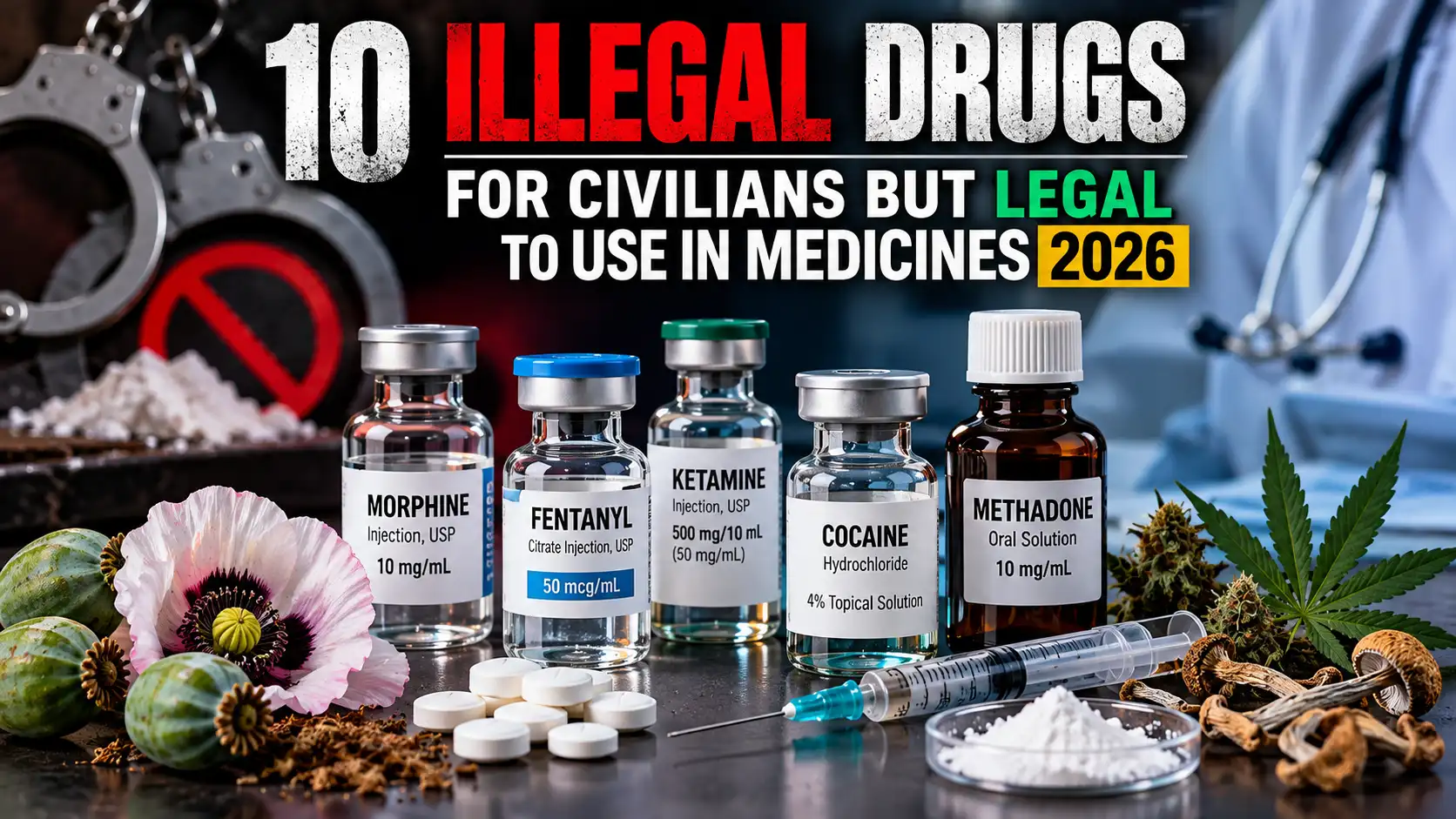
It sounds contradictory, but modern medicine has always drawn a careful line between a drug itself and the circumstances in which it is used. Morphine, fentanyl, methadone, cocaine, ketamine and even diamorphine are examples of substances that can be tightly controlled or illegal for unauthorized possession while still having legitimate medical applications under a doctor’s supervision.
The distinction is particularly important in 2026. Governments and health agencies are trying to balance two competing priorities: preventing addiction, diversion and illegal trafficking while ensuring that patients can still access medicines that may be essential for pain relief, anesthesia, palliative care, substance-use treatment and other medical purposes.
The World Health Organization (WHO) describes controlled medicines as substances that can have authorized medical or scientific applications but require regulation because of their potential for misuse, dependence or other harms. Its current guidance specifically recognizes controlled opioids, benzodiazepines, barbiturates, amphetamines and dissociative anesthetics among medicines with legitimate clinical applications.
That means the phrase “illegal drug” can be misleading. A substance may be illegal for a civilian to possess without authorization while being completely legitimate when manufactured, prescribed, stored and administered according to medical regulations.
Here are 10 of the most striking examples in 2026.
Morphine is perhaps the clearest example of how a substance can have two very different identities. Outside the medical system, unauthorized morphine possession or use is heavily restricted in many countries. Inside a hospital, however, morphine remains one of the most established medicines for treating moderate to severe pain.
Morphine is derived from the opium poppy and belongs to the opioid family. It acts primarily on opioid receptors in the central nervous system, reducing the perception of pain and altering the emotional response to painful stimuli.
Doctors may use morphine for severe acute pain, postoperative pain, cancer-related pain and palliative care. It can be administered in several forms, including oral medicines and injections, depending on the clinical situation.
The WHO considers morphine particularly important in palliative care. It has been included on the WHO Model List of Essential Medicines since the list was first published in 1977. The organization also continues to emphasize the importance of safe access to morphine because many patients around the world still cannot obtain adequate pain relief.
The same pharmacology that makes morphine medically valuable also explains why it is controlled. Opioids can cause respiratory depression, dependence and overdose, particularly when used outside medical supervision. WHO identifies morphine among opioids that can cause serious harm when misused.
Medical role: Severe pain, cancer pain and palliative care.
Why controlled: Dependence, respiratory depression, misuse and overdose risk.
Few drugs illustrate the difference between pharmaceutical medicine and illicit drug markets more dramatically than fentanyl.
Pharmaceutical fentanyl is an extremely potent opioid used by medical professionals for specific forms of pain management and anesthesia. It is available in carefully manufactured pharmaceutical preparations, including certain injectable and transdermal products.
WHO recognizes fentanyl as a medical opioid, including its use for cancer pain in appropriate settings.
In the United States, fentanyl is a Schedule II controlled substance, reflecting its high potential for abuse and dependence. The DEA lists fentanyl alongside morphine, methadone, oxycodone and other tightly controlled medical opioids.
The major public-health problem is that pharmaceutical fentanyl and illicitly manufactured fentanyl are not interchangeable from a safety perspective. Illicitly produced fentanyl can be mixed into illegal drug supplies without the user’s knowledge, creating a substantial overdose risk.
Medical fentanyl, by contrast, is manufactured to pharmaceutical standards and administered according to a defined clinical indication.
This is a crucial distinction when discussing “illegal drugs that are legal medicines”: the controlled pharmaceutical version is not the same thing as an uncontrolled illicit supply.
Medical role: Severe pain and anesthesia in selected clinical circumstances.
Why controlled: Extremely potent opioid with substantial overdose and dependence risks.
Methadone is another drug with a surprisingly complicated reputation.
It is an opioid, but unlike many people assume, its medical importance extends well beyond conventional pain treatment. Methadone is widely used as part of medication treatment for opioid use disorder, where it can help reduce withdrawal symptoms and cravings while allowing treatment to take place under structured medical supervision.
It also has established applications for pain management in some circumstances.
The WHO identifies methadone as a controlled medicine with applications including analgesia and treatment of opioid use disorders.
The U.S. DEA classifies methadone as a Schedule II controlled substance.
The irony is important: a substance associated with opioid dependence can itself become part of evidence-based treatment for opioid dependence. The goal is not to replace one uncontrolled high with another. Instead, treatment uses a carefully measured medicine to stabilize a person’s physiology and reduce the risks associated with illicit opioid use.
WHO’s recent work also highlights the continuing importance of methadone and buprenorphine in treatment for opioid dependence. In 2026, WHO invited manufacturers to submit products containing methadone and buprenorphine for evaluation under its Prequalification Programme.
Medical role: Treatment of opioid use disorder and selected pain conditions.
Why controlled: Opioid dependence, respiratory depression and misuse potential.
Oxycodone is a prescription opioid used to manage moderate to severe pain. It is also one of the substances that demonstrates why prescription status does not mean a drug is harmless.
In the United States, oxycodone is classified as a Schedule II controlled substance. FDA materials list oxycodone among extended-release and long-acting opioid analgesics approved for certain patients with moderate-to-severe pain when continuous, around-the-clock opioid treatment is appropriate.
Oxycodone works primarily through opioid receptors and can reduce pain effectively. But the same mechanism can produce euphoria, tolerance, physical dependence and respiratory depression.
This is why a tablet prescribed to a patient after major surgery is legally and medically very different from obtaining oxycodone without a prescription or using someone else’s medication.
One of the biggest lessons from the opioid crisis is that medical usefulness and addiction potential can exist in the same molecule.
Medical role: Moderate-to-severe pain when an opioid is clinically appropriate.
Why controlled: Dependence, misuse, respiratory depression and overdose.
Codeine may be less notorious than fentanyl or morphine, but it belongs on this list because it occupies an important place between everyday medicine and controlled-drug regulation.
Codeine is an opioid that can be used for pain relief and, in some formulations and jurisdictions, cough suppression. It is also metabolized in the body partly into morphine, although the amount and clinical effect vary between individuals.
The WHO identifies codeine as a controlled opioid with analgesic use.
In the United States, codeine appears in multiple controlled-substance categories depending on the formulation. The DEA notes that certain lower-dose combination preparations can fall under less restrictive schedules than pure or higher-dose opioid preparations.
This is a good example of why drug classification cannot be reduced to a simple “legal versus illegal” label. The same active ingredient may be regulated differently depending on how much is present, what it is combined with and what the product is intended to treat.
Medical role: Pain relief and, in some formulations, cough treatment.
Why controlled: Opioid effects, dependence potential and respiratory depression.
Cocaine is probably the most surprising entry for many readers because recreational cocaine is widely recognized as an illicit stimulant. Yet pharmaceutical cocaine hydrochloride has a legitimate medical use.
In the United States, the FDA approved cocaine hydrochloride nasal solution, marketed as Goprelto, for use in certain procedures involving the nasal cavity.
Cocaine has two properties that can be useful during nasal procedures: it can produce local anesthesia and constrict blood vessels. Vasoconstriction can reduce bleeding while the anesthetic effect helps numb the area.
FDA documentation describes cocaine hydrochloride as having been used for decades as an anesthetic and vasoconstrictive agent in procedures involving the nasal mucosa, septum and superficial sinuses.
The FDA has also specifically warned against distributing unapproved cocaine hydrochloride products. It states that Goprelto received FDA approval in 2017 while other unapproved cocaine hydrochloride products cannot simply be distributed as approved medicines.
That distinction is critical. The existence of pharmaceutical cocaine does not make recreational cocaine legal or medically safe.
Medical role: Local anesthesia and reduction of bleeding during certain nasal procedures.
Why controlled: Cardiovascular effects, abuse potential and dependence risk.
Methamphetamine is commonly associated with illicit stimulant use, but a pharmaceutical form has a narrow medical role.
The U.S. controlled-substance system places methamphetamine in Schedule II. The DEA specifically lists methamphetamine among Schedule II stimulants, alongside amphetamine-based medicines.
Pharmaceutical methamphetamine has historically been marketed under the name Desoxyn and has limited approved medical applications. Its controlled status reflects the fact that methamphetamine has significant potential for misuse and dependence.
This is an important example of how pharmaceutical medicine is not necessarily based on completely different chemistry from illicit drugs. Sometimes the difference lies in the formulation, manufacturing standards, dosage, clinical indication and monitoring.
Medical use of pharmaceutical methamphetamine is far narrower than the illicit use of methamphetamine. It should not be interpreted as evidence that recreational methamphetamine use has medical benefits.
Medical role: Limited prescription use for specific indications in jurisdictions where approved.
Why controlled: High abuse potential and risk of dependence and cardiovascular or neurological complications.
Ketamine has perhaps undergone one of the most dramatic changes in public perception. Once strongly associated with anesthetic use and recreational misuse, it is now also discussed in the context of modern psychiatric treatment—although the legal distinction between ketamine and esketamine is important.
FDA-approved ketamine products such as KETALAR are Schedule III controlled substances and are indicated as general anesthetics. The FDA states that ketamine can be used for induction of anesthesia and for diagnostic and surgical procedures.
Esketamine, a related molecule, is marketed as Spravato and is FDA-approved for specific depression-related indications. It is also a controlled substance and is subject to a restricted safety program because of risks including sedation, dissociation, abuse and misuse.
The distinction matters because people sometimes describe “ketamine therapy” as if every form of ketamine use has the same regulatory status. It does not.
In June 2026, the FDA continued taking enforcement action against websites selling unapproved ketamine products, emphasizing that approved pharmaceutical ketamine exists but that unauthorized formulations are not automatically legal medicines.
Medical role: General anesthesia; esketamine has specific approved psychiatric indications.
Why controlled: Dissociation, sedation, misuse and abuse potential.
Cannabis is one of the most complicated substances on this list because its legal status varies enormously between countries and even between states or provinces within the same country.
It is therefore inaccurate to say simply that “cannabis is illegal.” In some jurisdictions recreational cannabis is legal; in others it remains prohibited. Separately, specific cannabis-derived or cannabis-related medicines may receive regulatory approval even where recreational cannabis remains illegal.
The FDA provides a particularly clear example. As of 2026, the agency says it has not approved cannabis itself for treatment of any disease or condition. However, it has approved one cannabis-derived drug, Epidiolex, containing purified cannabidiol (CBD), and three synthetic cannabis-related medicines: Marinol, Syndros and Cesamet.
Epidiolex is approved for seizures associated with Lennox-Gastaut syndrome and Dravet syndrome in patients aged two years and older. Dronabinol-containing medicines have approved therapeutic uses including certain cases of chemotherapy-associated nausea and anorexia associated with weight loss in patients with AIDS.
This demonstrates a broader principle in pharmaceutical regulation: a plant, its individual compounds and a purified prescription medicine containing one of those compounds can have completely different legal statuses.
Medical role: Specific seizure disorders and selected chemotherapy-related or appetite-related indications, depending on the medicine.
Why controlled or restricted: Psychoactive effects, impairment, misuse potential and concerns surrounding non-medical use.
Heroin is perhaps the strongest example of the difference between recreational terminology and medical terminology.
Heroin is generally prohibited for non-medical possession and use in many countries. However, its pharmaceutical form, diamorphine, has been used medically in some countries under strict regulation.
Diamorphine is chemically heroin. In medical settings, it can be used as a powerful opioid analgesic, particularly in certain severe-pain and palliative-care circumstances. Its availability varies considerably between countries.
This is an important qualification: diamorphine is not an ordinary prescription medicine available to civilians in the way that paracetamol or ibuprofen is. Its use is restricted to specific medical systems and indications.
The international controlled-drug framework recognizes that substances with abuse potential can nevertheless have medical applications. WHO’s controlled-medicines guidance explicitly emphasizes the need to balance restrictions against legitimate access to medicines that can reduce suffering.
Heroin therefore illustrates perhaps the most extreme version of the medical-versus-illicit distinction.
Medical role: Highly restricted medical use in certain countries, including selected pain and palliative-care applications.
Why controlled: Very high misuse and dependence potential.
The answer lies in the difference between pharmacology and regulation.
A drug does not become medically safe simply because it is prescribed. Instead, medical systems attempt to control the circumstances under which a potentially dangerous substance is manufactured, distributed and administered.
That control can include:
The WHO’s 2025 guideline on controlled medicines makes this balance explicit. Controlled medicines can be necessary for surgery, sedation, acute and chronic pain, palliative care, seizure disorders, anxiety disorders and substance-use disorders. At the same time, governments need systems that prevent non-medical use, diversion and trafficking.
One of the biggest mistakes in articles about drugs is treating “illegal,” “controlled,” “prescription-only” and “restricted” as interchangeable terms.
They are not.
Illegal drug generally refers to a substance whose possession, manufacture, distribution or use is prohibited by law in a particular context.
Controlled substance refers to a substance subject to special legal controls because of its potential for abuse, dependence or other risks.
Prescription medicine is a medicine that can legally be supplied to an authorized patient under the conditions established by the relevant regulator.
A single molecule can therefore fall into different legal categories depending on the country and formulation.
The U.S. DEA’s scheduling system illustrates this particularly well. Schedule I substances are defined under U.S. federal law as having no currently accepted medical use and high abuse potential, while Schedule II substances have accepted medical applications but high potential for abuse and severe dependence. Schedule III substances have lower abuse potential than Schedule I and II substances.
This is why saying “a drug is illegal” without naming the country can produce an inaccurate statement.
Psychedelic drugs deserve a separate discussion because the medical landscape is changing rapidly.
Psilocybin, MDMA, LSD and other psychedelic substances are being investigated for conditions including treatment-resistant depression and post-traumatic stress disorder. However, research status should not be confused with general medical approval.
Recent 2026 reporting has highlighted growing regulatory and scientific interest in psychedelic therapies, including efforts to develop controlled treatments based on psilocybin, MDMA and other psychedelic compounds. At the same time, many of these substances remain controlled or prohibited for general use in countries such as the United States.
Some countries have already authorized particular psychedelic treatments or clinical pathways, while others remain at the research stage.
This is why psychedelic drugs should not automatically be placed in the same category as established medical opioids such as morphine or fentanyl. Their regulatory and clinical evidence is evolving, and the status of each substance must be checked separately.
For patients, the most important lesson is simple: never judge a medicine solely by the reputation of its active ingredient.
A controlled drug can be an essential medicine when used for the correct patient, indication, dose and duration. The same substance can become dangerous when obtained illegally, used recreationally, combined with other drugs or taken without medical supervision.
Opioids are a particularly clear example. WHO notes that morphine, codeine and fentanyl have legitimate medical applications, while opioid misuse can result in dependence, respiratory depression and fatal overdose.
The same principle applies to ketamine. Pharmaceutical ketamine has an established anesthetic role, while unauthorized products marketed online can bypass pharmaceutical safeguards. The FDA’s 2026 enforcement actions illustrate why buying controlled medicines from unapproved online sources is dangerous and legally problematic.
For Indian readers, another important qualification is necessary: the legal position in India is governed by Indian law rather than the U.S. DEA scheduling system.
The Narcotic Drugs and Psychotropic Substances Act, 1985 establishes India’s framework for controlling narcotic drugs and psychotropic substances. The law provides mechanisms for controlling and regulating activities involving these substances, including provisions dealing with government authorization and medical or scientific purposes.
Therefore, a drug’s classification in the United States should not automatically be presented as its legal classification in India.
This matters especially for medicines containing opioids, sedatives and other controlled substances. Patients in India should rely on prescriptions from authorized medical professionals and medicines obtained through legitimate pharmaceutical channels rather than assuming that a drug’s availability in another country makes it legal to possess or use in India.
There is an uncomfortable but important truth behind these examples: some of the most valuable medicines in modern healthcare also carry some of the highest risks of misuse.
Morphine can relieve severe cancer pain. Fentanyl can play a role in anesthesia and severe pain management. Methadone can be part of treatment for opioid dependence. Cocaine hydrochloride can provide local anesthesia during selected nasal procedures. Ketamine can be an important anesthetic. Cannabis-derived medicines can treat specific neurological conditions.
The medical system does not eliminate the pharmacological risks of these substances. Instead, it attempts to manage those risks through regulation, clinical judgment, pharmaceutical manufacturing standards and patient monitoring.
WHO’s current position reflects this balance. It argues that countries need policies that prevent misuse and diversion while maintaining access to controlled medicines for people who genuinely need them.
No. That would be an oversimplification. Many are controlled substances rather than universally illegal substances. Their legal status depends on the country, formulation, dosage, indication and authorization for use.
Generally, not without meeting the applicable legal requirements. Some are prescription medicines, while others may only be used in hospitals or specialized medical settings.
No. Pharmaceutical fentanyl is manufactured under regulated pharmaceutical standards and used for approved medical purposes. Illicitly manufactured fentanyl may be produced outside regulated pharmaceutical systems and can be present unpredictably in illegal drug supplies.
In some jurisdictions, yes, in specific pharmaceutical formulations and medical circumstances. In the United States, the FDA has approved cocaine hydrochloride nasal solution for particular medical procedures. That does not make recreational cocaine possession or use legal.
Yes, approved pharmaceutical ketamine is a controlled medicine in the United States and has an established role as an anesthetic. However, unapproved ketamine products sold online are a different matter.
Yes. WHO has included morphine on its Model List of Essential Medicines since 1977, particularly because of its importance in pain management and palliative care.
Yes. This is one of the central ideas behind controlled medicines. A substance may be prohibited for unauthorized possession or recreational use while being permitted for specific medical applications under strict regulatory controls.
The phrase “illegal drugs used as medicine” sounds like a contradiction, but it describes an important reality of modern pharmacology.
The difference is not always the molecule itself. Often, the difference is why it is being used, who is administering it, how it was manufactured, how much is being given and whether the use is authorized by law.
Morphine, fentanyl, methadone, oxycodone, codeine, cocaine, methamphetamine, ketamine, cannabis-derived medicines and diamorphine all demonstrate different versions of this principle.
At the same time, the legal status of these substances is not universal. A medicine permitted under one country’s regulations may be restricted or prohibited somewhere else. India’s NDPS framework, for example, should be considered separately from the U.S. federal scheduling system.
The most accurate way to describe these substances in 2026 is therefore not simply as “illegal drugs.” They are controlled or restricted substances that can have legitimate medical applications when used within an authorized healthcare system.
That distinction is more than legal wording. It explains how modern medicine can make use of some of the most powerful—and potentially dangerous—chemicals known to pharmacology while attempting to protect patients and the public from their misuse.