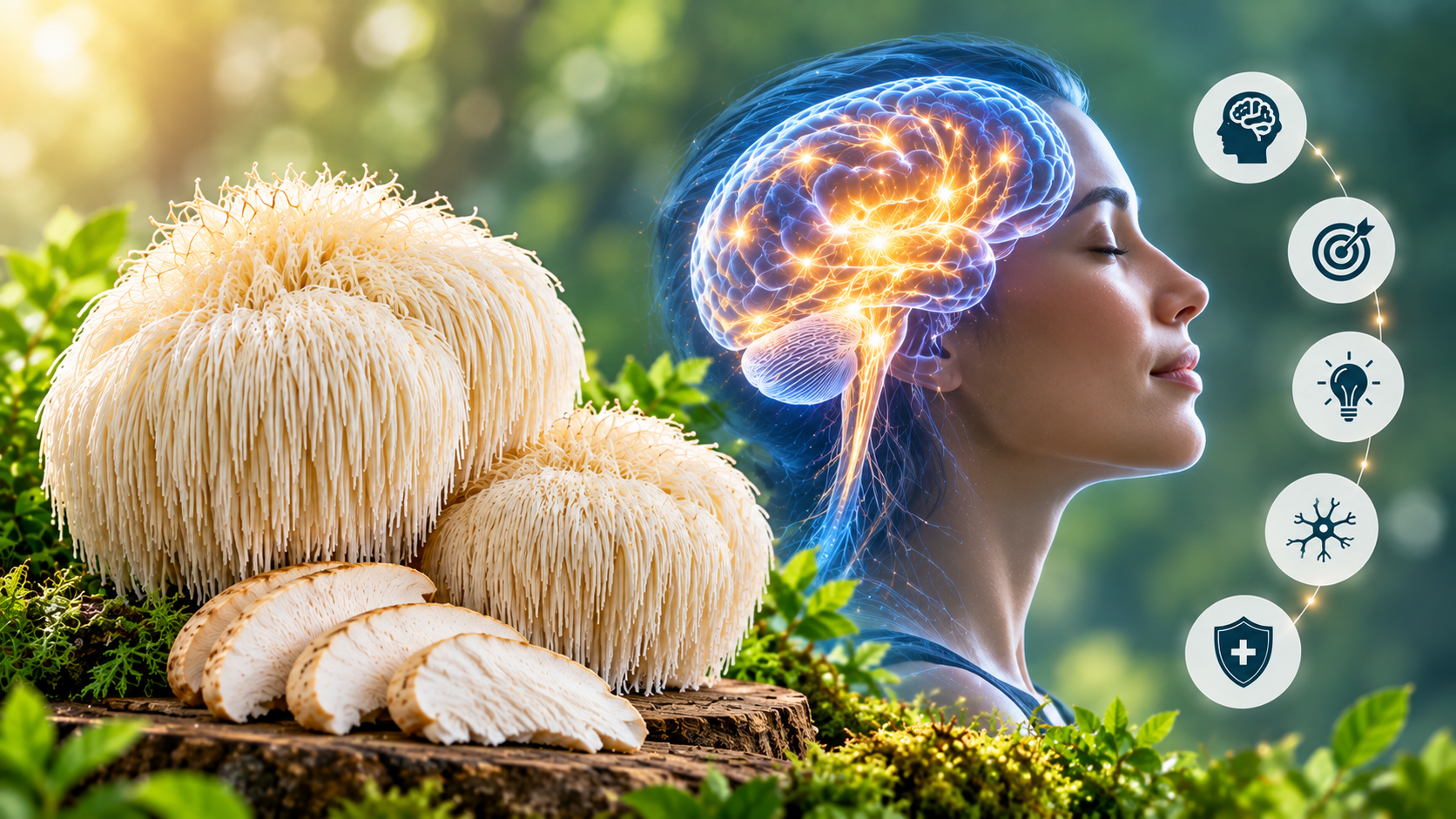
Lion’s Mane is one of the most talked-about mushrooms in the nootropic and healthy-aging world.
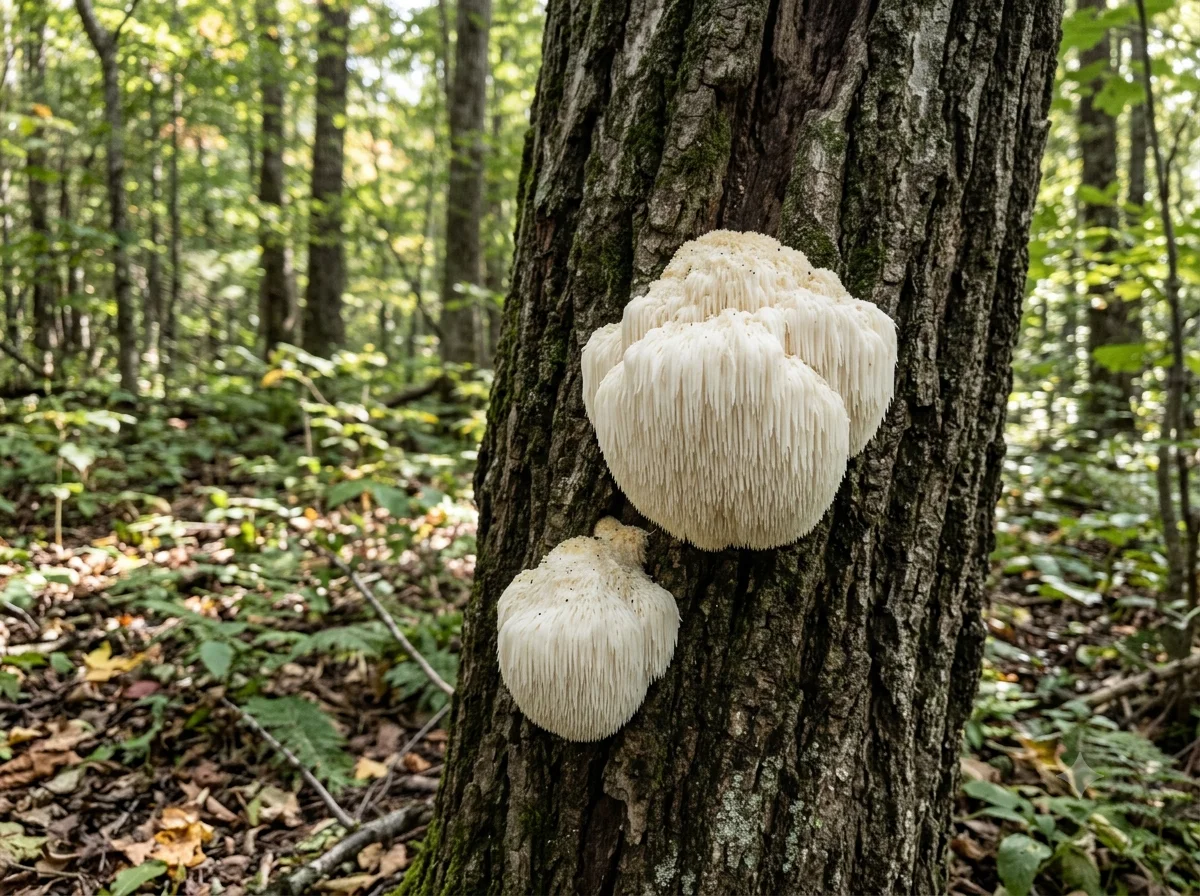
Lion’s Mane naturally grows on hardwood trees, especially older or damaged trees and fallen logs.
It is native to parts of North America, Europe, and Asia, although cultivation has now made it available around the world.
In the wild, it is generally associated with temperate forests.
You can find Hericium species in countries including:
China and Japan have particularly long histories of using Hericium mushrooms as food and traditional medicine. In China, Lion’s Mane is commonly known as Houtougu, or “monkey head mushroom,” while in Japan it is called Yamabushitake.
There is no scientifically established answer that says “Country X produces the best Lion’s Mane.”
This is an important point because supplement companies sometimes imply that geographic origin alone determines quality.
It doesn’t.
A well-grown and properly tested mushroom from the United States may be a better product than a poorly processed mushroom from China, Japan, or anywhere else.
When judging quality, look at the product, not just the country printed on the label.
Look for:
Correct species: The label should clearly identify Hericium erinaceus.
Fruiting body: If you are specifically looking for the mushroom itself, a product made from the fruiting body provides the actual reproductive structure of the mushroom.
Extraction information: Extracts can concentrate certain compounds compared with plain mushroom powder.
Beta-glucan testing: A transparent product should ideally disclose beta-glucan content rather than simply listing a huge mushroom-equivalent number.
No unnecessary grain fillers: Some mycelium products are grown on grain, which can contribute starch and make a label’s mushroom-equivalent weight difficult to interpret.
Third-party testing: Independent testing for identity, potency, heavy metals, pesticides, microbes, and other contaminants adds an important layer of confidence.
So if you are asking which country is “best,” the better answer is:
Choose the best-tested product, not simply the country of origin.
China and Japan have particularly deep cultural and scientific histories with Lion’s Mane, while the United States and Europe have developed a strong modern functional-mushroom supplement industry. Quality can be excellent in several regions.

Lion’s Mane has been known for centuries, so there is no single person who can accurately be called its “discoverer” in the everyday sense.
The mushroom was formally described by French botanist and mycologist Jean Baptiste François Bulliard around 1780, originally under the name Hydnum erinaceus. The species was later placed in the genus Hericium.
Its scientific name today is Hericium erinaceus.
But scientific naming is only part of the story.
The mushroom has a much longer history in East Asia.
Hericium mushrooms have been used as food and traditional medicine in China, Japan, and Korea for a very long time. Historical records describe the mushroom as a valuable food and medicinal material.
In traditional Chinese practice, Lion’s Mane has been associated with digestive health and general vitality. In Japan, its traditional name is Yamabushitake.
For centuries, however, it remained relatively unknown to the average Western consumer.
The modern popularity of Lion’s Mane came from several developments happening at the same time.
First, researchers began studying compounds in the mushroom that appeared to influence nerve growth factor, or NGF.
NGF is an important protein involved in the growth, maintenance, and survival of certain nerve cells.
Researchers identified compounds called hericenones in the fruiting body and erinacines primarily associated with mycelium. Laboratory research suggested that these compounds could stimulate NGF-related pathways.
That created an intriguing connection between an ancient medicinal mushroom and modern neuroscience.
Then came human clinical studies.
A 2009 randomized controlled trial involving 30 older adults with mild cognitive impairment found that the Lion’s Mane group showed significantly better cognitive scores than the placebo group during weeks 8, 12, and 16. Interestingly, scores declined after participants stopped taking the mushroom.
The study was small, but it attracted scientific and public interest.
Over time, Lion’s Mane became part of the growing functional mushroom and nootropic market.
The rise of wellness influencers, mushroom coffee, biohacking, natural cognitive-support products, and social media helped push it further into mainstream attention.
The 2023 publication of a randomized pilot study in healthy young adults added another layer of interest. That study found a faster performance on one cognitive task after a single dose and a trend toward reduced subjective stress after 28 days, although the researchers emphasized that the sample was small and the results needed confirmation.
More recently, a 2025 study in healthy young adults found that a single 3-gram dose of a standardized Lion’s Mane fruiting-body extract did not significantly improve overall cognition or mood, although one specific psychomotor task improved.
That is a good example of why the real Lion’s Mane story is more interesting than the marketing.
Some results are positive.
Some are neutral.
And we still need larger studies.

Lion’s Mane has been studied for several potential benefits, but the strength of evidence varies considerably.
The most interesting human evidence currently involves cognition and mood.
This is probably the main reason people take Lion’s Mane.
The mushroom has been studied for memory, attention, processing speed, and other aspects of cognitive performance.
The 2009 trial in people with mild cognitive impairment found improvements in cognitive scores during supplementation.
A later randomized study also investigated cognitive performance after 12 weeks of consuming a fruiting-body preparation.
However, not every study has produced positive results.
A 2022 study involving healthy adults found that four weeks of Lion’s Mane supplementation did not significantly improve the measured markers of cognition or metabolic flexibility.
This suggests that Lion’s Mane may not work equally well for everyone.
It may also matter whether a person is healthy, older, experiencing mild cognitive impairment, or dealing with another condition.
This is where the NGF research becomes important.
Laboratory studies suggest that compounds associated with Lion’s Mane can influence pathways involving nerve growth factor.
NGF plays a role in the development and maintenance of neurons.
This has led researchers to investigate whether Lion’s Mane could support nerve repair or neuroplasticity.
But there is a major difference between:
“Lion’s Mane compounds can influence NGF-related pathways in laboratory research”
and:
“Lion’s Mane regrows damaged brain cells in humans.”
The first statement is supported by research.
The second is not established.
There is some early evidence that Lion’s Mane may influence mood.
A 2010 randomized trial involving 30 women found that four weeks of Lion’s Mane intake was associated with reductions in depression-related and general complaint scores, with some anxiety-related measures showing favorable trends.
The 2023 young-adult pilot study also observed a trend toward reduced subjective stress after 28 days.
However, these studies were small.
Lion’s Mane should therefore not be considered a replacement for treatment of depression or anxiety.
Lion’s Mane has also attracted attention for its possible effects on the gut microbiome.
In a small pilot study involving 13 healthy adults, daily Lion’s Mane supplementation was associated with increased gut microbiome diversity and changes in several short-chain-fatty-acid-producing bacteria.
This is interesting because the gut and brain communicate through multiple pathways, often referred to as the gut-brain axis.
But a change in the microbiome does not automatically mean better health.
We still need larger human trials to determine whether these microbial changes lead to meaningful improvements in digestion or disease prevention.
Lion’s Mane contains polysaccharides and other compounds that have shown antioxidant activity in laboratory research.
Oxidative stress is involved in aging and many chronic diseases, so researchers are interested in compounds that may help cells manage oxidative damage.
However, antioxidant activity in a test tube does not automatically translate into a measurable health benefit in humans.
This is a recurring theme with Lion’s Mane.
The biology is interesting.
The human evidence is still catching up.
The mushroom contains beta-glucans and other polysaccharides that can interact with immune pathways.
Laboratory and animal studies suggest immunomodulatory effects.
That means Lion’s Mane may influence immune activity rather than simply “boosting” it.
This distinction is important because a healthy immune system needs balance, not constant stimulation.
Human evidence for specific immune benefits remains limited.
Animal and laboratory research has investigated Lion’s Mane for blood glucose, cholesterol, lipid metabolism, and cardiovascular health.
These findings are interesting but are not nearly as well established in humans as the cognitive research.
If you have diabetes, high cholesterol, or cardiovascular disease, Lion’s Mane should not replace medication or evidence-based lifestyle treatment.

Lion’s Mane is generally considered well tolerated in the limited human research available, but “natural” does not mean “risk-free.”
A 2025 systematic review identified potential adverse effects including stomach discomfort, headache, and allergic reactions, although these were not consistently reported across studies.
Some people may experience:
These effects may depend on the dose and the individual’s sensitivity.
Anyone with a mushroom allergy should be cautious.
An allergic reaction can cause symptoms such as itching, rash, swelling, digestive problems, or breathing difficulty.
Anyone experiencing signs of a serious allergic reaction should seek urgent medical care.
This is one of the biggest practical problems.
A bottle may say “10,000 mg Lion’s Mane” while containing a relatively small amount of actual extract plus a mushroom-equivalent calculation.
That number can be misleading if you do not know:
Most Lion’s Mane trials have been relatively small and short.
That means we have considerably more information about short-term use than about taking high-dose extracts every day for many years.
This is perhaps the most important practical downside.
Some studies show improvements.
Others do not.
That means Lion’s Mane should not be treated as a guaranteed cognitive enhancer.

The scientific evidence is promising but not conclusive.
This is probably the most accurate single sentence you can write about Lion’s Mane.
There is some genuine evidence.
The 2009 double-blind placebo-controlled trial in 30 people with mild cognitive impairment found improved cognitive scores during 16 weeks of supplementation.
However, the sample was small.
More recent research has produced mixed results.
A 2023 pilot trial in 41 healthy young adults found faster Stroop performance after a single dose and a trend toward reduced subjective stress after 28 days, but the researchers described the results as preliminary.
A 2025 study involving 18 healthy adults found no significant overall effect on global cognition or mood after an acute dose, although one specific psychomotor test improved.
So the evidence does not support the idea that Lion’s Mane universally makes healthy people smarter.
This area is promising.
The 2009 trial is one of the most frequently cited studies.
There has also been pilot research involving people with mild Alzheimer’s disease using an erinacine-A-enriched mycelial preparation. The study reported some favorable cognitive and functional outcomes, but it was a small pilot trial and should not be treated as proof that Lion’s Mane prevents or treats Alzheimer’s disease.
There is limited but interesting evidence.
The 2010 trial in women found improvements in some depression and general symptom scores after four weeks.
Animal research also suggests possible antidepressant and anxiolytic effects through mechanisms involving hippocampal neurogenesis.
But animal evidence cannot be treated as proof of a clinical effect in humans.
Early evidence exists.
The small 13-person microbiome study found changes in gut bacterial diversity and short-chain-fatty-acid-producing bacteria after supplementation.
But we need much larger studies before claiming that Lion’s Mane improves gut health in a clinically meaningful way.
A 2025 systematic review evaluated five randomized controlled trials, three pilot clinical trials, one cohort study, and numerous laboratory studies.
The authors concluded that Lion’s Mane shows promising effects involving cognition, neurological health, mood, and gut-related pathways, while also noting potential side effects and the need for further research.
The important takeaway is:
Lion’s Mane has enough human evidence to be scientifically interesting, but not enough evidence to support the strongest marketing claims.
It is best described as a promising nootropic mushroom under active research, not a proven treatment for dementia, depression, or neurological disease.
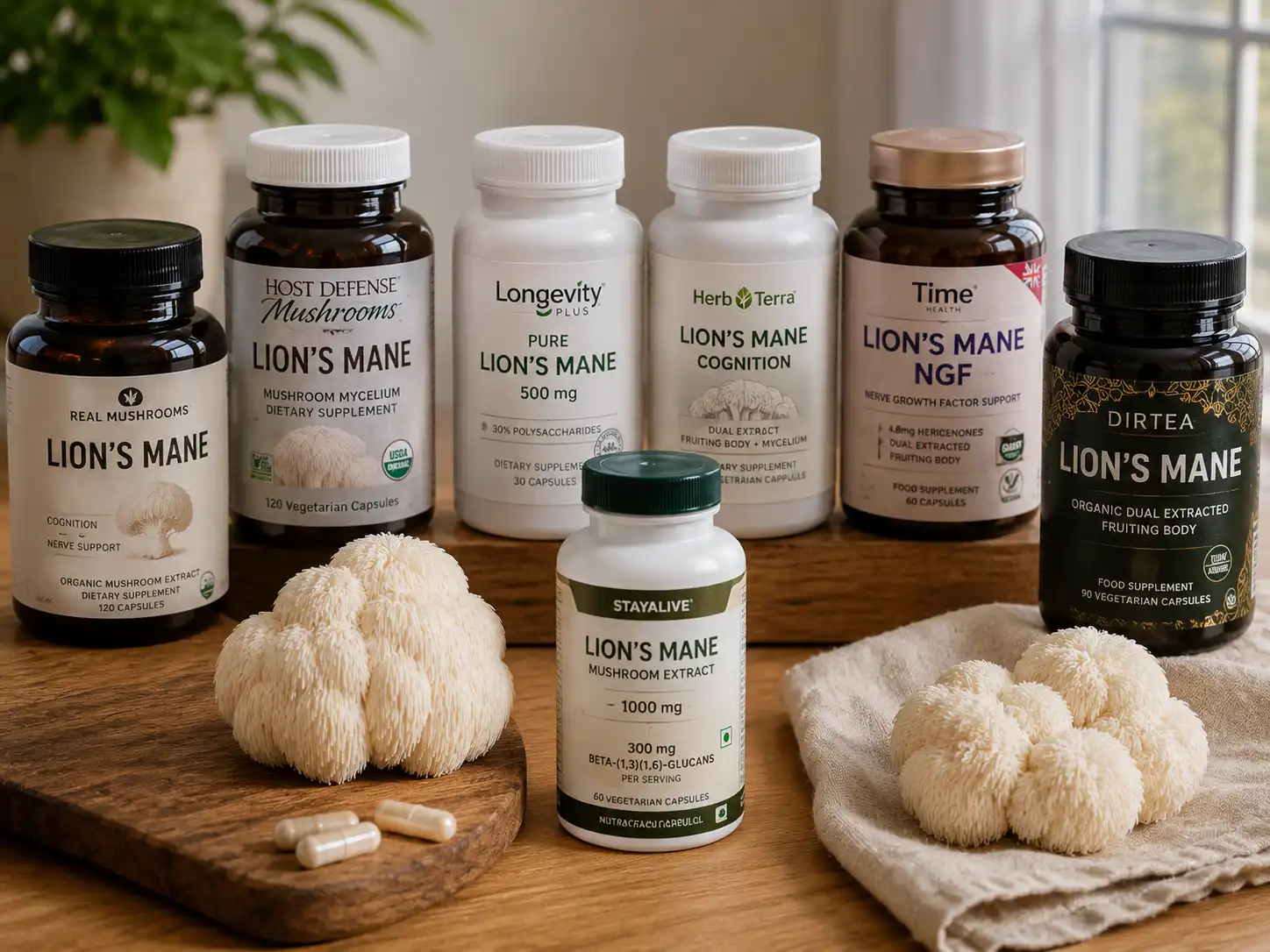
When comparing Lion’s Mane supplements, the most useful quality markers are species identity, fruiting-body content, extraction method, beta-glucan disclosure, absence of unnecessary fillers, and independent testing.
The products below are examples worth considering based on currently available product information. They should not be interpreted as clinically proven to produce the benefits discussed above.
Real Mushrooms Lion’s Mane
A fruiting-body-focused product that emphasizes beta-glucan testing and avoids grain fillers, making transparency a major advantage for quality-conscious buyers.
Host Defense Lion’s Mane Capsules
A well-established U.S. mushroom product using organically cultivated Lion’s Mane mycelium, with USDA organic and other quality credentials disclosed by the manufacturer.
Longevity Plus Pure Lion’s Mane 500 mg
A Singapore-available Lion’s Mane extract providing 500 mg per capsule, with the manufacturer listing 30% polysaccharides and a third-party test report.
Herb Terra Lion’s Mane Cognition
A Singapore-based supplement brand offering a dual-extract Lion’s Mane product combining fruiting body and mycelium, with the product page reporting third-party laboratory testing.
Time Health Lion’s Mane NGF
A UK-made dual-extracted fruiting-body product that discloses 4.8 mg of hericenones and states GMP manufacturing, vegan formulation, and no fillers or binders.
DIRTEA Lion’s Mane
A UK-formulated product using organic dual-extracted fruiting bodies, with the company stating that its products undergo third-party testing.
Stayalive Lion’s Mane Mushroom Extract
An India-available product providing 1,000 mg of Lion’s Mane extract with 300 mg of listed beta-(1,3)(1,6)-glucans per serving.
When comparing these products, do not judge them solely by the number of milligrams on the front label.
A 1,000 mg powder and a 1,000 mg concentrated extract are not necessarily equivalent.
Likewise, “10,000 mg mushroom equivalent” does not mean you are swallowing 10,000 mg of actual concentrated Lion’s Mane.

For healthy adults, daily Lion’s Mane is optional, not necessary.
There is no established Recommended Dietary Allowance for Lion’s Mane, and there is no medical requirement for healthy people to take it.
If someone chooses to use it, daily supplementation is the approach used in several human studies.
The 2009 cognitive trial used repeated daily intake for 16 weeks. The 2023 young-adult pilot study also used daily supplementation for 28 days.
But this does not mean everyone needs to take it forever.
An otherwise healthy adult interested in experimenting with a mushroom-based nootropic may reasonably consider a quality product for a limited period and monitor how they feel.
Someone interested specifically in cognition may want to evaluate:
Keep expectations realistic.
If nothing changes after a reasonable trial period, taking increasingly larger amounts is not necessarily the answer.
Speak with a healthcare professional before using Lion’s Mane if you:
Lion’s Mane should also not be used as a replacement for treatment prescribed for neurological, psychiatric, cardiovascular, or metabolic disease.
Lion’s Mane, scientifically known as Hericium erinaceus, is an edible mushroom with a long history in East Asian food and traditional medicine and a much newer reputation as a modern nootropic.
Its unusual white, shaggy appearance explains its common name, but its chemistry is what has made it scientifically interesting.
Researchers are particularly interested in hericenones, erinacines, beta-glucans, and other polysaccharides and their possible effects on nerve growth factor, cognitive function, inflammation, oxidative stress, immunity, and the gut-brain axis.
The mushroom was formally described by Jean Baptiste François Bulliard around 1780, but its culinary and traditional use in Asia goes back much further.
Its modern popularity has grown because neuroscience research, functional mushroom culture, nootropics, mushroom coffee, wellness trends, and social media have brought it into the mainstream.
The scientific evidence is genuinely interesting.
A small 2009 randomized controlled trial found improved cognitive scores in people with mild cognitive impairment during Lion’s Mane supplementation. Other studies have reported possible benefits involving mood, stress, and certain cognitive tasks.
But the evidence is not uniformly positive.
A recent study in healthy young adults found no significant overall improvement in cognition or mood after an acute dose, although one psychomotor measure improved. Another study found no meaningful cognitive benefit after four weeks.
That is why the best scientific description of Lion’s Mane today is:
Promising, but not proven.
If you want to try it, focus less on flashy claims and more on product quality.
Look for Hericium erinaceus, transparent ingredient amounts, clearly identified fruiting body or mycelium, meaningful beta-glucan information, appropriate extraction details, and independent testing.
There is also no single country that can honestly be declared the producer of the “best” Lion’s Mane. China, Japan, Korea, North America, and Europe all have established histories or industries around this mushroom. The quality of the finished product matters more than the country on the label.
And finally, Lion’s Mane should not be treated as a substitute for sleep, exercise, a good diet, medical treatment, or healthy daily habits.
It may eventually prove to be an important tool for cognitive and neurological health.
For now, it is best viewed as a promising natural nootropic with early human evidence, an interesting biological mechanism, and plenty of unanswered questions.
Not proven in humans. Laboratory and animal research suggests that compounds in Lion’s Mane may influence NGF and neurogenesis-related pathways. But there is no strong human evidence proving that taking Lion’s Mane causes the brain to grow new neurons in a clinically meaningful way.
There is not enough evidence to say that it makes healthy people smarter. Some human studies have reported improvements in specific cognitive tasks, while others have found no significant overall cognitive benefit. The evidence is promising but inconsistent.
It is being studied, but it is not a proven Alzheimer’s treatment. Small clinical trials have produced encouraging findings, but larger and longer studies are needed before Lion’s Mane can be recommended for preventing or treating Alzheimer’s disease.
Many human studies have used daily supplementation for several weeks or months, and Lion’s Mane has generally been well tolerated. However, long-term safety data are still limited. There is no requirement for healthy people to take it daily.
Not automatically, but they contain different compounds and should not be treated as interchangeable. Fruiting bodies contain compounds such as hericenones, while erinacines are especially associated with the mycelial portion. The important thing is that a supplement clearly states what it contains and provides meaningful quality testing.

Explore expert-reviewed articles on brain function, healthy habits, nutrition, age-related cognitive changes, and practical strategies to keep your mind sharp and resilient.