Sleep has become one of Australia’s biggest wellness conversations. From busy professionals struggling to switch off after work to people dealing with stress, changing routines, travel and screen-heavy evenings, the search for better sleep has created a huge market for supplements designed to support relaxation and nighttime routines.
Walk into an Australian pharmacy in 2026 and the sleep-support aisle looks very different from a decade ago. Magnesium powders sit beside herbal capsules, gummies, L-theanine formulas, ashwagandha products and multi-ingredient nighttime blends. Major retailers such as Chemist Warehouse and Priceline carry dozens of products marketed around sleep, relaxation and stress support.
But which sleep supplements are Australians actually buying?
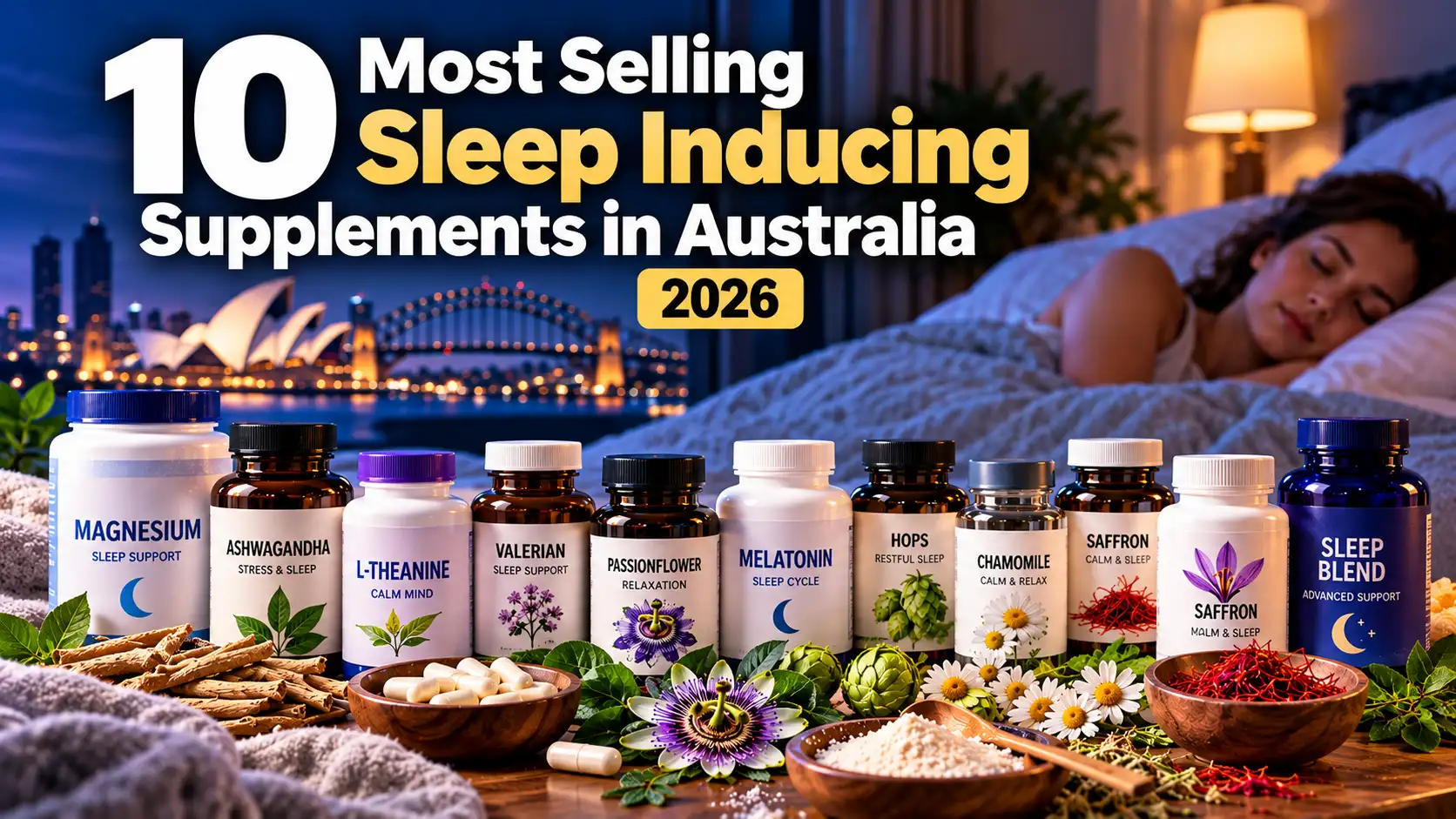
There is an important caveat. Australia does not publish a single public, independently audited ranking showing the exact national sales volume of every sleep supplement. Therefore, this list should not be interpreted as an official sales league table. Instead, it highlights 10 of the most prominent and widely stocked sleep-support ingredients and supplement categories in Australia’s 2026 pharmacy market, based on their presence across major retailers, product ranges, customer-review activity and current market visibility.
There is also a regulatory distinction worth understanding. Not everything sold for sleep is technically a “supplement” in Australia. For example, melatonin is regulated as a therapeutic medicine, with some adult formulations available as pharmacist-only medicines and other formulations requiring a prescription.
With that distinction in mind, here are 10 of the biggest names in Australia’s sleep-support market in 2026.
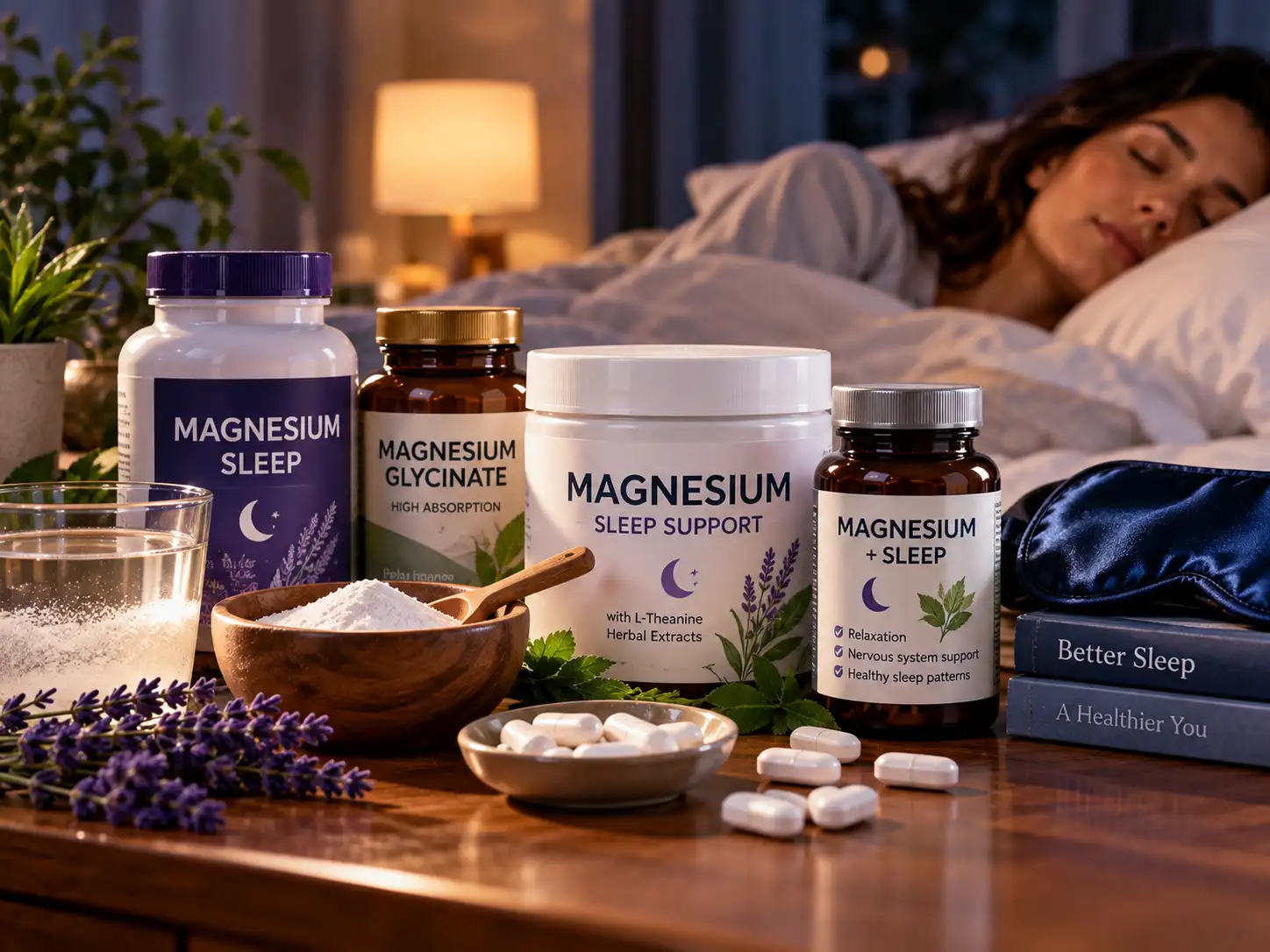
If there is one mineral that dominates Australia’s sleep-supplement shelves, it is magnesium.
Australian pharmacies stock a remarkable number of magnesium products positioned specifically around nighttime relaxation and sleep. Priceline currently lists products including Swisse Ultiboost Magnesium + Sleep, Nutra-Life Magnesium Sleep, Nature’s Way Magnesium + Sleep Well, Nature’s Own Sleep + Magnesium and several magnesium glycinate formulas.
Chemist Warehouse similarly carries magnesium-based sleep products, including Caruso’s Super Magnesium Glycinate + Sleep and Nature’s Own Magnesium + Sleep.
Magnesium is an essential mineral involved in hundreds of biochemical reactions throughout the body. It contributes to normal nervous-system function and muscle function, which helps explain why supplement manufacturers frequently position it as part of an evening relaxation routine.
The form of magnesium also matters. Australian products increasingly use forms such as magnesium glycinate, magnesium citrate and other formulations rather than simply listing “magnesium” on the front of the package.
Some products combine magnesium with herbs or amino acids rather than relying on the mineral alone. Blackmores Sleep Sound Magnesium Powder, for example, combines magnesium with hops and is marketed around relaxation and healthy sleeping patterns.
However, magnesium should not be treated as a universal sleeping pill. Its usefulness may depend on an individual’s nutritional status and the underlying reason for poor sleep. Taking more does not necessarily mean better sleep, and excessive supplemental magnesium can cause gastrointestinal problems.
Why it is popular in Australia: Huge pharmacy presence, multiple formulations, relatively broad consumer familiarity and frequent combination with other nighttime ingredients.
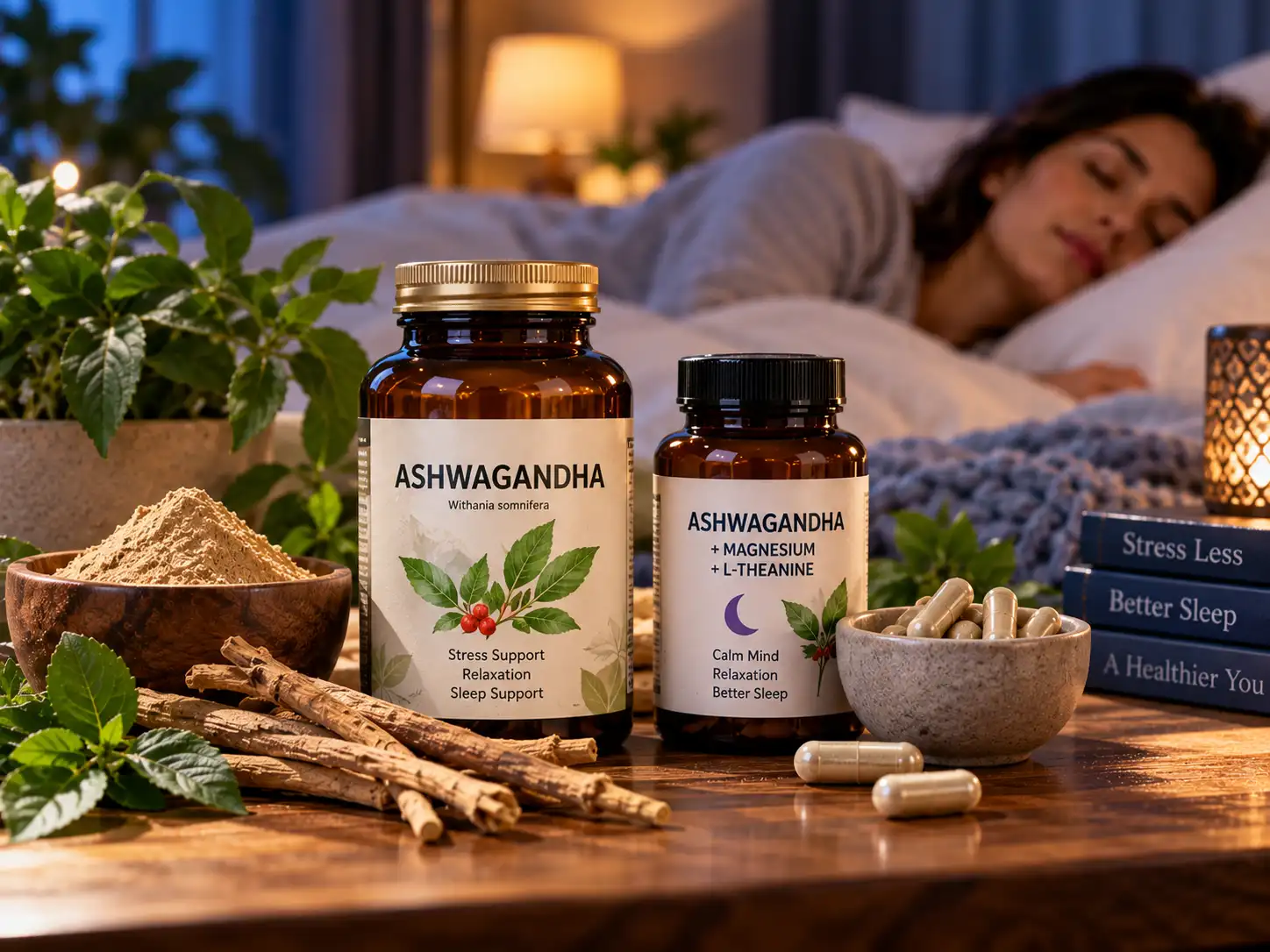
Ashwagandha has moved from a niche Ayurvedic ingredient into mainstream Australian supplement aisles.
In 2026, Priceline lists several ashwagandha products within its sleep and de-stress category, including Blackmores Ashwagandha+, Bioglan Ashwagandha products, Nature’s Own Sleep + Ashwagandha and Caruso’s Natural Health Ashwagandha.
Chemist Warehouse also features multiple ashwagandha products in its sleep, stress and mood category.
Ashwagandha, botanically known as Withania somnifera, has a long history of use in Ayurvedic medicine. Modern supplement companies have increasingly positioned it around stress management, relaxation and nighttime wellness.
That positioning reflects one of the biggest trends in the sleep-supplement market: consumers are not always looking for an ingredient that directly causes drowsiness. Many are looking for something that helps them relax before bed.
Stress can make it difficult to transition from an alert daytime state into sleep. Consequently, products combining ashwagandha with magnesium, L-theanine or traditional herbs have become particularly visible.
For example, Priceline currently lists Nutra-Life Ashwagandha + Magnesium Glycinate & L-Theanine and Bioglan Magnesium + Ashwagandha products.
Consumers should nevertheless remember that “natural” does not automatically mean risk-free. Ashwagandha can interact with medicines and may not be appropriate for everyone, including some people who are pregnant or have particular medical conditions.
Why it is popular in Australia: Strong growth in the adaptogen category and heavy overlap between sleep, stress and relaxation products.
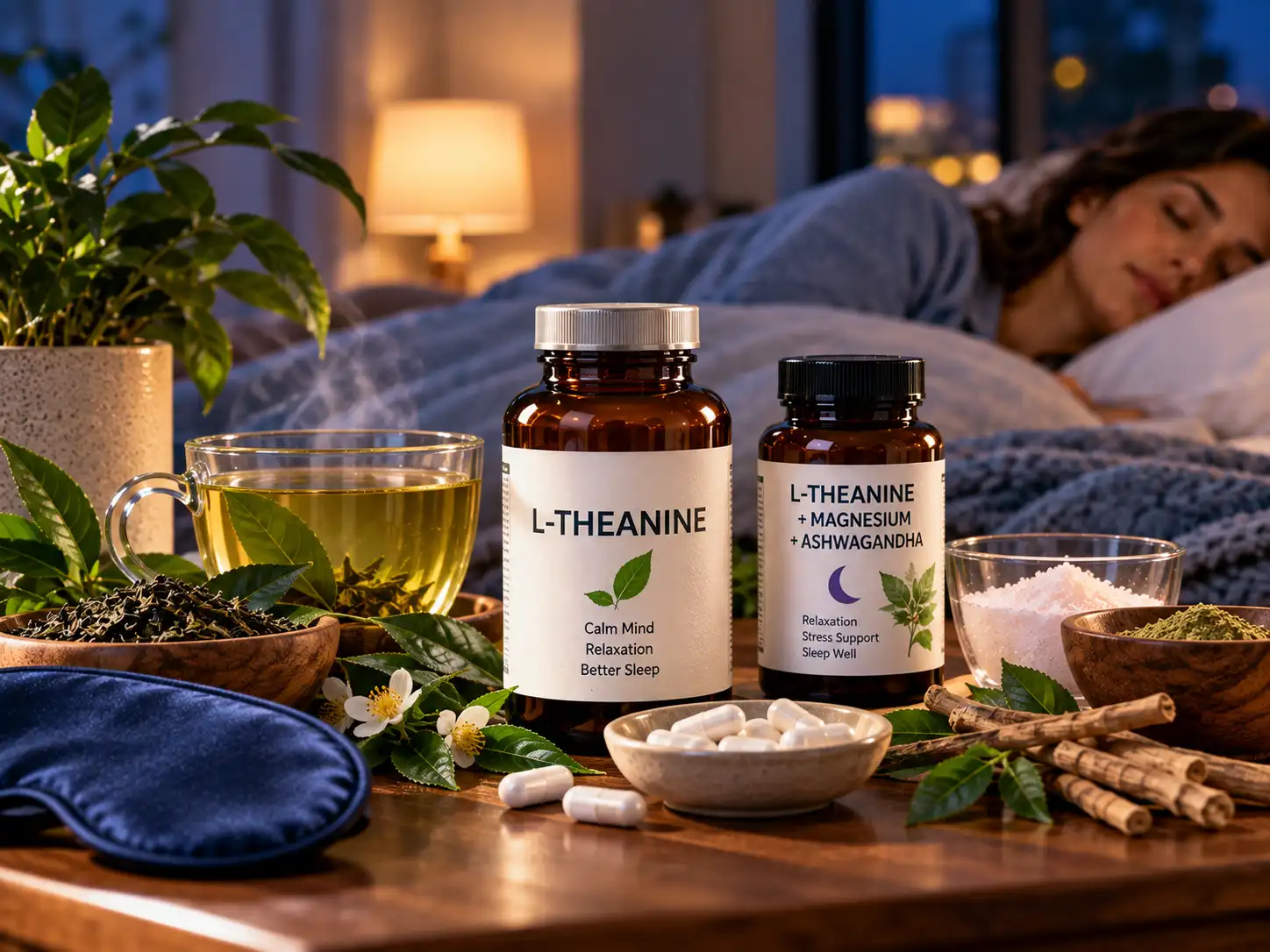
L-theanine has become another major ingredient in Australia’s relaxation and sleep-support market.
This amino acid is naturally associated with tea and is particularly popular in formulas designed to calm the mind without creating the heavy sedative feeling associated with some traditional sleep products.
Australian retailers currently stock multiple L-theanine products. Priceline lists Swisse Ultiboost L-Theanine Calm Mind, Bioglan L-Theanine products, Nutra-Life L-Theanine + Magnesium and Caruso’s Natural Health L-Theanine.
Some Australian products combine L-theanine with magnesium or ashwagandha to target several aspects of the nighttime routine simultaneously.
Bioglan’s L-Theanine PM Calm & Sleep, for example, contains L-theanine, ashwagandha, magnesium glycinate and hops. The product is positioned around relaxation, reducing the time to fall asleep and supporting refreshing sleep.
The popularity of L-theanine reflects a wider change in consumer expectations. Many shoppers do not necessarily want to be “knocked out” at bedtime. Instead, they want a calmer transition into sleep and hope to avoid feeling sluggish the next morning.
That does not mean L-theanine will work equally well for everyone. Evidence for individual sleep ingredients varies, and supplement claims should not be interpreted as guarantees of improved sleep.
Why it is popular in Australia: Strong association with relaxation, growing inclusion in multi-ingredient formulas and consumer interest in non-sedating nighttime support.
Valerian is one of the traditional herbal ingredients that continues to have a strong presence in Australia’s sleep market.
The root of Valeriana officinalis has a long history in herbal medicine, and Australian sleep products frequently combine valerian with other botanical ingredients.
Nature’s Own Sleep-Ezy is a prominent example. Chemist Warehouse lists the product with valerian, hops, passionflower and chamomile. It is marketed for sleeplessness and reducing the time needed to fall asleep.
Another Australian retail product, GO Healthy Restful Sleep, combines valerian with passionflower and hops.
This demonstrates something important about the Australian market: herbal sleep supplements are frequently formulated as blends. Rather than relying on one botanical, manufacturers combine several ingredients traditionally associated with relaxation and sleep.
Valerian is not appropriate for everyone, however. Nature’s Own specifically warns that, in rare cases, valerian may harm the liver and advises users to stop taking the product and seek medical advice if particular symptoms develop.
Consumers should also avoid assuming that taking several different sleep products simultaneously will necessarily produce a stronger or better result.
Why it is popular in Australia: Long history in Western herbal medicine and widespread inclusion in established multi-herb sleep formulations.
Passionflower is another familiar ingredient in Australian sleep and relaxation products.
Passiflora incarnata is traditionally used in Western herbal medicine for nervous tension and sleep-related complaints. Its presence is particularly strong in combination products.
Nature’s Own Sleep-Ezy includes passionflower alongside valerian, hops and chamomile.
Swisse also sells a Calm + Sleep gummy containing passionflower and vitamin B5. Priceline describes the product as a convenient gummy intended to support a healthy stress response and traditionally uses passionflower for calming the nerves and reducing restless sleep.
Passionflower is particularly interesting because it sits at the intersection of sleep and stress management. Many people who struggle to fall asleep do not necessarily have a lack of tiredness; their problem is an active or restless mind.
That has encouraged manufacturers to build products around the idea of “calm first, sleep second.”
Again, traditional-use claims should not be confused with proof that a particular supplement will treat chronic insomnia. Persistent sleep problems deserve proper assessment rather than indefinite self-treatment.
Why it is popular in Australia: Strong presence in herbal sleep blends and growing popularity in convenient gummy formats.
Melatonin deserves a special place on this list—but with an important Australian regulatory warning.
Melatonin is a hormone involved in regulating the body’s sleep-wake cycle. It has become one of the most recognizable sleep-related ingredients globally.
However, calling melatonin an ordinary “sleep supplement” in Australia would be misleading.
The Therapeutic Goods Administration states that melatonin products in Australia are regulated therapeutic goods. Some adult formulations are pharmacist-only medicines, while other formulations are prescription-only. For example, modified-release melatonin products containing 2 mg or less can be available as pharmacist-only medicines for short-term treatment of primary insomnia in adults aged 55 years or older, subject to the applicable conditions. Immediate-release preparations containing 5 mg or less can be pharmacist-only medicines for jet lag in adults aged 18 years and older, also subject to specific pack and use requirements.
Circadin 2 mg is one example of a pharmacist-only melatonin product for adults aged 55 and over with primary insomnia.
Australia’s regulatory position is particularly important because overseas websites sell melatonin products that may not be registered in Australia. The TGA warns that unregistered imported melatonin products may contain doses substantially different from their labels or even contain little or no melatonin.
In 2026, the TGA also approved an extension of indication for Slenyto, a prolonged-release melatonin medicine, for certain children and adolescents with insomnia associated with specified conditions.
Why it is popular: Strong global awareness and direct involvement in the body’s circadian rhythm—but in Australia it must be treated as a regulated medicine rather than an unrestricted dietary supplement.
Hops might be best known for brewing beer, but the same botanical appears in a number of Australian nighttime formulas.
Humulus lupulus is traditionally used in Western herbal medicine and is frequently combined with valerian, passionflower, chamomile and magnesium.
Nature’s Own Sleep-Ezy contains hops alongside valerian, passionflower and chamomile.
Blackmores Sleep Sound Magnesium Powder also includes hops in a magnesium-based formula positioned around relaxation and healthy sleeping patterns.
Hops therefore illustrates the multi-ingredient philosophy that dominates Australia’s sleep-support category. Instead of presenting a single ingredient as a magic solution, many products combine several traditional botanicals with minerals or amino acids.
People should nevertheless pay attention to the total ingredient list when combining supplements. Taking multiple nighttime products can unintentionally duplicate ingredients.
Why it is popular: Longstanding traditional use and frequent inclusion in established Australian herbal sleep formulas.
Chamomile is one of the most familiar bedtime botanicals in the world, and its popularity extends well beyond tea.
In Australia’s supplement market, chamomile is often found as part of combination sleep products rather than as a standalone high-dose sleep capsule.
Nature’s Own Sleep-Ezy, for example, contains chamomile together with valerian, hops and passionflower.
Chamomile’s appeal is partly cultural. A warm cup of chamomile tea has become almost synonymous with a relaxing bedtime ritual. Supplement companies have translated that familiarity into capsules, powders, teas and combination formulas.
It is important, however, to separate the relaxing ritual from clinical treatment. Drinking chamomile tea before bed may be a pleasant part of a nighttime routine, but persistent insomnia can have causes that require medical assessment.
People allergic to plants in the daisy family should also be cautious with chamomile-containing products.
Why it is popular: Familiarity, traditional use and easy integration into evening routines and multi-herb formulas.
Saffron is not the first ingredient most people associate with sleep, but it has become increasingly visible in Australia’s stress and sleep-support supplement market.
Priceline currently lists both Caruso’s Natural Health Saffron and Nature’s Own Saffron+ within its sleep and de-stress category.
Saffron, derived from Crocus sativus, is better known as one of the world’s most expensive culinary spices. In supplements, however, it is increasingly positioned around mood, stress and emotional wellbeing.
That makes saffron particularly relevant to the modern sleep market because sleep products are increasingly being designed around the connection between daytime stress, mood and nighttime rest.
Some combination formulas now pair saffron with magnesium, passionflower, chamomile or ashwagandha.
For example, JSHealth Advanced Sleep+ contains passionflower, ashwagandha and magnesium alongside saffron and chamomile. Priceline describes the product as a multi-action bedtime formula aimed at sleep, relaxation and stress support.
Why it is popular: Rising interest in mood-and-stress supplements and increasing inclusion in sophisticated multi-ingredient sleep formulas.
The final category is arguably the biggest trend of all: products that combine several sleep-support ingredients in one formula.
Rather than buying magnesium, valerian, passionflower and ashwagandha separately, consumers can now find products designed around several ingredients in a single nighttime serving.
Australian pharmacy shelves provide plenty of examples. Priceline’s current range includes products combining magnesium with L-theanine, ashwagandha with magnesium, passionflower with other botanicals, and formulas containing magnesium, ashwagandha, saffron and chamomile.
Bioglan L-Theanine PM Calm & Sleep combines 200 mg of L-theanine with ashwagandha, magnesium glycinate and hops.
Amcal Magnesium Plus Sleep combines magnesium with ashwagandha, passionflower, hops and California poppy.
These formulas reflect a broader consumer trend: sleep is increasingly being treated as a whole-night routine rather than a single symptom.
The advantage is convenience. The disadvantage is that it becomes harder to determine which ingredient is helping—or causing an unwanted reaction—when several are taken together.
Why it is popular: Convenience, broad ingredient coverage and strong retail presence across Australia’s pharmacy sector.
The growth of sleep supplements is not difficult to understand. Sleep affects almost every aspect of daily life, including concentration, mood, energy and physical performance.
At the same time, modern lifestyles can make healthy sleep more difficult. Late-night screen use, irregular work schedules, travel, stress and caffeine consumption can all interfere with a consistent bedtime routine.
Australian pharmacy retailers have responded with a broad range of products designed around different approaches to nighttime wellness.
Some focus on minerals such as magnesium. Others emphasize traditional herbal medicine. Newer products increasingly combine amino acids, adaptogens, minerals and botanical extracts.
The result is a market where shoppers can choose from tablets, capsules, powders, gummies, liquids and pharmacist-only medicines.
This is where marketing language needs to be separated from scientific evidence.
Not every supplement marketed for sleep has the same level of evidence. Some ingredients have clinical research suggesting potential benefits in particular populations, while others are supported primarily by traditional use or smaller studies.
Even when an ingredient has evidence behind it, that does not mean every commercial product containing it will produce the same effect.
Formulation, dose, extract standardisation, product quality, individual health status and the cause of poor sleep can all influence the outcome.
Australian consumers should also understand the distinction between TGA-listed medicines and registered medicines. The TGA explains that listed medicines carry an AUST L number and contain lower-risk ingredients and indications. Individual listed products are not evaluated by the TGA for efficacy before being supplied in the same way as registered medicines; sponsors are responsible for meeting applicable requirements and holding evidence supporting their indications.
That does not mean listed medicines are unregulated. It means consumers should understand what the regulatory category actually tells them.
Before purchasing a sleep supplement in Australia, look beyond the front of the package.
Look at the complete active-ingredient list rather than choosing a product solely because it says “sleep” in large letters.
Look for the appropriate Australian registration or listing information. The TGA explains that listed medicines carry an AUST L number.
Taking a magnesium sleep product, herbal sleep capsule and separate calming gummy at the same time could result in overlapping ingredients.
Do not assume that an overseas melatonin gummy sold online is equivalent to a product legally supplied in Australia. The TGA has specifically warned consumers about unregistered melatonin products purchased from overseas websites.
If the problem is caused by shift work, anxiety, chronic pain, sleep apnoea, medication, excessive caffeine or another medical condition, a supplement may not address the underlying issue.
Occasional difficulty sleeping is common. Persistent insomnia is different.
If poor sleep continues for weeks, repeatedly affects daytime functioning or is accompanied by loud snoring, breathing pauses during sleep, significant daytime sleepiness, persistent anxiety, depression or other concerning symptoms, it is worth discussing the problem with a healthcare professional.
Sleep supplements should not become a substitute for investigating an underlying sleep disorder.
This is particularly important for children and teenagers. The TGA specifically warns against giving children melatonin products purchased from overseas websites and states that children with sleep problems should be assessed by a doctor.
There is no scientifically responsible single answer for everyone.
The most appropriate product depends on the reason for poor sleep, age, existing medicines, medical conditions, diet and individual response.
Magnesium may appeal to someone looking for a mineral-based nighttime product. L-theanine is common in relaxation-focused formulas. Ashwagandha is prominent in stress-oriented products. Valerian, passionflower, hops and chamomile remain important traditional herbal ingredients. Melatonin has a more specific role but is subject to considerably stronger Australian regulation.
For many people, the biggest improvement may come not from adding another supplement but from improving the basics: a consistent sleep schedule, appropriate light exposure, exercise, limiting late caffeine, reducing stimulating activities before bed and creating a bedroom environment that supports sleep.
Australia’s sleep-supplement market in 2026 is no longer dominated by a single ingredient or one type of product.
Magnesium, ashwagandha, L-theanine, valerian, passionflower, melatonin, hops, chamomile, saffron and multi-ingredient sleep formulas are all prominent parts of the current retail landscape.
The biggest trend may be the move away from the idea of a single “sleeping pill” toward products that attempt to support several aspects of nighttime wellness: relaxation, stress management, nervous-system function and sleep quality.
But popularity should not be confused with proof. A product being widely stocked or heavily marketed does not guarantee that it will work for every person.
For Australian consumers, regulation is equally important. Melatonin is a particularly clear example: the TGA permits certain products under specific pharmacist-only or prescription conditions, while warning about unregistered products purchased from overseas websites.
The smartest approach is therefore to look at the ingredient, evidence, dose, regulatory status and reason for poor sleep rather than simply choosing the product with the biggest “deep sleep” claim on its packaging.
Sleep is ultimately a biological process, not just a supplement category. The right supplement may support a healthy routine for some people, but it should sit alongside—not replace—good sleep habits and appropriate medical care when sleep problems persist.
Magnesium, ashwagandha, L-theanine, valerian, passionflower, hops, chamomile and multi-ingredient sleep formulas are among the most visible categories in major Australian pharmacy retailers. Melatonin is also widely recognized for sleep, although it is regulated as a therapeutic medicine rather than an unrestricted dietary supplement.
Magnesium is widely used in Australian nighttime formulas and is commonly positioned around muscle relaxation and nervous-system support. However, individual results vary and magnesium should not be regarded as a guaranteed treatment for insomnia.
Not in the simple sense of an unrestricted dietary supplement. The TGA regulates melatonin as a therapeutic medicine. Certain adult formulations can be pharmacist-only medicines under specific conditions, while other products require a prescription.
Some melatonin products can be supplied by a pharmacist without a prescription when they meet specific Australian regulatory requirements. For example, certain formulations are available for adults aged 55 and over with primary insomnia, while immediate-release products can be supplied for jet lag in adults under specified conditions.
Ashwagandha is widely used in Australian products aimed at stress, relaxation and sleep support. It is frequently combined with magnesium and L-theanine. However, its suitability depends on the individual, and people taking medicines or with certain health conditions should seek professional advice before using it.
“Natural” does not automatically mean risk-free. Herbal ingredients can have side effects and interact with medicines. Valerian-containing products, for example, carry warnings about rare liver-related problems.
It is better not to combine multiple sleep products without checking their ingredient lists and discussing them with a pharmacist or healthcare professional. Several products may contain the same ingredients, increasing total exposure without necessarily improving sleep.
Editorial note: Product availability, prices and formulations can change during 2026. This article is intended for general health information and does not replace advice from an Australian doctor or pharmacist. Always read the product label and follow the directions for use.
Australia’s sleep-supplement market in 2026 is no longer dominated by a single ingredient or one type of product.
Magnesium, ashwagandha, L-theanine, valerian, passionflower, melatonin, hops, chamomile, saffron and multi-ingredient sleep formulas are all prominent parts of the current retail landscape.
The biggest trend may be the move away from the idea of a single “sleeping pill” toward products that attempt to support several aspects of nighttime wellness: relaxation, stress management, nervous-system function and sleep quality.
But popularity should not be confused with proof. A product being widely stocked or heavily marketed does not guarantee that it will work for every person.
For Australian consumers, regulation is equally important. Melatonin is a particularly clear example: the TGA permits certain products under specific pharmacist-only or prescription conditions, while warning about unregistered products purchased from overseas websites.
The smartest approach is therefore to look at the ingredient, evidence, dose, regulatory status and reason for poor sleep rather than simply choosing the product with the biggest “deep sleep” claim on its packaging.
Sleep is ultimately a biological process, not just a supplement category. The right supplement may support a healthy routine for some people, but it should sit alongside—not replace—good sleep habits and appropriate medical care when sleep problems persist.
Magnesium, ashwagandha, L-theanine, valerian, passionflower, hops, chamomile and multi-ingredient sleep formulas are among the most visible categories in major Australian pharmacy retailers. Melatonin is also widely recognized for sleep, although it is regulated as a therapeutic medicine rather than an unrestricted dietary supplement.
Magnesium is widely used in Australian nighttime formulas and is commonly positioned around muscle relaxation and nervous-system support. However, individual results vary and magnesium should not be regarded as a guaranteed treatment for insomnia.
Not in the simple sense of an unrestricted dietary supplement. The TGA regulates melatonin as a therapeutic medicine. Certain adult formulations can be pharmacist-only medicines under specific conditions, while other products require a prescription.
Some melatonin products can be supplied by a pharmacist without a prescription when they meet specific Australian regulatory requirements. For example, certain formulations are available for adults aged 55 and over with primary insomnia, while immediate-release products can be supplied for jet lag in adults under specified conditions.
Ashwagandha is widely used in Australian products aimed at stress, relaxation and sleep support. It is frequently combined with magnesium and L-theanine. However, its suitability depends on the individual, and people taking medicines or with certain health conditions should seek professional advice before using it.
“Natural” does not automatically mean risk-free. Herbal ingredients can have side effects and interact with medicines. Valerian-containing products, for example, carry warnings about rare liver-related problems.