Ashwagandha is one of the most popular herbal nootropics and adaptogens in the world today. It is especially popular among people looking for natural support for stress, sleep, mental performance, recovery, energy, and overall well-being.

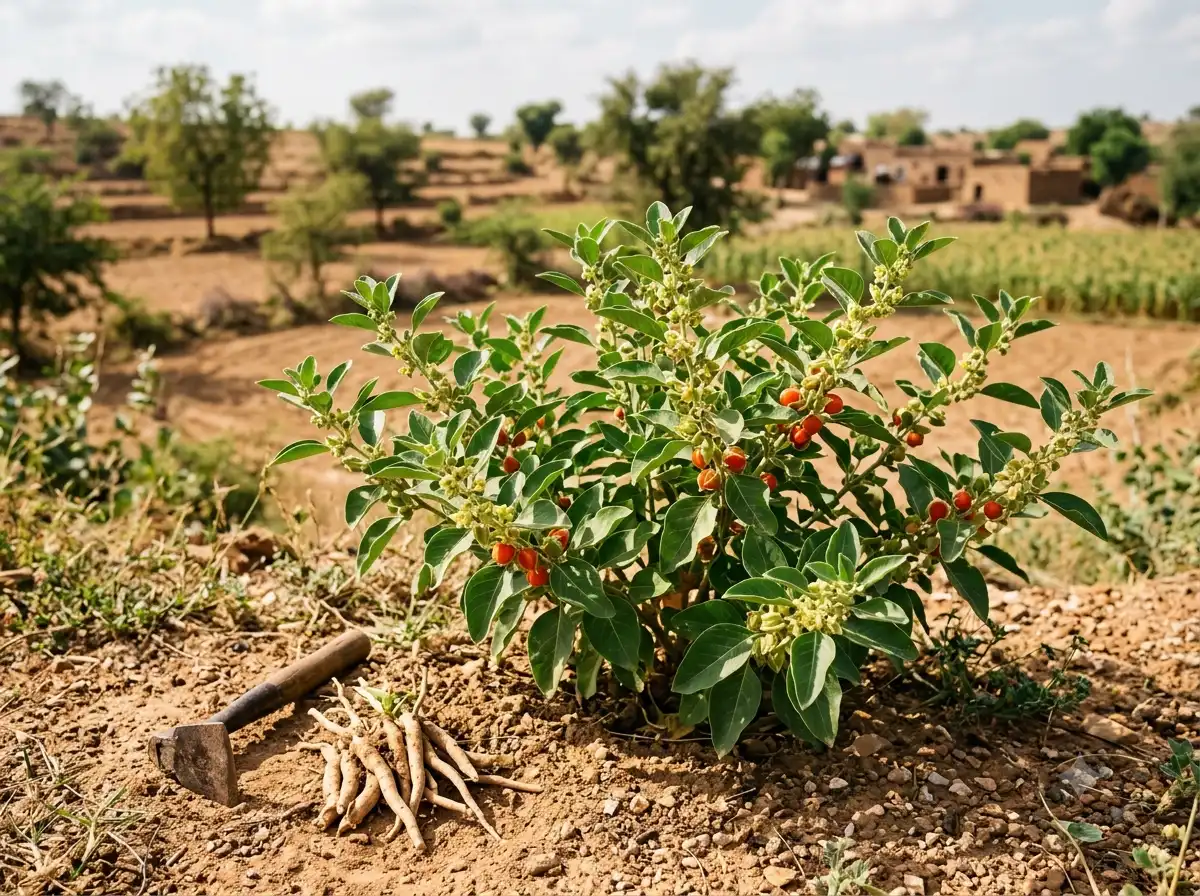
Ashwagandha is an evergreen shrub that grows naturally in dry and subtropical regions of India, Africa, and the Middle East. It is particularly well established in India, where it has been cultivated and used medicinally for centuries.
In India, commercial cultivation occurs in several states, including Madhya Pradesh, Rajasthan, Gujarat, Punjab, and Uttar Pradesh.
The plant produces small yellow-green flowers and red berries, but the root is the part most commonly used in modern supplements.
Leaves are also used in some products.
That difference matters.
India has the strongest historical connection to Ashwagandha and remains one of the most important growing regions.
But it would be misleading to say that every Indian Ashwagandha product is automatically better.
The quality of a finished supplement depends on several factors:
This is particularly important because root and leaf extracts are chemically different. NCCIH notes that the chemical composition of Ashwagandha root and leaf differs, and many commercial products use root extracts while some contain both root and leaf.
A good Ashwagandha label should tell you more than simply “600 mg Ashwagandha.”
Look for:
Scientific name: Withania somnifera
Plant part: Ideally clearly identified as root, leaf, or root plus leaf.
Standardization: The product should disclose its withanolide content where possible.
Extraction details: This helps you understand what the milligram number actually represents.
Testing: Look for third-party testing or a certificate of analysis when available.
Heavy-metal testing: Particularly important for botanical products.
Clear dosage: Avoid products hiding the amount inside proprietary blends.
So, if you are asking which country has the best Ashwagandha, the most accurate answer is:
India has the strongest traditional and agricultural connection, but product quality depends more on cultivation, extraction, standardization, and testing than on country of origin alone.

Ashwagandha does not have a single modern “discoverer.”
It has been used in traditional Indian medicine for more than 3,000 years, according to historical and scientific reviews of the plant. Ancient Ayurvedic texts including the Charaka Samhita and Sushruta Samhita describe Ashwagandha and its traditional applications.
In Ayurveda, the root was traditionally used as part of preparations associated with strength, vitality, reproductive health, and resilience.
It was considered a Rasayana, a category of traditional preparations associated with rejuvenation and maintaining health.
The scientific name Withania somnifera came much later.
The species belongs to the genus Withania, and its botanical classification allowed researchers to study the plant using modern pharmacology and chemistry.
Ashwagandha’s modern popularity came from the combination of traditional use and growing scientific interest.
Researchers began isolating and studying its bioactive compounds, particularly withanolides.
Laboratory research suggested that these compounds could affect pathways involved in inflammation, oxidative stress, nervous-system signaling, and stress responses.
Human clinical trials then started examining whether these traditional claims could be measured objectively.
Stress became one of the most important areas of research.
As modern lifestyles became increasingly associated with chronic psychological stress, poor sleep, and mental fatigue, Ashwagandha became increasingly attractive as a natural “adaptogen.”
The supplement industry then expanded the marketing into testosterone, muscle growth, fertility, cognition, and longevity.
Some of these areas have promising evidence.
Others remain preliminary.

Ashwagandha has been investigated for many different purposes, but the evidence is not equally strong for all of them.
The strongest current human evidence is around stress and sleep, with emerging research involving cognition, exercise performance, and hormones.
Stress is probably the best-supported reason to consider Ashwagandha.
A 2024 systematic review and meta-analysis included nine randomized controlled trials involving 558 participants.
Compared with placebo, Ashwagandha supplementation significantly reduced scores on the Perceived Stress Scale, Hamilton Anxiety Scale, and measures of serum cortisol.
This is important because cortisol is one of the hormones involved in the body’s response to stress.
However, lower cortisol is not automatically better.
Cortisol is a normal and necessary hormone.
The goal is not to eliminate it.
The potential benefit of Ashwagandha appears to be more about helping regulate the body’s response to stress rather than simply “blocking cortisol.”
Sleep is another area where the research is reasonably encouraging.
A systematic review and meta-analysis of five randomized controlled trials involving 400 participants found a small but significant overall improvement in sleep.
The effects were more noticeable in people with insomnia, participants taking at least 600 mg per day, and people who used Ashwagandha for eight weeks or longer.
This suggests that Ashwagandha may be particularly useful when poor sleep is connected with stress.
But it is important not to confuse Ashwagandha with melatonin.
Melatonin primarily interacts with the body’s circadian rhythm.
Ashwagandha appears to work through different pathways, potentially including stress regulation.
Ashwagandha is frequently marketed as an anxiety supplement.
There is some evidence supporting this, but the scientific picture is not completely settled.
The 2024 meta-analysis of nine randomized controlled trials found improvements in anxiety measures compared with placebo.
However, NCCIH currently describes the evidence for anxiety as unclear because studies have used different preparations, doses, and populations.
That is a useful reminder that a positive meta-analysis does not automatically mean every Ashwagandha product will work for every person.
This is a newer and more interesting area of research.
A 2025 randomized, double-blind, placebo-controlled trial studied a standardized Ashwagandha preparation called Somin-On in adults with mild cognitive impairment.
The researchers reported improvements in immediate memory, general memory, working memory, visuospatial processing, attention, and information-processing measures compared with placebo after 30 and 60 days.
Even more recently, a 2026 meta-analysis of 20 randomized trials involving 1,249 participants reported significant improvements in memory, attention and processing speed, executive function, and some visuospatial measures.
This is encouraging.
But it is still too early to describe Ashwagandha as a proven treatment for dementia or Alzheimer’s disease.
The cognitive evidence is growing, but researchers need more large, independent trials using standardized preparations.
Athletes and fitness enthusiasts often use Ashwagandha for strength, endurance, recovery, and muscle performance.
Recent evidence is becoming more interesting.
A 2026 systematic review and three-level meta-analysis included 13 randomized trials involving 599 participants.
The analysis found an average improvement in exercise performance, although the prediction interval crossed zero, meaning the results were not consistently positive across all possible settings.
A separate 2026 meta-analysis involving 20 randomized trials found an improvement in muscle strength, particularly among physically active individuals.
So Ashwagandha may have a role in exercise performance.
But it should not be confused with a steroid or direct muscle-building drug.
The potential effect is likely modest and works best alongside proper training, nutrition, and recovery.
This is one of the most heavily marketed Ashwagandha claims.
There is some evidence behind it, but it needs context.
A 2026 systematic review and meta-analysis of 23 randomized controlled trials involving 1,706 participants found that Ashwagandha reduced cortisol and increased testosterone in men, while the effect was not significant in women.
The same review found no effect on TSH or T3, although T4 increased modestly.
NCCIH also notes that limited evidence suggests Ashwagandha taken for two to four months may increase testosterone levels and sperm quality.
This does not mean Ashwagandha is a testosterone replacement therapy.
It also does not mean someone with clinically low testosterone should use Ashwagandha instead of seeing a doctor.
Ashwagandha has also been investigated for sperm quality and male fertility.
Some studies have reported improvements in sperm concentration, motility, and reproductive hormone measures.
However, NCCIH describes the evidence as limited rather than definitive.
Anyone dealing with infertility should have both partners properly evaluated rather than relying on a supplement alone.
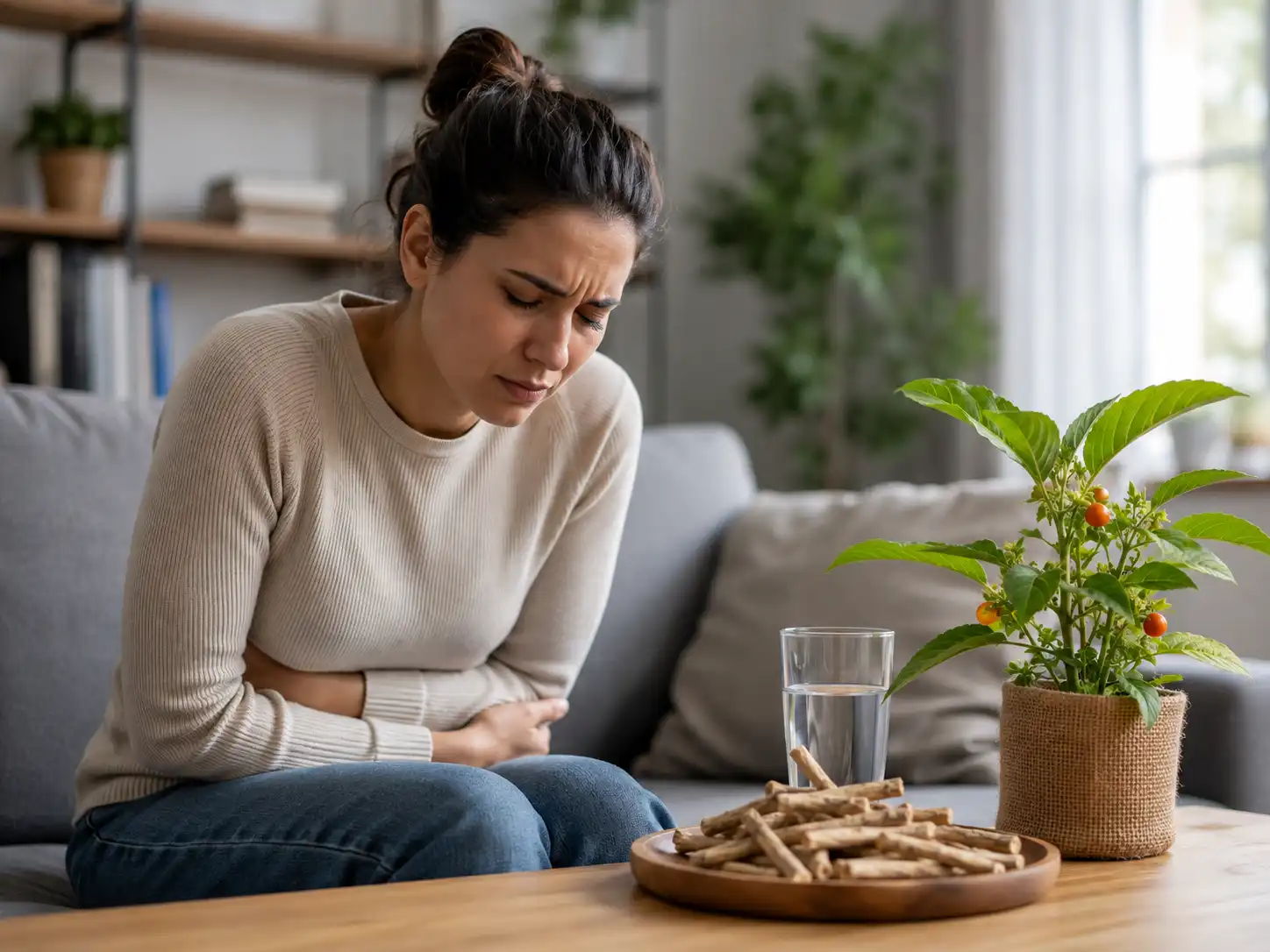
Ashwagandha is often marketed as completely natural and therefore completely safe.
That is not accurate.
NCCIH states that Ashwagandha may be safe in the short term, generally up to about three months, but there is not enough information to establish its long-term safety.
Some people may experience:
These effects are generally mild when they occur, but they can be unpleasant.
Ashwagandha may cause drowsiness in some people.
This is worth remembering if you are taking it during the day or combining it with other sedating substances.
This is one of the most important safety issues.
Although uncommon, there have been documented cases linking Ashwagandha supplements with liver injury. NCCIH specifically warns about this rare adverse effect.
If someone develops symptoms such as unusual yellowing of the skin or eyes, dark urine, severe fatigue, or persistent abdominal symptoms after starting an Ashwagandha product, they should stop the supplement and seek medical evaluation.
Ashwagandha can influence thyroid-related hormone levels.
Because of this, NCCIH recommends avoiding it in people with thyroid disorders unless specifically advised by a healthcare professional.
Ashwagandha may affect immune activity.
People with autoimmune diseases should therefore be cautious and discuss its use with their healthcare provider.
Ashwagandha may interact with medications for:
NCCIH specifically lists these potential interactions.
Ashwagandha should be avoided during pregnancy and breastfeeding according to NCCIH.
It is also not recommended immediately before surgery.

Ashwagandha is one of the more extensively researched traditional herbs, but the quality of evidence differs greatly depending on what benefit you are looking for.
The 2024 meta-analysis of nine randomized trials involving 558 participants found significant improvements in perceived stress, anxiety scores, and cortisol.
This is currently one of the better-supported uses.
Five randomized controlled trials involving 400 people found a small but significant improvement in sleep, with stronger effects in participants with insomnia and those taking at least 600 mg/day for eight weeks or more.
The newest evidence is particularly interesting.
A 2026 meta-analysis of 20 randomized trials involving 1,249 participants reported improvements in memory, attention, processing speed, and executive function.
However, this is still a relatively young area of research compared with conventional cognitive treatments.
A 2026 meta-analysis found an average improvement in exercise performance across 13 trials, but the prediction interval crossed zero, suggesting that individual study results were not uniformly positive.
The 2026 hormone meta-analysis found lower cortisol and increased testosterone in men, but not women.
This is interesting for men interested in reproductive or exercise health, but it should not be interpreted as evidence that Ashwagandha can treat testosterone deficiency.
The NIH’s NCCIH takes a more cautious position.
It says some Ashwagandha preparations may help with stress and insomnia, while evidence is unclear for anxiety and insufficient for several other conditions including athletic performance, cognitive function, diabetes, menopause, and female infertility.
That may seem more conservative than some newer meta-analyses.
The reason is simple: different products and extracts can produce different results, and many trials are small.
The most scientifically responsible conclusion is that Ashwagandha is promising, particularly for stress and sleep, but it is not a universally proven treatment for every condition it is marketed for.

Ashwagandha is commonly studied as a daily supplement, rather than something taken only once in a while.
Clinical studies have used daily doses for several weeks to a few months.
However, daily use does not mean lifelong use is proven safe.
NCCIH specifically states that short-term use of up to three months may be safe, while there is insufficient information about long-term safety.
There is no single dose that applies to every Ashwagandha extract.
Many clinical studies have used approximately 300 to 600 mg per day of a standardized extract, but the actual amount of withanolides and the type of extract matter.
For example, 600 mg of a 5% withanolide root extract is not chemically identical to 600 mg of a different extract standardized to 10%.
This is why comparing products based only on milligrams can be misleading.
There is no universally established best time.
Some people take it with breakfast.
Others take it in the evening because they find it relaxing.
If it causes drowsiness, evening use may make more sense.
Taking it with food may also improve tolerance for people who experience stomach discomfort.
There is no strong clinical evidence establishing an ideal “cycling” schedule.
Instead of following arbitrary internet protocols, it is more sensible to follow the product’s instructions and periodically reassess whether you still need it.
If you have been taking it continuously for months, especially at higher doses, discussing continued use with a healthcare professional is reasonable because long-term safety data are limited.
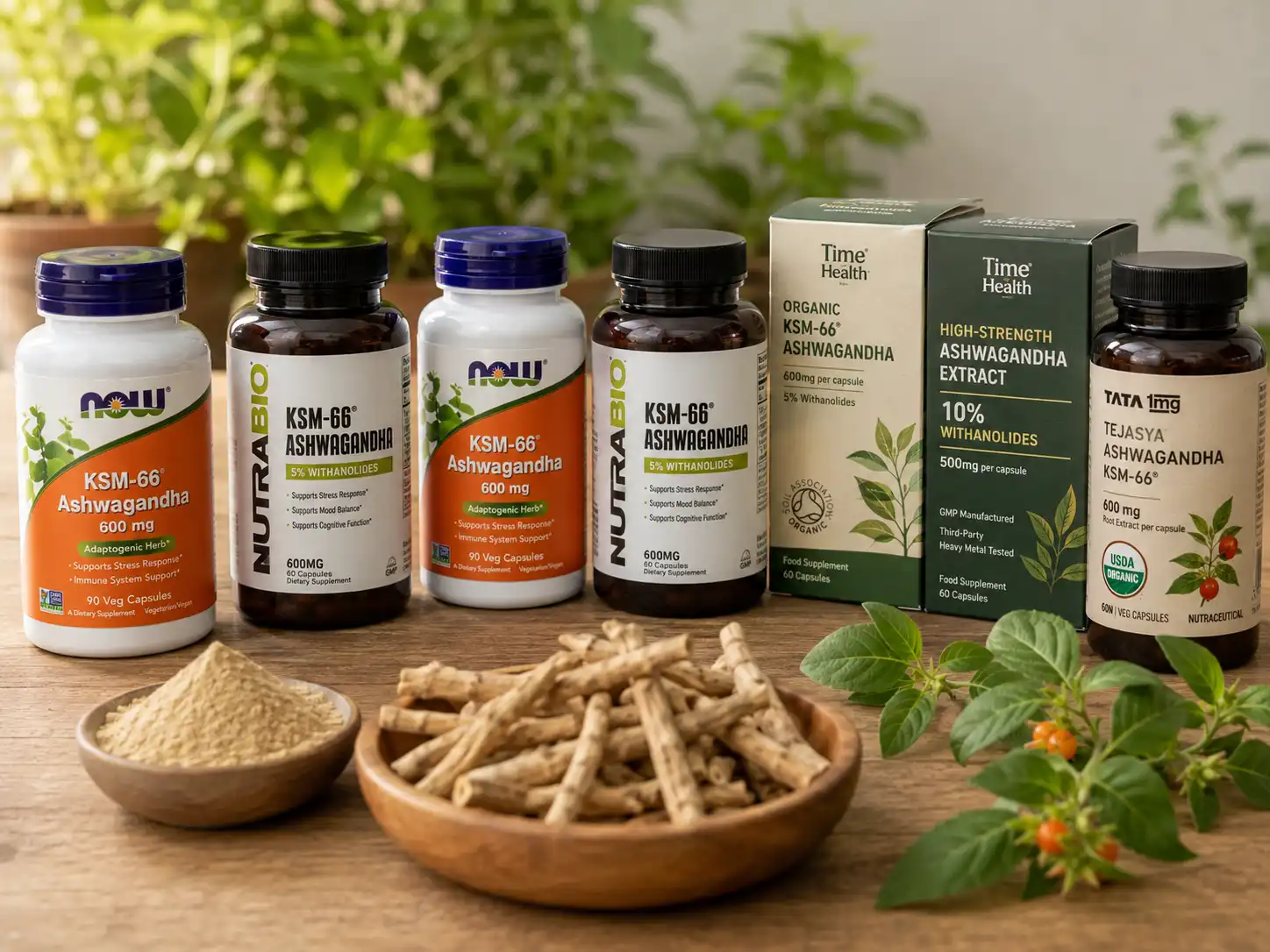
For Ashwagandha, I would prioritize root-only products, standardized extracts, clear withanolide information, reputable manufacturers, and independent testing.
The products below are examples worth considering based on currently available product information. They are not ranked as medically “best,” and formulations can change.
1. NOW Foods KSM-66 Ashwagandha 600 mg
A straightforward KSM-66 root-extract product providing 600 mg per capsule, with the product currently listed for U.S.-market distribution and also available internationally.
2. NutraBio KSM-66 Ashwagandha
A 600 mg KSM-66 root-extract product standardized to 5% withanolides, with detailed ingredient and manufacturing information.
3. NOW Foods KSM-66 Ashwagandha 600 mg
Currently listed through the Singapore iHerb marketplace, providing a standardized KSM-66 root extract in vegetarian capsules.
4. NutraBio KSM-66 Ashwagandha
Available through the Singapore iHerb marketplace, with the 600 mg KSM-66 root extract standardized to 5% withanolides.
5. Time Health Organic KSM-66 Ashwagandha
A UK-made product using organic KSM-66 root extract, with 600 mg per capsule and a stated 5% withanolide standardization.
6. Time Health High-Strength Ashwagandha 10% Withanolides
A UK-made product providing 500 mg Ashwagandha extract per capsule standardized to 10% withanolides, with the manufacturer reporting GMP manufacturing and third-party heavy-metal analysis.
7. Tata 1mg Tejasya Ashwagandha KSM-66
An India-market product providing 600 mg of KSM-66 root extract per capsule, with the product listed as USDA Organic and non-GMO on Tata 1mg’s product page.
One important warning applies to all of these products:
Do not assume that 600 mg of one Ashwagandha product is equivalent to 600 mg of another.
The extract ratio, root versus leaf, withanolide percentage, and manufacturing process can be very different.
For someone trying to reproduce the dose used in a clinical study, matching the specific extract and standardization is more meaningful than simply matching the number of milligrams.
Citicoline, also known as CDP-choline, is a naturally occurring compound involved in the production of phospholipids and other molecules essential for healthy cell membranes.
It is particularly interesting to brain researchers because Citicoline can provide choline and cytidine-related metabolites, which are involved in the synthesis of phosphatidylcholine and other neuronal components.
That gives Citicoline a strong biological rationale for its use as a cognitive-support supplement.
The human evidence is also more substantial than it is for many newer nootropics.
Clinical trials have reported improvements in certain measures of memory, attention, and cognitive performance, particularly among older adults and people with some forms of cognitive impairment. (pubmed.ncbi.nlm.nih.gov)
One randomized trial involving healthy adults aged 50 to 85 found improvements in episodic memory after 12 weeks of Citicoline supplementation. (pubmed.ncbi.nlm.nih.gov)
Another trial found improvements in attention after 28 days of supplementation. (pubmed.ncbi.nlm.nih.gov)
However, the evidence becomes much less straightforward when Citicoline is promoted as a treatment for neurological disease.
The large ICTUS trial, which included more than 2,000 patients with acute ischemic stroke, failed to demonstrate a significant improvement in major neurological outcomes. (pubmed.ncbi.nlm.nih.gov)
This is a useful reminder that a scientifically plausible mechanism does not guarantee a clinically meaningful benefit.
For healthy adults, Citicoline is best viewed as a potential cognitive-support supplement, not a magic brain enhancer.
A commonly studied range is approximately 250 to 500 mg per day, although some clinical trials have used higher doses.
If you want to try it, a simple standalone product with transparent dosing is easier to evaluate than a proprietary nootropic blend.
Branded ingredients such as Cognizin may also offer an advantage in terms of traceability and published research, although the presence of a branded ingredient does not guarantee that every person will experience a noticeable benefit.
Citicoline generally appears well tolerated, but headaches, digestive discomfort, and occasional restlessness can occur.
The long-term safety picture is reasonably reassuring but still less complete than for essential nutrients that have been studied for decades in large populations. (pubmed.ncbi.nlm.nih.gov)
The most accurate conclusion is:
Citicoline is a scientifically plausible and reasonably well-researched nootropic that may support memory and attention, particularly in certain populations, but it is not proven to make healthy people significantly smarter or prevent neurological disease.
For someone interested in cognitive health, it can be an interesting addition to a broader strategy that includes good sleep, regular exercise, adequate nutrition, learning, social activity, and management of cardiovascular risk factors.
The supplement may help.
But the foundation still matters more.
It may modestly increase testosterone in some men, but it is not a testosterone replacement treatment. A 2026 meta-analysis found increased testosterone in men but not women, while NCCIH describes the evidence as limited.
Research suggests it may reduce cortisol in some people experiencing stress. A 2024 meta-analysis found lower cortisol alongside improvements in perceived stress compared with placebo.
It can make some people drowsy, although not everyone experiences this effect. This is one reason some people prefer taking it later in the day.
Daily use has been studied for several weeks and months, but long-term safety has not been established. NCCIH says it may be safe in the short term, up to about three months, while more information is needed about longer use.
No. It should be avoided during pregnancy and breastfeeding and used cautiously or avoided in people with thyroid or autoimmune disorders. It can also interact with medications and has been linked, rarely, to liver injury.

Explore expert-reviewed articles on brain function, healthy habits, nutrition, age-related cognitive changes, and practical strategies to keep your mind sharp and resilient.