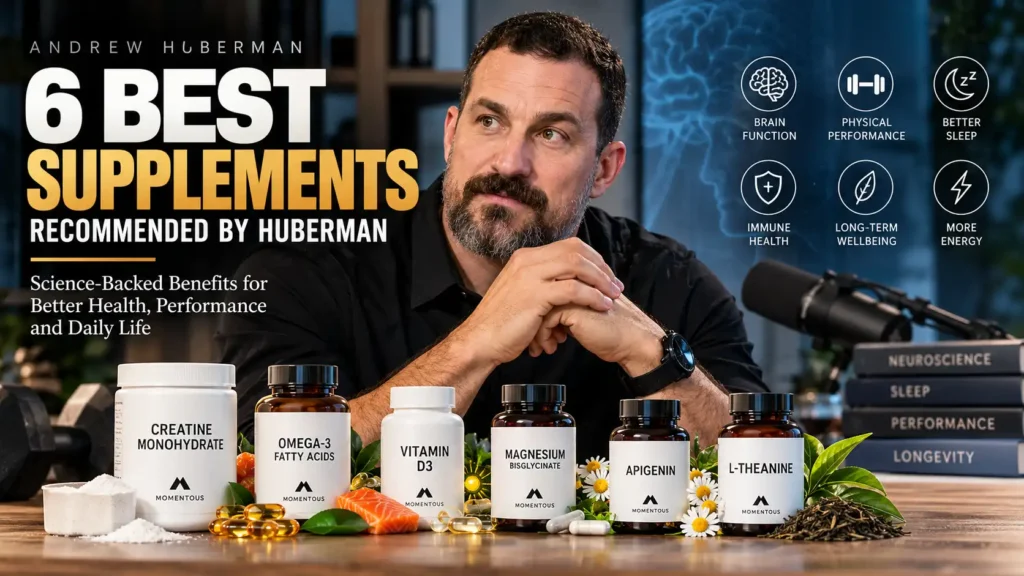
Joe Rogan has spent decades building a reputation around two things that might seem unrelated: asking questions and staying physically active.
The comedian, podcast host and longtime UFC commentator has turned his interest in martial arts, training, nutrition and human performance into a recurring theme of The Joe Rogan Experience. His supplement routine has consequently become almost as famous as his workouts. From Athletic Greens—now known as AG1—to Onnit’s Alpha BRAIN and Shroom Tech Sport, Rogan has openly discussed a wide range of products over the years.
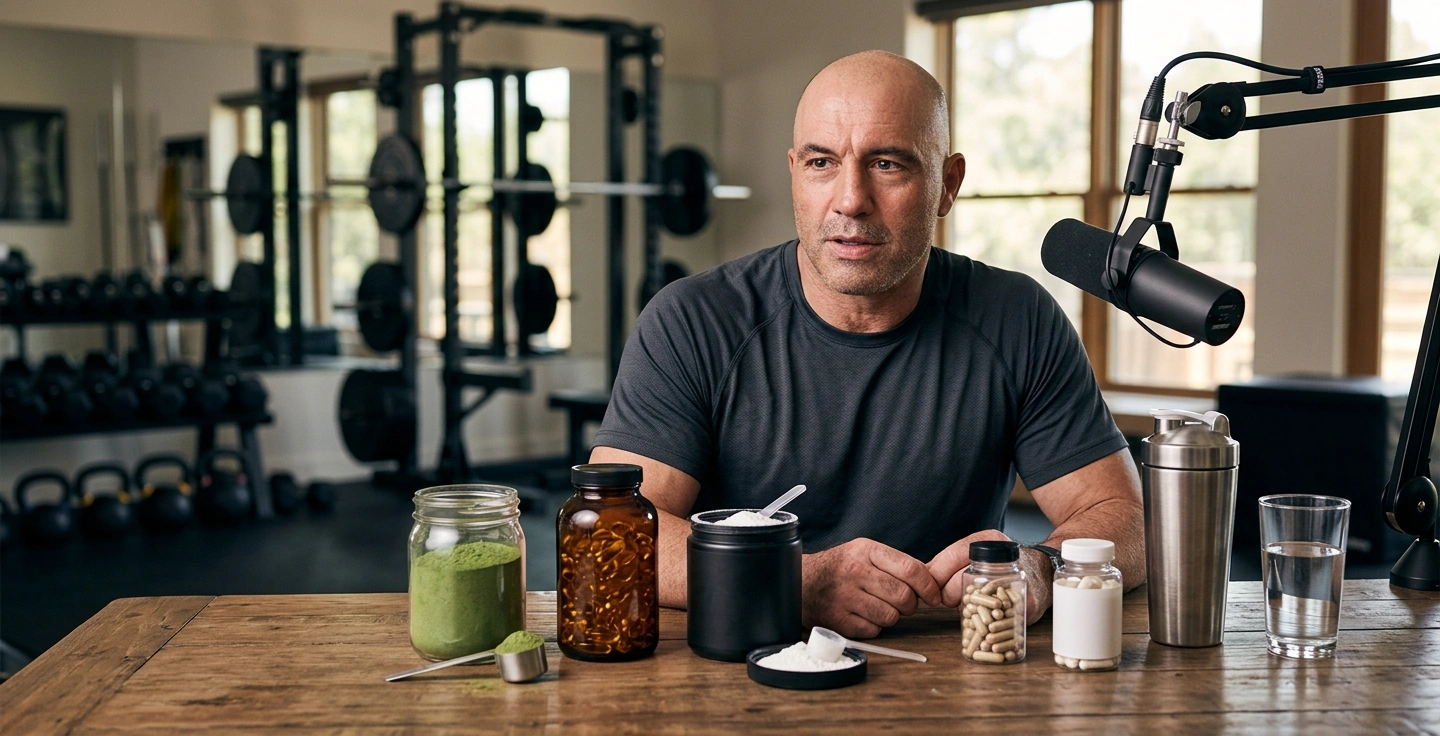
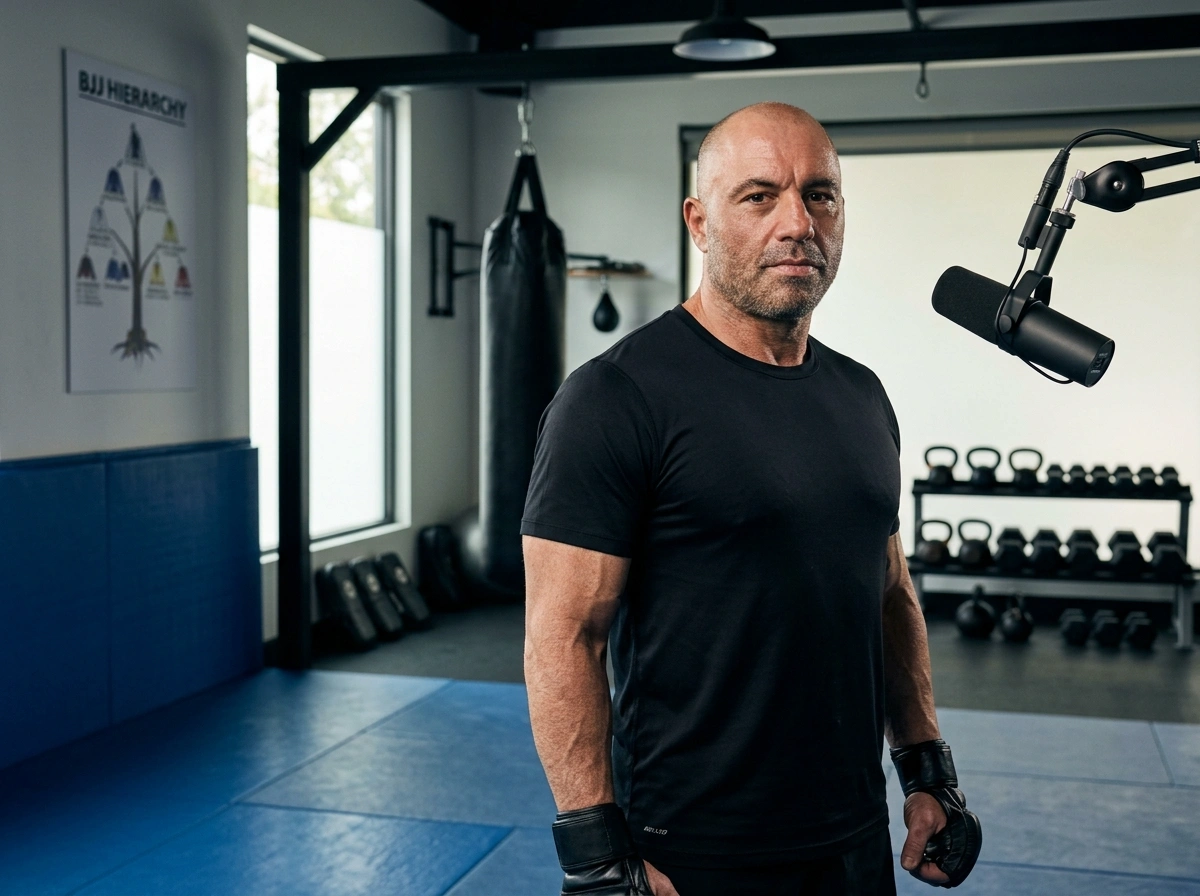
Joe Rogan is far more than a podcast host.
Born in 1967, Rogan began performing stand-up comedy in the late 1980s and later became known to mainstream television audiences through NewsRadio and Fear Factor. Since 2002, he has also worked as a UFC color commentator.
His biggest media achievement, however, has been The Joe Rogan Experience. Launched in 2009, the long-form podcast developed into one of the world’s most influential interview shows, attracting guests from comedy, science, sports, medicine, business and entertainment.
His interest in physical performance predates all of that.
Rogan began practicing martial arts as a teenager. His official biography says he started training at around 13, earned a black belt within a few years and became a four-time Massachusetts full-contact Tae Kwon Do champion. At 19, he won the U.S. Open Tae Kwon Do Championship and subsequently moved toward kickboxing.
He eventually stopped competing as a young man, partly because of recurring headaches and concerns about the physical consequences of fighting. But martial arts never disappeared from his life. He later trained in Brazilian jiu-jitsu and ultimately earned black belts in different BJJ systems.
That history matters when looking at his supplement choices.
Rogan isn’t approaching supplements primarily as a casual wellness consumer. His public routine has generally revolved around training, recovery, endurance, cognitive performance and maintaining a high level of daily activity.
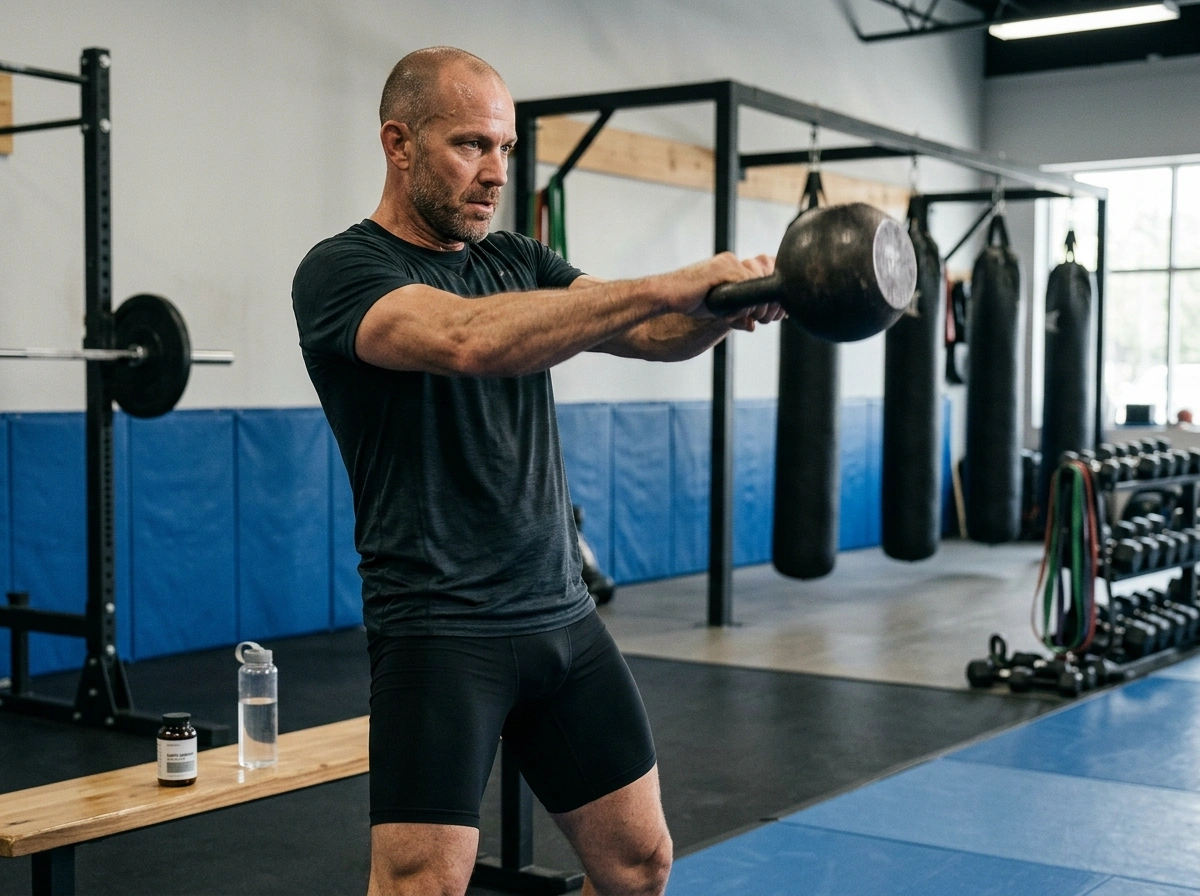
There isn’t a straightforward “Joe Rogan fitness comeback” story in the way there is with some celebrities who lose substantial weight and then return to exercise.
Rogan’s relationship with fitness has been relatively continuous.
After leaving competitive fighting in his early twenties, he continued to train and later returned more deeply to martial arts, including Brazilian jiu-jitsu. In adulthood, his routine has incorporated weight training, kettlebells, martial arts, conditioning and other forms of physical training.
In a 2023 conversation with Dwayne Johnson, Rogan described how seriously he approached martial arts when he was younger, recalling a period in which training and competition dominated his life.
That makes his supplement philosophy easier to understand. His approach has generally been less about finding one miracle pill and more about assembling different tools around an already demanding lifestyle.
And that distinction is important.
Supplements cannot substitute for training, adequate protein, a balanced diet, sleep or appropriate medical care. At their best, they fill a specific nutritional or performance role. At their worst, they simply add expense and complexity to an already crowded routine.
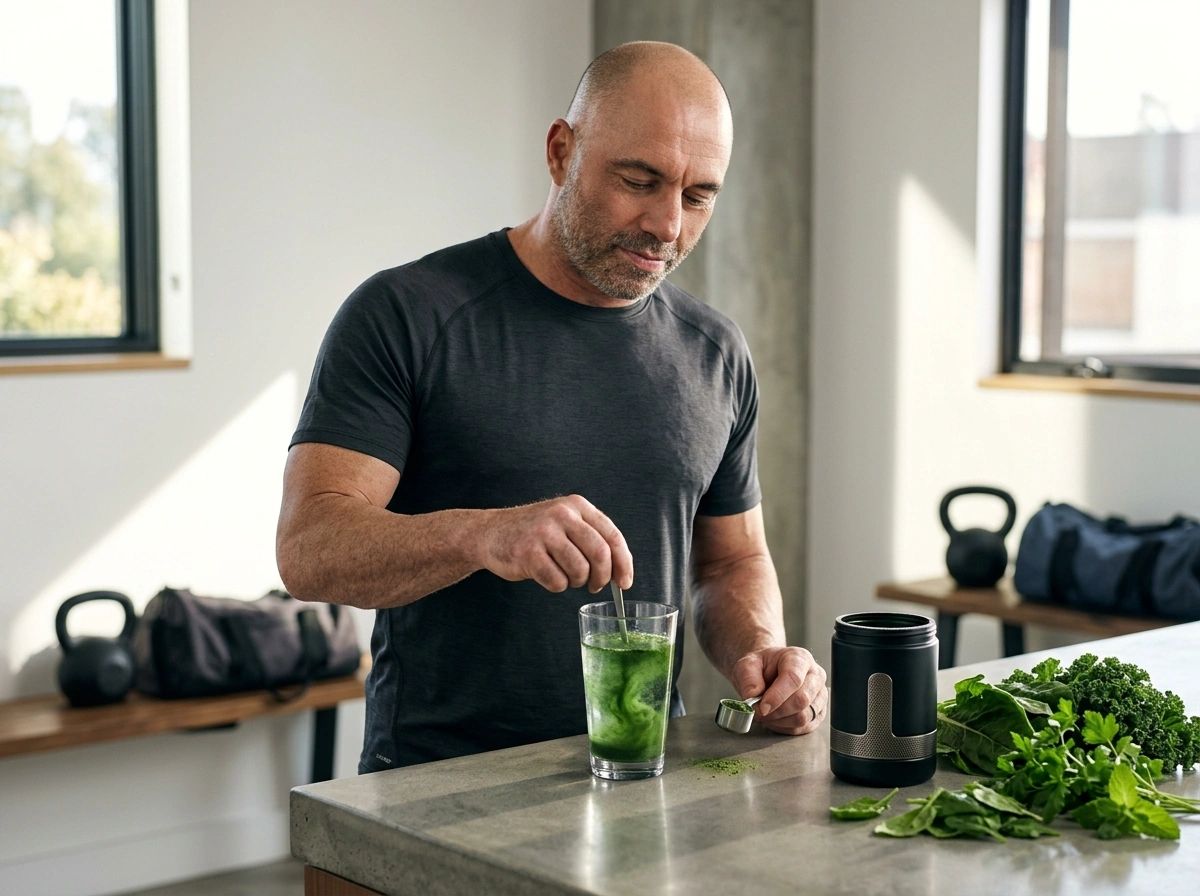
One of the most recognizable products associated with Joe Rogan is AG1, formerly called Athletic Greens.
Rogan has spoken publicly about drinking Athletic Greens for years. In an episode of The Joe Rogan Experience, he described Athletic Greens as something he used regularly and explained that he liked the convenience of mixing it into water.
AG1 itself also identifies Rogan as a long-time user and promotes his description of the product as part of his morning routine.
AG1 is produced by the company behind the AG1 brand, which began in 2010 under the Athletic Greens name before adopting the AG1 name in 2021.
The company describes AG1 as a daily nutritional drink containing vitamins, minerals, probiotics and whole-food-derived ingredients. Its current formulation contains more than 75 ingredients, according to the manufacturer, and the company says the product is NSF Certified for Sport.
AG1 is essentially designed around convenience: instead of taking several individual products, consumers mix one serving into water.
AG1’s attraction is not that it contains one magical ingredient.
Its appeal is the combination.
The formulation contains vitamins and minerals alongside plant-based ingredients, probiotics and other compounds. The company positions it as a nutritional foundation rather than a stimulant or traditional pre-workout.
For someone who frequently travels, works long hours or struggles to maintain a consistent diet, the convenience can be meaningful.
That does not mean AG1 can replace vegetables, fruit, protein-rich foods or a balanced diet.
A powdered drink cannot reproduce the complete nutritional complexity of a varied diet.
The biggest potential benefit is simplicity.
Someone who regularly skips breakfast or travels frequently may find it easier to mix one scoop into water than remember several different supplements.
That is likely part of why products like AG1 have become so popular among athletes, executives, podcasters and other people with demanding schedules.
However, the price is also worth considering. Fortune has reported on AG1’s premium price and the scientific debate surrounding the benefits of greens powders.
In other words, AG1 may be convenient, but convenience should not be confused with necessity.
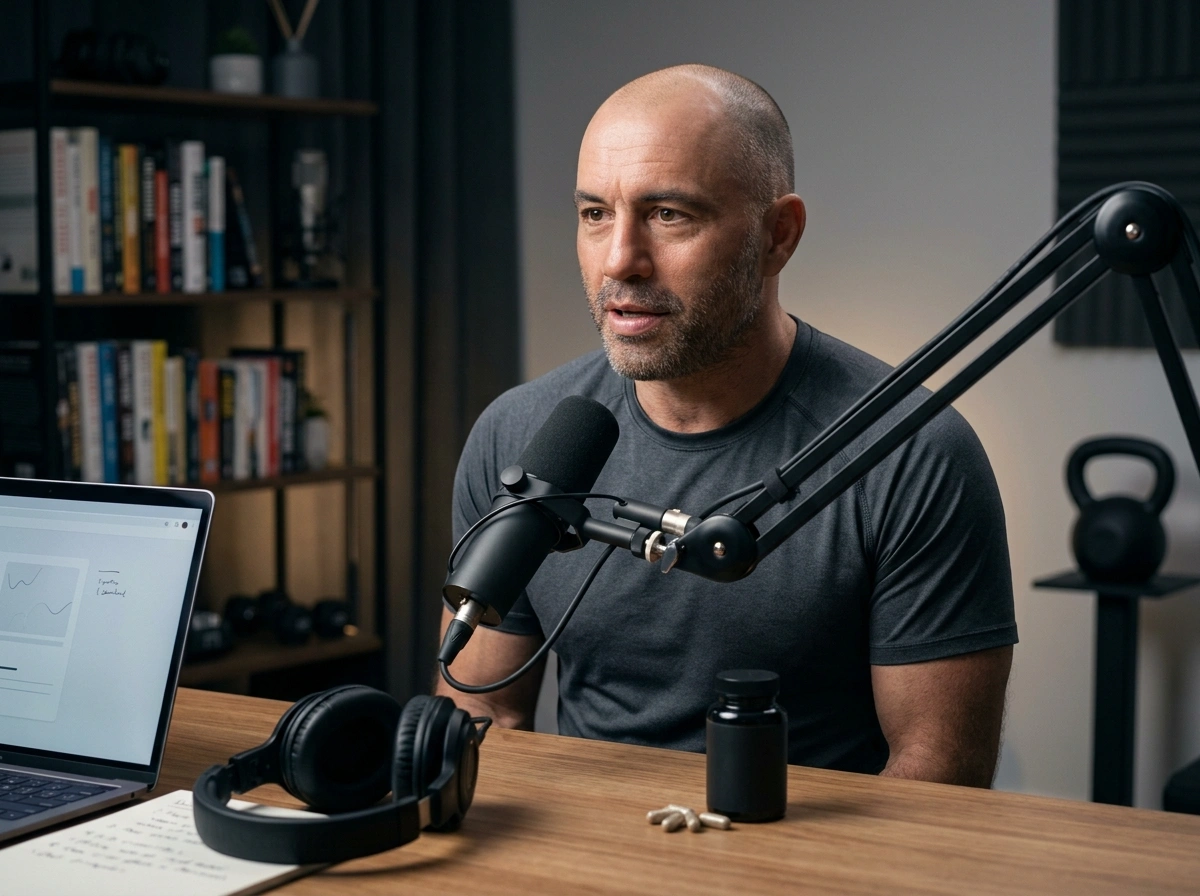
If one supplement is most closely associated with Joe Rogan, it is probably Alpha BRAIN.
Alpha BRAIN is a nootropic supplement developed by Onnit, the performance and wellness company that Rogan helped build. Onnit says Rogan has used Alpha BRAIN for years and continues to incorporate it into his routine.
Alpha BRAIN is made by Onnit, a company founded in 2011 by Aubrey Marcus.
Onnit originally positioned itself around the concept of “total human optimization,” combining supplements with physical training and lifestyle practices. Rogan became one of the most prominent figures associated with the company.
Unilever acquired Onnit in 2021, adding the company to its vitamins, minerals and supplements portfolio.
That corporate history is worth knowing because Rogan’s relationship with Onnit is not simply that of an unrelated celebrity who happens to drink the product.
Alpha BRAIN is marketed as a cognitive-support supplement rather than a traditional stimulant.
The current formula includes ingredients such as Alpha-GPC, bacopa monnieri, L-theanine, huperzine A and phosphatidylserine. Onnit says the formulation is designed to support focus, memory and mental processing.
The company currently markets Alpha BRAIN as caffeine-free, which distinguishes it from conventional energy products.
This is where the story becomes more interesting.
A randomized, double-blind, placebo-controlled study published in Human Psychopharmacology investigated Alpha BRAIN in healthy adults. The study included 63 participants who completed the trial. Researchers reported improvements in delayed verbal recall and some executive-function measures compared with placebo.
However, the researchers also described it as the first randomized controlled trial of Alpha BRAIN and said the findings required further study.
That is an important distinction.
The existence of one positive clinical trial does not establish that the product will dramatically improve cognition in everyone who takes it.
For someone whose day involves extended periods of concentration—writing, programming, studying, recording podcasts or working on complex projects—the intended benefit is straightforward: maintaining attention and cognitive performance.
Rogan has repeatedly connected the supplement with activities where he needs to think quickly and communicate for long periods.
But expectations should remain realistic.
Alpha BRAIN is not a substitute for sleep. It is not a treatment for cognitive disorders. And people taking medication or managing a medical condition should discuss supplement use with a qualified healthcare professional.
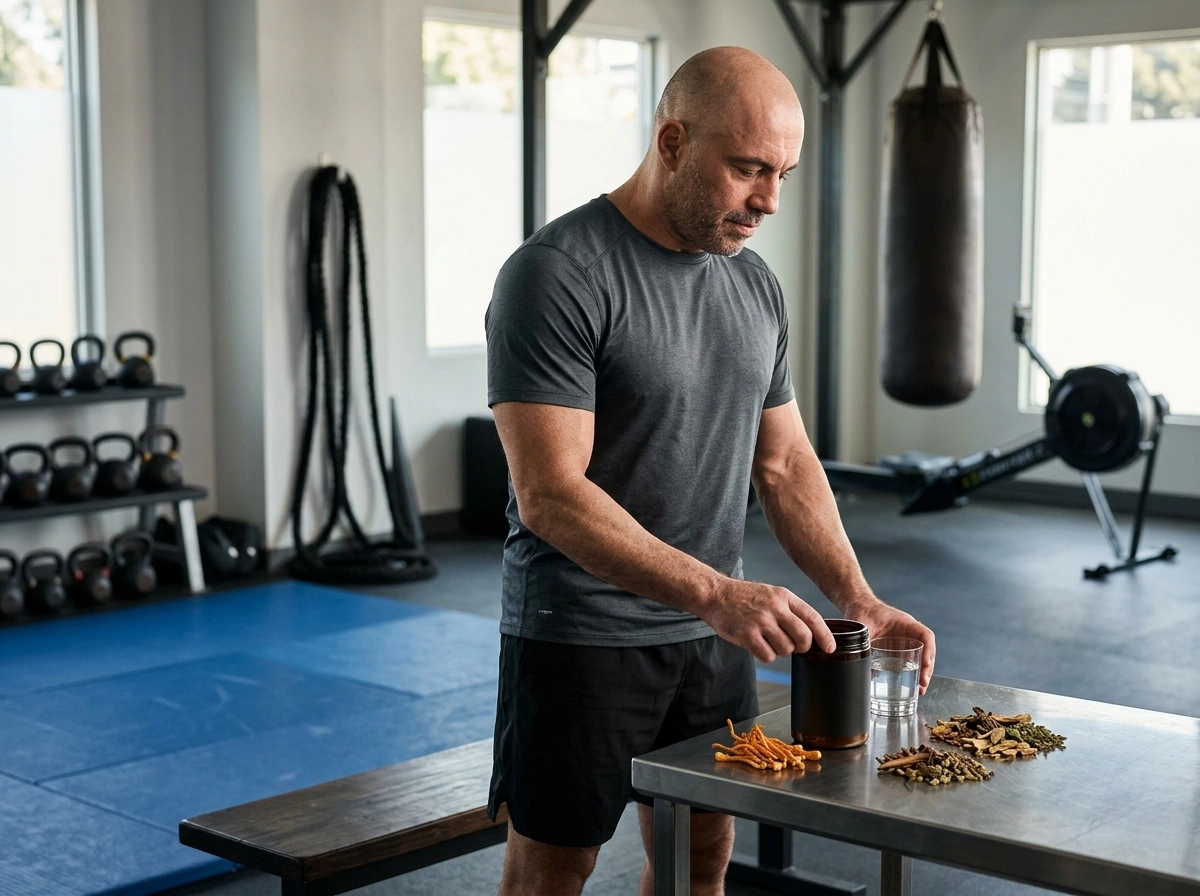
Another supplement repeatedly associated with Joe Rogan’s training routine is Shroom Tech SPORT.
The product has a very different purpose from Alpha BRAIN.
Rather than being designed primarily for cognitive support, Shroom Tech SPORT is positioned as an exercise-performance supplement containing cordyceps and other ingredients.
Rogan has discussed taking Shroom Tech before workouts and has specifically described using it alongside Alpha BRAIN. In a JRE MMA Show conversation, he said he took Shroom Tech before training and associated it with increased energy and endurance.
Shroom Tech SPORT is an Onnit product.
The current formulation includes Cordyceps sinensis, ashwagandha, rhodiola extract and vitamin B12, among other ingredients. Onnit markets the product toward exercise performance and endurance.
Cordyceps has attracted considerable interest in sports nutrition because of its potential relationship with aerobic performance and oxygen utilization.
The evidence, however, is not as definitive as the marketing around mushroom supplements sometimes suggests.
A recent review of Cordyceps supplementation and exercise performance found that some human studies reported improvements in selected performance outcomes, but the overall evidence remained limited by small sample sizes, different preparations and inconsistent research designs.
A separate systematic review and meta-analysis reported improvements in some endurance-related outcomes in studies involving Cordyceps sinensis, but the authors also noted the need for stronger evidence.
The practical use case is mostly around exercise.
Someone training in martial arts, running, cycling or resistance conditioning may be interested in whether a pre-workout supplement can help them train longer or maintain performance.
Rogan’s own comments reflect that use case. He has described taking Shroom Tech before training rather than treating it as a general multivitamin.
Still, the product should not be viewed as an essential part of exercise.
For most people, the fundamentals remain more important: adequate calories, carbohydrates when appropriate, protein, hydration, sleep and a well-designed training program.
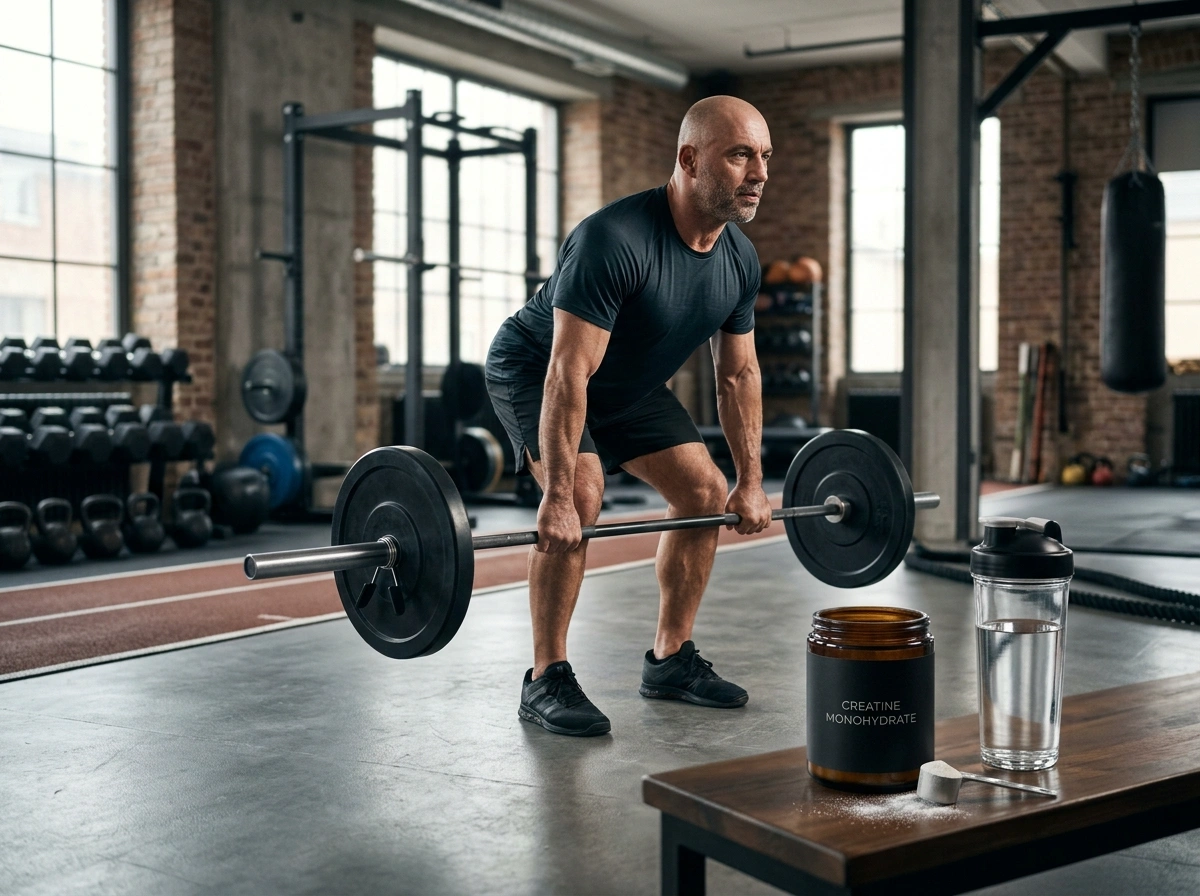
Unlike some of the more exotic products associated with celebrity supplement stacks, creatine monohydrate has an enormous body of sports-nutrition research behind it.
Creatine has also appeared in reporting about Rogan’s supplement routine, and Onnit now sells its own creatine monohydrate product.
There is an important distinction here.
Joe Rogan has discussed creatine, but that does not necessarily mean there is one single “Joe Rogan creatine” product that he has permanently endorsed.
Onnit currently sells Creatine Monohydrate, but consumers should distinguish between Rogan’s broader use or discussion of creatine and a formal endorsement of a specific current product.
Onnit’s current creatine is a straightforward monohydrate formula. The company says it is designed to support strength, power, muscle growth and recovery by helping regenerate ATP during high-intensity activity.
Creatine helps muscles rapidly regenerate ATP, the body’s primary immediate energy currency during short, intense efforts.
That is why creatine is particularly relevant to activities such as:
Creatine is also being studied for effects beyond muscle performance, including aspects of cognitive function.
Unlike many fashionable supplements, creatine monohydrate has been studied for decades.
The effects may be less dramatic than the word “performance” implies, but they can accumulate.
For a person who trains regularly, creatine may help support the ability to perform repeated high-intensity efforts over time. Increased training capacity can, in turn, contribute to improvements in strength and muscle mass when the overall training and diet are appropriate.
There is also no requirement to take creatine immediately before a workout for it to work. Consistent daily use is generally more important than precise timing.
This is one reason creatine occupies a different category from many celebrity supplements: its rationale is not dependent on Joe Rogan’s personal experience.

Vitamin D has been part of Joe Rogan’s publicly discussed supplement routine for years.
During a Joe Rogan Experience conversation, he explicitly said that he supplements vitamin D, alongside other nutrients.
More recently, Rogan again discussed vitamin D supplementation during a 2026 episode involving sunlight and vitamin D, saying that he takes vitamin D supplements.
Unlike Alpha BRAIN or Shroom Tech, vitamin D is not uniquely associated with one Rogan-owned or Rogan-linked product.
Publicly circulated descriptions of his supplement routine have included products such as Solgar Vitamin D3, but the exact brand and dose should not be treated as a permanent current prescription.
The important point is the nutrient itself.
Vitamin D is involved in calcium absorption, bone health, muscle function and several physiological processes.
The interesting issue is that vitamin D supplementation is most clearly useful when someone has inadequate vitamin D status.
That means taking more is not automatically better.
Blood testing can help determine whether supplementation is appropriate, especially for people taking relatively high doses.
When someone is deficient, correcting that deficiency can matter for normal health and physiological function.
But vitamin D is not a stimulant.
You should not expect a vitamin D capsule to provide the immediate sensation of energy associated with caffeine.
Its value is more foundational: maintaining adequate vitamin D status supports normal biological functions, particularly those involving bones and calcium metabolism.
This is also an excellent example of why celebrity supplement routines should not be copied blindly.
A dose that makes sense for one person may be unnecessary—or inappropriate—for another.
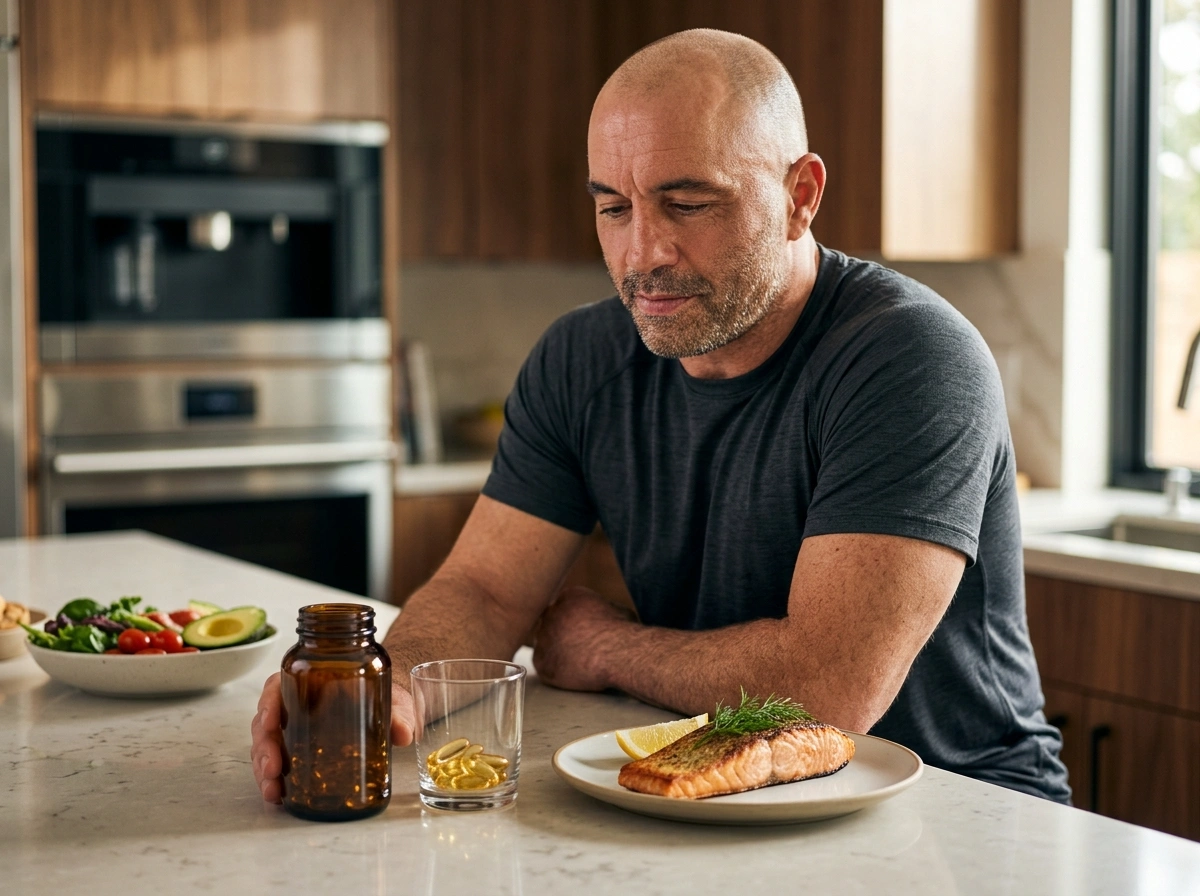
The final supplement is omega-3, particularly fish oil.
Rogan’s publicly documented supplement lists have included omega-3/fish-oil products, and his broader interest in nutrition has frequently brought fatty acids into the conversation.
The exact product has varied across publicly reported lists, which is another reason not to treat a particular brand as a permanent part of his regimen.
The most important omega-3 fatty acids in fish oil are EPA and DHA.
These are long-chain omega-3 fatty acids that play structural and physiological roles in the body.
They are particularly associated with cardiovascular health and normal cell-membrane function.
Different products have been associated with Rogan’s publicly reported supplement routines over the years, including Carlson products.
However, consumers should focus less on celebrity association and more on the actual label.
For omega-3 supplements, the relevant information includes the amount of EPA and DHA—not simply the total amount of “fish oil.”
A product containing 1,000 mg of fish oil does not necessarily contain 1,000 mg of EPA and DHA.
Omega-3 supplementation can be relevant for people who do not regularly consume oily fish.
But again, it is not an instant performance enhancer.
The potential value is long-term nutritional support rather than a noticeable pre-workout effect.
For someone who already eats fatty fish regularly, the need for supplementation may be different from someone whose diet contains very little seafood.
People taking anticoagulant medication or managing certain medical conditions should discuss omega-3 supplementation with a healthcare professional.
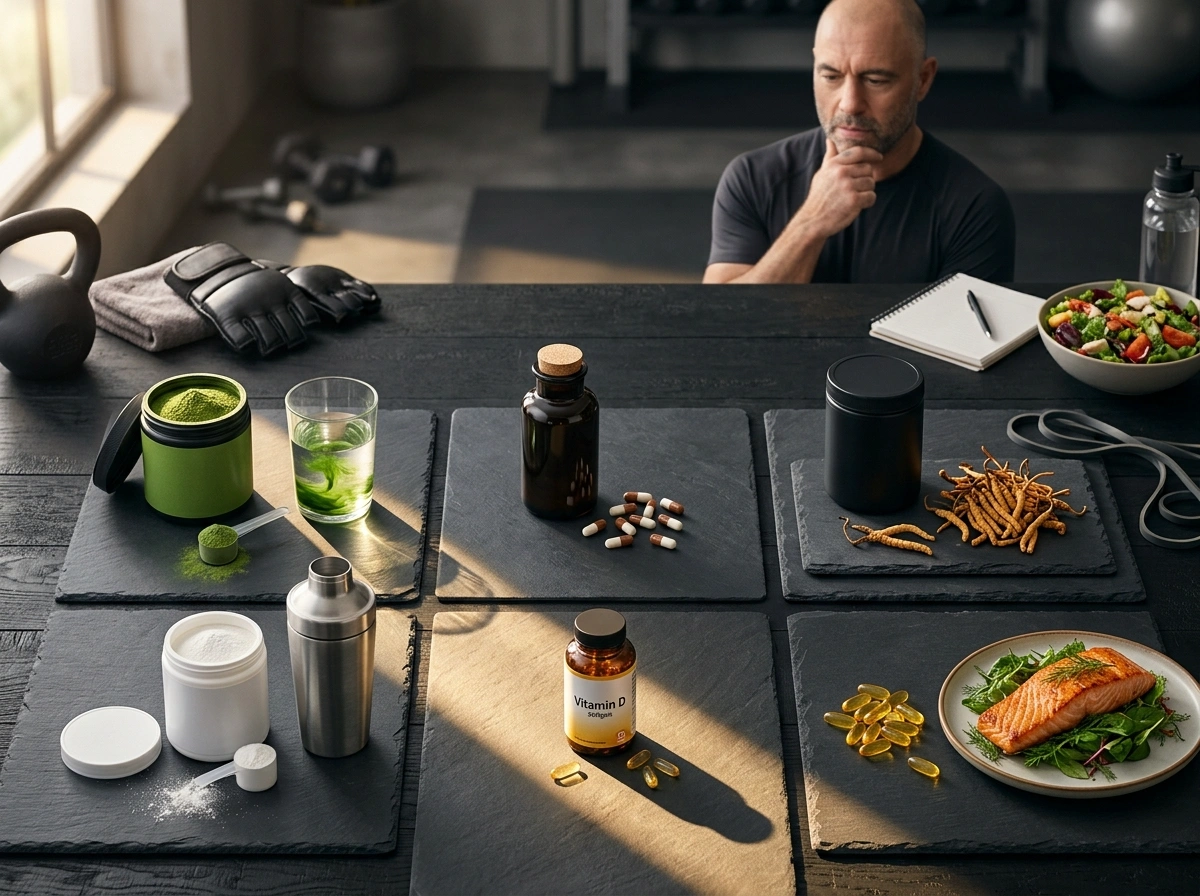
Looking at these six supplements together reveals something more useful than a list of products.
Rogan’s approach is built around several different objectives:
AG1: nutritional convenience
Alpha BRAIN: cognitive support
Shroom Tech SPORT: exercise and endurance support
Creatine: strength and high-intensity performance
Vitamin D: maintaining adequate vitamin D status
Omega-3: dietary fatty-acid support
In other words, these products are not interchangeable.
A greens powder is not a substitute for creatine.
Creatine is not a replacement for omega-3.
Omega-3 is not a pre-workout.
And Alpha BRAIN should not be treated as a substitute for sleep.
That sounds obvious, but the supplement industry frequently blurs these categories.
Celebrity supplement lists are attractive because they turn a complicated subject into a simple shopping list.
But human physiology doesn’t work that way.
Rogan is a highly active adult with a long history of martial arts and structured exercise. His training volume, diet, age, lifestyle and health status are different from those of the average person.
Even more importantly, Rogan has experimented with a large number of supplements over the years. Some have disappeared from his routine, while others have remained.
A 2026 review of his supplement history similarly notes that there is no single permanent stack and that different products have been mentioned at different times.
That is why it is better to describe these as supplements Joe Rogan has publicly used, discussed or been associated with, rather than suggesting that every reader should take all six.
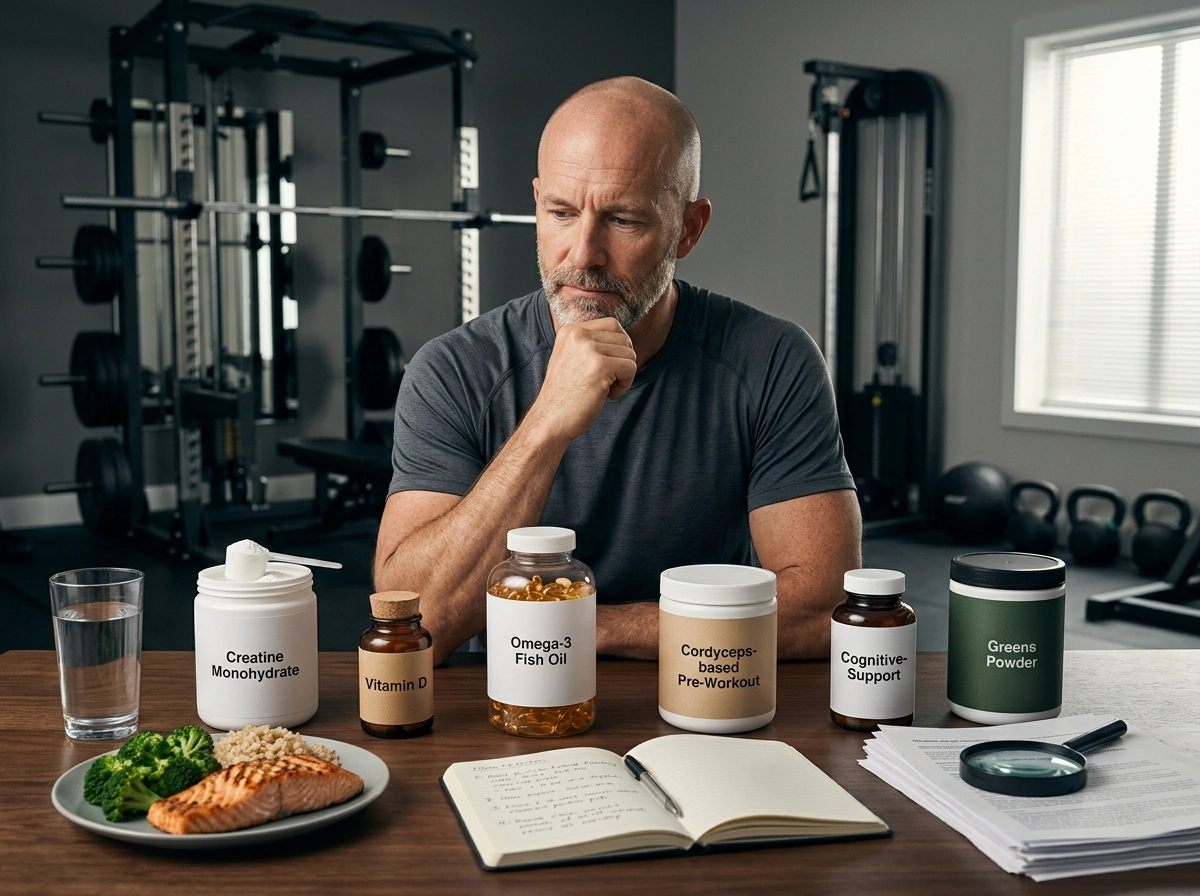
The answer depends on the individual supplement.
Creatine has some of the strongest evidence among the products discussed here.
Vitamin D can be valuable when someone has inadequate levels.
Omega-3 can be useful depending on dietary intake and individual circumstances.
Cordyceps-based products are interesting but have a more developing evidence base.
Alpha BRAIN has some encouraging product-specific research, but that evidence is considerably smaller than the enormous literature surrounding creatine.
AG1 is primarily a convenience product. It may help someone maintain a consistent nutritional routine, but it does not eliminate the need for whole foods.
This distinction is essential for anyone searching for the best supplements recommended by Joe Rogan.
The “best” product for Rogan is not necessarily the best product for another person.
| Supplement | Main Purpose | Associated Brand/Product | Evidence Picture |
|---|---|---|---|
| AG1 | Foundational nutrition and convenience | AG1 / Athletic Greens | Useful as a convenience product; not a replacement for a balanced diet |
| Alpha BRAIN | Focus, memory and cognitive support | Onnit | Some product-specific clinical research, but evidence remains limited |
| Shroom Tech SPORT | Exercise endurance and performance | Onnit | Cordyceps research is promising but inconsistent |
| Creatine | Strength, power and muscle performance | Onnit and many other brands | Strong research base for exercise performance |
| Vitamin D | Bone, calcium and normal physiological function | Multiple brands | Most relevant when vitamin D status is inadequate |
| Omega-3 Fish Oil | EPA/DHA intake and cardiovascular support | Multiple brands | Well-established nutrient; need depends partly on diet |
Joe Rogan’s supplement routine is interesting not because every product in it is revolutionary, but because it reflects the way modern fitness culture has changed.
Today’s performance-focused consumer is no longer interested only in protein powder and multivitamins. People are looking at cognition, recovery, endurance, metabolic health, gut health and longevity alongside traditional strength training.
Rogan has been part of that shift for years.
His history as a martial artist, comedian, UFC commentator and podcast host has made him a particularly influential voice in the performance and wellness space. He has publicly discussed everything from creatine and vitamin D to nootropics and mushroom-based products, while companies such as Onnit and AG1 have built major businesses around the broader performance-nutrition market.
But there is a valuable distinction between Joe Rogan’s personal routine and scientific evidence.
Alpha BRAIN may be part of Rogan’s preparation for long podcast conversations. That does not mean everyone needs it.
AG1 may make his morning routine easier. That does not mean a greens powder is nutritionally superior to a varied diet.
Shroom Tech SPORT may fit his training philosophy. That does not mean cordyceps is essential for every gym-goer.
Creatine has a much broader scientific foundation than celebrity endorsement.
Vitamin D makes the most sense when individual status and dietary circumstances justify supplementation.
And omega-3 supplementation should be considered in the context of how much EPA and DHA someone already gets from food.
Ultimately, the most useful lesson from Joe Rogan’s supplement routine may be the simplest one: supplements work best when they solve a specific problem rather than when they become a substitute for the fundamentals.
Training consistently, eating an adequate and varied diet, getting enough protein, sleeping well and managing recovery will usually matter far more than adding another bottle to the cabinet.
The celebrity stack can be interesting.
The fundamentals are what make the stack matter.
This article discusses supplements that Joe Rogan has publicly used, discussed or been associated with. It does not constitute medical advice or a recommendation that readers copy his regimen. Supplement requirements vary by age, diet, training load, medications and health status. Anyone considering high-dose vitamin D, omega-3 supplementation or a multi-ingredient supplement should consider discussing it with a qualified healthcare professional.