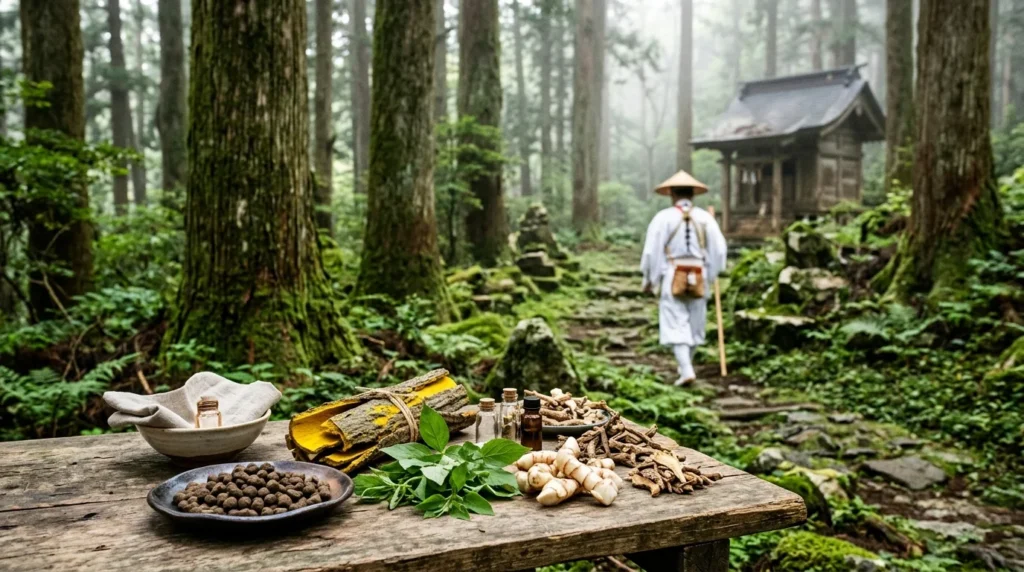
Japan’s Sakoku era was far more than a period of restricted foreign contact. Behind its carefully controlled borders, medicinal plants travelled through trading ports, herbal gardens flourished under shogunal patronage, and traditional medicine continued to evolve. Discover five fascinating botanicals connected to this period—from highly prized ginseng and cinnamon bark to rhubarb and wild garlic—and explore their historical uses, cultural stories, potential health benefits, and relevance to modern wellness in 2026.
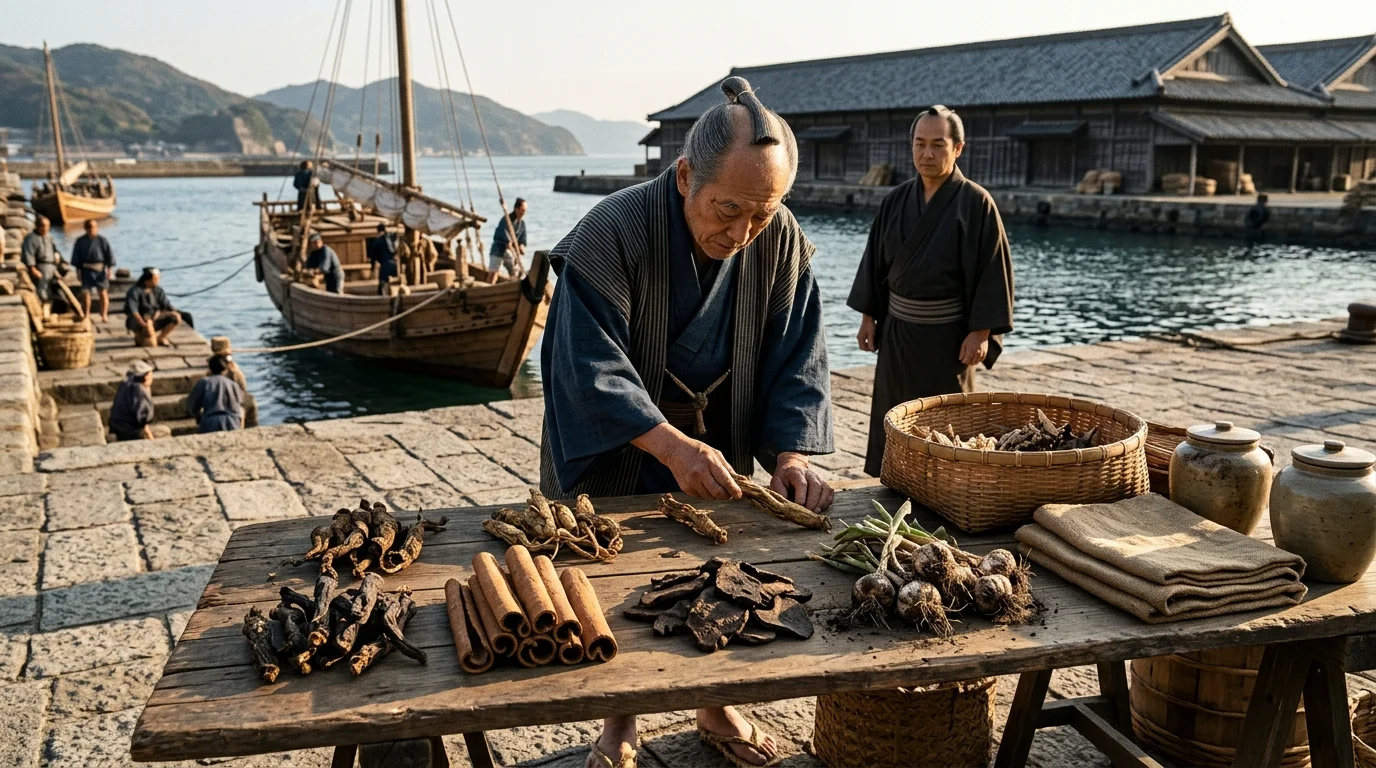
Between the 1630s and the mid-19th century, Japan’s Tokugawa shogunate imposed strict controls on foreign relations, overseas travel, and international trade. This system is commonly known as Sakoku, meaning “closed country,” although historians increasingly emphasize that Japan was never completely isolated.
Foreign trade and diplomatic contact continued through carefully managed channels. Chinese merchants and Dutch traders operated in Nagasaki, while other routes connected Japan with Korea, the Ryukyu Kingdom, and the Ainu world. These networks carried more than silk, sugar, ceramics, and luxury goods. They also transmitted medicinal ingredients, medical books, and knowledge about plants.
The period was especially important for the development of Japanese herbal medicine, known today as Kampo. Although Kampo originated in Chinese medical traditions, Japanese practitioners adapted its methods to local conditions and developed their own approaches to selecting, cultivating, and combining medicinal plants.
The shogunate also had a practical reason to support domestic medicinal agriculture. Imported medicines could be expensive, and reliance on overseas supplies placed pressure on Japan’s reserves of gold and silver. Under Tokugawa Yoshimune in the 18th century, officials promoted the investigation and cultivation of useful plants, including medicinal species imported from abroad.
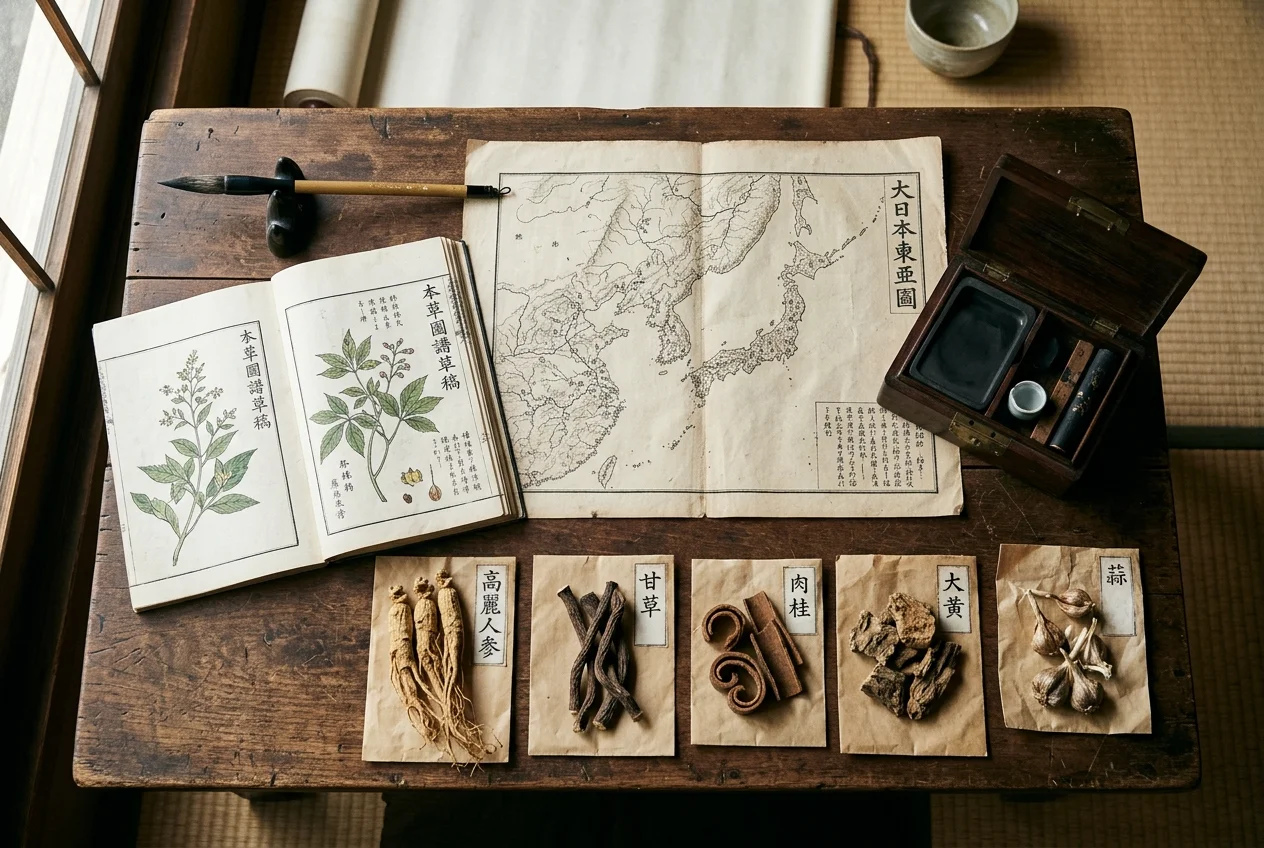
The National Diet Library’s exhibition on Edo-period natural history documents these efforts, including government-sponsored plant surveys, the dispatch of officials to collect medicinal herbs, and attempts to cultivate Asian ginseng in Japan.
This history provides a useful starting point for examining five botanicals associated with Japanese medicine and folk traditions: Asian ginseng, licorice root, cinnamon bark, medicinal rhubarb, and wild garlic.
One distinction is important. These plants were not five official Sakoku supplements, nor did they all originate in Japan. Some were important Kampo ingredients, some were imported or cultivated domestically, and one has a particularly notable place in Japanese mythology. Their value lies in what they reveal about medicine, trade, and cultural exchange during a period often misunderstood as complete isolation.
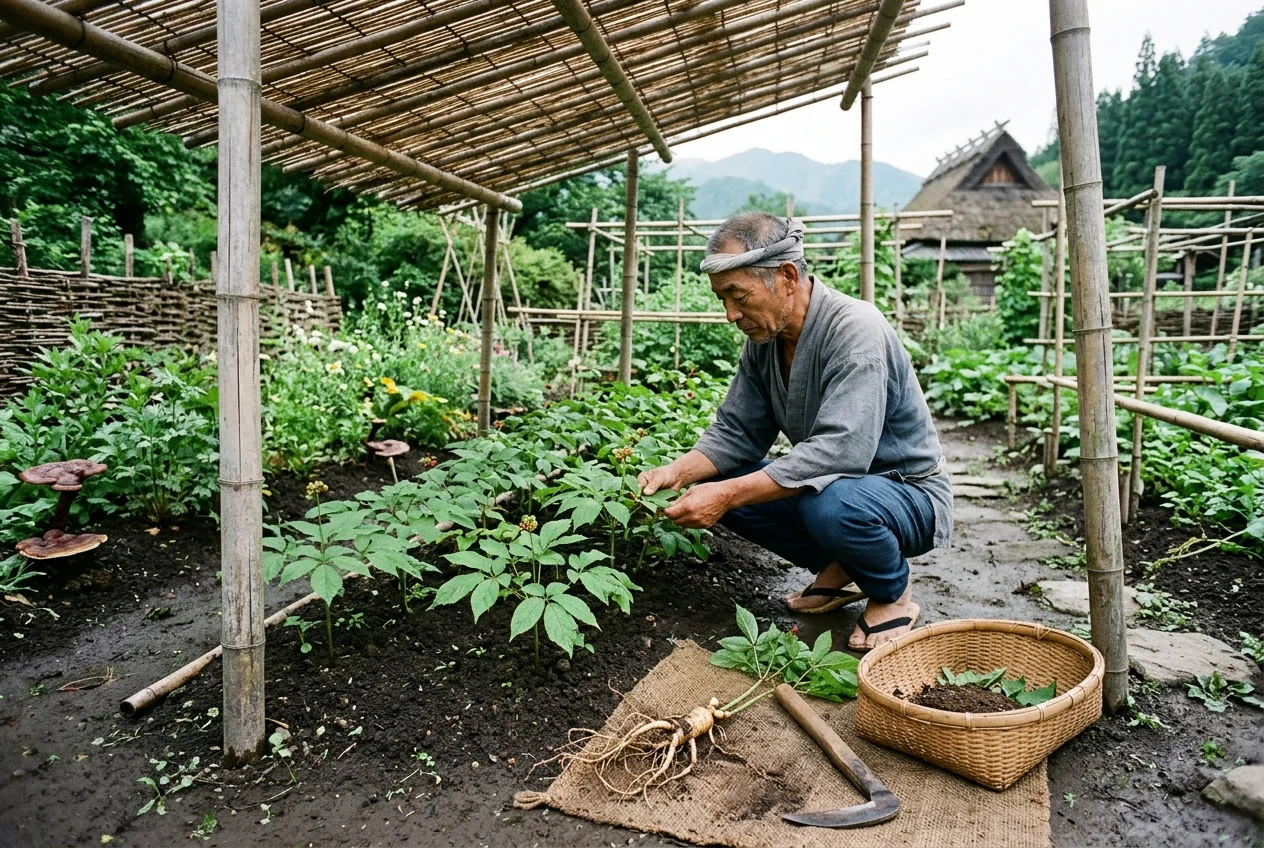
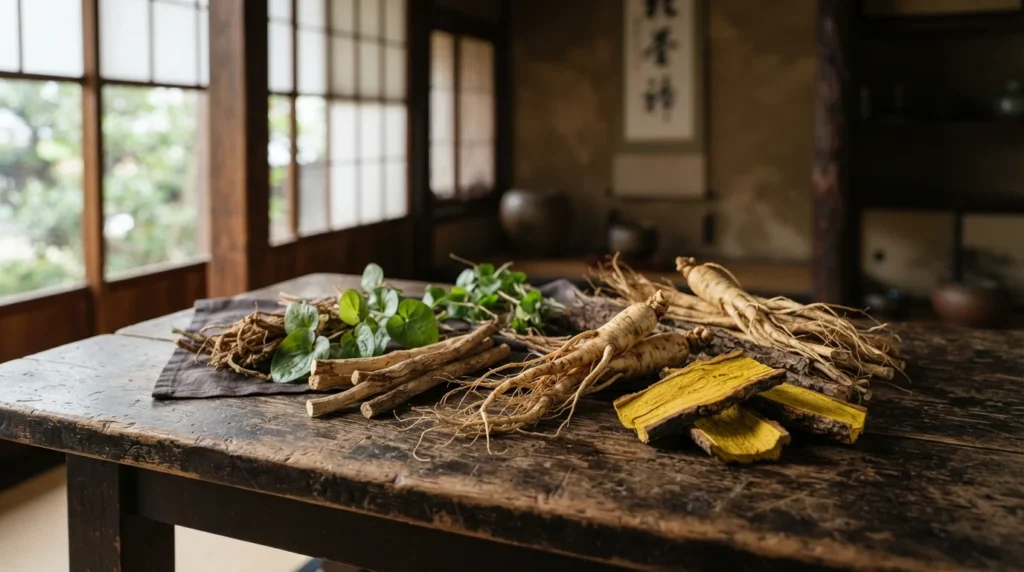
Asian ginseng (Panax ginseng), often called Korean or Chinese ginseng in historical trade contexts, is a slow-growing perennial plant valued for its fleshy root. It has been used in East Asian medical traditions for centuries and became one of the most important medicinal commodities traded into Japan during the Edo period.
In traditional medicine, ginseng was associated with restoring vitality, supporting recovery from weakness, and helping people cope with fatigue. Its reputation made it a valuable ingredient in multi-herb prescriptions rather than simply a daily nutritional supplement.
Demand was sufficiently strong that Japan depended heavily on imported ginseng, especially supplies obtained through trade with Korea. Its high price made domestic cultivation an economic and medical priority.
The Tokugawa government did not merely accept dependence on imported medicinal roots. It attempted to establish domestic cultivation.
The National Diet Library documents how Tokugawa Yoshimune’s policies encouraged the study and domestication of foreign plants. Asian ginseng was among the species that Japanese cultivators worked to grow successfully. The process was challenging: the plant required appropriate growing conditions and took years to mature.
Historical records also describe ginseng cultivation projects in the 18th century. Tamura Ransui, for example, investigated methods for growing the plant after receiving seeds from the shogunate. His work helped preserve practical knowledge about its cultivation.
The government’s interest reflected a wider pattern in Edo-period medicine. Domestic production could reduce dependence on imports, improve availability, and make important medicines more accessible.
A 2026 historical study published in The Japanese Journal for the History of Pharmacy examined Tokugawa-era notices relating to medicinal-plant cultivation and pharmaceutical administration. It found that more than half of the medicinal notices studied concerned Panax ginseng, underlining the plant’s importance to the shogunate’s pharmaceutical priorities.
Source: National Diet Library — Natural History of the Edo Era and Historical Study on the Introduction and Cultivation of Medicinal Plants in the Edo Period, 2026.
Traditional East Asian medicine has used ginseng for fatigue, weakness, and recovery. Modern research has investigated its ginsenosides, a group of compounds that may influence several biological pathways.
Some clinical studies suggest that certain ginseng preparations may have modest effects on fatigue or aspects of physical and cognitive performance. However, findings are not uniform, and results depend on the type of ginseng, the preparation, the dose, and the population being studied.
Ginseng should not be treated as a proven cure for chronic fatigue, diabetes, or other medical conditions. It may also affect blood glucose, interfere with certain medicines, and cause side effects such as insomnia in some people.
Most importantly, evidence about a modern standardized ginseng extract cannot automatically be applied to the roots used in Edo-period Kampo prescriptions. Historical preparations may have differed in species, processing, concentration, and combinations with other ingredients.
Ginseng is strongly associated with East Asian medicinal traditions, but there is no well-established Japanese myth in which a deity specifically gives ginseng to Japan during the Sakoku period.
Its historical importance is better understood through medicine, commerce, and agricultural policy than through mythology. This distinction makes its story no less interesting: the effort to cultivate ginseng demonstrates how a medicinal plant could influence government planning, botanical research, and international trade.
Ginseng remains a popular ingredient in energy, vitality, and wellness products. Its Edo-period history offers an important perspective on today’s supplement industry: a plant that now appears in modern capsules once represented a costly international commodity that the Japanese government worked to produce locally.
The underlying challenge remains familiar. Consumers want reliable products, while manufacturers and regulators must ensure that botanical ingredients are correctly identified, consistently processed, and supported by evidence appropriate to the health claims being made.
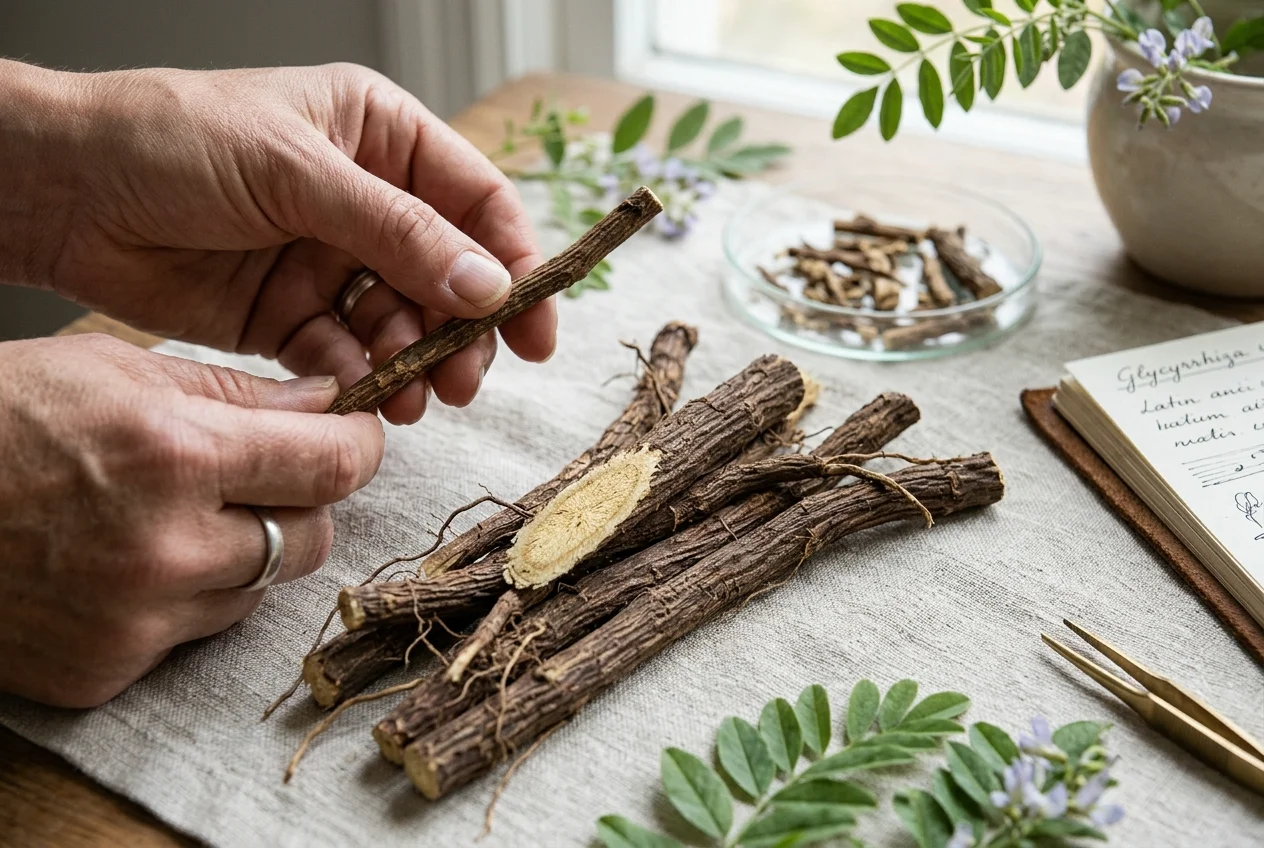
Licorice root generally comes from Glycyrrhiza species, especially Glycyrrhiza uralensis in East Asian herbal medicine. It has a naturally sweet taste because it contains glycyrrhizin and other compounds.
In Kampo, licorice is valued as a versatile ingredient that can be combined with other herbs. Traditional formulas use it for a variety of purposes, including addressing certain digestive and respiratory complaints. Its role depends on the formula in which it appears, rather than on a single universal benefit.
The root was particularly useful in a medical system built around combinations of crude drugs. Kampo practitioners selected multiple ingredients according to the patient’s symptoms and overall presentation.
The Edo period saw considerable development in Japanese methods for evaluating and cultivating medicinal plants. Although many herbal ingredients were imported, practitioners and researchers increasingly investigated the quality of local substitutes and the feasibility of domestic cultivation.
A scholarly article published in the journal Kampo Medicine, “Herb Selection and Medicinal Plant’s Diversity,” describes how Japanese medicine evolved from dependence on imported materials toward greater evaluation and cultivation of local alternatives. The paper specifically discusses licorice and cinnamon as examples of the challenges involved in selecting medicinal plant species.
This was more than a botanical exercise. Different species, growing conditions, harvest periods, and processing methods could affect the properties of a medicinal ingredient. Identifying a reliable substitute required careful observation and accumulated practical knowledge.
During the Sakoku era, licorice belonged to the broader world of East Asian materia medica—the body of knowledge concerned with substances used in medicine. It was not a secret supplement invented by the Tokugawa government, but an established ingredient in the medical traditions that Japan adapted and developed.
Source: Honda, “Herb Selection and Medicinal Plant’s Diversity,” Kampo Medicine.
Licorice has traditionally been used in formulas intended to soothe certain digestive or respiratory symptoms. Laboratory research has examined glycyrrhizin and other compounds for anti-inflammatory and antiviral activity, among other effects.
However, laboratory findings do not prove that licorice supplements can prevent or treat viral infections in people. Evidence varies considerably according to the preparation and the condition being studied.
Licorice also has an important safety concern. Glycyrrhizin can cause the body to retain sodium and lose potassium, potentially leading to increased blood pressure, swelling, and muscle weakness. In severe cases, excessive exposure can contribute to dangerous heart-rhythm problems.
The risk is particularly relevant to people with high blood pressure, kidney or heart conditions, or those taking medicines that affect blood pressure or potassium levels. Some products labelled as deglycyrrhizinated licorice, or DGL, contain much less glycyrrhizin, but their suitability still depends on the product and the intended use.
A traditional ingredient is not necessarily safe in every quantity or for every person. The fact that licorice has been used for centuries does not eliminate the need for dose control and medical supervision when appropriate.
There is no widely established Sakoku-era Japanese myth that identifies licorice root as a gift from a deity or credits it with saving a legendary hero.
Its historical significance comes from its place in herbal prescriptions and the development of Japanese medicinal knowledge. In this context, the important story is how imported botanical knowledge was assessed, adapted, and integrated into Japanese practice.
Licorice continues to appear in herbal teas, traditional medicine products, and modern supplements. It is also an example of why supplement consumers should read ingredient labels carefully. A plant may be familiar as a food flavouring while behaving very differently when consumed in concentrated medicinal quantities.
For the modern wellness industry, licorice highlights the importance of distinguishing traditional use from proven clinical effects and of evaluating safety alongside potential benefits.
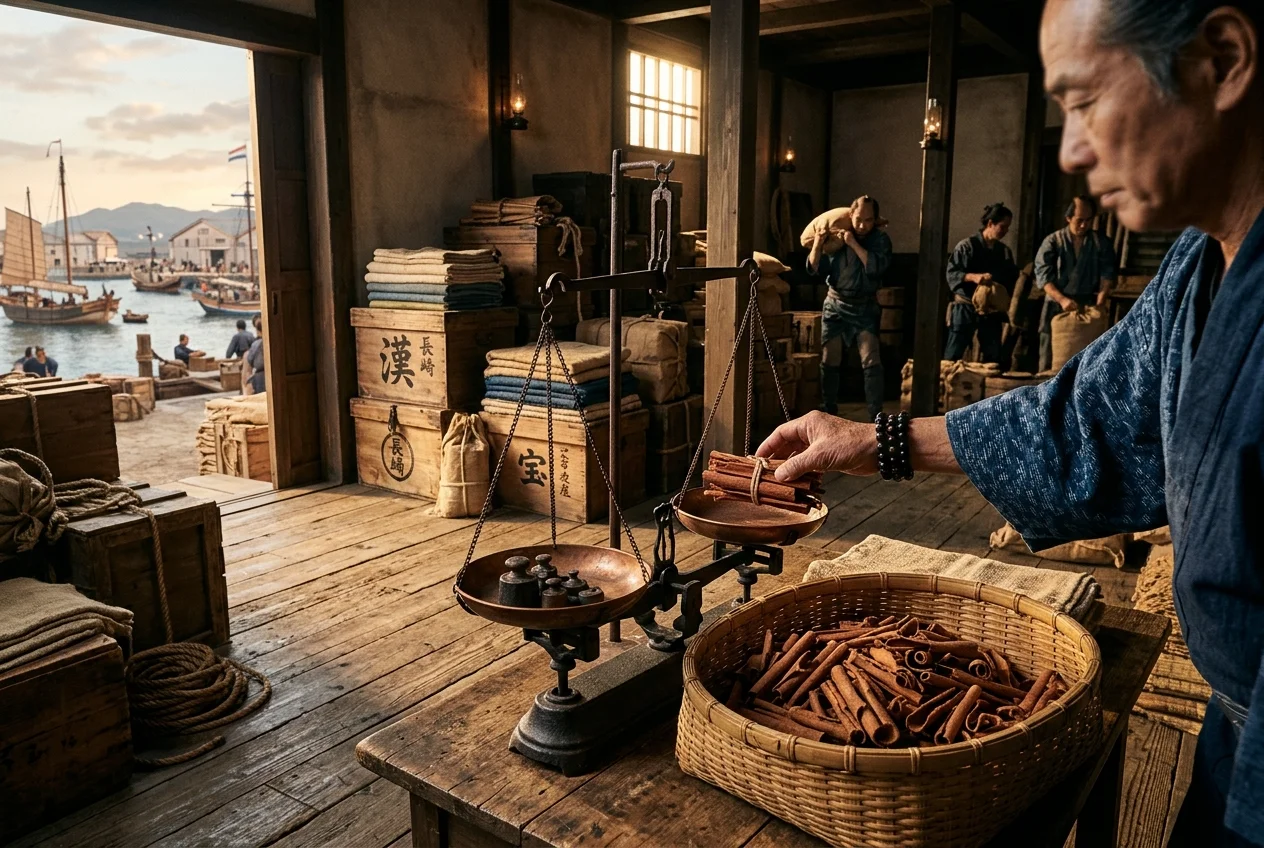
Cinnamon is obtained from the bark of trees in the genus Cinnamomum. Different species are used around the world, including Ceylon cinnamon (Cinnamomum verum) and cassia-type cinnamons.
In Japanese Kampo, cinnamon bark is known as keihi and is included in several traditional multi-herb formulas. It has historically been associated with warming preparations and the management of certain symptoms, including discomfort related to coldness.
Cinnamon is both a culinary spice and a medicinal ingredient, but those uses should not be confused. The amount consumed in ordinary food is generally different from the concentrated quantities used in supplements or medicinal preparations.
Sakoku did not prevent all foreign goods from entering Japan. Rather, it concentrated international trade through controlled routes.
Chinese merchants and Dutch traders operating through Nagasaki provided important links to overseas commodities. Cinnamon became part of the wider trade in spices and medicinal materials, reflecting the overlap between culinary demand and the market for herbal ingredients.
Historical research on maritime trade in Asia has documented substantial cinnamon imports into Japan during the Edo period, including increases in the 18th century. Demand was shaped by several factors: a growing population, the expansion of the medicinal market, and the use of imported botanicals in Japanese medical practice.
The story of cinnamon also reveals that “Japanese traditional medicine” was never simply a collection of plants that grew within Japan’s borders. Its development depended on centuries of exchange with China and other parts of Asia, followed by local adaptation.
Traditional formulas containing cinnamon bark have been used for a range of symptoms, depending on the other ingredients and the medical reasoning behind the prescription.
Modern research has investigated cinnamon for possible effects on blood glucose, inflammation, and digestion. Yet evidence remains inconsistent, in part because studies use different species, extracts, doses, and research methods.
The US National Center for Complementary and Integrative Health, whose information is also presented through Japan’s eJIM medical-information portal, notes that current evidence does not clearly support cinnamon for treating any specific health condition. Some research suggests possible effects on blood glucose, but methodological limitations make the findings difficult to interpret.
Cassia cinnamon may contain significant amounts of coumarin, a naturally occurring compound that can harm the liver when consumed in excessive amounts. Ceylon cinnamon generally contains much less coumarin, although product identification and quality remain important.
Source: Japan’s eJIM — Cinnamon.
Cinnamon has a long history in global trade and traditional medicine, but there is no well-established Sakoku-era Japanese myth that specifically credits cinnamon bark with a miraculous cure or a victory in a mythological battle.
Its relevance to Japanese history is primarily commercial and medical. Cinnamon shows how a plant grown elsewhere could become part of Japanese medicinal practice through regulated trade and the adaptation of imported medical knowledge.
Cinnamon remains common in wellness products marketed for metabolism and blood-sugar management. That popularity should not be mistaken for definitive proof of a therapeutic effect.
The historical lesson is equally relevant today: a plant’s reputation can spread across countries and centuries, but its modern use should be guided by evidence about the specific species, preparation, dose, and safety profile.
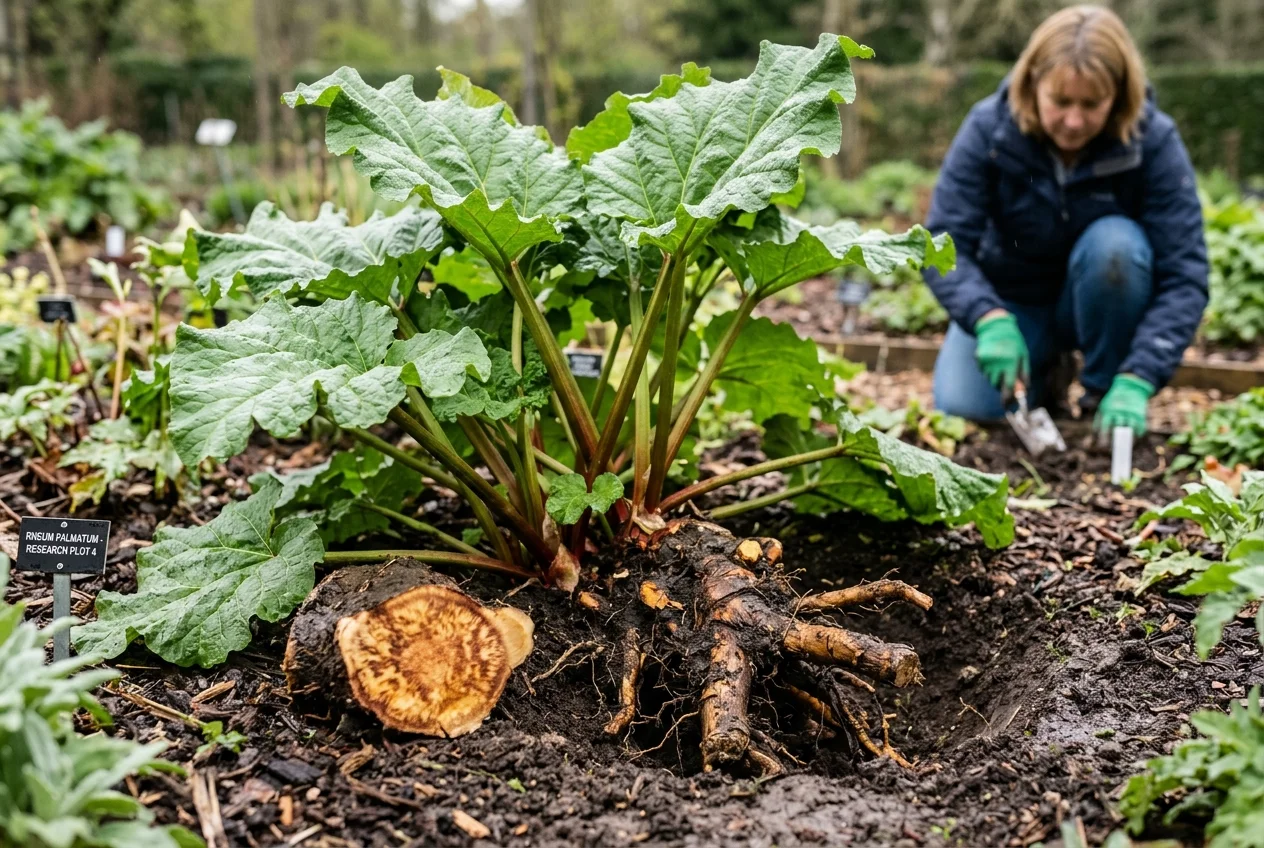
Medicinal rhubarb is derived from the roots or rhizomes of certain Rheum species. It should not automatically be equated with the rhubarb stalks commonly used in desserts. The plant species, plant part, and preparation can differ substantially.
In East Asian medicine, medicinal rhubarb has traditionally been used primarily for its laxative effects and in formulas intended to address particular digestive conditions.
Its history in Japan is especially interesting because historical practitioners did not always identify the botanical source in the same way that modern pharmacognosy does.
Medicinal materials moved through East Asian trade routes long before the Tokugawa period, and rhubarb was one of the botanicals used in Chinese and Japanese medical traditions.
A 2026 historical study examining Japanese medicinal literature and pharmacopoeias traced changes in the identification and use of rhubarb during the Edo period and later. The research found that the plant material regarded as medicinal rhubarb in Japan changed over time, with imported species and locally available plants sometimes being confused or treated as alternatives.
This is an important example of the difficulties faced by historical herbal practitioners. A plant’s common name does not always identify one species consistently, particularly when botanical knowledge is transmitted across languages and regions.
Such confusion could affect the strength and expected effects of a preparation. The research suggests that some rhubarb materials used in Japan during the Edo period may have had weaker laxative effects than other types that became more prominent later.
Source: Historical Studies on the Use of Rhubarb in Japan, 2026.
Medicinal rhubarb contains compounds, including anthraquinone derivatives, that can stimulate bowel movements. Certain rhubarb preparations have therefore been used as laxatives.
However, stimulant laxatives are not appropriate for every digestive complaint. Frequent or excessive use can lead to diarrhoea, dehydration, electrolyte disturbances, and other complications. They may also be unsuitable for people with certain gastrointestinal conditions.
The rhubarb used in a traditional prescription may not be chemically equivalent to a modern over-the-counter supplement or to edible rhubarb stalks. Product identity, plant part, preparation, and dosage all matter.
It is particularly important not to interpret a historical use for constipation as proof that medicinal rhubarb detoxifies the body, removes unspecified toxins, or produces lasting weight loss. Such claims are not justified by its traditional history.
There is no strong evidence that medicinal rhubarb played a major role in a famous Japanese myth from the Sakoku era. Its story is rooted in materia medica, trade, and the evolving identification of medicinal plants.
That may be less dramatic than a legend about a sacred herb, but it provides a valuable window into the practical challenges of traditional medicine. Before modern botanical classification and chemical testing, identifying the correct plant material was a central part of producing a consistent remedy.
Medicinal rhubarb is relevant to modern discussions of digestive supplements and laxative products. It demonstrates why consumers should distinguish between traditional botanical ingredients and ordinary food plants with similar names.
It also shows how historical research can revise assumptions about the past. The name of a medicinal plant may have remained stable even while the botanical material associated with it changed.

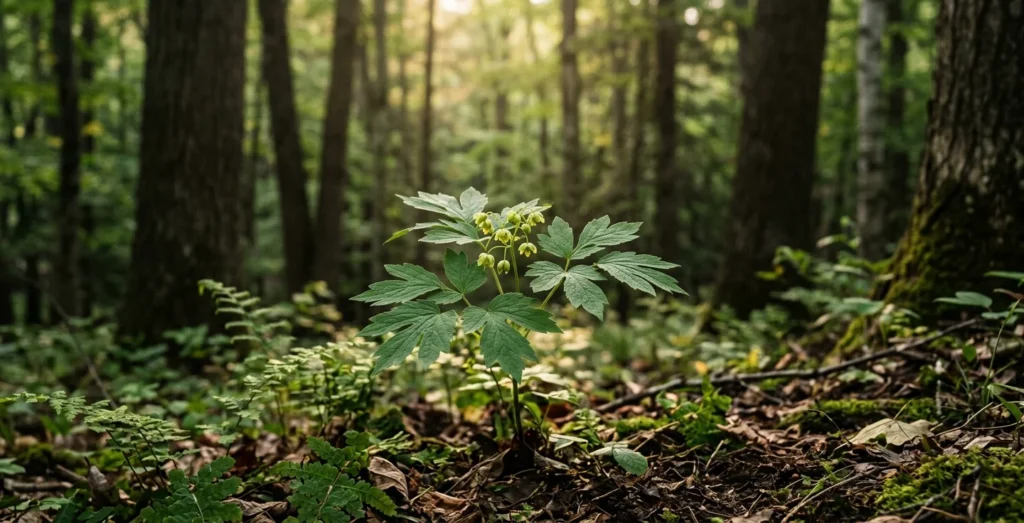
Wild garlic refers to garlic-like plants that grow naturally rather than being cultivated in the same way as commercial garlic. The exact species covered by historical Japanese terms can vary according to the text and translation.
Garlic and related plants have long histories as foods and traditional remedies in many parts of the world. In Japanese cultural history, however, a garlic-like plant has an especially striking role in one of the country’s best-known classical narratives.
Unlike the other plants in this article, wild garlic has a clear connection to a Japanese mythological episode. But the story is much older than the Sakoku era.
The Kojiki, compiled in 712 CE, is one of Japan’s earliest surviving chronicles of myths, genealogies, and accounts associated with the imperial line.
In a famous episode, the legendary hero Yamato Takeru reaches the Ashigara Pass during his eastern campaign. A deity associated with the pass appears in the form of a white deer.
According to the Kojiki, Yamato Takeru strikes the deer in the eye with a piece of the wild garlic-like plant he has been eating, killing it.
The episode is not a historical account of a medicinal trial. It is a mythological narrative in which an ordinary plant becomes part of a dramatic encounter between a legendary human hero and a supernatural being.
The story also appears in discussions of Japanese folklore surrounding mountain deities and dangerous journeys. In the related account in the Nihon Shoki, a garlic-like plant is associated with protection against the harmful influence of a mountain deity.
An English translation of the Kojiki recounts the Ashigara episode in detail. The National Museum of Shinto studies the figures involved in the story, including the deity of the Ashigara Pass.
Sources: Kojiki, Section 85 — Yamato Takeru and the Deity of the Ashigara Pass and Kokugakuin University Digital Museum — Encyclopedia of Shinto.
The Kojiki story predates Sakoku by more than nine centuries. It would therefore be inaccurate to describe wild garlic as a supplement discovered during the Edo period or as a remedy introduced by the Tokugawa shogunate.
Its relevance lies in the longer cultural history of Japan. During the Edo era, traditional beliefs, food practices, and folk remedies continued to coexist with the developing medical system. Plants could carry several meanings at once: they could be food, practical remedies, or symbols in stories about the supernatural world.
The myth also illustrates a broader pattern in traditional cultures. Plants associated with protection, healing, or survival could acquire symbolic significance through stories passed down over generations.
Garlic and related plants contain sulfur-containing compounds and have been studied for potential effects on cardiovascular health and other biological processes. Some research suggests that certain garlic preparations may modestly influence blood pressure or cholesterol levels.
However, effects depend on the preparation, dose, and person taking it. Evidence for garlic supplements cannot be applied automatically to wild garlic species or to the plant described in an ancient text.
Garlic supplements can also interact with medicines, including anticoagulants, and may increase bleeding risk in some circumstances. Concentrated products should be discussed with a healthcare professional before surgery or when used alongside prescription medication.
The Kojiki episode does not demonstrate that wild garlic has supernatural powers or that it can prevent infections. It is evidence of a plant’s place in Japanese storytelling, not proof of a medical effect.
Wild garlic offers a compelling example of how plants can occupy both cultural and practical roles. The story of Yamato Takeru connects a botanical object with a sacred landscape and a confrontation with a mountain deity.
For modern readers interested in Japanese herbal history, the lesson is not to interpret the myth as an endorsement of a supplement. Instead, it is to recognize how traditional narratives helped shape the cultural meaning of the natural world long before contemporary wellness marketing existed.
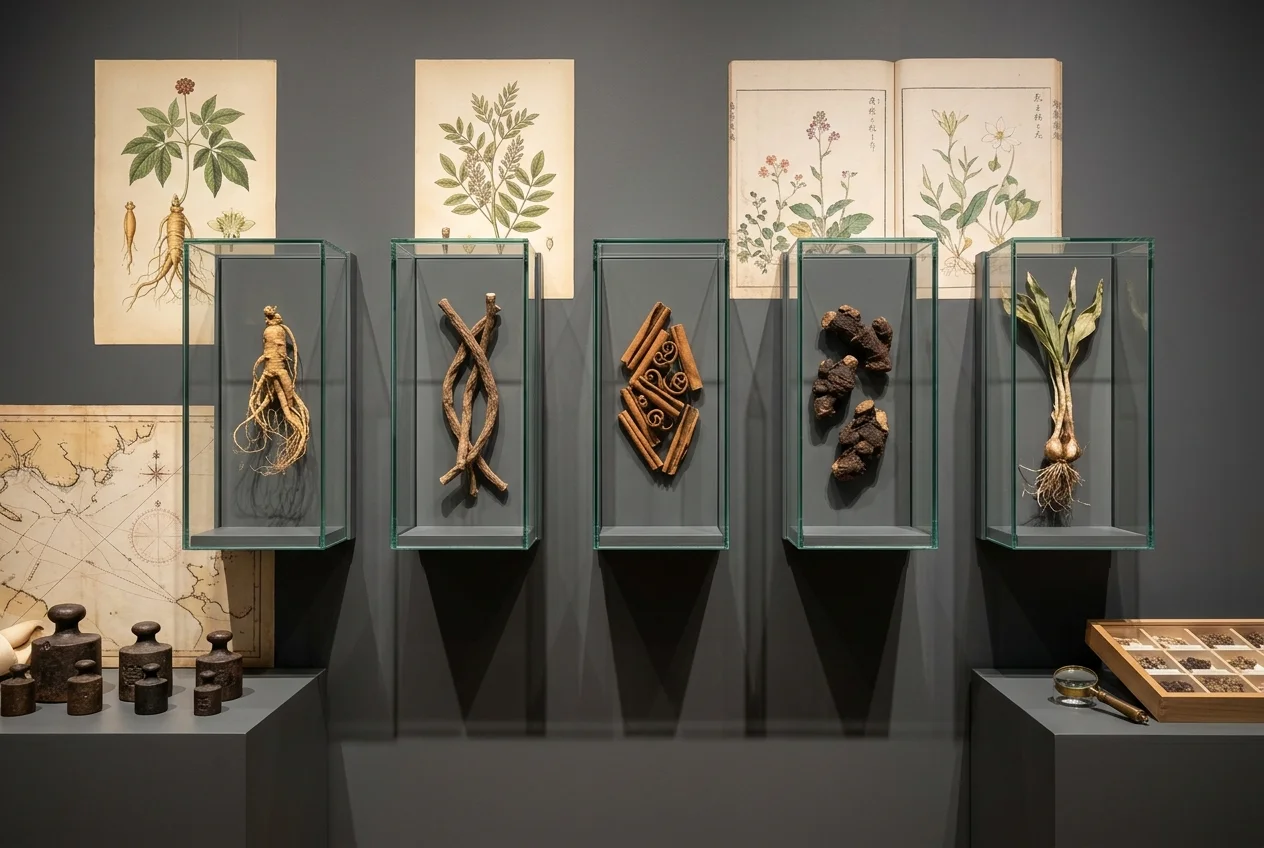
The five plants discussed here reveal several important features of Japanese medicine during the Edo period.
First, Sakoku did not eliminate international exchange. The Tokugawa government controlled the channels through which people, goods, and knowledge entered Japan, but imported medicines and medical ideas continued to circulate.
Second, domestic cultivation became a strategic priority. Asian ginseng is a particularly clear example. Its high value encouraged the shogunate and local cultivators to develop ways of growing a plant that had previously depended heavily on foreign supply.
Third, botanical identification was an ongoing challenge. Licorice, cinnamon, and rhubarb demonstrate how species, growing conditions, and processing methods could affect the quality and properties of medicinal ingredients. Historical practitioners needed to distinguish between plants that looked similar but did not necessarily behave in the same way.
Fourth, medicine and mythology were not the same kind of evidence. The story of Yamato Takeru and wild garlic provides insight into Japanese religious imagination and folklore. It does not prove a modern medical benefit. Likewise, the historical importance of ginseng does not require a mythological origin story to make it significant.
Finally, the history of these botanicals helps explain why traditional medicine should be evaluated with both historical sensitivity and scientific care. A remedy may have a long cultural history, but its modern safety and effectiveness depend on evidence about its actual ingredients and use.
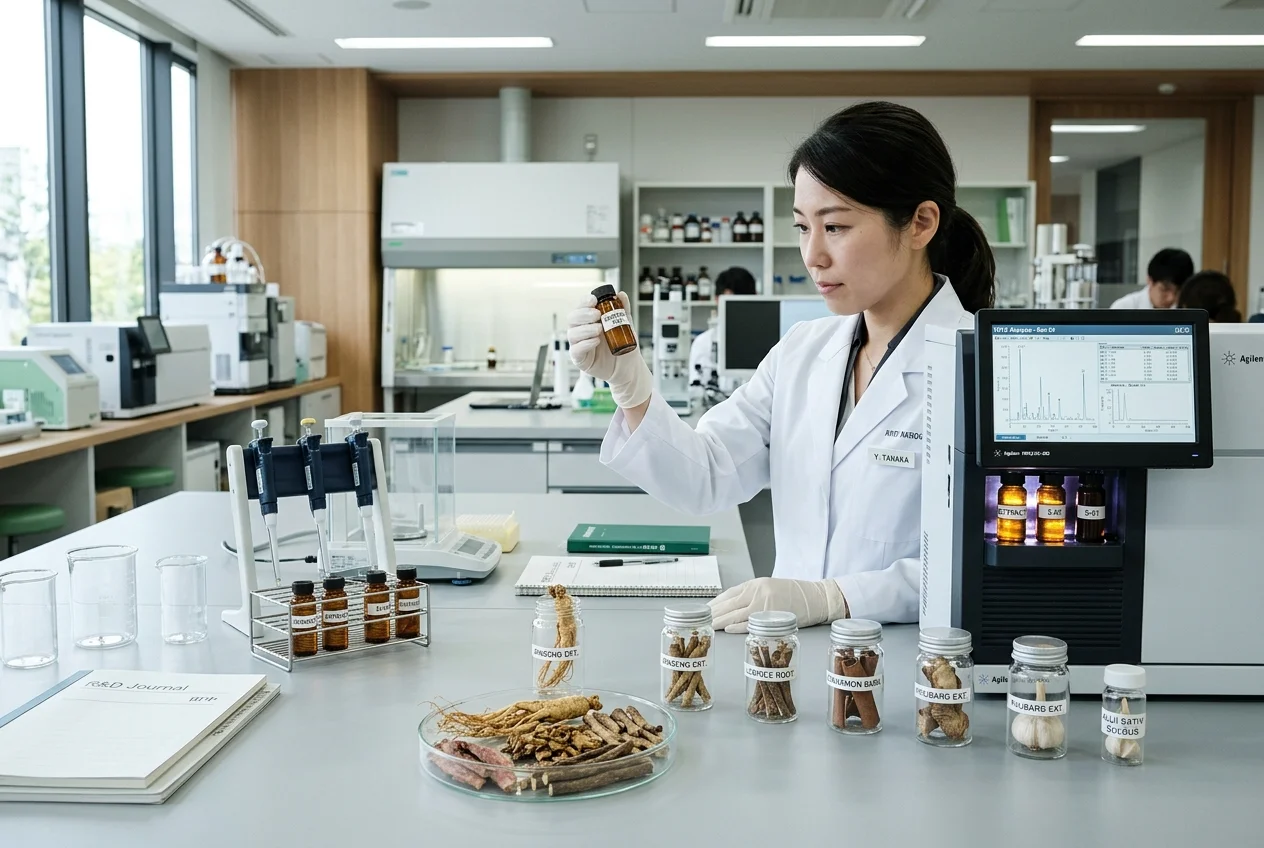
Interest in traditional Japanese medicine continues in 2026, particularly as researchers investigate how established multi-herb formulas may fit into modern healthcare.
Kampo is now a recognized part of Japan’s medical landscape. The Japan Pharmaceutical Manufacturers Association explains that Kampo developed from Chinese medical traditions but evolved into a distinct Japanese system. Modern Kampo preparations often combine multiple crude drugs and are prescribed in clinical settings.
Recent research demonstrates that the field remains active. A nationwide survey published in Scientific Reports in April 2026 examined how Japanese physicians use Kampo medicine in frailty care. The researchers surveyed 8,351 physicians and found that prescribing patterns varied by clinical setting and specialty. Appetite loss, malnutrition, and sarcopenia were among the concerns for which some physicians reported using Kampo.
The study provides evidence of continued clinical interest in traditional multi-herb medicine. It does not, however, prove that the five historical botanicals discussed in this article are effective treatments for frailty or any other condition.
The modern challenge is to identify which preparations are useful, for whom, at what dose, and with what risks. That requires well-designed studies, reliable manufacturing, accurate botanical identification, and clear communication about uncertainty.
For consumers, it is wise to approach products marketed as “ancient Japanese supplements” with a few practical questions:
These questions matter because “natural” does not automatically mean safe. Ginseng may interact with medication, licorice can affect blood pressure and potassium, cinnamon products vary in their coumarin content, medicinal rhubarb can cause laxative-related complications, and garlic supplements may increase bleeding risk.
Anyone with a chronic medical condition, anyone taking prescription medicines, and anyone who is pregnant or breastfeeding should consult a qualified healthcare professional before using concentrated herbal products.
The hidden botanical history of Sakoku is not a story of Japan discovering five magical supplements behind closed borders. It is a story of regulated trade, traditional medicine, government-sponsored cultivation, and the gradual development of Japanese approaches to herbal knowledge.
Asian ginseng shows how the value of a medicinal plant could influence agricultural policy. Licorice and cinnamon illustrate the complexity of selecting and combining imported botanical ingredients. Rhubarb reveals how the identification of medicinal plants could change over time. Wild garlic, meanwhile, connects the natural world to the mythological imagination preserved in the Kojiki.
These examples also demonstrate why historical and scientific claims must be kept separate. A myth can reveal cultural meaning; an archival record can document trade or cultivation; a laboratory experiment can identify biological activity; and a clinical trial can investigate whether a preparation benefits people. Each provides a different kind of evidence.
In 2026, Japan’s traditional herbal heritage continues to attract interest from researchers, healthcare professionals, and wellness consumers. Its most enduring lesson is that medicinal knowledge develops through exchange, experimentation, and reassessment—not simply through age-old reputation.
The plants of the Sakoku era remain worth exploring, not because they promise miraculous results, but because their history shows how medicine, economics, botany, and culture have shaped one another across centuries.
Sakoku refers to the Tokugawa shogunate’s system of restricting and controlling foreign contact, especially from the 1630s until the mid-19th century. Japan was not completely isolated; regulated trade and diplomatic relations continued through several channels.
Asian ginseng, licorice root, cinnamon bark, and medicinal rhubarb were among the botanical ingredients associated with the wider East Asian and Japanese herbal medicine traditions of the Edo period. Wild garlic also has a notable place in Japanese cultural history and mythology.
Yes. The shogunate supported botanical surveys and the cultivation of medicinal plants. Efforts included investigating local plant resources and attempting to domesticate imported species such as Asian ginseng.
Wild garlic appears in the Kojiki story of Yamato Takeru and the white deer deity at the Ashigara Pass. This episode predates Sakoku and should be understood as mythology, not as a medical experiment.
Not as a group. Some botanical ingredients have been studied in modern research, but the evidence varies by species, preparation, dose, and condition. Historical use alone does not establish clinical effectiveness.
Not all of them. Asian ginseng, licorice, cinnamon, and medicinal rhubarb belong to wider East Asian or international botanical and medical traditions. Their connection to Sakoku lies in their use, trade, cultivation, or adaptation within Japan during the Edo period.