Mark Zuckerberg is not the stereotypical technology executive anymore.
The Meta founder is still one of the world’s most powerful technology leaders, but over the past several years another side of his life has attracted increasing attention: fitness, martial arts, nutrition and performance.
Mark Zuckerberg is not the stereotypical technology executive anymore.
The Meta founder is still one of the world’s most powerful technology leaders, but over the past several years another side of his life has attracted increasing attention: fitness, martial arts, nutrition and performance.
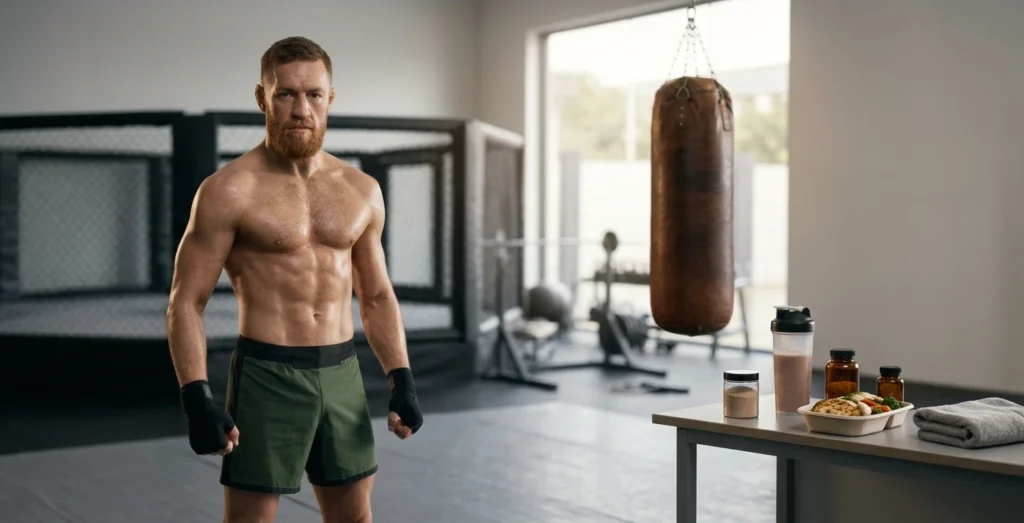
His transformation has been particularly visible through his interest in Brazilian jiu-jitsu, mixed martial arts and strength training. Zuckerberg has spoken about spending significant amounts of time training, competing in grappling tournaments and using physical activity as a way to reset his mind before tackling the demands of running Meta.
That naturally raises another question:
What supplements does Mark Zuckerberg actually take?
The answer is more interesting than many online “celebrity supplement stack” lists suggest.
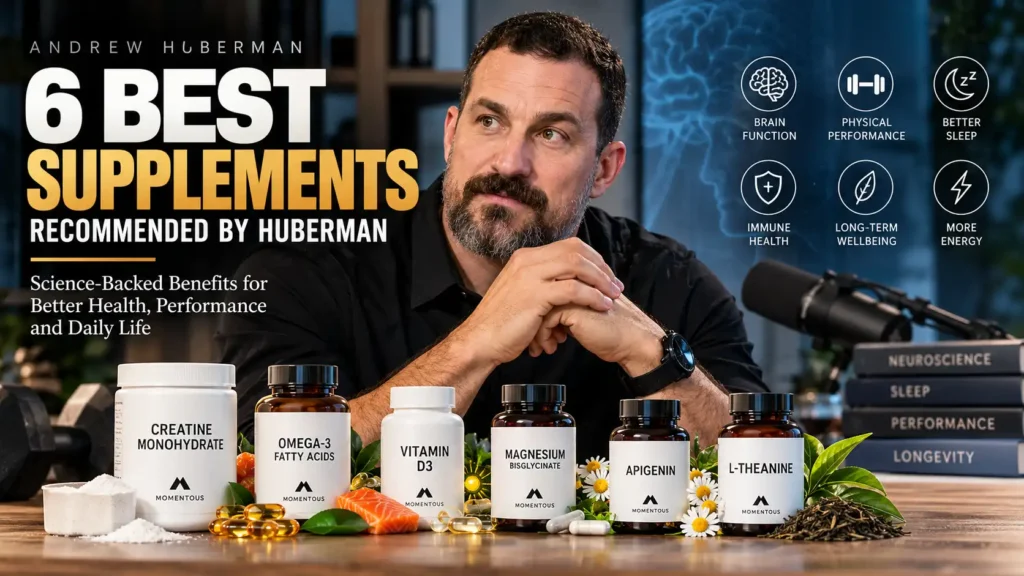
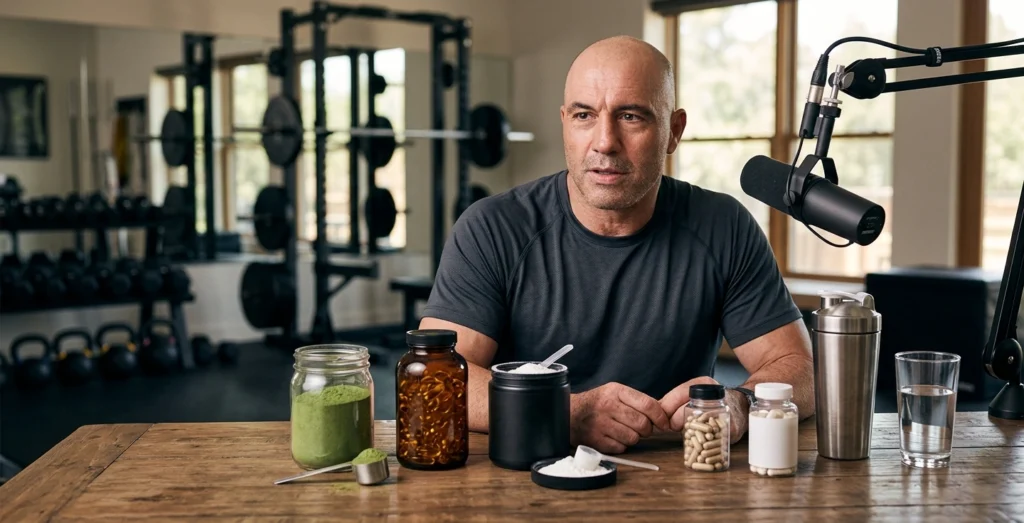
Zuckerberg has publicly mentioned creatine and vitamins, including vitamin D, but he has not published a detailed six-supplement protocol with doses and timings. In his 2025 appearance on Theo Von’s This Past Weekend, Zuckerberg was asked whether he takes any vitamins or nutritional supplements. He mentioned creatine and vitamin D, while describing vitamins generally as something he uses.
That makes creatine and vitamin D the strongest starting points.
The other supplements frequently associated with a high-performance routine — such as protein powder, magnesium, omega-3 fatty acids and electrolytes — are worth discussing from a nutritional perspective, but they should not automatically be described as Zuckerberg’s personal recommendations.
This distinction matters.
So, rather than inventing an “exact Mark Zuckerberg supplement stack,” this article looks at six supplements that are either directly connected to his public comments or relevant to the kind of training and nutrition he has publicly described.
Mark Zuckerberg is the co-founder and CEO of Meta, the technology company behind Facebook, Instagram, WhatsApp and other major digital platforms.
He founded Facebook in 2004 while he was a student at Harvard University. The company eventually grew from a university social network into one of the world’s largest technology businesses.
Today, Meta operates across social media, artificial intelligence, virtual and augmented reality, messaging and other areas of technology.
Zuckerberg’s career has been dominated by technology, but his personal interests have expanded considerably over the years.
His fascination with artificial intelligence and science has also influenced his philanthropic work. Through the Chan Zuckerberg Initiative, Zuckerberg and Priscilla Chan have funded scientific research aimed at improving the understanding and treatment of human disease.
Zuckerberg has also participated in conversations with scientists about health research and biotechnology. In 2023, he appeared on the Huberman Lab podcast with Priscilla Chan to discuss their work on disease research and the future of health technology.
But the biggest change in public perception came from something much more physical.
He started training seriously in martial arts.
For years, Zuckerberg was mostly associated with computers, coding and the image of a technology entrepreneur who spent long hours behind a screen.
That image changed dramatically when he became involved in Brazilian jiu-jitsu and mixed martial arts.
In interviews, Zuckerberg has described training for around two hours in the morning and said that martial arts gives him a mental reset before he starts dealing with work.
During his conversation with Theo Von, he explained that he wakes up and trains rather than relying on coffee to get himself going. He described jiu-jitsu as demanding cardio, strength and neurological stimulation and said the training helps him recenter before beginning his workday.
His interest isn’t purely recreational.
Zuckerberg competed in Brazilian jiu-jitsu tournaments and has trained with high-level fighters. His relationship with MMA has become sufficiently serious that UFC figures have publicly discussed his training and athletic ability.
UFC CEO Dana White has also spoken publicly about Zuckerberg’s dedication to martial arts, describing him as someone who trains seriously rather than treating combat sports as a casual hobby.
That training load changes the nutritional equation.
A person who regularly performs intense grappling, striking, conditioning and strength work has different nutritional demands from someone who spends most of the day sitting at a desk.
And that is where supplements can become useful — not as shortcuts, but as tools for filling specific nutritional or performance gaps.
If there is one supplement that can confidently be connected to Mark Zuckerberg, it is creatine.
During his appearance on Theo Von’s podcast, the conversation turned to what Zuckerberg uses instead of caffeine and other stimulants. He specifically mentioned creatine and vitamins.
Creatine is particularly relevant to someone involved in martial arts and strength training.
Creatine is a naturally occurring compound produced by the human body and obtained through foods such as meat and seafood.
Its main role is connected to energy production.
Muscle cells use ATP as an immediate energy source. During short bursts of intense activity, the phosphocreatine system helps regenerate ATP rapidly.
That makes creatine particularly useful for activities involving repeated high-intensity efforts.
Think about a hard grappling exchange, a series of explosive movements, heavy lifting or repeated sprint efforts.
These are precisely the kinds of activities where rapid energy production matters.
Creatine monohydrate is one of the most extensively researched sports supplements.
Research consistently supports its ability to increase muscle creatine stores and improve performance during repeated high-intensity exercise.
Over time, this can contribute to greater training volume and improvements in strength and muscle development when combined with resistance training.
There is also growing scientific interest in creatine and the brain.
Researchers have investigated whether creatine supplementation can influence memory, cognition and mental performance, particularly under conditions of stress, fatigue or sleep deprivation.
However, it is important not to overstate the evidence.
Creatine is not a magic intelligence supplement.
Its strongest evidence remains in physical performance.
The benefits aren’t necessarily something you feel immediately after taking a scoop.
Instead, creatine can become part of a longer-term training strategy.
Someone who trains several times a week may be able to perform more quality work over time, recover between repeated efforts and gradually improve strength and muscle mass.
For someone like Zuckerberg, whose routine involves physically demanding martial arts training, that makes creatine a logical supplement to discuss.
Zuckerberg has not publicly endorsed a particular creatine brand.
Consumers therefore shouldn’t assume that any particular manufacturer is “Mark Zuckerberg’s creatine.”
When buying creatine, the important factors are generally the ingredient itself, dosage, manufacturing quality and third-party testing.
For most consumers, plain creatine monohydrate is the form with the strongest research support.
Vitamin D is the second supplement most directly connected to Zuckerberg’s public comments.
During his Theo Von interview, when asked about vitamins, Zuckerberg mentioned vitamin D along with creatine.
Vitamin D is particularly interesting because it is technically a vitamin but functions in the body more like a hormone.
The body can produce vitamin D when skin is exposed to UVB sunlight, while smaller amounts come from foods and supplements.
Vitamin D is essential for calcium absorption and normal bone health.
It also plays roles in muscle function and the immune system.
For an athlete or someone training frequently, maintaining adequate vitamin D status is relevant to overall health.
But there is a major difference between correcting vitamin D deficiency and taking very large amounts simply because a celebrity uses it.
More isn’t necessarily better.
Vitamin D is fat soluble, meaning excessive amounts can accumulate in the body.
Vitamin D is often discussed in relation to muscles and physical performance.
If someone is deficient, correcting that deficiency can support normal physiological function.
But a person with adequate vitamin D shouldn’t assume that taking increasingly large doses will produce increasingly impressive results.
This is one reason testing can be useful when supplementation is significant or long term.
Unlike caffeine, vitamin D isn’t something you take and immediately feel.
Its importance is more fundamental.
Adequate vitamin D contributes to normal bone and muscle function and helps maintain overall nutritional status.
For someone who spends most of the day indoors, has limited sunlight exposure or has a documented deficiency, vitamin D may be particularly relevant.
Again, however, Zuckerberg’s mention of vitamin D shouldn’t be interpreted as a universal prescription.
Protein powder is frequently included in online lists about the diets of athletes and technology executives.
But there is an important distinction here.
Zuckerberg has discussed consuming a large amount of protein, but that does not establish a specific protein-powder brand or daily supplement protocol.
During his conversation with Theo Von, the topic moved from caffeine to nutritional supplements, and Zuckerberg referred to consuming a “very large amount of protein” before the conversation moved toward creatine and vitamin D.
Protein itself is not a supplement in the same way creatine is.
It is a macronutrient.
Every cell in the body requires protein, and athletes often need more dietary protein than sedentary individuals.
Brazilian jiu-jitsu and MMA involve repeated muscular contractions, grappling, pulling, pushing, stabilisation and conditioning.
Add strength training to that routine and protein requirements become particularly relevant.
Protein provides amino acids needed for muscle repair and adaptation.
For people who struggle to consume enough protein from normal meals, protein powder can be a convenient solution.
That doesn’t mean everyone needs whey.
Whey protein, casein, soy, pea and other protein sources can all be useful depending on dietary preferences and tolerance.
There is no verified “Mark Zuckerberg protein powder.”
If someone wants to follow the nutritional principle rather than the celebrity association, look for a product with:
For athletes, third-party certification can also be useful.
Magnesium is another supplement commonly associated with athletic recovery.
However, unlike creatine and vitamin D, there is no strong public evidence that Zuckerberg has specifically said he takes magnesium.
It therefore belongs in this article as an evidence-based supplement relevant to his type of training, not as a confirmed part of his personal stack.
Magnesium participates in hundreds of biochemical reactions.
It contributes to:
Athletes may have increased nutritional considerations because exercise, sweating and dietary patterns can influence mineral intake.
But magnesium supplementation isn’t automatically necessary.
Foods such as nuts, seeds, legumes, whole grains and leafy vegetables can provide substantial amounts.
Magnesium is also frequently marketed as a sleep supplement.
Some people report feeling more relaxed after taking certain forms, particularly magnesium glycinate.
However, supplement marketing often goes much further than the scientific evidence.
If poor sleep is caused by an inconsistent schedule, excessive screen exposure, stress or insufficient sleep opportunity, magnesium alone isn’t going to solve the problem.
For someone training hard, however, sleep and recovery are fundamental.
So magnesium may be useful when dietary intake is inadequate, but it should not be presented as a secret part of Zuckerberg’s routine.
Omega-3 fatty acids are another popular addition to high-performance supplement routines.
But once again, there is no reliable public disclosure showing that Zuckerberg regularly takes an omega-3 supplement.
That doesn’t make omega-3 unimportant.
The major long-chain omega-3 fatty acids, EPA and DHA, are involved in numerous biological processes.
DHA is particularly abundant in the brain and retina.
EPA and DHA are commonly obtained from oily fish, while plant foods such as flaxseed and chia provide ALA.
Omega-3 fatty acids are frequently studied in relation to cardiovascular health, inflammation and recovery.
However, supplement claims can easily get ahead of the evidence.
A person who regularly eats fatty fish may already obtain considerable EPA and DHA.
Someone who rarely consumes seafood may have a different nutritional profile.
Vegetarians and vegans can also consider algae-based DHA and EPA products.
This is another supplement where the effects aren’t necessarily obvious.
You don’t normally take an omega-3 capsule and suddenly feel more energetic.
Its potential role is nutritional — helping provide fatty acids involved in normal physiological processes.
That makes it quite different from stimulants or pre-workout supplements.
Electrolytes are perhaps one of the most practical additions to a demanding training routine.
But again, there is no strong evidence that Zuckerberg has publicly identified a particular electrolyte product as part of his personal supplement stack.
Electrolytes include minerals such as sodium, potassium and magnesium.
They help regulate fluid balance, nerve signalling and muscle contraction.
For someone exercising intensely and sweating heavily, replacing fluids and electrolytes can become more important.
A two-hour martial arts session is very different from sitting at a computer.
Grappling, drilling, sparring and conditioning can generate substantial heat and sweat.
When sweat losses are significant, replacing fluids is essential.
The exact amount required depends on environmental temperature, exercise intensity, sweat rate and individual physiology.
For shorter or moderate workouts, ordinary food and water may be enough.
For prolonged, intense sessions, an electrolyte drink may be useful.
The important point is that electrolytes are not necessarily a “performance hack.”
They are part of basic hydration physiology.
This is where a responsible article needs to separate documented information from internet speculation.
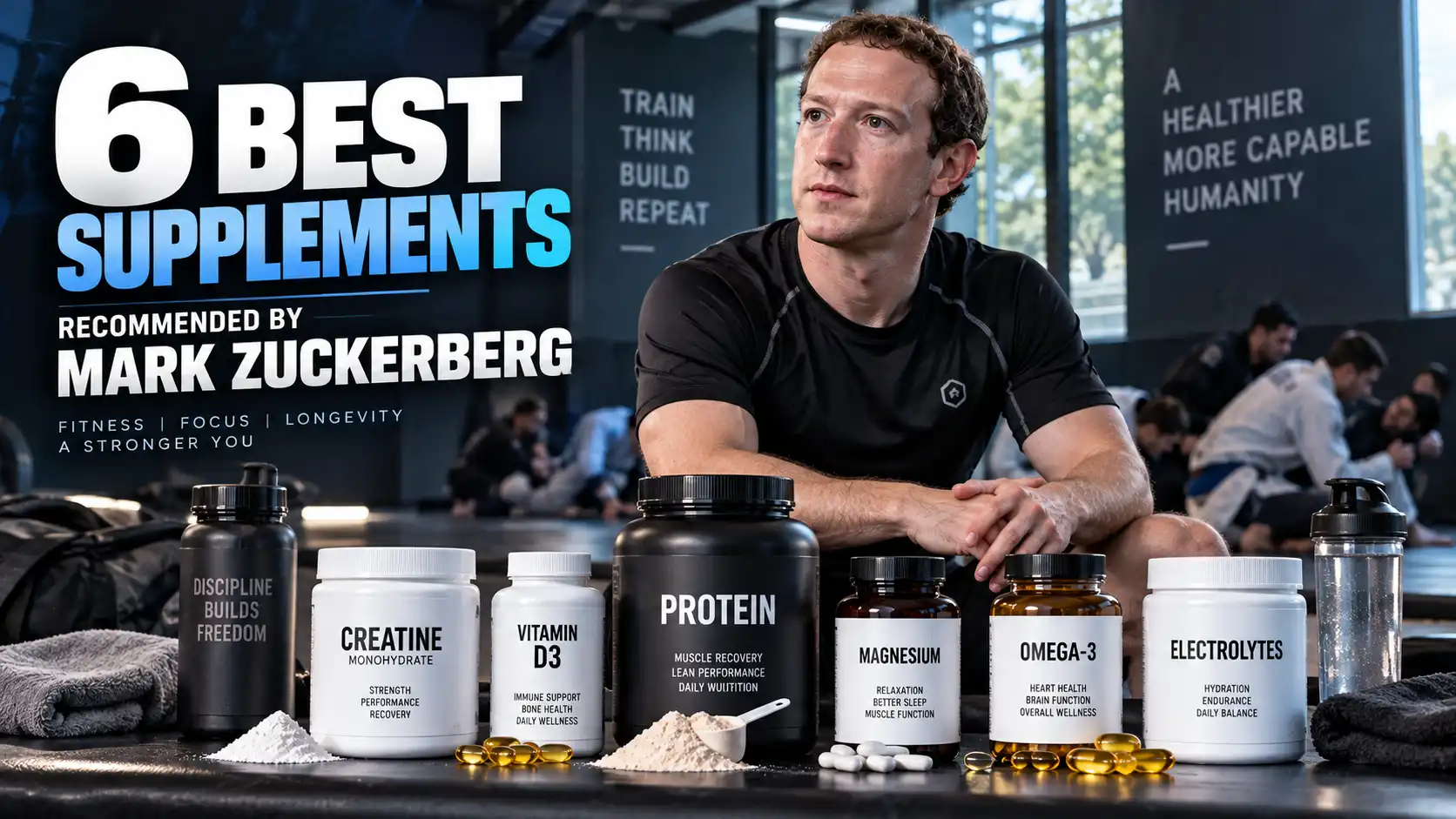
Based on his public comments, the clearest supplements connected to Zuckerberg are:
Publicly mentioned by Zuckerberg.
Publicly mentioned by Zuckerberg.
Zuckerberg has also spoken broadly about vitamins.
He has discussed consuming a large amount of protein, but that does not prove he uses a particular protein powder.
Relevant to athletes, but not publicly confirmed as part of his routine.
Nutritionally relevant, but not publicly confirmed as part of his routine.
Potentially useful during heavy training, but not publicly confirmed as a Zuckerberg supplement.
This distinction is important because several websites currently publish detailed “Mark Zuckerberg supplement stacks” containing vitamin D, magnesium, omega-3, creatine and whey with precise doses despite lacking a primary source for those claims.
Supplements make more sense when viewed within the broader diet.
Zuckerberg has previously discussed eating around 4,000 calories per day during periods of intense training. Reports of his routine have connected that intake to his MMA and strength-training workload rather than a simple bodybuilding bulk.
That number should not be interpreted as a recommendation.
A 4,000-calorie diet may be appropriate for one highly active person and excessive for another.
Calories depend on body size, training volume, age, metabolism and goals.
The same principle applies to protein.
If someone is already consuming enough protein through food, adding several protein shakes may simply increase calories without providing a meaningful additional advantage.
Perhaps the biggest lesson from Zuckerberg’s routine isn’t a particular capsule.
It’s consistency.
He has repeatedly spoken about martial arts as part of his daily routine and has described training as something that helps him mentally reset.
In his conversation with Theo Von, Zuckerberg said he starts his day with around two hours of fighting and described the experience as better than caffeine for him.
That tells us something important about performance.
A supplement can potentially support training.
It cannot replace training.
Creatine can help support the energy systems used during high-intensity exercise.
It cannot teach someone Brazilian jiu-jitsu.
Protein can help meet nutritional requirements.
It cannot replace a balanced diet.
Vitamin D can correct inadequate status.
It cannot replace sleep, exercise or time outdoors.
Electrolytes can help replace fluids and minerals lost through sweat.
They cannot turn a sedentary lifestyle into an athletic one.
Celebrity supplement lists are attractive because they turn complicated biology into a simple shopping list.
Six bottles.
Six benefits.
One famous person.
Real human physiology is considerably more complicated.
Mark Zuckerberg’s publicly discussed routine suggests that he puts significant emphasis on physical activity, particularly martial arts, while avoiding dependence on caffeine and recreational drugs. His supplement comments point toward a relatively small number of basics rather than a huge collection of pills.
That is quite different from the elaborate supplement stacks sometimes attributed to him online.
The most defensible takeaway is therefore not:
“Take these six supplements because Mark Zuckerberg takes them.”
It is:
“Understand what your body needs, then use supplements to fill genuine gaps.”
That approach is less exciting, but considerably more useful.
Mark Zuckerberg’s evolution from technology entrepreneur to serious martial-arts enthusiast has created enormous interest in his diet, workout routine and supplements.
But the evidence doesn’t support the idea that he has publicly revealed a six-supplement formula.
Creatine and vitamin D are the clearest supplements connected to his own comments. Protein is clearly part of his nutritional thinking, although a specific protein powder has not been established. Magnesium, omega-3 fatty acids and electrolytes are sensible subjects to discuss for someone undertaking demanding physical training, but they should not be falsely presented as confirmed elements of Zuckerberg’s personal routine.
The distinction between what a celebrity actually said and what the internet assumes they take is especially important in health content.
For anyone interested in following the principles behind Zuckerberg’s routine, the fundamentals remain much more important than the supplement shelf:
Train consistently. Eat enough protein and total calories for your activity. Stay hydrated. Get adequate sleep. Build a diet around nutrient-dense foods. Use supplements when they solve a specific nutritional or performance problem.
The interesting part of Mark Zuckerberg’s fitness story isn’t a secret pill.
It is the fact that one of the world’s busiest technology executives has made serious physical training part of his daily life — and appears to view that training as a tool for mental clarity as much as physical fitness.
That may be the most useful lesson to take from his routine.