Citicoline is a naturally occurring compound involved in the production and maintenance of cell membranes, especially those found in the brain and nervous system.


Citicoline is different from many herbal nootropics because it is not primarily obtained from a particular plant or food.
It occurs naturally as part of human and animal metabolism and is involved in the synthesis of phospholipids.
Commercial Citicoline used in supplements is generally manufactured rather than extracted from food.
One of the best-known branded forms is Cognizin, a patented form of citicoline manufactured by Kyowa Hakko Bio.
Citicoline has also been used in pharmaceutical and clinical settings in several countries, particularly in Europe and Asia.
There is no scientific ranking proving that one country produces universally superior Citicoline.
Instead, look for:
For branded ingredients, traceability can be an advantage.
Cognizin, for example, is a branded form of Citicoline with published research behind the ingredient. (cognizin.com)
The United States, Japan, Europe, India, and other regions all have companies manufacturing or selling Citicoline products.
So the better question is not:
“Which country makes the best Citicoline?”
It is:
“Which product provides verified Citicoline from a reputable manufacturer at a clearly stated dose?”
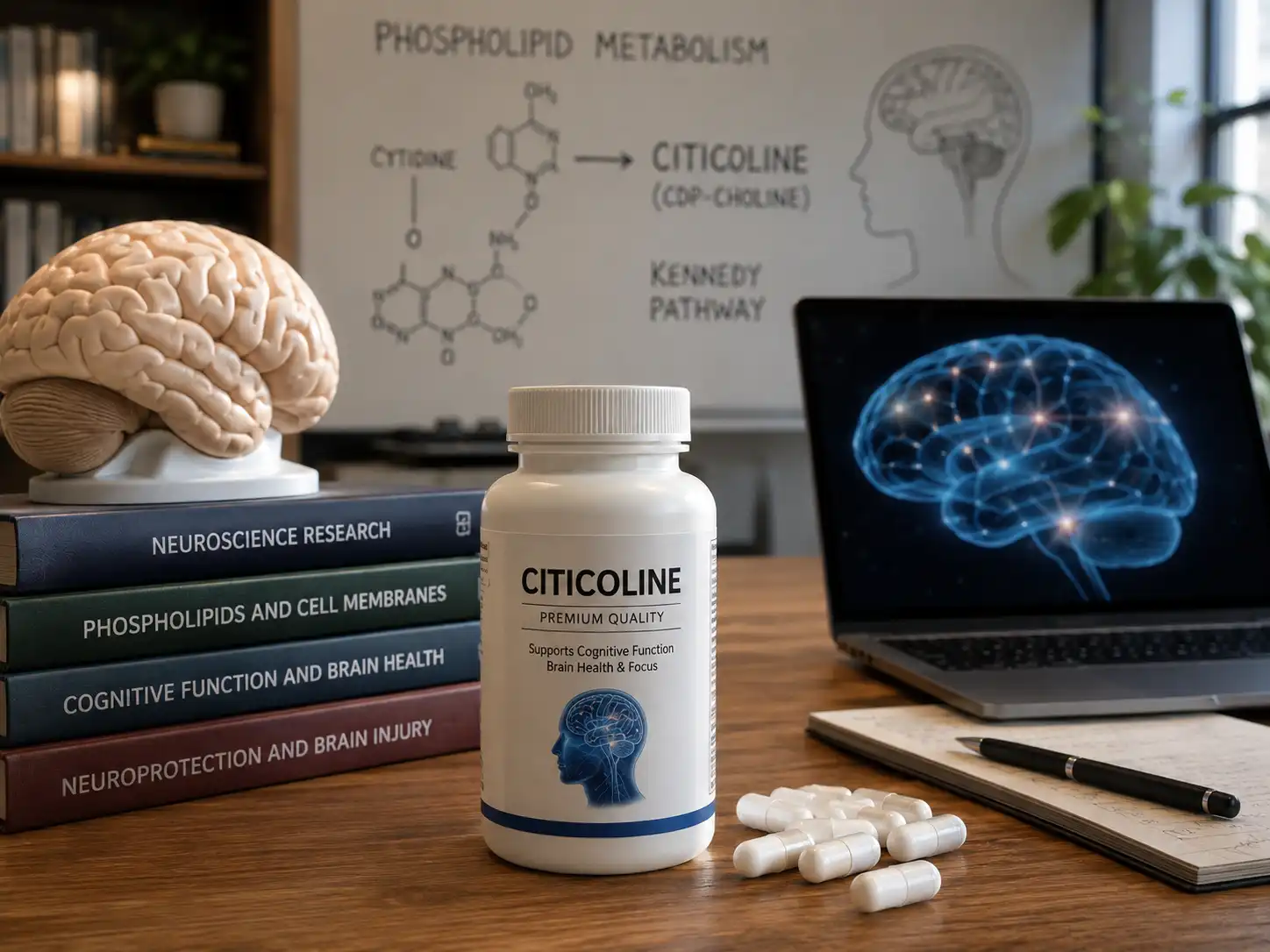
Citicoline has a more technical history than herbs such as Bacopa or Ashwagandha.
The compound was identified through research into phospholipid metabolism and nucleic-acid chemistry during the twentieth century.
Citicoline became scientifically important because it is a key intermediate in the Kennedy pathway, one of the pathways the body uses to produce phosphatidylcholine.
Phosphatidylcholine is one of the major phospholipids found in cell membranes.
This connection attracted the attention of researchers interested in brain injury and neurological disease.
Citicoline was subsequently studied in countries including Japan, Spain, Italy, and the United States, particularly for neurological conditions such as stroke and cognitive impairment.
It later became available as a dietary supplement in many markets.
The modern nootropic popularity of Citicoline is largely based on three ideas.
First, it supplies choline, which can contribute to acetylcholine production.
Second, it provides cytidine, which can be converted into uridine-related metabolites involved in phospholipid synthesis.
Third, clinical research suggested that Citicoline could influence aspects of cognitive function.
This combination made it particularly attractive to people interested in:
Citicoline also became popular in combination formulas containing caffeine, L-Theanine, Bacopa, Alpha-GPC, and other nootropic ingredients.

Citicoline has been studied for both cognitive performance in healthy people and neurological conditions.
The evidence is stronger in some areas than others.
Memory is one of the main reasons Citicoline is used as a nootropic.
A 2023 systematic review and meta-analysis examined randomized controlled trials involving citicoline and cognitive outcomes.
The researchers found that Citicoline was associated with improvements in several cognitive measures, particularly memory-related outcomes, although the evidence varied between populations and studies. (pubmed.ncbi.nlm.nih.gov)
A randomized controlled trial involving healthy adults aged 50 to 85 found that 500 mg and 1,000 mg daily of Citicoline improved episodic memory compared with placebo after 12 weeks. (pubmed.ncbi.nlm.nih.gov)
That makes Citicoline particularly interesting for people concerned about normal age-related cognitive changes.
However, a supplement improving performance on a memory test is not the same thing as preventing dementia.
Citicoline may also influence attention.
A randomized, double-blind, placebo-controlled study involving healthy women aged 40 to 60 found that 250 mg and 500 mg of Citicoline improved certain measures of attention after 28 days. (pubmed.ncbi.nlm.nih.gov)
This is particularly relevant for people looking for a nootropic that is not primarily a stimulant.
Citicoline does not work like caffeine.
Instead, its proposed effects are related to neurotransmitter production and neuronal membrane metabolism.
Some people describe Citicoline as producing a subtle feeling of mental clarity or energy.
This may be related to its role in cellular metabolism and neurotransmitter synthesis.
However, the evidence for “mental energy” as a distinct outcome is weaker than the evidence for specific cognitive tests.
So it would be more accurate to say Citicoline may support cognitive performance rather than calling it a direct energy booster.
This is one of Citicoline’s most biologically established functions.
After absorption, Citicoline provides choline and cytidine-related metabolites that participate in the synthesis of phospholipids.
Phosphatidylcholine is an important component of cell membranes.
This matters because neurons rely heavily on healthy cell membranes for communication, signaling, and maintaining their structure.
This mechanism is one of the main reasons Citicoline has been studied in neurological conditions.
Choline is required for the synthesis of acetylcholine.
Acetylcholine is a neurotransmitter involved in:
Citicoline can contribute to the body’s choline pool.
But this does not mean more Citicoline automatically produces more acetylcholine in a way that improves cognition.
The brain regulates neurotransmitter production carefully.
This is why clinical outcomes matter more than simply knowing that a supplement affects a biochemical pathway.
Citicoline has attracted attention among older adults because several clinical trials have investigated cognitive function in people experiencing age-related decline.
The 2013 systematic review and meta-analysis found that Citicoline was associated with improvements in memory and behavior in people with vascular cognitive impairment and related conditions, although the researchers emphasized limitations in the available evidence. (pubmed.ncbi.nlm.nih.gov)
The evidence is therefore promising but not strong enough to describe Citicoline as a proven anti-aging treatment.
Citicoline has been extensively studied in stroke research.
The theory is that supporting phospholipid synthesis and neuronal membrane repair could help the brain recover after ischemic injury.
However, large clinical trials have produced mixed results.
The major ICTUS trial, which involved 2,298 patients with moderate-to-severe acute ischemic stroke, did not find a significant benefit of Citicoline over placebo on the primary combined outcome of death, disability, or recovery at 90 days. (pubmed.ncbi.nlm.nih.gov)
This is important because it shows why a plausible mechanism does not automatically translate into a proven medical treatment.
Citicoline should not be considered a replacement for emergency stroke treatment.

Citicoline appears to have a relatively good safety profile in clinical studies.
However, some people can experience side effects.
Headache is one of the more commonly reported complaints.
Some people may notice it when starting a higher dose.
Possible digestive symptoms include:
These effects are usually mild when they occur.
Citicoline is not a stimulant in the same way as caffeine, but some people report feeling more alert after taking it.
For someone who is sensitive to stimulating effects, taking Citicoline late in the evening may interfere with sleep.
Choline is an essential nutrient and is available through foods such as:
This does not mean dietary choline and Citicoline are interchangeable.
But it does mean that people with an adequate diet do not necessarily need additional choline-related supplementation.
Citicoline has been used in clinical research for relatively long periods and appears well tolerated.
A 2024 systematic review found Citicoline to have a favorable safety profile across 50 studies involving more than 4,000 participants. (pubmed.ncbi.nlm.nih.gov)
Still, safety evidence is stronger for conventional study periods than for taking high doses indefinitely.

Citicoline has one advantage over many trendy nootropics:
It has been studied in actual human clinical trials for decades.
But the evidence is not universally positive.
A 2013 systematic review and meta-analysis found that Citicoline may improve memory and behavior in people with chronic vascular cognitive impairment and related conditions. (pubmed.ncbi.nlm.nih.gov)
A separate randomized controlled trial in healthy older adults found improvements in episodic memory after 12 weeks of supplementation. (pubmed.ncbi.nlm.nih.gov)
These findings provide a reasonable basis for investigating Citicoline as a cognitive-support supplement.
The 2021 randomized controlled trial involving healthy women found improvements in certain attention measures after 28 days of 250 or 500 mg/day. (pubmed.ncbi.nlm.nih.gov)
This suggests that Citicoline may influence more than memory.
A 2023 systematic review and meta-analysis found that Citicoline was associated with improvements in several cognitive domains, including memory and attention, although the certainty and consistency of the evidence varied. (pubmed.ncbi.nlm.nih.gov)
This is encouraging but not definitive.
This is where the scientific story becomes much more complicated.
Although earlier studies suggested potential benefits, the large ICTUS randomized clinical trial failed to show significant improvement in major neurological outcomes after acute ischemic stroke. (pubmed.ncbi.nlm.nih.gov)
A 2024 systematic review concluded that Citicoline appears safe and may have potential benefits across several neurological and cognitive conditions, but the authors also highlighted the need for better-designed clinical trials. (pubmed.ncbi.nlm.nih.gov)
The evidence is strongest for:
Memory and certain aspects of cognitive function.
It is less certain for:
General focus, athletic performance, brain aging, and neurological disease treatment.
And it is not strong enough to claim that Citicoline prevents dementia or makes healthy people dramatically smarter.

For healthy adults, Citicoline can be taken daily, and many clinical studies have used daily supplementation.
Common supplemental doses are approximately 250 to 500 mg per day, although studies have tested different amounts.
A 12-week randomized trial in older adults used 500 or 1,000 mg/day. (pubmed.ncbi.nlm.nih.gov)
A 2021 attention study used 250 and 500 mg/day. (pubmed.ncbi.nlm.nih.gov)
There is no universally established ideal time.
Because some people find it mentally stimulating or alerting, morning or early afternoon may be preferable.
If you combine it with caffeine, pay attention to your total stimulant intake.
Not necessarily.
Higher doses are not automatically better.
For someone experimenting with Citicoline for general cognitive support, a lower studied dose may be a more sensible starting point than immediately taking the highest amount available.
There is no strong evidence establishing that Citicoline must be cycled.
Many studies use continuous daily supplementation for several weeks or months.
However, there is also no requirement for healthy people to take it indefinitely.
If you are taking Citicoline for a specific medical condition, the appropriate dose and duration should be determined by a healthcare professional.
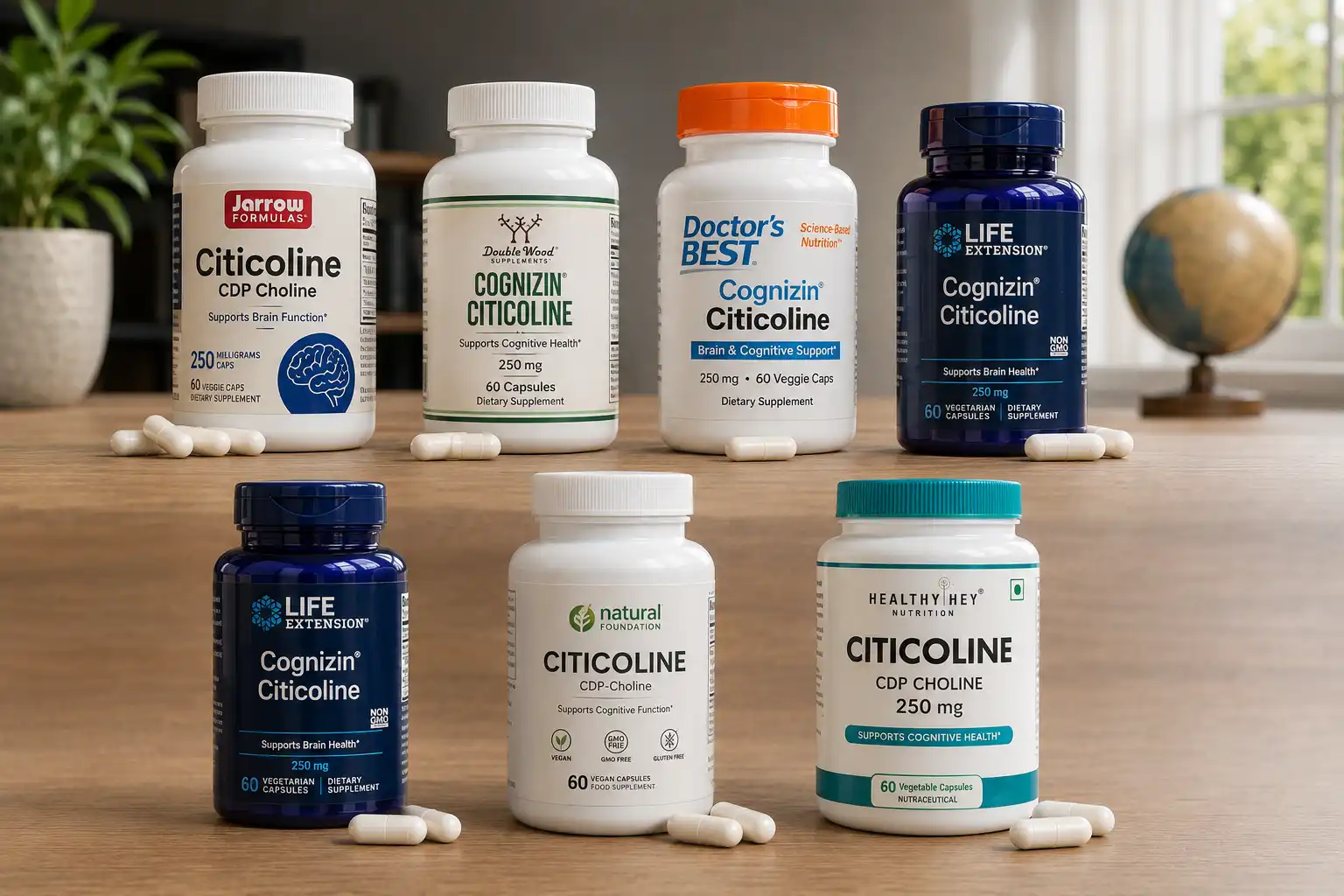
For Citicoline, I would prioritize genuine CDP-choline, clear dosing, reputable manufacturing, third-party testing, and well-documented branded ingredients.
1. Jarrow Formulas Citicoline CDP Choline
A widely available U.S. supplement providing Citicoline in a straightforward capsule formulation from an established supplement company.
2. Double Wood Cognizin Citicoline
A U.S.-market product using Cognizin, the branded Citicoline ingredient with published human research behind it. (cognizin.com)
3. Doctor’s Best Cognizin Citicoline
A Singapore-available product using Cognizin Citicoline and providing a clearly stated 250 mg serving, making it convenient for users looking for a lower-dose option. (iherb.com.sg)
4. Life Extension Cognizin Citicoline
A Singapore-available Citicoline supplement using Cognizin, from a long-established U.S. supplement manufacturer. (sg.iherb.com)
5. Life Extension Cognizin Citicoline
A European-market option providing 250 mg of Cognizin Citicoline per capsule and designed as a simple standalone cognitive-support supplement. (lifeextensioneurope.com)
6. Natural Foundation Citicoline
A European-market Citicoline product offering a clearly labeled CDP-choline formulation for consumers looking for a standalone product rather than a multi-ingredient nootropic blend.
7. HealthyHey Nutrition Citicoline 250 mg
An India-market Citicoline supplement providing 250 mg per capsule and positioned as a straightforward cognitive-support product.
When comparing these products, remember that 250 mg Citicoline is not automatically equivalent to 250 mg of another choline compound.
Citicoline, Alpha-GPC, choline bitartrate, and phosphatidylcholine are different compounds with different chemical structures and pharmacokinetics.
If you specifically want Citicoline, look for the words:
Citicoline / CDP-Choline
on the Supplement Facts panel.
Citicoline, also known as CDP-choline, is a naturally occurring compound involved in the production of phospholipids and other molecules essential for healthy cell membranes.
It is particularly interesting to brain researchers because Citicoline can provide choline and cytidine-related metabolites, which are involved in the synthesis of phosphatidylcholine and other neuronal components.
That gives Citicoline a strong biological rationale for its use as a cognitive-support supplement.
The human evidence is also more substantial than it is for many newer nootropics.
Clinical trials have reported improvements in certain measures of memory, attention, and cognitive performance, particularly among older adults and people with some forms of cognitive impairment. (pubmed.ncbi.nlm.nih.gov)
One randomized trial involving healthy adults aged 50 to 85 found improvements in episodic memory after 12 weeks of Citicoline supplementation. (pubmed.ncbi.nlm.nih.gov)
Another trial found improvements in attention after 28 days of supplementation. (pubmed.ncbi.nlm.nih.gov)
However, the evidence becomes much less straightforward when Citicoline is promoted as a treatment for neurological disease.
The large ICTUS trial, which included more than 2,000 patients with acute ischemic stroke, failed to demonstrate a significant improvement in major neurological outcomes. (pubmed.ncbi.nlm.nih.gov)
This is a useful reminder that a scientifically plausible mechanism does not guarantee a clinically meaningful benefit.
For healthy adults, Citicoline is best viewed as a potential cognitive-support supplement, not a magic brain enhancer.
A commonly studied range is approximately 250 to 500 mg per day, although some clinical trials have used higher doses.
If you want to try it, a simple standalone product with transparent dosing is easier to evaluate than a proprietary nootropic blend.
Branded ingredients such as Cognizin may also offer an advantage in terms of traceability and published research, although the presence of a branded ingredient does not guarantee that every person will experience a noticeable benefit.
Citicoline generally appears well tolerated, but headaches, digestive discomfort, and occasional restlessness can occur.
The long-term safety picture is reasonably reassuring but still less complete than for essential nutrients that have been studied for decades in large populations. (pubmed.ncbi.nlm.nih.gov)
The most accurate conclusion is:
Citicoline is a scientifically plausible and reasonably well-researched nootropic that may support memory and attention, particularly in certain populations, but it is not proven to make healthy people significantly smarter or prevent neurological disease.
For someone interested in cognitive health, it can be an interesting addition to a broader strategy that includes good sleep, regular exercise, adequate nutrition, learning, social activity, and management of cardiovascular risk factors.
The supplement may help.
But the foundation still matters more.
There is no evidence that Citicoline dramatically increases intelligence. Research suggests it may improve certain aspects of memory and attention, particularly in some older adults, but that is different from increasing overall intelligence.
No. Both provide choline-related benefits, but Citicoline and Alpha-GPC are chemically different compounds. They should not be treated as identical supplements.
There is not enough evidence to say that it prevents dementia. Citicoline has been investigated in cognitive impairment and neurological conditions, but clinical evidence does not establish it as a dementia-prevention treatment. (pubmed.ncbi.nlm.nih.gov)
Yes, daily supplementation has been used in human studies and Citicoline appears to have a favorable safety profile at commonly studied doses. However, healthy people do not necessarily need to take it indefinitely. (pubmed.ncbi.nlm.nih.gov).
It may make some people feel more mentally alert, but Citicoline is not a stimulant like caffeine. Its proposed effects are connected more closely to neurotransmitter and phospholipid metabolism than direct stimulation.

Explore expert-reviewed articles on brain function, healthy habits, nutrition, age-related cognitive changes, and practical strategies to keep your mind sharp and resilient.