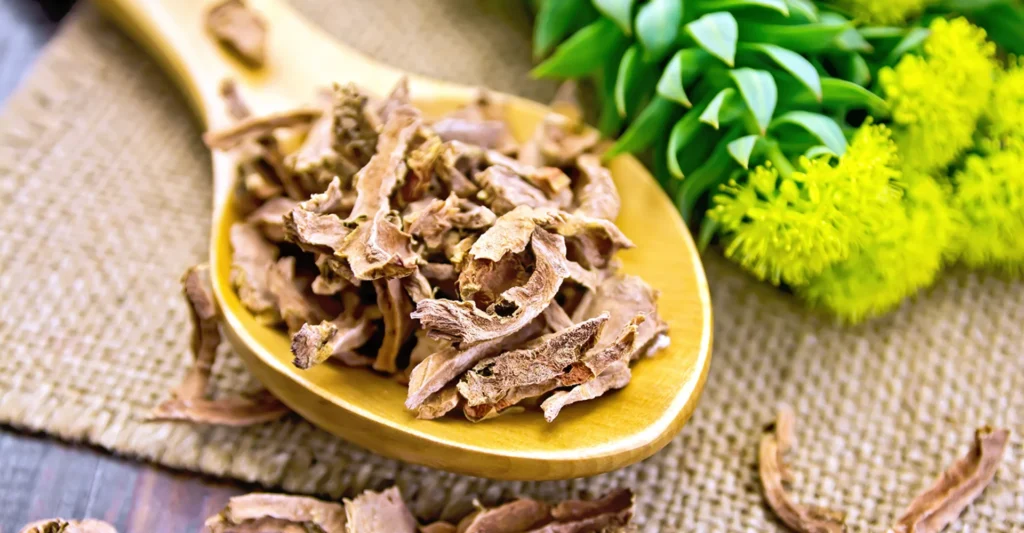
Bacopa Monnieri is one of the better-known herbal nootropics used today for memory, learning, focus, and mental performance.


Bacopa Monnieri naturally grows in wet, tropical and subtropical environments.
It is particularly associated with the Indian subcontinent and can be found around ponds, streams, rivers, marshes, and other areas where the soil stays moist.
India has a particularly important place in the history of Bacopa because the plant has been used in Ayurvedic medicine for centuries. Indian agricultural research sources describe Bacopa as native to India, Bangladesh, and Southern Asia.
The plant is also cultivated or found in other parts of Asia and in several tropical regions around the world.
India has a strong advantage when it comes to traditional knowledge, cultivation, Ayurvedic use, and research, but it would be misleading to say that every Bacopa product from India is automatically better than products from other countries.
The quality of a Bacopa supplement depends much more on how the herb was identified, cultivated, extracted, standardized, and tested.
A high-quality product should ideally provide information about:
This matters because a bottle claiming “1,000 mg Bacopa” does not necessarily contain the same amount of active compounds as another product with the same number.
Bacosides are among the best-known active compounds in Bacopa.
A standardized extract tells you that the manufacturer is trying to maintain a consistent amount of these compounds from batch to batch.
For example, a 300 mg extract standardized to 50% bacosides provides a very different chemical profile from 300 mg of plain Bacopa leaf powder.
That is why standardization is more useful than simply looking at the largest milligram number on the front of the bottle.
India remains one of the most important sources for Bacopa, but high-quality standardized products are also manufactured in the United States, United Kingdom, Europe, Australia, and other markets.

There is no single person who can accurately be called the “discoverer” of Bacopa Monnieri.
The plant has been used in Ayurvedic medicine for centuries, long before modern botanical science began formally classifying it. It has traditionally been associated with memory, intellect, learning, and mental well-being.
The modern scientific name is Bacopa monnieri, and the plant is also known by several other common and historical names.
One of the biggest sources of confusion is the word Brahmi.
Bacopa Monnieri is commonly called Brahmi, but Centella asiatica is also sometimes called Brahmi. They are different plants.
For anyone buying a supplement, checking the Latin name is therefore important.
Look for:
Bacopa monnieri
rather than relying only on the word “Brahmi.”
Bacopa’s rise in the modern nootropic market happened largely because researchers began testing whether its traditional reputation for memory could be measured scientifically.
One of the early human studies, published in 2001, gave healthy adults 300 mg of Bacopa extract daily for 12 weeks. Researchers reported improvements in certain measures of information processing, learning rate, memory consolidation, and anxiety.
Another randomized controlled trial involving 98 healthy adults over age 55 tested 300 mg/day of BacoMind, a standardized Bacopa extract. The study reported improvements in some memory measures after 12 weeks.
Research involving older adults has also reported improvements in delayed recall and other memory-related outcomes.
These studies helped move Bacopa from traditional herbal medicine into the modern cognitive-supplement market.
Today, Bacopa can be found in standalone capsules, memory formulas, stress supplements, and multi-ingredient nootropic products.

The most interesting potential benefit of Bacopa is memory support.
But researchers are also studying it for learning, stress, mental fatigue, antioxidant activity, and healthy brain aging.
Memory is the area where Bacopa has some of its strongest human evidence.
A systematic review of randomized controlled trials found that Bacopa improved performance on 9 out of 17 tests measuring memory free recall. The studies included in that review generally used 300 to 450 mg of Bacopa extract daily for 12 weeks.
This is encouraging because the results are not based only on animal experiments.
There are actual human randomized trials behind the memory claims.
However, the effect is not universal, and the evidence for other areas of cognition is much weaker.
Learning and memory are closely connected.
In the 2001 randomized trial, researchers reported improvements in learning rate and memory consolidation after 12 weeks of supplementation.
This has made Bacopa particularly interesting to students and people doing mentally demanding work.
But it would be an exaggeration to say that Bacopa dramatically increases intelligence or makes someone learn anything instantly.
The research points toward specific improvements in certain memory processes, not a general increase in intelligence.
Delayed recall refers to your ability to remember information after some time has passed.
This is an important part of everyday memory because remembering something immediately after learning it is different from remembering it hours or days later.
A randomized trial involving healthy older adults found improvements in delayed word recall after 12 weeks of standardized Bacopa supplementation.
Another study involving people with age-associated memory impairment found improvements in measures including logical memory and paired-associate learning.
These findings are encouraging, but they do not establish Bacopa as a treatment for dementia.
Bacopa has traditionally been associated with calming effects, and some modern studies have produced similar findings.
The 2001 trial reported reduced anxiety in participants receiving Bacopa compared with placebo.
More recently, the 2025 randomized controlled trial found potential stress-reduction effects even though its main cognitive outcomes were not significantly different from placebo.
This is an interesting development because it suggests Bacopa may be useful not only for memory but also for the relationship between stress and cognitive performance.
The same 2025 study reported potential anti-fatigue effects after 12 weeks of Bacopa supplementation.
This is still an emerging area of research.
If future trials confirm these findings, Bacopa may prove useful for people who experience mental fatigue during prolonged periods of cognitive work.
For now, however, it is better described as a promising possibility rather than an established treatment.
Bacopa has been studied in older adults with memory concerns, which is one reason it has become popular among people interested in healthy aging.
Some studies report improvements in specific memory tests.
However, this does not mean Bacopa prevents Alzheimer’s disease.
A systematic review of randomized controlled trials in Alzheimer’s disease found no difference between Bacopa and placebo or donepezil, and rated the certainty of the available evidence as very low because of small sample sizes, imprecision, and risk of bias.
This is a crucial distinction.
Bacopa may help certain memory measures.
That is not the same as treating a neurodegenerative disease.
Laboratory and animal studies suggest that Bacopa may influence oxidative stress, inflammation, neuronal signaling, and other pathways involved in brain health.
A 2024 systematic review examining these mechanisms reported evidence involving antioxidant, anti-inflammatory, anti-apoptotic, and other neuroprotective pathways.
These findings help explain why scientists are interested in Bacopa.
But laboratory and animal evidence should not be confused with clinical proof.
A compound protecting cells in a laboratory experiment does not automatically mean a Bacopa capsule will prevent neurological disease in humans.

Bacopa is generally considered reasonably well tolerated in clinical studies, but it is not completely free of side effects.
The most common problems tend to involve the digestive system.
Some people may experience:
These effects may be more noticeable at higher doses.
Taking Bacopa with food may improve tolerance for some people.
Headaches have also been reported.
In the 2025 randomized trial, Bacopa was generally well tolerated and no serious adverse reactions were reported, but the Bacopa group reported adverse reactions more frequently than placebo, mainly digestive complaints and headaches.
This is important for anyone buying Bacopa as a nootropic.
Bacopa is not caffeine.
You should not expect an immediate burst of energy or alertness.
Some people may find its effects calming rather than stimulating.
For someone looking for a late-night study supplement that keeps them awake, Bacopa may not be the best choice.
Bacopa may affect several physiological pathways, so interactions with medications are possible.
A recent review specifically notes that medication interactions and conditions such as hyperthyroidism deserve consideration.
Anyone taking prescription medications should discuss Bacopa with a healthcare professional before using it regularly.
There is not enough high-quality human safety evidence to recommend Bacopa during pregnancy or breastfeeding.
It is better not to self-prescribe it during these periods.
Many clinical studies have lasted around 12 weeks.
That gives researchers useful information about short-term and medium-term use, but much less information about taking Bacopa continuously for many years.
This is one reason daily use should be viewed as an optional supplement strategy rather than something every healthy person needs indefinitely.

Bacopa has a stronger human research base than many herbal nootropics, but the evidence is still mixed.
The most convincing signal is around memory.
The classic research includes multiple randomized, double-blind, placebo-controlled trials.
A 2008 study in healthy older adults used 300 mg/day for 12 weeks and found improvements in certain memory outcomes.
A separate study in adults with age-associated memory impairment used standardized Bacopa twice daily for 12 weeks and found significant improvements in mental control, logical memory, and paired-associate learning.
Another trial involving 98 adults over 55 tested 300 mg/day of BacoMind and assessed both visual and verbal memory.
A 2012 systematic review identified six randomized controlled trials and found some evidence for improvement in memory free recall, while noting limited evidence for other cognitive abilities.
A later meta-analysis included nine studies and 518 participants and specifically examined standardized Bacopa extracts used for at least 12 weeks.
A broader systematic review of plant-derived nootropics concluded that Bacopa appears to have potential benefits involving language, learning, and memory, while also emphasizing inconsistencies across the research.
The newest evidence is a good reason to avoid exaggerated claims.
The 2025 randomized trial involving 101 adults found no significant improvement in its primary cognitive outcomes after 12 weeks of Bacopa, although stress and fatigue outcomes were promising.
At the same time, a 2026 network meta-analysis of 29 randomized controlled trials involving 2,107 healthy adults found that Bacopa performed well for certain working-memory and short-term-memory outcomes, although the authors noted limitations because many comparisons were indirect.
Taken together, the evidence suggests:
Bacopa is promising for memory, but it is not a guaranteed cognitive enhancer.
The results also appear to depend on the extract, dose, study population, treatment duration, and cognitive test being used.

If you decide to try Bacopa, daily use is the way it has most often been studied.
Unlike caffeine, Bacopa is not expected to produce its main cognitive effects immediately.
Many human trials have used daily supplementation for approximately 12 weeks.
This means taking one capsule today and deciding tomorrow that it does not work is not a meaningful test.
A commonly researched amount is around 300 mg per day of a standardized Bacopa extract, although studies have used different extracts and doses.
The important word is standardized.
A 300 mg standardized extract cannot automatically be compared with 300 mg of raw leaf powder.
Look at the:
A high percentage of bacosides also does not automatically mean a better product. The specific extract used in clinical research matters.
There is no universally proven best time.
Because digestive problems can occur, taking it with food is a practical option.
If it makes you feel relaxed or sleepy, taking it later in the day may make more sense.
If you are using it for daytime cognitive work, take it at a time that does not interfere with your alertness.
No.
Healthy adults do not have a medical requirement to take Bacopa.
It may be worth considering if you are interested in a non-stimulant nootropic and are willing to evaluate it over several weeks rather than expecting an instant effect.
People with significant memory loss, dementia, depression, anxiety, thyroid disease, or other medical conditions should not use Bacopa as a substitute for professional care.

When choosing a Bacopa supplement, I would prioritize standardization, transparent bacoside content, exact species identification, manufacturing quality, and independent testing over the largest number of milligrams on the label.
One important point: these products should not be treated as interchangeable.
For example, 300 mg of a 12% bacoside extract is chemically different from 350 mg of a 50% standardized extract.
And a combination product containing Bacopa plus several other herbs cannot be compared directly with a Bacopa-only capsule.
If your goal is to compare a supplement with clinical research, a product based on a specific standardized extract that has itself been studied in humans is generally easier to evaluate.
Bacopa Monnieri is one of the more interesting herbal nootropics available today, largely because it combines a long history of traditional Ayurvedic use with a growing body of human clinical research.
Its scientific name is Bacopa monnieri, and it grows naturally in wet environments, particularly across India and other parts of South Asia.
The herb’s most studied compounds are bacosides, which are thought to contribute to many of its biological effects.
The strongest reason people take Bacopa is memory.
Several randomized controlled trials have found improvements in certain memory measures after approximately 12 weeks of supplementation. Systematic reviews have also found evidence of improvement in memory free recall, although the evidence for broader cognitive abilities is much less consistent.
There is also emerging evidence that Bacopa may help with stress and mental fatigue.
However, the newest research reminds us why exaggerated nootropic claims should be avoided. A 2025 randomized trial found no significant improvement in its primary cognitive outcomes, despite possible improvements in stress and fatigue.
A newer 2026 network meta-analysis was more encouraging for certain working-memory and short-term-memory outcomes, but the researchers also noted limitations in the evidence base.
So the fairest conclusion is:
Bacopa Monnieri is promising for memory and certain aspects of cognitive function, but it is not a proven “smart drug.”
If you decide to use it, look for Bacopa monnieri, not simply “Brahmi,” because Brahmi can refer to more than one plant.
Also look for a standardized extract with clearly disclosed bacoside content and good manufacturing and testing practices.
A commonly studied approach is around 300 mg per day of a standardized extract, generally taken consistently for several weeks rather than expecting an immediate effect.
And remember that a bigger number on the supplement label does not automatically mean a better product.
Bacopa is best viewed as an optional cognitive-support supplement, not something every healthy person needs.
It may eventually prove to have an important role in healthy cognitive aging, but larger, longer, better-controlled human studies are still needed.
For now, the strongest foundation for memory and brain health remains surprisingly simple: regular physical activity, adequate sleep, a nutritious diet, social engagement, learning new skills, and managing conditions that affect cardiovascular health.
Bacopa can be part of that picture, but it should not replace the basics.
The bottom line: Bacopa Monnieri has more credible human evidence than many herbal nootropics, particularly for memory, but its benefits are likely to be modest and gradual rather than dramatic or immediate.
There is no strong evidence that Bacopa increases general intelligence. Human research is more supportive of specific memory outcomes, particularly recall and learning, rather than a broad increase in intelligence.
Bacopa is generally studied over several weeks rather than as an instant nootropic. Many randomized trials have used daily supplementation for around 12 weeks before assessing cognitive changes.
No. Bacopa has been investigated in Alzheimer’s disease and cognitive impairment, but a systematic review found no established advantage over placebo or donepezil and rated the evidence as very low certainty.
Bacopa Monnieri is commonly called Brahmi, but the name can also refer to Centella asiatica. These are different plants, so checking the scientific name on a supplement label is important.
Daily use has been studied and is generally well tolerated in short-term clinical trials. However, digestive problems and headaches can occur, and long-term safety data are less extensive.

Explore expert-reviewed articles on brain function, healthy habits, nutrition, age-related cognitive changes, and practical strategies to keep your mind sharp and resilient.