Australia has several layers of medicine regulation. A drug may be prohibited from sale and supply, withdrawn from the Australian market after new safety evidence, recalled by its manufacturer, restricted to prescription use, or prohibited from particular therapeutic applications. These are not legally identical outcomes.
The country’s principal medicines regulator is the Therapeutic Goods Administration (TGA). Medicines generally need to be entered in the Australian Register of Therapeutic Goods (ARTG) before they can legally be supplied in Australia, unless an exemption applies. The TGA can take regulatory action when safety, quality, efficacy or compliance problems emerge.


Status in Australia: Withdrawn from the Australian market historically; thalidomide is not simply an entirely banned medicine today and is available under highly controlled conditions for specific medical uses.
Few medicines have had a greater impact on pharmaceutical regulation than thalidomide.
The drug was introduced internationally as a sedative and was widely marketed during the 1950s and early 1960s. In Australia, it was also used to treat nausea and morning sickness during pregnancy.
The consequences were catastrophic.
Thalidomide was associated with severe congenital abnormalities, including shortened or absent limbs, hearing and vision problems and malformed internal organs. The TGA estimates that more than 10,000 children worldwide were born with birth defects associated with thalidomide, with around 40% estimated to have died within their first year.
Australia’s experience with thalidomide became particularly significant because the country did not yet have the modern pre-market medicine evaluation system that exists today.
The drug was eventually withdrawn from the Australian market in 1961. The TGA describes the tragedy as a major event in the evolution of Australia’s therapeutic-goods regulatory system.
The history is also more complicated than the phrase “Australia banned thalidomide” suggests. Thalidomide was not permanently eliminated from Australian medicine. It has since been used for certain conditions, including some cancers and leprosy-related treatment, but under strict controls and with safeguards designed to prevent fetal exposure.
The thalidomide tragedy ultimately contributed to a broader shift toward requiring evidence of safety and efficacy before medicines could be supplied.
Why was it removed?
Primarily because of its devastating effects on fetal development.
Key lesson:
A medicine that appears useful in adults can have completely different risks during pregnancy. Thalidomide remains one of the most important historical examples of why pharmacovigilance and reproductive-safety testing matter.

Status in Australia: Prohibited for therapeutic use.
Phenacetin was once a commonly used pain-relieving medicine and was incorporated into various analgesic preparations.
Its history became increasingly problematic as evidence accumulated linking long-term exposure to serious kidney damage and other health problems.
Australia eventually prohibited phenacetin for therapeutic use. The current Australian Poisons Standard specifically lists phenacetin for therapeutic use in Schedule 10, while allowing an exclusion when it is present as an excipient under the relevant provisions.
The dangers of phenacetin have not disappeared simply because it is no longer an accepted painkiller.
In 2024, Queensland drug-checking services reported finding phenacetin in cocaine samples tested on the Gold Coast. ABC News reported that the medicine had been banned in Australia decades earlier because of its links to kidney disease and cancer among long-term users.
Phenacetin’s story is therefore not just historical. Its detection in illicit drug samples illustrates how substances removed from legitimate medicine can continue to appear in unregulated markets.
Why was it prohibited?
Long-term exposure was associated with kidney damage and other serious health risks.
Key lesson:
A medicine being familiar or historically popular does not mean that its long-term safety profile remains acceptable.
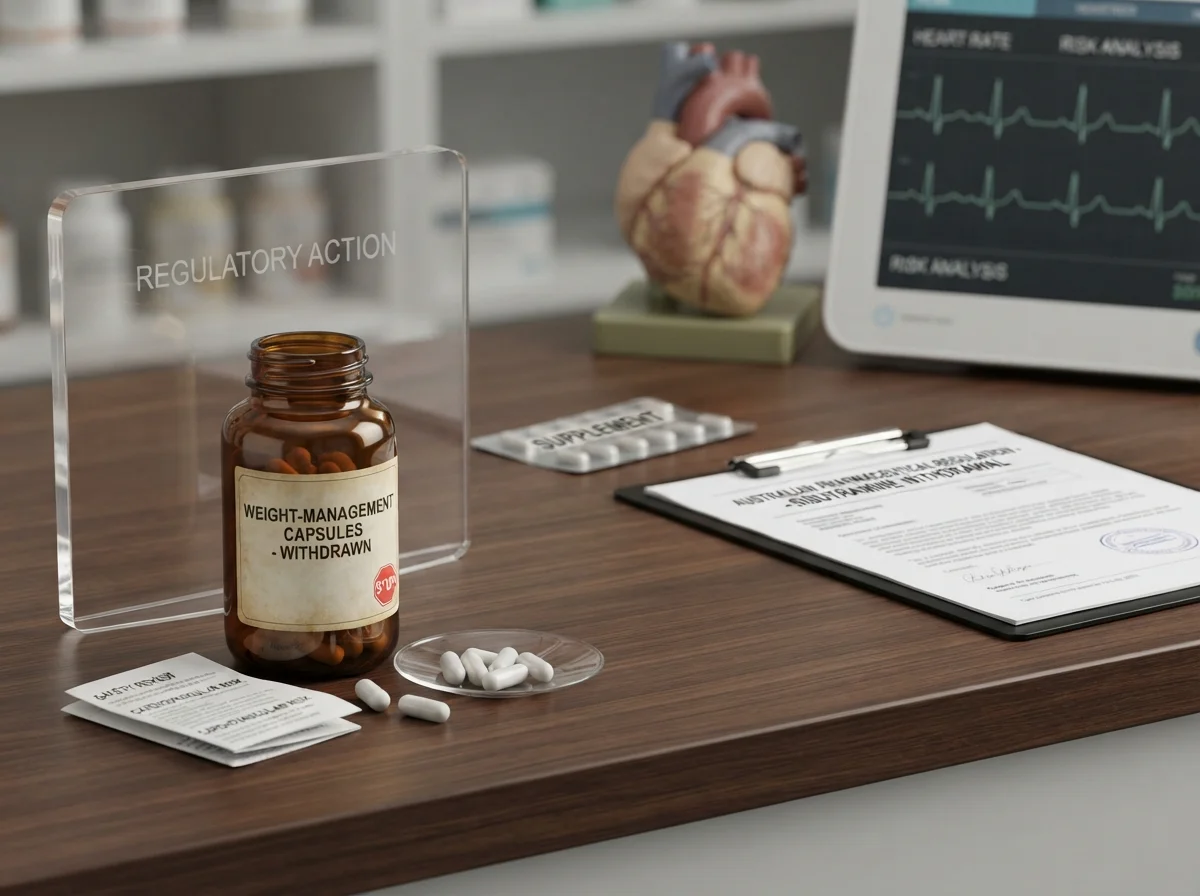
Status in Australia: Withdrawn from the Australian market.
Sibutramine is one of the better-known examples of a weight-loss medicine withdrawn because of cardiovascular safety concerns.
The drug was marketed in Australia under the brand name Reductil and was prescribed as an appetite suppressant for weight management.
In October 2010, Abbott Australasia announced that it would stop supplying sibutramine in Australia following discussions with the TGA. The decision followed results from the large SCOUT cardiovascular-outcomes study, which found an increased risk of major cardiovascular events, including heart attack and stroke.
This distinction is important: sibutramine was not simply removed because it failed to produce weight loss. The concern was the balance between its benefits and cardiovascular risks.
The medicine’s withdrawal also created another problem: illegal weight-loss products began appearing that contained undeclared sibutramine.
The TGA has repeatedly warned Australians about unapproved slimming products containing the substance. In one example, GNY Slimming Pills were found to contain undeclared sibutramine even though the ingredient was not disclosed on the labels.
More recently, the TGA warned consumers about Li Da Daidaihua capsules containing undeclared sibutramine. The regulator stated that sibutramine had been withdrawn from world markets in 2010 because of increased cardiovascular and stroke risk.
Why was it withdrawn?
Evidence showed an increased risk of cardiovascular events, including heart attack and stroke.
Key lesson:
A medicine can move from being an approved prescription treatment to being removed from the market when post-market evidence changes the understanding of its risk-benefit balance.
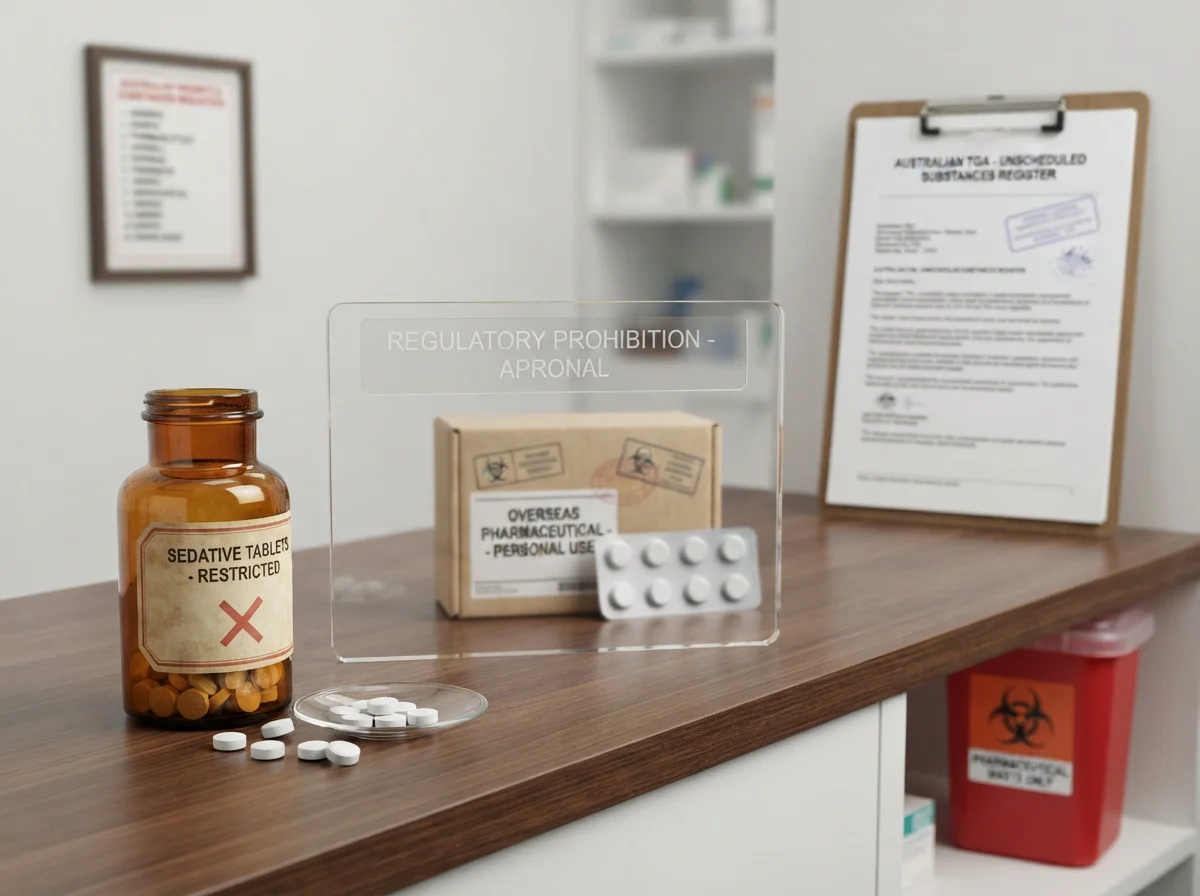
Status in Australia: Schedule 10; prohibited for sale, supply and use.
Apronal, also known as allylisopropylacetylurea or apronalide, is a sedative-hypnotic with a much less familiar name than many drugs on this list.
The TGA issued a warning in 2023 after the substance was identified in imported EVE-branded products.
According to the regulator, apronal had been withdrawn from clinical use in Australia because of dangerous adverse effects and is banned in many countries. Australia classifies it under Schedule 10 of the Poisons Standard.
Schedule 10 is particularly significant because it is reserved for substances considered so dangerous that their sale, supply and use should be prohibited for the specified purposes.
The TGA’s warning concerned products including:
The regulator warned that these products were not registered for use or sale in Australia and advised consumers who had them to stop taking them and take remaining tablets to a pharmacy for safe disposal.
This case also illustrates why Australians are warned about ordering medicines from overseas websites. A medicine legally available in another country is not automatically legal for supply in Australia.
Why was it prohibited?
Because of significant health risks associated with the sedative ingredient.
Key lesson:
“Available overseas” and “approved in Australia” are two very different things.

Status in Australia: Prohibited substance.
DMAA, or 1,3-dimethylamylamine, is a stimulant that has appeared in sports supplements, pre-workout products and weight-loss products.
It became controversial because some products marketed as supplements contained the stimulant despite consumers not necessarily understanding the potential risks.
The TGA has classified DMAA as a substance whose sale, supply and use are prohibited. The regulator has associated DMAA exposure with potentially serious cardiovascular and neurological effects.
In 2013, the TGA warned consumers about Plexus Slim Accelerator capsules after testing found undeclared DMAA.
The agency stated that DMAA was included in the relevant prohibited category and warned about possible adverse effects including high blood pressure, psychiatric disorders, bleeding in the brain and stroke.
DMAA is particularly relevant to the modern supplement industry because it demonstrates that the word “supplement” does not mean “unregulated.”
In Australia, products containing prohibited substances can face regulatory action even if they are marketed as sports nutrition, fat burners or performance products rather than conventional medicines.
In 2023, the TGA also announced infringement notices against EmpireLabz Australia after laboratory testing identified DMAA and other prohibited substances in sports supplements.
Why was it prohibited?
Because of concerns about serious cardiovascular, neurological and psychiatric adverse effects.
Key lesson:
Sports supplements can contain pharmacologically active substances that are subject to strict medicine and poison controls.

Status in Australia: Prohibited.
DMHA is another stimulant that has appeared in performance and weight-management products.
It is sometimes marketed under different names, which can make it difficult for ordinary consumers to identify what they are actually buying.
Australia treats 1,5-dimethylhexylamine (DMHA) as a prohibited substance. The Department of Agriculture’s guidance for imported sports foods identifies DMHA among substances considered a risk to human health and references its status under the Australian Poisons Standard.
The TGA has also identified DMHA in products subject to enforcement action.
In its 2023 enforcement announcement concerning EmpireLabz Australia, laboratory testing identified both DMAA and DMHA. The TGA stated that the sale, supply and use of products containing these substances is prohibited in Australia because of the dangers they pose to human health.
The case is significant because stimulant-containing products can be promoted using fitness-oriented language such as:
Such marketing language does not change the legal status of the active ingredient.
Why was it prohibited?
Because of health risks associated with potent stimulant activity and its use in unapproved products.
Key lesson:
Consumers should examine the actual ingredients in sports supplements rather than relying only on product categories or marketing claims.

Status in Australia: Prohibited for human therapeutic use.
2,4-Dinitrophenol, commonly called DNP, is one of the most notorious substances associated with dangerous weight-loss products.
DNP has a history that stretches back to industrial applications and early weight-loss use. Its ability to interfere with cellular energy production can increase metabolic heat production dramatically.
That property is precisely what makes it dangerous.
Australian regulatory documents identify dinitrophenols in the Poisons Standard, with therapeutic-use restrictions designed to prevent their use as ordinary weight-loss medicines. The TGA has also considered the substance specifically in relation to prohibiting human therapeutic use because of concerns about potential abuse.
Australian government guidance for imported sports foods currently identifies 2,4-dinitrophenol (DNP) as a Schedule 10 dangerous substance.
The problem with DNP is that the difference between an intended “fat-burning” effect and severe toxicity can be dangerously narrow.
Unlike a conventional weight-loss medicine whose dose is designed around a therapeutic window, DNP’s metabolic effects can produce uncontrolled increases in body temperature and potentially fatal toxicity.
Why was it prohibited?
Because its toxicity and ability to cause dangerous metabolic overheating make therapeutic weight-loss use unacceptable.
Key lesson:
A substance that accelerates metabolism is not necessarily a safe weight-loss treatment. The mechanism that produces an apparent effect can also produce life-threatening toxicity.
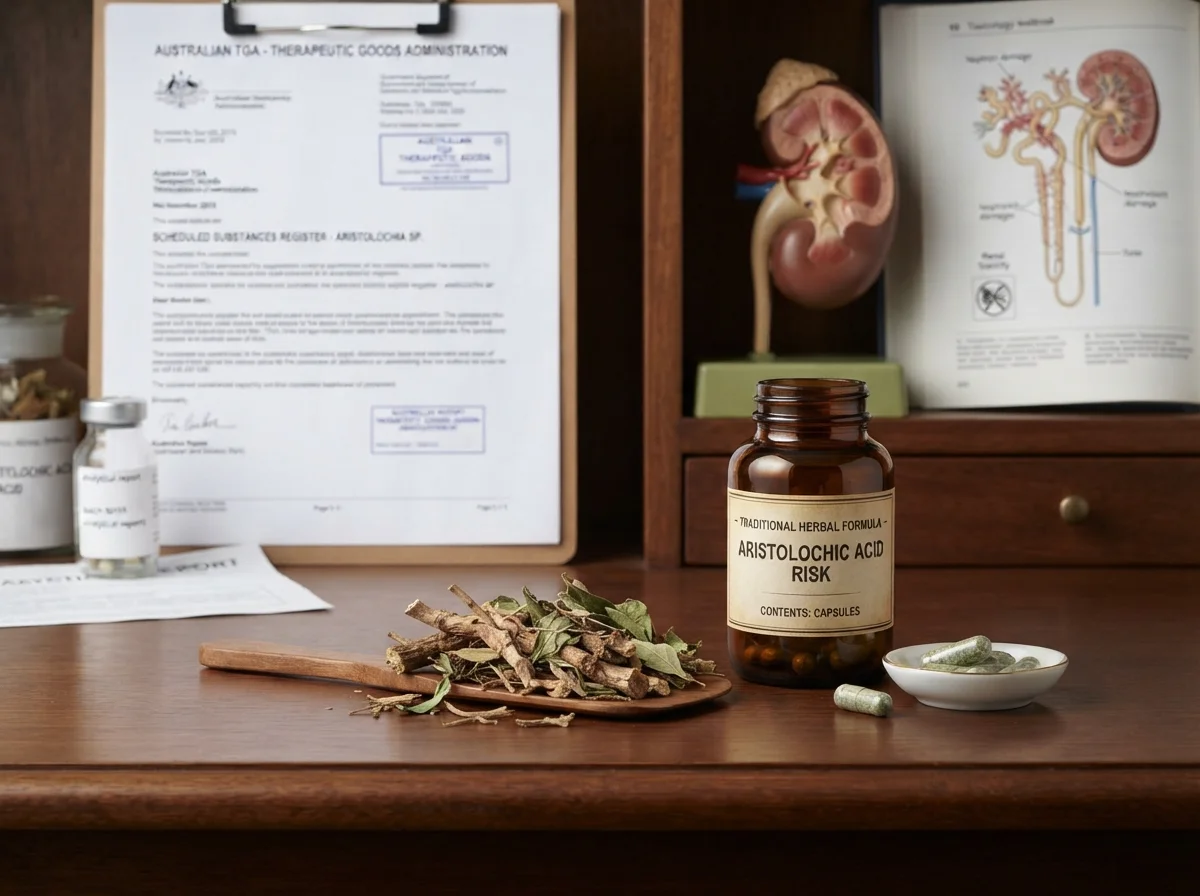
Status in Australia: Schedule 10 substance; not permitted for human therapeutic use in relevant applications.
Aristolochic acid is particularly important because it is associated with traditional herbal and complementary medicines, rather than conventional pharmaceutical tablets.
Aristolochic acids occur naturally in plants belonging to the Aristolochia and related botanical groups. They have been associated with serious kidney injury and urinary tract cancers.
Australian regulation treats aristolochic acid as a Schedule 10 substance.
The TGA has repeatedly acted against therapeutic products containing it.
In 2019, for example, the regulator recalled an Ayurvedic product called OA/RA capsules after testing detected low levels of aristolochic acid. The product had been marketed for temporary relief of osteoarthritis and rheumatoid arthritis symptoms.
Earlier, in 2016, the TGA recalled several traditional Chinese medicine products after testing detected aristolochic acid. The regulator noted that certain Asarum species containing aristolochic acids were included in Schedule 10 and were not permitted for use in therapeutic goods in Australia.
The concern is not simply whether a product is “natural.”
Natural substances can have potent biological effects, and some can cause permanent organ damage.
Why was it prohibited?
Because of serious kidney toxicity and links with urinary tract cancers.
Key lesson:
“Herbal,” “Ayurvedic” or “traditional” does not automatically mean safe. The chemical composition of the product remains critical.

Status in Australia: Withdrawn and recalled from the Australian market.
Rofecoxib, sold under the brand name Vioxx, became one of the most prominent examples of a blockbuster medicine being removed after evidence revealed an important cardiovascular safety problem.
Vioxx was a selective COX-2 inhibitor used for pain and inflammation, particularly in conditions such as arthritis.
In 2004, Merck decided to withdraw Vioxx worldwide after clinical evidence showed an increased risk of cardiovascular events, including heart attack and stroke.
The TGA’s Australian recall notice dated 1 October 2004 records the recall of all listed Vioxx batches following new information from a clinical study showing increased cardiovascular risk after prolonged treatment at the studied dose.
The story received substantial attention in Australia.
ABC News reported in 2005 that doctors had linked Vioxx to hundreds of deaths in Australia, while noting that the drug had already been withdrawn from the worldwide market.
The Vioxx case demonstrates why regulators continue monitoring medicines even after approval.
Pre-market clinical trials can identify many important risks, but rare or delayed adverse effects may only become apparent after a medicine is prescribed to very large populations.
Why was it withdrawn?
Evidence of increased cardiovascular risk, including heart attack and stroke.
Key lesson:
Medicine approval is not necessarily the end of safety evaluation. Post-market surveillance can lead to recalls and market withdrawal when new evidence changes the risk assessment.

Status in Australia: Strictly controlled; certain Ephedra preparations and ephedrine are prescription-controlled, while some imports are prohibited without appropriate permission.
Ephedra occupies a complicated place in Australian medicine regulation.
The plant has historically been used in traditional medicine and has also been marketed internationally in weight-loss and performance products.
The problem is its ephedrine content.
Australian regulations do not simply treat Ephedra as an ordinary herbal supplement. Under the current Poisons Standard, Ephedra species are included in Schedule 4 except for preparations containing 0.001% or less ephedrine, while ephedrine itself is also subject to prescription controls.
Australian border controls add another layer.
The Therapeutic Goods Administration states that substances such as Ephedra, ephedrine and certain related compounds can be controlled under Australian Customs legislation. Some overseas dietary supplements containing these ingredients can therefore be seized if imported without the necessary permit.
Australian Border Force has also warned about Ephedra because of serious potential adverse effects, including high blood pressure, heart attacks, seizures, stroke and death.
This makes Ephedra a useful example of why the phrase “banned medicine” can be misleading. The regulatory question is often not whether the plant exists legally at all, but what preparation is being used, how much active substance it contains, what the intended use is and whether the product has the necessary approval or permit.
Why is it heavily restricted?
Because ephedrine-containing products can produce significant cardiovascular and neurological effects.
Key lesson:
The legal status of a botanical medicine can depend on its active constituents, concentration, formulation and intended use.

Australia’s medicine-regulation system is designed around risk management rather than simply maintaining a permanent list of “good” and “bad” drugs.
The TGA uses several mechanisms to protect public health.
A medicine can be approved initially and later withdrawn when larger studies reveal previously underestimated risks.
Sibutramine and rofecoxib are two examples.
Some substances are considered too dangerous for ordinary therapeutic use.
Schedule 10 exists specifically for substances considered so dangerous that supply or use should be prohibited for the specified purposes.
A medicine does not necessarily need to be dangerous because of its intended active ingredient.
Contamination can also trigger a recall.
Aristolochic acid contamination in traditional medicines is one example.
The TGA regularly encounters products sold as supplements or medicines that contain pharmaceutical ingredients that are not declared on the label.
Sibutramine-containing slimming products are a prominent example.
Australian consumers can purchase products from international websites that have never been assessed for supply in Australia.
The TGA warns that such products may contain undeclared ingredients or contaminants and may not meet Australian quality, safety or efficacy requirements.
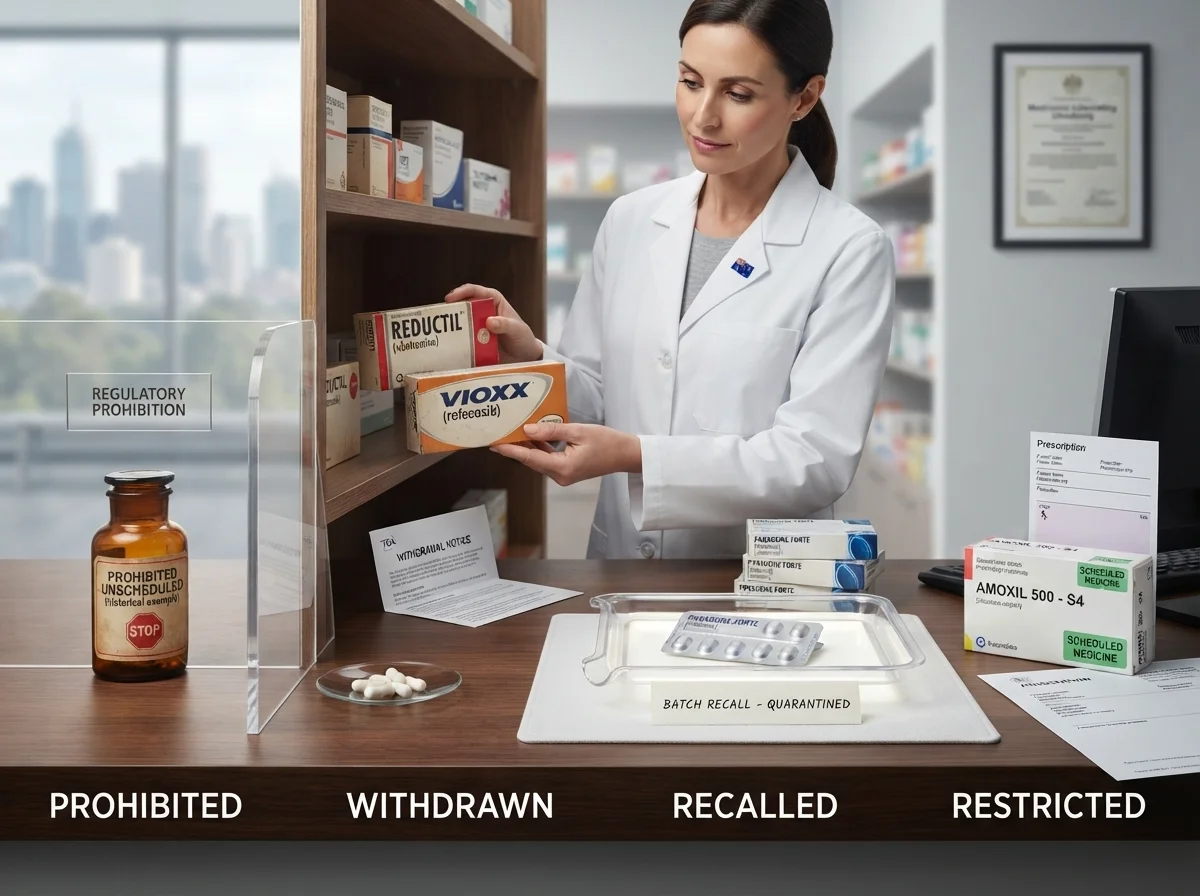
This is one of the most important points when discussing banned medicines in Australia.
A substance may be classified so that its sale, supply or use is prohibited for specified purposes.
Schedule 10 is Australia’s clearest example of this type of control.
A medicine may be removed from the Australian market by its sponsor following safety concerns or other regulatory considerations.
Sibutramine and rofecoxib are examples of medicines that were withdrawn from the market.
A recall generally concerns particular products, batches or presentations.
A recall does not necessarily mean the active ingredient itself is permanently banned.
For example, a particular herbal medicine may be recalled because testing discovers contamination.
A medicine can remain available but only under certain conditions.
Prescription-only medicines fall into this category.
This is why saying that every drug on a list of “banned medicines” is completely illegal can be inaccurate.

The growth of international online pharmacies and supplement websites has made medicine access easier, but it has also increased the risk of purchasing products that have not been assessed for Australian supply.
The TGA advises consumers to be particularly careful with medicines purchased from unknown overseas websites. Unapproved products can contain undeclared pharmaceutical ingredients, allergens, stimulants, contaminants or other dangerous substances.
One useful indicator is the AUST number on an approved Australian medicine.
The TGA explains that:
However, consumers should not assume that an AUST number by itself proves that every online seller is legitimate. The product, sponsor, formulation and supply pathway still matter.
No.
That is the most important clarification in this article.
The 10 examples above represent different regulatory outcomes:
| Medicine or substance | Australian regulatory position |
|---|---|
| Thalidomide | Historically withdrawn; now available under strict controls for specific medical uses |
| Phenacetin | Prohibited for therapeutic use |
| Sibutramine | Withdrawn from the Australian market |
| Apronal | Schedule 10; prohibited for specified sale, supply and use |
| DMAA | Prohibited |
| DMHA | Prohibited |
| DNP | Prohibited for human therapeutic use |
| Aristolochic acid | Schedule 10; prohibited in relevant therapeutic applications |
| Rofecoxib/Vioxx | Withdrawn and recalled |
| Ephedra/Ephedrine | Strictly controlled; some imports prohibited without permission |
The current Australian framework confirms that Schedule 9 and Schedule 10 are different categories and that many ordinary prescription medicines sit elsewhere in the scheduling system.

The history of banned and withdrawn medicines is ultimately a history of how medical science learns from mistakes.
Thalidomide exposed the consequences of inadequate medicine-safety systems. Phenacetin demonstrated the dangers of long-term exposure to a widely used analgesic. Rofecoxib showed how cardiovascular risks can emerge after widespread use. Sibutramine illustrated how a weight-loss medicine can become unacceptable when cardiovascular harms outweigh its benefits.
More recent cases involving DMAA, DMHA, DNP and undeclared sibutramine also show that medicine regulation is no longer limited to traditional pharmaceutical companies.
The modern regulatory challenge extends to:
Australia’s regulatory framework therefore operates on two fronts: assessing legitimate medicines and identifying potentially dangerous substances entering the market through less conventional channels.
The TGA says it regulates therapeutic goods through pre-market assessment, post-market monitoring and enforcement, as well as manufacturing controls.
That continuing surveillance matters because the safety profile of a medicine is not always fully understood on the day it enters the market.
The phrase “10 banned medicines by Australia government” makes for a compelling search query, but Australia’s actual regulatory system is more nuanced than a simple blacklist.
Some medicines are prohibited because their risks are considered unacceptable. Others are withdrawn after new clinical evidence changes the risk-benefit assessment. Some products are recalled because a particular batch has been contaminated or incorrectly manufactured. Others remain available but under strict prescription or import controls.
The stories of thalidomide, phenacetin, sibutramine, apronal, DMAA, DMHA, DNP, aristolochic acid, Vioxx and Ephedra illustrate different points along that regulatory spectrum.
For consumers, the practical lesson is straightforward: a medicine being sold online, advertised as “natural,” promoted as a supplement or legally available in another country does not automatically mean it is approved for supply in Australia.
When buying or taking a medicine in Australia, checking its regulatory status and discussing unfamiliar products with a qualified healthcare professional is considerably safer than relying on an online seller’s claims.
Australia’s medicine rules continue to evolve as new safety evidence emerges, and the current Poisons Standard remains the key reference point for understanding how substances are classified and controlled.