Dietary supplements are often associated with vitamins, minerals, protein powders and herbal products. In the United States, however, the category is far broader—and the regulatory system is more complicated than many consumers realize.
A supplement can be sold in a brightly packaged bottle, promoted as “natural,” and still contain an ingredient that the U.S. Food and Drug Administration (FDA) considers unlawful for use in dietary supplements.

Few supplement ingredients have had a more important place in the history of U.S. supplement regulation than ephedra.
Ephedra, also known as ma huang, is a botanical source of stimulant compounds called ephedrine alkaloids. Before the federal action against these products, ephedra appeared in dietary supplements marketed for weight loss, increased energy and athletic performance.
The FDA took a major step in 2004, issuing a final rule prohibiting the sale of dietary supplements containing ephedrine alkaloids because the agency concluded that they presented an unreasonable risk of illness or injury.
That makes ephedra different from many ingredients on this list: there is an explicit federal rule addressing dietary supplements containing ephedrine alkaloids.
Ephedrine stimulates the cardiovascular and nervous systems. Research reviewed by the National Institutes of Health found that ephedra-containing supplements could produce modest short-term weight-loss effects, but those benefits were accompanied by significant safety concerns.
Reported risks included increased blood pressure, palpitations and other cardiovascular effects. Serious adverse events associated with ephedra and ephedrine exposure included heart attack, stroke and seizures.
The issue became especially controversial because many products were promoted as weight-loss or performance-enhancing supplements rather than conventional medicines.
The FDA ultimately determined that the potential risks outweighed the benefits for dietary supplements containing ephedrine alkaloids.
This is where consumers need to be careful with terminology.
The federal action specifically addressed dietary supplements containing ephedrine alkaloids. Ephedrine-related substances can still have legitimate medical uses under regulated circumstances, and some ephedrine products are subject to other federal rules.
Therefore, saying “all ephedrine is banned in America” would be inaccurate.
The relevant point is that dietary supplements containing ephedrine alkaloids are prohibited under the FDA’s 2004 rule.

DMAA, or 1,3-dimethylamylamine, became one of the best-known controversial ingredients in the sports-supplement industry.
It was marketed in products designed to increase energy, improve exercise performance and support weight loss. Some labels referred to DMAA using names such as methylhexanamine, geranamine or “geranium extract.”
The FDA has stated that DMAA is not a dietary ingredient and that products containing it and marketed as dietary supplements are illegal.
DMAA has stimulant properties and can constrict blood vessels.
According to the FDA, consuming DMAA can increase blood pressure and may contribute to cardiovascular problems, including shortness of breath, chest tightness, arrhythmias and heart attack. Neurological problems, including seizures, have also been associated with concern about DMAA.
The FDA also challenged the industry’s characterization of DMAA as a naturally occurring ingredient derived from geranium.
The agency said it was not aware of reliable scientific evidence demonstrating that DMAA naturally occurs in plants.
One of the surprising aspects of the DMAA story is that regulatory action did not mean every product containing the substance immediately disappeared.
The FDA has continued to identify products containing DMAA.
In 2026, for example, the agency warned consumers about a product called PRE-FORMANCE BLACK after laboratory analysis found undeclared 1,4-dimethylamylamine, a form of DMAA.
This illustrates an important point about illegal supplements: an ingredient can remain prohibited even when manufacturers continue attempting to sell products containing it.
Consumers should therefore pay attention to ingredient names rather than assuming that a product’s availability means it is legitimate.
Another stimulant that has attracted FDA action is DMHA, or 1,5-dimethylhexylamine.
It has also been called octodrine, 2-aminoisoheptane and several other chemical names.
DMHA appeared in some pre-workout, energy and weight-loss products and was sometimes promoted as a powerful stimulant.
The FDA’s position is clear: DMHA does not meet the statutory definition of a dietary ingredient and is considered an unsafe food additive when used in dietary supplements under the circumstances described by the agency.
As a result, dietary supplements containing DMHA are considered adulterated.
The ingredient belongs to a broader family of stimulant compounds that became popular in the performance-supplement market after other stimulants came under regulatory pressure.
This created a recurring pattern:
For shoppers, this makes relying on a product’s front label particularly risky.
A supplement described as “hardcore,” “extreme energy,” “thermogenic” or “next-generation pre-workout” can contain ingredients that deserve closer scrutiny than the marketing language suggests.

DMBA, short for 1,3-dimethylbutylamine, is another stimulant that has been targeted by the FDA.
It has appeared under names including AMP citrate, 4-AMP citrate, Amperall and 4-amino-2-methylpentane citrate.
DMBA illustrates a slightly different regulatory pathway from ephedra.
The FDA determined that it was a new dietary ingredient and said it was not aware of information demonstrating that DMBA had been lawfully marketed as a dietary ingredient in the United States before October 15, 1994.
Under U.S. law, new dietary ingredients are subject to additional requirements.
A manufacturer generally must have an appropriate basis for concluding that the ingredient can reasonably be expected to be safe and, where required, submit a notification to the FDA before marketing the product.
The FDA stated that the necessary conditions had not been met for the DMBA products it addressed.
Those products were therefore considered adulterated.
The supplement industry has historically used chemical names, proprietary blends and alternative ingredient names to differentiate products.
That can make older formulas difficult to identify.
Someone searching for “banned supplements,” for example, might expect to see a familiar brand name. In reality, regulators often focus on the ingredient, not simply the brand.
For that reason, consumers researching an unfamiliar pre-workout or fat burner should check the complete Supplement Facts panel rather than relying on the product’s headline claims.
BMPEA, or beta-methylphenethylamine, is another stimulant associated with FDA enforcement.
The substance has been marketed in connection with products intended to support energy, exercise performance and weight management.
The FDA has concluded that BMPEA does not meet the statutory definition of a dietary ingredient.
That means a product declaring BMPEA as a dietary ingredient can run into federal regulatory problems.
BMPEA became particularly controversial because researchers found that supplements labeled as containing Acacia rigidula sometimes appeared to contain BMPEA.
This raised a broader question about ingredient accuracy.
Consumers generally assume that the ingredient listed on a supplement label is actually what is inside the product. When laboratory testing finds a different stimulant, however, that assumption can become problematic.
This is one reason third-party testing and transparent labeling matter in the supplement industry.
BMPEA is less famous among mainstream consumers than ephedra or DMAA, but its regulatory history illustrates a recurring problem: chemical stimulants can enter the supplement market before consumers fully understand what they are or how they behave biologically.
A product does not become automatically safe simply because its label uses the word “natural.”
The story of tianeptine is one of the most important recent examples of a substance being marketed as a supplement despite not being approved for use in that way in the United States.
Tianeptine is a drug used medically in some countries, particularly for depression. It is not approved by the FDA for medical use in the United States.
Despite this, products containing tianeptine have been sold in America under various names and marketed as nootropics, cognitive enhancers or dietary supplements.
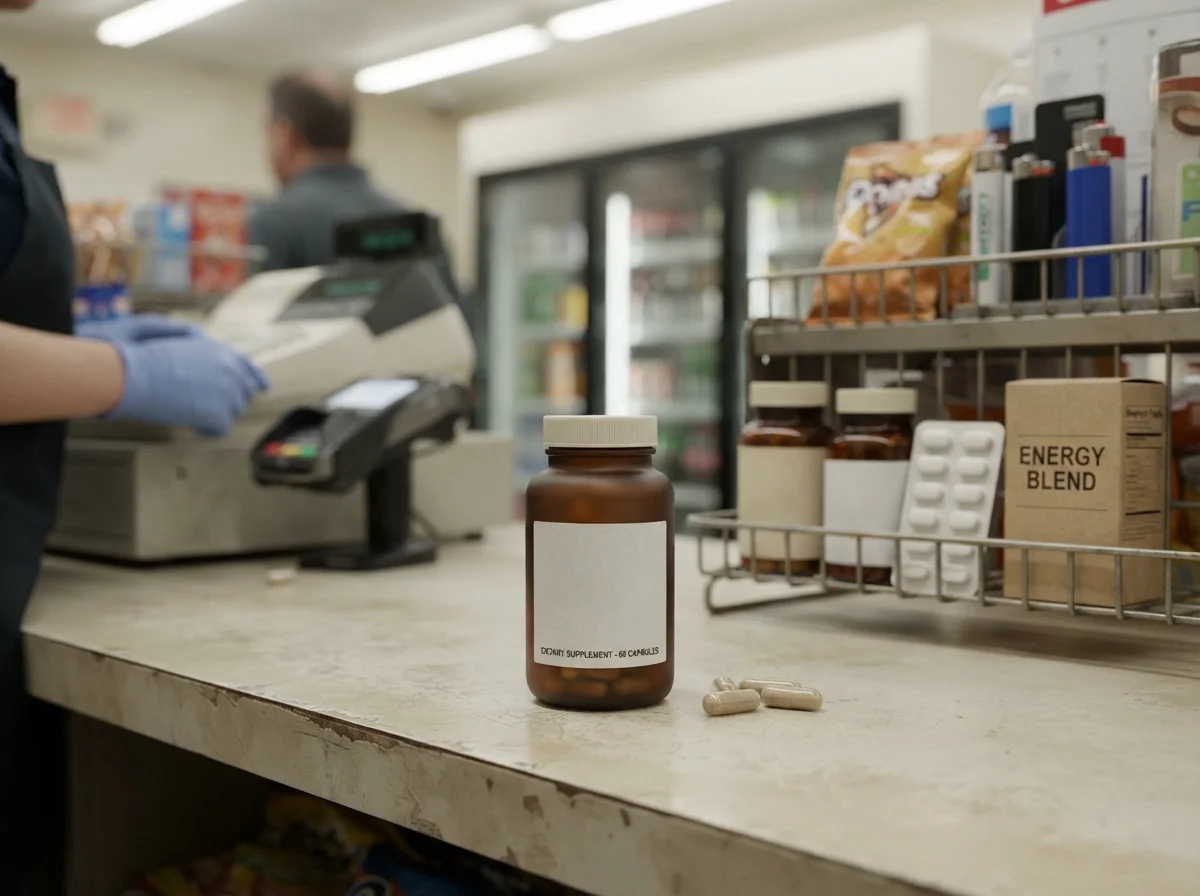
Some products became widely associated with convenience stores, gas stations, vape shops and online retailers.
Tianeptine has opioid-like activity and can produce dependence and withdrawal problems.
The FDA has reported serious adverse events involving tianeptine products, including cases involving overdose and death.
The agency considers tianeptine to be neither a dietary ingredient nor an approved food additive. As a result, dietary supplements containing tianeptine are considered adulterated under federal law.
The FDA has also issued warning letters and taken action against companies marketing tianeptine products.
The substance gained widespread public attention after products such as Neptune’s Fix were associated with adverse events and regulatory action.
The FDA has repeatedly warned consumers not to purchase or use tianeptine products.
The agency’s message is particularly relevant because availability can create a false impression of legitimacy.
A product sitting behind a convenience-store counter is not necessarily a legal dietary supplement.
In fact, the FDA specifically warns that consumers should not interpret easy availability as evidence that a product is safe or approved.

Selective androgen receptor modulators, commonly known as SARMs, are not traditional vitamins or herbal supplements.
Nevertheless, they are frequently sold online as bodybuilding or performance-enhancing products and are often labeled as “research chemicals.”
Examples include compounds such as ostarine, ligandrol, andarine and RAD-140.
The FDA considers SARMs to be unapproved drugs, not legal dietary supplements.
SARMs were developed to interact selectively with androgen receptors.
Their potential to influence muscle and bone tissue made them attractive to the bodybuilding and fitness market.
Online sellers have marketed them for muscle growth, strength and body composition.
But putting “research use only” on a bottle does not automatically transform a product intended for human consumption into a legitimate research chemical.
The FDA has taken action against companies marketing SARMs directly to consumers.
The FDA has warned that SARMs may be associated with serious or potentially life-threatening effects.
Reported concerns include liver injury and acute liver failure, increased risk of heart attack or stroke, sexual dysfunction, infertility and other adverse effects.
The agency has also warned about their use among teenagers and young adults.
The important legal distinction is that SARMs are not simply “banned vitamins.” They are unapproved drug substances that cannot legally be marketed as dietary supplements.
That distinction is important for anyone researching bodybuilding supplements.
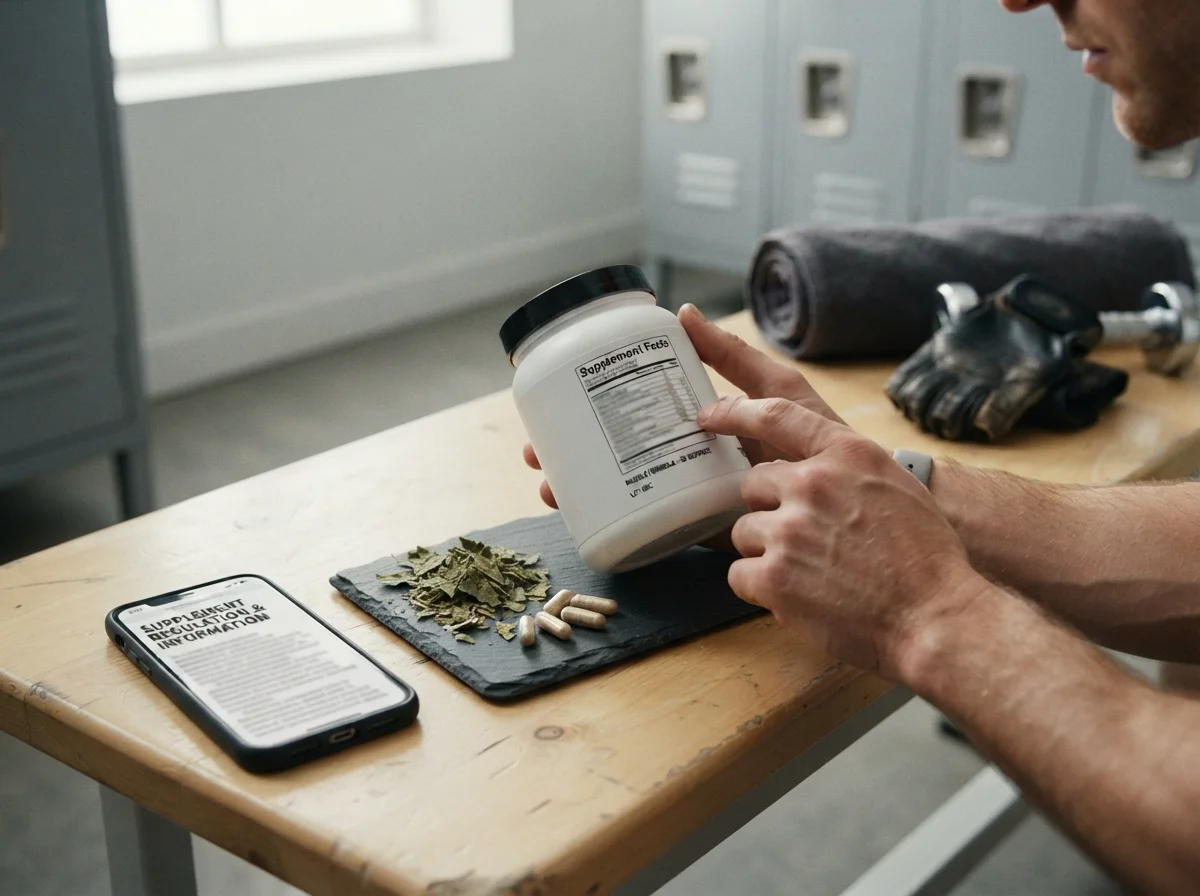
A much less familiar ingredient is 5-alpha-hydroxy-laxogenin, sometimes shortened to 5-alpha-hydroxy-laxogenin or 5a-hydroxy-laxogenin.
It has appeared in products marketed for muscle growth, body recomposition and testosterone support.
The FDA has taken action against companies that declared this substance as a dietary ingredient.
In warning letters, the agency stated that 5-alpha-hydroxy-laxogenin does not qualify as a dietary ingredient under the federal definition.
The supplement industry sometimes uses plant-derived terminology to create the impression that a compound is automatically a legal botanical ingredient.
But being chemically related to a plant compound—or being marketed as “natural”—does not by itself determine whether something meets the statutory definition of a dietary ingredient.
The FDA’s regulatory position depends on the substance and how it fits within federal law.
This is a useful lesson for consumers looking at bodybuilding products.
A bottle may use language such as:
None of those phrases guarantees that every ingredient is legally marketable as a dietary supplement.

Kratom, or Mitragyna speciosa, occupies a particularly complicated position in the United States.
It is a plant native to Southeast Asia and has been sold in America in powders, capsules, drinks and other forms.
Unlike ephedra, kratom has not been subject to a nationwide federal ban comparable to the 2004 ephedra rule.
That distinction is essential.
However, the FDA says kratom is not lawfully marketed in the United States as a dietary supplement.
The agency has concluded that kratom is a new dietary ingredient for which there is inadequate information to provide reasonable assurance that it does not present a significant or unreasonable risk of illness or injury.
The FDA therefore considers dietary supplements containing kratom to be adulterated.
Kratom contains several alkaloids, particularly mitragynine and 7-hydroxymitragynine.
The FDA has warned about serious adverse events associated with kratom, including liver toxicity, seizures and substance-use disorder.
The agency has also taken enforcement action against companies selling kratom products with unapproved medical claims.
Another reason kratom causes confusion is that U.S. state laws vary.
A substance can be subject to restrictions in one state while remaining available elsewhere.
Therefore, “kratom is legal in America” is too broad a statement, just as “kratom is federally banned” would be inaccurate.
At the federal level, the FDA’s position is that kratom is not lawfully marketed as a dietary supplement.
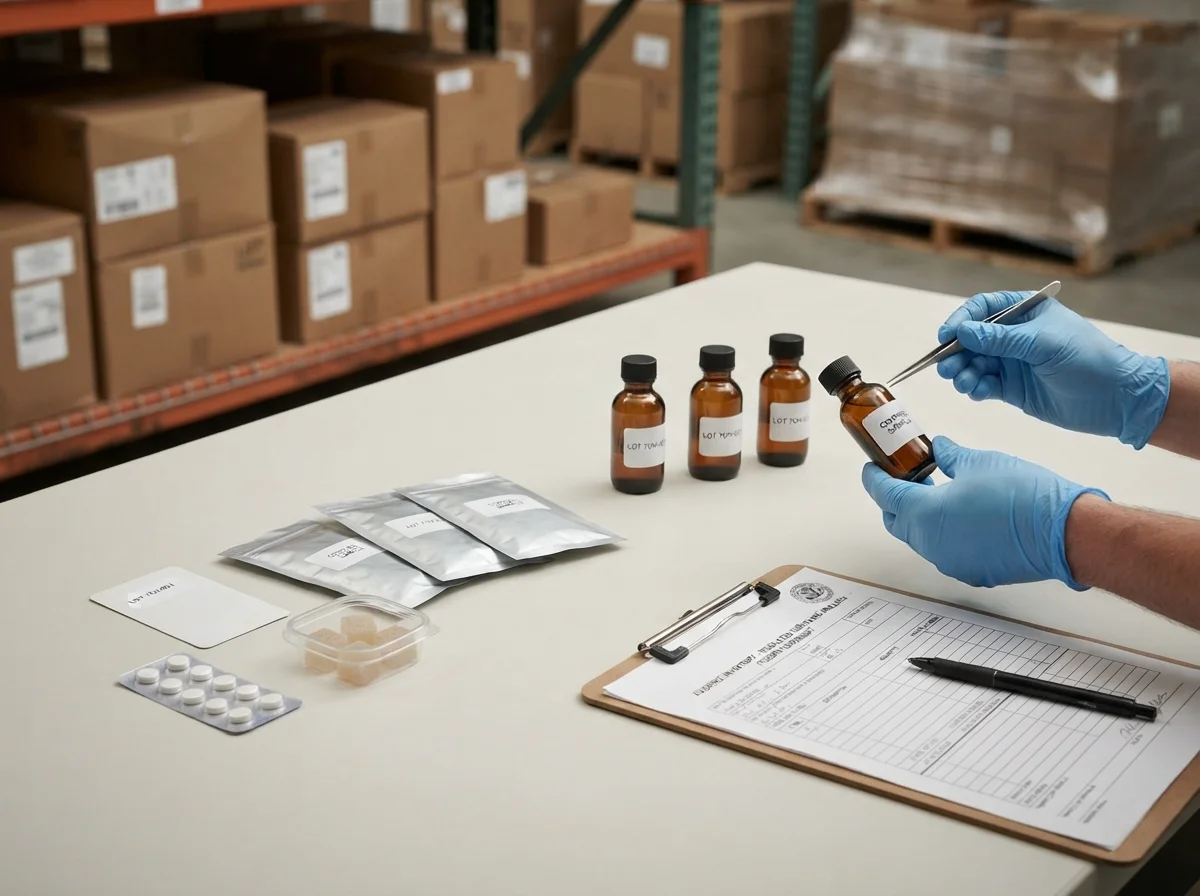
One of the newest and most important developments in the U.S. supplement market involves 7-hydroxymitragynine, usually abbreviated as 7-OH.
7-OH naturally occurs in trace amounts in kratom, but the FDA’s recent actions have focused particularly on products containing added or concentrated levels of 7-OH.
These products have been sold as tablets, gummies, drink mixes, shots and other consumer products.
The FDA states that 7-OH is not lawful as a dietary supplement or as an ingredient added to conventional food.
7-OH has opioid activity and has raised concerns about abuse, dependence and other serious health effects.
In 2025, the FDA issued warning letters to companies marketing concentrated 7-OH products.
The agency also coordinated with federal authorities in a major enforcement action in December 2025, when approximately 73,000 units of 7-OH products were seized from three warehouses.
The products included dietary supplements and foods containing concentrated 7-OH.
The 7-OH story is still developing.
In July 2026, the Drug Enforcement Administration announced that it was beginning a temporary scheduling process for 7-OH above a proposed threshold, along with three related synthetic substances.
By August 2026, DEA had issued a temporary scheduling order placing three related substances—mitragynine pseudoindoxyl, MGM-15 and MGM-16—into Schedule I.
The regulatory process concerning 7-OH itself has involved a proposed threshold and additional federal proceedings, so it would be inaccurate to describe the entire 7-OH category simply as a completed nationwide federal ban.
What is already clear is that concentrated 7-OH products are not lawful dietary supplements under the FDA’s position, and federal authorities have been actively moving against them.
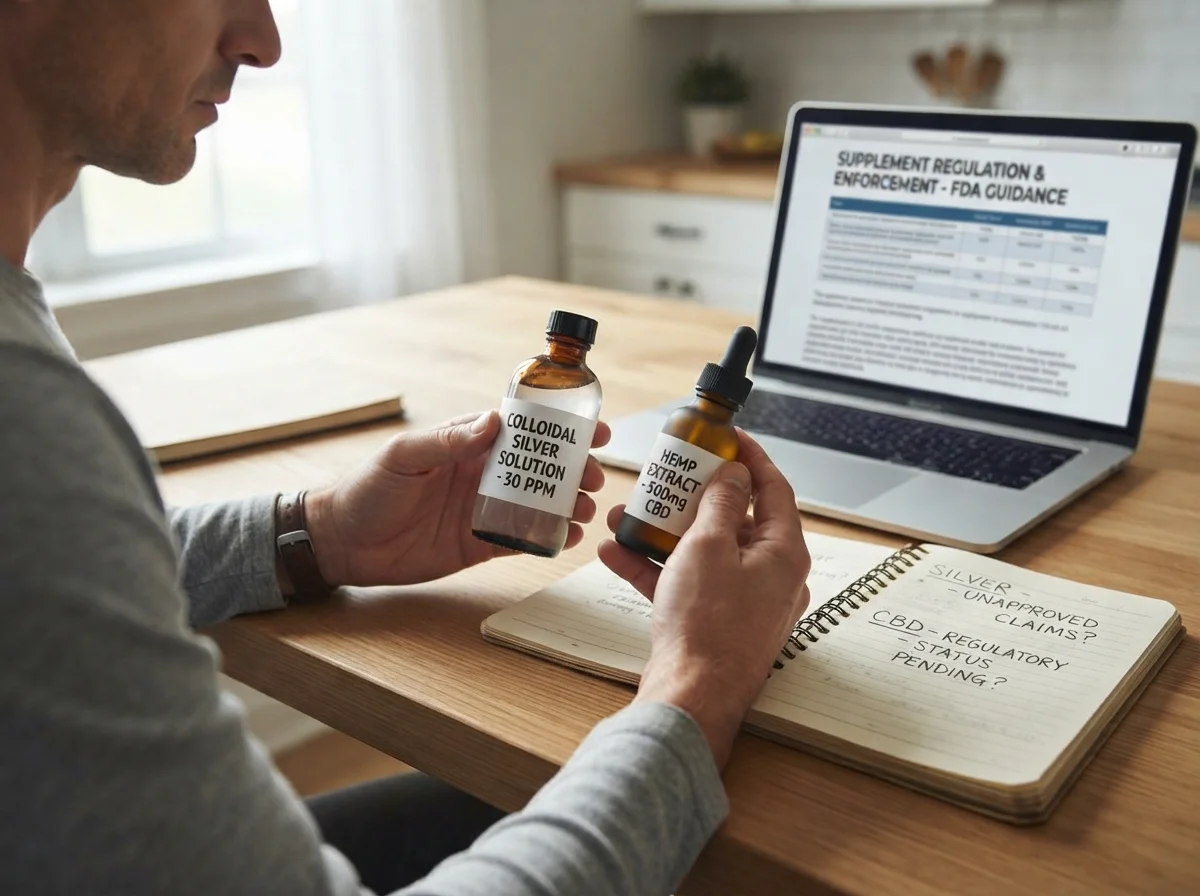
Searches for banned supplements often produce long lists that mix genuine federal prohibitions with substances that are merely unapproved, restricted, recalled or illegal when marketed for particular purposes.
That can create considerable confusion.
Colloidal silver is frequently described online as a “banned supplement.”
The more precise description is that the FDA has determined that colloidal silver is not safe or effective for treating diseases or medical conditions, and the agency has taken action against companies making unlawful health claims.
The National Center for Complementary and Integrative Health notes that colloidal silver can cause argyria, a usually permanent blue-gray discoloration of the skin.
Therefore, it belongs in discussions about questionable or unlawfully marketed health products—but describing it simply as a federally banned dietary supplement oversimplifies the regulatory situation.
CBD is another frequently misunderstood example.
The FDA has not created a blanket federal ban on every CBD product.
Instead, CBD occupies a complicated legal and regulatory position depending on the product, its intended use and the applicable federal rules.
Consumers should therefore avoid assuming that “not FDA-approved” automatically means “federally banned,” or that being sold online means “FDA-approved.”

The answer is partly structural.
Unlike prescription drugs, dietary supplements generally do not go through the same premarket approval system before reaching consumers.
This creates a different regulatory model.
A manufacturer is responsible for ensuring that its supplement complies with federal requirements, while the FDA can investigate products, inspect facilities, issue warning letters, request recalls, place products on import alerts and pursue other enforcement mechanisms when violations are identified.
That means enforcement frequently happens after a product has already entered the marketplace.
The problem becomes more complicated with online sellers.
A company can operate through a website, marketplace, social media account or overseas supplier. A product may change its name or formulation after regulatory scrutiny.
The FDA itself acknowledges that it cannot identify and test every potentially dangerous product marketed as a dietary supplement.
This is particularly important in categories such as:
These categories have repeatedly attracted products containing undeclared pharmaceutical drugs or stimulant compounds.

Consumers should not rely only on the front of a bottle.
Before purchasing an unfamiliar supplement, check the following.
Look beyond the headline ingredient.
A product may use a proprietary blend that makes it difficult to identify exactly how much of each ingredient is present.
If an ingredient has a complicated chemical name, search the exact name together with “FDA.”
This can reveal warning letters, FDA ingredient-directory entries and safety communications.
A label saying “not for human consumption” does not necessarily protect a company if the surrounding marketing demonstrates that the product is actually being sold for human use.
This issue has appeared repeatedly with SARMs and other performance-enhancing substances.
Claims such as:
should prompt additional scrutiny.
A supplement cannot become a legitimate prescription treatment simply because a seller prints a medical claim on its website.
The FDA maintains databases and consumer alerts covering dietary supplements and other products.
A product being absent from a warning list does not prove that it is safe, but an FDA warning is a strong reason not to use the product.

The history of banned and prohibited supplements in the United States follows a recognizable pattern.
Ephedra represented an earlier generation of stimulant-based weight-loss products.
DMAA, DMHA and DMBA later appeared in performance and energy products.
BMPEA demonstrated the problems created when chemical stimulants were associated with botanical ingredients.
Tianeptine showed how a pharmaceutical drug could be repackaged as a nootropic or “natural” product.
SARMs blurred the line between bodybuilding supplements and experimental drugs.
Kratom and concentrated 7-OH demonstrate how rapidly a plant-derived product can evolve into a major regulatory issue.
The common thread is not that every supplement on the market is dangerous.
It is that the word “supplement” does not guarantee safety, effectiveness or legal status.
Consumers should also understand that “FDA has not approved this supplement” is not automatically equivalent to “FDA has banned this supplement.” Dietary supplements are regulated differently from drugs, and the legal status of individual ingredients can depend on whether they meet the statutory definition of a dietary ingredient, whether they are adulterated, whether they are unapproved drugs, and how they are marketed.
That is why a careful article about banned supplements needs to distinguish between:
Banned: A specific regulatory prohibition exists.
Illegal as a dietary supplement: The FDA considers the product or ingredient unlawful under the Federal Food, Drug, and Cosmetic Act.
Unapproved drug: The substance is being marketed as a drug without the required FDA approval.
Recalled: A manufacturer has withdrawn a product from the market, often because of contamination, undeclared ingredients or another safety problem.
Seized: Government authorities have physically taken products out of commerce as part of enforcement.
State-restricted: A substance may be restricted in particular states without being subject to an identical nationwide federal prohibition.
Those distinctions are more useful to consumers than a generic “banned supplements” label.
The United States has taken action against a wide range of substances marketed as dietary supplements, but they did not all arrive at the same legal destination.
Ephedra containing ephedrine alkaloids is one of the clearest examples of an ingredient specifically prohibited in dietary supplements.
DMAA, DMHA, DMBA and BMPEA illustrate how stimulant ingredients can be deemed unlawful or adulterated under federal dietary-supplement law.
Tianeptine is an unapproved drug that the FDA considers an unsafe food additive when used in dietary supplements.
SARMs are unapproved drugs frequently misrepresented as bodybuilding supplements.
5-alpha-hydroxy-laxogenin has been the subject of FDA enforcement because the agency determined it did not qualify as a dietary ingredient in the products addressed.
Kratom is not subject to a simple nationwide federal ban, but the FDA says it is not lawfully marketed as a dietary supplement.
And concentrated 7-OH products have become a rapidly developing federal enforcement issue, with FDA warning letters, seizures and an evolving DEA scheduling process.
For consumers, the safest approach is not to memorize a list of “banned supplements.” Instead, learn how to recognize unapproved drugs, adulterated supplements, hidden pharmaceutical ingredients and ingredients that regulators say cannot legally be marketed as dietary supplements.
A supplement’s availability on a website, social-media page, gas station shelf or even in a retail store is not proof that the product has been reviewed, approved or legally marketed by the U.S. government.