Alpha-GPC has become one of the more interesting ingredients in the modern nootropics market. You will often see it in brain-health supplements, pre-workout formulas and stacks designed around memory, focus and mental performance. The reason is fairly straightforward: Alpha-GPC is a highly bioavailable source of choline, and choline is needed to make acetylcholine, a neurotransmitter involved in memory, attention, learning and communication between nerve cells.

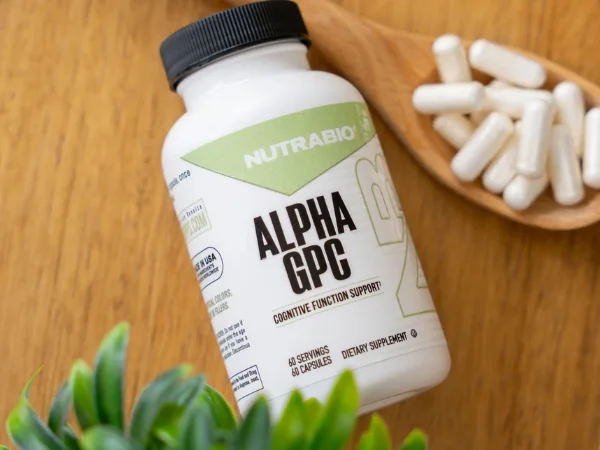
Alpha-GPC, short for L-alpha-glycerylphosphorylcholine, is also known as choline alphoscerate or alpha-glycerophosphocholine.
It is a choline-containing compound that occurs naturally in the body and participates in phospholipid metabolism and the production of acetylcholine, an important neurotransmitter involved in memory, learning, attention and communication between nerve cells.
A simple way to understand its role is:
Alpha-GPC → choline → acetylcholine
Alpha-GPC is particularly interesting as a supplemental choline source because it can cross the blood-brain barrier and is considered relatively bioavailable compared with some other forms of supplemental choline.
Unlike caffeine, Alpha-GPC is not a conventional stimulant. It does not normally produce the same immediate wired or energized sensation. Its main appeal in nootropic products comes from its relationship with the cholinergic system and acetylcholine.
Alpha-GPC also contributes to phospholipid metabolism. Phospholipids are important structural components of cell membranes, including neuronal membranes.
The body naturally produces Alpha-GPC during phosphatidylcholine metabolism. Commercial Alpha-GPC can also be produced from purified phospholipid sources such as lecithin.
Unlike botanical supplements, Alpha-GPC is not primarily harvested from a particular plant or geographic region. The concentrated Alpha-GPC used in supplements is generally a manufactured or purified compound produced from phospholipid sources.
There is no scientifically established country that makes the universally “best” Alpha-GPC. Finished-product quality depends much more on the manufacturing process, purity, dosage accuracy and quality-control procedures.
When comparing products, look for:
For example, a U.S. supplement may use globally sourced ingredients while still being manufactured and quality-tested in the United States. Therefore, the country printed on the bottle should not be the only factor used to judge quality.
Europe has an additional regulatory distinction. Alpha-GPC, also called choline alphoscerate, has been used as a medicinal product in some European countries, while its status as an ingredient for food supplements has also been subject to European regulatory assessment.
So, “made in Europe” or “made in the USA” should not automatically be interpreted as proof that a particular Alpha-GPC product is superior. The actual ingredient quality and finished-product testing matter more.

Alpha-GPC does not have a simple discovery story involving one scientist and one specific date. Its history developed through research into phosphatidylcholine, phospholipid metabolism and choline biology.
Alpha-GPC is a naturally occurring metabolite associated with phosphatidylcholine, one of the major phospholipids found in cell membranes. Its importance became clearer as scientists investigated the relationship between choline and acetylcholine.
The compound eventually moved from biochemical research into clinical medicine. During the late 20th century, researchers investigated Alpha-GPC in people with cognitive impairment, dementia and cognitive problems associated with cerebrovascular disease.
Clinical research helped establish its reputation as a compound relevant to neurological function. Later, the growth of the modern nootropics industry introduced Alpha-GPC to a much wider audience as a brain-performance and choline supplement.
It subsequently became popular among people interested in:
The underlying theory is straightforward: because choline is required to produce acetylcholine, providing a bioavailable source of choline could potentially support cholinergic function.
That biological reasoning is plausible, but it does not mean that every healthy person will experience a noticeable improvement in memory, intelligence or concentration.

The most fundamental reason people use Alpha-GPC is its ability to provide choline.
Choline is required for the synthesis of acetylcholine, which is involved in learning, memory, attention and neuromuscular communication.
However, the relationship should not be interpreted as “more Alpha-GPC equals more intelligence.” The brain tightly regulates neurotransmitter systems, and people who already have adequate choline availability may not experience a dramatic cognitive effect from additional supplementation.
Memory and cognitive function are among the most extensively researched areas for Alpha-GPC.
Clinical studies have investigated Alpha-GPC in people with cognitive impairment and neurological conditions for decades. A 2023 systematic review and meta-analysis reported improvements in cognitive, behavioral and functional outcomes in adults with neurological conditions associated with cognitive impairment, although the authors also highlighted the need for additional research.
A 2024 randomized, double-blind, placebo-controlled study involving 100 people with mild cognitive impairment found that participants receiving 600 mg of Alpha-GPC daily for 12 weeks showed a statistically greater improvement in an ADAS-Cog measure compared with placebo.
These findings are encouraging, but the participants had mild cognitive impairment rather than being healthy young adults.
Therefore, the evidence does not justify the claim that Alpha-GPC has been proven to make healthy people “smarter.”
Because acetylcholine plays an important role in attention and information processing, Alpha-GPC is frequently included in nootropic formulas designed for focus.
Some clinical research has reported improvements in attention and related cognitive measures, particularly in people experiencing cognitive problems.
Evidence in healthy adults is less established. A recent randomized crossover study examined acute doses of 315 mg and 630 mg in 20 resistance-trained men and assessed cognitive performance following supplementation.
Research of this type is useful because it examines Alpha-GPC outside traditional neurological populations. However, the small sample size means the results should not be generalized to the entire healthy population.
Alpha-GPC has also become popular in sports and pre-workout supplements because acetylcholine is involved in neuromuscular communication.
Researchers have therefore investigated whether Alpha-GPC could influence exercise performance, power output and other physiological responses.
Reviews of the research suggest that Alpha-GPC has several biological effects that may be relevant to exercise, but the evidence is not consistent enough to describe it as a guaranteed performance enhancer.
For athletes, Alpha-GPC should therefore be considered an optional supplement rather than a replacement for proper training, nutrition, sleep and recovery.
Alpha-GPC’s biological role extends beyond acetylcholine production.
It is also involved in phospholipid metabolism, which is important because phospholipids form a major structural component of cell membranes, including neuronal membranes.
This gives Alpha-GPC a broader biological role than a conventional stimulant. It acts as a source of choline while also participating in pathways associated with phospholipid metabolism.
Alpha-GPC has been studied extensively in older populations because cognitive impairment becomes more common with age.
Historical research has investigated its use in conditions such as vascular dementia, Alzheimer’s disease and cognitive dysfunction following cerebrovascular events.
However, these findings should not be interpreted as proof that healthy people should take Alpha-GPC to prevent dementia.
There is currently insufficient evidence to recommend Alpha-GPC as a proven dementia-prevention supplement for healthy adults.

Alpha-GPC has generally been reasonably well tolerated in clinical research, but that does not mean it is completely free of side effects.
Reported adverse effects can include:
Most concerns are relatively mild, but individual responses can vary.
Some users may experience nausea, heartburn or general stomach discomfort.
Taking Alpha-GPC with food may improve tolerance for some people, although this does not guarantee that digestive side effects will disappear.
Because Alpha-GPC influences cholinergic signaling, headaches can occur in some users.
If headaches repeatedly appear after supplementation, increasing the dose is not a sensible response. Reducing or stopping the supplement and discussing persistent symptoms with a healthcare professional is more appropriate.
Some people may experience increased alertness, restlessness or difficulty sleeping.
For this reason, taking Alpha-GPC earlier in the day may be preferable for users who notice sleep-related effects.
Alpha-GPC is a concentrated source of choline. Combining it with other choline-containing supplements can substantially increase total choline intake.
Choline is an essential nutrient, but consuming more does not automatically produce greater cognitive benefits.
Alpha-GPC has a longer clinical research history than many newer nootropics, which is reassuring. However, much of the strongest evidence comes from specific medical populations rather than healthy people taking Alpha-GPC continuously for many years.
For that reason, long-term daily supplementation should be approached thoughtfully rather than treated as something everyone needs.

The supplement market changes frequently, so the products below should be viewed as examples worth considering rather than a permanent ranking.
It is also important to distinguish between a product being available in a country and actually being manufactured there. A supplement sold in Singapore, for example, may have been manufactured in the United States or another country.
NOW Foods is an established U.S. supplement manufacturer. Its Alpha-GPC product provides 300 mg of L-alpha-glycerylphosphorylcholine per capsule.
The company states that the product is made and quality-tested in the USA using globally sourced ingredients and manufactured under GMP-related quality standards.
Why consider it:
It is a straightforward option for someone looking for a moderate-strength, single-ingredient Alpha-GPC supplement.
Jarrow Formulas is another established U.S. supplement company offering Alpha-GPC at 300 mg per capsule.
The product uses L-alpha-glycerylphosphorylcholine and provides a clearly identified single active ingredient rather than relying on a proprietary blend.
Why consider it:
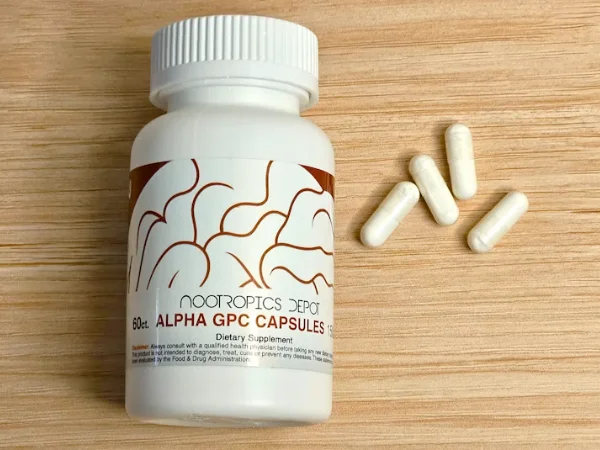
Sports Research Alpha-GPC is available to Singapore consumers through major supplement retailers such as iHerb.
The listed product provides 630 mg per two-capsule serving and is described as vegan, non-GMO and third-party tested. The product is manufactured in the USA using domestic and international ingredients.
Why consider it:
NOW Foods Alpha-GPC 300 mg is also available to consumers in Singapore through international supplement retailers.
It offers a 300 mg serving and comes from an established manufacturer with clear labeling and recognized quality-control practices.
This can be a practical option for Singapore consumers who prefer an established brand over an unknown marketplace seller.
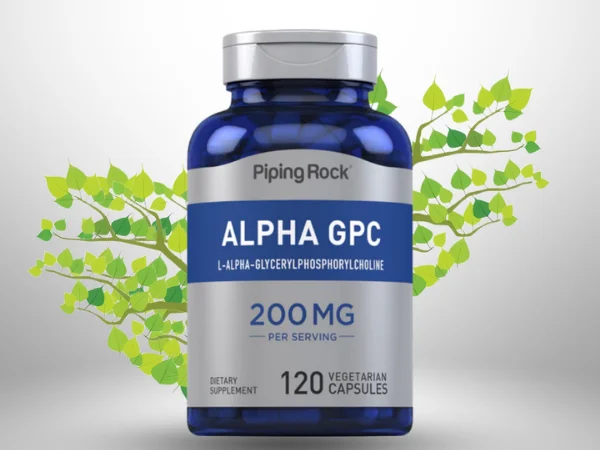
EVLution Nutrition offers a 300 mg Alpha-GPC capsule product. Current product listings describe it as manufactured in the UK by a GMP-registered facility.
Why consider it:
Time Health offers Alpha-GPC powder in the UK and describes its product as 98% purity, with purity testing and UK production.
The powder contains no unnecessary additional ingredients and may appeal to experienced supplement users who prefer powder over capsules.
One practical consideration is that Alpha-GPC powder is hygroscopic, meaning it readily absorbs moisture. Proper storage and quickly resealing the container are therefore important.
For beginners, capsules are generally simpler to measure and use.
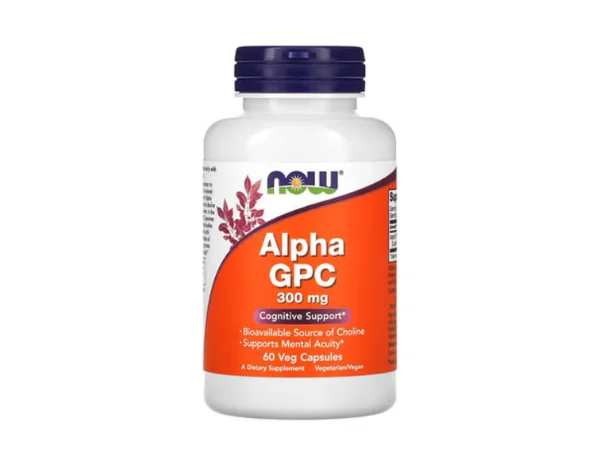
Pure Nutrition offers an Alpha-GPC product in the Indian market providing 300 mg per capsule.
The product is marketed as a high-purity L-alpha-glycerylphosphorylcholine supplement intended to support cognitive function, attention and mental performance.
Another Indian-market product is Trexgenics Alpha-GPC, which has been listed with 300 mg Alpha-GPC per capsule and a stated purity of 99%.
For Indian consumers, purity claims should still be verified through current product documentation, batch information and credible quality testing rather than relying only on the percentage printed on the label.

This is the most important question because Alpha-GPC’s marketing claims are broader than the evidence available for healthy users.
Alpha-GPC has a substantial history of clinical investigation in neurological disorders.
Older studies involving dementia and stroke-related cognitive problems reported improvements in various cognitive and functional measures.
A 2023 systematic review and meta-analysis also reported improvements in cognition and other outcomes among adults with neurological conditions associated with cognitive impairment.
This is currently one of the stronger areas of evidence for Alpha-GPC.
A 2024 randomized, placebo-controlled trial involving 100 people with mild cognitive impairment reported a statistically significant improvement in the Alpha-GPC group after 12 weeks.
The study is useful because it used a randomized and placebo-controlled design. However, one relatively small study is not enough to establish a definitive conclusion.
Larger and longer clinical trials would provide much stronger evidence.
Healthy adults are different from people with cognitive impairment, so clinical findings cannot automatically be transferred between these groups.
A 2024 randomized crossover study involving 20 resistance-trained men examined acute Alpha-GPC supplementation and cognitive performance.
The study contributes useful information, but its small sample size limits how confidently the results can be applied to the broader population.
This distinction is important because nootropic marketing can sometimes move faster than the scientific evidence.
Based on the available research, Alpha-GPC:
Therefore, describing Alpha-GPC as a guaranteed “brain booster” would overstate the current evidence.

Not necessarily.
Healthy adults do not have an established requirement to take Alpha-GPC every day. Choline itself is an essential nutrient, but that does not mean everyone needs supplemental Alpha-GPC.
If your diet already provides sufficient choline and you have no specific reason to supplement, Alpha-GPC may provide little noticeable additional benefit.
For someone using it as a nootropic, a sensible approach is to start conservatively and evaluate whether there is a meaningful benefit rather than automatically taking it indefinitely.
Commercial products commonly provide approximately 300–600 mg per serving, while clinical studies have used different amounts depending on the population and medical condition being investigated.
For example, the 2024 mild cognitive impairment study used 600 mg daily for 12 weeks. That does not mean 600 mg is automatically the appropriate dose for a healthy adult.
Clinical-study doses should not be copied blindly for general supplementation.
Speak with a qualified healthcare professional before using Alpha-GPC if you:
Product labels may also recommend medical consultation for certain health conditions or medication combinations.
Alpha-GPC is a biologically active choline compound with a legitimate connection to acetylcholine production and phospholipid metabolism. Its clinical history is considerably longer than that of many newer nootropics, particularly in research involving cognitive impairment.
However, the evidence is much less convincing when the question changes from “Can Alpha-GPC help people with cognitive impairment?” to “Will it noticeably improve cognition in an already healthy person?”
The current evidence does not justify treating Alpha-GPC as a guaranteed memory enhancer, intelligence booster or athletic performance drug.
For healthy adults, the most sensible approach is to consider the reason for supplementation, choose a product with transparent labeling and credible quality controls, avoid unnecessary combinations with other choline products, and assess whether there is a genuine benefit.
Medical note: Alpha-GPC is a dietary supplement in many markets, although choline alphoscerate also has a history of medicinal use in some countries. It should not be treated as a proven treatment for dementia, Alzheimer’s disease, depression, anxiety or other medical conditions. People who are pregnant or breastfeeding, have a medical condition, or take prescription medication should consult a qualified healthcare professional before using it. Always check the current product label because formulations, dosage and availability can change.
Alpha-GPC is one of the more scientifically interesting compounds in the nootropics category because its biological role is relatively well understood.
It supplies choline, which the body uses to produce acetylcholine, a neurotransmitter involved in memory, attention, learning, and neuromuscular communication.
However, Alpha-GPC is more than simply an “acetylcholine booster.” It also participates in phospholipid metabolism and contributes to compounds involved in the structure of cell membranes.
Its history also differs from many newer nootropic ingredients. Alpha-GPC has been investigated clinically for decades, particularly in Europe, including research involving dementia, vascular cognitive impairment, and cognitive problems following cerebrovascular events. More recent research has renewed interest in the compound, including a 2024 randomized controlled trial involving people with mild cognitive impairment that reported improved cognitive scores after 12 weeks.
The evidence becomes less certain when moving from people with cognitive impairment to healthy adults.
Some emerging research has examined Alpha-GPC in healthy people and athletes, but these studies are generally smaller and less conclusive.
Therefore, healthy people should not expect Alpha-GPC to suddenly make them significantly more intelligent, dramatically improve focus, or transform their memory. Current evidence does not justify those expectations.
For people interested in Alpha-GPC because of its role in cholinergic function, however, it is a more scientifically grounded option than many ingredients marketed broadly as “nootropics.”
Quality also matters.
A good Alpha-GPC supplement should clearly identify L-alpha-glycerylphosphorylcholine, provide an exact amount rather than hiding the ingredient inside a proprietary blend, and come from a manufacturer with credible quality-control practices.
Among the examples discussed in this guide, NOW Foods and Jarrow Formulas are established U.S. options, while Sports Research and NOW Foods are readily available to consumers in Singapore. In Europe, EVLution Nutrition’s UK-made product and Time Health’s UK Alpha-GPC powder are options worth examining. For India, Pure Nutrition and Trexgenics provide clearly labeled Alpha-GPC products.
These products are examples rather than medical endorsements, and supplement formulations, manufacturing arrangements, and availability can change over time. Always check the current product label before purchasing.
As for daily use, there is no universal requirement for healthy adults to take Alpha-GPC every day.
For healthy adults, the smarter strategy is to ask a simple question:
What am I actually trying to improve, and can I tell that Alpha-GPC is helping?
If you notice no meaningful benefit, there may be little reason to continue taking it indefinitely.
Likewise, if you experience headaches, nausea, stomach discomfort, unusual restlessness, or insomnia, that is a reason to reassess your use rather than simply increasing the dose.
The bottom line: Alpha-GPC is a legitimate choline-containing compound with a substantial research history and promising cognitive evidence, particularly in people with cognitive impairment. However, its reputation as a universal brain booster for healthy people is stronger than what current evidence can confidently support.
Used thoughtfully, Alpha-GPC can be a reasonable nootropic ingredient for some people. It should not, however, be confused with a proven way to make a healthy brain dramatically smarter or used as a replacement for appropriate medical treatment.
Medical note: Alpha-GPC is a dietary supplement in many markets, but its regulatory status and approved uses can differ between countries. People who are pregnant or breastfeeding, take prescription medication, have a significant medical condition, or experience persistent adverse effects should consult a qualified healthcare professional before using it.
No, but they are closely related. Alpha-GPC is a choline-containing compound and a highly bioavailable source of choline. The body can use the choline supplied by Alpha-GPC to produce acetylcholine and other important molecules.
There is no strong evidence that Alpha-GPC increases intelligence in healthy people. It may support cholinergic function and has shown cognitive benefits in some people with cognitive impairment, but that is different from proving a general increase in intelligence.
Neither is universally “better.” Both provide choline but have different metabolic pathways. Alpha-GPC has a substantial clinical history in cognitive disorders, while CDP-choline has its own research base. The best choice depends on the purpose, dose, tolerance and overall supplement stack.
Possibly, but the evidence is not conclusive. Alpha-GPC has been investigated for neuromuscular function, exercise performance and related physiological effects. However, studies in healthy athletes are relatively small, so it should not be treated as a guaranteed performance enhancer.
It appears reasonably well tolerated at studied doses, but daily long-term use should still be approached thoughtfully. Clinical studies have generally reported good tolerability, while possible side effects include nausea, digestive discomfort, headache and insomnia or excitation.