Zanskar is a relatively new Indian pain-care brand that has built its identity around natural and bio-active ingredients rather than the conventional pharmaceutical pain-relief ingredients commonly found in many topical gels and creams.
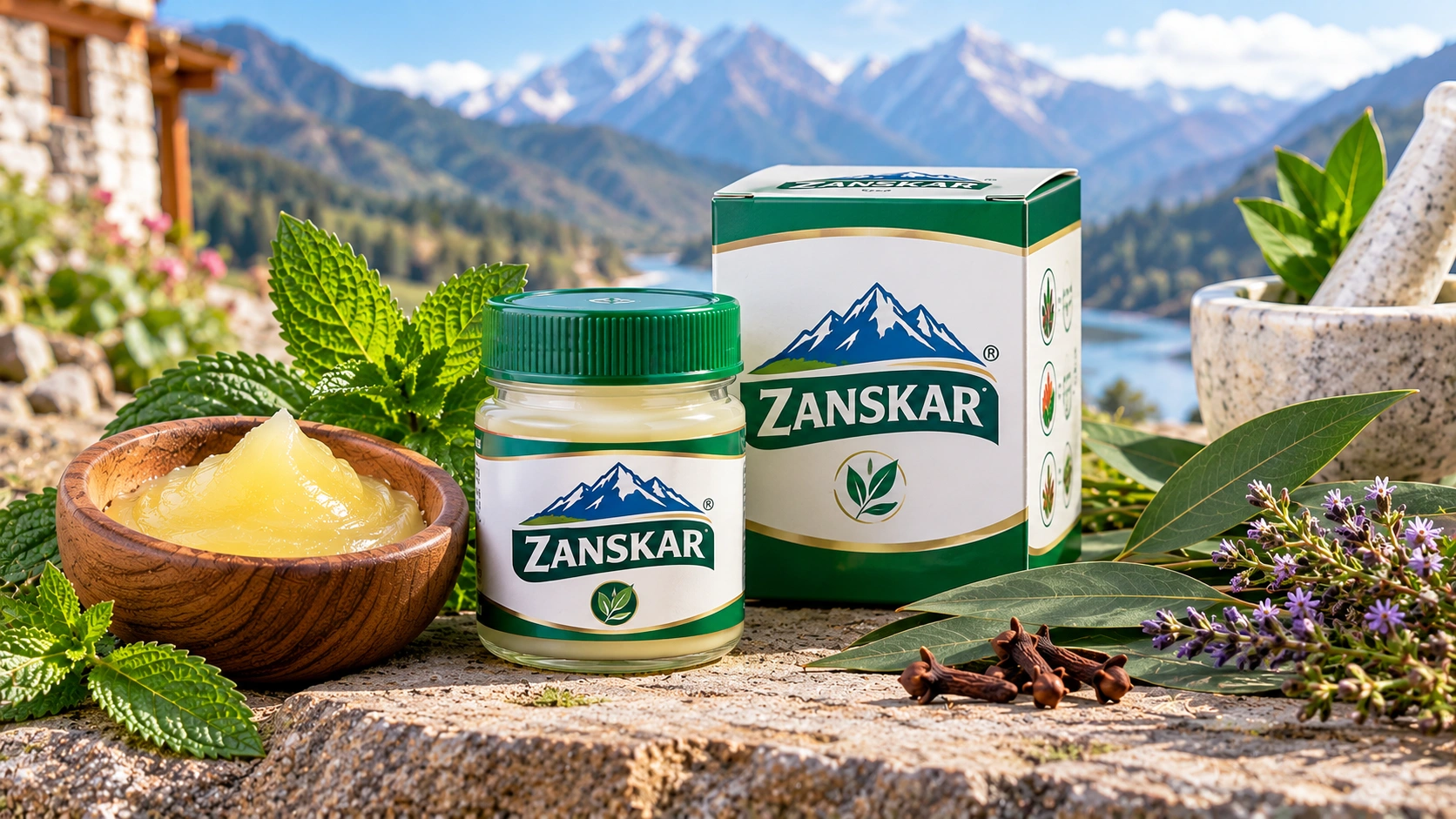
Zanskar is a much younger brand than traditional medicated balms that have been around for 50 or 100 years.
The company has built its business around a modern pain-care concept rather than an old-fashioned medicinal-balm identity.
Publicly available company information does not provide the same detailed founding story that is available for brands such as Tiger Balm or Zam-Buk. This is an important point because many online articles repeat generic claims about a company’s history without providing primary documentation.
What can be established from current company and marketplace information is that Zanskar operates under Medchain Innovation Pvt. Ltd., with its registered office in Hari Nagar, Ashram, New Delhi.
The company’s current LinkedIn profile describes Zanskar as a biotechnology-based, scientifically driven professional pain-care brand.
Its positioning is clearly aimed at consumers who want an alternative to traditional pharmaceutical pain-relief products.
The manufacturer depends on the individual product.
For the current Zanskar Advanced Pain Healing Cream, the company’s official product page identifies:
The product page also displays a manufacturing license reference, while current marketplace information such as Tata 1mg identifies AG Organica Pvt. Ltd. as the manufacturer and Medchain Innovation Pvt. Ltd. as the marketer.
This distinction between marketer and manufacturer is worth highlighting because consumers often assume that the brand name and manufacturing company are automatically the same.
Zanskar’s current product information identifies manufacturing in Uttar Pradesh, India.
The company’s website says its products are made in GMP-certified facilities, while its marketing materials also refer to ISO-certified manufacturing.
However, the exact manufacturing facility can vary between products, so it is better to check the label or official product page for each Zanskar product rather than assuming that every item in the portfolio is made at exactly the same facility.
Zanskar’s marketing is built around a criticism of the conventional topical pain-relief market.
The company argues that many common pain-relief products rely heavily on pharmaceutical ingredients and that consumers may want alternatives based on botanical and bio-active compounds.
This creates the central Zanskar proposition:
Modern pain science combined with natural ingredients.
That positioning allows Zanskar to sit between two categories.
On one side are traditional Ayurvedic oils and balms.
On the other are pharmaceutical topical products containing ingredients such as diclofenac.
Zanskar attempts to occupy the middle ground.
Zanskar’s product range has expanded beyond its original-style pain cream positioning.
The current portfolio includes:
This expansion is strategically important.
Instead of asking consumers to use one product for every type of discomfort, Zanskar can create a product for a particular use case.
For example, the cream is positioned around muscle and joint discomfort, the roll-on around headaches, and the newer nerve-pain cream around neuropathic discomfort.
Zanskar’s own website currently claims that its formulations have reached 20 lakh or more global customers.
Because this is a company-reported figure rather than an independently audited customer database, it should be treated as a brand claim rather than verified market-share data.
The company’s current website also describes more than 50,000 Indians as users or customers in connection with its ingredient information.
The difference between these figures illustrates why company marketing numbers should be interpreted carefully.
They may refer to different periods, product ranges or definitions of customers.
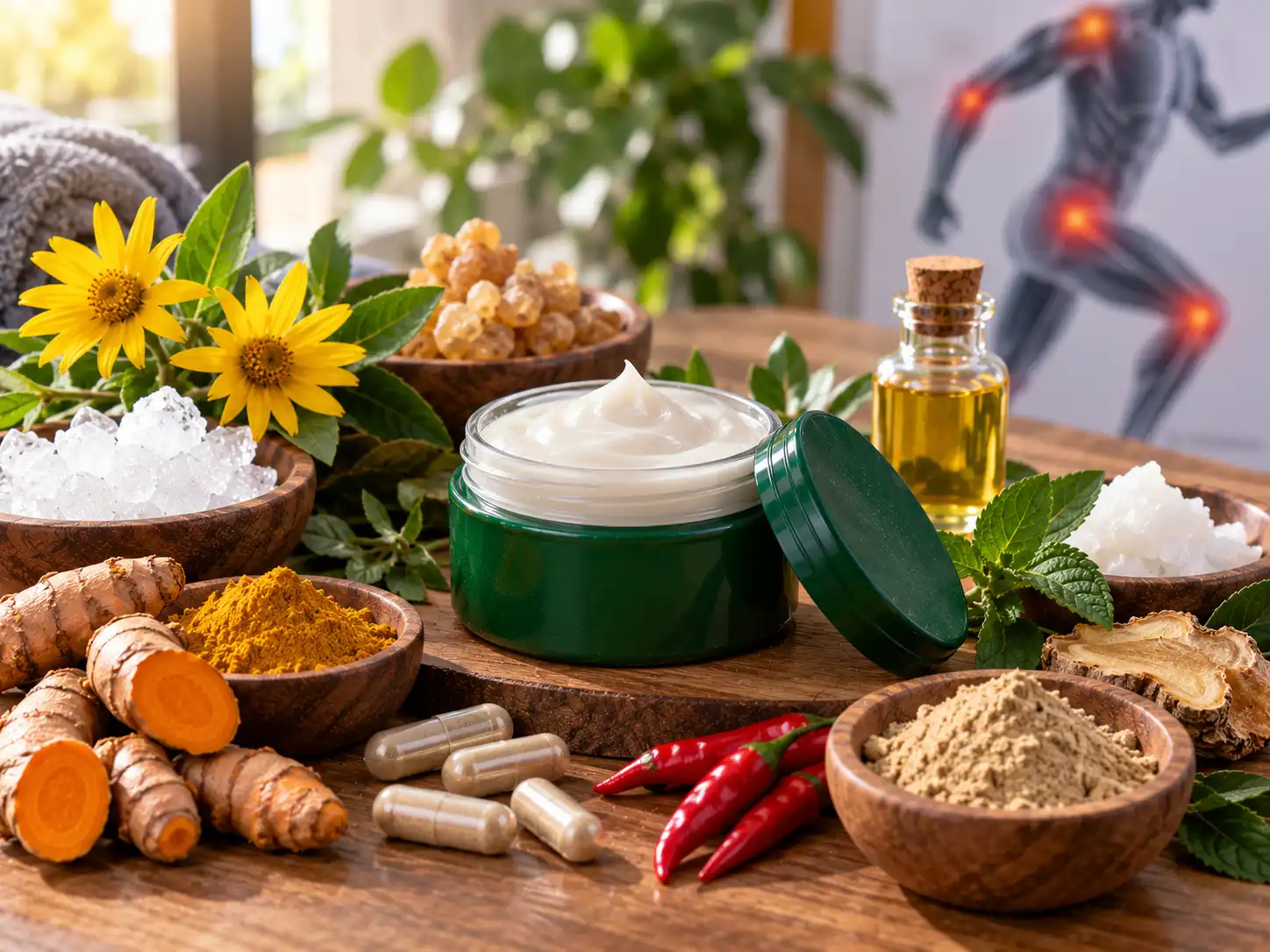
Zanskar’s most distinctive feature is its use of multiple botanical and bio-active ingredients.
The company says its Advanced Pain Healing Cream contains ingredients including:
The exact formula should be checked against the packaging of the specific product because Zanskar has several different topical formulations.
Arnica montana is a European flowering plant traditionally used in topical preparations for bruising and muscle soreness.
Arnica contains compounds known as sesquiterpene lactones, which have been investigated for their effects on inflammatory pathways.
There is some evidence for topical arnica in certain situations, but the overall clinical evidence is mixed and product-specific.
It is also important to distinguish between topical and oral arnica. Arnica products intended for skin application should not be assumed to be safe for ingestion.
Methylsulfonylmethane, commonly called MSM, is an organosulfur compound used in some joint-health supplements and topical formulations.
Research has examined MSM for pain and inflammation, particularly in osteoarthritis and exercise-related discomfort.
However, evidence for topical MSM is not as extensive as evidence for some conventional topical pharmaceutical ingredients.
Zanskar describes MSM as supporting connective-tissue health and joint function.
Boswellia, particularly extracts from Boswellia serrata, has a long history in Ayurvedic medicine.
Its active compounds, known as boswellic acids, have been studied for their effects on inflammatory pathways.
Most human research has focused on oral Boswellia extracts rather than every possible topical formulation.
Therefore, evidence that Boswellia may influence inflammation should not automatically be interpreted as proof that a topical cream containing Boswellia will produce the same effect.
Camphor is a familiar ingredient in topical balms and muscle rubs.
It interacts with sensory receptors in the skin and produces cooling, warming or tingling sensations.
This sensory effect can temporarily alter the perception of discomfort.
Camphor is particularly useful from a sensory-branding perspective because consumers can feel the product soon after application.
Turmeric contains curcuminoids, including curcumin.
Curcumin has been extensively studied for its potential anti-inflammatory effects.
However, much of the research involves oral supplements or laboratory models.
The amount of curcumin delivered through a topical product and its ability to penetrate the skin can be very different from taking a standardized oral curcumin supplement.
Therefore, claims about turmeric’s anti-inflammatory properties should be kept separate from claims about the clinical effectiveness of Zanskar itself.
Capsaicin is the compound responsible for the heat of chili peppers.
It has a particularly interesting role in pain science.
Capsaicin activates TRPV1 receptors in sensory nerves. With repeated exposure, it can reduce the ability of those nerves to transmit certain pain signals.
Prescription-strength and standardized high-dose capsaicin products have been clinically studied for certain types of neuropathic pain.
However, a product containing capsaicin is not automatically equivalent to those clinically tested formulations.
Concentration, delivery system and treatment duration matter.
Vitamin B6, or pyridoxine, plays an important role in normal nervous-system function and amino-acid metabolism.
Zanskar includes vitamin B6 in some of its formulations and describes it as supporting pain management and tissue health.
However, topical vitamin B6 should not be confused with oral vitamin B6 treatment for a documented deficiency.
The strategy is based on the idea of combining several ingredients with different mechanisms and traditional uses.
From a product-development perspective, this can create a multi-target formulation.
From a consumer perspective, it also helps distinguish Zanskar from a simple menthol gel.
The challenge is that the more complex a formula becomes, the more difficult it can be to determine which ingredient is responsible for any observed effect.
That is why controlled studies of the finished Zanskar product are more valuable than simply citing studies about individual ingredients.

Zanskar’s Advanced Pain Healing Cream is marketed for several types of muscle and joint discomfort.
The company lists conditions and situations including:
The company’s Rapid Nerve Pain Relief Cream is positioned separately for nerve-related discomfort.
The Advanced Headache Roll-On is designed for application around the head and temples according to its product instructions.
The company also sells an oil and spray format for people who prefer different application methods.
These products are designed as topical preparations and should be used according to their individual directions.
For persistent, severe or unexplained pain, topical products should not replace medical evaluation.

Zanskar’s strongest marketing idea is not a single television advertisement.
It is the positioning of the entire brand around “Modern Pain Science, Now in India.”
This phrase allows Zanskar to differentiate itself from traditional Indian pain oils while still using botanical ingredients.
The company presents its products as natural formulations supported by research, rather than as old-fashioned herbal remedies.
This is particularly effective for urban Indian consumers who want a product that feels natural but still appears scientifically developed.
Another major branding pillar is the term natural bio-actives.
The company repeatedly emphasizes ingredients such as Arnica, Boswellia, MSM, turmeric, capsaicin and camphor.
This gives consumers specific ingredients to recognize rather than asking them to trust an anonymous herbal mixture.
Ingredient-led marketing is increasingly common in the modern wellness market.
Zanskar describes itself as India’s “science-backed” pain-care brand.
Its website also refers to pain doctors, clinical testing and research-backed formulations.
This is an important marketing strategy because pain relief is a category where consumers frequently compare natural products with pharmaceutical gels.
The challenge for the brand is ensuring that “science-backed” claims are supported by appropriately designed evidence for the finished product rather than only by studies of individual ingredients.
Zanskar says its formulations were developed or co-created with pain doctors and specialists.
This gives the brand a professional-healthcare identity.
It also helps differentiate the company from informal herbal products sold through general stores or traditional medicine shops.
Zanskar has built a substantial part of its current business around online sales.
The company’s website sells individual products, bundles and subscription-style offers while collecting consumer reviews and testimonials.
This allows the company to control its messaging and customer relationship rather than depending entirely on pharmacies.
Bundling is another important strategy.
The company’s current “All-in-One Care Kit” combines multiple products, including cream, oil, spray and roll-on formats.
The strategy encourages consumers who already trust one product to try several others.
It also increases the average order value.
Zanskar prominently displays customer reviews across its website.
Current marketplace listings also show thousands of reviews for its Advanced Pain Healing Cream.
For example, a current Flipkart listing shows thousands of ratings for the 50-gram cream.
Consumer reviews are particularly powerful for pain products because shoppers often want to know whether other people experienced relief before purchasing.
However, testimonials and ratings are not substitutes for controlled clinical trials.
Zanskar has also differentiated itself through sensory positioning.
Traditional pain balms can have strong smells because of ingredients such as camphor, menthol and eucalyptus.
Zanskar promotes some of its products as having a more pleasant or disappearing scent.
This directly addresses a common consumer complaint.
The message is simple:
You can use a pain-relief product without smelling like a traditional medicinal balm.
The brand has also expanded beyond topical products.
Its product bundles include access to a Zanskar Physio App, linking the product business with exercises and physiotherapy-related content.
This is strategically significant.
Instead of presenting pain relief as something achieved only through a cream, the brand is attempting to position itself as a broader pain-care ecosystem.
Zanskar’s direct-to-consumer model is naturally suited to social media advertising.
The company can target consumers searching for back pain, knee discomfort, sports recovery and other pain-related topics.
It can then move those consumers directly from an advertisement to an online product page.
This shortens the path between awareness and purchase.

Zanskar does not have the decades of heritage enjoyed by products such as Moov, Iodex or traditional balms.
Instead, it is competing through modern positioning.
Consumers increasingly want products that sound natural but are presented professionally.
Zanskar is designed specifically for this audience.
The packaging and website emphasize scientific language, while the formula highlights botanical and naturally derived ingredients.
Traditional balms can be extremely pungent.
Zanskar’s marketing emphasizes a gentler sensory experience.
This may appeal to office workers, younger consumers and people who do not want the smell of a traditional pain balm on their clothes.
The company offers creams, oils, sprays and roll-ons.
This allows consumers to choose how they want to use a topical product.
Instead of building the brand exclusively through pharmacies, Zanskar can reach consumers through its own website and large online marketplaces.
This is particularly useful for a young company because it reduces dependence on traditional retail distribution.
The company has created different products for different needs.
A consumer searching for headache relief sees the roll-on.
Someone looking for muscle and joint support sees the cream or oil.
Someone searching for nerve-related discomfort sees the Rapid Nerve Pain Relief Cream.
This improves the brand’s ability to target specific search queries and consumer problems.
Zanskar is manufactured in India, giving the brand an opportunity to position itself as a domestic alternative to international topical products.
For consumers who prefer Indian brands, this can be an important advantage.
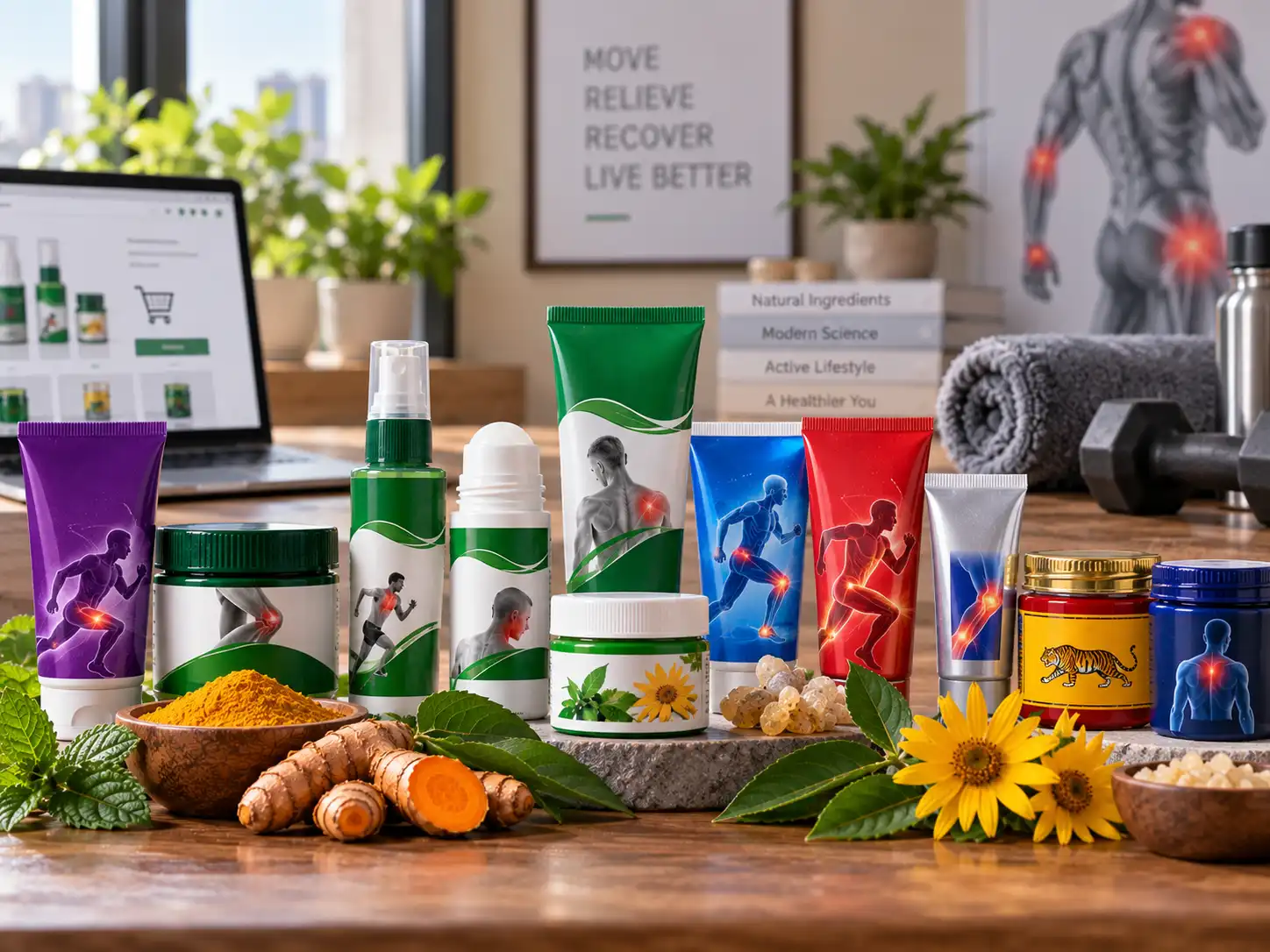
Zanskar operates in a crowded category, and its competitors differ depending on the type of pain product being considered.
Important competitors include:
Moov is one of the strongest Indian competitors in the topical pain-relief category.
It has a large consumer base and strong recognition across India.
Moov competes with Zanskar through creams, sprays and other topical formats.
Iodex is another major heritage brand in India’s pain-relief market.
Its long history and widespread pharmacy presence give it an advantage over newer companies.
Zanskar counters that advantage by emphasizing natural ingredients, modern pain science and direct-to-consumer marketing.
Volini is particularly important in the sports and muscle-pain segment.
Its modern branding, topical sprays and gels make it a strong competitor for consumers looking for convenient pain relief.
Omnigel competes more directly in the pharmaceutical topical-gel segment.
Because it uses a conventional pharmaceutical active ingredient, its positioning differs from Zanskar’s natural-ingredient proposition.
Tiger Balm is a major international competitor in the traditional topical category.
Its strongest advantage is heritage.
Zanskar’s advantage is modern Indian branding and a natural bio-active formulation.
Voltaren is a major global competitor in topical pain relief.
Its active ingredient, diclofenac, is an NSAID and works differently from botanical ingredients such as arnica, Boswellia or turmeric.
This makes Voltaren an important benchmark for efficacy-focused consumers, even though its positioning is very different from Zanskar’s.
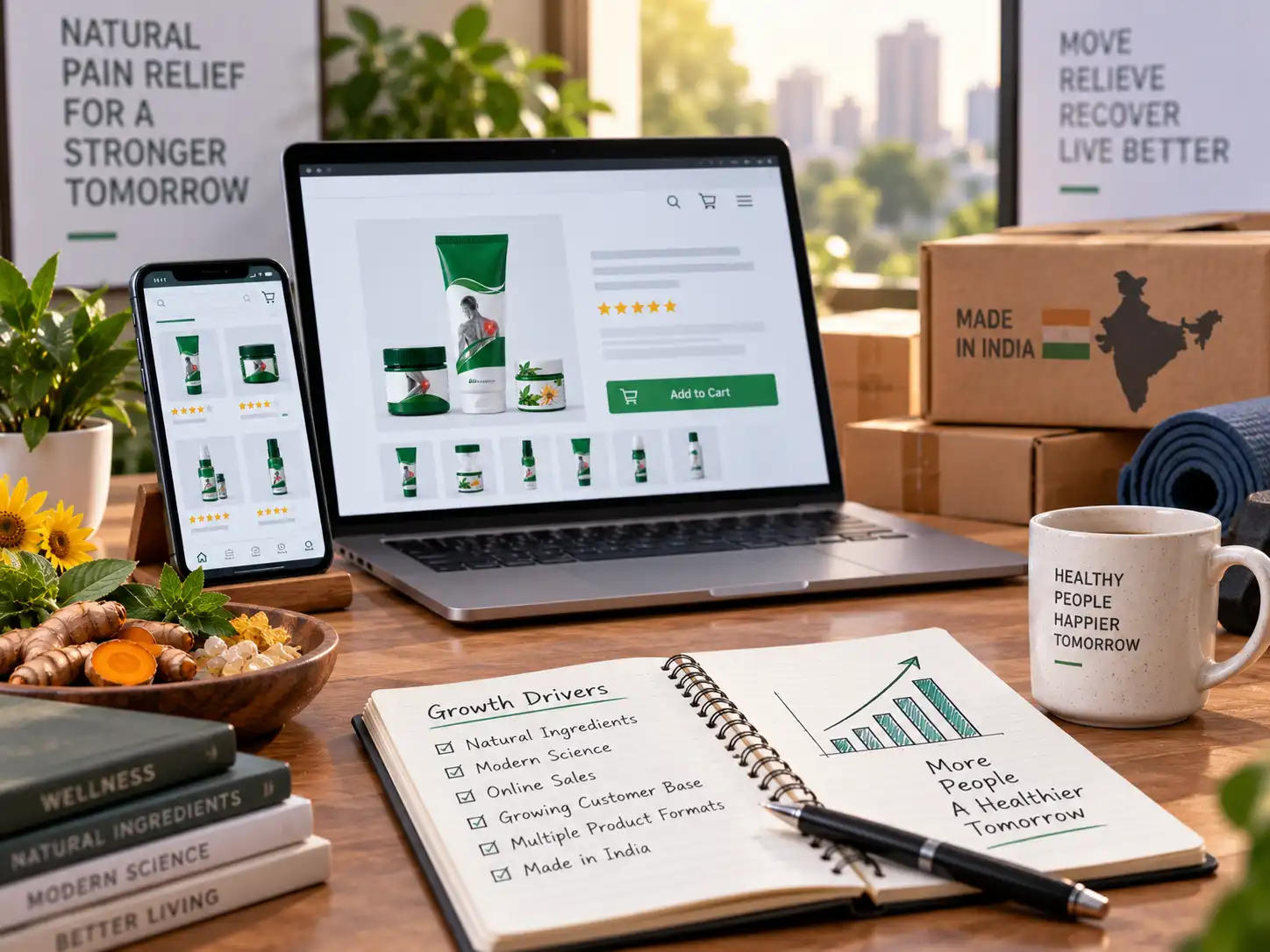
This is one area where reliable information is limited.
Zanskar does not publicly disclose a verified standalone annual revenue figure for 2026.
The company operates through Medchain Innovation Pvt. Ltd., a private company, and there is no publicly available audited financial statement that provides a verified global Zanskar brand revenue number.
Zanskar is actively selling products through its official website and major Indian e-commerce platforms in 2026.
The company’s official store currently lists its 50-gram Advanced Pain Healing Cream and multiple product combinations.
Current marketplace listings also show substantial consumer engagement.
For example, a current Flipkart listing for the 50-gram Advanced Pain Healing Cream shows more than 6,900 ratings, while the company’s own product pages display hundreds of reviews for some product variants.
These figures demonstrate online market activity but should not be converted directly into revenue estimates.
The official Zanskar website currently lists the 50-gram Advanced Pain Healing Cream at approximately ₹499 before certain promotional discounts.
Bundle pricing can reduce the effective price per unit.
The company also sells multi-product combinations, allowing it to increase the value of individual customer orders.
Zanskar’s official product page states that it has served more than 20 lakh global customers.
If interpreted literally, 20 lakh equals approximately two million customers.
However, this is a company claim rather than an independently audited customer database.
It is therefore better used as an indicator of the company’s claimed scale rather than as verified market-share data.
No.
Even if the two-million-customer figure is accurate, we would still need information about:
Without those figures, calculating revenue would require assumptions.
That is why publishing a precise Zanskar revenue estimate without company financial disclosure would not be reliable.
Zanskar has clearly established a growing online presence, but it is still difficult to compare its total sales directly with established Indian brands such as Moov, Iodex and Volini because those companies operate at substantially different scales and publicly available market-share information does not provide an apples-to-apples comparison.
The safest conclusion is that Zanskar is an emerging direct-to-consumer Indian pain-care brand with significant online traction, rather than claiming that it already dominates India’s entire pain-relief market.
Zanskar is a modern Indian pain-care brand built around natural and bio-active ingredients, direct-to-consumer sales and a science-oriented marketing strategy.
Unlike heritage brands such as Tiger Balm and Zam-Buk, Zanskar does not rely on a century of history.
Its competitive strategy is based on something different: modern pain science, natural ingredients, professional positioning, online distribution and product-specific solutions.
The brand is marketed by Medchain Innovation Pvt. Ltd., while its current Advanced Pain Healing Cream is manufactured by AG Organica Pvt. Ltd. in Uttar Pradesh, India.
The company’s current product portfolio includes the Advanced Pain Healing Cream, Advanced Pain Healing Oil, Advanced Pain Relief Spray, Advanced Headache Roll-On and Rapid Nerve Pain Relief Cream.
The Advanced Pain Healing Cream includes ingredients such as Arnica Montana, MSM, Boswellia, camphor, turmeric, capsaicin and vitamin B6.
Each ingredient has a different scientific background.
Menthol and camphor are well known for their sensory effects on the skin. Capsaicin has a particularly strong evidence base in certain standardized topical preparations for neuropathic pain. Boswellia, turmeric, arnica and MSM have also been studied for various aspects of pain and inflammation.
But an important scientific distinction must be maintained.
Evidence that an individual ingredient may affect pain does not automatically prove that the finished Zanskar formulation has the same level of clinical effectiveness.
That distinction is particularly important when evaluating the company’s “science-backed” and “clinically tested” marketing claims.
Zanskar’s marketing strategy is one of its biggest strengths.
The brand combines natural-ingredient messaging with modern scientific language. It uses doctor and pain-specialist positioning, online consumer reviews, direct-to-consumer sales, product bundles, e-commerce advertising and creator partnerships.
Its “Modern Pain Science, Now in India” positioning is designed to differentiate the company from both traditional Ayurvedic oils and conventional pharmaceutical gels.
The company has also expanded beyond one product, creating specialized formats for headaches, muscle and joint discomfort and nerve-related pain.
This gives Zanskar more opportunities to target specific consumer needs and online search behavior.
Its competitors include Moov, Iodex, Volini, Omnigel, Dynapar, Tiger Balm, Bengay, Icy Hot, Voltaren and Deep Heat.
Established competitors have major advantages in retail distribution, brand recognition and pharmaceutical evidence.
Zanskar’s advantage is its newer positioning, natural-ingredient story, Indian identity and digital-first business model.
Financially, there is no reliable publicly disclosed global 2026 revenue number for Zanskar.
The company claims more than 20 lakh global customers, while its products have accumulated thousands of ratings on Indian e-commerce platforms. These figures demonstrate meaningful consumer activity but should not be treated as independently audited revenue or market-share data.
The most accurate description of Zanskar in 2026 is therefore that it is a growing Indian direct-to-consumer pain-care brand with a strong online presence and a portfolio centered on botanical and bio-active topical formulations.
Its long-term success will depend on whether it can turn online popularity into sustained repeat purchases while building stronger independent evidence for its finished products.
That may ultimately be the biggest difference between Zanskar and older pain-relief brands.
Heritage brands win because generations already know them.
Pharmaceutical brands win through clinical evidence and massive distribution.
Zanskar is trying to build a third path: a modern Indian pain-care brand that combines natural ingredients, scientific language, digital marketing and convenient topical products.
Whether that model can eventually make Zanskar one of India’s leading pain-relief brands remains to be seen, but its current growth, product expansion and online presence make it a notable name in India’s rapidly changing consumer-health market.

Watch expert-inspired short videos on health, wellness, nutrition, fitness, preventive care, and healthy living in under a minute.