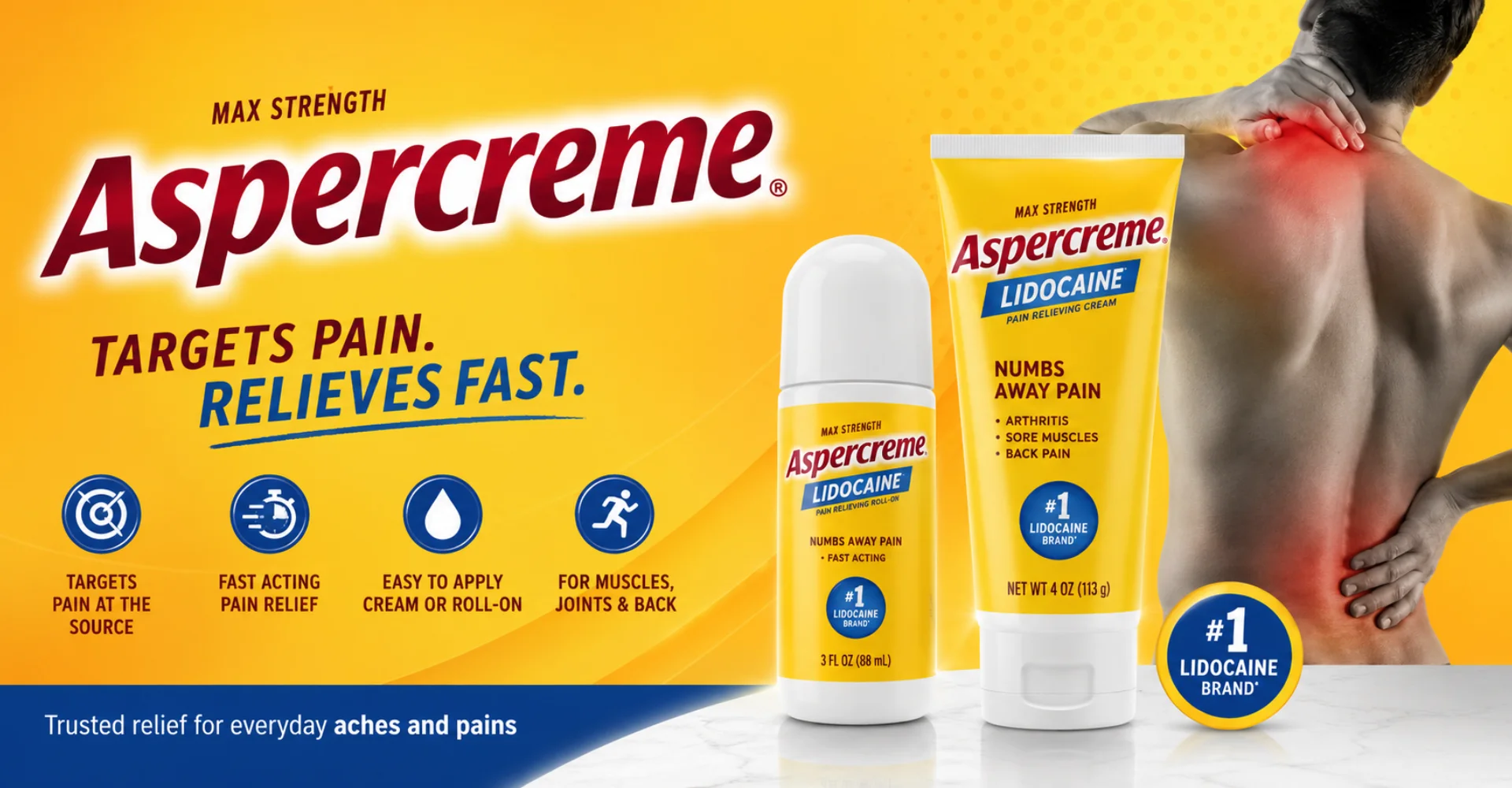
Today, Aspercreme is best known in the United States for its 4% lidocaine creams, roll-ons, sprays and patches. The brand describes itself as the No. 1 topical lidocaine brand in the U.S. among OTC topical analgesic brands, while its current range has expanded beyond a single pain-relief cream into multiple formats and specialized products.
Aspercreme is not a recent brand.
Historical FTC records state that Aspercreme had been available in the United States since 1971. At that time, its active ingredient was 10% trolamine salicylate, a topical analgesic related chemically to salicylates.
The product’s early history is particularly interesting because its name and advertising created regulatory controversy.
In 1976, Thompson Medical Company acquired Aspercreme from Sperti Drug Products, Inc. FTC records identify a 1976 Aspercreme package that listed 10% triethanolamine salicylate, an earlier naming convention for the active ingredient.
Thompson Medical then invested heavily in advertising and distribution.
There is no reliable evidence identifying one individual “founder of Aspercreme” in the same way that some consumer brands have a famous founder.
The more accurate history is that Aspercreme originated as a commercial topical analgesic product and was subsequently acquired and developed by companies including Sperti Drug Products and Thompson Medical Company.
This distinction matters because calling Thompson Medical’s executives the “founder” would oversimplify the documented history.
Thompson Medical became particularly important to the brand’s development during the 1970s and 1980s.
Thompson Medical marketed Aspercreme as a topical treatment for minor aches and pains, including arthritis-related discomfort.
The company used aggressive television advertising and positioning that attempted to make consumers think of Aspercreme as delivering aspirin-like relief directly where it hurt.
That strategy became one of the most controversial chapters in the brand’s history.
In 1981, the FTC filed an administrative complaint against Thompson Medical. The agency argued that Aspercreme advertising had made unsupported efficacy claims and misleadingly suggested that the product contained aspirin.
The FTC ultimately ruled against Thompson, and the U.S. Court of Appeals for the D.C. Circuit upheld the findings in 1986. The court noted that Aspercreme contained no aspirin, even though its advertising had strongly associated the product with aspirin.
The episode is important not only as a regulatory footnote but also as an example of how powerful advertising can be in building an OTC healthcare brand.
By the late 1990s and 2000s, Aspercreme had become part of the broader Chattem consumer healthcare portfolio.
A current FDA/DailyMed record for the older Aspercreme trolamine salicylate product identifies Chattem, Inc. as the labeler and shows a marketing start date of December 1, 1998. That older formulation was subsequently discontinued, but the record provides a useful link between the historical brand and modern Chattem ownership.
In 2009, Sanofi announced its intention to acquire Chattem, and the transaction became effective in March 2010. Chattem’s portfolio included Aspercreme, Icy Hot, Gold Bond and other major consumer healthcare brands.
This acquisition gave Aspercreme access to a much larger global healthcare organization.
This is where the ownership story changed recently.
Sanofi created Opella as its consumer healthcare business and then completed the sale of a 50% controlling stake to Clayton, Dubilier & Rice on April 30, 2025.
The ownership structure became:
Opella became an independent consumer healthcare company, while Sanofi retained a significant minority interest.
However, U.S. FDA labeling for Aspercreme continues to identify Chattem, Inc. as the labeler, with Chattem described as a Sanofi company on some current product labels.
Therefore, the safest way to describe the brand in 2026 is:
Aspercreme is a Chattem-labeled consumer healthcare brand within the broader Opella business, following the 2025 separation of Opella from Sanofi’s controlled operations.
There is not one single factory responsible for every Aspercreme product.
Historical Chattem filings show that consumer products, including Aspercreme, were principally manufactured at Chattem facilities in Chattanooga, Tennessee, while some Canadian packaging and distribution occurred through Chattem Canada.
Current product labels show that manufacturing can vary by product.
For example, the current Aspercreme lidocaine patch is labeled Made in Japan, while some Aspercreme topical creams sold in Canada are listed as Made in Canada.
This means it would be inaccurate to claim that every Aspercreme product is made in the United States.
The brand uses a broader manufacturing and supply network, with Chattem handling labeling and distribution in the U.S.
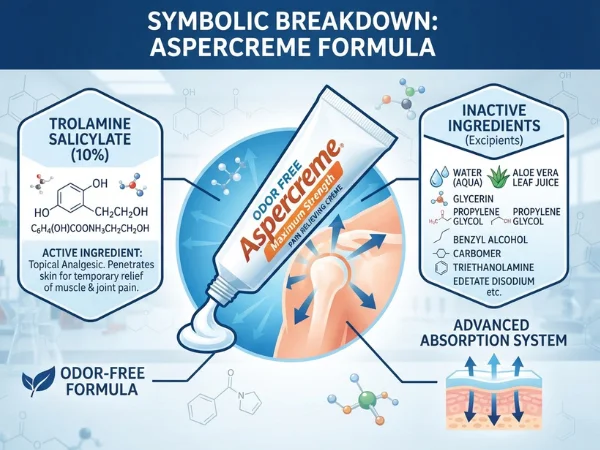
The first thing to understand is that there is no single Aspercreme formula.
The brand now sells multiple products, including lidocaine creams, roll-ons, sprays, patches and products containing other active ingredients. The exact inactive ingredients vary by format.
For modern Aspercreme products, the most important active ingredient is lidocaine.
Many Aspercreme products contain 4% lidocaine hydrochloride.
Under the U.S. OTC labeling framework, 4% lidocaine is a topical anesthetic. Aspercreme uses it to temporarily relieve minor pain by reducing the ability of nerves in the application area to transmit pain signals.
The current DailyMed label for Aspercreme Professional Cream, updated July 2026, lists 4 g of lidocaine hydrochloride per 100 g of cream.
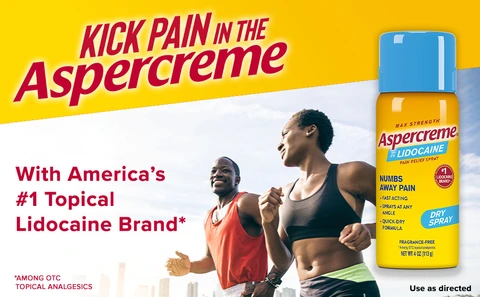
This is also why Aspercreme’s current marketing revolves around the phrase “numbs away pain.”
The brand says its lidocaine products target nerves at the area where the pain occurs.
Several Aspercreme lidocaine formulations contain aloe vera leaf juice.
Aloe helps provide a skin-conditioning component to the formulation. It is not the primary pain-relieving ingredient.
In the 2026 Aspercreme Professional Cream label, aloe is listed as an inactive ingredient.
Alcohol is used in several Aspercreme formulations, particularly fast-drying liquids and creams.
For example, the current Professional Cream contains 5% denatured alcohol, while other products can contain higher concentrations.
Alcohol can help the product dry quickly and contributes to the feel of the formulation.
Dimethicone is a silicone-based ingredient used in many topical products.
In Aspercreme formulations, it contributes to skin feel and helps create a smooth, spreadable product.
It is an inactive ingredient rather than the source of pain relief.
Cetearyl alcohol may sound like the type of alcohol found in beverages, but it is not.
It is a fatty alcohol commonly used as a thickener and texture-enhancing ingredient in creams.
Glyceryl stearate helps stabilize the cream and gives it a smoother texture.
It is part of the delivery system rather than an analgesic.
These ingredients help give the cream its structure and viscosity.
They allow the formulation to remain stable while still spreading easily across the skin.
Some newer Aspercreme formulations contain panthenol, a form of vitamin B5 used in skin-care products.
It is primarily included for skin-conditioning purposes.
Tocopheryl acetate is a vitamin E derivative used in topical formulations.
It contributes to the conditioning and antioxidant profile of the product.
Aspercreme has expanded beyond fragrance-free lidocaine.
The current range includes products containing rosemary and mint essential oils, lavender and eucalyptus. The essential oils primarily modify the sensory experience rather than replacing lidocaine as the active analgesic.
For example, Aspercreme’s Rosemary & Mint product contains 4% lidocaine alongside its essential-oil formulation.
This is another important historical distinction.
The original Aspercreme was based on 10% trolamine salicylate, not lidocaine. Current DailyMed records for the older product identify trolamine salicylate 10% as the active ingredient.
The modern Aspercreme brand has therefore undergone a major formulation evolution.
It went from a salicylate-based topical analgesic to a brand heavily centered on topical lidocaine.
Lidocaine is a local anesthetic.
When applied topically, it reduces the ability of certain nerves to generate and transmit pain signals from the treated area.
That makes Aspercreme different from a topical NSAID such as diclofenac.
A topical NSAID is designed to reduce inflammation through a different biological pathway, whereas lidocaine primarily works by temporarily reducing nerve signaling.
The current Aspercreme Professional label describes 4% lidocaine as a topical anesthetic for the temporary relief of pain.
Aspercreme products are marketed for minor aches and pains, including areas such as the back, neck, shoulders, knees, elbows, hands, wrists, feet, ankles and legs.
One of Aspercreme’s biggest advantages is format choice.
The current portfolio includes:
This lets the company target different consumer preferences rather than forcing everyone into one cream.
Aspercreme has a particularly interesting advertising history.
Its marketing has evolved from aggressive traditional television advertising to modern influencer, social and lifestyle campaigns.
The most historically significant Aspercreme campaign was also its most controversial.
In the early 1980s, Thompson Medical ran advertisements that associated Aspercreme with aspirin and suggested that it could provide the strong relief of aspirin directly where the consumer hurt.
The FTC found those claims misleading because Aspercreme did not contain aspirin and because the company lacked adequate substantiation for certain comparative and efficacy claims.
The campaign remains an important lesson in OTC healthcare marketing: a familiar medical association can make a product memorable, but health claims need strong evidence and careful regulatory compliance.
A much more recent campaign took a completely different approach.
In 2023, Aspercreme partnered with drag performer Nicky Doll for the “Asperqueens” campaign.
The campaign was designed to connect with younger consumers, particularly around the problem of high-heel pain.
The Consumer Healthcare Products Association recognized the campaign in its 2023 Self-Care Marketing Awards. The campaign positioned Nicky Doll as the first “AsperQueen” and used humor, performance and social-media-friendly content to connect Aspercreme with a younger audience.
This was smart positioning.
Instead of telling consumers only that Aspercreme is a pain reliever, the campaign connected the product with a relatable lifestyle problem.
Modern Aspercreme advertising has increasingly simplified the product message.
The current brand positioning centers on:
Numb the pain. Target the nerves. Get back to life.
The official website describes the brand’s mission around helping consumers get back to everyday activities without pain interfering.
That positioning is much easier to understand than older medical-style advertising.
The brand’s product expansion is itself a marketing strategy.
A person who does not like applying cream with their hands can choose a roll-on.
Someone with a hard-to-reach area can use the spray.
Someone who wants longer contact with the skin can choose a patch.
The current Aspercreme website specifically promotes these different delivery systems.
This strategy increases the number of situations in which the brand can compete.

It would be too broad to say Aspercreme dominates the entire global pain-relief market.
It doesn’t.
But it has established a strong position in the U.S. OTC topical lidocaine category.
The brand itself currently claims to be the No. 1 topical lidocaine brand in the United States among OTC topical analgesic brands.
Several factors explain its strength.
Consumers generally understand the idea of numbing pain.
That gives Aspercreme a simple marketing message.
Instead of asking consumers to understand a complex mechanism, the brand communicates:
Pain is here. Lidocaine numbs the area.
Aspercreme’s 4% lidocaine products are marketed as containing the maximum-strength lidocaine available without a prescription among relevant OTC topical analgesics.
This gives the brand a powerful competitive message.
The consumer does not necessarily need to compare complicated ingredient percentages across dozens of products.
The word “maximum” does much of the marketing work.
Aspercreme products are available through major U.S. retailers and pharmacies.
The brand’s products appear across mass retail, grocery, drugstore and online channels.
That accessibility matters enormously in OTC healthcare.
Consumers often buy pain relief when they need it, not after researching it for weeks.
Aspercreme does not rely on one product.
The portfolio includes creams, patches, sprays and roll-ons, allowing the company to compete for different use cases.
Aspercreme benefits from being connected to a major global consumer healthcare organization.
Opella currently operates approximately 100 brands, serves consumers in around 100 countries, has more than 11,000 employees and operates 13 manufacturing sites.
That gives Aspercreme access to capabilities that a small independent topical brand would struggle to match.
The introduction of eucalyptus, rosemary-mint, lavender, foot-pain and XL patch products shows that Aspercreme is not simply relying on its original cream.
The current XL patch, for example, is described as 71% larger than the standard Aspercreme patch.
This is classic category expansion.
Instead of competing only for one consumer need, the brand tries to own multiple pain-relief occasions.
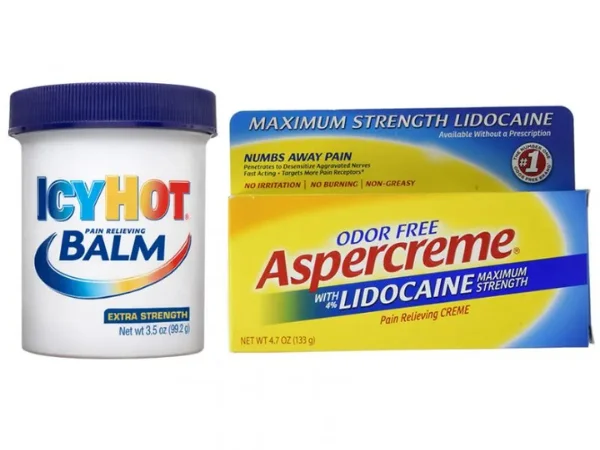
Aspercreme operates in a highly competitive topical pain-relief market.
Its direct competitors differ depending on the country and the active ingredient.
Icy Hot is one of the most important U.S. competitors.
The brand is particularly strong in creams, gels, patches and other topical products using ingredients such as menthol and methyl salicylate.
The key difference is that Icy Hot is strongly associated with a hot-and-cold counterirritant experience, while Aspercreme has built much of its modern identity around lidocaine and numbing.
Salonpas is a major competitor in topical patches.
It has a strong international presence and offers patches and other topical pain-relief products.
The patch format makes Salonpas particularly relevant to Aspercreme’s growing patch business.
Bengay is another established topical pain-relief brand, especially in the United States.
It has significant heritage and competes across creams and other topical products.
Voltaren represents a different type of competitor.
Its topical products commonly use diclofenac, a nonsteroidal anti-inflammatory drug.
That means Voltaren may appeal more to consumers specifically seeking topical anti-inflammatory treatment rather than the numbing sensation associated with lidocaine.
Tiger Balm is a major global topical pain-relief brand.
Its traditional products use ingredients such as menthol and camphor and have a very strong heritage, particularly across Asia.
Tiger Balm competes with Aspercreme for consumers seeking topical relief, although the product positioning and active ingredients are quite different.
Deep Heat is especially relevant in the United Kingdom and other international markets.
Its positioning is centered around warming topical relief, creating a different sensory experience from Aspercreme’s lidocaine-based numbing.
Perhaps the biggest long-term competitive threat is not another famous brand at all.
It is the large number of generic 4% lidocaine creams, sprays and patches.
Because consumers can purchase topical lidocaine from multiple manufacturers, Aspercreme must continuously justify its brand premium through trust, distribution, packaging, product formats and consumer awareness.

This is where an honest article needs to separate brand revenue from parent-company revenue.
There is no publicly disclosed financial statement showing exactly how much money Aspercreme generated in 2025 or 2026.
Neither Chattem nor Opella publicly breaks out Aspercreme revenue by individual product or brand in the financial information currently available.
Therefore, claims such as “Aspercreme makes $X million per year” should be treated skeptically unless the source has access to proprietary market data.
The latest 2026 information gives us a useful picture of the parent business.
Opella reports €4.6 billion in 2025 revenue, according to its current corporate website. It describes itself as the world’s third-largest OTC and vitamins, minerals and supplements player and says it operates with approximately 11,000 employees, around 100 brands, 38 countries with direct operations and roughly 110 countries served indirectly.
However, that €4.6 billion is Opella’s total revenue, not Aspercreme revenue.
The financial data released with Sanofi’s FY2025 results also provide consolidated Opella financial information. Because Opella was deconsolidated from Sanofi on April 30, 2025, accounting presentation for the year is affected by the ownership transition. Sanofi’s appendix reported €3.346 billion in consolidated net sales and other revenues for the relevant 2025 consolidated period.
The more useful headline for consumers and business readers is therefore the figure Opella itself now publishes:
Opella revenue in 2025: approximately €4.6 billion.
The latest 2026 interim figures are even more useful.
For H1 2026, Opella reported consolidated net sales and other revenues of approximately €2.657 billion, compared with €887 million in the comparable period presented after the ownership transition.
Again, this is the revenue of the entire Opella business.
It includes major brands across allergy, digestive health, pain relief, vitamins and other consumer healthcare categories.
There is no public breakdown showing the exact percentage contributed by Aspercreme.
Private-label and brand-level OTC sales are often tracked by third-party market-research companies rather than disclosed publicly.
A company can know exactly how many Aspercreme units it sells, but it does not necessarily have to publish that number.
This is particularly true after the Opella ownership transition, because Opella is not a publicly traded standalone company publishing the same detailed segment reporting that a listed corporation would provide.
Therefore, the most defensible statement in 2026 is:
Aspercreme is a major brand within a multibillion-euro global consumer healthcare company, but its standalone annual revenue is not publicly disclosed.
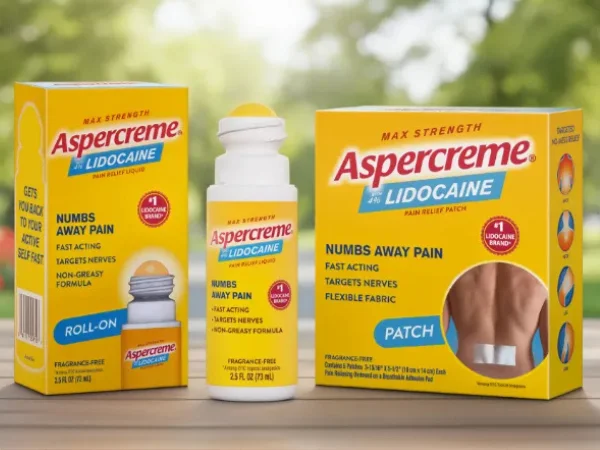
Aspercreme today is very different from the Aspercreme consumers would have purchased in the 1970s.
The original brand relied on trolamine salicylate.
The modern range is heavily centered on 4% lidocaine.
The original marketing relied heavily on television advertising and comparisons with aspirin.
The modern brand uses digital content, lifestyle positioning, social campaigns and a broad range of product formats.
The original product was essentially a topical cream.
Today, consumers can choose from creams, sprays, roll-ons and patches, including products designed around essential oils or specific body areas.
This evolution explains why Aspercreme has survived for more than five decades.
It has not remained tied to one formulation.
Instead, the brand has changed with consumer behavior and the OTC pain-relief market.
Aspercreme has a history that goes back to 1971, making it more than 50 years old. Its early formulation was based on 10% trolamine salicylate, and the brand became particularly associated with Thompson Medical Company during its rise in the 1970s and 1980s.
Its early marketing became controversial when the FTC found that Thompson Medical’s advertising misleadingly connected Aspercreme with aspirin and made unsupported efficacy claims. The resulting legal battle became one of the better-known regulatory cases in OTC pain-relief advertising.
The brand later became part of Chattem, which was acquired by Sanofi in 2010. In 2025, Sanofi separated its consumer healthcare business, Opella, into an independent company controlled by Clayton, Dubilier & Rice, while Sanofi retained 48.2% and Bpifrance 1.8%.
In 2026, Aspercreme’s modern identity is built largely around 4% lidocaine, a topical anesthetic used for temporary relief of minor pain. The brand has expanded beyond traditional cream into patches, roll-ons, sprays and specialized formulations containing ingredients such as eucalyptus, lavender, rosemary and mint.
Its competitive advantage is not simply the lidocaine itself.
Generic competitors can use the same active ingredient.
Aspercreme’s strength comes from combining the ingredient with brand recognition, retail distribution, multiple delivery formats, strong marketing and the resources of a global consumer healthcare business.
Its current website claims the No. 1 position among OTC topical lidocaine brands in the United States.
The brand also benefits from a broader Opella portfolio that reaches approximately 100 countries and includes around 100 consumer healthcare brands. Opella reported approximately €4.6 billion in 2025 revenue, making it one of the world’s largest OTC and VMS businesses.
But there is an important limitation: there is no publicly verified revenue figure for Aspercreme alone.
That means it would be misleading to take Opella’s €4.6 billion revenue and call it Aspercreme sales.
What can be said confidently is that Aspercreme has evolved from a 1970s salicylate-based cream into a modern, lidocaine-focused topical pain-relief brand with a substantial U.S. retail presence and an increasingly diverse product portfolio.
Its story is ultimately a lesson in brand longevity.
Aspercreme survived because it kept changing.
It changed its active ingredient strategy, its formats, its advertising, its target audiences and its parent-company structure while keeping one simple promise at the center of the brand:
Target the pain where it hurts and get back to everyday life.
For a topical pain-relief brand that has been around for more than five decades, that ability to adapt may be its biggest competitive advantage of all.