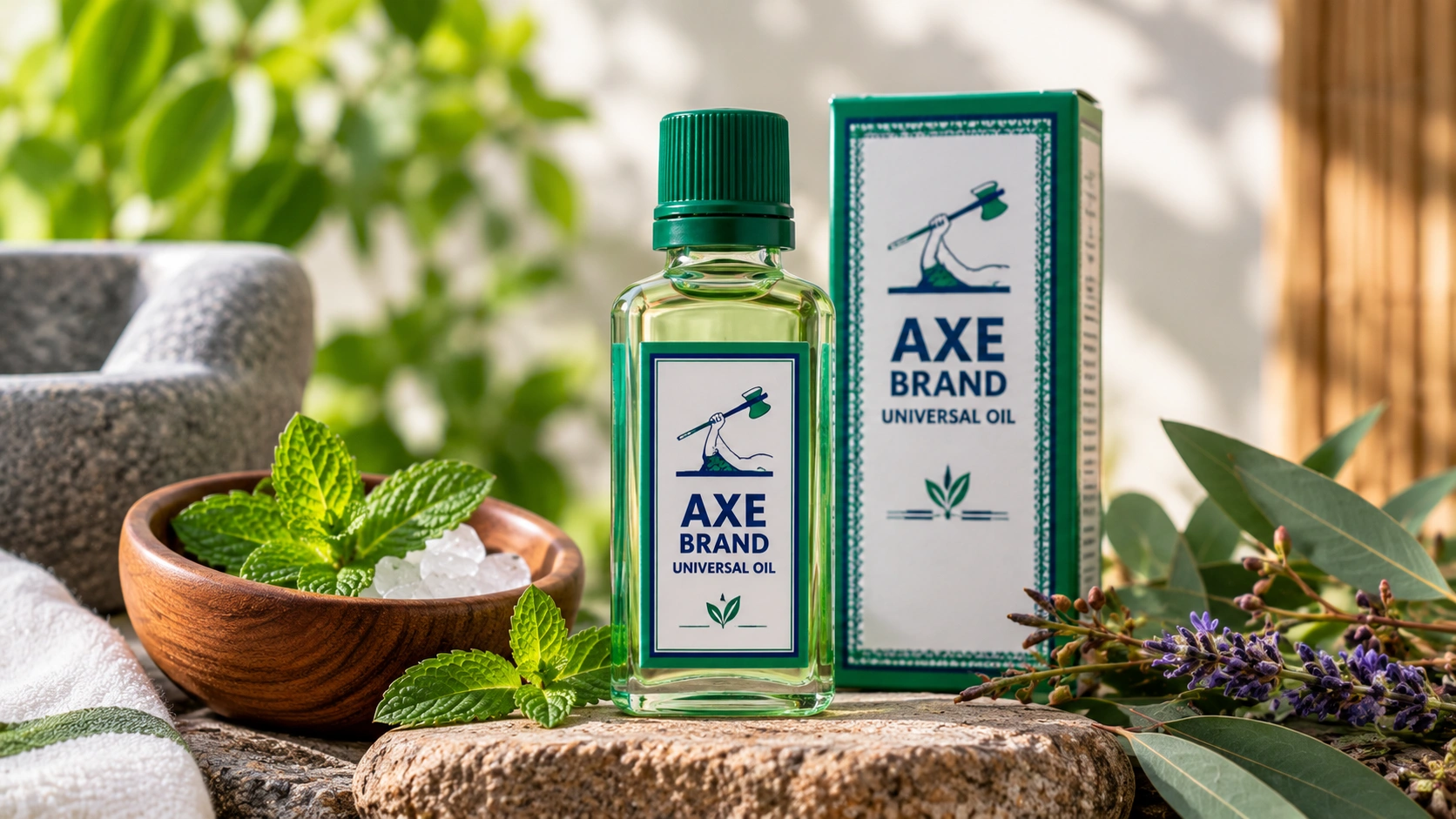
Axe Brand Universal Oil, often called Axe Oil or Axe Brand Medicated Oil, is one of Singapore’s best-known heritage health products. For almost a century, the small bottle with the distinctive axe logo has been used across Southeast Asia and in markets throughout the Middle East, China, Africa and other parts of the world.

The story of Axe Brand Universal Oil begins in 1928 with Leung Yun Chee, who had emigrated from China to Singapore.
According to the company’s official history, Leung Yun Chee met a German physician named Dr. Schmeidler. The physician shared a formula for a medicated oil that was intended for a broad range of ailments.
Leung Yun Chee saw commercial potential in the formula and began marketing and selling the oil in Singapore. This became the foundation of what is now Leung Kai Fook Medical Company and the Axe Brand.
The company describes Leung Yun Chee as the founding father of Axe Brand and says his entrepreneurial approach remains an important part of the company’s identity today.
The axe logo was an unusually clever branding decision for the period.
During the early twentieth century, many households still relied on wood as cooking fuel, meaning an axe was a familiar household object.
Leung Yun Chee recognized that a simple axe symbol could be understood easily by ordinary consumers and would stand out from competing medicated oils.
The decision worked.
Nearly 100 years later, the axe remains the central visual symbol of the brand.
This is one of the clearest examples of long-term visual branding in the traditional healthcare category. The logo survived changes in packaging, technology, distribution and consumer behavior.
Axe Brand did not immediately become a household name.
The company faced strong competition from established medicated-oil brands originating from China and Hong Kong.
Instead of competing only on the formula, Leung Yun Chee focused heavily on marketing.
He created an identity around the axe symbol and used pamphlets to explain the product and its traditional uses.
The company says these pamphlets were distributed throughout Singapore, helping awareness and sales gradually increase.
Historical accounts also describe an unusual sales tactic used by the founder. When approaching medical shops, Leung Yun Chee reportedly dressed in a Western-style suit and traveled with a uniformed chauffeur. The presentation was designed to make him appear like an important businessman and encourage shopkeepers to meet him.
He also used promotional gifts such as calendars and free product samples.
These strategies were remarkably sophisticated for a small consumer-health business operating in the 1930s.
The Second World War disrupted international trade across Southeast Asia.
For Axe Brand, however, the disruption created an unexpected commercial opportunity.
During the Japanese occupation of Singapore, many overseas competitors were no longer able to operate in the same way.
The company’s official history states that this allowed Axe Brand Universal Oil to become a leading medicated-oil product in the local market.
While this was obviously a difficult period for Singapore, the reduction in foreign competition helped strengthen Axe Brand’s position.
After the war, the company continued expanding beyond Singapore and Malaysia.
One of its most important breakthroughs came during the 1960s and 1970s when the company began targeting consumers traveling to Saudi Arabia for Hajj.
This is arguably one of the most successful examples of grassroots international marketing in Axe Brand’s history.
Many Muslims from Singapore, Malaysia and neighboring countries traveled to Mecca by ship during the period when sea travel was common for Hajj journeys.
These journeys could be long and uncomfortable. Travelers experienced problems such as motion sickness, headaches and insect bites.
Leung Yun Chee’s sons recognized that Axe Oil could be useful during these journeys.
According to historical accounts, the company began giving away thousands of free bottles to pilgrims before their journeys.
The approach was simple:
It worked.
Saudi Arabia became the company’s first major foreign market, followed by other Middle Eastern countries including the United Arab Emirates and Jordan.
PwC’s family-business research highlighted this strategy as an example of the company’s patient, long-term approach to international expansion. The company reportedly handed out free samples to Hajj travelers for around a decade before the strategy produced the kind of strong market position it wanted.
After establishing itself in the Middle East, Axe Brand continued expanding.
Its international markets eventually included China, Hong Kong and African countries such as Kenya and Nigeria.
By the 1990s, the brand had expanded further into markets including the United States, Australia, Vietnam, Cambodia and the Philippines.
The company’s current distribution information states that LKF Medical has built a presence in more than 50 countries and regions worldwide.
Axe Brand Universal Oil is manufactured by Leung Kai Fook Medical Company, commonly known as LKF Medical.
The business remains associated with the Leung family and is headquartered in Singapore.
Over time, the company has developed a wider product portfolio that includes:
The manufacturer’s current website lists five GMP-certified manufacturing facilities across Asia:
The company says its regional facilities follow internationally recognized regulations and stringent certification requirements. LKF Medical states that it obtained GMP certification in Singapore in 2003.
This five-factory figure is important because older online sources sometimes mention four factories. The manufacturer’s current website now lists five, including Vietnam.
Axe Brand’s manufacturing story has also changed significantly over the decades.
The company moved from small-scale production toward more automated manufacturing as demand increased.
By the early 2000s, the Singapore manufacturing operation had been expanded and automated. Historical accounts reported a production line capable of producing more than 100 bottles per minute.
This helped the company maintain a relatively affordable product while serving a growing international customer base.
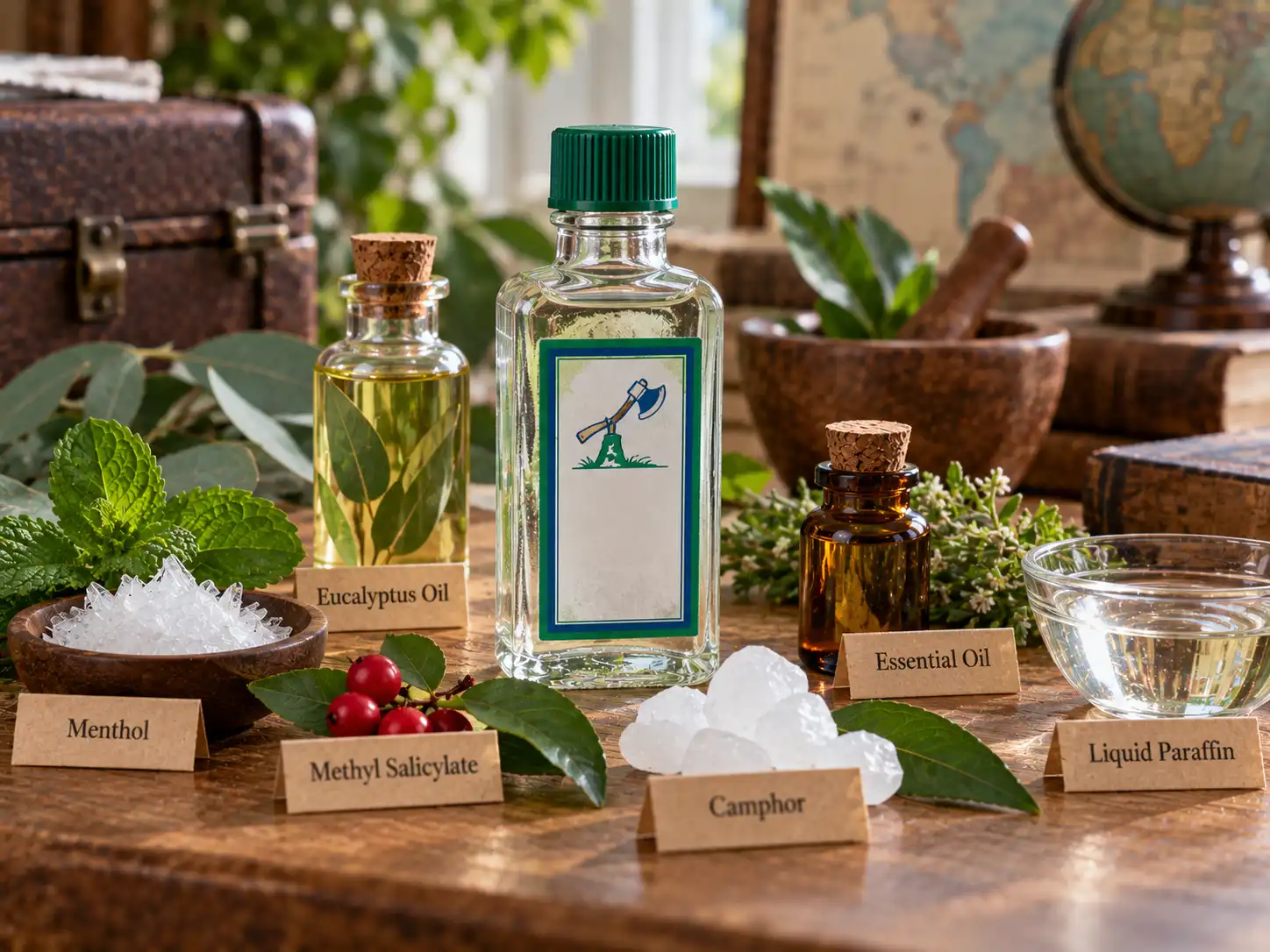
The formula of Axe Brand Universal Oil is based on a combination of aromatic and topical ingredients.
The manufacturer’s product information lists the following ingredients:
A current product information page from LKF Medical describes the product as a colorless, transparent oily liquid with a pleasant odor and identifies these ingredients in the formulation.
Menthol is one of the most recognizable ingredients in Axe Oil.
It produces the familiar cooling sensation when applied to the skin.
Menthol interacts with sensory receptors involved in the perception of cold, particularly TRPM8. The result is a cooling sensation that can temporarily change how the brain interprets discomfort in the treated area.
This is one reason menthol is widely used in topical products for temporary relief of minor aches and pains.
Eucalyptus oil contributes to the strong, refreshing aroma of Axe Oil.
Eucalyptus oil contains aromatic compounds such as 1,8-cineole and is commonly used in products associated with respiratory comfort.
Its aroma can create a feeling of clearer breathing when inhaled, although this should not be confused with treating the underlying cause of a cold or respiratory infection.
Methyl salicylate is commonly associated with wintergreen oil and is used in various topical pain-relief products.
It can produce a warming or stimulating sensation on the skin and may temporarily alter the perception of minor muscular or joint discomfort.
Because methyl salicylate is pharmacologically active, Axe Oil should be used only according to the product’s directions. It should not be swallowed.
Camphor contributes to the characteristic cooling and warming sensation of the oil.
It interacts with several sensory ion channels in the skin and can influence the way the nervous system processes temperature and irritation.
Camphor is commonly found in traditional medicated oils, balms and topical products.
The formula also contains essential oil components that contribute to its characteristic aroma and sensory profile.
These aromatic ingredients are an important part of the traditional identity of Axe Oil.
Liquid paraffin acts primarily as the oil-based vehicle or carrier.
It allows the active and aromatic ingredients to remain in a liquid formulation that can be applied easily to the skin.
Depending on the market and approved labeling, Axe Brand Universal Oil is traditionally associated with temporary relief from:
The manufacturer emphasizes that individual response can vary.
It is also important to distinguish between symptomatic relief and medical treatment. For example, the aromatic ingredients may make nasal congestion feel more comfortable, but that does not mean Axe Oil eliminates the virus responsible for a cold.

The axe symbol itself was one of the brand’s earliest and most successful marketing decisions.
Instead of relying entirely on a complicated product name, the company created a visual identity that consumers could remember.
That strategy became particularly valuable when the brand expanded into countries where languages and alphabets were different.
The logo became a universal shortcut for the brand.
In the 1930s, Leung Yun Chee distributed pamphlets that combined popular stories with Axe Brand advertising.
This was clever because consumers received something entertaining rather than simply receiving a traditional advertisement.
In modern marketing language, it resembles an early form of content marketing.
The strategy helped build familiarity while keeping the product in front of consumers.
The Hajj strategy became one of Axe Brand’s most successful international marketing moves.
Instead of spending enormous amounts of money on conventional advertising in a foreign country, the company placed the product directly into the hands of potential customers.
Thousands of free bottles were reportedly distributed to pilgrims.
Those customers then carried the product home and introduced it to their families and communities.
The strategy effectively turned customers into distributors and brand ambassadors.
The company also used promotional gifts such as calendars and free samples to maintain consumer awareness.
This approach was particularly effective before television and digital advertising became dominant.
A calendar displaying the Axe Brand name could remain in a home for an entire year, giving the product continuous visibility.
Leung Yun Chee’s marketing ambitions extended beyond the product itself.
He was involved in newspaper publishing, including the founding of Shin Min Daily News in 1967 with Hong Kong writer and publisher Louis Cha, better known as Jin Yong.
This became another platform through which Axe Brand could reach consumers.
The strategy was unusual but reflected the founder’s broader belief that controlling communication channels could strengthen the brand.
Axe Brand demonstrated that it was not relying only on nostalgia when it launched a major outdoor campaign in Singapore in 2017.
The brand worked with JCDecaux on a large three-dimensional advertising display at Suntec City.
The enlarged Axe Brand packaging was designed to attract attention from shoppers, office workers and tourists.
According to JCDecaux, the campaign generated numerous consumer inquiries about where the product could be purchased.
This was a particularly good example of taking a traditional product and presenting it in a modern advertising format.
One of the most interesting recent marketing developments happened in Malaysia.
Axe Brand Malaysia, where the product is widely known as Minyak Angin Cap Kapak or simply Cap Kapak, began actively targeting younger consumers.
The brand appeared at the Rock n’ Riuh cultural festival in 2024.
The activation included a 3D photobooth and limited-edition MACK keychains, with the keychain designed to hold a miniature bottle of the oil.
This transformed a traditional medicated-oil bottle into a lifestyle accessory.
According to Marketing-Interactive’s December 2025 report, the activation generated user-generated content and strong engagement among younger festivalgoers.
Axe Brand Malaysia also developed a more modern social-media campaign around the idea of “therapy in a bottle.”
The campaign used three visual stages.
The campaign was designed to turn nostalgia from a weakness into a strength.
Instead of telling younger consumers that Axe Brand was new, the brand essentially communicated that being old was part of what made it special.
Axe Brand Malaysia has also increased its use of TikTok and Instagram.
The strategy includes short videos, tutorials, humor, lifestyle content and creator collaborations.
This is a significant shift from the traditional image of medicated oils as products marketed mainly to older consumers.
The goal is to place Axe Oil into modern situations such as studying, gaming, working long hours, traveling and attending sporting events.
Another recent campaign connected Axe Brand with Chinese New Year traditions.
The “Pride of Lions with Cap Kapak” campaign used lion dancing and the brand’s traditional identity to connect wellness, culture and performance.
This approach demonstrates how Axe Brand is increasingly using cultural events rather than relying solely on conventional product advertising.
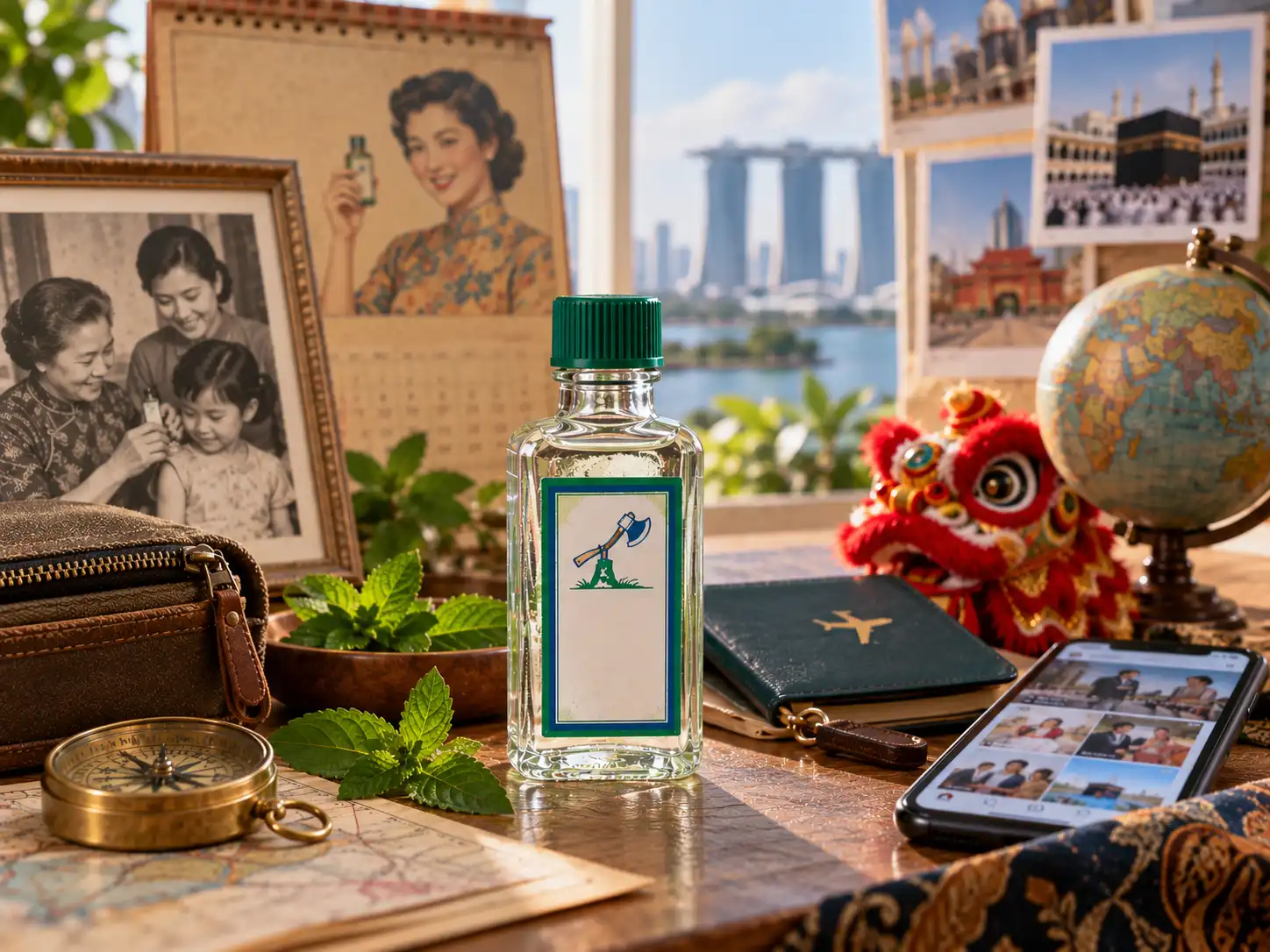
Axe Brand does not dominate the entire global pain-relief industry. Large multinational companies have much greater overall sales and distribution.
However, Axe Brand has built a very strong position within the traditional medicated-oil category.
Several factors explain its longevity.
Axe Brand was founded in 1928.
That gives it something new competitors cannot manufacture overnight: generations of familiarity.
Many consumers first encountered Axe Oil through their parents or grandparents.
The bottle, color scheme, axe logo and strong menthol aroma make the product easy to recognize.
Strong sensory identity is valuable because customers can often recognize a product without consciously reading the label.
Axe Brand has historically maintained an affordable positioning.
In a category where consumers may purchase products for everyday household use, keeping prices accessible encourages repeat purchases.
The company has previously stated that it prefers maintaining affordable pricing and using sales volume across many markets rather than relying on high prices.
The small bottle is another advantage.
Consumers can carry it in a handbag, pocket, travel bag, desk drawer or car.
This portability was particularly important during the company’s early international expansion.
Unlike a product designed for only one specific complaint, Axe Oil has traditionally been associated with multiple everyday uses.
That makes it a convenient household product rather than something consumers purchase only when a particular condition occurs.
Axe Brand’s international expansion was built heavily around word of mouth.
The Hajj strategy is an excellent example.
Instead of depending only on advertisements, the company allowed travelers to experience the product and then share it with others.
The same principle continues today through social media.
The company currently says its distribution network reaches more than 50 countries and regions.
This international footprint is a major advantage over smaller traditional medicated-oil brands that remain concentrated in one or two countries.
Perhaps the company’s biggest strength is consistency.
Axe Brand has modernized its marketing, manufacturing and distribution while preserving the core identity of the product.
That balance allows older customers to recognize the product while giving younger consumers new reasons to try it.
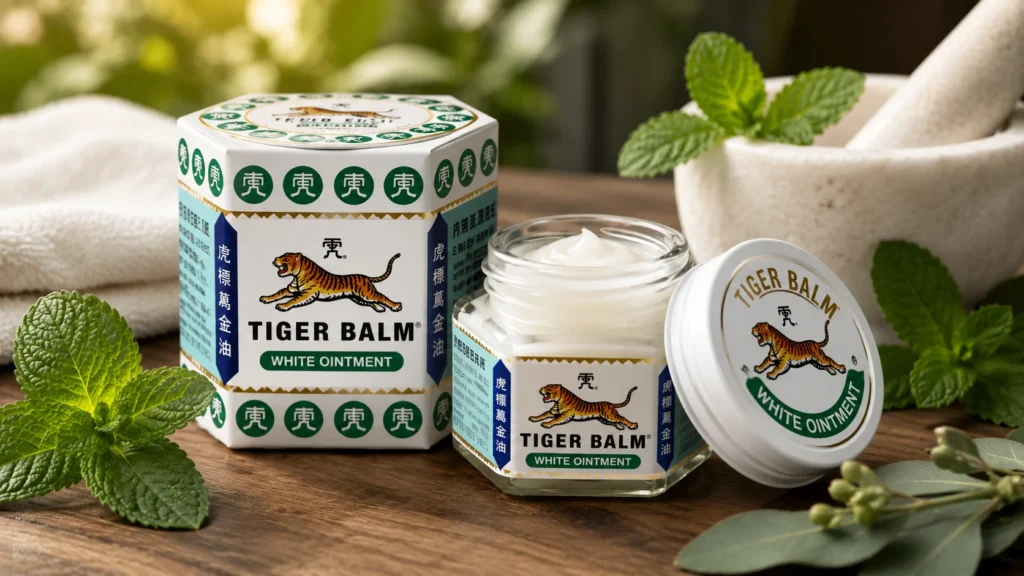
Outside India, Axe Brand competes with several established medicated oils and topical products, particularly across Asia and international diaspora markets.
Its most relevant competitors include:
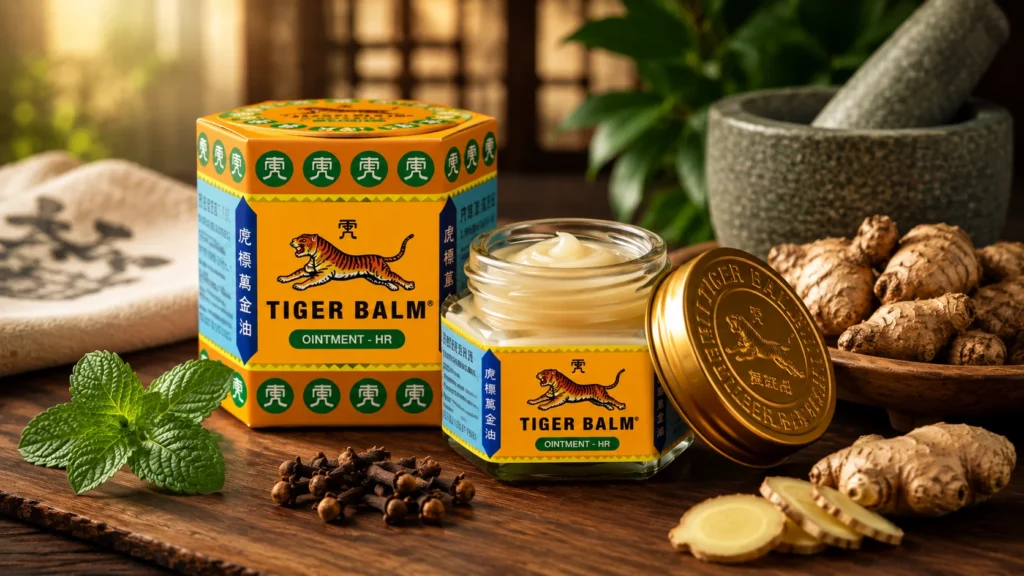
Tiger Balm is probably Axe Brand’s strongest international competitor.
The brand is owned by Singapore-based Haw Par Corporation and has a much larger global marketing and distribution infrastructure.
Tiger Balm sells multiple formats including ointments, creams, patches and other topical products.
This gives it an advantage in modern retail because consumers can choose different formats depending on their needs.
Eagle Brand is another long-established Asian medicated-oil brand.
It competes with Axe Brand in the traditional topical-oil category and is especially familiar among Asian consumers.
The two brands share several characteristics, including strong aromatic formulations, compact bottles and multigenerational consumer familiarity.
White Flower Oil, also known as Pak Fah Yeow, is another major traditional medicated oil associated with Southeast Asia and Chinese communities worldwide.
Its long history and distinctive aroma make it a natural competitor for consumers looking for traditional medicated oils.
Kwan Loong is another established Asian medicated-oil brand associated with Haw Par.
Its positioning overlaps with Axe Brand in the broader market for topical aromatic oils used for everyday discomfort.
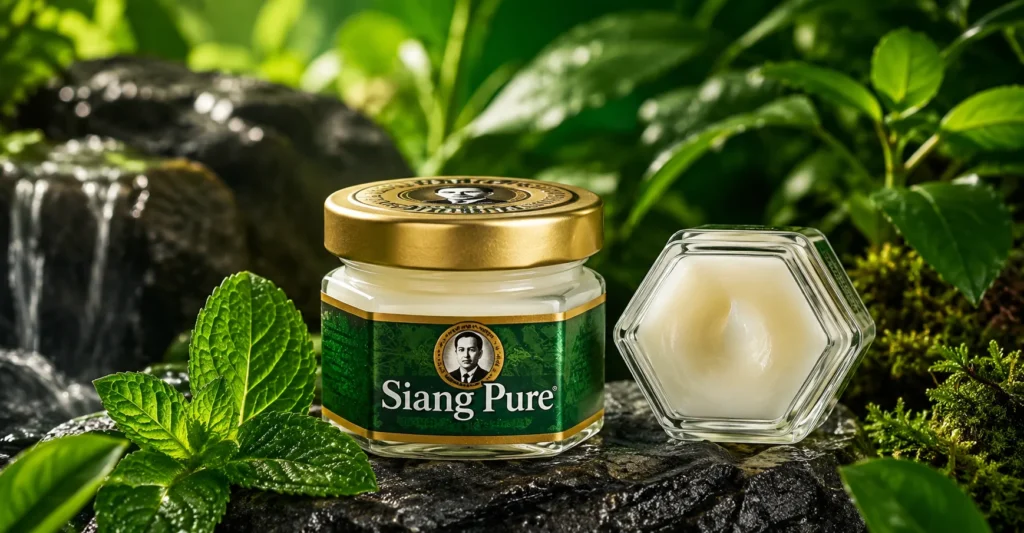
Siang Pure is particularly well known in Thailand and Southeast Asia.
Its product range includes traditional medicated oils and balms and therefore competes for consumers who prefer traditional topical remedies.
Tiger Balm has a major advantage in terms of scale.
It combines heritage with modern product development, international distribution, sports partnerships, digital marketing and multiple product formats.
Axe Brand’s competitive advantage is different.
It relies more heavily on heritage, affordability, sensory recognition, family familiarity and cultural relevance.
This explains why both brands can remain successful despite operating in overlapping categories.
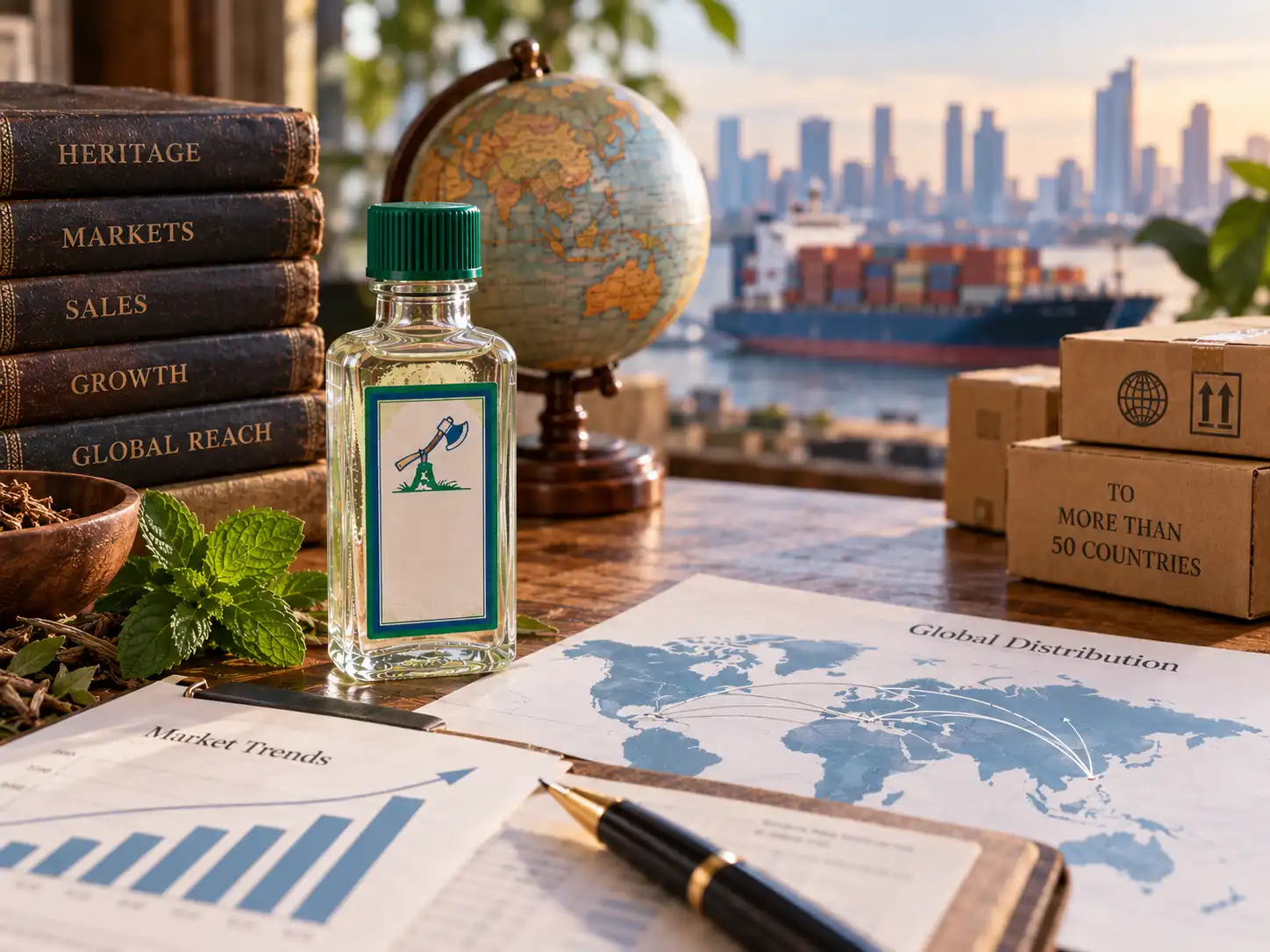
Revenue is one area where online articles often become unreliable.
Leung Kai Fook Medical is a privately held company and does not publicly disclose a single audited global revenue figure for Axe Brand Universal Oil.
That means it would be misleading to publish an exact worldwide 2026 revenue number without a verifiable source.
A particularly useful source is a High Court of Malaya judgment issued on February 24, 2026 involving counterfeit Axe Brand Medicated Oil.
The case involved Leung Kai Fook Medical Co. Pte Ltd and Leung Kai Fook Medical Sdn Bhd against TJS Worldwide Sdn Bhd.
The judgment recorded revenue for four Axe Brand Medicated Oil sizes in Malaysia during 2023:
The combined 2023 revenue for these four sizes was approximately RM37.24 million.
The same court record stated that revenue for those products had been approximately RM47.47 million in 2022.
That represents a decline of approximately RM10.24 million between 2022 and 2023.
However, this figure should be interpreted carefully.
It is not global Axe Brand revenue.
It represents revenue associated with specified Axe Brand Medicated Oil sizes in Malaysia and was presented in the context of a trademark-infringement and counterfeit-goods case.
It provides two useful insights.
First, Axe Brand has substantial commercial activity in Malaysia.
Second, the brand is valuable enough that counterfeit products have become a significant intellectual-property concern.
The judgment also recognized Axe Brand as a well-known and valuable brand with more than 90 years of heritage.
Another Malaysian court record provides additional information about the company’s marketing investment.
For the period from 2019 to 2023, the plaintiffs stated that average annual advertising and marketing expenditure was approximately RM870,536.76.
This figure is useful because it shows that the company continues to invest in brand visibility rather than relying entirely on historical recognition.
No reliable public source currently provides a verified global 2026 revenue number for Axe Brand Universal Oil.
There are several reasons:
There are third-party trade databases that track international shipments involving Leung Kai Fook and Axe Oil, but shipment value is not the same as retail revenue.
Therefore, the most accurate 2026 conclusion is:
Axe Brand Universal Oil remains a commercially significant international medicated-oil brand, but its exact global 2026 revenue is not publicly disclosed.
Although RM37.24 million is not a global figure, it provides a useful indication of the brand’s strength in one of its important Southeast Asian markets.
It also demonstrates why the company continues to protect its trademarks and fight counterfeit products.
A product with strong consumer recognition and significant annual sales naturally attracts imitation.
The 2026 judgment therefore provides a more credible picture of Axe Brand’s commercial scale than speculative websites that publish unsupported global revenue estimates.
Axe Brand Universal Oil is one of Singapore’s most successful heritage health products and one of the longest-running medicated-oil brands in Asia.
The product was introduced in 1928 by founder Leung Yun Chee, who emigrated from China to Singapore and later developed the product commercially after meeting German physician Dr. Schmeidler.
From the beginning, the company understood the importance of branding.
The axe logo helped the product stand out from competitors, while pamphlets, promotional gifts, samples and other marketing tactics helped build awareness.
World War II unexpectedly reduced overseas competition and helped Axe Brand strengthen its position in Singapore and Malaya.
The company’s most important international breakthrough came later through the Hajj pilgrimage market.
Free samples distributed to travelers helped Axe Brand establish a relationship with consumers from Singapore, Malaysia and other parts of Southeast Asia. Word of mouth then helped the product reach Saudi Arabia and other Middle Eastern markets.
From there, the brand expanded into China, Hong Kong, Africa, Australia, the United States and numerous other countries.
Today, LKF Medical says Axe Brand has a presence in more than 50 countries and regions.
The company currently lists five GMP-certified manufacturing facilities in Singapore, China, Malaysia, Indonesia and Vietnam.
The core Axe Brand Universal Oil formula contains menthol crystals, eucalyptus oil, methyl salicylate, camphor, essential oil and liquid paraffin, although formulations and regulatory labeling can vary between markets.
Menthol contributes the cooling sensation, camphor adds another cooling or warming sensory effect, methyl salicylate contributes topical counter-irritant properties, while eucalyptus and other aromatic oils provide the product’s distinctive fragrance.
The brand’s marketing has also evolved dramatically.
Its earliest strategies included pamphlets, promotional gifts and free samples. The Hajj campaign became one of its most successful international growth strategies.
In more recent years, Axe Brand has adopted modern advertising techniques, including the large 3D Suntec City billboard campaign in 2017.
In Malaysia, the brand has gone even further by targeting Gen Z through TikTok, Instagram, creator collaborations, short-form videos, humor and cultural events.
The 2024 Rock n’ Riuh activation, MACK mascot, “therapy in a bottle” campaign and Chinese New Year lion-dance campaign show how the company is trying to make a nearly century-old product relevant to younger consumers.
Its main international competitors include Tiger Balm, Eagle Brand Medicated Oil, White Flower Oil, Kwan Loong and Siang Pure.
Tiger Balm is arguably the strongest global competitor because of its broader product portfolio and larger international marketing infrastructure.
Axe Brand’s strength is different. Its biggest advantages are heritage, affordability, portability, recognizable packaging, strong aroma, family familiarity and international word-of-mouth.
Financially, there is no credible publicly disclosed global 2026 revenue figure for Axe Brand Universal Oil.
However, a Malaysian High Court judgment issued in February 2026 recorded approximately RM37.24 million in 2023 revenue for four specified Axe Brand Medicated Oil sizes in Malaysia. The same products generated approximately RM47.47 million in 2022.
This should not be presented as global revenue, but it provides valuable evidence of the brand’s commercial strength in Malaysia.
The broader lesson from Axe Brand is perhaps more interesting than any single sales figure.
The company has managed to keep a simple medicated-oil product relevant for almost a century by changing its marketing and distribution without abandoning its identity.
The axe logo remains recognizable. The bottle remains portable. The distinctive aroma remains part of the experience. But the way the company reaches consumers has evolved from pamphlets and free samples to outdoor advertising, cultural activations, Instagram, TikTok and creator collaborations.
That balance between heritage and reinvention explains why Axe Brand Universal Oil remains one of the most recognizable traditional medicated oils in Asia and continues to have a presence in more than 50 countries in 2026.

Watch expert-inspired short videos on health, wellness, nutrition, fitness, preventive care, and healthy living in under a minute.