Unlike conventional migraine medicines that are swallowed and work throughout the body, Stopain Migraine is designed to be applied to the skin around the back of the neck. Its formula combines menthol with several homeopathic ingredients, and the product is marketed for temporary relief of migraine symptoms such as headache, light sensitivity and nausea.
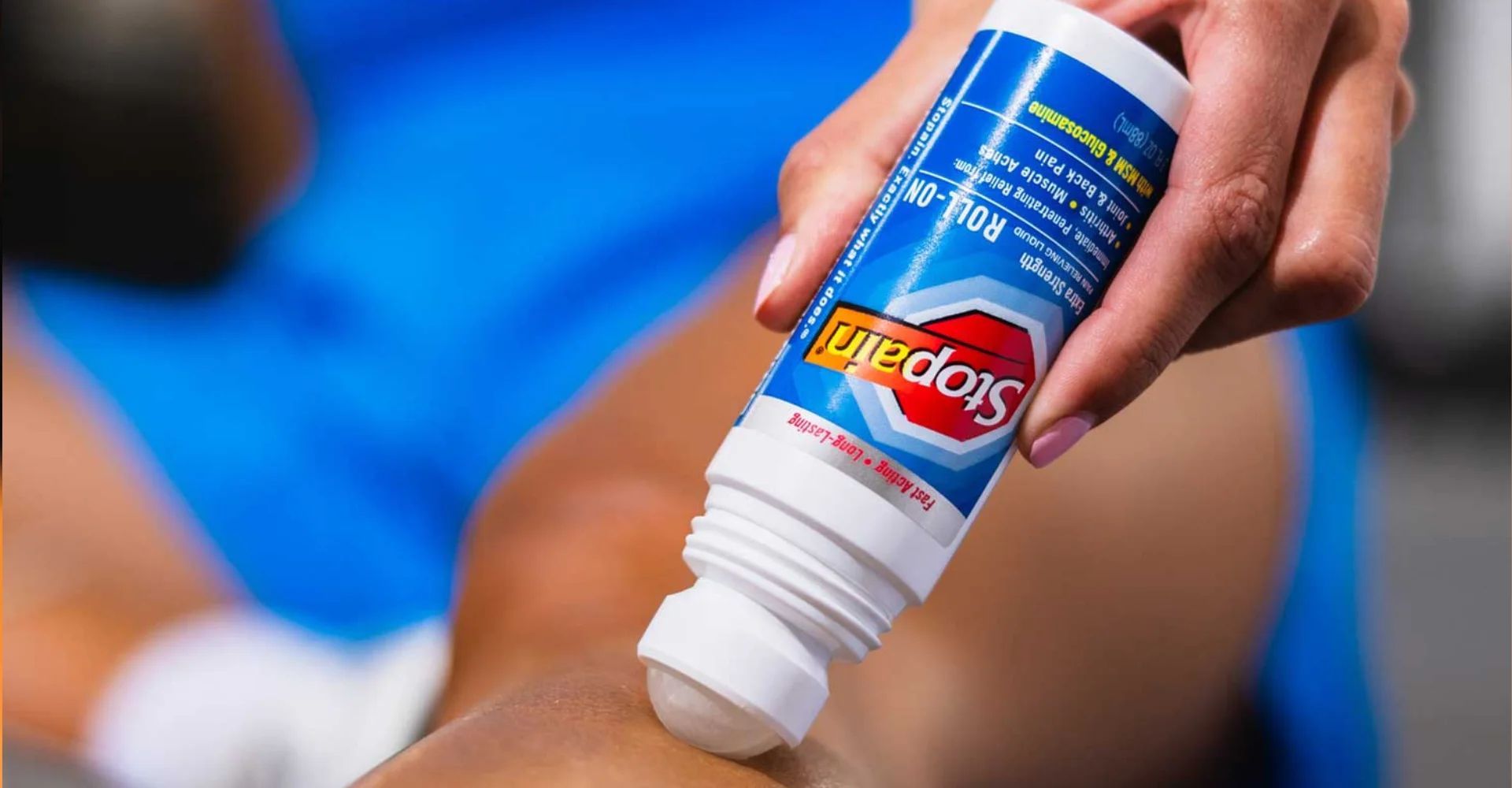

The Stopain trademark was filed in the United States in 1991, with the trademark registration covering topical analgesic spray. Trademark records show first use in commerce in 1991.
However, the company behind today’s Stopain story, Troy Manufacturing, Inc., was founded in 1997 by Anthony Cicini.
Troy started as a contract manufacturer specializing in topical analgesics. The company did not immediately begin as a major consumer brand owner. Its early business model was manufacturing products for other companies.
That experience would become extremely important later.
According to Troy’s own history, the company became the sole manufacturer of Biofreeze in 2000. That relationship gave Troy extensive experience in the topical pain-relief category and helped it understand manufacturing, product formulation, distribution and consumer demand at scale.
In 2002, Troy became a contract manufacturer for the Stopain retail brand.
This was a major step because Troy was no longer simply developing topical products in the background. It was now directly involved in producing one of the products that consumers were purchasing under the Stopain name.
Stopain itself was particularly notable because the company describes it as the first spray analgesic in the marketplace when Troy acquired the brand.
The biggest turning point came in 2010.
Troy purchased the Stopain brand outright.
At the same time, the company ended its long manufacturing relationship with Biofreeze. Troy explains that competing in the conventional retail pain-relief market against much larger pharmaceutical and consumer healthcare companies was becoming increasingly difficult.
Instead of trying to outspend the biggest brands on supermarket and drugstore shelves, Troy changed direction.
That decision eventually led to Stopain Clinical.
Beginning around 2015, Troy started developing a new topical migraine and headache formulation specifically for professional use.
The company conducted observational work and began research and development for its Stopain Clinical line. In 2017, Stopain Clinical launched into the healthcare professional market.
The migraine-specific product followed.
Troy says Stopain Clinical Migraine & Headache was launched into the healthcare professional market in 2019, although the company’s broader history says the migraine product development and launch process began earlier.
This is important because there are several Stopain products that are easily confused online.
The names are similar, but the products are not necessarily identical.
The current DailyMed listing for Stopain Migraine Pain Relieving carries NDC 63936-8700 and lists a 50 mL pump bottle. Its active ingredients are mentholum, belladonna, iris versicolor and sanguinaria canadensis.
The professional product is listed separately as Stopain Clinical Migraine and Headache, with NDC 63936-9700. It uses a similar core ingredient concept but is marketed through the professional channel.
That distinction matters when comparing ingredients, clinical claims and availability.
Stopain is owned and manufactured within the Troy organization.
The manufacturer listed on the current DailyMed label is Troy Manufacturing, Inc.
Troy Healthcare’s current materials identify Anthony Cicini as the owner of Troy Healthcare.
So, unlike brands owned by multinational pharmaceutical corporations, Stopain remains associated with a privately held, Pennsylvania-based company.
One of Stopain’s strongest selling points is that it is made in the United States.
Troy’s primary manufacturing operation is located at:
130 Lions Drive, Hazleton, Pennsylvania.
The company says research and development, quality, regulatory work, manufacturing and packaging are performed at its FDA-compliant 80,000-square-foot facility in Hazleton.
A 2026 report from Hazleton CAN DO also confirms that Troy’s Stopain manufacturing operations remain based locally in Greater Hazleton.
Troy says it has manufactured and sold more than 200 million units of drug products since its incorporation in 1997.
There is no strong public evidence showing a separate overseas Stopain manufacturing network comparable to that of multinational pharmaceutical companies.
Troy’s published materials emphasize its Pennsylvania manufacturing facility.
The company does, however, distribute products outside the United States. Its professional website provides Canadian purchasing information, and Stopain Clinical has an official Canadian distributor.
That makes Stopain an American-made brand with international distribution rather than a multinational manufacturer with numerous publicly documented factories.
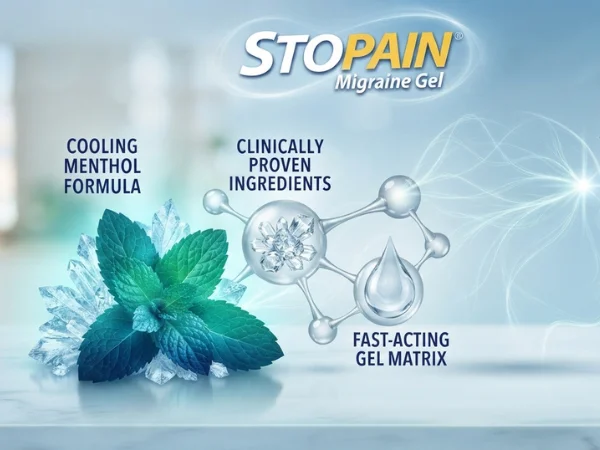
The current U.S. DailyMed label, updated November 24, 2025, provides the clearest source for the formulation available in 2026.
Stopain Migraine Pain Relieving Gel contains four listed active ingredients:
The label also lists five inactive ingredients:
There is an important terminology issue here.
These ingredients are presented using homeopathic dilution designations, such as 1X, 3X and 6X. They should not be interpreted like conventional percentages of active pharmaceutical ingredients.
Menthol is the ingredient that makes the most sense from a conventional topical pain-relief perspective.
Menthol produces a recognizable cooling sensation on the skin and can influence cold-sensitive sensory receptors.
That cooling effect is one reason menthol appears in many topical pain-relief products.
However, the Stopain Migraine formulation is labeled as homeopathic, and its current label does not establish that the product’s migraine claims have been proven through FDA review.
The “1X” designation is a homeopathic dilution notation, not the same thing as saying the gel contains 50% ordinary menthol in the pharmaceutical sense.
Belladonna comes from Atropa belladonna, commonly known as deadly nightshade.
This ingredient deserves particular attention because belladonna contains naturally occurring tropane alkaloids, including atropine and scopolamine.
Stopain lists belladonna in homeopathic dilution form.
The FDA specifically warns that some homeopathic products use substances that can be toxic if manufacturing or dilution is not properly controlled. The agency lists belladonna among substances that have raised safety concerns in homeopathic products.
That does not mean the labeled dilution in Stopain automatically represents a toxic dose. It means consumers should understand that the product’s homeopathic status is important and that it has not gone through the FDA’s standard approval process.
Iris versicolor is commonly known as blue flag.
It is included in the product’s homeopathic formulation.
As with the other homeopathic active ingredients, the 6X designation indicates a homeopathic dilution rather than a conventional pharmaceutical dose.
There is not strong clinical evidence demonstrating that this ingredient independently treats migraine.
Sanguinaria canadensis is commonly known as bloodroot.
It is another botanical source used in homeopathic preparations.
Stopain includes it at the 6X HPUS designation.
Again, consumers should distinguish between the historical use of a botanical in homeopathy and evidence from modern controlled clinical trials.
Alcohol is listed as an inactive ingredient.
It contributes to the formulation and helps create the characteristic fast-drying feel of many topical gels.
It also explains why the current label warns that the product is flammable and should be kept away from fire or flame.
Pentylene glycol is a formulation ingredient commonly used as a solvent and humectant.
In a topical gel, it helps maintain the consistency and delivery characteristics of the formula.
Silicon dioxide is used as a formulation aid.
It can contribute to the physical characteristics and stability of topical products.
Trolamine is another inactive formulation ingredient.
It can be used to adjust formulation properties, including pH and texture.
Water is the primary basic carrier in the gel formulation.
Together, these inactive ingredients create the vehicle that allows the active ingredients to be distributed over the skin.

This is perhaps the most important section of the entire article.
The current DailyMed label states clearly:
Stopain Migraine Pain Relieving is an unapproved homeopathic product.
The FDA disclaimer says the product has not been evaluated by the FDA for safety or efficacy and that the agency is not aware of scientific evidence supporting homeopathy as effective.
The FDA’s current guidance goes further.
It states that there are no FDA-approved products labeled as homeopathic and that homeopathic products marketed in the United States have not been reviewed by the agency for safety and effectiveness.
That distinction is essential for SEO content because many product pages use phrases such as “clinically proven,” “effective” or “research proven.”
Those phrases should not be treated as equivalent to FDA approval.
There actually is published research involving a Stopain topical gel.
A small pilot study published in Frontiers in Neurology examined topical menthol 6% gel for migraine attacks.
The researchers enrolled 32 people, with 25 completing the study. Participants applied the gel to the skull base during a migraine attack. Two hours later, 28% reported no pain, while 52% reported improvement in pain intensity.
That sounds promising at first glance.
But there are important limitations.
It was:
The study formula also differs from the current Stopain Migraine label. The research gel included menthol plus belladonna, nux vomica, iris versicolor and sanguinaria canadensis. The current DailyMed formulation lists mentholum, belladonna, iris versicolor and sanguinaria canadensis, without nux vomica.
Therefore, the study is interesting but should not be presented as definitive proof that the current Stopain Migraine Gel treats migraine.
That is an important difference between scientific evidence and marketing language.
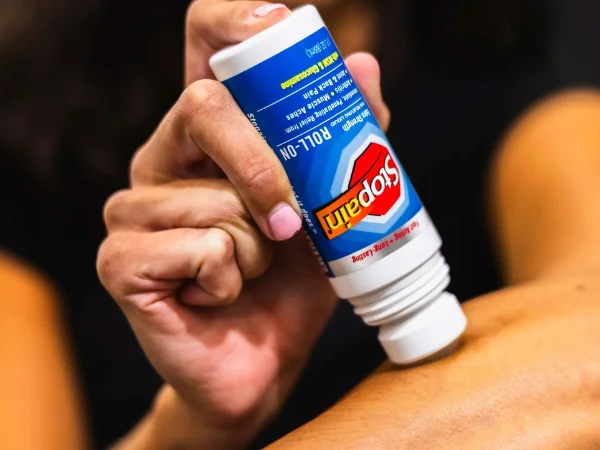
The manufacturer positions the product as a topical approach to migraine symptoms.
The current label says it provides temporary relief of migraine symptoms including:
The product is applied to the back of the neck, not directly over the forehead or temples.
That is actually a significant part of the product’s design.
The current label specifically says:
Do not apply to the forehead or temples.
It also says not to apply it to wounds or damaged skin and not to tightly bandage the application area or use a heating pad over it.
Consumers should therefore follow the current package directions rather than instructions copied from older reviews or third-party websites.
Stopain has never marketed itself in exactly the same way as enormous consumer healthcare brands.
Its most interesting marketing strategy has been its shift from conventional retail advertising toward professional healthcare networks and sampling.
When Troy acquired Stopain in 2010, the brand was primarily a retail product.
Troy says it ultimately found it difficult to compete with large pharmaceutical companies in traditional retail, so it changed direction.
That decision shaped almost everything that came afterward.
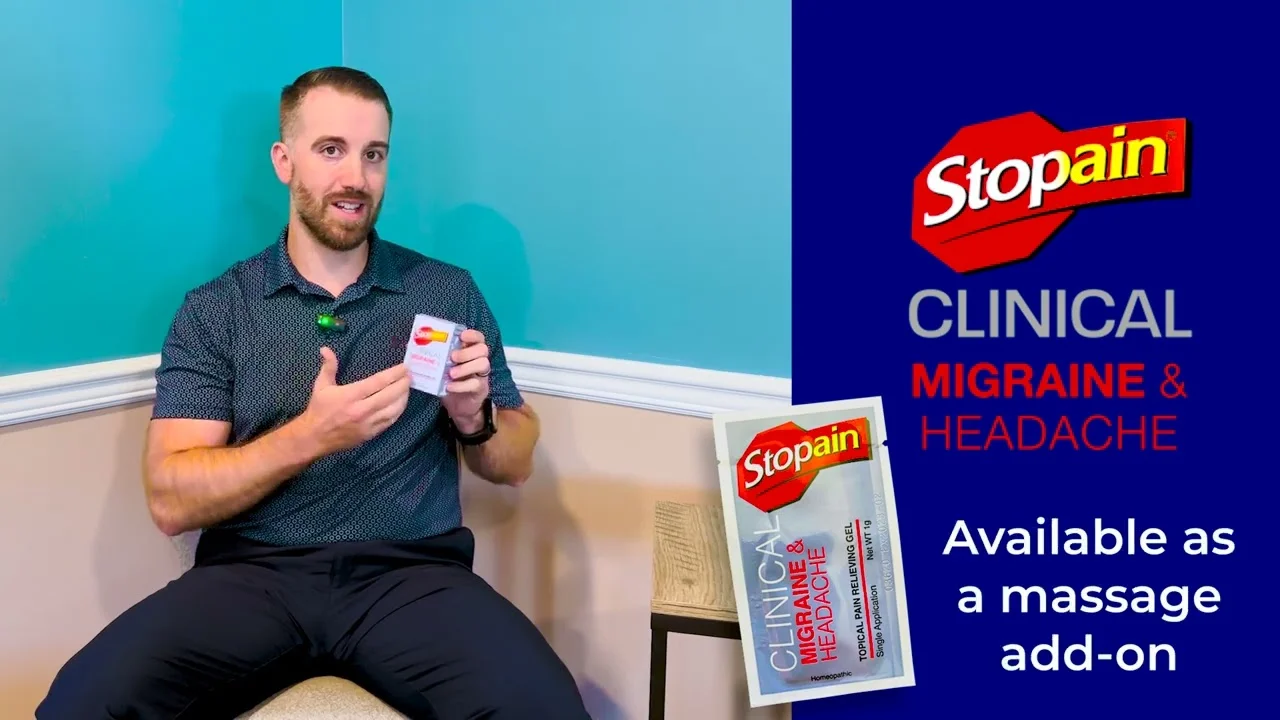
In 2017, Troy launched Stopain Clinical for healthcare professionals.
The company focused on chiropractors, physical therapists, massage therapists and other hands-on professionals.
This gave Stopain a different distribution model from products that depend almost entirely on pharmacy shelves.
The professional network also became part of the marketing itself.
A consumer could experience the product through a chiropractor, physical therapist or massage therapist and then continue using it at home.
Troy says Stopain Clinical products are used in thousands of clinics and spas.
Its own company history reports more than 6,000 clinics and spas using Stopain Clinical and says the brand later partnered with Hand & Stone Spas and FYZICAL Therapy & Balance Centers, reaching more than 1,200 locations through those partnerships in 2022.
This type of marketing is powerful because it puts the product into a professional environment.
One of Stopain’s most ambitious recent marketing initiatives launched in 2025.
Troy partnered with workplace uniform and first-aid companies to distribute more than 10 million Stopain Clinical pain-relief gel packets annually.
The concept was simple:
A worker experiences pain, receives a sample packet, tries the product and is then directed toward healthcare professionals for further care.
This is much more than traditional product sampling.
It is a customer acquisition strategy.
The sample introduces the product while simultaneously directing potential customers toward clinics that carry Stopain Clinical.
Troy’s 2025 growth campaign emphasized three brand ideas:
American Made.
Always in Stock.
Amazing Value.
The company said Stopain grew more than three times faster than the category at the largest U.S. retailer in 2024.
This is an especially important claim because it demonstrates how the brand is currently positioning itself.
Rather than competing only on medical sophistication, Stopain is competing on availability, price and domestic manufacturing.
Pain relief is an unusually sensory category.
A consumer can read about a topical gel, but actually feeling its cooling or soothing effect is much more persuasive.
That makes a sample packet valuable.
Troy’s 2025 strategy effectively turns millions of workers into potential product testers while simultaneously creating awareness for the Stopain name.
It would be inaccurate to say Stopain “dominates” the global migraine market.
It does not.
Large pharmaceutical companies, established migraine therapies and major topical pain brands have far larger overall market presence.
What Stopain has done successfully is establish a distinct niche in topical pain relief, particularly among healthcare professionals.
Several factors explain its growth.
Unlike many brands that outsource their finished products, Troy says it handles research, development, regulatory, quality, manufacturing and packaging at its own Pennsylvania facility.
That provides greater control over supply.
“Made in USA” is a central part of Stopain’s current positioning.
The company argues that American manufacturing allows it to maintain reliable supply and quality control.
Troy says it has never experienced a backorder and emphasizes consistent inventory as a competitive advantage.
Whether that advantage can be maintained indefinitely is impossible to predict, but it is clearly a major part of the company’s current strategy.
Stopain Clinical is designed specifically for chiropractors, physical therapists, massage therapists and related healthcare professionals.
That gives the company a distribution channel that does not depend entirely on conventional retail competition.
The product is positioned as an inexpensive addition to pain-management routines rather than a complex prescription therapy.
The 10-million-packet annual workplace initiative gives Stopain an unusually large direct consumer-exposure opportunity.
A topical gel specifically positioned around migraine and headache creates a distinctive niche.
Most migraine medications are oral, nasal, injectable or prescription-based.
Stopain offers a completely different application method.
That differentiation is valuable even if the evidence base is still limited.

Stopain competes in several different categories, so its competitors are not all identical.
Biofreeze is one of the most interesting competitors because of Troy’s own history.
Troy was the sole manufacturer of Biofreeze for approximately 10 years before acquiring Stopain in 2010.
Today, Biofreeze remains a major topical pain-relief brand.
The competition is especially relevant in professional channels.
Icy Hot is another major topical pain-relief brand.
It offers gels, creams, patches and other products, generally built around cooling and warming counterirritant ingredients.
The brand has much stronger mainstream retail recognition than Stopain.
Salonpas is especially important in the patch category.
Its topical patches compete for consumers who want localized, non-oral pain relief.
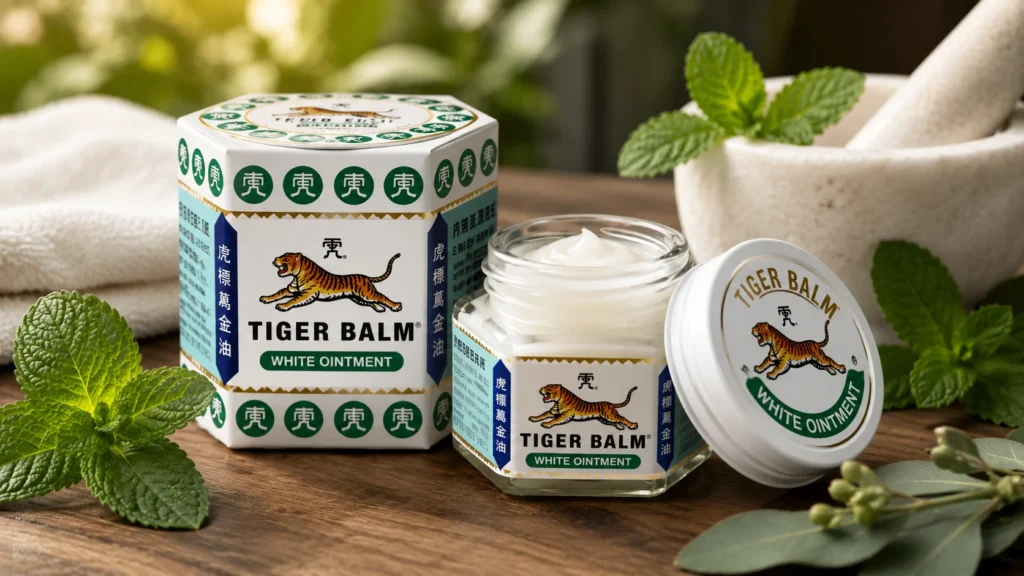
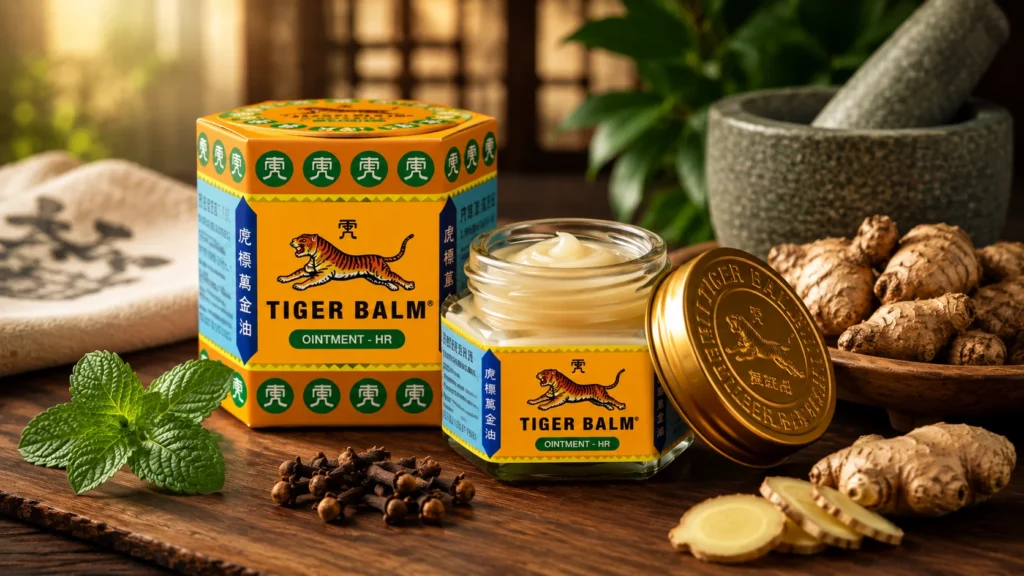
Tiger Balm is a major international topical pain-relief brand with decades of history.
Its traditional formulations rely heavily on ingredients such as menthol and camphor.
It competes with Stopain for consumers seeking topical alternatives, although the formulas and positioning are very different.
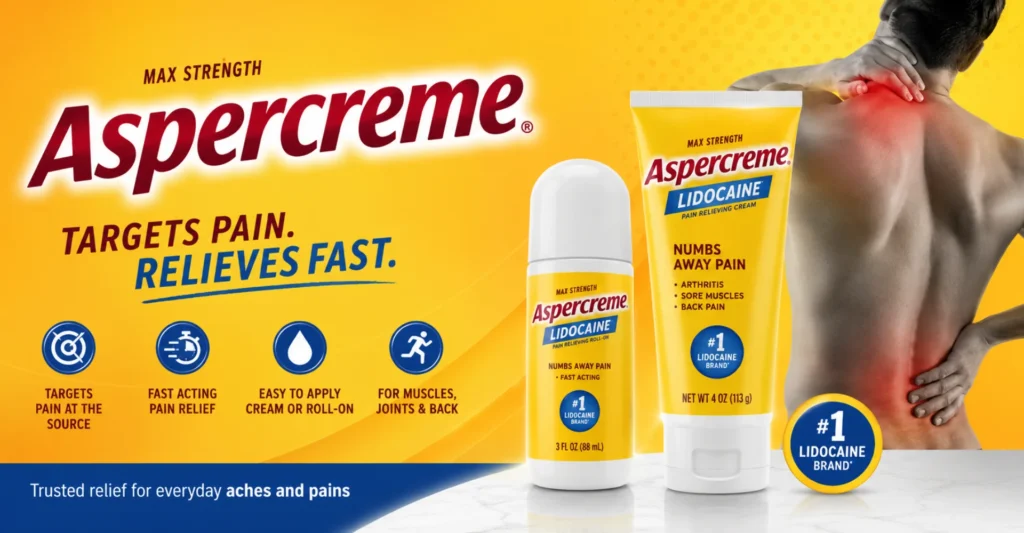
Aspercreme is particularly relevant because it offers topical lidocaine products.
Its 4% lidocaine positioning makes it a fundamentally different product from Stopain Migraine’s homeopathic formulation, but both compete for consumers looking for topical approaches to pain.
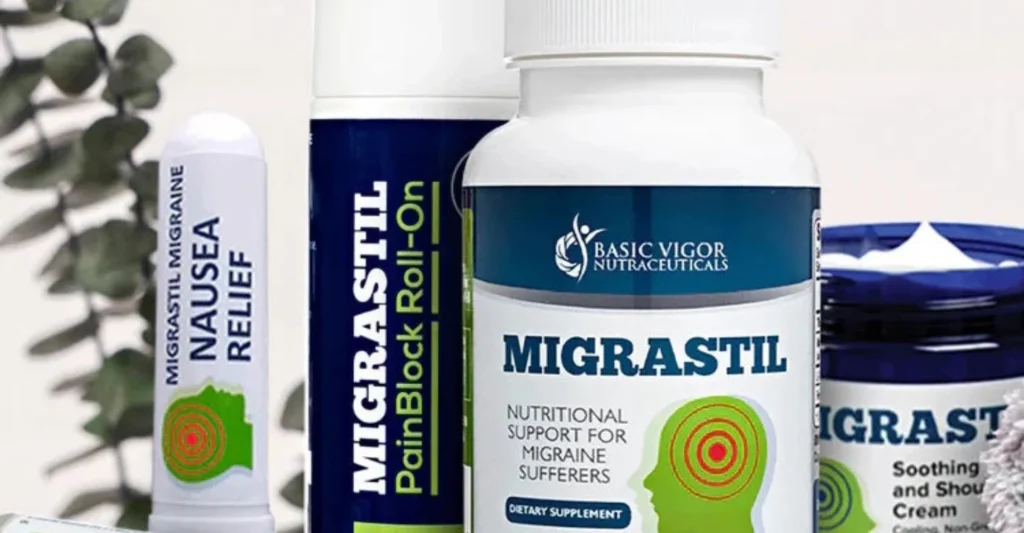
Migrastil is more directly relevant to the migraine-specific segment.
Its products are designed around topical and aromatherapy approaches for migraine and headache relief.
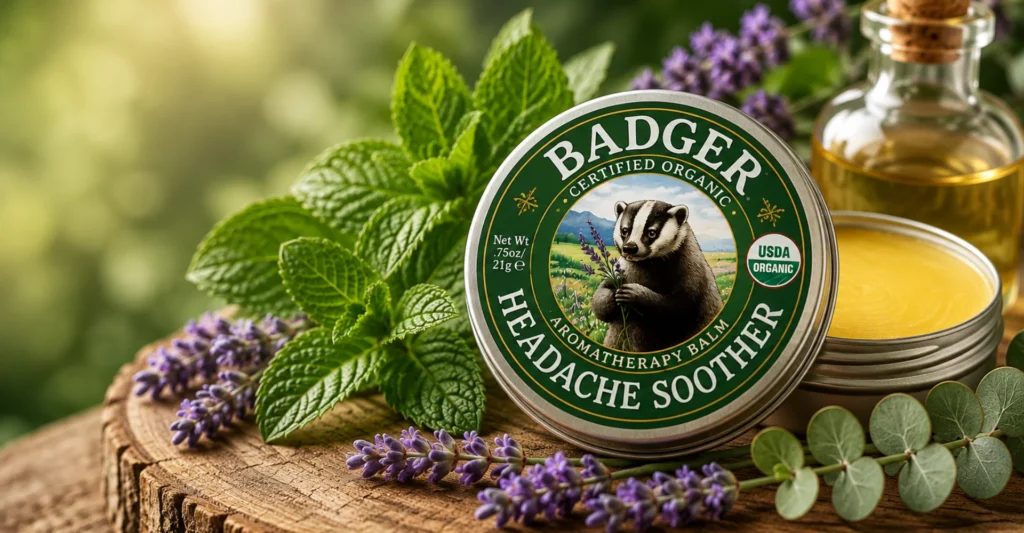
Saje’s Peppermint Halo is another alternative for consumers who prefer a topical or aromatherapy-style approach.
The main distinction is that Saje is positioned more as an aromatherapy wellness product, whereas Stopain is sold as a topical OTC product labeled for temporary migraine symptom relief.
The largest competitive category may actually be generic products.
Consumers can find numerous menthol gels, creams, sprays and roll-ons without paying for a specific brand.
This puts pressure on Stopain to compete through formulation, professional distribution, American manufacturing, availability and brand recognition.

This is one area where online content needs careful fact-checking.
Troy Manufacturing is a private company, and Stopain does not publicly disclose audited brand-level revenue for Stopain Migraine Gel.
There is therefore no reliable public number for:
Claims that give an exact number without identifying a credible financial filing should be treated cautiously.
Troy says it has manufactured and sold more than 200 million units of drug products since its incorporation.
That number covers the company’s broader product history, not Stopain Migraine alone.
The company also reported that Stopain grew more than three times faster than the category at the largest U.S. retailer in 2024.
Again, this is a growth-rate comparison, not a revenue figure.
Commercial business databases publish estimates for Troy Manufacturing/Troy Healthcare, but these figures vary dramatically.
For example, LeadIQ currently estimates annual revenue around $4.8 million, while another commercial database gives a much broader $10 million to $25 million range.
Other sites produce figures that are dramatically higher and appear inconsistent with the company’s publicly available profile.
Because Troy is privately held, these estimates should not be treated as audited financial statements.
The safest conclusion in 2026 is:
Stopain is a growing private topical-pain business, but its exact annual revenue and Stopain Migraine Gel sales are not publicly disclosed.
That is more accurate than assigning the brand an invented market value.
Stopain’s distribution model has changed considerably over time.
The original Stopain brand was a retail product.
Today, the company operates both consumer and professional channels.
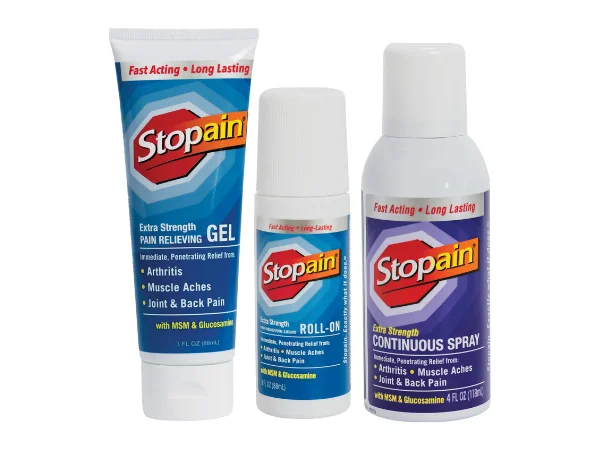
Stopain Extra Strength is available through retailers in the United States and Canada, with the company saying the product launched in those retail markets in 2024.
Stopain Clinical products have a more restricted distribution model.
The company says Stopain Clinical and Stopain Clinical Migraine & Headache are primarily available through healthcare professionals rather than traditional retail outlets.
For Canada, Stopain Clinical identifies Heal Faster as its official Canadian distributor.
That makes North America the clearest documented commercial market.
Stopain does not publish the same extensive global manufacturing and distribution footprint seen with multinational brands such as Haleon, Reckitt or Kenvue.
Its international presence is therefore better described as selective distribution rather than a massive global retail network.
Because Stopain Migraine is applied to the skin, it may seem relatively harmless.
The label still contains important warnings.
The current DailyMed instructions say:
The label also says to stop use and consult a doctor if the condition worsens, symptoms persist for more than seven days or symptoms clear and return within a few days.
The FDA’s broader warning about homeopathic products is also important.
The agency says homeopathic products have not been evaluated through the FDA approval process and that manufacturing problems can result in incorrect dilutions or contamination.
For anyone experiencing frequent, severe or changing migraines, a healthcare professional should be involved rather than relying exclusively on a topical product.
Stopain Migraine Gel is an unusual product in the modern headache-relief market.
Its history goes back to the early 1990s, while its current manufacturer, Troy Manufacturing, was founded in 1997 by entrepreneur Anthony Cicini. Troy initially built its business as a contract manufacturer of topical analgesics and became the sole manufacturer of Biofreeze in 2000. In 2002, it began manufacturing Stopain, and in 2010 it acquired the Stopain brand.
The company then made a strategic decision to move away from trying to compete directly with huge pharmaceutical brands in traditional retail.
It developed Stopain Clinical, targeting chiropractors, physical therapists, massage therapists and other healthcare professionals.
The migraine-specific professional product followed, creating a specialized niche for topical headache and migraine support.
The current Stopain Migraine Pain Relieving Gel is manufactured by Troy Manufacturing in the United States and is listed by DailyMed under NDC 63936-8700.
Its current formula contains:
The biggest issue consumers need to understand is its regulatory status.
Stopain Migraine is labeled as an unapproved homeopathic product. The FDA has not evaluated it for safety or effectiveness, and the FDA states that no homeopathic products are FDA-approved.
There is published research involving an earlier Stopain topical migraine formulation. A small open-label pilot study found reductions in headache severity after treatment, but the study was small, lacked a placebo-controlled design and used a formulation that is not identical to the current DailyMed product.
That means the research is interesting but should not be presented as definitive proof that today’s Stopain Migraine Gel is an FDA-approved or clinically established migraine treatment.
From a business perspective, Stopain’s strongest competitive advantages are different.
The company controls its own manufacturing, emphasizes Made in USA, focuses heavily on supply reliability and has built an unusual professional distribution strategy.
Its most notable recent marketing move is the 2025 workplace sampling program designed to put more than 10 million Stopain Clinical packets into workers’ hands every year.
This is a smart strategy because topical pain products are highly experiential. Consumers can try the product rather than simply reading an advertisement.
Stopain’s competitors include Biofreeze, Icy Hot, Salonpas, Tiger Balm, Aspercreme, Migrastil, Saje Peppermint Halo and numerous generic topical pain-relief products.
However, Stopain’s exact market share and annual revenue are not publicly disclosed.
Third-party databases offer revenue estimates for Troy, but they vary substantially and are not equivalent to audited financial statements. The most credible public information instead points to significant unit production, growing Stopain sales and an expanding professional distribution network.
The biggest takeaway is that Stopain Migraine Gel is not simply another menthol headache product.
It represents the intersection of topical pain relief, homeopathic formulation, professional healthcare distribution and American manufacturing.
Its commercial story is impressive, but its medical claims require more careful interpretation.
For consumers, the key distinction is simple: a product can be commercially successful and widely used without having the same level of evidence or FDA approval as a conventional migraine medicine.
That distinction is especially important when evaluating Stopain Migraine Gel in 2026.