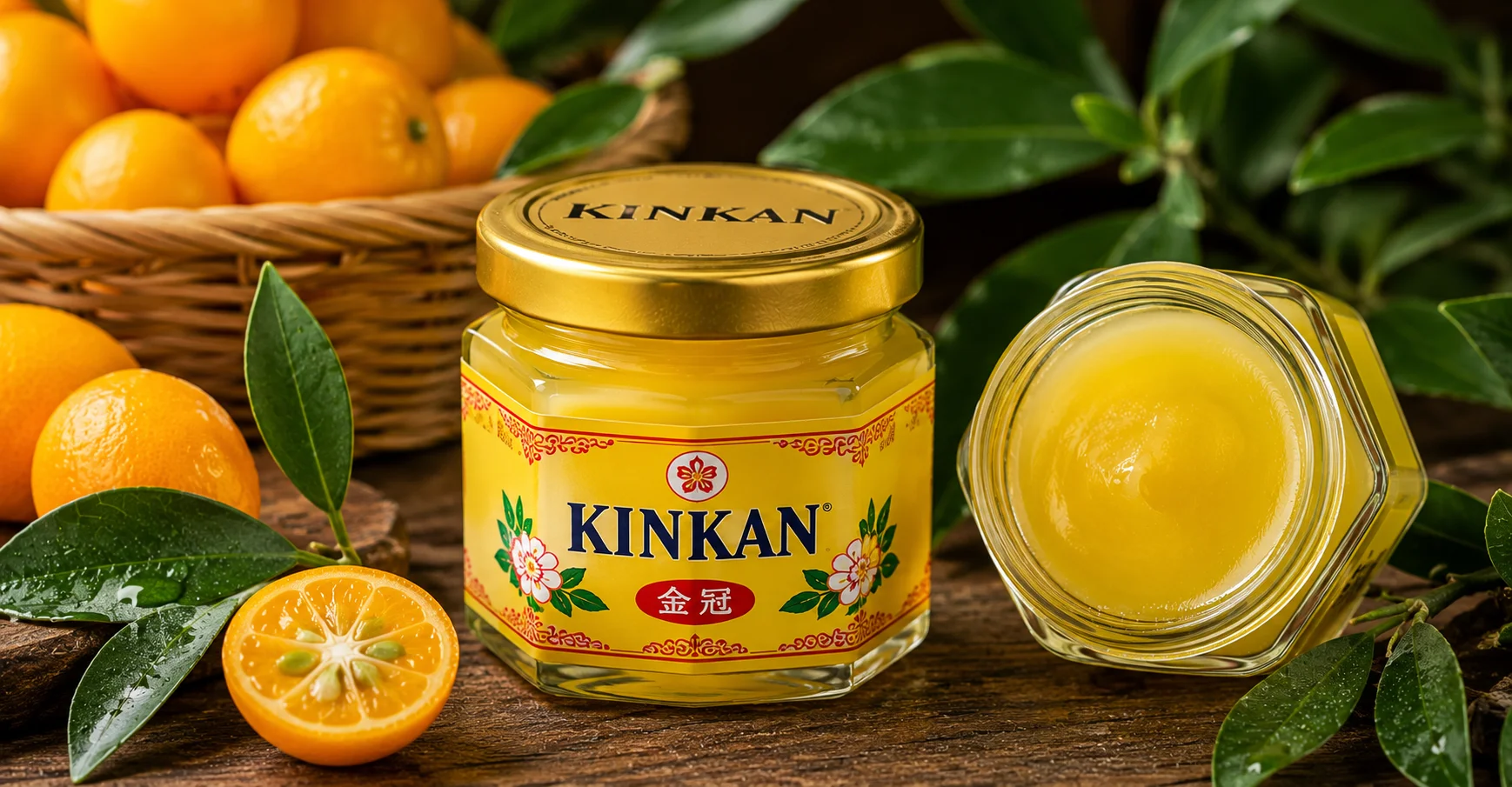
The product known as Kinkan is a Japanese topical medicine made by Kinkando Co., Ltd. It is primarily associated with insect bites, itching, shoulder stiffness, lower back pain, bruises and sprains. Unlike many modern topical products that are heavily redesigned every few years, Kinkan has deliberately preserved the core active ingredients of its original formula while changing its packaging and applicator to make the product easier to use.
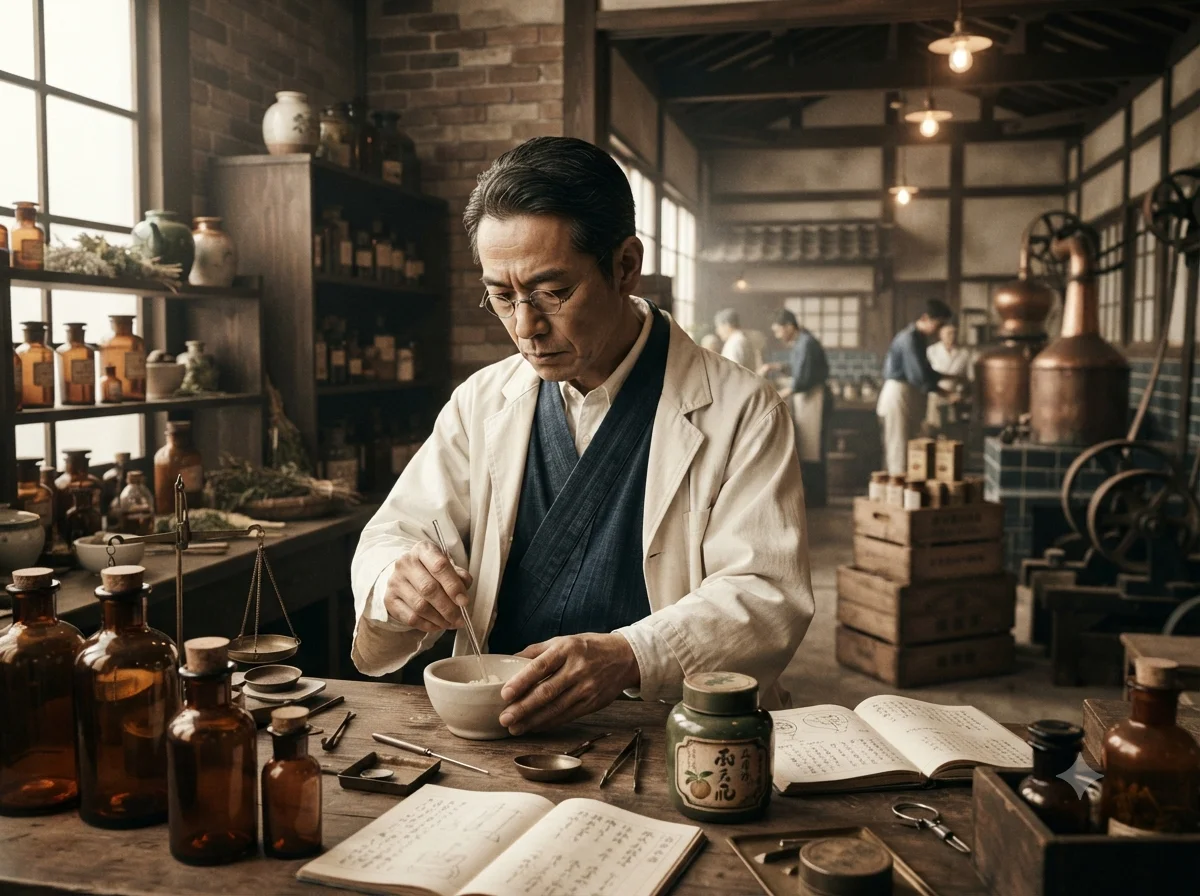
The story begins in 1923, when founder Eiji Yamazaki established the Kinkan Research Institute and began researching what would eventually become Kinkan.
According to the company’s official history, Yamazaki had previously served as a military medic. A deeply personal tragedy influenced his decision to develop a medicine: a child in his family suffered severe burns and died at a young age. Yamazaki wanted to create a medicine that could help people suffering from such injuries.
The research took approximately four years.
In 1926, Yamazaki completed the first Kinkan product and began selling it. The company itself was formally established as Kinkando Co., Ltd. later in its corporate history, in 1943.
This distinction is important.
1923 marks the beginning of Kinkan’s research and the origin of Kinkando, while 1926 is the year the Kinkan product was completed and launched.
Kinkan did not immediately become a hit.
When Yamazaki returned to Japan in 1931, he reportedly traveled around the country trying to sell the product. Sales were slow.
He then came up with an extremely unusual demonstration.
According to Kinkando’s official history, Yamazaki would boil water, pour the hot water over his own arm and then immediately apply Kinkan to demonstrate its claimed usefulness. The dramatic demonstration attracted attention, and orders reportedly increased afterward.
By modern standards, this would be an extremely unsafe marketing stunt.
But as a piece of brand history, it shows something important about Kinkan’s early growth: the company understood that people needed to see and remember the product before they would trust it.
In 1941, Kinkan was adopted as a military supply product under the name Yusō-eki, according to Kinkando’s historical record.
The company’s history then took a dramatic turn.
On May 25, 1945, during the Tokyo air raids, the Kinkan factory in Tokyo’s Setagaya area was completely destroyed by fire.
The company rebuilt after the war and continued operations from Setagaya.
Kinkando eventually moved manufacturing from Sangenjaya in Tokyo to Kodama, Saitama Prefecture, in 1986.
That facility remains central to Kinkan production.
Kinkando says the Saitama factory occupies approximately 5,000 tsubo, with manufacturing buildings, office and testing facilities and warehouses. The facility is equipped to handle high-concentration alcohol and is designed for both large-scale production and smaller production runs. It also operates under GMP principles and conducts ongoing quality improvements.
The company’s current corporate information lists the factory at:
350-2 Kodamachokyoei, Honjo City, Saitama, Japan.
The manufacturer is:
KINKANDO Co., Ltd.
Its headquarters is currently located in Sangenjaya, Setagaya-ku, Tokyo.
Kinkando lists its main business as the manufacturing and sale of OTC medicines, along with the sale of quasi-drugs, cosmetics and food products. The company currently lists ¥46.2 million in capital.
Kinkando remains a separate Japanese company rather than a brand owned by a huge multinational pharmaceutical corporation.
That is one of the most interesting parts of Kinkan’s story.
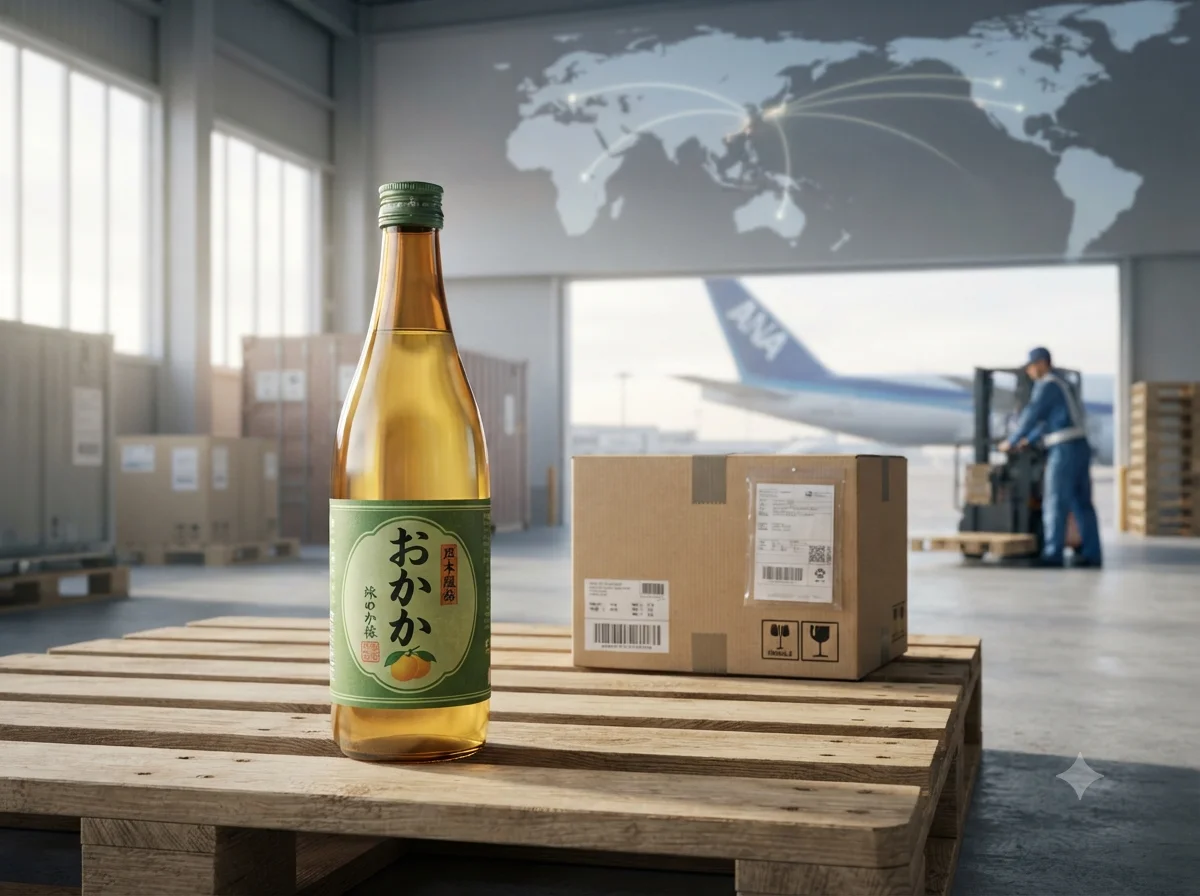
Kinkan is primarily associated with Japan, but it is not limited to the Japanese market.
As of the company’s current overseas information, Kinkando identifies product exports to:
The company specifically notes that the products available differ according to the export market.
This is a relatively modest international footprint compared with multinational OTC giants such as Haleon or Kenvue.
It would therefore be inaccurate to describe Kinkan as a product with distribution in every major global market.
Its strength is much more concentrated in Japan and selected Asian and overseas markets.
There is also a practical issue with international shipping.
Kinkando says Kinkan liquid is classified as an aviation dangerous good and therefore cannot be sent internationally through ordinary international mail.
That matters for online sales and helps explain why international availability can be less straightforward than simply ordering a bottle from Japan.
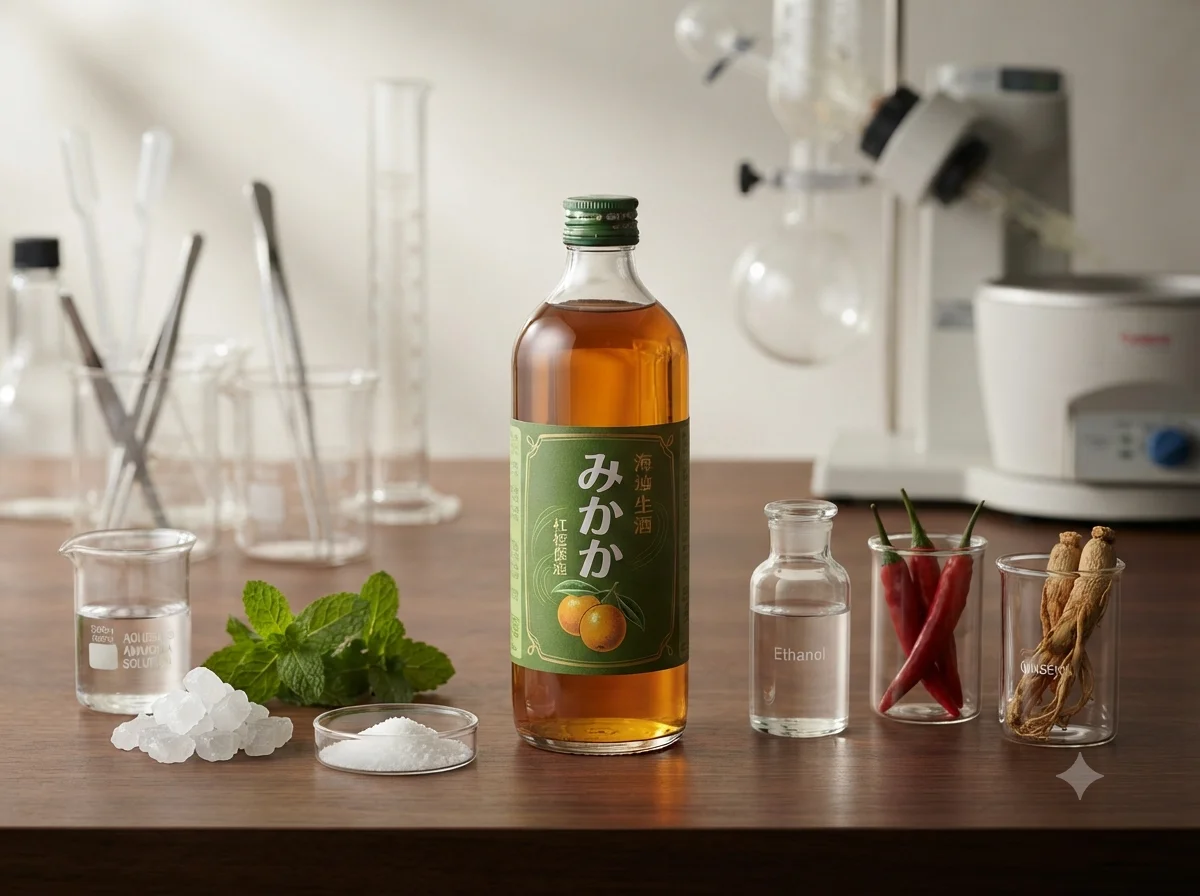
The current Kinkan 120 mL 100th Anniversary Limited Edition, sold under the name Kinkan, lists five active ingredients per 100 mL:
| Ingredient | Amount per 100 mL | General role in the formulation |
|---|---|---|
| Aqueous ammonia | 21.3 mL | Part of the topical formula and contributes to the product’s characteristic sensation |
| L-Menthol | 1.97 g | Cooling sensation and topical counter-irritant effect |
| D-Camphor | 2.41 g | Cooling/warming sensory effect and topical stimulation |
| Salicylic acid | 0.57 g | Keratolytic/topical medicinal ingredient |
| Capsicum tincture | 0.35 mL | Produces a warming/stimulating sensation |
The company also lists ginseng extract as an additive and ethanol as the solvent.
One of the most notable things about Kinkan is that the company says the active ingredients have remained unchanged since the product’s creation, even though the container and applicator have been improved over time.
Aqueous ammonia is one of Kinkan’s defining ingredients.
It contributes to the characteristic strong sensation consumers associate with the product.
It should not be confused with household cleaning ammonia. Kinkan is a regulated medicinal formulation in which the ingredient is present at a specified concentration.
Menthol is responsible for much of the familiar cooling sensation.
When applied to the skin, menthol interacts with sensory receptors that produce a cooling feeling.
This can make the product feel fast acting even though a cooling sensation should not automatically be interpreted as proof that an underlying condition has been treated.
Camphor is another classic topical ingredient.
It creates a noticeable sensory effect on the skin and is widely used in topical products designed around cooling or warming sensations.
Together, menthol and camphor help give Kinkan its instantly recognizable character.
Salicylic acid is included in a relatively small amount in the formula.
It is known for its keratolytic properties and has a long history of use in dermatological products.
In Kinkan, it is one component of a larger multi-ingredient formula rather than the product’s only active ingredient.
Capsicum tincture comes from chili pepper-derived material.
It contributes a warming and stimulating sensation, which complements the cooling effect produced by ingredients such as menthol.
This mixture of cooling and warming sensations is part of what makes Kinkan feel different from a simple anti-itch cream.
Kinkando identifies ginseng extract as an additive rather than one of the five active ingredients.
It is therefore important not to describe ginseng as the primary medicinal ingredient in Kinkan.
Ethanol functions as the solvent.
It also contributes to the fast-drying character of the liquid.
Because of the alcohol content, Kinkando warns about certain practical issues, including potential effects on floor wax if the product is spilled.
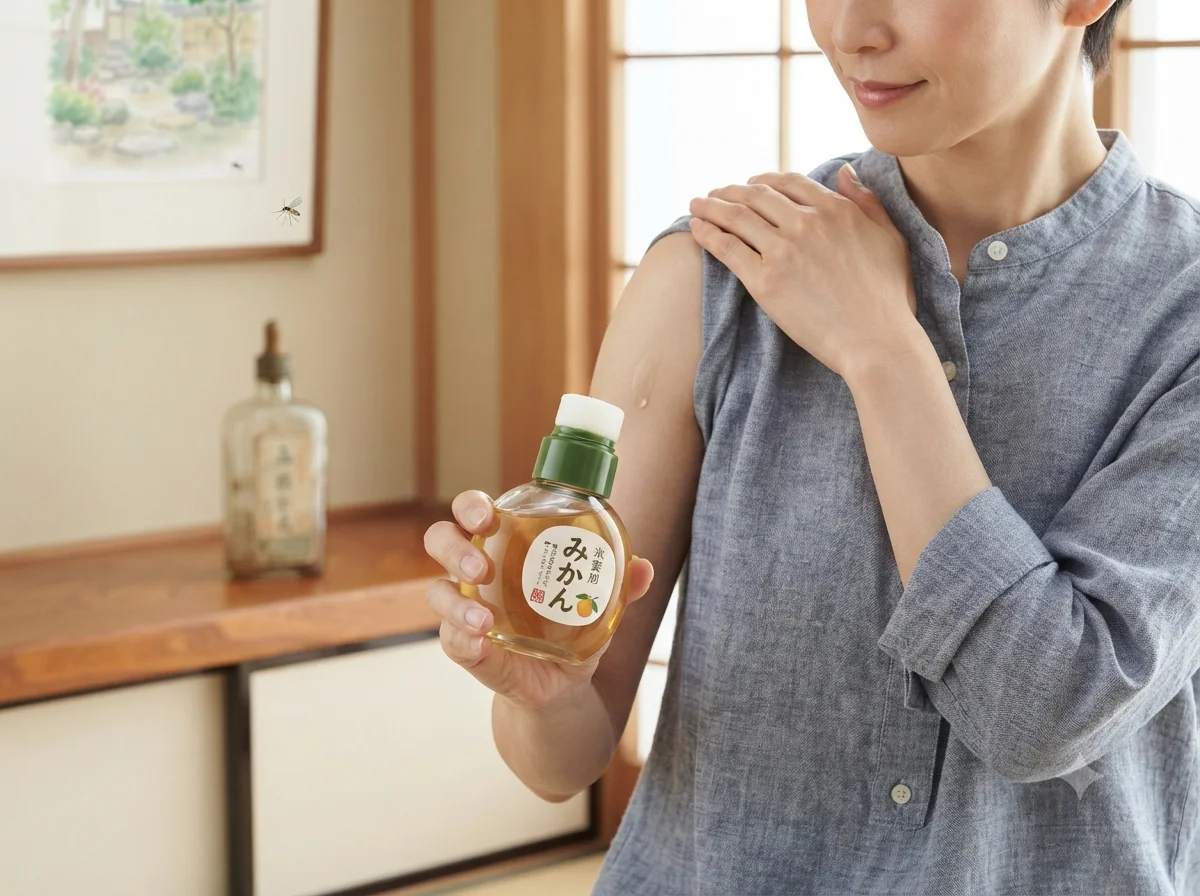
The current Kinkan product is indicated for:
Kinkando says the ingredients work together to quickly remove heat from the affected area and provide local stimulation that helps suppress the transmission of itching and pain sensations.
This is one reason Kinkan has a broader identity than a conventional insect-bite medicine.
A consumer might keep it around during summer for mosquito bites but also use it for occasional shoulder stiffness or other minor discomforts listed on the product label.
The company describes this multi-purpose positioning as one of the secrets behind the product’s long-term appeal.
This is another unusual part of the product.
Instead of a conventional cream or ointment tube, Kinkan uses a liquid and sponge applicator.
The current applicator has a mechanism that helps regulate the amount of liquid released when the sponge is pressed against the skin.
The design has changed over time.
In 1970, Kinkan introduced a sponge-equipped inner stopper and moved from its older flat bottle design toward a rounded bottle that was easier to apply to affected areas. The old flat bottle and rubber-cap design were eventually discontinued in 1995.
That is a useful lesson in product design: Kinkando changed the packaging without abandoning the product’s identity.
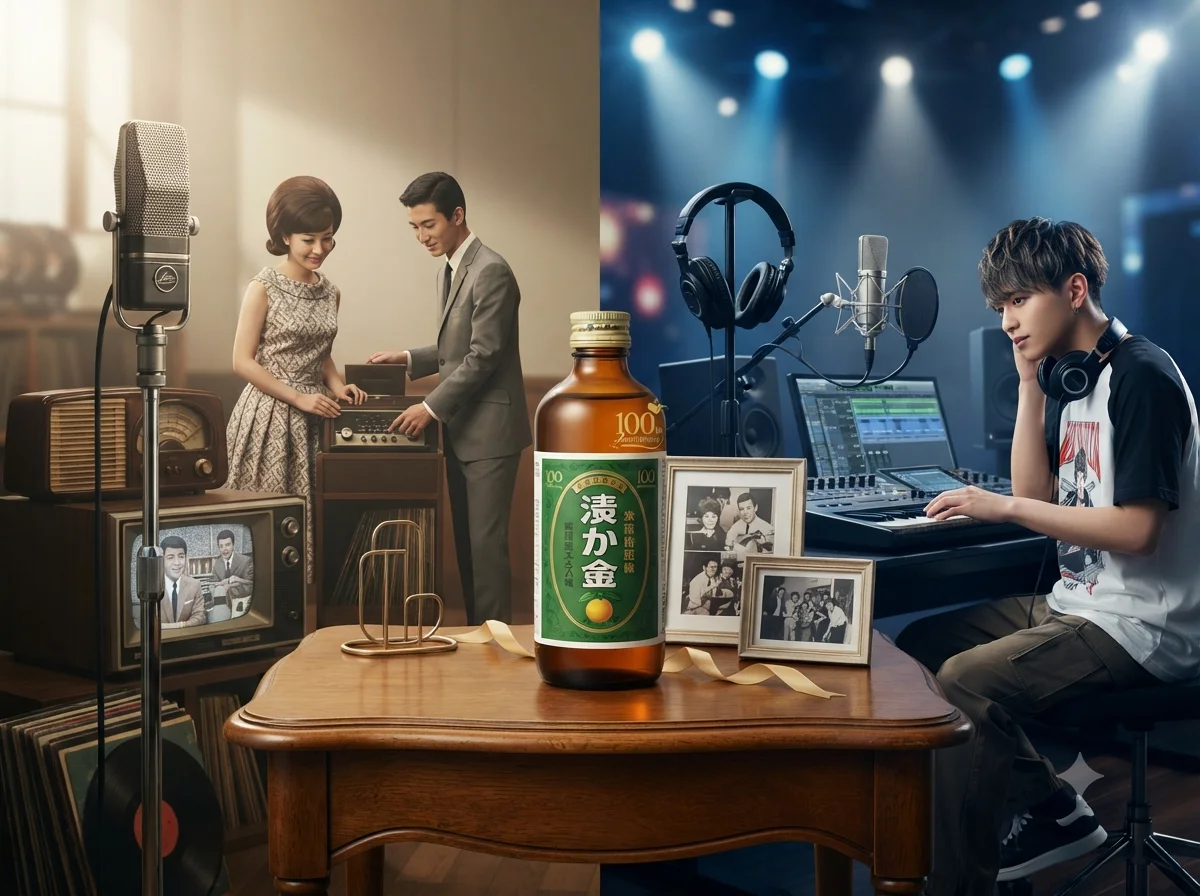
Kinkan’s marketing history is arguably one of the biggest reasons the brand has remained culturally recognizable.
In 1963, Kinkando introduced the famous “Kinkan no Uta,” or Kinkan Song.
The song included the memorable phrase commonly rendered in English as:
“Apply Kinkan, then apply it again.”
The music was written by Hattori Tadashi, while lyrics were written by Fujiura Ko, with performances by Izumi Yukimura and Dark Ducks.
The song became one of the brand’s defining assets.
This was brilliant advertising because the company was not simply telling consumers what Kinkan did.
It gave them a tune they could remember.
More than six decades later, that musical identity remains associated with the brand.
The company later experimented with younger, more playful advertising.
Kinkando’s official archive lists campaigns including:
This progression shows how the company has repeatedly refreshed the brand without abandoning its core identity.
In 2024, Kinkando released a new commercial titled “Kinkan Nippon no Fukaikan.”
The campaign continued the company’s effort to connect its century-old brand with contemporary Japanese audiences.
One of the most interesting recent campaigns came in June 2025.
Kinkando partnered with Japanese hip-hop artist Hannya, who grew up in the same Sangenjaya area where Kinkando has its headquarters.
The collaboration produced a music video called “Jimoto no Uta Kinkan Remix,” essentially connecting the brand’s local roots with modern music culture.
This is particularly smart from a branding perspective.
Instead of trying to pretend Kinkan is a young startup, the campaign embraces the company’s history and turns its local identity into something contemporary.
Kinkando’s 100th-anniversary marketing has become a major focus around 2026.
The company launched a special 120 mL 100th Anniversary package, with the product retaining its familiar medicinal positioning.
The company has also promoted its centenary through special content, collaborations and a 100th-anniversary logo design contest.
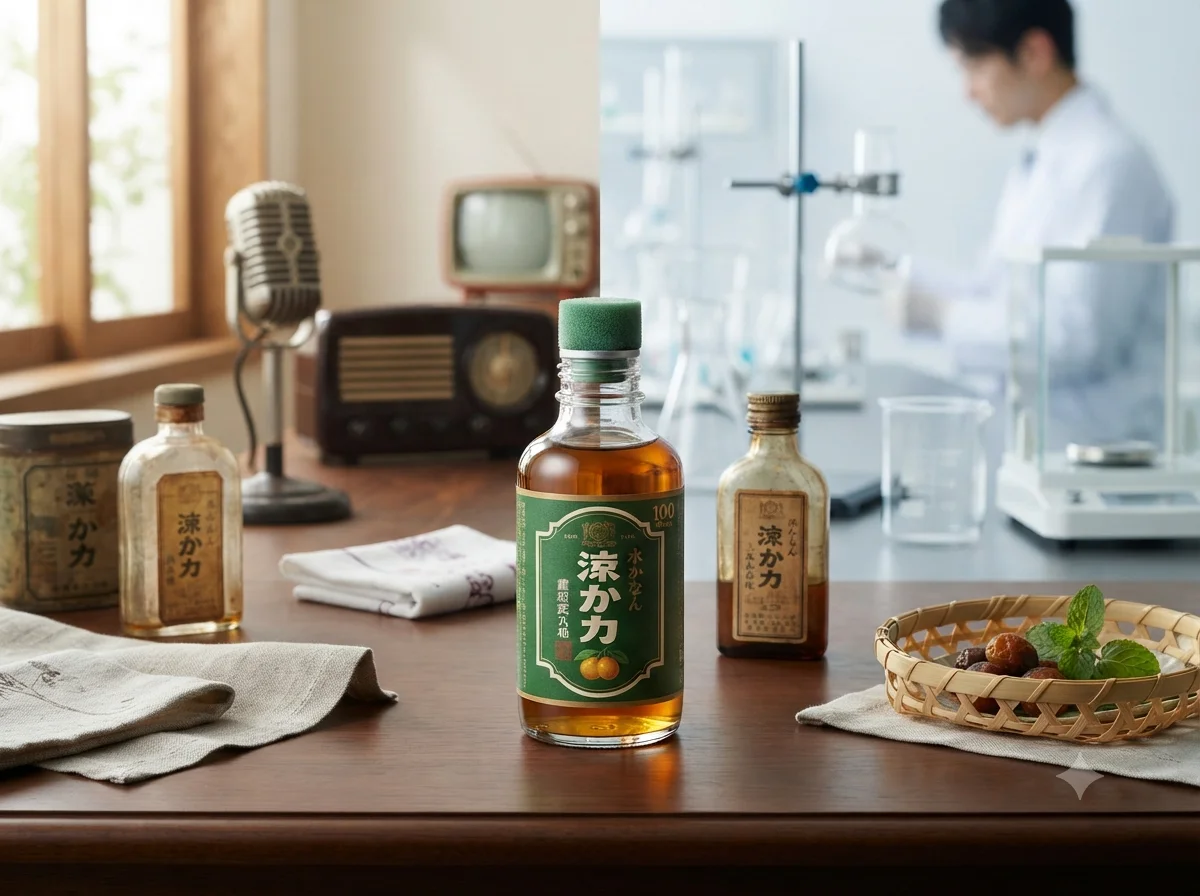
Kinkan’s success is not based on one ingredient or one advertising campaign.
It is the result of several things working together.
Kinkan was launched in 1926.
By 2026, consumers are dealing with a product that has existed for a full century.
That is a powerful trust signal in consumer healthcare.
The bottle, sponge applicator, smell and cooling sensation are all distinctive.
A consumer who has used Kinkan before can often recognize the product almost immediately.
Kinkan is not restricted to one narrow consumer problem.
Its labeled uses include insect bites, itching, shoulder stiffness, lower back pain, bruises and sprains.
That gives consumers more reasons to keep a bottle at home.
Kinkando’s president specifically highlights the company’s strategy of preserving what should not change while improving things that can be improved.
The company says the active ingredients in its flagship Kinkan product have remained the same while the container and application system have evolved.
That balance between tradition and modernization is difficult for brands to achieve.
The Kinkan song is a perfect example.
Many brands spend millions trying to create recognition that Kinkan built through decades of repeated exposure.
Kinkando describes itself as a specialist manufacturer focused on skin medicines and continues developing products around itching, insect bites and other skin concerns.
That specialization gives the company a clear identity.
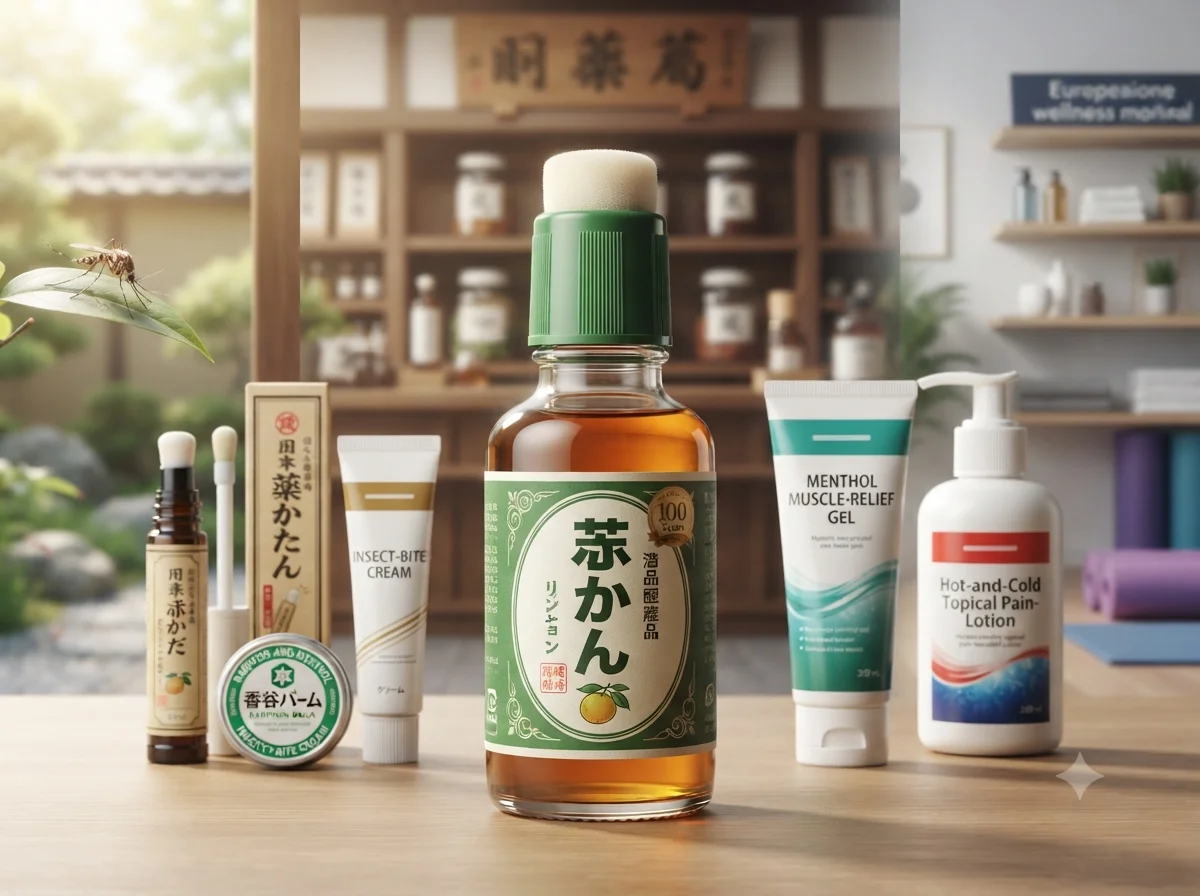
Kinkan’s competition depends on which consumer need we are discussing.
There is no single global company that exactly matches Kinkan’s formulation and positioning.
In Japan, Muhi is arguably one of the most relevant competitors because it is strongly associated with insect bites and itching.
Both brands have long histories in Japanese OTC medicine and have products designed for summer insect-bite problems.
Vicks competes more heavily in cough and cold products, but its topical products overlap with Kinkan in the broader category of traditional household topical medicines.
Tiger Balm is an important international competitor in topical pain relief.
Its products commonly use ingredients such as camphor and menthol, creating familiar cooling and warming sensations.
The difference is that Tiger Balm has a much stronger global association with muscle and joint pain, while Kinkan has a particularly strong identity around Japanese summer insect bites and itching.
In the United States, Icy Hot is a major competitor in topical pain relief.
Its hot-and-cold positioning overlaps with some of the sensory effects consumers associate with Kinkan.
Biofreeze competes particularly strongly in menthol-based topical pain relief, especially among consumers looking for muscle and joint products.
In North America, products such as After Bite compete more directly with Kinkan’s insect-bite use case.
This is an important distinction.
Kinkan is not simply competing against pain-relief brands. Depending on the use, it can also compete against anti-itch and insect-bite products.
This is one area where responsible reporting matters.
Kinkando does not publicly disclose a standalone annual global revenue figure on its official company website.
The company does publish its corporate information, capital, management and manufacturing details, but it does not provide a current annual sales figure comparable to the financial reports of a publicly traded multinational.
Therefore, claims online that give a highly precise “Kinkan annual revenue” number should be treated carefully unless they can be traced to audited financial statements or a credible corporate filing.
Kinkando currently lists:
The company also operates a separate sales company, KINKAN Co., Ltd., established in April 1997, with listed capital of ¥36 million.
That means it would be incorrect to treat the ¥46.2 million capital figure as revenue.
Capital and annual sales are two completely different financial measures.
There is no reliable public evidence from Kinkando supporting such a claim.
Kinkan is undoubtedly a successful and long-running Japanese healthcare brand, but it should not be grouped financially with giant multinational OTC companies without evidence.
Its international distribution is also relatively selective, with the company currently identifying the United States, Taiwan and Vietnam as export destinations.
That suggests a business model built more around strong domestic brand recognition and selective international expansion than worldwide mass-market dominance.

The main current manufacturing site is the Kinkando Saitama Factory in Honjo, Saitama Prefecture.
The factory began operating after manufacturing moved from Sangenjaya in Tokyo in 1986.
Kinkando says the site covers approximately 5,000 tsubo and includes manufacturing, testing and warehouse facilities.
The company also emphasizes its ability to handle high concentrations of alcohol and to produce both large and small batches. Its quality systems follow GMP requirements, with ongoing efforts to improve manufacturing quality.
This facility has now been producing Kinkan for roughly four decades.
That makes it an important part of the brand’s continuity.
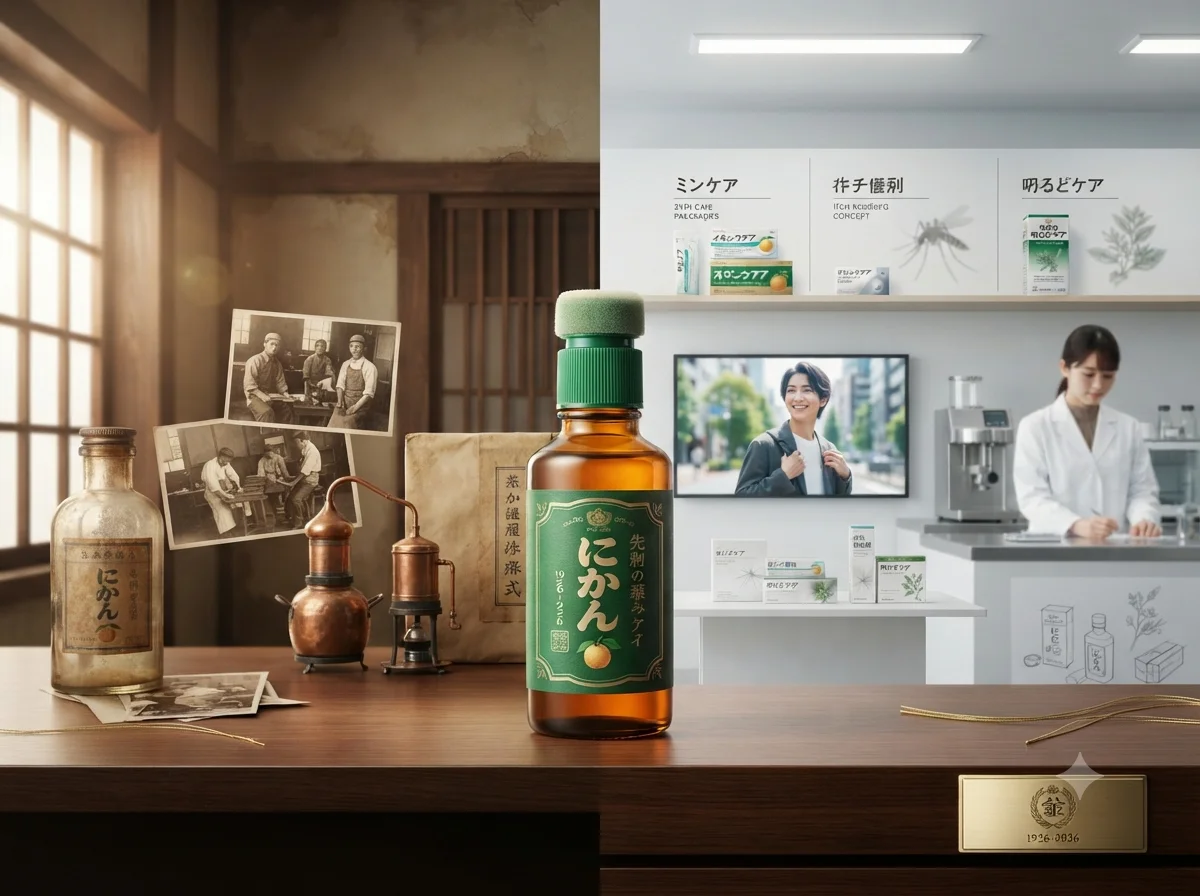
2026 is a major milestone for Kinkando.
The company identifies December 8, 2026 as the date it reaches its 100th anniversary.
The company is using the anniversary not simply to celebrate its past but also to position the brand for its next century.
Recent activity shows this clearly.
Kinkando has introduced new products, modernized its marketing, worked with younger cultural figures and promoted products beyond its traditional flagship medicine.
The company is also expanding beyond the classic Kinkan liquid.
Its current portfolio includes products for itching, insect protection and other skin-related concerns, while products such as Kinkan throat lozenges extend the name into adjacent consumer categories.
That may be the most important challenge facing the company.
A 100-year-old brand needs to preserve its identity without becoming trapped in the past.
Kinkando’s recent marketing suggests it understands that problem.
Kinkan is far more than a Japanese insect-bite medicine.
Its story began in 1923, when founder Eiji Yamazaki established the Kinkan Research Institute and began developing a topical medicine. After approximately four years of research, the first Kinkan was completed and launched in 1926.
The brand grew through an unusual combination of product demonstrations, word of mouth, memorable advertising and an easily recognizable formula.
Its famous early demonstration involved Yamazaki applying Kinkan after pouring boiling water over his own arm. While obviously not something consumers should attempt, the stunt became part of the brand’s fascinating history.
Kinkando’s flagship Kinkan formula contains five active ingredients: aqueous ammonia, L-menthol, D-camphor, salicylic acid and capsicum tincture, with ginseng extract and ethanol also included in the formulation.
The product is currently labeled for insect bites, itching, shoulder stiffness, lower back pain, bruises and sprains.
Manufacturing is centered at Kinkando’s Saitama factory in Honjo, which has been producing Kinkan since the company’s manufacturing operation moved there from Tokyo in 1986.
Internationally, Kinkando currently identifies exports to the United States, Taiwan and Vietnam, although the range of products differs by destination.
Marketing has been one of Kinkan’s greatest strengths. The 1963 Kinkan Song became an enduring part of Japanese advertising culture, while more recent campaigns have included the Kinkan Dance, Nippon no Fukaikan and the 2025 collaboration with hip-hop artist Hannya.
The company does not publicly disclose a current standalone Kinkan revenue figure, so there is no reliable basis for assigning the brand a precise 2026 annual sales number. What can be confirmed is Kinkando’s corporate structure, ¥46.2 million capital, manufacturing operation and selective international presence.
Perhaps the biggest reason Kinkan has survived for a century is that it has managed to do something many legacy brands struggle with:
It has changed without abandoning what made it recognizable.
The formula has retained its core identity. The bottle and applicator have evolved. The advertising has moved from a 1960s jingle to dance campaigns, digital video and hip-hop collaborations. The company has expanded into related healthcare products while keeping Kinkan at the center of its identity.
In 2026, Kinkan therefore stands as an unusual example of Japanese consumer healthcare branding: a century-old product that remains recognizable because it has treated its history as an asset rather than a limitation.