Zandu Balm is one of India’s most recognizable Ayurvedic pain-relief brands and one of the country’s best-known examples of a traditional health product becoming a modern FMCG brand. With origins going back to 1910, Zandu has survived more than a century of changing consumer habits, new competitors, modern medicine and the rise of digital commerce.
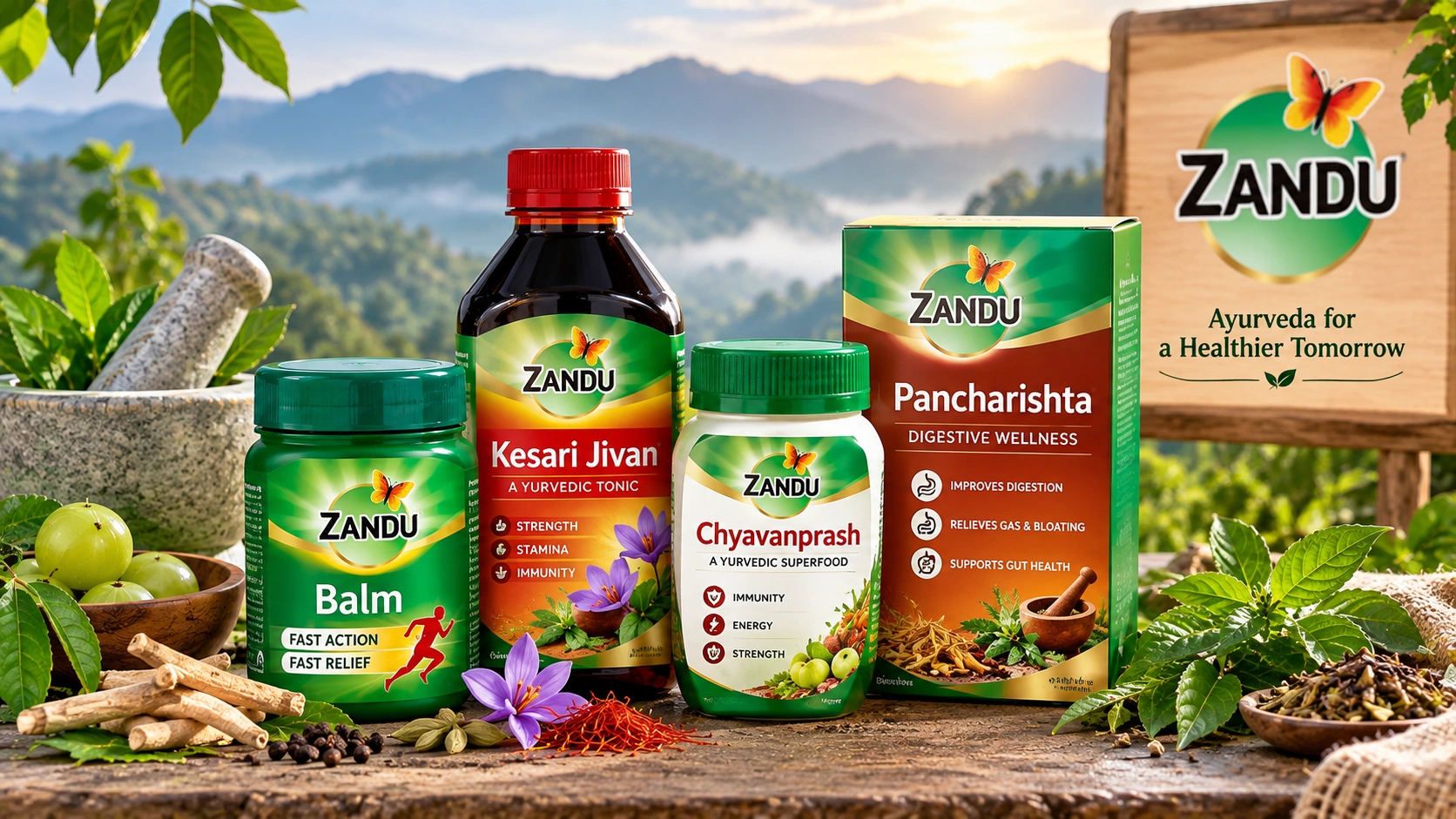

Zandu traces its origins to 1910, when Vaidya Zandu Bhatt founded the company associated with the Zandu name.
The brand’s official history describes Zandu as having more than a century of Ayurvedic heritage and a focus on developing products based on traditional Ayurvedic texts while using modern manufacturing technology.
This origin is important because Zandu was established during a period when Indian Ayurvedic medicine was becoming increasingly organized into commercial pharmaceutical businesses.
Rather than treating Ayurveda solely as a traditional household practice, companies such as Zandu helped turn Ayurvedic formulations into standardized packaged products that could be manufactured and distributed on a larger scale.
Vaidya Zandu Bhatt is the historical figure associated with the foundation of Zandu.
He was an Ayurvedic physician whose name became the identity of the company.
The brand subsequently developed into Zandu Pharmaceutical Works, building a portfolio of Ayurvedic medicines and wellness products.
Over the decades, the Zandu name became particularly associated with products that consumers could keep at home and use for common health complaints.
Zandu Balm’s success came partly from its broad positioning.
Instead of restricting the product to one narrow condition, the brand positioned the balm as a multipurpose topical product.
Historically, Zandu’s marketing highlighted uses associated with headache, cold, tiredness, backache, sprains and muscular pain.
That broad positioning helped transform the product from a specialized Ayurvedic preparation into a household item.
Consumers did not need to remember a complicated medical indication.
They simply knew that when someone in the family had an everyday ache or headache, there was a familiar little container of Zandu Balm available.
Older Emami annual-report material describes Zandu Balm as a product that became the choice of millions and identifies its distinctive formulation around Gaultheria oil and menthol, alongside beneficial herbs.
The same historical material reported that Zandu and Emami’s Mentho Plus Balm together accounted for around 61% of the balm category at the time of the 2008 acquisition.
It also reported Zandu Balm sales of approximately ₹180 crore according to ORG data for January to December 2008.
These are historical figures, not current 2026 sales numbers, but they demonstrate how commercially important the brand had already become before Emami acquired it.

One of the biggest turning points in Zandu’s history came in 2008.
Emami Limited acquired Zandu Pharmaceutical Works Limited in a deal valued at approximately ₹750 crore.
Emami describes the transaction as one of the major acquisition milestones in its history.
The acquisition brought several important Zandu brands into Emami’s portfolio, including:
In 2009, the Zandu FMCG business was merged with Emami.
This meant that the Zandu name continued to exist as a consumer brand, but the company behind it became part of Emami’s much larger FMCG organization.
Zandu offered Emami something that is difficult to create from scratch: more than 100 years of consumer trust.
Building a new healthcare brand can take decades.
Zandu already had recognition, distribution and a strong association with Ayurveda.
For Emami, the acquisition provided an opportunity to combine Zandu’s heritage with modern FMCG management, advertising and distribution.
Emami’s own history describes the strategy as giving older brands a contemporary touch while retaining their established consumer equity.

Today, Zandu Balm is part of Emami Limited.
The current Zandu Care product page identifies Emami Ltd., 687 Anandapur, EM Bypass, Kolkata, West Bengal as the manufacturer and Emami Limited as the marketer.
The product’s country of origin is listed as India.
Emami currently operates several manufacturing facilities in India and one overseas manufacturing unit in Bangladesh.
The company states that its manufacturing units follow quality-management and GMP-related standards.
However, publicly available company information does not establish that every Zandu product is manufactured at one specific factory.
Manufacturing can depend on product category and production requirements.
Yes.
Zandu benefits from Emami’s international distribution network.
Emami states that its products have a presence in 70+ countries, covering regions including South Asia, the Middle East and North Africa, Southeast Asia, Africa, Eastern Europe and CIS markets.
This gives Zandu access to international consumers, particularly people familiar with Indian Ayurvedic products and members of the Indian diaspora.
However, Zandu should not be confused with a global pharmaceutical company with equal market share across all countries.
Its strongest consumer recognition remains rooted in India and markets where Indian and Ayurvedic products have established demand.

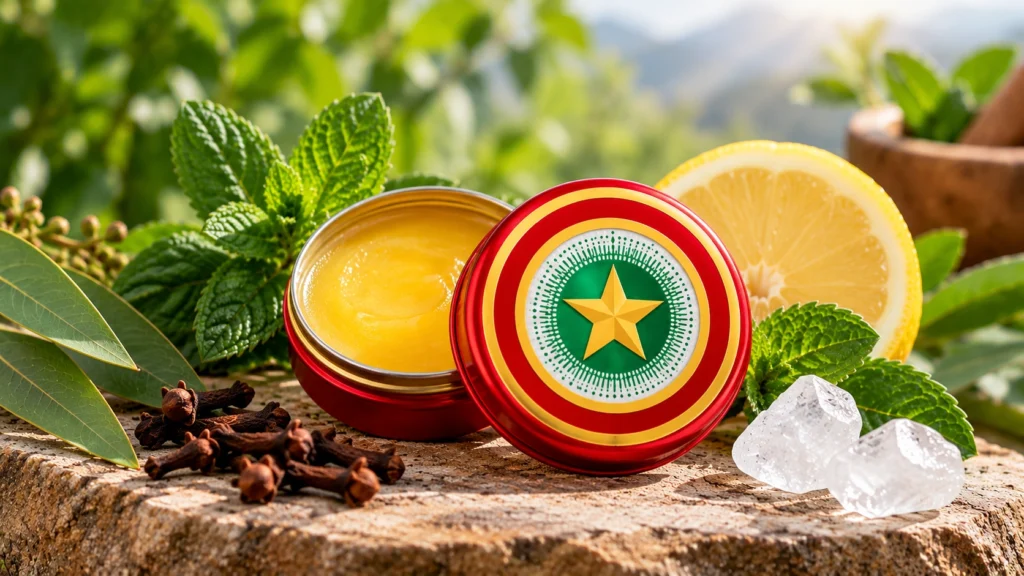
The current Zandu Care product page lists six major ingredients in Zandu Balm:
The formula combines aromatic oils and sensory-active ingredients that create Zandu’s distinctive cooling, warming and penetrating sensation.
Menthol is responsible for much of the cooling sensation associated with Zandu Balm.
When applied to the skin, menthol interacts with cold-sensitive receptors, particularly TRPM8.
This makes the skin feel cool even though the actual temperature may not fall significantly.
The resulting sensory signal can temporarily alter the perception of pain.
Menthol is therefore common in many topical pain-relief products around the world.
Eucalyptus oil contributes to Zandu’s strong herbal aroma.
Eucalyptus oil contains volatile compounds such as 1,8-cineole.
Its aroma is commonly associated with freshness and respiratory comfort.
However, the presence of eucalyptus oil does not mean Zandu Balm should be considered a treatment for respiratory infections.
Gaultheria oil, commonly known as wintergreen oil, naturally contains a high proportion of methyl salicylate.
Methyl salicylate is widely used in topical preparations designed for temporary relief of minor muscle and joint discomfort.
It contributes to the warming or stimulating sensation that consumers associate with many traditional pain balms.
Cinnamon oil contributes aromatic and warming characteristics.
Cinnamon contains compounds such as cinnamaldehyde, which can stimulate sensory receptors in the skin.
This contributes to the overall warming sensation of the balm.
Clove oil is another traditional botanical ingredient.
Its major compound, eugenol, has been studied for analgesic and antimicrobial properties.
Clove oil is particularly familiar in traditional dental and herbal preparations.
In a topical balm, it contributes both aroma and sensory activity.
Camphor is one of the most recognizable ingredients in traditional Indian and Asian balms.
It can produce cooling, warming and tingling sensations by interacting with several sensory receptors.
Camphor is also one reason why Zandu Balm has its characteristic medicinal aroma.
Camphor-containing products should be used only externally according to the product instructions and kept away from young children.

Zandu Balm’s immediate effects are largely related to sensory modulation.
The ingredients stimulate sensory receptors in the skin, producing cooling, warming or tingling sensations.
Those signals are processed by the nervous system and can temporarily modify the way discomfort is perceived.
Menthol produces a cooling sensation, while camphor, cinnamon, clove and methyl-salicylate-containing Gaultheria oil contribute additional sensory effects.
The combination creates the characteristic “strong” feeling consumers associate with Zandu.
This is sometimes described as a counter-irritant effect.
The balm does not necessarily remove the underlying cause of a headache or muscle injury.
Instead, it can change the sensory experience of the discomfort.
The answer is the combination of multiple aromatic and sensory-active ingredients.
A simple moisturizer may produce almost no sensory response.
Zandu produces a noticeable one.
That immediate sensation became a major part of the product’s identity.
For generations of Indian consumers, the smell and cooling-warming feeling of Zandu Balm have become almost inseparable from the idea of traditional headache and pain relief.

The current Zandu product information markets the balm for temporary relief associated with:
Historically, the brand has used an even broader “multipurpose” positioning.
That positioning is one of the reasons Zandu became a household product.
Instead of requiring consumers to buy separate products for every minor ache, the balm was positioned as one product that could serve several everyday situations.
Headache relief remains one of the strongest associations with Zandu Balm.
Consumers traditionally apply small amounts to the forehead or temples.
The cooling and warming sensory effects may temporarily alter the perception of headache discomfort.
However, Zandu Balm should not be considered a proven preventive treatment for migraine.
Frequent or severe headaches should be evaluated by a healthcare professional.
The warming and cooling effects can also make the balm appealing for minor muscle discomfort.
This explains why the product is frequently associated with backache, muscular pain and everyday physical strain.
The eucalyptus and aromatic ingredients give the balm a strong scent that many consumers associate with cold relief.
The aroma may create a subjective feeling of freshness or easier breathing.
However, topical balm should not be presented as a cure for a viral infection or respiratory disease.

One of Zandu’s most memorable historical marketing ideas was “Ek Balm Teen Kaam”, meaning approximately “One balm, three uses.”
The campaign reinforced the idea that Zandu was not limited to headaches.
It was a multipurpose household solution.
This was an important positioning decision because it increased the number of occasions on which consumers might use the product.
Another major campaign used the line “Desh Ka Dard Mitana Hai”.
The campaign connected the brand with Indian national identity and used prominent Indian cricket personalities including Sachin Tendulkar, Harbhajan Singh and Zaheer Khan.
This was a powerful strategy because cricket has enormous cultural reach in India.
Instead of showing only an ordinary consumer with a headache, Zandu associated the product with elite athletes and national sporting culture.
The use of cricket stars was particularly effective for a product associated with physical discomfort.
Athletes naturally provide a connection to muscle pain, physical exertion and recovery.
At the same time, their enormous popularity allowed Zandu to reach households far beyond the traditional Ayurvedic medicine audience.
Zandu later used the memorable positioning “Dard Ki Bolti Band”, roughly meaning “Silencing pain.”
The phrase was short, memorable and easy to understand.
It also shifted the brand’s communication toward a more energetic and contemporary tone.
Emami’s 2013-14 annual report specifically described Zandu Balm as a 100-year-old pain-relief solution and highlighted the “Dard ki bolti band” advertising positioning.
Zandu’s modern marketing increasingly combines its Ayurvedic heritage with language around quality, technology and modern manufacturing.
This is important because today’s consumers may want traditional ingredients without feeling that they are buying an outdated product.
The brand therefore attempts to preserve the credibility of its heritage while presenting itself as compatible with modern consumer expectations.
One of Zandu’s greatest marketing assets is something money cannot easily buy: generational familiarity.
Many Indian consumers remember parents or grandparents using Zandu Balm.
That creates an emotional connection with the brand.
The consumer is not simply purchasing a pain balm.
They are purchasing something they already know.
Zandu’s packaging has remained highly recognizable over the years.
The distinctive container, brand name and visual identity allow consumers to identify it quickly on a pharmacy or grocery shelf.
This is especially important in a category where numerous competitors offer small jars containing similarly colored balms.

Zandu should not be described as dominating the entire global pain-relief market.
It competes against multinational pharmaceutical and consumer-health companies with much larger global revenues.
However, within India’s traditional topical pain-relief category, Zandu has historically held a very strong position.
Few competitors can match Zandu’s 1910 origin story.
Longevity creates trust.
A brand that has survived for more than 100 years feels familiar and established.
Zandu is deeply embedded in Indian popular culture.
The brand name itself has become strongly associated with pain balms.
That kind of mental availability is a major competitive advantage.
Zandu Balm has historically been marketed for several everyday complaints.
This increases household penetration.
One family can use the same product for headache, body ache or minor muscular discomfort.
Emami currently states that it has more than 4,000 distributors and reaches more than 54 lakh retail outlets across India.
This is one of Zandu’s greatest modern advantages.
A new wellness brand may have an excellent product but struggle to get shelf space.
Zandu benefits from Emami’s established FMCG infrastructure.
Emami has the financial resources to invest heavily in mass-market advertising.
This allows Zandu to compete for television, digital and retail attention on a much larger scale than small independent Ayurvedic brands.
Zandu combines an Ayurvedic identity with modern packaging, manufacturing, distribution and advertising.
This hybrid model is one of the brand’s strongest advantages.
Emami’s presence in more than 70 countries gives Zandu an international distribution opportunity.
Indian diaspora communities are particularly relevant because they may already know and trust the brand.

Zandu operates in a highly competitive category.
Its most important competitors include:
Amrutanjan is probably Zandu’s most direct heritage competitor in India.
Both brands have been part of Indian households for generations.
Both are strongly associated with headache and body-pain relief.
The competition between them is therefore about more than ingredients.
It is also about memory, trust and brand preference.
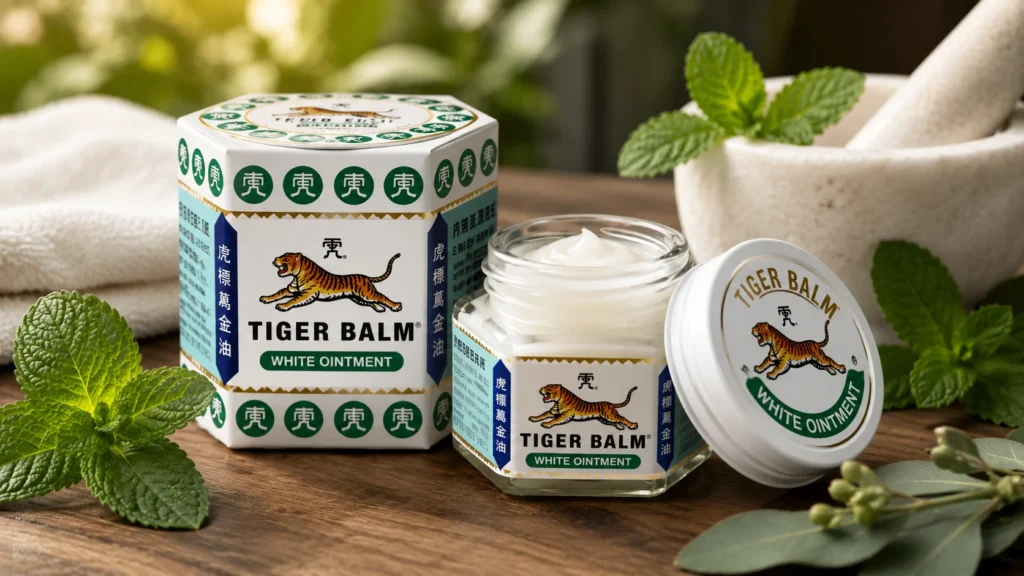
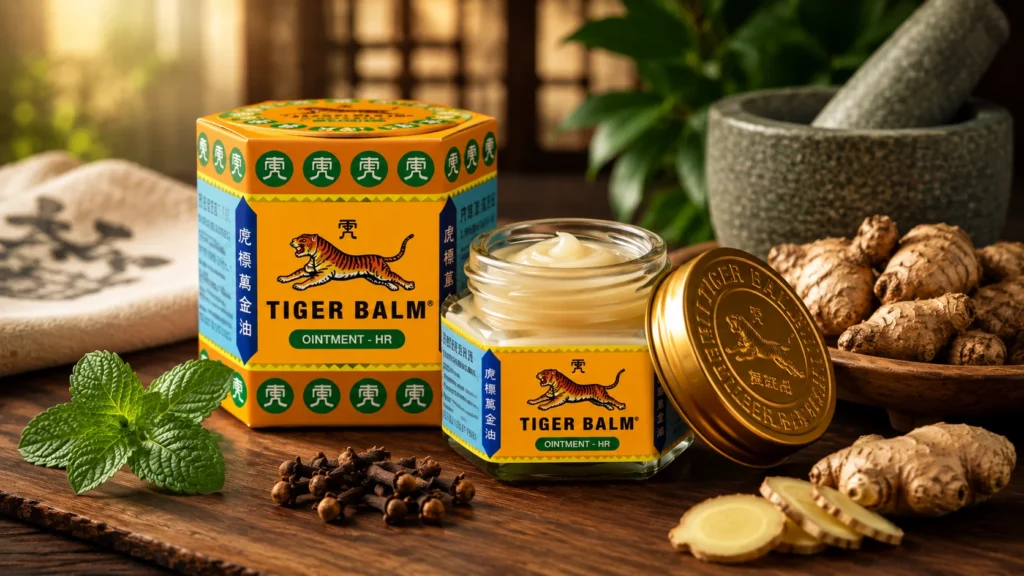
Tiger Balm is a major international competitor.
It has a strong heritage in Asian markets and extensive international distribution.
Its advantage is global recognition.
Zandu’s advantage is its deep Indian identity and much stronger association with India’s Ayurvedic tradition.
Iodex competes in the broader topical pain-relief market.
Its pharmaceutical-style positioning makes it different from Zandu, but consumers often compare the products when looking for relief from everyday aches.
Moov and Volini represent a more modern generation of Indian pain-relief products.
They compete through creams, gels, sprays and modern advertising.
This is an important competitive challenge for Zandu because younger consumers may prefer clean, modern formats over traditional balm jars.
Vicks competes more strongly around cold and congestion-related use cases but overlaps with Zandu because of its strong association with aromatic topical products.
Both brands benefit from enormous household recognition.

This is an area where historical and current figures must be separated carefully.
Emami does not publicly report a standalone 2026 revenue figure for Zandu Balm alone.
Zandu is part of a much larger Emami portfolio, and financial reporting generally groups brands and businesses rather than publishing a separate audited revenue number for every individual product.
Historical Emami documentation provides useful context.
At the time of the 2008 acquisition, Zandu Balm was reported to have generated approximately ₹180 crore in sales during January-December 2008 according to ORG data.
The same historical company material reported approximately 46% market share for Zandu Balm at the time.
It also stated that after combining Zandu with Emami’s Mentho Plus Balm, Emami became the category leader with around 61% market share.
These numbers are historical and should not be presented as current market share.
Emami’s current financial disclosures continue to identify Zandu as one of its major brands.
The company’s corporate materials describe Zandu Balm, along with Mentho Plus Balm, as a strong market-leading franchise in the pain-management category.
However, the company does not provide a separate current revenue figure for Zandu Balm alone.
Emami’s current corporate profile reports approximately ₹883 crore in net cash as of March 31, 2026 and an FY26 EBITDA margin of approximately 25.5%.
These figures relate to Emami, not Zandu Balm.
They demonstrate the financial scale of the parent company but should not be incorrectly attributed to the Zandu brand.
There are several reasons.
Therefore, websites that publish a precise “Zandu Balm revenue in 2026” without citing audited company information should be treated cautiously.

Zandu’s biggest advantage is not necessarily that its ingredients are unique.
Many modern balms contain menthol, camphor, eucalyptus or wintergreen-derived ingredients.
Its real advantage is the combination of heritage, distribution, familiarity and cultural recognition.
The formula continues to use familiar aromatic ingredients associated with traditional topical pain relief.
Although the brand is rooted in Ayurveda, it is now manufactured within Emami’s modern FMCG infrastructure.
Zandu is available through a distribution system that smaller competitors cannot easily reproduce.
The brand has been used across multiple generations of Indian families.
This creates a level of trust that cannot be built overnight through digital advertising.
Zandu Balm is one of India’s most important heritage pain-relief brands and one of the clearest examples of how traditional Ayurveda can evolve into a modern FMCG business.
The Zandu story begins in 1910, when the brand was founded by Vaidya Zandu Bhatt.
Over more than a century, Zandu developed from an Ayurvedic pharmaceutical business into a household name associated with topical pain relief, wellness and traditional Indian healthcare.
Zandu Balm became particularly successful because of its multipurpose positioning.
The brand historically promoted the product for headache, cold-related discomfort, backache, muscular pain, tiredness and minor sprains.
Its memorable positioning included “Ek Balm Teen Kaam”, reinforcing the idea that one product could serve several household needs.
Another major campaign, “Desh Ka Dard Mitana Hai”, used Indian cricket stars such as Sachin Tendulkar, Harbhajan Singh and Zaheer Khan, connecting the brand with national sporting culture.
Later, the memorable “Dard Ki Bolti Band” positioning helped modernize the brand’s communication while maintaining its association with pain relief.
The biggest corporate turning point came in 2008, when Emami acquired Zandu Pharmaceutical Works Limited for approximately ₹750 crore.
The Zandu FMCG business was subsequently merged with Emami in 2009.
This gave Zandu access to a much larger FMCG distribution and marketing infrastructure while allowing Emami to acquire one of India’s most valuable heritage Ayurvedic brands.
Today, Zandu is part of Emami Limited.
The current Zandu Balm product page identifies Emami Limited as both manufacturer and marketer, with India as the country of origin.
The current formulation contains menthol, eucalyptus oil, Gaultheria oil, cinnamon oil, clove oil and camphor.
These ingredients create the product’s familiar cooling, warming and aromatic experience.
Menthol activates cooling-sensitive receptors, while camphor, cinnamon, clove and wintergreen-derived methyl salicylate contribute additional sensory effects.
The resulting sensation can temporarily change the perception of discomfort, but consumers should not interpret the sensation itself as proof that the underlying cause of pain has been treated.
Zandu Balm remains primarily associated with temporary relief from everyday headache, body ache, muscular discomfort and cold-related symptoms.
Its strongest competitive advantage is its heritage.
Few competitors can claim more than a century of continuous brand recognition in India.
That heritage is supported by Emami’s enormous distribution infrastructure.
Emami currently reports more than 4,000 distributors and access to more than 54 lakh retail outlets across India.
This gives Zandu an enormous physical distribution advantage over smaller direct-to-consumer wellness brands.
The major competitors include Amrutanjan, Tiger Balm, Iodex, Moov, Volini, Dr. Ortho, Vicks and Himani Fast Relief.
Amrutanjan is perhaps the closest heritage competitor, while Moov and Volini represent the newer generation of modern topical pain-relief products.
Tiger Balm provides international competition with its strong Asian heritage and global distribution.
Financially, it is important not to confuse historical figures with current sales.
Zandu Balm generated approximately ₹180 crore in sales in 2008 according to historical ORG data cited in Emami’s reporting. The company also reported around 46% market share at the time, while Zandu and Mentho Plus together represented around 61% of the balm category.
Those figures are more than a decade old and should not be used as 2026 market-share statistics.
Emami does not currently disclose a standalone audited annual revenue figure for Zandu Balm.
The current financial position of the parent company, Emami, demonstrates substantial scale, but Emami’s consolidated financial results should never be presented as Zandu’s revenue.
The most accurate description of Zandu in 2026 is therefore that it is a century-old Indian Ayurvedic pain-relief brand operating under Emami, with strong domestic distribution, international reach and enduring consumer recognition.
Zandu’s greatest strength is not simply its formula.
It is the combination of heritage, familiarity, advertising, distribution and cultural relevance.
That combination explains why a product created more than 100 years ago continues to compete successfully against modern creams, gels, sprays, roll-ons and pharmaceutical pain-relief products.
For consumers, Zandu Balm remains a familiar option for temporary relief from everyday aches and discomfort.
For the FMCG industry, however, Zandu represents something bigger: a case study in how an old Indian Ayurvedic brand can be acquired, modernized and scaled without losing the identity that made consumers trust it in the first place.
That is ultimately the reason Zandu remains one of the most recognizable names in India’s topical pain-relief market in 2026.

Watch expert-inspired short videos on health, wellness, nutrition, fitness, preventive care, and healthy living in under a minute.