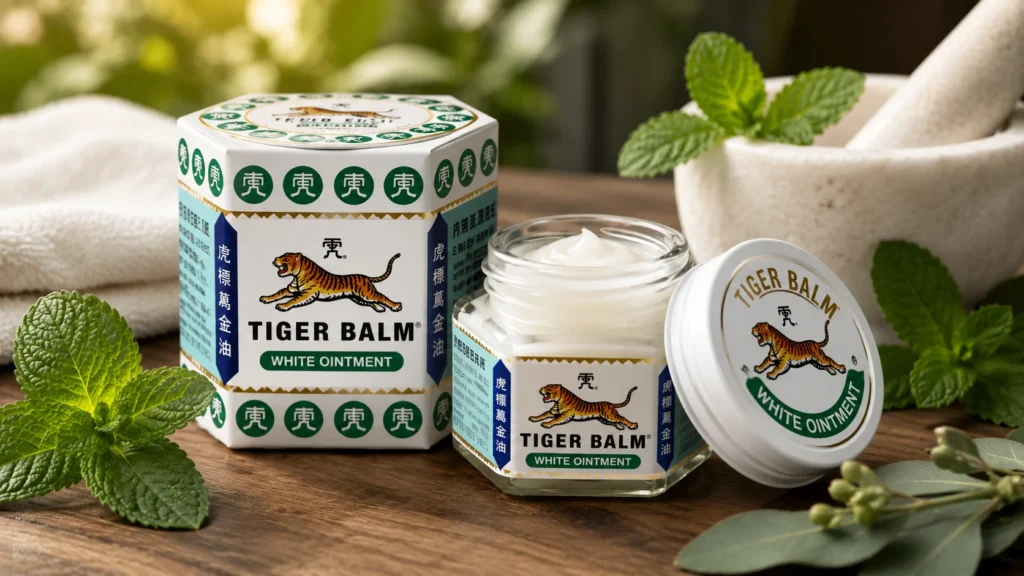
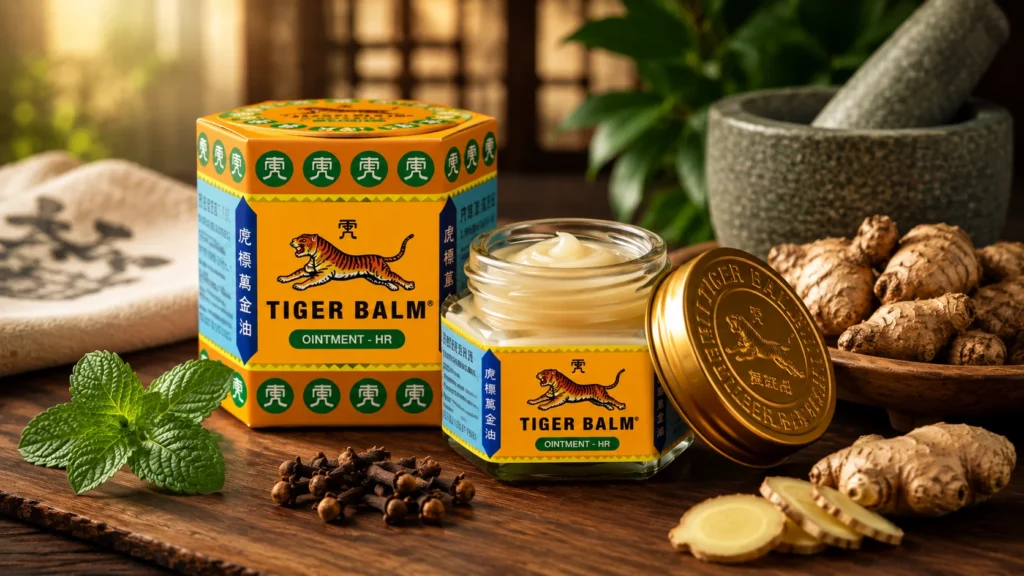
Some products are designed mainly for tension and stress headaches, while others are traditional medicinal balms intended for headaches alongside muscle pain, dizziness, congestion or insect bites. Some rely heavily on menthol and camphor. Others use peppermint, lavender, eucalyptus and other essential oils in a wax or oil base.
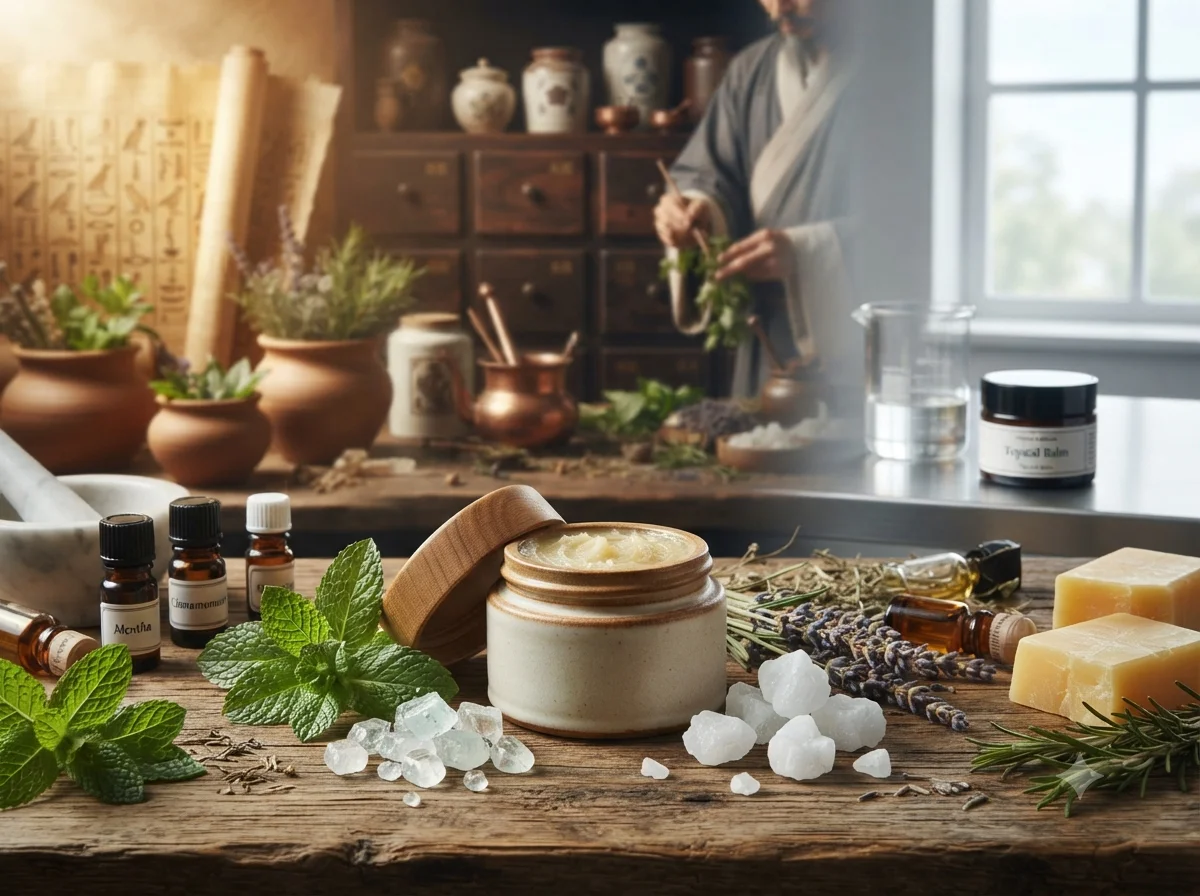
A headache balm is a topical preparation applied to areas such as the temples, forehead, back of the neck or shoulders with the goal of providing a cooling, warming, soothing or aromatic sensation during headache or head tension.
Most headache balms fall into two broad groups.
The first group contains ingredients such as menthol, camphor or methyl salicylate. These products are often closer to traditional topical analgesics and may carry formal OTC drug labeling in some countries.
The second group is made primarily from essential oils, plant oils, waxes and butters. These are often marketed as aromatherapy or wellness products rather than medicines.
That distinction matters.
A balm that smells strongly of peppermint is not automatically a migraine medicine. Likewise, a product that creates a powerful cooling sensation is not necessarily treating the underlying neurological cause of migraine.
Depending on the formula, a balm may be intended to:
Menthol is particularly important because it activates TRPM8, a cold-sensitive receptor involved in temperature and pain signaling. Topical menthol can therefore create a pronounced cooling sensation and can act as a counter-irritant.
Camphor works through a different group of sensory receptors and can create warming or cooling sensations depending on formulation and concentration. Modern reviews describe both menthol and camphor as topical counter-irritants, although the strength of clinical evidence varies considerably between products and conditions.
There is no historically verified individual who can be identified as the inventor of the world’s first headache balm.
This is an important point because many websites make the mistake of assigning a single inventor or country to the entire category.
People have used aromatic plants, oils, resins and cooling substances for pain for thousands of years, but the modern product category called “headache balm” developed gradually from traditional herbal medicine, apothecary preparations and topical analgesic formulations.
Ancient Egyptian medical writings contain references to headache and different therapeutic approaches, but the surviving evidence does not establish a modern-style headache balm with a known inventor.
Menthol itself has an even longer history in traditional medicine. A scientific review notes that menthol has been used as a topical pain-relieving substance since ancient times.
Traditional Chinese medicine, South and Southeast Asian herbal medicine and European herbal medicine all contributed to the broader tradition of applying aromatic or herbal preparations to the body.
The modern medicated balm, however, is especially associated with Asian apothecary traditions.
One famous example is Tiger Balm. Its history traces back to Aw Chu Kin, a Chinese herbalist who operated Eng Aun Tong in Rangoon, then Burma, in the late 19th century. His sons Aw Boon Haw and Aw Boon Par later developed and commercialized the product that became Tiger Balm.
So the most accurate answer is:
Headache balms do not have one inventor. Their history is the result of centuries of topical herbal medicine, with modern Asian medicated balms playing a major role in shaping the category.
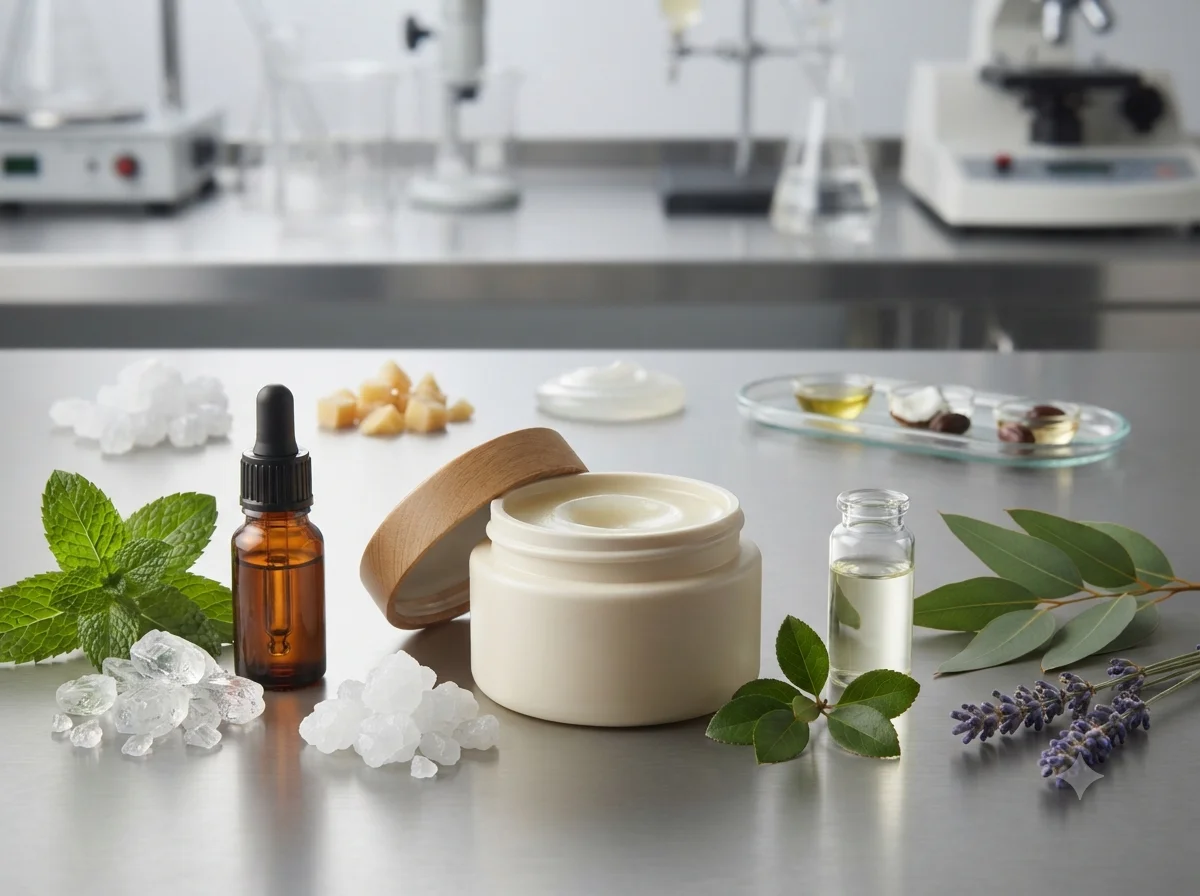
Not every balm uses the same ingredients, and not every ingredient has the same level of scientific evidence.
Menthol is probably the most recognizable headache-balm ingredient.
It activates TRPM8, a receptor associated with cool sensation. This can make the skin feel cold and can alter how pain signals are perceived.
Menthol is particularly common in products designed for:
But more menthol does not automatically mean a better product. High concentrations can become irritating and may actually produce uncomfortable cold sensitivity.
Camphor has been used in topical preparations for generations.
It can produce a warming or cooling sensation and works partly through sensory receptors involved in temperature and pain perception.
It is common in traditional Asian pain balms.
Peppermint oil contains menthol naturally and is one of the most popular ingredients in modern natural headache balms.
Its cooling aroma is one reason it is so common in temple balms and aromatherapy products.
A clinical review of peppermint oil and headache-related applications has found some evidence for topical peppermint preparations, but evidence for essential-oil balms should not be generalized to every commercial product.
Lavender is usually included for its aromatic and calming qualities.
It is particularly popular in balms marketed toward stress, tension and relaxation rather than strictly medicinal pain relief.
Eucalyptus provides a strong aromatic sensation and is commonly combined with menthol and peppermint.
It is particularly common in formulas marketed for a refreshing or open-airway sensation.
Methyl salicylate, sometimes called wintergreen oil, is found in many traditional pain balms.
Unlike a simple essential-oil aromatherapy product, a balm containing a substantial amount of methyl salicylate should be treated more like a topical analgesic. The ingredient can be absorbed through the skin, and excessive use can be dangerous.
These ingredients generally form the base rather than being the primary headache-relieving ingredients.
Beeswax creates structure.
Petrolatum helps create an occlusive base.
Olive, coconut, jojoba, castor and other plant oils can soften the skin and help dissolve or carry aromatic ingredients.
The base also determines how quickly a balm melts and spreads.
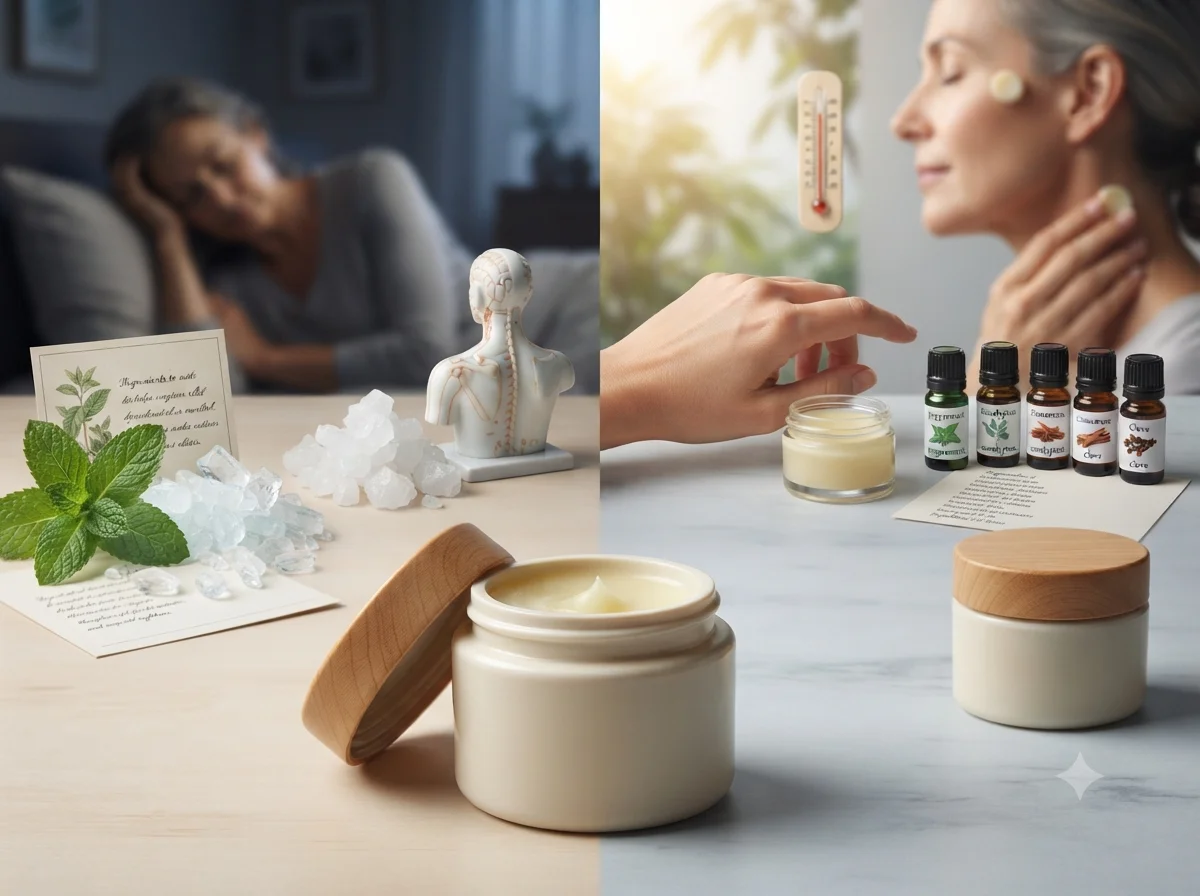
The best headache balm for one person may be a poor choice for another.
For tension or stress-related head discomfort, a balm containing peppermint, menthol and lavender may be appealing because it combines cooling sensation with an aromatic component.
For headaches associated with neck or shoulder tightness, a traditional analgesic balm containing menthol or camphor may make more sense.
For migraine, be more cautious about the word “relief.”
A migraine is a neurological condition, not simply a stronger tension headache. A balm may provide sensory comfort for some people, but it should not be presented as a substitute for evidence-based migraine treatment.
If your skin is sensitive, look for a simpler formula.
A balm containing peppermint, eucalyptus, camphor, cinnamon, clove and several other essential oils may feel intense and can be more likely to irritate sensitive skin.
A simpler balm with a small number of ingredients may be easier to tolerate.
Always read the complete ingredient list.
Badger, for example, advises consumers who are trying a product for the first time to read the full ingredient disclosure and test a small area of skin. The company also warns that its manufacturing environment cannot be certified completely free of certain allergens.
This is something consumers often overlook.
Balms are semi-solid products made from oils, waxes, butters and other materials. Their texture can change with temperature.
In a hot climate, a balm may become very soft or partially melt.
In a cold climate, it can become significantly harder.
For example, Siang Pure specifically recommends storage below 30°C, while Tiger Balm products sold through Singapore retailers are also commonly labeled for storage below 30°C.
For tropical countries, look for a balm with a stable wax base and avoid leaving the container inside a hot car.
This is particularly important with mentholated products.
The cooling sensation can quickly become an intense burning sensation if the product migrates into the eyes.
Do not apply a balm to broken skin unless the product specifically says it is appropriate.
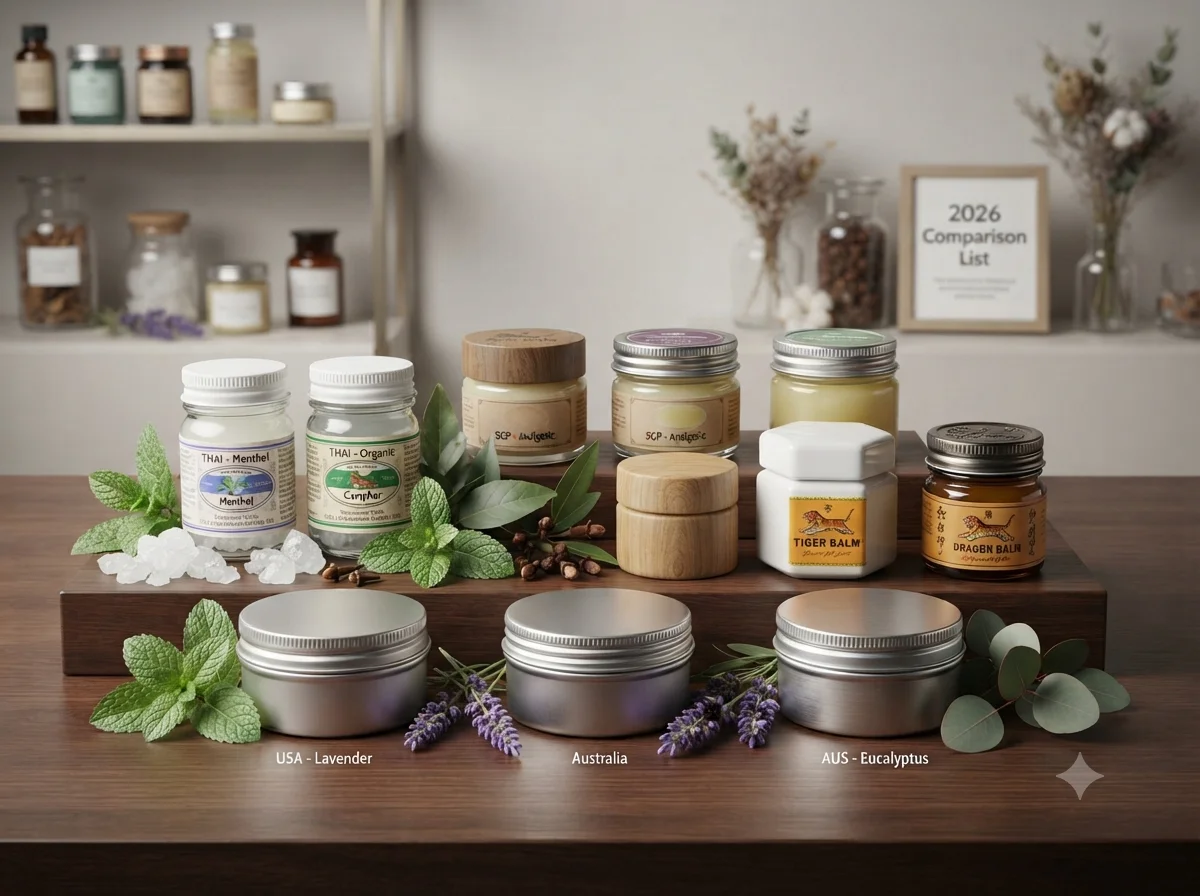
Company: Badger
Country: United States
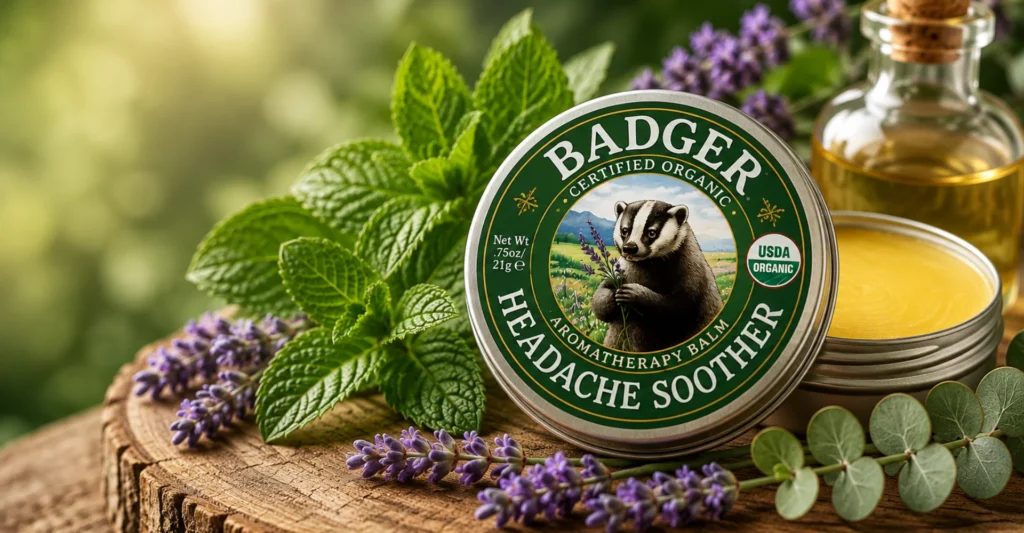
Badger is a family-owned New Hampshire company founded by Bill Whyte and Katie Whyte in 1995. The story started when carpenter Bill Whyte created a beeswax and olive-oil balm to help his cracked hands. The company eventually developed a much broader range of organic personal-care products.
Badger’s Headache Soother is one of the more recognizable U.S. products specifically positioned around headache comfort.
Its current formula contains 12 ingredients:
The company describes menthol as providing cooling, while peppermint and eucalyptus contribute a refreshing sensation and lavender supports a calmer aromatic experience.
Percentages: Badger does not publicly disclose the percentage concentration of each ingredient on its consumer product page, so exact percentages should not be invented.
Best for: People who prefer an organic, aromatic temple balm.
Customer feedback: Badger’s own site displays customer praise for its aromatherapy line, including comments such as “Ahhhhh Relief” and “Nothing short of miraculous, no exaggeration,” although those comments are not all clearly attributed to the Headache Soother specifically.
Important: Badger says Headache Soother should be kept away from eyes, broken skin and sensitive areas.
Company: Svasthya
Country: United States
Svasthya is a U.S.-based family-owned natural wellness company that says it has operated since 2013. The company manufactures its products at its own facility rather than relying entirely on outside production.
Its Peppermint Headache Balm is more directly focused on headaches than many traditional pain balms.
The formula includes:
Percentages: Individual ingredient percentages are not publicly disclosed by the manufacturer.
The product is designed to be massaged onto the temples, below the eyebrows and the back of the neck.
Svasthya’s own product page currently shows a 5.0/5 rating from three reviews.
These are customer opinions, not clinical evidence, but they are useful for understanding why consumers buy the product.
Best for: People looking for an essential-oil-based headache balm rather than a strong camphor/methyl-salicylate pain balm.
Company: Ananda Life
Country: Australia
Ananda Life is an Australian family-owned brand associated with Byron Bay. Its founder, Nicole, is described by the company as an aromatherapist and organic formulator. The brand emphasizes natural, plant-based, Australian-made products.
The Headache Aromatherapy Balm is positioned specifically around tension and stress.
Its formula includes:
Percentages: Individual essential-oil concentrations are not publicly disclosed.
The manufacturer says it is made in Byron Bay and has more than 50,000 happy customers across the broader Ananda Life brand, although that number should not be interpreted as sales of the headache balm alone.
A current Shop listing shows the Headache Balm at 4.5/5 from two ratings. One 2026 reviewer described it as effective and easy to travel with, while another review was primarily about shipping/service.
Best for: Stress and tension-headache users who prefer a softer aromatherapy profile.
Company: Laguna Lavender
Country: Australia
Laguna Lavender is an Australian aromatherapy and lavender-focused business offering a dedicated 15 g Headache Balm.
The formula includes:
Percentages: Not publicly disclosed.
The product is marketed for headaches, stress, migraines, sinus discomfort and tight muscles, with directions to apply to the temples and sides or back of the neck. Those are manufacturer claims and should not be confused with clinical proof that the product treats migraine.
Best for: Consumers who want a traditional Australian aromatherapy balm with lavender, peppermint and eucalyptus.
Customer review availability: I could not verify three independent, credible product-specific testimonials from a major review platform during this research. That is worth noting rather than manufacturing a review score.
Company: Leaves of Trees
Country: Canada
Leaves of Trees is a Toronto-based natural skincare company. Its headache balm has evolved into the brand’s Calm Balm, while retaining the familiar essential-oil formula. The company describes the formula as being based around organic essential oils, argan oil, shea butter and beeswax.
The formula includes:
Percentages: Not publicly disclosed.
The product currently has 4.9/5 from 15 reviews on the brand’s website, with 14 five-star ratings and one four-star rating.
Best for: Consumers who want a minimalist essential-oil formula and a portable tin.
Company: Rocky Mountain Soap Company
Country: Canada
Rocky Mountain Soap Company is a well-known Canadian natural personal-care brand. Its Aromatherapy Headache Balm was sold through Well.ca and positioned specifically for headaches and nervous tension.
The formula contains:
The formula is 100% natural, vegan, non-GMO and cruelty-free according to the retailer listing.
However, there is a major 2026 caveat:
Well.ca currently lists the product as no longer available.
That makes it more appropriate for a historical or discontinued-products section than a current shopping recommendation.
Best for: Readers researching Canadian headache-balms from recent years.
Customer reviews: A current product-specific review count could not be reliably verified because the retailer’s product page is no longer active.
Company: Bertram (1958) Co., Ltd.
Country: Thailand
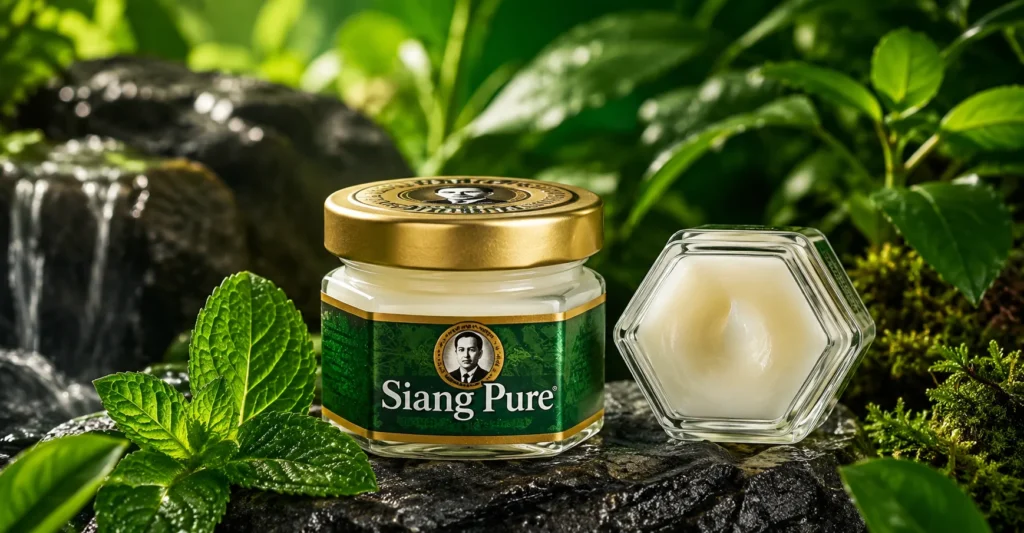
Siang Pure has one of the most interesting histories on this list.
Bertram says the Siangpure brand was created in 1958 by Boonjuea Eiampikul, using a herbal recipe associated with Master Tang. Bertram Chemical was later established as the company’s corporate manufacturing entity, and the company was renamed Bertram (1958) in 2019.
Siang Pure White Balm is a much stronger medicinal-style balm than a simple aromatherapy product.
Its registered formulation contains:
These ingredients provide different sensory effects.
Menthol: cooling sensation and counter-irritant effect.
Camphor: warming/cooling sensory stimulation.
Methyl salicylate: topical analgesic ingredient used in many traditional pain-relief formulations.
Siang Pure is officially registered in several markets, and the Laos regulatory database identifies Bertram (1958) as the Thai manufacturer.
Bertram’s current website says the White Balm is designed around 28% menthol and is intended for muscle relaxation, bruising and insect-bite discomfort.
Best for: People who prefer a strong traditional Thai medicated balm.
Company: Golden Cup Pharmaceutical Company Limited
Country: Thailand
Golden Cup is another major Thai traditional balm brand.
The company was registered in 1950 and initially operated from a shophouse in Talat Phlu before moving to other manufacturing facilities. Its current production facility is in Bang Yai, Nonthaburi, and the company says it operates under GMP PIC/S standards.
Golden Cup Balm 2493 contains:
Percentages: The manufacturer does not publicly list the percentage concentration of each ingredient on its current consumer page.
The company lists headache among the product’s indications alongside muscular rheumatism, strains, sprains, insect bites and nasal congestion.
Best for: Consumers looking for a classic Thai multi-purpose balm rather than a headache-only product.
Company: Haw Par Healthcare
Country: Singapore
Tiger Balm is arguably the most globally recognized product on this list.
Its origins trace back to the late 19th-century Chinese herbal medicine trade. Aw Chu Kin developed the precursor to Tiger Balm in Rangoon, and his sons Aw Boon Haw and Aw Boon Par later developed and commercialized it. The product was renamed Tiger Balm in 1918.
The current U.S. Tiger Balm White Regular Strength formula is precisely documented by DailyMed:
However, there is an important country-specific issue.
The current U.S. label does not list headache as an indication. It is labeled for temporary relief of minor muscle and joint aches and pains.
In Singapore, however, Tiger Balm White is sold with headache among its listed uses.
This is exactly why consumers should check the label in their own country.
Best for: Consumers wanting a globally established traditional balm with a well-documented formulation.
Company/Brand: Dragon Balm
Country: Singapore
Dragon Balm is a traditional Singapore-made medicated balm that has a particularly broad traditional-use profile.
Watsons Singapore lists it for:
Its listed ingredients are:
Percentages: The retailer does not disclose the percentage concentration of these ingredients.
Dragon Balm is described as being made in Singapore, and a Singapore senior-care retailer currently lists it with a 4.65/5 rating.
Best for: People looking for a traditional Singapore medicated balm with headache and muscle-pain positioning.
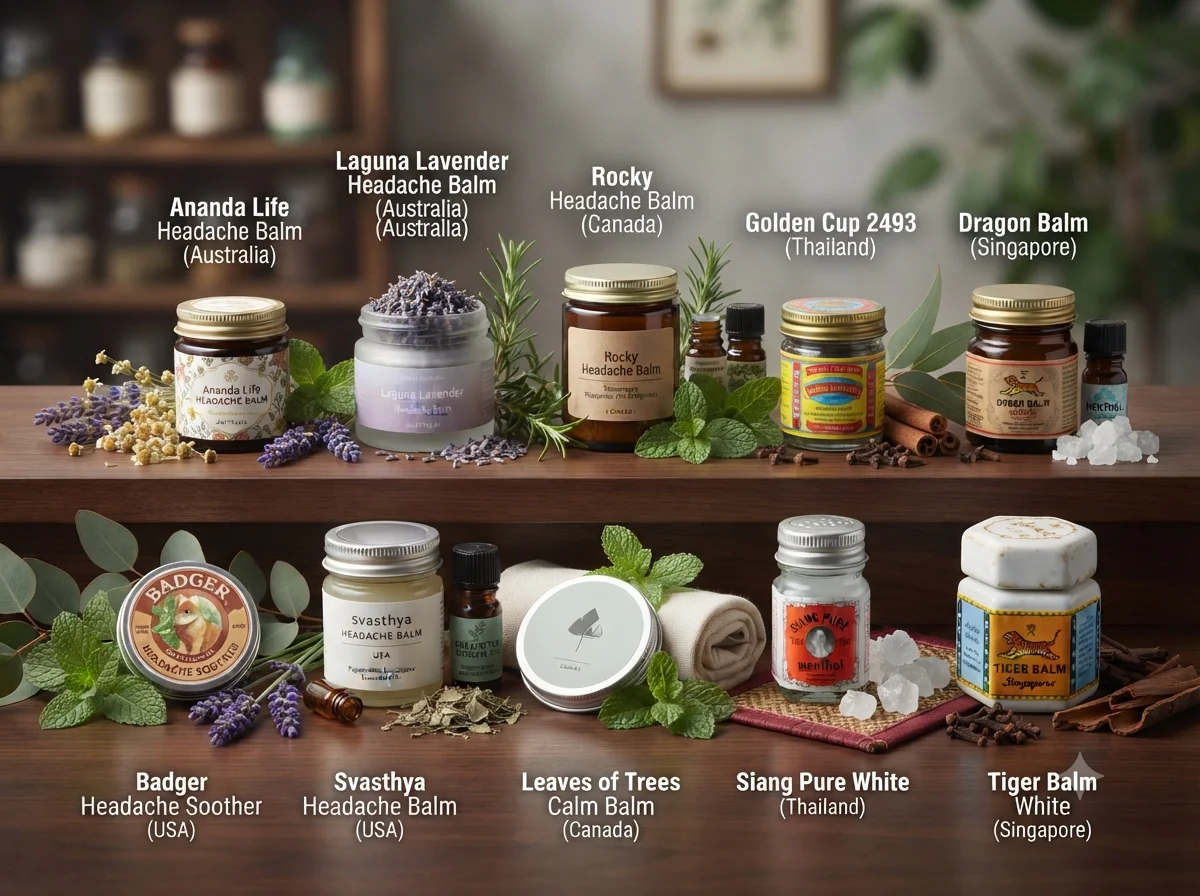
| Balm | Country | Main profile | Key ingredients | Best suited to |
|---|---|---|---|---|
| Badger Headache Soother | USA | Aromatherapy | Menthol, peppermint, lavender, eucalyptus | Stress/tension |
| Svasthya Headache Balm | USA | Essential-oil balm | Peppermint, marjoram, lavender, eucalyptus | Headache-focused natural use |
| Ananda Life Headache Balm | Australia | Aromatherapy | Peppermint, lavender, marjoram, chamomile | Stress/tension |
| Laguna Lavender Headache Balm | Australia | Aromatherapy | Lavender, peppermint, eucalyptus, rosemary | Tension and relaxation |
| Leaves of Trees Calm Balm | Canada | Natural balm | Peppermint, lavender, eucalyptus | Tension/portable use |
| Rocky Headache Balm | Canada | Aromatherapy | Peppermint, lavender, rosemary, marjoram | Headache/tension |
| Siang Pure White | Thailand | Medicated balm | Menthol 28%, camphor 16%, methyl salicylate 18% | Strong traditional balm |
| Golden Cup 2493 | Thailand | Traditional balm | Camphor, menthol, methyl salicylate, herbs | Multi-purpose use |
| Tiger Balm White | Singapore | Medicated balm | Camphor 11%, menthol 8% in U.S. formula | Pain and traditional use |
| Dragon Balm | Singapore | Medicated balm | Menthol, camphor, methyl salicylate | Headache/muscle discomfort |
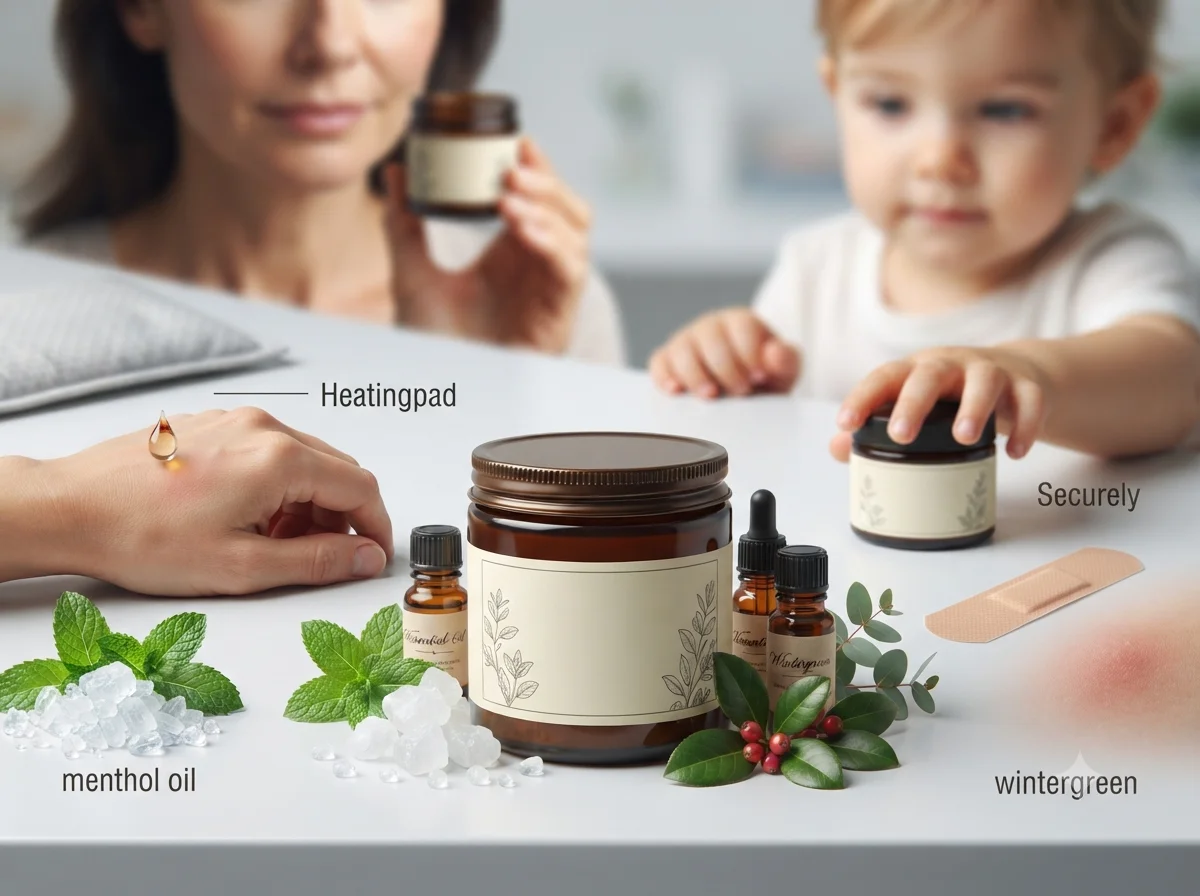
The biggest mistake is assuming that “natural” means “risk-free.”
Essential oils can irritate skin.
Menthol can sting.
Camphor can be dangerous if swallowed, particularly by children.
Methyl salicylate can cause toxicity when used excessively.
Many medicated balms also carry warnings against use on broken skin, near the eyes or with heating pads.
For example, the current U.S. Tiger Balm White label specifically warns against using the product on wounds or irritated skin, covering it with a bandage or using a heating pad.
The same basic caution applies to other strong camphor and menthol balms.
There is no single headache balm that is best for everyone.
If you want a natural U.S. aromatherapy option, Badger Headache Soother stands out for its USDA Organic positioning and 12-ingredient formula.
If you want a more dedicated headache-focused essential-oil balm, Svasthya is worth considering, particularly given its current 5.0/5 rating from three product reviews.
For an Australian-made natural balm, Ananda Life has a strong combination of peppermint, lavender, marjoram, melissa and chamomile and is made in Byron Bay.
For a Canadian natural option, Leaves of Trees’ Calm Balm has the strongest directly verifiable rating among the Canadian products reviewed here, with 4.9/5 from 15 reviews.
If you prefer a strong traditional Thai medicated balm, Siang Pure White is notable because its registered formula specifies 28% menthol, 16% camphor and 18% methyl salicylate.
Golden Cup is another long-established Thai option, with more than seven decades of history and a broad traditional-use profile.
For a globally recognized traditional balm, Tiger Balm White remains one of the strongest choices. Its current U.S. formulation is precisely documented at 11% camphor and 8% menthol, although its approved uses vary by market.
And if you want a Singapore-made traditional alternative, Dragon Balm remains a notable option for consumers looking for a multi-purpose medicated balm.
The most important lesson is that “best” should depend on the reason you are buying the balm.
For occasional stress or tension, a mild peppermint-lavender aromatherapy balm may be enough.
For muscle-related head and neck discomfort, a traditional menthol/camphor balm may feel more useful.
For migraine, however, a balm should be viewed as a possible comfort tool rather than a replacement for proper migraine diagnosis and treatment.
And when comparing products, always look beyond the front of the package. Check the exact ingredients, concentration, approved uses, warnings, storage instructions and country-specific label. That is especially important because the same brand can have different formulas and indications in different countries, as the Tiger Balm White example clearly demonstrates.
For a consumer in 2026, that is ultimately a better way to choose a headache balm than simply buying the strongest-smelling jar on the shelf.
It depends on what you mean by “work.”
A menthol-containing balm can create a real cooling sensation and can temporarily alter pain perception. Menthol’s interaction with TRPM8 is well established.
But that does not mean every headache balm has been clinically proven to treat every type of headache.
No.
A balm may provide temporary sensory comfort for some people, but migraine is a neurological condition. A topical balm should not be described as a cure.
If headaches are frequent, severe, suddenly different or associated with neurological symptoms, medical evaluation is more appropriate than simply increasing the amount of balm.
Not necessarily.
Peppermint naturally contains menthol, but commercial peppermint oils differ in composition and concentration.
A product with pure menthol can feel much stronger than a mild peppermint-based aromatherapy balm.
It depends on the product.
Some manufacturers specifically recommend the forehead and temples. Others recommend the neck and shoulders.
Always follow the product’s directions and avoid the eyes.
Do not assume that daily use is safe simply because a product is topical.
If the balm is an OTC drug, follow its label.
If it is an aromatherapy product, follow the manufacturer’s directions.
If you are repeatedly needing a balm because of frequent headaches, the bigger issue is finding out why you are having recurrent headaches.
No.
A powerful menthol or camphor smell mainly tells you that the volatile ingredients are noticeable.
It does not prove that the balm will provide better headache relief.
You can be more prone to irritation.
Choose a simpler formula, patch test first and avoid products with ingredients you already know irritate your skin.
Do not assume that a natural balm is automatically appropriate during pregnancy.
Some formulas contain camphor, methyl salicylate, concentrated essential oils or other ingredients that may require caution.
Ask your doctor or pharmacist before using a medicated topical product during pregnancy.
Some mentholated products can create a cooling or more open-feeling nasal sensation.
That is not the same as treating a sinus infection or removing the underlying cause of congestion.
This varies substantially by product.
Camphor-containing products require particular caution around children because accidental ingestion can be dangerous. Always follow the specific age restrictions on the label.