The brand is best known for its medicated oil, balms and inhalers, products that have become part of everyday life for generations of Thai consumers. What makes Siang Pure particularly interesting is that it sits at the intersection of traditional Chinese medicine, modern pharmaceutical manufacturing and consumer wellness.
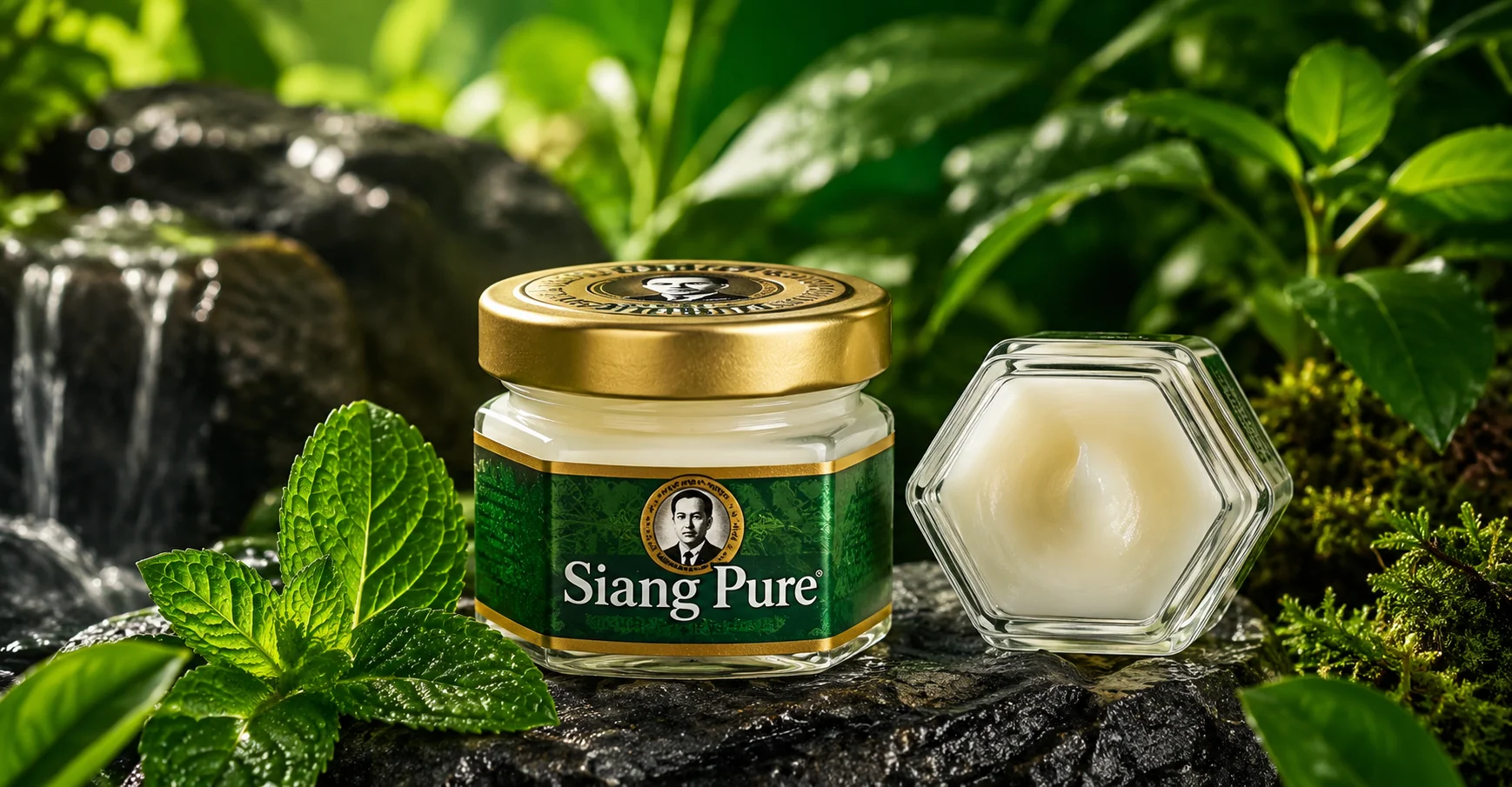
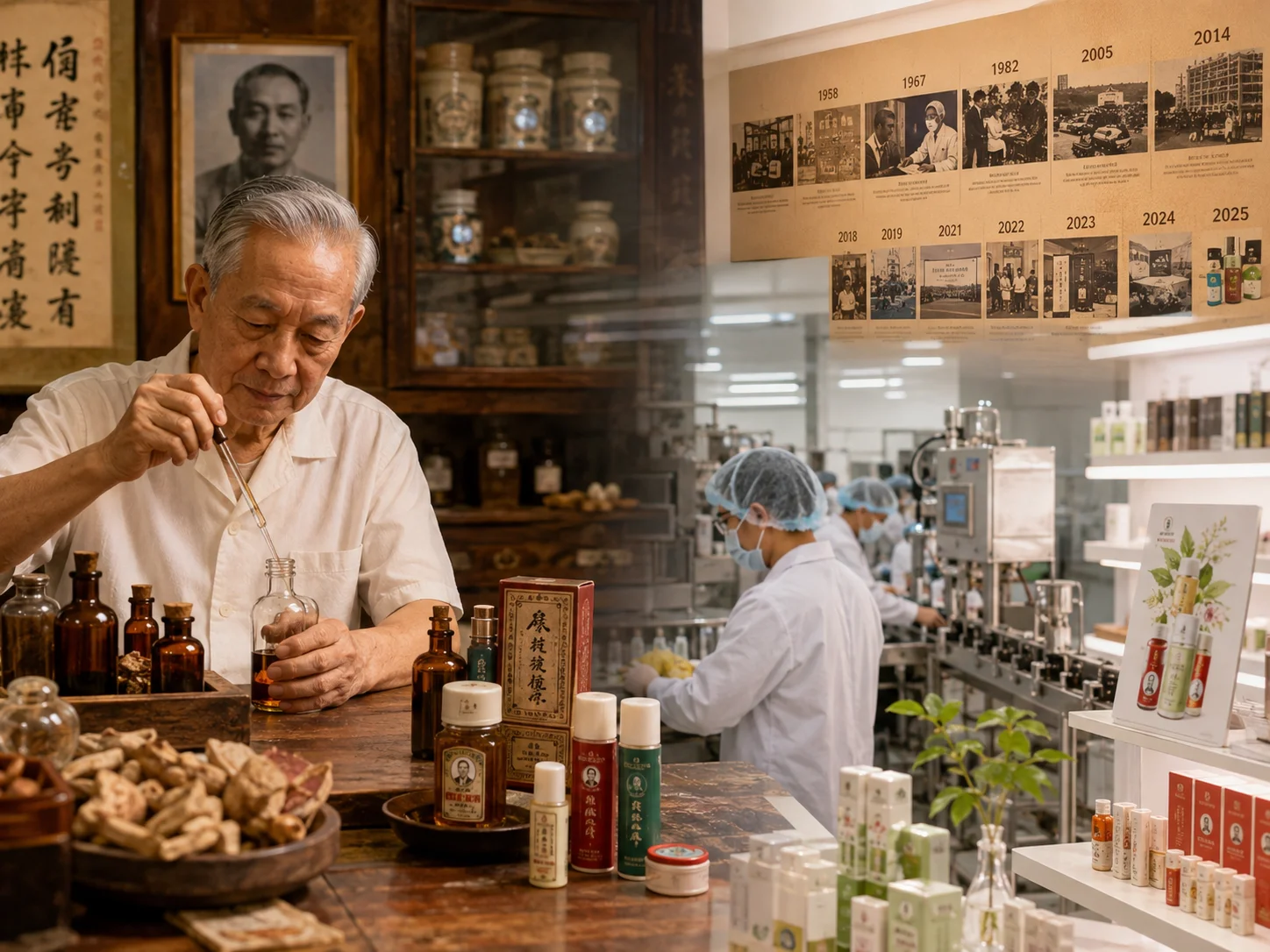
The history of Siang Pure is closely tied to the history of Bertram.
According to Bertram’s current corporate history, the origins of the formula can be traced to Master Tang of Shantou, whose traditional medicinal knowledge eventually traveled from China to Thailand. In the company’s current timeline, Boonjuea Eiampikul created the first Siang Pure Oil in 1958 after learning the formula as Master Tang’s apprentice.
There is an important detail here.
Some older historical accounts describe the commercial company structure differently. The World Intellectual Property Organization’s case study says Boonjuea and Master Tang developed the oil in the late 1950s, with Boonjuea selling small quantities to Bangkok’s Chinese community. As demand grew, he formally established Chakrintr Ltd. Partnership in 1963. The business later became Bertram Chemical Works and was renamed Bertram Chemical (1982) Co., Ltd. in 1982.
Bertram’s current website provides the modern corporate timeline as:
That explains why you may find both Bertram Chemical (1982) and Bertram (1958) in older articles and databases. The current company name is Bertram (1958) Co., Ltd., following the 2019 rebranding.
The central founder figure is Boonjuea Eiampikul.
He learned traditional Chinese medicine from Master Tang and transformed the traditional herbal formula into an oil-based product that could be produced and sold commercially.
This was a crucial step.
Traditional medicinal knowledge existed long before Siang Pure, but Boonjuea turned that knowledge into a standardized consumer product.
The early business was extremely small. WIPO reports that the company initially produced products only after receiving orders. As demand grew, production had to expand rapidly.
Siang Pure’s early growth came largely through word-of-mouth and its reputation among Thai consumers.
For decades, the brand remained strongly associated with the older generation.
That created a problem in the late 1990s.
The product was still trusted, but younger consumers increasingly viewed Siang Pure as an old-fashioned product.
Rather than simply abandoning the traditional formula, Bertram redesigned the product portfolio and introduced Formula II, which was clearer, less viscous and had a less aggressive aroma.
The company’s goal was straightforward: preserve the credibility of the traditional brand while making it more attractive to younger customers.
This repositioning became one of the most important moments in Siang Pure’s modern history.
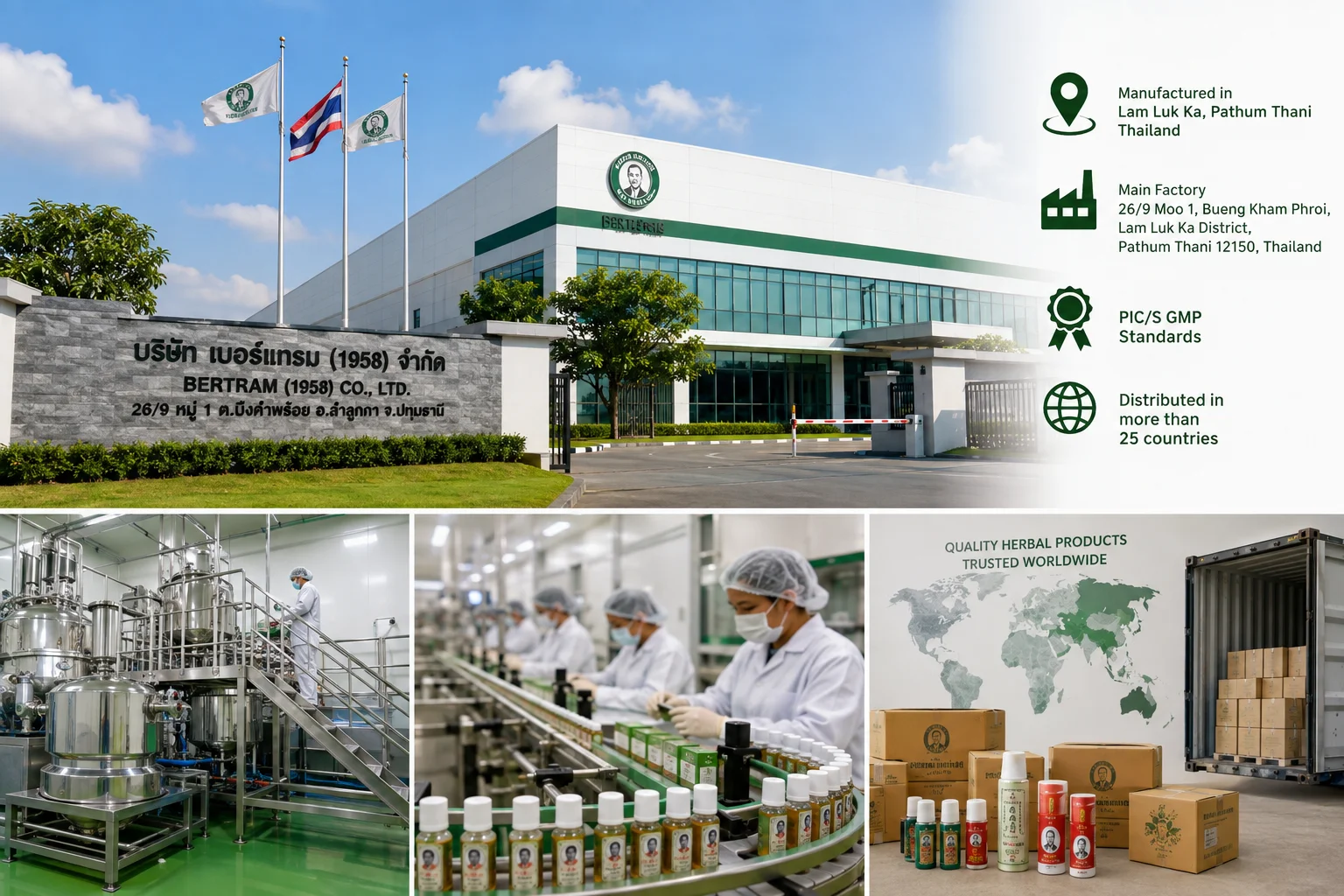
Today, Bertram’s main manufacturing facility is located in Lam Luk Ka, Khlong 7, Pathum Thani, Thailand.
The current factory address is:
26/9 Moo 1, Bueng Kham Phroi, Lam Luk Ka District, Pathum Thani 12150, Thailand.
Bertram says the facility covers approximately 70 rai, or roughly 11.2 hectares, and contains both pharmaceutical and cosmetic production facilities.
The company states that the factory operates under PIC/S GMP standards, with controlled production environments, cleanrooms and extensive quality-control procedures.
The factory was established in 2014 as part of Bertram’s expansion strategy.
Earlier reporting from The Nation said the company planned to invest 300 million baht in the new Lam Luk Ka facility, with the new factory designed to have approximately ten times the production capacity of its older Lat Phrao facility.
The older Lat Phrao location is now associated with the company’s head office, while the Lam Luk Ka site serves as the manufacturing facility.
Bertram also states that its products are distributed in more than 25 countries.
Historically, WIPO documented exports to markets including:
By 2010, WIPO reported that approximately 60% of Bertram’s annual production was being sold in export markets.
That figure is historical rather than a current 2026 percentage, so it should not be presented as today’s export mix.
The company has continued expanding its international footprint. Current regulatory records also show Bertram products registered in markets such as Laos and Pakistan.
One reason Siang Pure has remained recognizable is that its formulas are relatively straightforward.
However, there is not one single “Siang Pure formula.”
The company sells several different products and formulas.
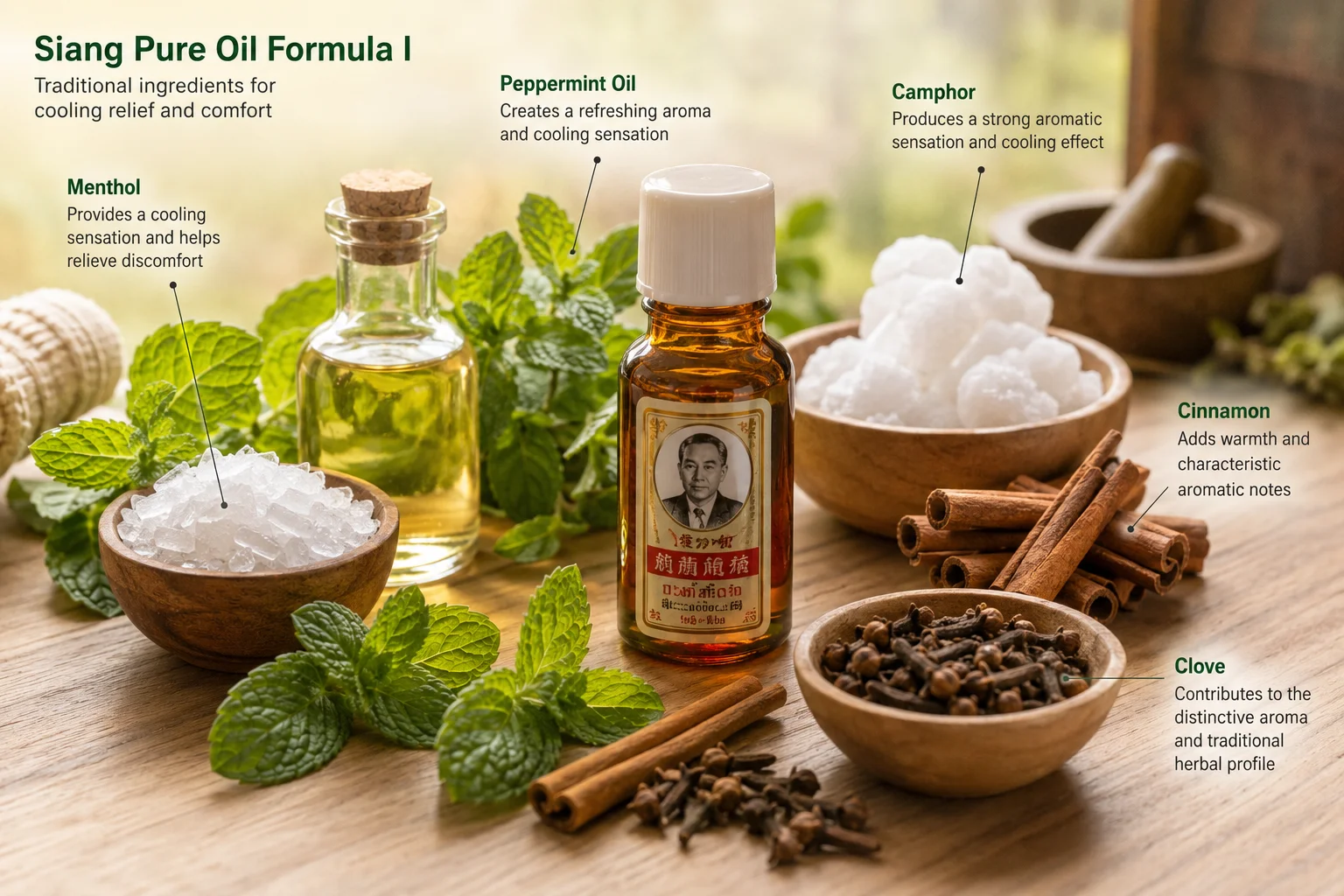
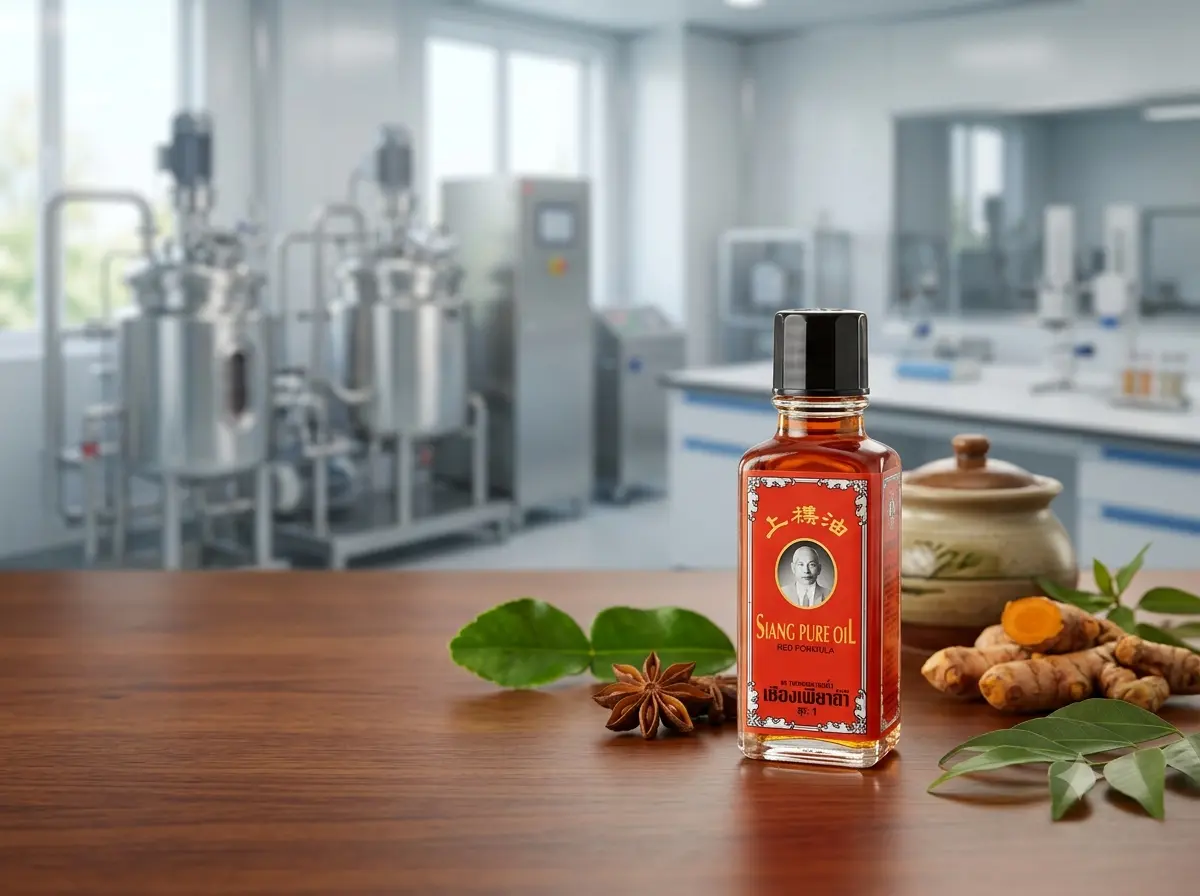
The original amber-colored Siang Pure Oil Formula I contains:
Current Thai FDA registration data for Siang Pure Oil identifies the active ingredients as:
The current Siang Pure website describes Formula I as the original amber herbal medicated oil and says its wider traditional formula includes peppermint, camphor, cinnamon and clove.
Menthol produces the familiar cooling sensation associated with mint.
When applied to the skin, it activates cold-sensitive sensory receptors, creating a cooling feeling that can temporarily change how discomfort is perceived.
That does not mean menthol fixes the underlying cause of pain.
It is primarily a topical counter-irritant and sensory analgesic ingredient.
Peppermint oil contributes both aroma and the cooling sensation associated with the product.
Its main component, menthol, is particularly important to the sensory experience.
Peppermint oil has been widely used in traditional medicine and topical products for headaches, muscle discomfort and other everyday complaints.
Camphor provides a characteristic aromatic sensation and is widely used in topical preparations.
Like menthol, camphor can produce a strong sensory effect when applied to the skin.
It is also one of the ingredients that gives traditional medicated oils their distinctive smell.
Cinnamon and clove are part of the traditional aromatic profile associated with the original Siang Pure formula.
They contribute warmth, fragrance and the distinctive character of Formula I.
WIPO’s historical account specifically identifies menthol, peppermint oil, clove, camphor and cinnamon among the ingredients associated with the traditional Siang Pure Oil.
Formula II was created partly as a response to changing consumer preferences.
The original Formula I is amber-colored and has a stronger traditional aroma.
Formula II was developed to be clearer, lighter and more discreet.
According to current registration data, Formula II contains:
The product was specifically designed to appeal to consumers who did not want the strong smell or visible staining associated with the original oil.
This is an excellent example of product evolution without abandoning brand heritage.
Siang Pure also sells balms for consumers who prefer a thicker topical product.
The company’s current product information distinguishes between Yellow Balm and White Balm.
The Yellow Balm is positioned as the warmer formula.
Its listed key ingredients include:
The current Bertram shop identifies 29% methyl salicylate as a major component of the Yellow Balm.
White Balm is positioned differently.
The current formulation is described as containing:
It is marketed around a cooling rather than warming sensation.
Consumers should always check the packaging of the specific product they purchase because formulas can differ by country, registration and product version.
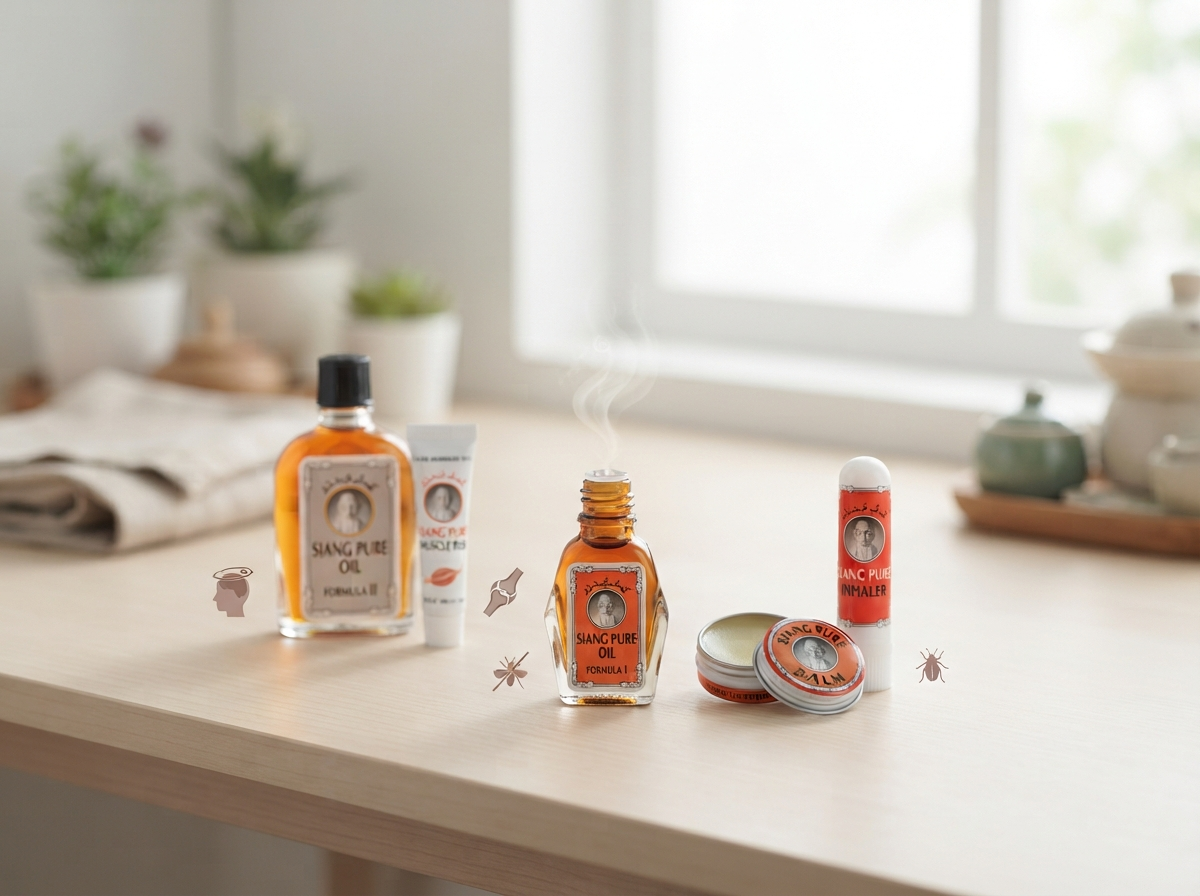
Siang Pure products have traditionally been marketed for a broad range of everyday discomforts.
Depending on the particular product, these include:
The Thai FDA database lists Siang Pure Oil for inhalation for relief of dizziness and fainting sensations and topical use for complaints including flatulence, cramps, sprains, muscle pain and insect bites.
These are product indications and should not be interpreted as proof that Siang Pure can treat serious medical conditions.
As with any medicated topical product, users should follow the label and avoid contact with the eyes or broken skin.
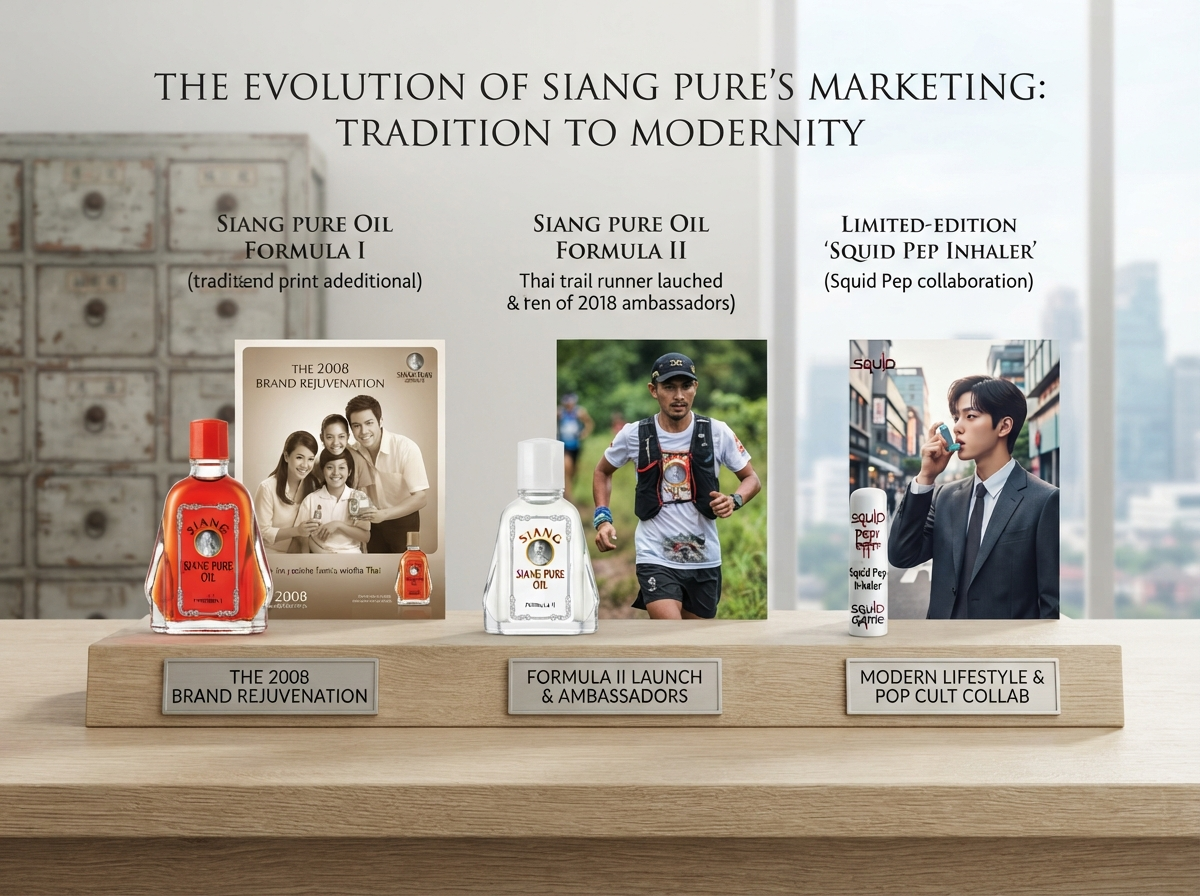
Siang Pure’s marketing history is more interesting than it might appear.
The company faced a major branding challenge when its traditional image became strongly associated with older consumers.
One of the most important campaigns came in 2008.
According to WIPO, Bertram invested approximately 60 million baht, around US$1.7 million at the time, in an advertising campaign designed to refresh the company’s image.
The company worked with a major advertising agency and produced television commercials for Thailand as well as markets including Cambodia, China, Malaysia and Vietnam.
It also used:
The goal was to communicate the brand’s traditional heritage while making it feel more modern and convenient.
This was arguably the most important marketing investment in Siang Pure’s history because it addressed the brand’s biggest problem: being trusted by older consumers but becoming less relevant to younger ones.
The Formula II launch itself was part of the marketing strategy.
The company kept the traditional red packaging for Formula I but gave Formula II a white package.
That allowed the company to communicate two different ideas:
Formula I: tradition, heritage and the original experience.
Formula II: modernity, convenience and a lighter experience.
Instead of forcing every customer into one product, Siang Pure created a product architecture that could serve multiple generations.
In 2018, Bertram introduced four running ambassadors to represent Siang Pure at local and international running events.
The campaign featured trail runners and members of Thailand’s running community.
This was a smart positioning move because it helped move the brand away from the image of a product used exclusively by older people and toward active lifestyles and physical wellness.
Bertram has repeatedly connected its brands with sports.
It has supported running, football, badminton and cycling activities.
The company also created Peppermint Bike, a staff-oriented cycling project that combined exercise, teamwork and environmental awareness.
The broader strategy is important.
Siang Pure is not marketed only as something you reach for when you’re sick.
It is increasingly positioned as a product that fits into an active lifestyle.
Bertram’s current corporate history identifies another important modern marketing move: a limited-edition Squid Pep Inhaler collaboration with Netflix’s Squid Game, announced in 2025.
This type of collaboration is very different from traditional medicinal-oil advertising.
It uses pop culture to make a familiar Thai wellness product more interesting to younger consumers.
In 2026, Siang Pure participated in Mineré’s “Young, Even More” campaign alongside several established Thai brands.
The campaign was designed to give legacy brands a fresher and more contemporary image while keeping their familiar identity.
That is particularly relevant to Siang Pure because rejuvenating an older brand without destroying its heritage has been one of Bertram’s central marketing challenges for decades.
It would be too broad to say Siang Pure “dominates the global pain-relief market.”
It doesn’t.
Large multinational companies such as Haleon, Kenvue, Bayer and others operate at a completely different scale.
Siang Pure’s strength is its heritage and position within Thailand and Southeast Asia’s traditional topical-relief category.
Several factors explain its success.
Bertram says Siang Pure was created in 1958 and has more than 65 years of heritage.
That creates something money cannot easily buy: familiarity.
The smell, bottle shape and packaging make Siang Pure immediately recognizable.
For a consumer brand, recognition is extremely valuable.
The company does not hide its origins.
Instead, it makes traditional Chinese and Oriental knowledge part of the brand story.
That creates authenticity while the company simultaneously emphasizes modern manufacturing standards.
The Lam Luk Ka facility is PIC/S GMP certified.
Bertram says the factory includes controlled production environments and modern pharmaceutical and cosmetic manufacturing capabilities.
This helps bridge the gap between traditional remedies and modern consumer expectations.
Siang Pure is no longer dependent on one oil.
The brand now includes:
That creates more opportunities to sell to the same consumer.
Bertram currently says its products reach more than 25 countries.
That gives Siang Pure a meaningful international footprint even though it remains much smaller than global pharmaceutical brands.
Bertram has invested heavily in protecting the Siang Pure name and packaging.
WIPO documented trademark registration in Thailand and later expansion of trademark protection into the United States.
The current U.S. trademark registration for Siang Pure covers medicated balms, inhalants and liniments.
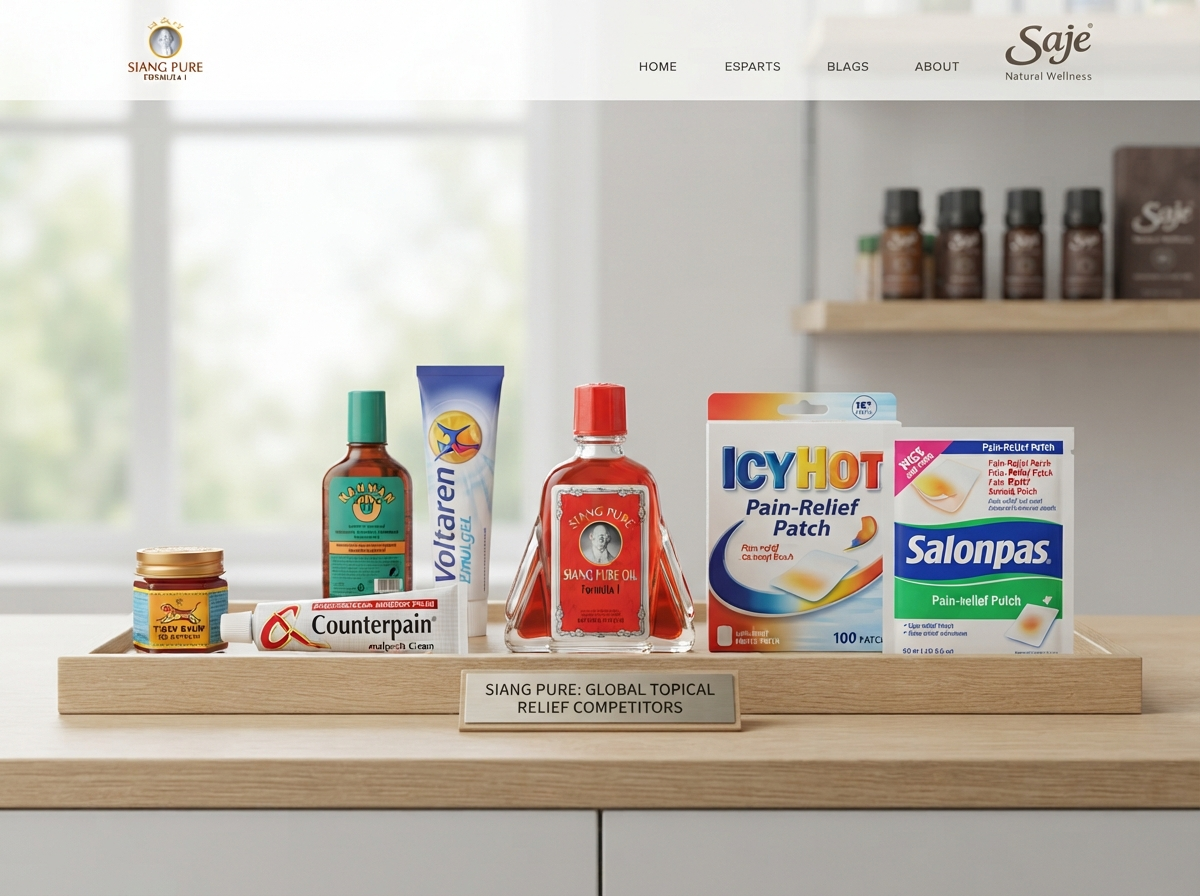
Siang Pure operates across several categories, so its competitors differ depending on the product.
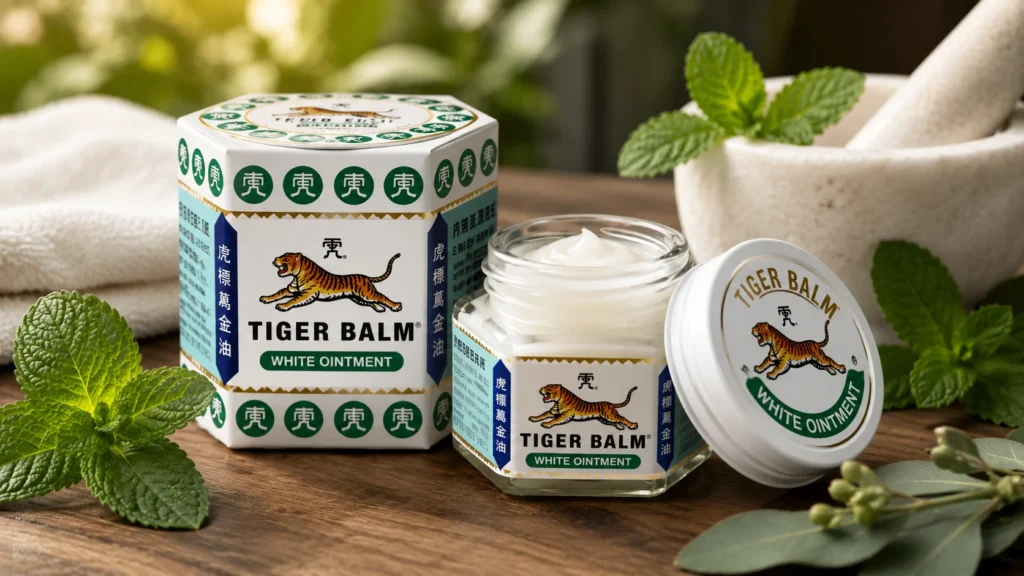
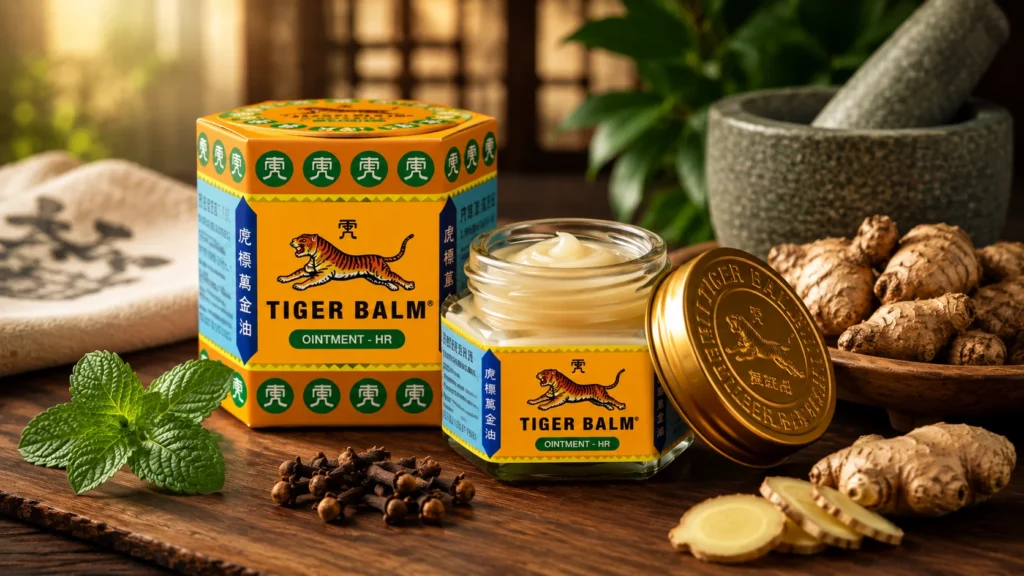
Tiger Balm is perhaps the most obvious international competitor.
Both brands have deep Asian heritage, strong recognition and topical products based around ingredients such as menthol and camphor.
Tiger Balm has a larger global footprint, but Siang Pure competes strongly in markets where Thai and Southeast Asian traditional remedies are familiar.
Counterpain is another major Southeast Asian topical pain-relief brand.
It competes directly with Siang Pure in creams, balms and topical pain products.
Namman Muay is particularly relevant in Thailand.
It has strong recognition among athletes and consumers seeking topical muscle relief.
A Thai market analysis cited Namman Muay, Voltaren, Siang Pure, Tiger Balm and Counterpain among key topical analgesic competitors.
Voltaren is a much more pharmaceutical-oriented competitor.
Its topical diclofenac products operate in the mainstream topical pain-relief market.
The difference is that Voltaren’s core proposition is based on a pharmaceutical active ingredient, while Siang Pure has historically emphasized traditional formulas, menthol, camphor and herbal ingredients.
In the United States, Icy Hot is a major competitor in topical pain relief.
Its products are positioned around hot-and-cold sensations and active ingredients such as menthol.
This makes it relevant to Siang Pure’s balm and topical-relief categories.
Salonpas is another major Asian-origin brand with a substantial international presence.
Its patches and topical products compete for consumers seeking convenient non-oral pain relief.
Siang Pure also overlaps with natural wellness and aromatherapy brands.
This is especially relevant for its inhalers and newer lifestyle products.
The competitive landscape is therefore much larger than just traditional medicated oils.
This is one area where online articles frequently get things wrong.
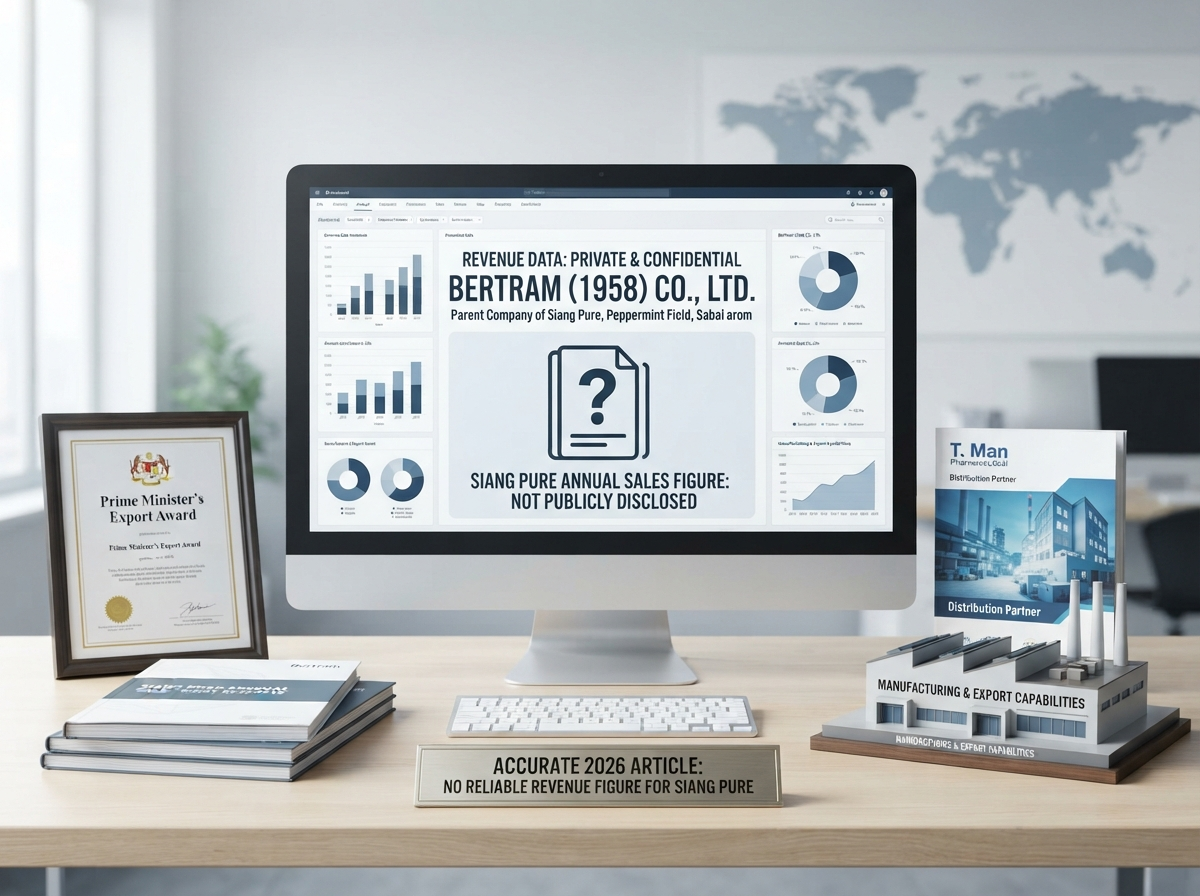
There is no reliable public figure for Siang Pure’s annual revenue.
The reason is simple: Bertram (1958) Co., Ltd. is privately held.
It does not publish the kind of detailed segment-level financial statements that a publicly traded company would provide.
Bertram’s current public materials provide information about the company’s products, factory, international markets and awards, but they do not disclose a verified annual revenue figure for Siang Pure alone.
That means websites offering a precise figure for “Siang Pure revenue in 2026” should be treated cautiously unless they can show audited company documents.
The company’s parent operating business is clearly substantial enough to maintain:
Bertram also received the Prime Minister’s Export Award, including Best Exporter recognition in 2019.
More recently, the company partnered with T. Man Pharmaceutical PCL for distribution of Siang Pure and Peppermint Field products through pharmacies and modern trade outlets in Thailand. T. Man’s 2025 disclosure specifically identifies Bertram as the producer of the two brands.
That partnership is significant because it can expand physical distribution without requiring Bertram to build an entirely new logistics network.
But it still does not give us a verified Siang Pure sales figure.
This distinction is important.
Bertram owns multiple brands, including:
Therefore, even if a third-party database estimates Bertram’s total revenue, that number would not automatically represent Siang Pure sales.
The same applies to factory output and export figures.
For an accurate 2026 article, the best conclusion is:
Siang Pure’s exact annual sales and revenue are not publicly disclosed.
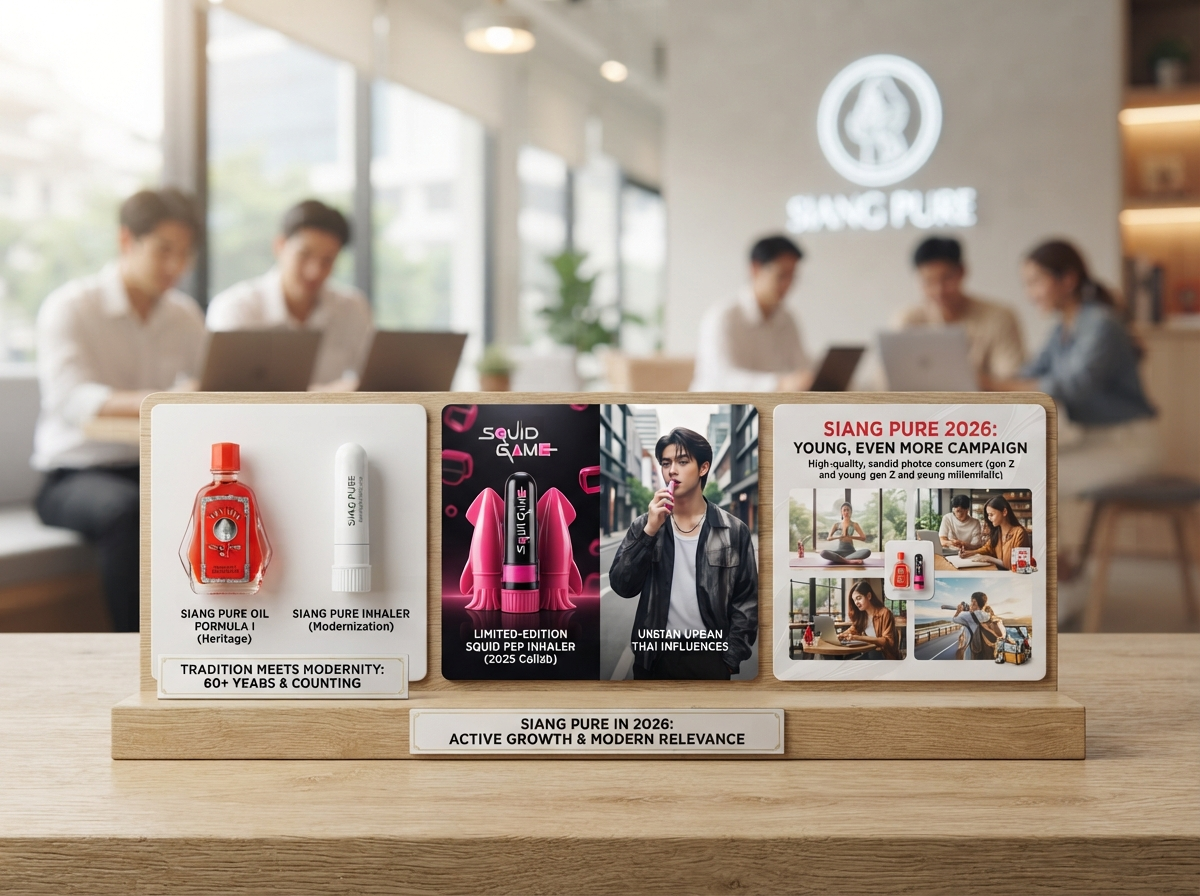
The evidence suggests that Siang Pure is actively modernizing rather than simply relying on its heritage.
The company has refreshed packaging, introduced new products, expanded international distribution, invested in manufacturing technology and entered collaborations with modern consumer brands.
The 2023 redesign of the Siang Pure inhaler is one example of this modernization.
The 2025 Squid Game collaboration is another.
And the 2026 participation in the “Young, Even More” campaign shows that the brand continues to pursue younger consumers rather than relying exclusively on its traditional customer base.
That strategy may be one of the biggest reasons Siang Pure has remained relevant for so long.
It has managed to change the way the product is presented without changing the basic identity that consumers recognize.
Siang Pure is one of Thailand’s most recognizable traditional medicated-oil and topical-relief brands.
Its history begins with Boonjuea Eiampikul, who learned traditional Chinese medicinal knowledge from Master Tang and developed the first Siang Pure Oil in 1958. The small operation grew into a formal business, eventually becoming Bertram Chemical and later Bertram (1958) Co., Ltd.
The current manufacturer and brand owner is Bertram (1958) Co., Ltd., a privately held Thai consumer healthcare company headquartered in Bangkok.
Its primary manufacturing facility is in Lam Luk Ka, Pathum Thani, where Bertram manufactures products under PIC/S GMP standards. The facility covers approximately 70 rai and includes pharmaceutical and cosmetic production capabilities.
The original Siang Pure Oil Formula I is built around menthol, peppermint oil and camphor, with the traditional formula also associated with cinnamon and clove. Formula II modifies the proportions and presentation to provide a lighter, clearer product designed partly for consumers who prefer a more discreet experience.
The company also sells Yellow and White balms, inhalers and other relief products, allowing the Siang Pure name to compete across several consumer-health categories.
Marketing has played a major role in the brand’s survival.
The most important historical campaign was the 2008 rebranding and advertising push, which invested approximately 60 million baht and used television, magazines, posters and billboards across Thailand and several neighboring markets. The objective was to modernize the brand and make it attractive to younger consumers without throwing away its heritage.
More recently, Siang Pure has used sports ambassadors, lifestyle activities, refreshed packaging, international expansion and pop-culture collaborations such as the 2025 Squid Game limited edition.
Its major competitors include Tiger Balm, Counterpain, Namman Muay, Voltaren, Icy Hot and Salonpas, although each competes with Siang Pure in slightly different product categories.
When it comes to revenue, there is an important limitation: Siang Pure does not publicly disclose audited brand-level sales figures for 2026. Because Bertram is privately held and owns several brands, estimates of total company revenue should not be presented as Siang Pure revenue.
What can be said with confidence is that Siang Pure has developed from a small traditional Chinese-inspired remedy into a Thai consumer healthcare brand distributed in more than 25 countries, supported by modern manufacturing, international regulatory registrations and decades of brand recognition.
Perhaps the biggest lesson from the Siang Pure story is not simply the formula.
It is the company’s ability to modernize without losing its identity.
The red bottle, familiar scent and traditional heritage remain recognizable. But around them, Bertram has built modern factories, new product formats, international distribution, sports marketing, younger-focused campaigns and contemporary collaborations.
That combination of heritage + product recognition + manufacturing standards + modern marketing is what has allowed Siang Pure to remain relevant more than six decades after its first bottle was created.