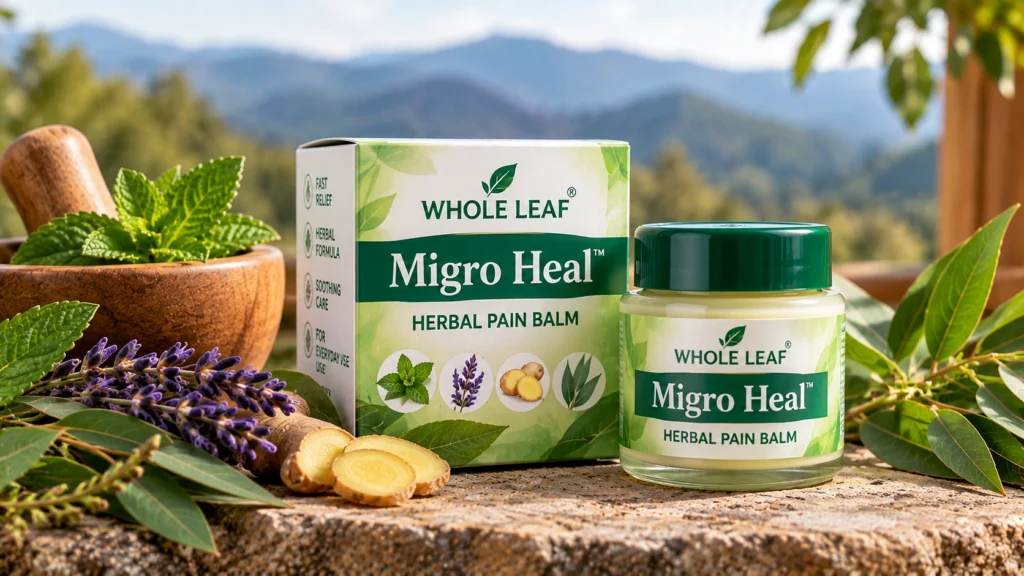
Migrastil is best known for its Migraine Stick, a small roll-on containing peppermint, spearmint and lavender essential oils diluted in fractionated coconut oil. The company has since expanded the brand into migraine-support capsules, nausea inhalers, neck and shoulder products, neuropathy creams and other natural pain-relief products.
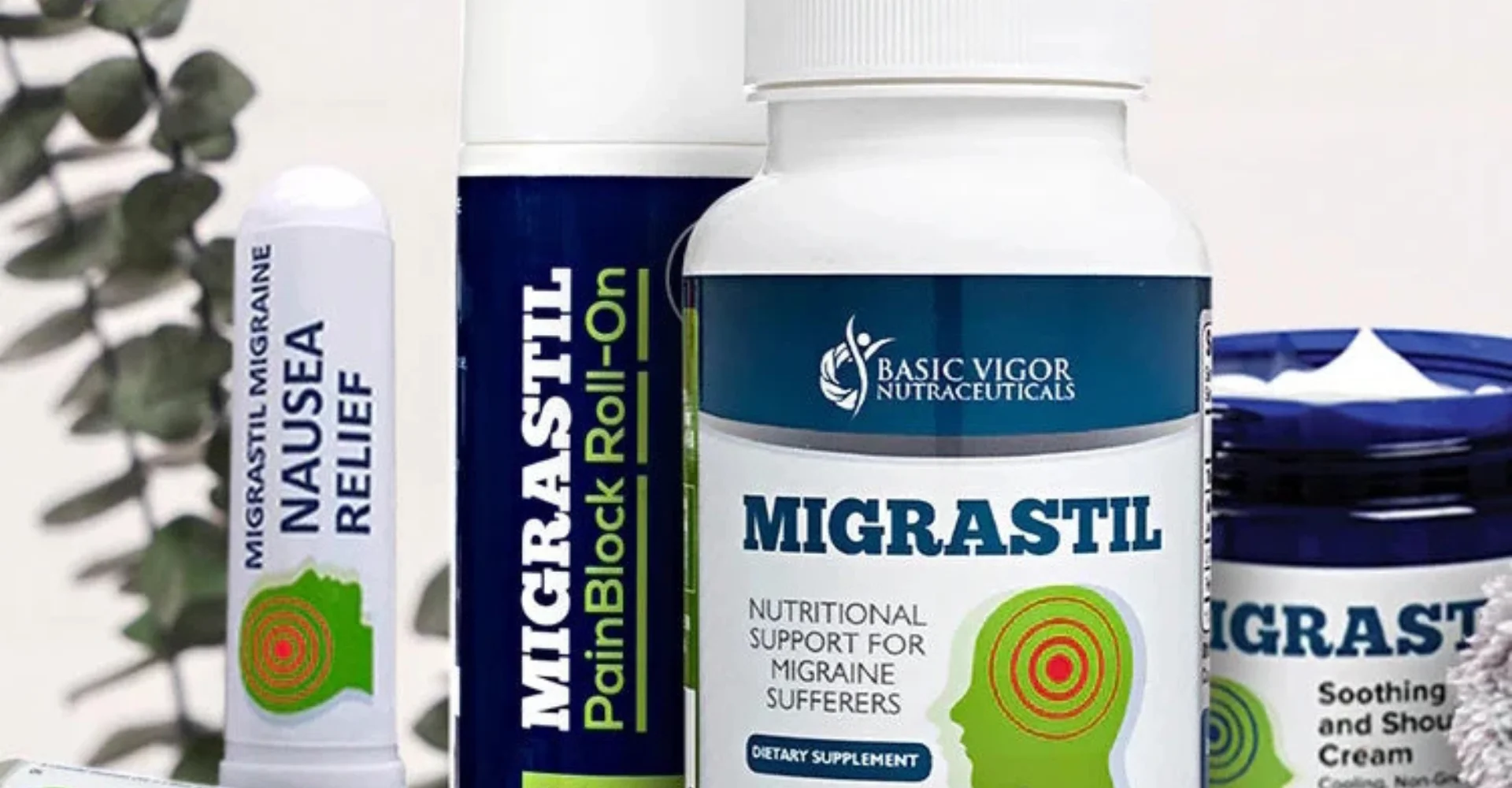

The story of Migrastil begins with Scott Griffin, the founder of the brand and Basic Vigor Nutraceuticals.
According to the company’s own history, Griffin had experienced migraines for almost 30 years. He became frustrated with the side effects and limitations he associated with conventional medicines and began researching different approaches to migraine management.
His research included self-help books, medical literature, research reports and traditional medicine. He also experimented with different ingredients on himself and family members before developing the Migrastil concept.
Business and trademark records place the commercial beginning of Basic Vigor and Migrastil in the mid-2010s.
Basic Vigor Nutraceuticals is described by the Vitamin Retailer Buyers Guide as a family-owned business started in Virginia in 2014, with its headquarters later moving to North Carolina.
U.S. trademark records also show Migrastil’s first use in commerce on July 1, 2014, with first use dating to March 1, 2014. Basic Vigor Nutraceuticals is the registered owner of the Migrastil trademark.
That gives us a more reliable timeline than simply saying the brand has existed for “many years.”
Migrastil entered commercial use in 2014, while Basic Vigor was established as a family-owned business around the same period.
The manufacturer and brand owner is Basic Vigor Nutraceuticals, LLC.
The company’s current address is:
3600 S. College Road, Suite E-308, Wilmington, North Carolina 28412.
Basic Vigor describes itself as a family-owned company focused on natural products for migraines, pain and related health concerns.
It is important to clarify one point about manufacturing.
There is no reliable evidence that Basic Vigor operates a large, company-owned factory comparable to the manufacturing campuses of multinational pharmaceutical companies.
Instead, the company says its products are made in the USA in FDA-registered facilities, and it routinely uses independent laboratories for purity and safety testing.
So claims that Migrastil has a single giant “Migrastil factory” should be avoided unless the company itself identifies a specific facility.
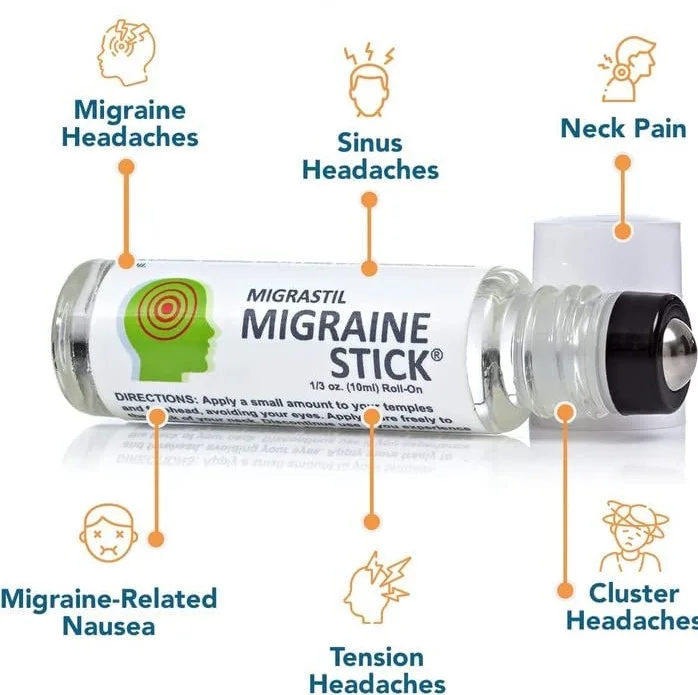
Migrastil’s original identity centered on the Migraine Stick, a portable essential-oil roll-on.
The product appealed to consumers who wanted something that did not involve swallowing a pill.
The company’s current website describes the Migraine Stick as its flagship product and emphasizes four major selling points:
The brand now sells more than just the original stick. Its current catalog includes 28 products, ranging from migraine sticks and capsules to neuropathy creams and other pain-related products.
This expansion is important because it shows that Basic Vigor is no longer simply a single-product migraine company.
It is developing Migrastil into a broader natural pain and wellness brand.

Migrastil began as an American company, but its reach has expanded considerably.
The official website currently says Basic Vigor ships internationally to:
The company also sells products through Amazon marketplaces in the UAE, Japan and Singapore.
For customers in the United States, the company offers free standard shipping on orders of $24.99 or more. Canadian customers qualify for free standard shipping on orders above $49, according to the company’s current shipping information.
Migrastil also says some of its products are available through iHerb, which can extend the brand’s reach beyond the countries where it directly ships from its website.
This is a relatively efficient global distribution model for a small private company.
Instead of building physical stores or large overseas offices, Basic Vigor can use its online store, marketplaces, distributors and international shipping partners to reach consumers.

The Original Migrastil Migraine Stick contains four ingredients:
Basic Vigor describes the formula as a blend of pure essential oils diluted in fractionated coconut oil.
That simplicity is one of the product’s strongest marketing advantages.
Let’s examine each ingredient.
Peppermint is the most recognizable ingredient in the formula.
It contains menthol, which creates the familiar cooling sensation associated with mint.
That cooling feeling is one reason peppermint-based products are commonly used by people looking for topical headache comfort.
Importantly, there is some scientific evidence behind topical peppermint preparations, although it is much more limited than the evidence available for established migraine medications.
The National Center for Complementary and Integrative Health says a limited amount of evidence suggests that topical peppermint oil may help relieve tension headaches. It does not say that peppermint oil has been definitively proven to treat migraine.
That distinction matters.
Spearmint adds another mint-based aromatic component.
It contributes to the cooling and fresh scent of the roll-on while complementing peppermint.
The company uses spearmint alongside peppermint rather than relying on peppermint alone.
Lavender contributes a softer floral aroma to the formula.
It also helps balance the sharp mint smell.
Migrastil markets the combination as part of a relaxing and refreshing aromatherapy experience.
However, consumers should distinguish between an aromatic or soothing effect and a proven medical treatment for migraine.
Fractionated coconut oil acts as the carrier oil.
Essential oils are highly concentrated, so they generally need to be diluted before topical use.
Migrastil specifically states that its essential oils are diluted in fractionated coconut oil to make the formula suitable for application to the skin.
The company also describes fractionated coconut oil as less greasy and having a long shelf life.
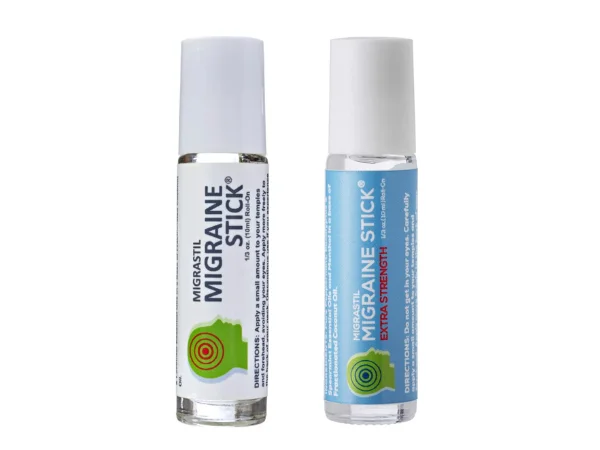
Basic Vigor has also expanded the original formula.
The current Extra Strength Migraine Stick is described as containing menthol plus peppermint, eucalyptus and spearmint essential oils in fractionated coconut oil.
The company positions it as a stronger option than the original product and says it does not contain lavender.
The company currently sells the Extra Strength stick for around $13.99, although prices and promotions can change.
There is also a Migrastil Migraine Stick with Magnesium, which combines peppermint, eucalyptus and spearmint essential oils with menthol and magnesium chloride in fractionated coconut oil.
This product expansion allows Basic Vigor to target different consumer preferences without abandoning the core roll-on concept.
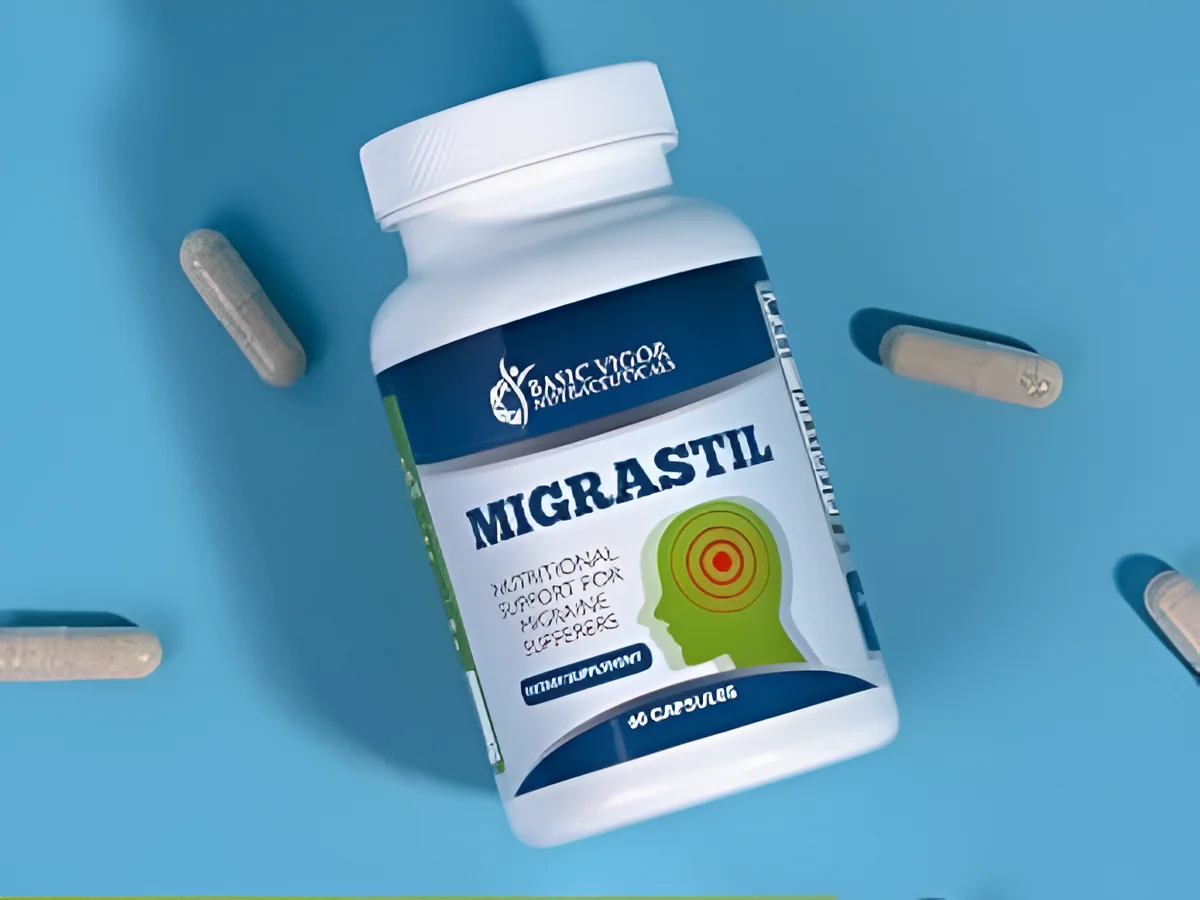
The Migrastil brand is not limited to topical products.
Its capsules contain four primary active ingredients:
The current product also lists rice flour and a vegetarian capsule made from hypromellose and purified water.
The company recommends taking one capsule twice daily and says a bottle contains 60 capsules, enough for one month when taken as directed.
Magnesium is widely discussed in migraine research.
Basic Vigor says magnesium supports normal neurological function and vascular function.
The broader scientific literature also recognizes magnesium as a nutrient that may have a role in migraine prevention for some people.
However, the evidence for an individual supplement formula should not automatically be treated as evidence that the entire Migrastil capsule product prevents migraines.
Taurine is an amino acid-like compound found naturally in the body, including the brain.
Migrastil includes taurine as part of its daily-support formula.
Feverfew is a botanical that has a long history of traditional use for headache.
It has also been studied for migraine prevention.
But feverfew is not risk-free. Migrastil itself warns that pregnant people should not take it and advises people taking blood thinners to avoid the product unless cleared by a healthcare professional.
Vitamin B1, or thiamine, is essential for energy metabolism and normal nervous-system function.
Migrastil includes it as part of its nutritional approach to migraine support.

This is where a responsible review needs to separate customer experience, company claims and scientific evidence.
Migrastil’s website uses language such as “relief,” “cooling support” and “works in minutes” for its Migraine Stick.
At the same time, the company explicitly states that its products are not intended to diagnose, treat, cure or prevent disease and that its health claims have not been evaluated by the FDA.
That disclaimer is important.
The FDA does not approve dietary supplements for safety and effectiveness before they reach consumers. It also notes that products intended to treat, cure, prevent or alleviate disease can fall under drug regulations rather than simply being treated as supplements.
Migrastil’s topical stick is not a dietary supplement in the regulatory sense. FDA guidance notes that dietary supplements are products intended to be ingested. Topical products are regulated differently.
The NCCIH says there is limited evidence that topical peppermint oil might help with tension headaches. It also warns that topical peppermint can cause skin irritation or rash in some people.
That means Migrastil’s cooling sensation is biologically plausible as a sensory form of comfort, but there is not enough evidence to say that the product is equivalent to an established migraine medication.
For people with frequent or severe migraines, Migrastil should be viewed as a possible complementary tool rather than a replacement for appropriate medical treatment.
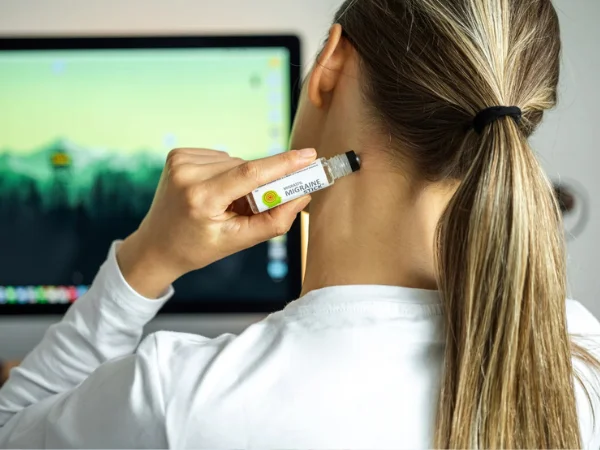
The original Migraine Stick is designed as a roll-on.
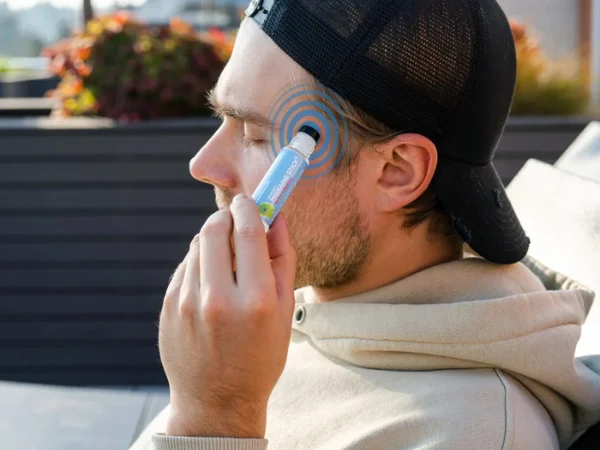
The company recommends applying it to areas such as the temples and back of the neck, while avoiding the eyes. It can also be used on pulse points such as the wrists.
Basic Vigor says the product can be used as needed but suggests waiting at least two hours between applications for best results. People with sensitive skin may experience temporary irritation with repeated applications.
Because essential oils can irritate the eyes and sensitive skin, users should avoid getting the product in or too close to the eyes.

Migrastil’s marketing is different from that of pharmaceutical giants.
There is no evidence that the brand has built its business around massive television campaigns or celebrity endorsements.
Instead, its strategy is based on founder storytelling, customer reviews, natural ingredients, portability, direct-to-consumer sales and word-of-mouth.
Scott Griffin’s own migraine history is perhaps the company’s strongest marketing asset.
He isn’t presented simply as a businessman who spotted an opportunity in the migraine market.
The company presents him as someone who personally suffered from migraines, became dissatisfied with existing options and developed a product from his own research and experimentation.
That creates an emotional connection with the target audience.
Migrastil’s product language is intentionally simple.
Instead of trying to sound like a pharmaceutical company, the brand emphasizes the sensory experience:
cooling, refreshing, portable and easy to apply.
Its website describes the Migraine Stick as “The Little Stick That Takes the Edge Off.”
That is a strong consumer message because the product itself is small and simple.
Reviews play a major role in the brand’s online marketing.
The company displays customer testimonials directly on its website and repeatedly highlights the number of users who report positive experiences.
Independent marketplace feedback is more mixed, which is exactly what readers should expect from a product used for a subjective condition like migraine.
Some users report strong cooling and comfort, while others say it mostly provides a temporary sensory distraction. Current third-party reviews from 2026 show both experiences.
The phrase “no pill-popping” appears prominently in Migrastil’s marketing.
This directly targets consumers who dislike swallowing medication or who want something they can add to their existing migraine routine.
Portability is one of the product’s strongest commercial advantages.
A roll-on can fit in a pocket, purse, backpack or travel kit.
That makes it particularly suitable for people who want something available at the first sign of discomfort.
Migrastil’s current website explicitly markets the stick as travel-ready and portable.
The company currently promotes a 90-day money-back guarantee.
That reduces the perceived risk of trying a relatively inexpensive product for the first time.
For a product whose effects can vary significantly between people, this can be an effective conversion strategy.
Basic Vigor has also moved beyond one product.
Its current catalog includes migraine sticks, nausea inhalers, capsules, neck and shoulder products and cold-therapy products.
That means a customer can potentially buy several products from the same company instead of purchasing every migraine-related product from a different brand.
It would be inaccurate to say Migrastil dominates the global migraine market.
Prescription migraine drugs, OTC medications and major pharmaceutical companies are much larger players.
Migrastil’s strength is in a more specific niche: natural, topical and non-pill migraine support.
Several factors help explain its position.
Migrastil does not try to be everything to everyone.
Its flagship product is specifically designed for people looking for a topical migraine-support product.
Peppermint, spearmint and lavender are easy for consumers to understand.
The formula does not require a chemistry degree to read.
The cooling sensation appears quickly, which gives the consumer immediate feedback.
That is commercially useful even when the underlying headache does not completely disappear.
The company emphasizes that it is family owned.
That gives Migrastil a more personal identity than many mass-market healthcare brands.
Basic Vigor states that its products are made in the United States in FDA-registered facilities and tested by independent laboratories for purity and safety.
The company has built a surprisingly broad international shipping footprint for a relatively small brand. Its current direct-shipping list covers more than a dozen countries outside the United States and Canada.
Migrastil has moved from one migraine stick into a broader natural-pain portfolio.
That reduces the company’s dependence on one product.

Migrastil operates in several overlapping categories, so its competitors depend on which product is being compared.
Saje Peppermint Halo is one of the closest conceptual competitors.
It targets consumers interested in essential oils and aromatherapy for headache-related discomfort.
The major similarity is the consumer mindset: natural ingredients, topical use and a strong mint aroma.
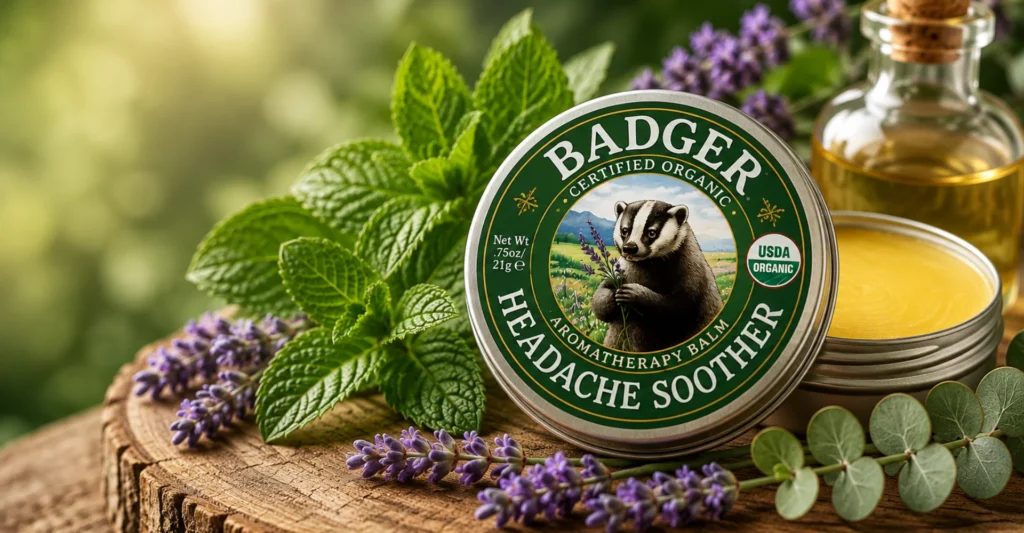
Badger Headache Soother competes with Migrastil for consumers seeking a botanical, portable product.
Badger’s product is an organic balm containing menthol and multiple essential oils, while Migrastil uses a roll-on format based on peppermint, spearmint, lavender and fractionated coconut oil.
The two brands therefore compete more on natural headache comfort and aromatherapy than as identical pharmaceutical products.
Origins has long offered aromatherapy-style products positioned around relaxation and headache-related comfort.
This category competes for shoppers who prefer sensory products rather than traditional medicines.
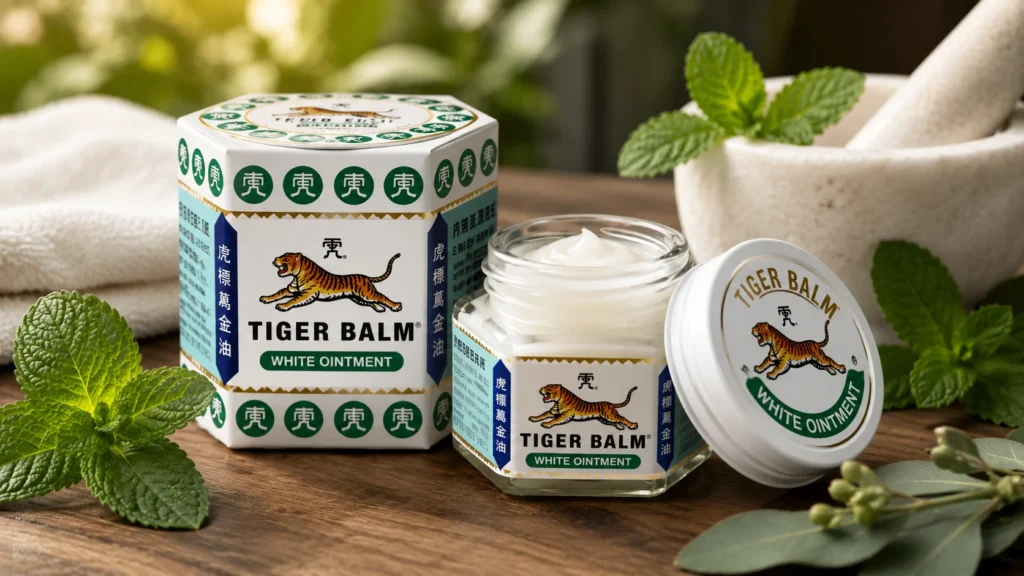
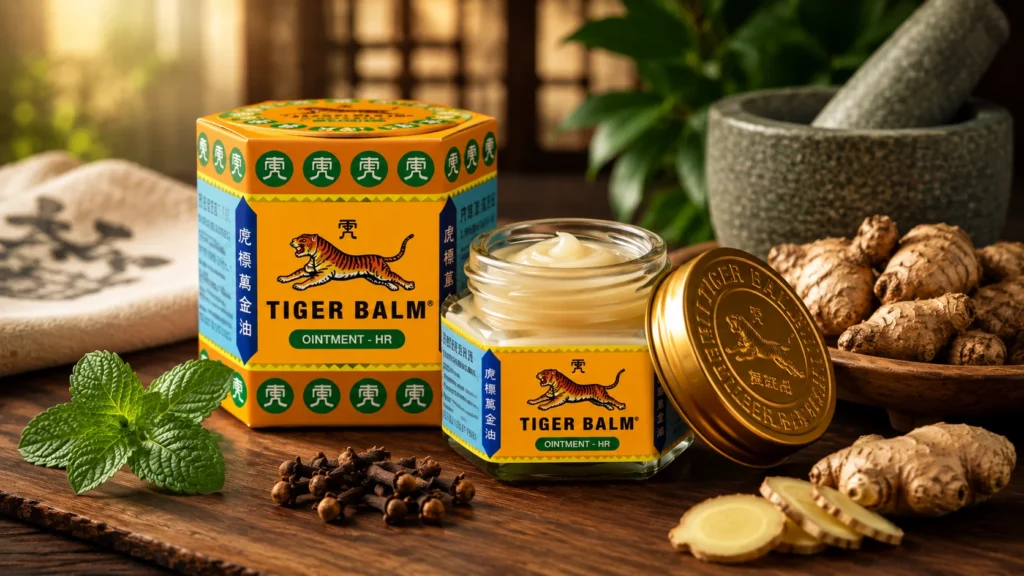
Tiger Balm is a much larger and older topical pain-relief brand.
Its traditional formulas use ingredients such as menthol and camphor.
Tiger Balm is a stronger competitor in conventional topical pain relief, while Migrastil is more focused on the natural migraine-support and aromatherapy audience.
Biofreeze is another important topical competitor.
Its menthol-based products are widely available and have strong consumer recognition.
The major difference is that Biofreeze has a more conventional topical analgesic positioning, while Migrastil leans toward natural migraine support.
There are also dozens of smaller peppermint and essential-oil roll-ons competing on Amazon, Walmart, natural-product websites and specialty wellness stores.
This is probably Migrastil’s most fragmented competitive category.
The brand’s advantage is that it has been specifically associated with migraine support for years rather than simply selling a generic peppermint roll-on.

This is the section where accuracy matters most.
Basic Vigor Nutraceuticals is a private company and does not publicly disclose audited annual revenue or product-level sales figures.
There is no reliable public filing that tells us exactly how much Migrastil Migraine Stick generated in 2025 or 2026.
That means figures claiming exact Migrastil revenue should be treated carefully.
Business databases provide estimates, but they do not agree.
Buzzfile currently estimates Basic Vigor Nutraceuticals at approximately $251,455 in annual revenue and around three employees at the listed Wilmington location.
Other business databases give much higher estimates.
Salary.com currently places the company in a broad $1 million to $5 million revenue range and estimates 21 to 50 employees.
The enormous difference between these estimates is itself useful information.
It shows why these third-party figures should not be presented as verified company revenue.
Marketplace data can provide hints about individual products, but these numbers are also estimates.
For example, third-party Amazon research on another Migrastil product, its neuropathy cream, estimates annual Amazon sales in the tens of thousands of dollars for that particular niche. However, that is not the same as Migrastil’s total company revenue or Migraine Stick sales.
The Migraine Stick itself has significant consumer visibility. One international marketplace listing currently shows more than 31,000 customer reviews and a 4.4-star rating, although marketplace review counts should not be treated as sales numbers.
There is no publicly verified current revenue figure for Migrastil or Basic Vigor.
The company is clearly operating an established direct-to-consumer business with international shipping, multiple products and third-party marketplace distribution.
But assigning a precise annual revenue figure without access to Basic Vigor’s internal accounts would be speculation.
For an SEO article that aims to remain trustworthy, it is better to say that revenue is privately held and not publicly disclosed than to publish an attractive but unsupported number.
One of the most interesting developments in the Migrastil story is that the brand is moving beyond migraine.
The current website features products for:
The brand’s Extra Strength Neuropathy Cream is an example of this expansion. The company is applying its natural essential-oil positioning to a completely different pain category.
The company has also introduced new topical products and is continuing to file trademarks.
One interesting 2026 development is a new EARVANA trademark application filed by Basic Vigor in April 2026 for topical anesthetics and products related to tinnitus. The filing identifies Basic Vigor Nutraceuticals as the owner/applicant.
A trademark application does not mean a commercial product has launched or that a product has been approved by the FDA.
Still, it suggests that Basic Vigor is looking beyond migraine and exploring additional health categories.

No.
This point should be very clear.
Migrastil’s website itself states that its health-related statements have not been evaluated by the FDA and that its products are not intended to diagnose, treat, cure or prevent disease.
The FDA explains that dietary supplements are not approved for safety and effectiveness before marketing. It also warns consumers not to assume that the word “natural” means a product is automatically safe.
Migrastil’s topical products are also not conventional FDA-approved migraine medicines.
This does not mean consumers cannot use a natural product as part of their personal approach to headache management.
It means consumers should understand what type of product they are buying and how much scientific evidence exists behind the specific product.

Natural ingredients can still cause side effects.
Peppermint oil, for example, can cause skin irritation or rash in some people when applied topically. NCCIH recommends caution with peppermint oil, particularly around infants and young children because of menthol-related breathing risks.
Migrastil itself says people with sensitive skin may experience temporary irritation with repeated use of the Migraine Stick.
For Migrastil capsules, the company specifically advises against use during pregnancy or nursing and warns people taking prescription blood thinners such as Coumadin not to take the product.
Anyone with frequent migraines, new neurological symptoms, unusually severe headaches or a major change in their usual headache pattern should discuss the problem with a healthcare professional instead of relying only on a topical natural product.
Migrastil is a family-owned American natural migraine and pain-relief brand operated by Basic Vigor Nutraceuticals, LLC.
The company traces its commercial beginnings to 2014, when Migrastil first entered commerce. Its founder, Scott Griffin, developed the brand after years of personal experience with migraines and extensive research into natural approaches to headache management.
The flagship product is the Migrastil Migraine Stick, a portable roll-on built around peppermint, spearmint and lavender essential oils diluted in fractionated coconut oil. The brand has since introduced Extra Strength and magnesium versions, along with capsules, nausea inhalers, creams and other products.
The company says its products, with the exception of the MigraFreeze cold-therapy hat, are made in the USA in FDA-registered facilities and independently tested for purity and safety. There is no reliable public evidence that Basic Vigor operates a single large, dedicated Migrastil factory, so it is more accurate to describe the brand as U.S.-made rather than claim ownership of a particular manufacturing plant.
Migrastil has also developed an impressive international distribution footprint for a relatively small private company. As of 2026, its website lists direct shipping to countries including the United Kingdom, Japan, Australia, New Zealand, Singapore, the UAE, Switzerland, Canada and several Middle Eastern and Asian markets.
Its marketing success comes from a simple formula: a relatable founder story, natural ingredients, a portable product, customer testimonials, direct-to-consumer selling, a money-back guarantee and a growing product ecosystem.
Scientifically, the picture is more nuanced.
There is limited evidence that topical peppermint oil may help with tension headaches, but that should not be interpreted as proof that Migrastil can treat every migraine. NCCIH specifically describes the evidence as limited.
Financially, the company remains private, and Migrastil’s exact revenue and sales are not publicly disclosed. Third-party databases provide widely different estimates, from roughly $250,000 to a broader $1 million to $5 million range, which makes them unsuitable as definitive financial figures.
Perhaps the biggest reason Migrastil has survived and grown is that it does not try to compete directly with pharmaceutical migraine giants.
Instead, it owns a narrower space.
It speaks to consumers who want something portable, natural, cooling, non-pill based and easy to use at the first sign of discomfort.
That positioning has allowed a small family-owned company to build an international brand around one remarkably simple idea: roll it on, feel the cooling sensation and keep moving.
For consumers, the most important takeaway is equally simple: Migrastil can be considered a complementary, natural option for some people, but its products should not be confused with FDA-approved migraine medicines or treatments with the same level of clinical evidence. The brand itself makes that distinction in its labeling, and the evidence should be judged accordingly.