Aboniki Balm is one of the most recognizable Nigerian topical pain-relief brands and has developed a strong following across West Africa and among African communities around the world. Known for its powerful cooling and warming sensation, distinctive smell and compact packaging, Aboniki has become a familiar household product for people looking for temporary relief from everyday muscle and joint discomfort.
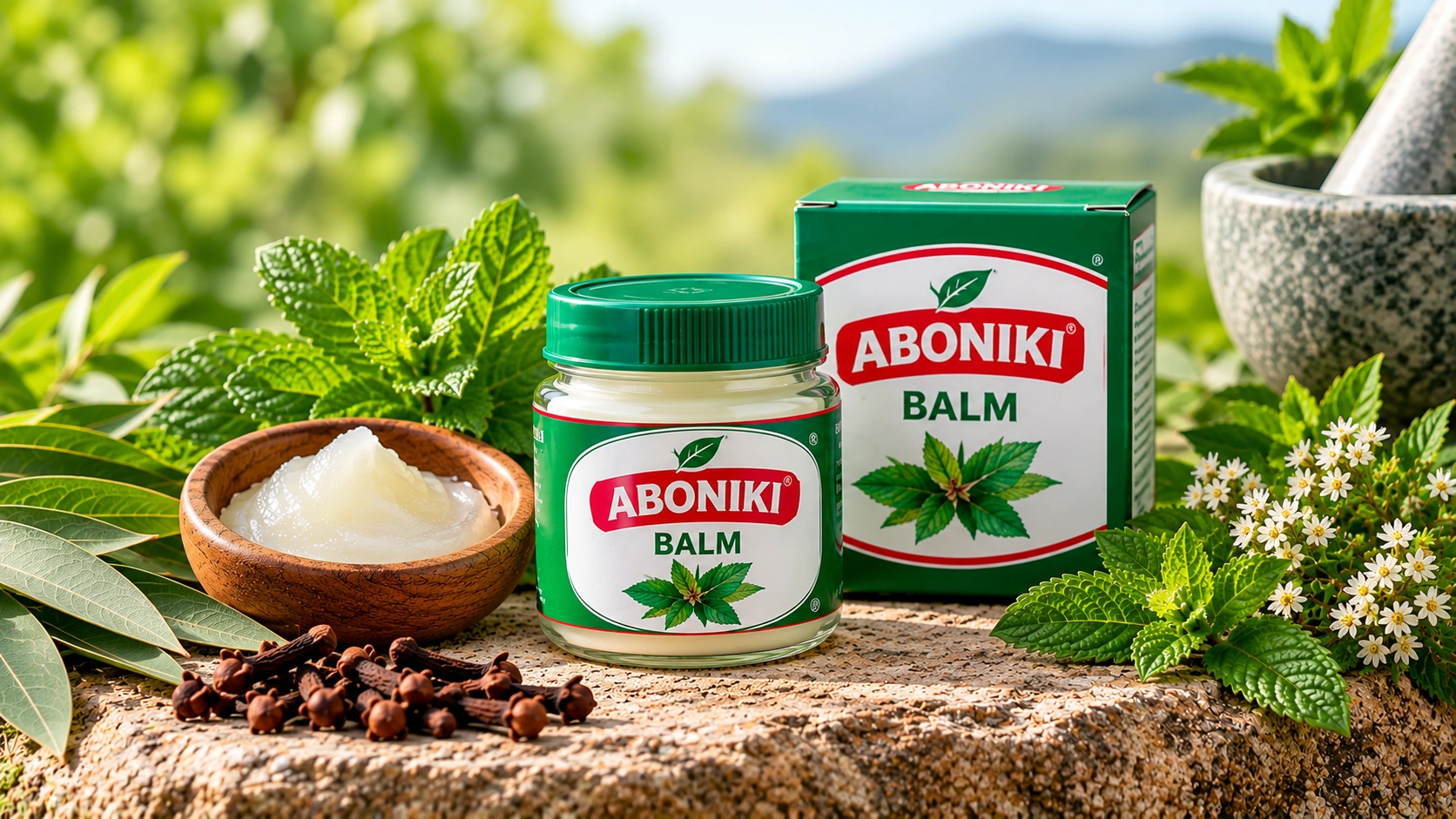
Aboniki Balm’s origins date back to the 1960s in Nigeria, according to the company’s current international brand information.
The brand was developed as a topical product intended to provide relief from aches and pains, particularly those associated with physical work and muscle strain.
The early positioning was straightforward.
Nigeria had a large population of farmers, laborers, athletes, traders and workers whose daily activities could involve considerable physical exertion. A portable topical balm offered an inexpensive and convenient option for temporary relief from everyday discomfort.
Over time, Aboniki moved beyond its original audience and became a household product.
The brand’s own materials describe it as a product used by millions of people and say that it has become a household name after decades of manufacturing and distribution.
The brand is closely associated with J. C. Udeozor and the Udeozor family.
Current company materials identify Jude Udeozor as Chairman and CEO, while the company’s international brand information describes Aboniki as a family-owned business.
Some current brand materials describe J. C. Udeozor as the entrepreneur behind the product’s Nigerian origins.
Because publicly available historical documentation about the exact original formulation process is limited, it is safer to describe J. C. Udeozor as the founder associated with the Aboniki business rather than inventing a detailed story about how the original formula was created.
Aboniki’s growth appears to have been driven primarily by familiarity and word of mouth.
Unlike multinational pharmaceutical brands that can spend enormous amounts on television and global advertising, Aboniki built much of its reputation through people recommending it to friends, family members and colleagues.
The strong sensory experience also helped.
When applied to the skin, the combination of menthol, camphor and other aromatic ingredients produces a noticeable cooling and warming sensation.
For many consumers, that sensation became part of the identity of the product itself.
In other words, people did not simply remember the name.
They remembered the smell and the feeling.
As the brand became established in Nigeria, it expanded through regional distribution networks.
Ghana became one of the important markets where Aboniki developed strong consumer recognition.
A University of Education, Winneba research study examining traditional medicine sales on commercial vehicles documented the sale of Aboniki Balm in Ghana. One seller interviewed for the study had been selling the Nigerian-imported balm for several years.
The research also provides an interesting look at how Aboniki was marketed at street level.
Sellers would sometimes give passengers with body aches an opportunity to try the balm on the affected area. If the customer reported feeling an effect within several minutes, that personal experience could encourage other passengers to purchase it.
This is a classic example of demonstration-based word-of-mouth marketing.
Aboniki is no longer limited to Nigeria and West Africa.
The company has established international distribution operations and maintains offices or business contacts in Nigeria, Europe and North America.
The company’s official website lists its head office in Edo State, Nigeria, and a Europe office in Nottingham, United Kingdom.
The current U.S. Aboniki store also markets the product directly to American consumers and states that the company is expanding its U.S. presence.
This is significant because the African diaspora represents an important potential customer base for heritage Nigerian products.
Aboniki’s Nigerian manufacturing identity remains central to the brand.
A Nigerian National Agency for Food and Drug Administration and Control, or NAFDAC, product record identifies J. C. Udeozor & Sons Global Industrial Limited as the manufacturer and Nigeria as the manufacturer country for Aboniki Balm.
The company’s current contact information places its head office and manufacturing operations in Edo State, Nigeria.
The company also says it operates international distribution through Europe and North America.
Publicly available company information does not provide a reliable list of multiple current overseas Aboniki manufacturing factories comparable to the global factory networks operated by large multinational pharmaceutical companies.
It is therefore more accurate to describe Nigeria as the brand’s principal manufacturing base while noting that Aboniki has developed international distribution operations.
This distinction matters.
A company can sell a product internationally without manufacturing that product in every country where it is available.
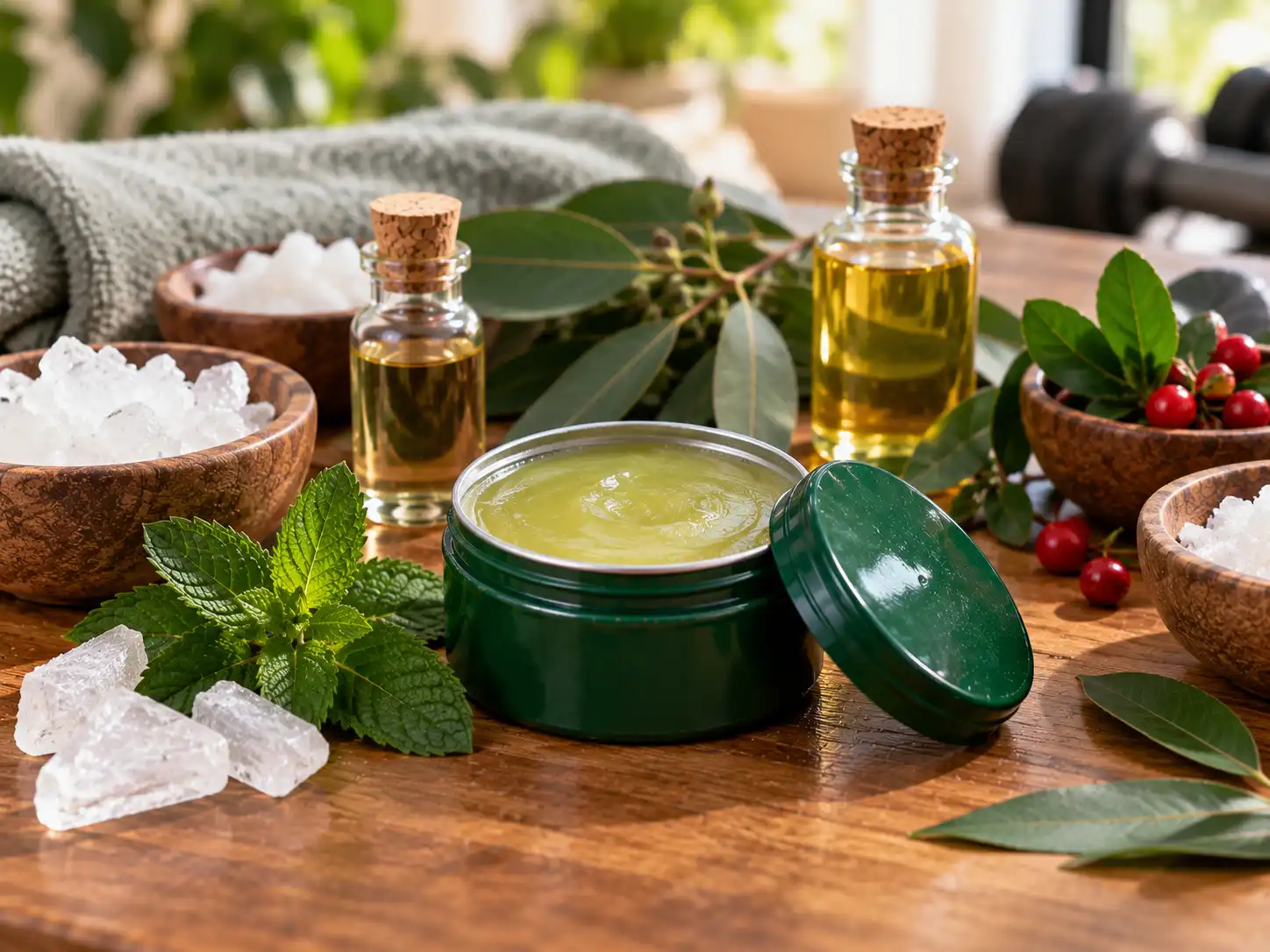
The traditional Aboniki Balm formula is built around several familiar topical analgesic and aromatic ingredients.
A NAFDAC product record for Aboniki Balm lists the following active ingredients and concentrations:
The NAFDAC record identifies the dosage form as a cream and the route of administration as topical.
That particular registration was approved in 2019 and had an expiry date in 2023, so it should not automatically be treated as proof of the regulatory status of every Aboniki product sold in 2026.
Current international Aboniki product information continues to identify the same four major ingredients, but consumers should check the label of the specific product they purchase for the most current formulation.
Menthol is responsible for much of Aboniki’s immediate cooling sensation.
When menthol is applied to the skin, it activates cold-sensitive sensory receptors, particularly TRPM8.
This does not necessarily mean that the skin becomes significantly colder.
Instead, the nervous system receives a signal that the area feels cool.
That sensory effect can temporarily change the way the brain perceives minor pain or discomfort.
Menthol is therefore common in topical pain-relief creams, sports rubs and muscle balms.
Camphor adds another strong sensory component.
It can produce cooling, warming or tingling sensations depending on the formulation and individual response.
Camphor interacts with several sensory pathways in the skin and contributes to the characteristic “strong” feeling associated with Aboniki.
Camphor should never be swallowed. Products containing camphor should be kept away from children and used only according to the product’s directions.
Methyl salicylate, commonly associated with wintergreen oil, is widely used in topical preparations for temporary relief of minor muscle and joint discomfort.
It is often described as a counter-irritant because it produces a noticeable sensory effect on the skin that can alter the perception of discomfort.
Its presence also helps explain why Aboniki can feel stronger or “hotter” than ordinary moisturizing creams.
Eucalyptus oil contributes to Aboniki’s strong herbal aroma.
Eucalyptus oil contains volatile compounds such as 1,8-cineole and is widely used in topical and aromatic products.
Its smell can create a sensation of freshness and clearer breathing when the aroma is inhaled.
However, this should not be interpreted as proof that rubbing Aboniki on the skin cures a cold, respiratory infection or other disease.
The answer lies largely in the combination of menthol, camphor and methyl salicylate.
Each ingredient can influence sensory receptors in a different way.
When combined, they create a strong cooling, warming or tingling experience.
That experience has become one of Aboniki’s most recognizable characteristics.
It is also an important part of the brand’s marketing.
Consumers who expect a strong sensation may interpret it as evidence that the product is “working,” although the sensation itself should not be considered proof of clinical effectiveness.
Current Aboniki marketing focuses primarily on temporary relief from muscle and joint discomfort.
The company’s international product information lists uses associated with:
The brand’s Nigerian website also describes traditional uses involving insect bites and cold symptoms.
However, consumers should follow the labeling for the exact product and country because approved indications can differ.
Aboniki is a topical product. It should not be applied to the eyes, inside the mouth or other mucous membranes, and it should not be applied to damaged skin unless the specific product labeling says otherwise.
One of Aboniki’s most interesting marketing advantages is that its effects can be felt quickly after application.
That creates an opportunity for direct product demonstrations.
The University of Education, Winneba research into traditional medicine sellers in Ghana documented a seller who would let passengers try Aboniki on areas experiencing body aches.
The seller then relied on the customer’s immediate response to influence other passengers.
This type of marketing is extremely powerful in communities where personal recommendations carry significant weight.
It also requires relatively little advertising expenditure compared with television or large-scale digital campaigns.
Aboniki’s official website repeatedly positions the product as a household essential.
This is a smart marketing strategy.
Instead of saying that consumers should buy the balm only when they experience pain, the brand encourages households to keep it available.
The product is positioned for everyday situations such as muscle discomfort, insect bites and other minor complaints.
That increases the number of situations in which consumers may remember the brand.
The brand also connects Aboniki with physical activity.
Its marketing encourages people to keep active and use the balm when muscle discomfort interferes with exercise or daily activities.
This connects naturally with athletes, gym users, workers and people whose jobs involve physical activity.
It also connects with the original story that the balm was intended for athletes and laborers.
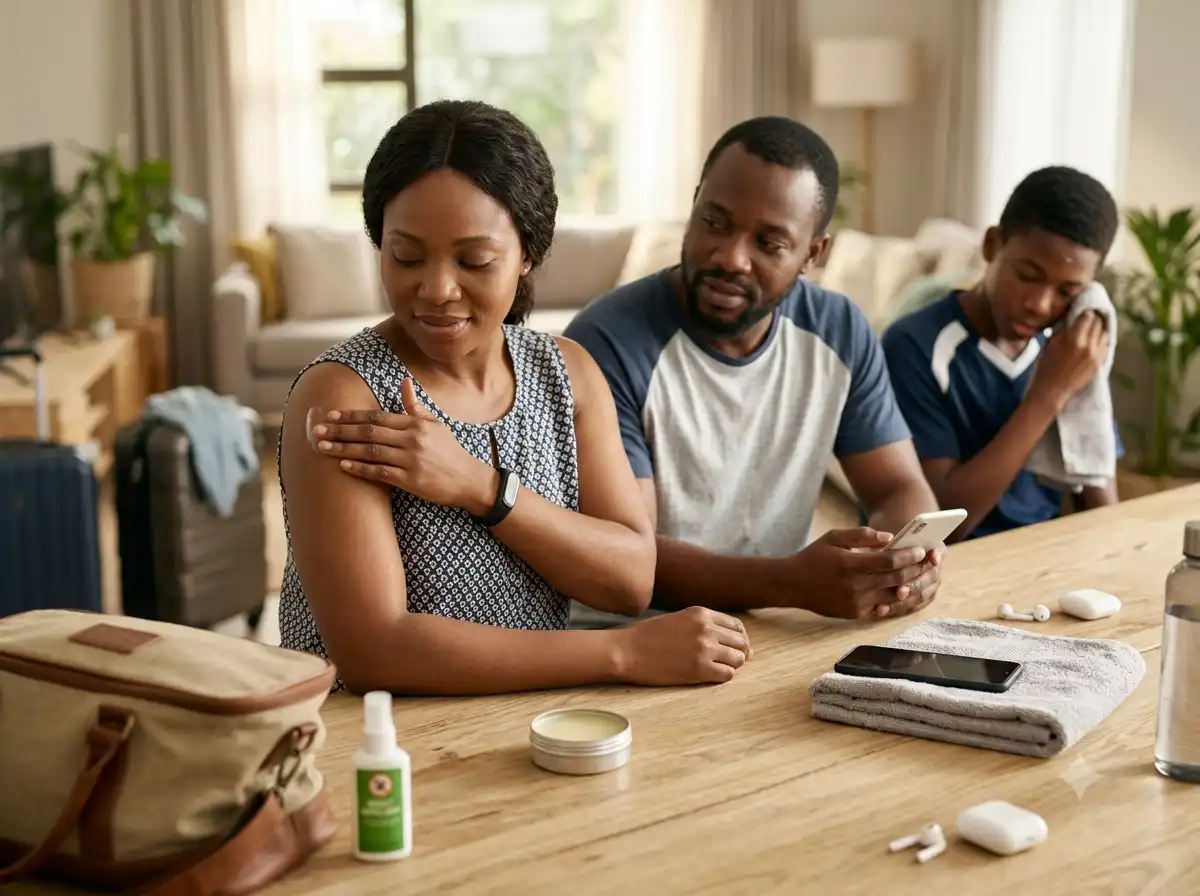
Another interesting positioning is Aboniki as a travel product.
The company promotes the balm for use during holidays and outdoor activities, particularly in relation to insect bites and muscle aches.
This gives the product another reason to be packed in a travel bag.
The strategy is particularly relevant in tropical climates where insects, physical activity and travel-related discomfort can overlap.
Aboniki has used awards as part of its credibility and brand-building strategy.
The company’s official website lists several recognitions, including the West African Direct Marketing Award for Best Balm of the Year in 2008.
It also lists a West African Corporate Achievement Award for West Africa’s Best Anti-Pain Ointment of the Year and an ESQR Quality Achievements Award in 2013.
These awards do not constitute clinical evidence that Aboniki is medically superior to competing products.
They are better understood as recognition of the company’s marketing, business performance or brand positioning.
Aboniki was also listed as a winner in the African Excellence Awards 2023 in the category “Best Muscle Pain Alleviation Product Brand 2023.”
This gave the company another opportunity to position the brand as an established African consumer-health product.
Aboniki’s marketing strategy has increasingly moved online.
The company now operates dedicated online stores targeting international consumers, including the United States.
This matters because African diaspora consumers living outside Nigeria may have difficulty finding traditional Nigerian brands in local stores.
E-commerce removes much of that geographical barrier.
A Nigerian consumer living in Texas, London or Toronto can potentially order the product without relying on a local African grocery store or pharmacy.
The company’s current U.S. website openly invites creators to participate in its marketing program.
The program includes:
The company says it is looking for creators to help increase awareness and sales in the U.S. market.
This represents a major shift from the traditional word-of-mouth model.
Instead of relying only on physical communities, Aboniki is now attempting to turn online creators into digital brand ambassadors.
Aboniki does not dominate the global topical pain-relief market.
That would be an inaccurate claim because multinational brands such as Bengay, Tiger Balm and Voltaren have much larger international distribution and sales infrastructures.
But Aboniki has built a powerful position within its own niche, especially among Nigerian and West African consumers.
One of Aboniki’s greatest advantages is that it is clearly associated with Nigeria.
Consumers who grew up with the product can identify it immediately.
That creates a form of cultural trust that a new imported competitor may struggle to reproduce.
Aboniki has been around for decades.
Parents who used it can introduce it to their children.
That creates a self-reinforcing cycle.
The product becomes familiar because people remember other people using it.
The strong cooling and warming sensation is central to the product’s identity.
Menthol, camphor and methyl salicylate create a sensation that consumers can recognize almost immediately.
That sensory identity makes Aboniki difficult to confuse with a generic moisturizing cream.
Aboniki is sold in relatively small packages, making it easy to keep at home or carry while traveling.
Its traditional positioning as an affordable topical product also makes it accessible to a wide range of consumers.
Aboniki is not marketed for only one type of pain.
The brand talks about muscle pain, joint discomfort, exercise, insect bites and other everyday situations.
This gives consumers multiple reasons to keep the product in their homes.
Word of mouth remains one of the brand’s strongest assets.
The Ghanaian research example is particularly revealing because the product was being sold through personal demonstrations and immediate consumer feedback.
That type of marketing can create trust much faster than a generic advertisement.
Aboniki has an additional advantage that many African heritage products share.
Millions of Nigerians and other West Africans live outside Africa.
Those consumers may continue purchasing familiar brands because the products remind them of home.
Online distribution makes that market easier to reach.
The company’s current push into creator marketing and U.S. e-commerce demonstrates that Aboniki is not relying entirely on its traditional customer base.
The strategy is to take an established African brand and introduce it to a wider international audience.
Aboniki operates in the global market for topical analgesics, medicated balms and muscle-rub products.
Outside India, its most relevant competitors include:
Tiger Balm is probably Aboniki’s strongest competitor among traditional Asian topical products.
It has a much larger international distribution network and offers multiple formats including balms, creams, patches and topical rubs.
Tiger Balm also has extensive international marketing and strong recognition across Asia, North America and Europe.
Aboniki’s advantage is its Nigerian identity and strong West African following.
Bengay is a major American topical pain-relief brand.
Its products commonly use topical analgesic ingredients such as menthol and methyl salicylate.
This makes it a direct functional competitor for consumers seeking temporary relief from minor muscle and joint discomfort.
Voltaren represents a different category because its topical products are based on diclofenac, a nonsteroidal anti-inflammatory drug.
Unlike traditional menthol-and-camphor balms, topical diclofenac is an NSAID and works through a different pharmacological pathway.
Voltaren therefore competes for the same consumer need, but its mechanism and regulatory positioning are different.
Deep Heat is strongly associated with sports, muscle discomfort and topical warming products.
Its sports-oriented identity overlaps with Aboniki’s positioning around active muscles and physical activity.
Icy Hot is another major American competitor.
Its branding is built around the contrast between cooling and warming sensations, which overlaps with the sensory experience consumers associate with Aboniki.
Eagle Brand Medicated Oil and White Flower Oil are especially relevant among Asian consumers and diaspora communities.
Like Aboniki, these products rely heavily on heritage, strong aroma, portable packaging and multigenerational familiarity.

Revenue is one area where online articles frequently make unsupported claims.
J. C. Udeozor & Sons Global Industries Limited is a privately held company, and there is no publicly disclosed audited global revenue figure for Aboniki Balm for 2026.
That means a specific number such as “$50 million annual revenue” or “$100 million annual sales” should not be presented as fact unless the company publishes verifiable financial statements supporting it.
The official Aboniki website states that more than two million people use Aboniki Balm every day.
This is a company claim rather than an independently audited consumer-count measurement, so it should be presented as such.
If accurate, however, it would indicate a substantial international customer base.
The current U.S. Aboniki website makes a much larger claim, stating that the product has helped over 200 million people globally.
Again, this is a marketing claim and not an independently audited figure.
The two numbers should not be treated as equivalent measures of active users or annual customers.
There are several reasons Aboniki’s global revenue cannot be reliably calculated from public information:
Aboniki has also had a presence in U.S. regulatory records.
An NDC record identifies Aboniki Balm as a topical OTC drug containing camphor, eucalyptus oil, menthol and methyl salicylate.
However, the historical U.S. listing for NDC 82729-001 is currently marked as discontinued by the firm in the August 2026 record.
This is an important detail for current SEO content.
A historical NDC listing should not automatically be presented as proof that the same exact U.S. formulation remains actively marketed under that NDC today.
The company’s current U.S. store continues to sell Aboniki Balm directly and says the brand is expanding its U.S. presence, but regulatory status and retail availability are separate issues.
NAFDAC’s online Greenbook contains a record for Aboniki Balm manufactured by J. C. Udeozor & Sons Global Industrial Limited in Nigeria.
That specific record lists an approval date of 2019 and an expiry date of February 2023.
Again, this does not mean that Aboniki as a brand disappeared in 2023.
It means that the particular registration record retrieved from the database had that expiry date.
Current product registrations can change, renew or be replaced, so consumers should verify the latest registration information through the relevant national regulator.
The safest conclusion is that Aboniki remains an active commercial brand in 2026 with a strong Nigerian and West African customer base and an expanding international e-commerce presence.
However, its exact global annual revenue is not publicly disclosed.
This is a better and more credible conclusion than publishing an invented revenue estimate.
Aboniki Balm is one of Nigeria’s most recognizable heritage topical pain-relief products and has developed a strong presence across West Africa and international African communities.
The brand’s origins date to the 1960s in Nigeria, according to current company and brand materials. It is closely associated with J. C. Udeozor and the Udeozor family, while the business behind the product is J. C. Udeozor & Sons Global Industries Limited.
The company’s headquarters and principal manufacturing identity remain in Nigeria, specifically Edo State.
Unlike multinational pharmaceutical companies that operate dozens of factories around the world, Aboniki’s publicly available information does not establish a large network of overseas manufacturing plants. Its international growth has instead been built through distribution, export networks, regional partners and increasingly through e-commerce.
The traditional Aboniki Balm formula contains four major active ingredients: menthol, camphor, methyl salicylate and eucalyptus oil.
These ingredients explain much of the product’s distinctive sensory experience.
Menthol produces cooling, camphor contributes cooling and warming sensations, methyl salicylate provides another topical counter-irritant effect, and eucalyptus oil supplies the characteristic herbal aroma.
A NAFDAC record lists concentrations of 6.10% menthol, 5.04% camphor, 4.25% methyl salicylate and 2.30% eucalyptus oil for one Nigerian registration.
Because that registration expired in 2023 and different markets can use different formulations, consumers should check the current label rather than assuming those exact concentrations apply to every Aboniki product sold in 2026.
The brand’s marketing history is particularly interesting.
Aboniki has benefited from word-of-mouth marketing, product demonstrations, household positioning, sports and physical-activity messaging, awards and international e-commerce.
Research conducted in Ghana documented sellers allowing potential customers to try the balm directly on areas experiencing discomfort. The customer’s immediate response could then influence other people nearby.
This kind of demonstration-based marketing is especially powerful for a topical product because the cooling or warming sensation is experienced immediately.
Aboniki has also received several business and marketing recognitions, including the West African Direct Marketing Award for Best Balm of the Year in 2008, the West African Corporate Achievement Award and an ESQR Quality Achievements Award in 2013.
In 2023, the brand was also listed as the winner of the African Excellence Awards category for Best Muscle Pain Alleviation Product Brand.
More recently, Aboniki has begun targeting international consumers through e-commerce and creator marketing.
The company’s current U.S. website openly invites creators to participate through affiliate marketing, product gifting, discount codes, content creation and campaigns.
This represents a significant change from the traditional West African word-of-mouth model.
Instead of relying exclusively on physical communities, the brand is now trying to build digital communities around the product.
Aboniki’s major competitors include Tiger Balm, Bengay, Voltaren, Deep Heat, Icy Hot, Eagle Brand Medicated Oil and White Flower Oil.
These competitors have different strengths. Tiger Balm has global heritage and distribution, Bengay and Icy Hot are well established in the United States, Voltaren competes with a pharmaceutical NSAID formulation, while Eagle Brand and White Flower Oil compete in the traditional medicated-oil category.
Aboniki’s biggest competitive advantage is its Nigerian identity and cultural familiarity.
For consumers who grew up with the product, it is more than a topical balm. It is a familiar household item that can remind them of home and family.
Financially, there is no reliable publicly disclosed global Aboniki revenue figure for 2026.
The company says more than two million people use the product every day and its current U.S. website makes a claim of more than 200 million people helped globally. These should be treated as company marketing claims rather than independently audited customer statistics.
The available regulatory records provide useful context but should also be interpreted carefully. A historical NAFDAC registration expired in 2023, while a historical U.S. NDC listing is currently marked as discontinued by the firm in an August 2026 record. Neither fact means the brand itself has disappeared, because the company continues to market and sell Aboniki internationally.
The most accurate description of Aboniki in 2026 is therefore that it is an established Nigerian topical analgesic brand with a strong West African heritage, international distribution and a growing direct-to-consumer presence outside Africa.
The real story behind Aboniki’s success is not simply the ingredients in the jar.
It is the combination of strong sensory branding, affordability, cultural familiarity, personal recommendations and decades of consumer trust.
That combination has allowed a Nigerian-born balm to move beyond its original market and reach consumers in Europe, North America and other parts of the world.
As the company expands its e-commerce and creator-marketing strategy in 2026, Aboniki faces a new challenge: keeping the authenticity that made it successful in West Africa while making the product understandable and relevant to consumers who have never encountered it before.
If it can maintain that balance, Aboniki has the potential to remain one of Africa’s most recognizable heritage topical-health brands for many more years.

Watch expert-inspired short videos on health, wellness, nutrition, fitness, preventive care, and healthy living in under a minute.