It is a small aromatherapy balm made by W.S. Badger Company, the family-owned New Hampshire company better known simply as Badger. Unlike conventional oral headache medicines, Badger Headache Soother is designed as a topical balm that combines menthol and essential oils with an organic oil-and-beeswax base.
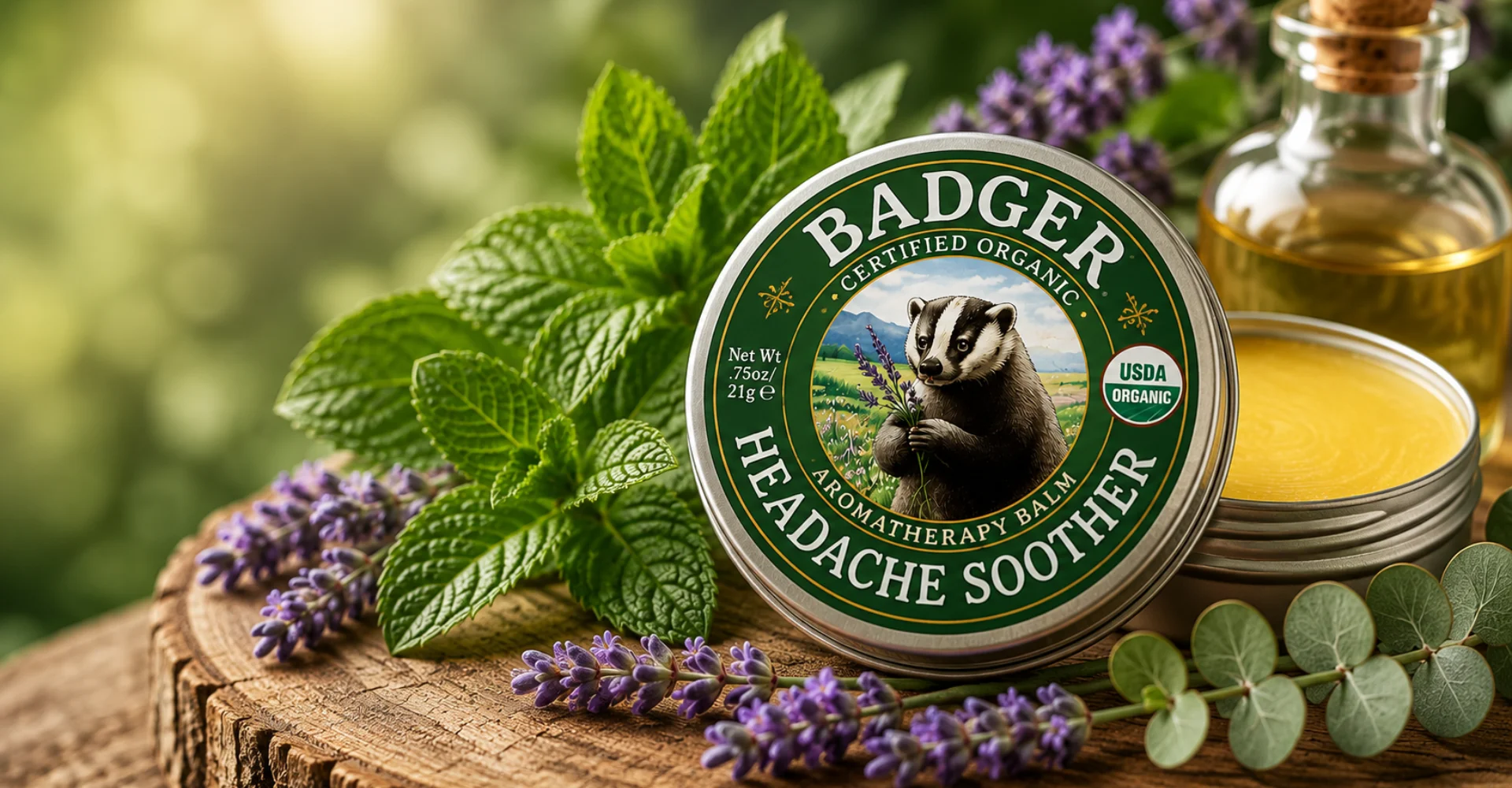

Badger Headache Soother is part of the much larger Badger natural and organic personal-care business, founded in New Hampshire in 1995.
The company’s founder is Bill Whyte, a carpenter who was dealing with dry, cracked hands during the harsh New England winters.
Instead of buying another commercial lotion, Whyte experimented with a simple mixture of beeswax and olive oil. The result worked well enough that he decided to make the balm for other people. In 1995, Bill and his wife, Katie Schwerin, began filling tins by hand in their kitchen.
The original product was almost called Bear Paw.
Whyte had chosen that name, but he discovered that another product was already using it. According to Badger’s own history, he eventually put a tin under his pillow and woke up with the name “Badger” in mind. He then began selling the balm from his work van to local hardware stores.
That humble beginning became the foundation of W.S. Badger Company.
The original Badger Balm was designed for hardworking hands, but customers began asking for other products.
That encouraged the company to expand into products for babies, lips, skin, outdoor protection, sun protection, aromatherapy and other areas of personal care.
Badger says that within 25 years it had grown to nearly 100 products, more than 80 employees and sales in 15 countries. More recent company material describes the business as having grown to more than 100 natural and organic products.
The company remains family-owned.
Bill Whyte eventually moved out of the CEO role, and his daughters Emily Schwerin-Whyte and Rebecca Hamilton became co-CEOs, using the company’s distinctive title Collaborative Executive Officers. Emily’s background includes sales and marketing, while Rebecca has led research and product development.
That second-generation leadership is significant because Badger has deliberately kept its family-owned identity while expanding the company internationally.
Badger’s manufacturing model is unusual compared with many modern personal-care companies.
The company says it makes nearly all of its products in its own manufacturing facility in rural New Hampshire, rather than outsourcing most of its production to contract manufacturers.
The facility is located in Gilsum, New Hampshire, where the Badger family has lived since the 1970s.
The company designed and built its custom manufacturing facility in 2011. It is a large post-and-beam building with sustainability features, including solar power. Badger says its manufacturing facility is 100% powered by solar energy.
This is the primary manufacturing base for Badger products, including its balms and personal-care products.
The company also states that some subcontract manufacturers are used for certain products or situations, so “made by Badger” does not mean that absolutely every product in the entire portfolio is manufactured under the same roof.
Yes.
W.S. Badger Company is headquartered at 768 Route 10 in Gilsum, New Hampshire. The company remains privately held and family owned.
Badger products are sold throughout the United States and internationally. The company’s own materials have previously stated that its products were sold in 15 countries, while New Hampshire’s official “Made in NH” program currently describes the company as serving customers in the U.S. and more than 15 countries.
Its international distribution is handled partly through distributors and wholesale partners. Badger’s current wholesale information says international stores generally order through Badger’s international distributors.
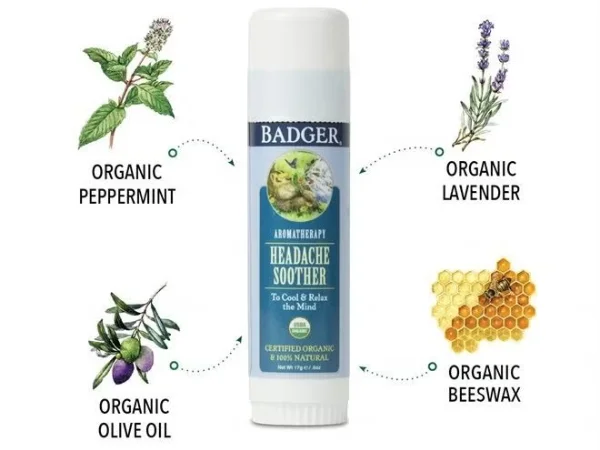
The current Badger Headache Soother formula contains 12 listed ingredients.
The product page identifies them as:
Badger states that the product is 100% USDA Certified Organic, GMO-free and cruelty-free.
Let’s look at what each ingredient contributes.
Olive oil forms part of the balm’s base.
It helps give the product its smooth, spreadable texture while providing emollient properties that help soften the skin.
Badger places strong emphasis on minimally processed plant oils throughout its product range and identifies olive oil as one of its important globally sourced ingredients.
Beeswax helps turn the liquid oils into a semi-solid balm.
It also gives the product structure and helps it remain on the skin after application.
This is one reason Badger Headache Soother feels more like a traditional balm than an essential-oil roller or watery lotion.
Castor oil is another part of the moisturizing base.
It helps provide the smooth, rich texture associated with oil-based balms and helps spread the product over the skin.
Lavender is included primarily for its aromatic profile.
Badger describes lavender as supporting balance and calm within its aromatherapy philosophy.
It also helps soften the sharpness of the peppermint and eucalyptus aroma.
Menthol is arguably the star ingredient when it comes to the immediate sensory experience.
Badger describes its formula as containing super-concentrated menthol crystals and says the menthol contributes to the cooling effect.
Menthol activates cold-sensitive sensory pathways in the skin, producing the familiar cooling sensation.
That sensation can make the product feel refreshing, particularly when applied to the temples or forehead.
However, a cooling sensation should not be confused with proof that the underlying cause of a headache has been treated.
Peppermint oil contributes the familiar minty aroma and cooling character.
Badger describes peppermint as stimulating and refreshing within its aromatherapy formulation.
Peppermint is also one of the best-known essential oils associated with topical headache products.
Research has investigated topical peppermint preparations containing menthol for tension-type headache, but evidence for essential-oil products should not be generalized to every commercial balm or every type of headache.
Vitamin E helps support the formulation and contributes antioxidant properties.
Badger uses sunflower-derived vitamin E in several of its products and lists it among the ingredients in Headache Soother.
Eucalyptus gives the balm its sharp, fresh aroma and contributes to the cooling and refreshing sensation.
Badger specifically describes eucalyptus as stimulating and refreshing and connects its aroma with clearing and cooling the sinuses.
Mandarin oil adds a sweeter citrus note to the formula.
Badger describes mandarin as uplifting the mood within its aromatherapy philosophy.
This helps balance the stronger medicinal smell of menthol and eucalyptus.
Sandalwood adds a deeper, warmer aromatic note.
It is used in a relatively complex essential-oil profile that aims to make the product smell more rounded rather than purely minty.
Calendula is a botanical extract traditionally used in skin-care products.
Its role here is primarily associated with the skin-conditioning side of the formula rather than being the main source of the product’s cooling effect.
Rosehip extract is another botanical ingredient included in the balm.
It contributes to Badger’s broader approach of combining botanical extracts with simple oils and waxes in topical products.
At a practical level, the formula has three jobs:
First, create a cooling sensation.
Menthol and peppermint are the major contributors.
Second, create an aromatic experience.
Peppermint, eucalyptus, lavender, mandarin and sandalwood create the characteristic scent.
Third, deliver those ingredients in a skin-friendly balm.
Olive oil, beeswax, castor oil and vitamin E provide the base.
That combination is what separates Headache Soother from simply inhaling peppermint oil.
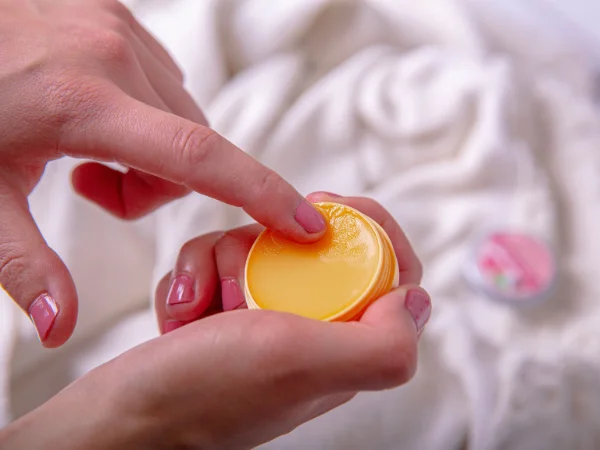
Badger recommends massaging the balm onto the temples, forehead, back of the neck or other areas where soothing is desired, followed by breathing in the aroma.
The product is designed to be portable, which is a major part of its appeal.
A small 0.6-ounce stick can fit into a purse, backpack, desk drawer or travel bag.
However, essential oils and menthol can irritate sensitive skin or eyes. It is sensible to avoid direct eye contact and discontinue use if significant irritation occurs.
Also, recurring or severe headaches should not automatically be treated with a topical balm. Headaches can have many causes, and sudden, severe or unusual headaches may require medical attention.

Badger Headache Soother has not achieved its recognition through one giant Super Bowl commercial or a single celebrity campaign.
The company’s marketing success has been built around a different idea: authenticity, natural ingredients, founder storytelling, sustainability and word-of-mouth.
Badger’s first marketing advantage was its founder story.
Bill Whyte did not invent a balm because market research identified a gap in the hand-care category. He made it because his own carpenter’s hands were cracking in the New Hampshire winter.
That story became part of the company’s identity.
The brand still describes its products as being created for “people we love” and emphasizes the original connection between founder, product and everyday problem.
This gives Badger a very different voice from large personal-care corporations.
In its early years, Whyte drove around to hardware stores in his work van and sold the balm.
That was not sophisticated advertising, but it was effective grassroots distribution.
The product was introduced directly to retailers and customers by the person who made it.
One of Badger’s biggest commercial turning points did not involve Headache Soother at all.
It involved sunscreen.
In 2006, the Environmental Working Group published its first sunscreen guide and placed Badger’s sunscreen at the top. Badger says it subsequently sold a year’s supply in two weeks.
That event dramatically increased awareness of the Badger brand.
It also helped establish Badger as a serious natural-products company rather than simply the maker of one unusual hand balm.
Badger has made third-party certifications and sustainability part of its marketing strategy.
The company became a B Corp in 2011 and later became a Benefit Corporation in New Hampshire. It has also emphasized USDA organic ingredients, sustainable packaging and regenerative agriculture.
For a product such as Headache Soother, this matters because the target consumer is often interested in more than whether the product works.
They may also care about:
Badger has built its brand around those questions.
Badger’s packaging has always played an important role.
The company uses detailed illustrations and nature-oriented artwork throughout its product range. Badger says the artwork is intentionally developed to reinforce the emotional and healing character of the products.
This gives Badger a distinctive shelf presence in stores that sell natural products.
Badger now uses digital channels, online retail and social media alongside traditional wholesale distribution.
Its current website actively promotes direct-to-consumer promotions, while the company maintains social channels and online product education.
For Headache Soother, the product’s compact size and recognizable ingredients also make it naturally suited to online product discovery.
The Headache Soother has accumulated substantial customer feedback across major online retailers.
Current reviews frequently mention its portability, smell and cooling sensation. Some users say it helps them feel more relaxed or makes headaches more manageable, while others explicitly report that it does not stop their headache.
That split is worth mentioning because it provides a more realistic picture than marketing copy alone.
The product appears to resonate strongly with consumers who want a soothing aromatherapy ritual, but customer experience varies.
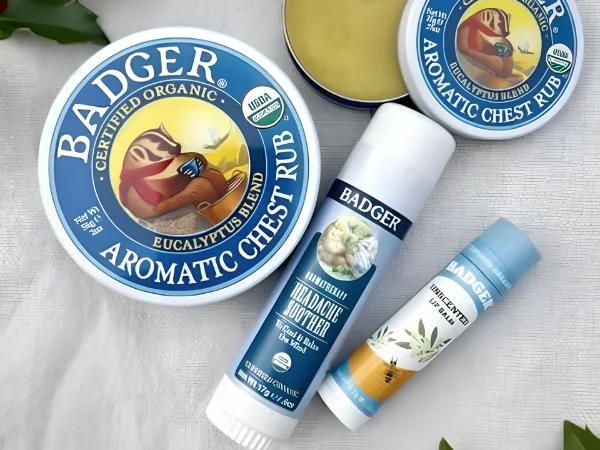
It would be inaccurate to say Badger Headache Soother “dominates” the global headache-treatment market.
It does not.
It occupies a specific niche within the natural and organic aromatherapy and personal-care market.
Within that niche, however, Badger has several advantages.
The company’s origin is unusually authentic.
Badger started with one carpenter solving his own problem, not with a large corporation creating a new product category.
That story remains central to the brand more than 30 years later.
The current Headache Soother is USDA Certified Organic.
For consumers specifically searching for natural or organic headache-soothing products, that immediately differentiates it from conventional mentholated products.
There are only 12 listed ingredients.
That is easy for consumers to understand compared with many conventional personal-care formulations.
Badger also publishes its ingredient philosophy and sourcing standards, reinforcing its transparency positioning.
Badger’s decision to manufacture nearly all products at its own New Hampshire facility gives it a strong “Made in USA” and small-family-business story.
That matters to consumers who deliberately seek American-made personal-care products.
The combination of peppermint, eucalyptus and menthol creates an immediate cooling sensation.
Consumers do not have to wait to feel something.
That immediate sensory feedback can be powerful in reinforcing product recognition.
The 0.6-ounce stick is small and convenient.
That makes Headache Soother particularly attractive for travel, offices, gym bags and purses.
This is perhaps the biggest advantage.
Consumers discovering Headache Soother may also discover Badger’s other products.
The brand has expanded into sunscreens, lip care, baby care, outdoor products, skin care and aromatherapy.
That creates a larger ecosystem around a relatively small product.
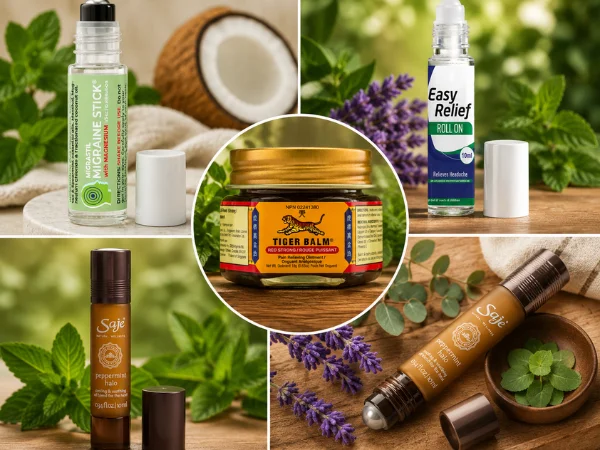
Badger Headache Soother competes in several overlapping categories, so there is no single perfect competitor.
Some alternatives compete on headache aromatherapy, while others compete on natural ingredients, and others compete on topical cooling or pain relief.
Saje’s Peppermint Halo is one of the closest conceptual competitors.
It is positioned as a topical aromatherapy product featuring peppermint and other essential oils and is marketed specifically around headache and tension-related wellness.
The key similarity is the target customer: someone looking for an aromatic, topical alternative to conventional headache products.
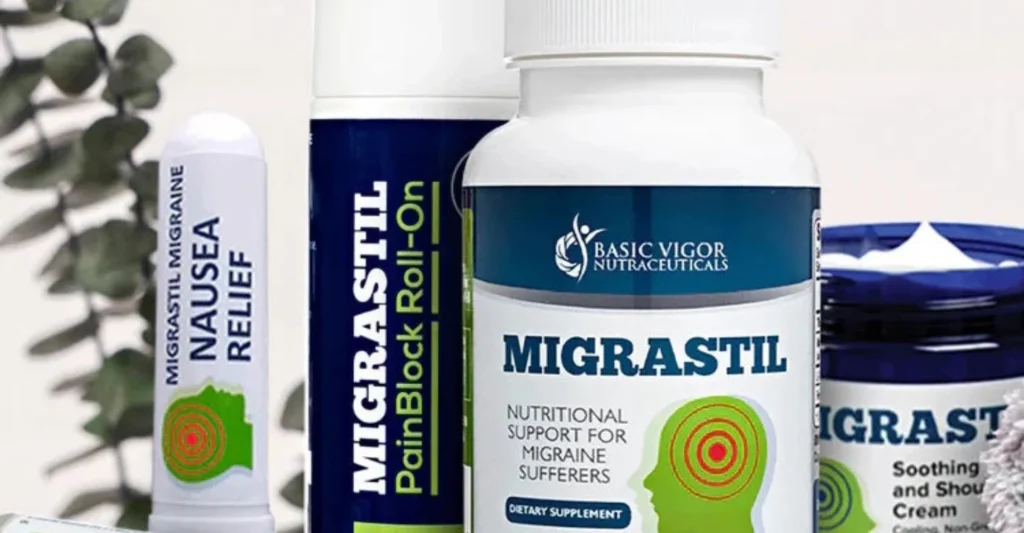
Migrastil is another competitor in the portable topical headache and migraine-support category.
Its format is particularly relevant because it targets consumers who want something that can be applied directly to the temples or forehead.
Numerous essential-oil brands sell peppermint-based headache roll-ons.
These products compete directly with Badger on portability, natural positioning and aromatherapy.
However, Badger’s USDA organic certification and established natural-products brand give it an advantage among shoppers already familiar with the company.
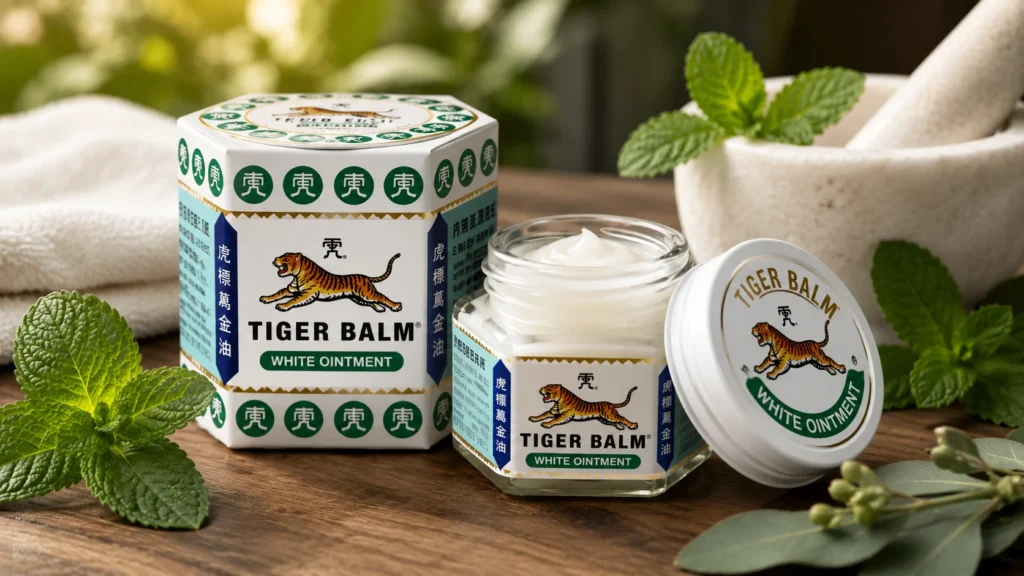
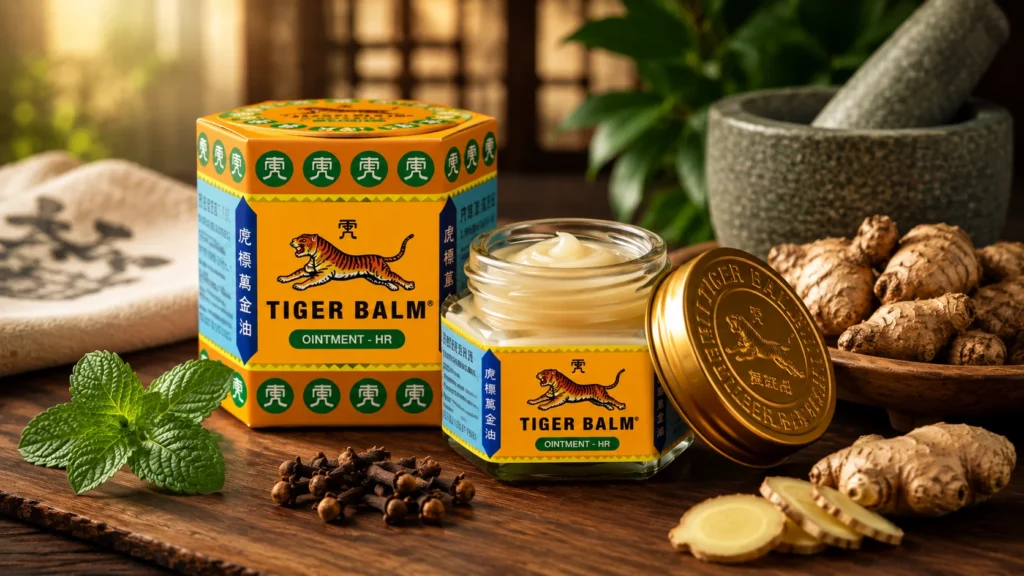
Tiger Balm is a broader topical analgesic competitor.
Its classic products contain ingredients such as menthol and camphor and have a much stronger heritage in topical pain relief.
The two brands are not identical competitors, though.
Tiger Balm generally has a stronger medicinal/topical-analgesic identity, while Badger Headache Soother leans more heavily toward organic aromatherapy and wellness.
Weleda competes more broadly in the natural and organic personal-care market.
It is relevant because consumers who shop for certified natural or botanical products may consider both brands.
Burt’s Bees is another major natural-products brand that competes for the same general consumer mindset.
It has a much broader presence in lip care, skin care and personal care, but its natural-brand positioning overlaps with Badger’s target audience.
Badger’s advantage is its unusually strong focus on organic certification, in-house manufacturing and family ownership.

This is one area where online articles often make unsupported claims.
Badger does not publicly disclose a standalone annual revenue figure for Headache Soother.
It also does not publish audited financial statements that break out sales by individual product.
So there is no credible public number for:
Those figures should not be invented.
Historical reporting provides some useful context.
Forbes reported that W.S. Badger generated approximately $17 million in annual revenue in 2017 and had more than 100 employees at that time.
Another Forbes profile from 2017 cited approximately $16 million in revenue and 100 employees.
These figures are historical, not current 2026 revenue.
More recent third-party databases provide estimates rather than audited company disclosures. Dun & Bradstreet currently lists estimated annual sales revenue of approximately $13.99 million for W.S. Badger Company, while other commercial databases place the company in broader revenue ranges.
These estimates conflict with each other and should therefore be treated as directional rather than definitive.
Third-party e-commerce tracking offers another, narrower data point.
Particl currently estimates approximately $1.1 million in Badger e-commerce sales over the most recent six-month period it tracks, with about 73,000 units sold. It estimated approximately $284,000 in sales during June 2026 alone.
But there is a critical limitation.
That figure is an estimated e-commerce dataset, not Badger’s total company revenue.
It does not include every retail channel, wholesale sales, international distributor sales or other revenue sources. It also covers the broader Badger product catalog, not Headache Soother specifically.
Therefore, the safest conclusion is that Badger is a meaningful independent natural-products company with international distribution, but there is no publicly verified 2026 revenue number for Badger Headache Soother itself.
The appeal of Badger Headache Soother is relatively straightforward.
It combines:
The result is a portable balm designed to provide a cooling, refreshing and aromatic experience.
The product is especially attractive to people who prefer botanical products and want something they can apply without swallowing a pill.
But it is important to keep expectations realistic.
Badger Headache Soother should not be presented as a proven cure for migraines or a substitute for medical care. Customer experiences vary, and even current reviews include people who found it soothing but said it did not actually stop their headache.
Its strongest proposition is therefore not “this will eliminate every headache.”
It is:
a convenient, organic, menthol-and-essential-oil balm designed to cool, refresh and create a soothing aromatherapy experience when you feel uncomfortable or tense.
Badger Headache Soother is the product of a much bigger story.
The Badger brand began in 1995, when carpenter Bill Whyte created a simple beeswax-and-olive-oil balm to protect his cracked hands during New Hampshire winters. He and his wife Katie initially filled tins in their kitchen and sold them locally.
More than 30 years later, Badger is still family owned, but it has grown into a broad natural and organic personal-care business with more than 100 products and international distribution.
The company is now led by Bill Whyte’s daughters, Emily Schwerin-Whyte and Rebecca Hamilton, who serve as co-CEOs.
Badger Headache Soother itself contains 12 ingredients, with menthol, peppermint and eucalyptus providing much of the cooling and refreshing sensory experience. Olive oil, beeswax and castor oil create the balm base, while lavender, mandarin, sandalwood, calendula, rosehip and vitamin E round out the formulation.
Its current positioning is built around organic aromatherapy, cooling, relaxation and portability, rather than being marketed as a conventional pharmaceutical headache treatment.
Manufacturing is another important part of Badger’s identity.
The company makes nearly all of its products at its own facility in Gilsum, New Hampshire, a custom-built factory powered by solar energy.
Marketing has also played a major role.
Instead of relying primarily on celebrity endorsements or huge advertising budgets, Badger has built its reputation around founder storytelling, organic certification, environmental responsibility, family ownership, distinctive artwork and word-of-mouth. Its natural sunscreen success in the mid-2000s helped transform the company from a small balm maker into a much broader natural-products brand.
The company’s competitive position is strongest among consumers who value organic ingredients, natural personal care, American manufacturing and aromatherapy.
It faces competition from products such as Saje Peppermint Halo, Migrastil, other peppermint-based headache roll-ons, Tiger Balm and broader natural brands such as Weleda and Burt’s Bees.
Financially, however, caution is essential.
There is no verified public revenue figure for Badger Headache Soother alone, and Badger does not publicly disclose product-level sales. Third-party sources estimate overall W.S. Badger revenue in the tens of millions of dollars, while e-commerce tracking provides only a partial view of online sales.
That lack of public product-level financial data does not make Headache Soother insignificant. It simply means claims about exact sales or market share should be treated carefully.
Ultimately, Badger Headache Soother’s success comes from the same formula that has driven Badger for more than three decades: simple ingredients, a strong founder story, organic credentials, distinctive branding, family ownership and a product experience that feels personal rather than mass-produced.
For consumers who want a small, portable balm with menthol and botanical oils, that combination is the heart of the product’s appeal.