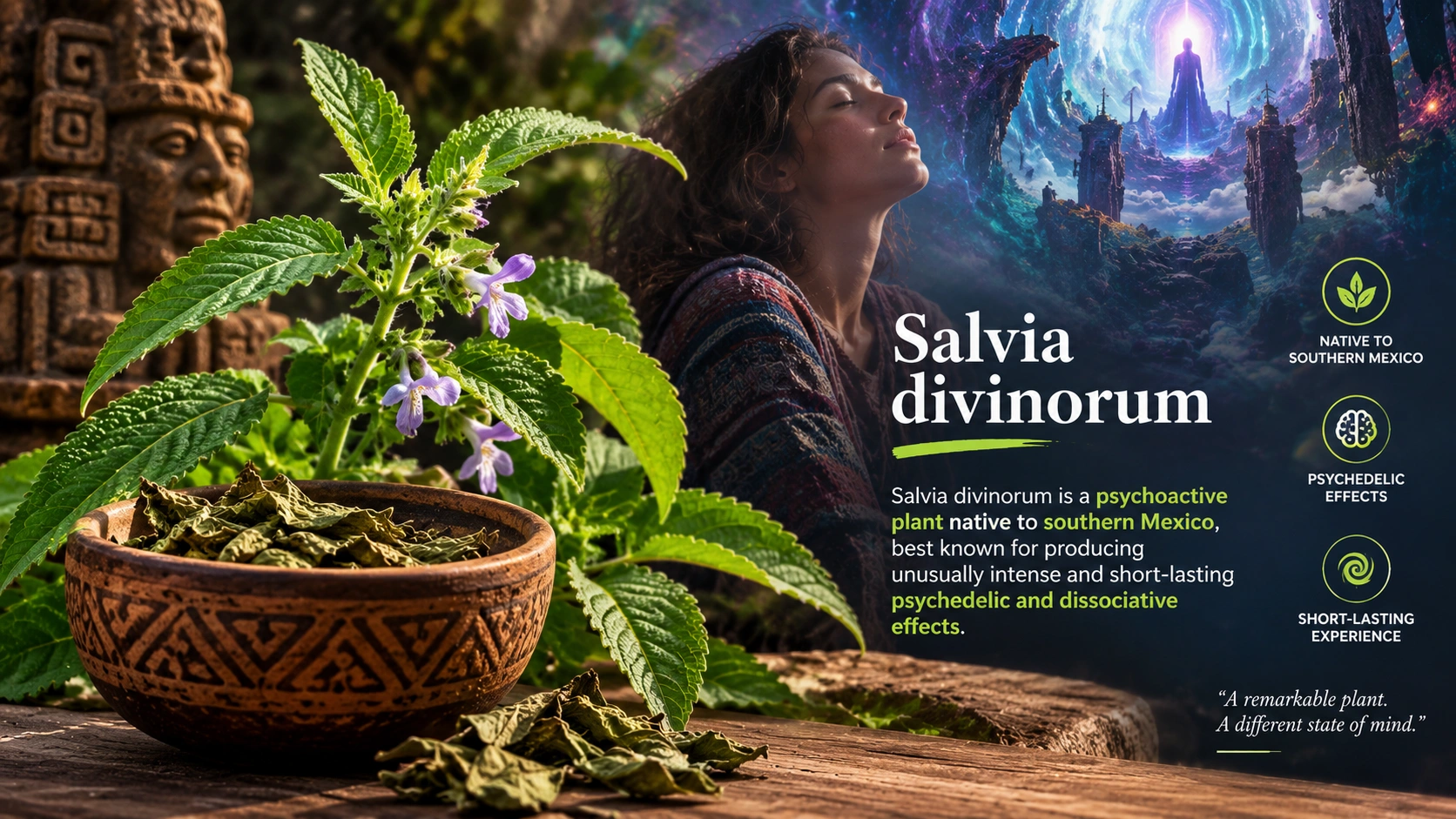
Salvia divinorum is a psychoactive plant native to southern Mexico, best known for producing unusually intense and short-lasting psychedelic and dissociative effects.
Salvia divinorum was not “discovered” by Western science in the same way that a newly synthesized chemical might be.
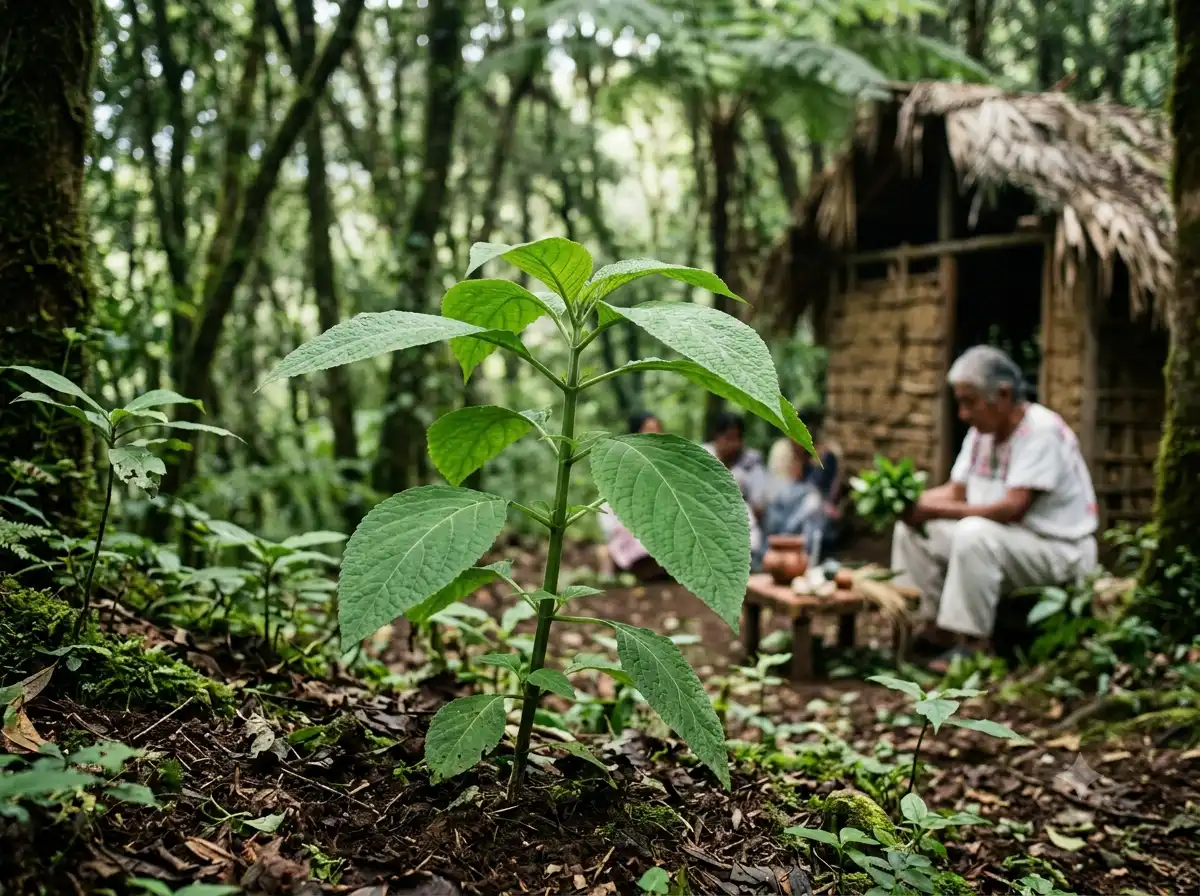
The plant was already known and used by the Mazatec people of Oaxaca, Mexico for generations before modern researchers documented it.
Its traditional name, hojas de la Pastora, is associated with the plant’s use in spiritual and healing practices. Mazatec healers used the leaves during divination ceremonies, where altered states of consciousness were traditionally sought for spiritual insight and diagnosis.
Historical accounts indicate that ethnobotanist R. Gordon Wasson learned about the plant’s traditional use from Mazatec healers in the early 1960s.
In 1962, Wasson and Swiss chemist Albert Hofmann, famous for his work with LSD, traveled to Oaxaca and collected flowering specimens of the plant. Their work helped Western science formally identify and describe the species.
The plant was subsequently classified botanically by Carl Epling and Carlos Játiva-M in 1962.
Traditional Mazatec use already demonstrated that the plant could profoundly alter consciousness.
Modern science later began asking a different question:
What chemical inside the plant causes these effects?
That question was eventually answered in the early 1980s.
In 1982, researchers Alfred Ortega, John Blount, and colleagues isolated salvinorin A, the principal psychoactive compound in Salvia divinorum.
The discovery was remarkable.
Scientists had already identified many hallucinogens that worked through serotonin systems.
Salvinorin A was different.
It turned out to be a powerful and highly selective activator of the kappa-opioid receptor.
This opened an entirely new area of neuroscience research because it demonstrated that intense psychedelic-like states could be produced through a receptor system very different from the classic serotonin pathway.
Over time, Salvia divinorum moved from traditional Mazatec ceremonies into botanical collections, scientific laboratories, online communities, and recreational drug markets.
Its popularity increased significantly during the 1990s and 2000s as information about psychoactive plants spread through the internet.
By the late 2000s and early 2010s, videos showing people experiencing Salvia became common online.
This generated significant public attention, particularly because the effects often looked dramatically different from those associated with cannabis or alcohol.
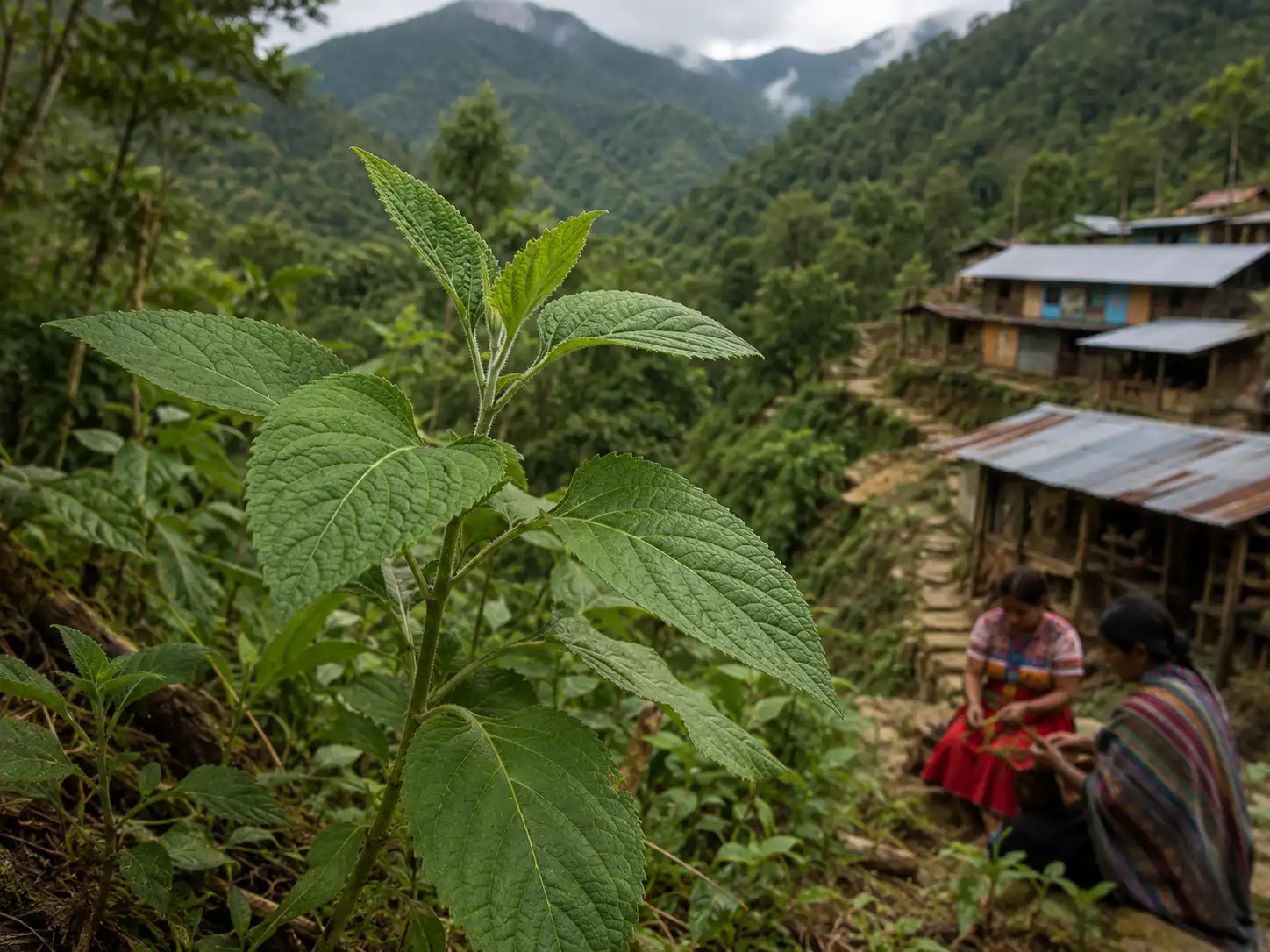
Salvia divinorum is endemic to a relatively small region of Oaxaca, Mexico, particularly the Sierra Mazateca.
“Endemic” is important here.
It means the plant naturally occurs in that particular geographic region rather than being naturally widespread across the world.
The plant grows in warm, humid environments and is associated with forested, mountainous areas of Oaxaca.
Traditional knowledge of the plant is particularly connected to the Mazatec communities of the Sierra Mazateca.
Unlike many psychoactive plants that grow across large portions of a continent, the natural distribution of Salvia divinorum is comparatively restricted.
Today, however, the plant is cultivated outside Mexico.
It can be grown in controlled environments and by botanical enthusiasts in other countries, meaning that the plant’s modern availability is much broader than its original natural range.
The narrow natural distribution of Salvia divinorum is important from both a cultural and scientific perspective.
Its traditional use is deeply connected to the people and environment of Oaxaca.
Researchers have also pointed out that relatively little is known about the plant’s natural ecology, genetics, pollination, and evolutionary history compared with many more widely studied plants.
So while the internet may make Salvia appear like an ordinary commercially available herb, its biological and cultural history is much more specific.
The legal status varies considerably by country and, in the United States, by state.
The U.S. Drug Enforcement Administration states that Salvia divinorum and salvinorin A are not currently controlled under the federal Controlled Substances Act, but several states have enacted their own restrictions. The DEA also states that Salvia divinorum has no approved medical use in the United States.
Because laws can change, anyone researching the plant should check current laws in their specific location rather than relying on old internet claims that Salvia is simply “legal.”
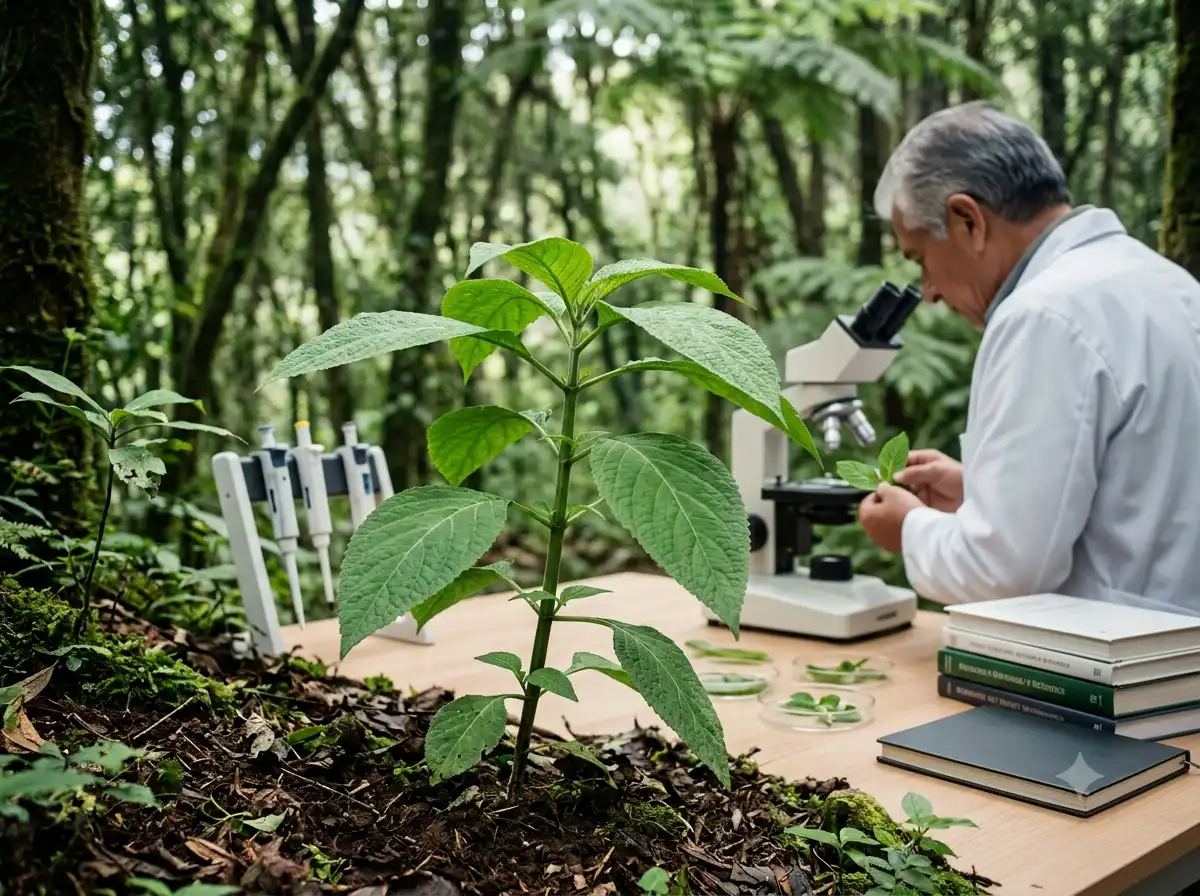
The unusual effects of Salvia divinorum begin with salvinorin A.
Salvinorin A is a neoclerodane diterpene, a type of naturally occurring compound produced by the plant.
Its chemical structure is very different from classic psychedelic compounds such as LSD, psilocybin, or DMT.
Most importantly, salvinorin A has a very high affinity for the kappa-opioid receptor.
The kappa-opioid receptor is part of the opioid receptor family.
The brain and body naturally produce opioid peptides that interact with these receptors.
But the kappa-opioid receptor is different from the mu-opioid receptor, which is primarily associated with the classic effects of drugs such as morphine.
Salvinorin A strongly activates the kappa receptor while showing little activity at the other major opioid receptor types.
This unusual selectivity helps explain why the Salvia experience can feel so different from other psychedelic experiences.
This is one of the most important scientific facts about Salvia.
LSD and psilocybin primarily interact with serotonin 5-HT2A receptors.
Salvinorin A does not depend on this mechanism.
Instead, activation of kappa-opioid receptors changes signaling through intracellular pathways involving G-proteins and downstream neuronal signaling systems.
This can influence perception, mood, sensory processing, pain perception, movement, memory, and the brain’s interpretation of internal and external information.
Salvinorin A is highly potent but also rapidly metabolized and eliminated.
Its chemical structure contributes to rapid breakdown, which helps explain why the intense subjective experience is generally short-lived.
Human studies have found a very rapid onset after inhalation, with effects peaking within minutes and declining relatively quickly afterward.
This creates an unusual pattern:
Very intense experience + very short duration.
That combination is one of the defining characteristics of Salvia divinorum.
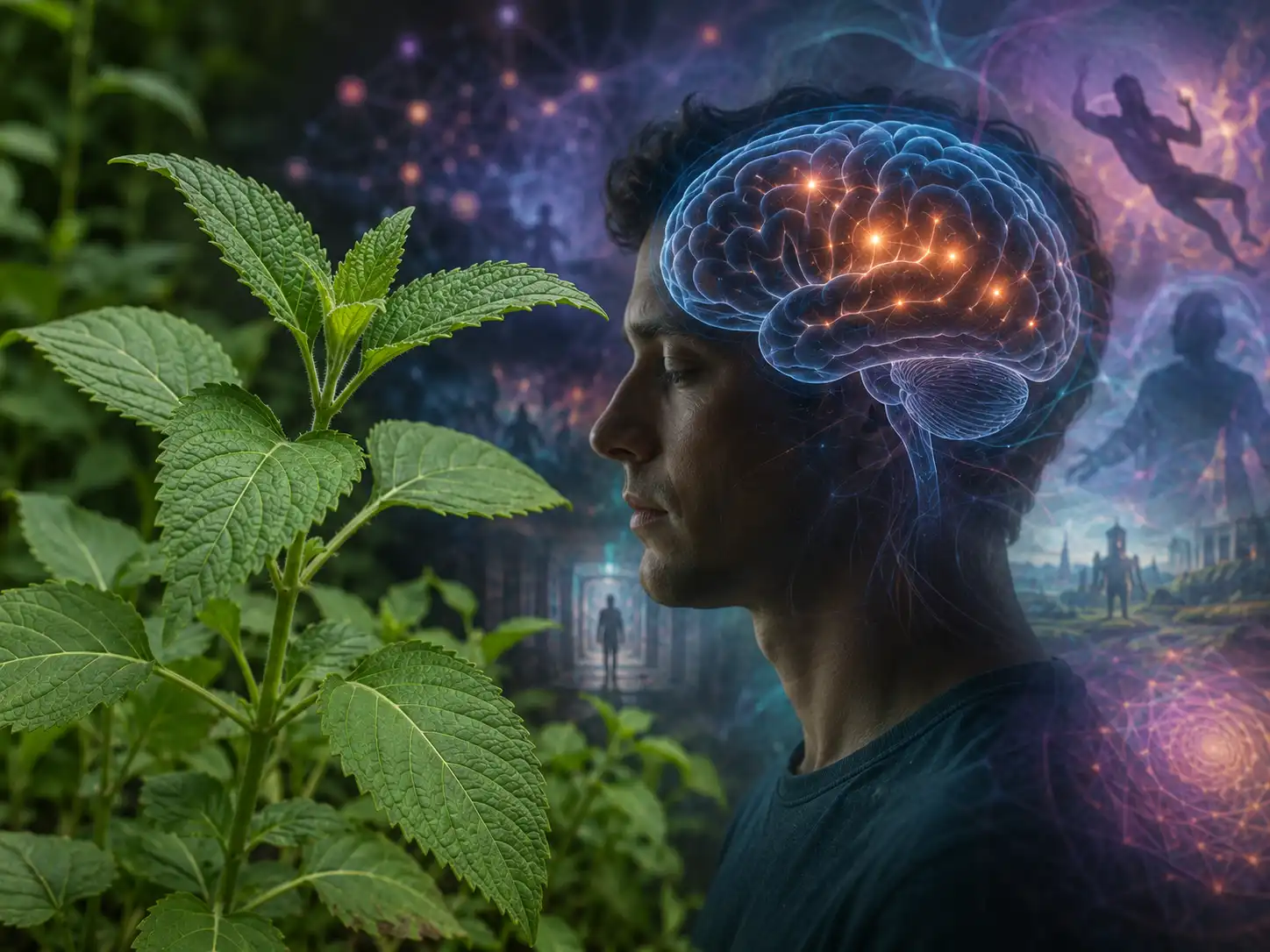
The brain effects of Salvia are among the most unusual aspects of the plant.
Human studies have documented dissociation, hallucinations, changes in body perception, altered spatial awareness, impaired memory, and major changes in subjective reality.
Dissociation means a temporary disruption in the normal sense of connection between yourself, your body, your surroundings, and your thoughts.
Someone may feel:
This is not simply seeing colorful patterns.
Salvia can alter the fundamental feeling of where you are and who you are.
Human research has found unusual changes in interoceptive and vestibular experiences.
Interoception refers to the brain’s perception of internal bodily signals.
Vestibular processing is involved in balance and spatial orientation.
Researchers have reported experiences involving unusual pressure sensations, changes in spatial orientation, and a distorted sense of movement.
This helps explain why people sometimes describe Salvia experiences as feeling like being pulled, rotated, folded, stretched, or transported.
In a controlled human study, salvinorin A produced dose-related impairments in recall and recognition memory.
This is important because online discussions sometimes portray Salvia as simply a visual psychedelic.
The effects are broader than visual hallucinations.
Salvia can temporarily disrupt the brain’s ability to process and remember information normally.
Current research does not establish that typical exposure causes permanent structural brain damage.
Human studies have generally focused on acute effects and relatively short follow-up periods.
One controlled study found no evidence of persistent adverse effects at one-month follow-up.
However, this should not be interpreted as proof that every pattern of use is harmless.
Research into long-term human effects remains limited.

Salvia’s strongest effects are psychological and perceptual, but the body is also affected.
Human studies have reported changes in:
The effects vary between people and depend on the preparation and exposure.
One controlled human study found no significant increases in heart rate or blood pressure after inhaled salvinorin A, despite intense subjective effects.
Another study observed increases in cortisol and prolactin after exposure.
This demonstrates an important point:
A person can experience an extremely intense psychological effect without showing a dramatic increase in conventional vital signs.
Loss of coordination and dizziness have been reported among adverse effects.
The DEA lists loss of coordination, dizziness, and slurred speech among possible physical effects.
This creates an important practical danger.
A person who is severely disoriented may not realize that they are physically unstable.
That creates risks from falls, traffic, water, heights, or other environmental hazards.
The phrase “positive effects” needs some context.
Salvia is not an approved medical treatment in the United States, and many of the experiences people describe as positive are subjective rather than established medical benefits.
Still, research and user reports have identified several potentially interesting effects.
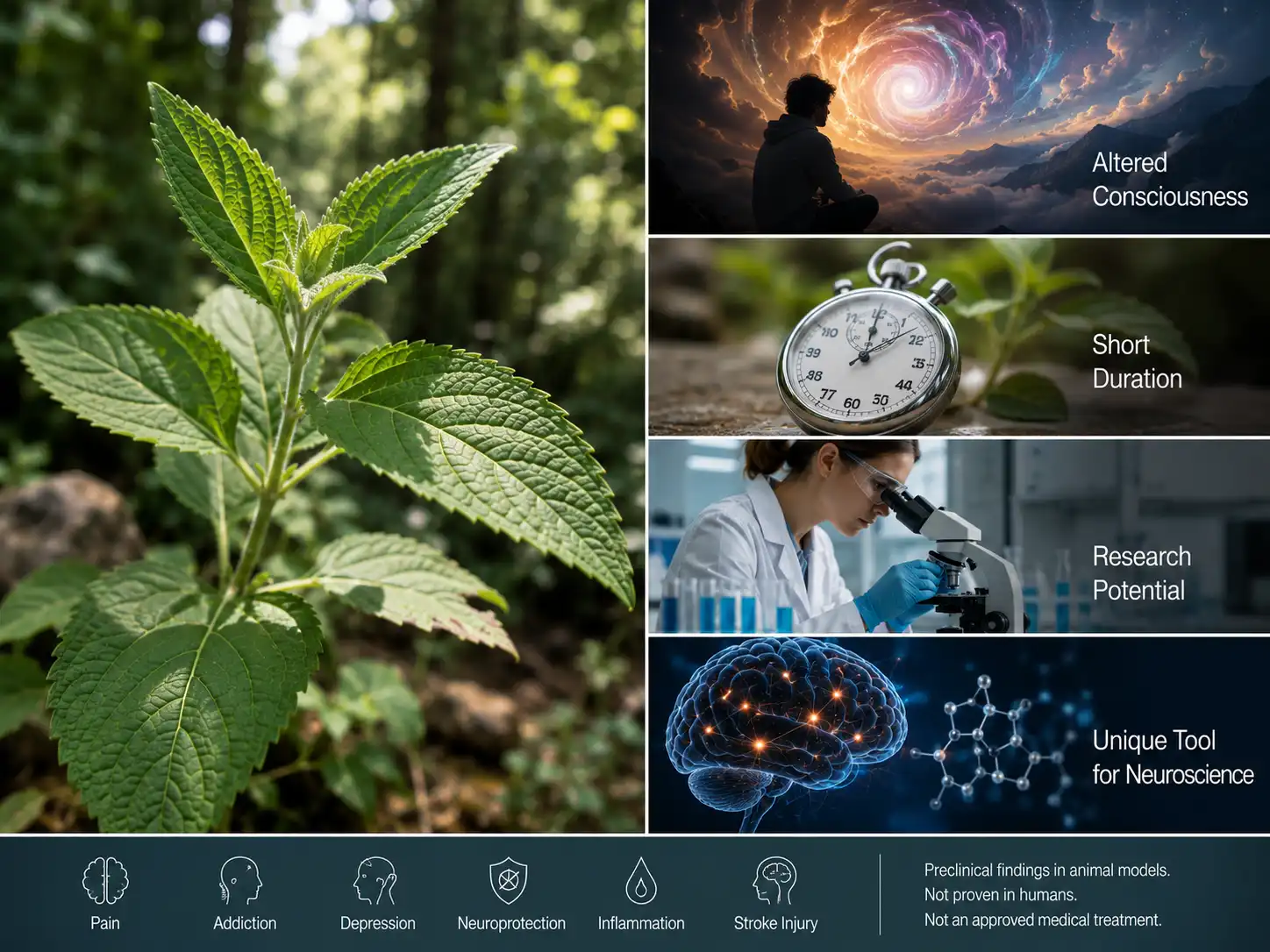
Some people seek Salvia specifically because it produces an unusual change in consciousness.
The experience can be radically different from ordinary waking perception.
Compared with many classic psychedelics, salvinorin A’s intense effects are remarkably brief.
Controlled studies found rapid onset and rapid decline of subjective effects.
This makes it scientifically interesting because researchers can study an intense altered state over a relatively short time window.
Salvinorin A is scientifically valuable because it provides researchers with a tool for studying the kappa-opioid receptor system.
Animal research has investigated possible applications involving:
A 2025 systematic review of preclinical research found evidence of anti-nociceptive, anti-inflammatory, neuroprotective, and anti-addictive effects in animal models, while also finding anxiety-like and cognitive/motor impairments in some settings.
These findings are intriguing.
But they are preclinical findings, not proof that Salvia divinorum can treat these conditions in humans.
Perhaps its biggest “positive” scientific effect is that Salvinorin A has expanded our understanding of consciousness.
It demonstrates that profound psychedelic-like experiences can occur through a receptor system that is fundamentally different from the classic serotonin psychedelic pathway.
That makes Salvia important to neuroscience even if it never becomes a mainstream medicine.

The negative effects deserve as much attention as the potential positive ones.
Salvia can produce an experience that is extremely difficult to predict or understand while it is happening.
Reported adverse effects include:
A detailed review of Salvia pharmacology reports confusion, drowsiness, dizziness, tachycardia, fear, panic, paranoia, agitation, sadness, irritability, sweating, and chills among reported effects.
Salvia’s hallucinations are not necessarily pleasurable.
A person may experience extremely vivid perceptions that they cannot recognize as drug-induced while they are occurring.
Some people report feeling trapped, pulled apart, transported, transformed, or confronted by unfamiliar environments or entities.
This is one reason researchers describe Salvia as capable of producing dissociative and psychotomimetic effects rather than simply calling it a “fun psychedelic.”
Because coordination and awareness can be impaired, the surrounding environment matters enormously.
A person experiencing intense dissociation may not accurately judge:
This creates a risk of accidental injury even when the drug itself does not cause severe cardiovascular toxicity.
Research suggests that Salvia can precipitate anxiety, paranoia, and other psychiatric symptoms in some people.
A review from the National University of Singapore and Duke-NUS noted concerns about psychiatric symptoms and negative effects on cognition, while also emphasizing that long-term effects have not been adequately studied.
Anyone with a personal or family history of serious psychiatric illness should be particularly cautious about psychoactive substances.
The addiction potential appears to be relatively low compared with classical drugs of dependence, and salvinorin A does not produce the same rewarding profile associated with many conventional opioids.
However, low addictive potential does not mean no risk.
The plant can still produce dangerous intoxication, impaired judgment, and psychological distress.
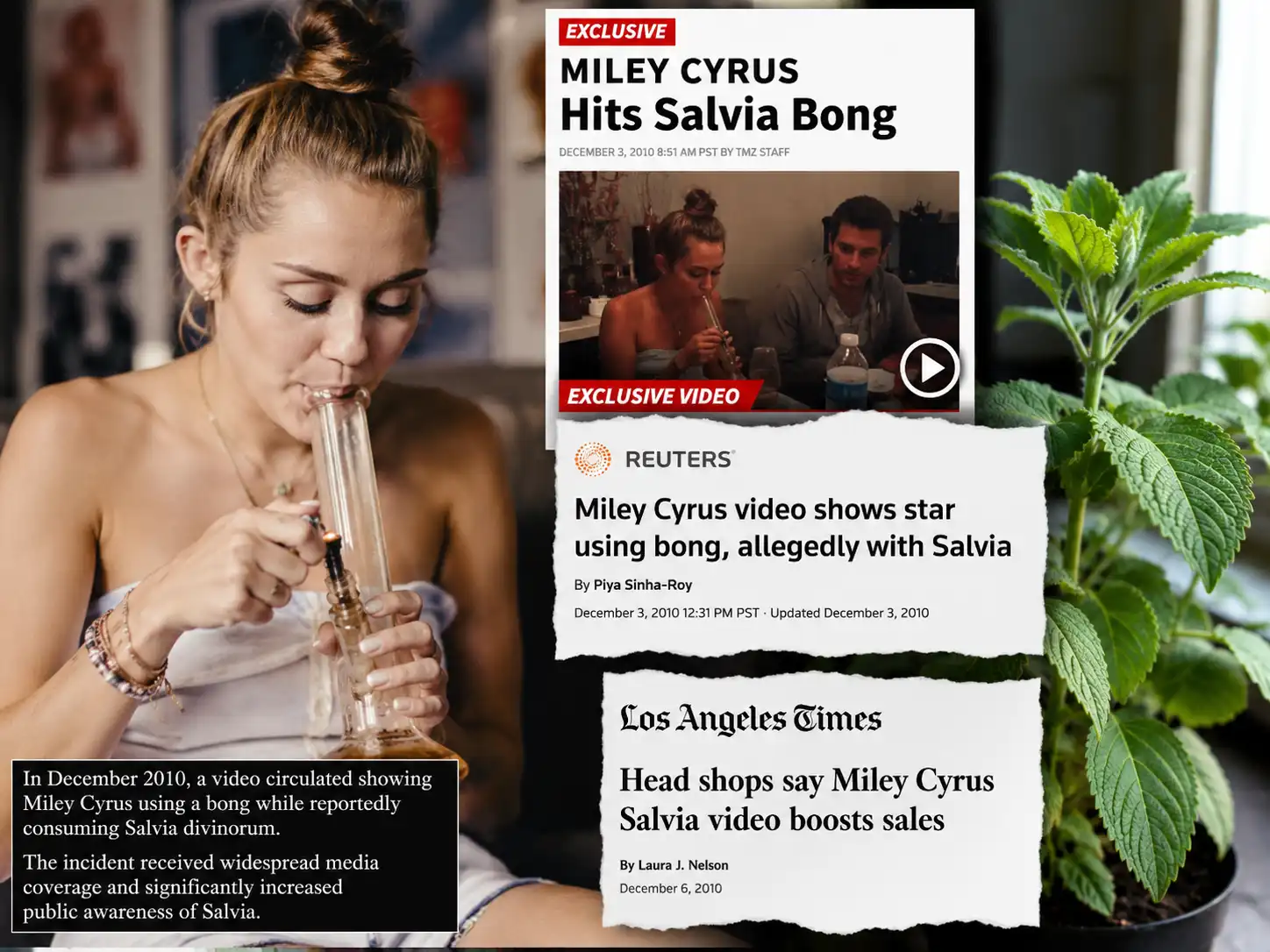
The most famous celebrity connection is Miley Cyrus.
In December 2010, a video circulated online showing Cyrus, shortly after her 18th birthday, using a bong while reportedly consuming Salvia divinorum.
The incident received extensive media coverage because Cyrus was already one of the world’s most recognizable young entertainers following her role as Hannah Montana.
Reuters reported at the time that the substance was reportedly Salvia rather than marijuana, based on information surrounding the video.
The incident dramatically increased public awareness of Salvia.
It even appears to have influenced consumer interest.
Contemporary reporting from Los Angeles described head shops experiencing increased demand after the video circulated, with some customers reportedly asking specifically for the product associated with Cyrus.
That episode is an interesting example of how celebrity culture can influence awareness of a relatively obscure psychoactive substance.
However, it is important not to treat celebrity use as evidence that a substance is safe.
A celebrity’s experience is not scientific evidence.
There are also many online claims about other celebrities supposedly using Salvia, but most are poorly documented.
Miley Cyrus is the clearest widely reported celebrity case.
Salvia divinorum is one of the most unusual psychoactive plants known to modern science.
Native to a relatively small region of Oaxaca, Mexico, it has a long history of traditional use among Mazatec communities for spiritual and divinatory practices. Western scientific interest accelerated after R. Gordon Wasson and Albert Hofmann collected specimens in Oaxaca in 1962, followed by botanical classification and later isolation of its principal psychoactive compound, salvinorin A.
What makes Salvia particularly fascinating is its chemistry.
Its active compound, salvinorin A, is a powerful and selective kappa-opioid receptor agonist.
That makes it fundamentally different from LSD, psilocybin, and many other classic psychedelics, which primarily work through serotonin receptors.
The result can be an extraordinarily intense alteration in consciousness.
People may experience vivid hallucinations, dissociation, distorted body awareness, unusual spatial sensations, confusion, and temporary memory impairment.
Yet the experience is usually remarkably brief.
Controlled human studies have found effects that can begin rapidly, peak within minutes, and then fade relatively quickly.
That combination of high intensity and short duration is one of the reasons Salvia has become so interesting to neuroscientists.
The potential medical applications are also scientifically intriguing.
Researchers are investigating salvinorin A and related compounds for possible applications involving pain, addiction, depression, inflammation, and neurological injury. A recent systematic review of preclinical research found promising effects in several animal models, but also found anxiety-like behavior and cognitive or motor impairment in some experiments.
This distinction is essential.
Promising laboratory research is not the same as an approved human treatment.
Salvia divinorum currently has no approved medical use in the United States, according to the DEA.
The risks also deserve attention.
Although severe physical toxicity and fatal overdose have not been clearly established in the available literature, the psychological effects can be intense. Panic, paranoia, confusion, dizziness, impaired coordination, and dissociation can create real dangers, especially through accidental injury or unpredictable behavior.
The long-term effects of repeated human use also remain insufficiently understood.
Perhaps the biggest lesson from Salvia is that “natural” does not mean mild.
A plant can be natural and still profoundly alter brain function.
Salvia divinorum is therefore best understood not as an ordinary herbal supplement, but as a powerful psychoactive plant with deep cultural roots, unusual chemistry, significant effects on consciousness, and an active role in modern neuroscience research.
Its story also shows why context matters.
For the Mazatec people, the plant has a cultural and spiritual history that predates modern recreational use by generations.
For scientists, salvinorin A offers a unique window into the kappa-opioid system and the biology of consciousness.
For modern recreational users, however, the experience can be unpredictable and psychologically overwhelming.
The most responsible conclusion is simple:
Salvia divinorum is scientifically fascinating, culturally significant, and pharmacologically unique, but it should not be confused with a harmless natural herb or an established medical treatment.
The research into salvinorin A may eventually lead to new medicines that target pain, addiction, mood, or other neurological conditions without producing the intense psychedelic effects of the original compound.
For now, much of that potential remains in the research stage.
And that is precisely what makes Salvia divinorum so interesting: a traditional Mexican plant has helped scientists discover an entirely different way of thinking about opioid receptors, altered consciousness, and the human brain.
No. Salvia divinorum belongs to the same broad plant genus as culinary sage but is a distinct species with very different chemistry. Its principal psychoactive compound is salvinorin A.
It is generally described as a psychedelic, dissociative, or hallucinogenic plant, but it does not work like classic psychedelics. Salvinorin A primarily activates kappa-opioid receptors rather than the serotonin 5-HT2A receptor that mediates many classic psychedelic effects.
The intense effects are generally short-lived. Controlled human studies found effects peaking within a few minutes and subjective effects largely declining within roughly 20 minutes after inhalation, although individual experiences can vary.
It can be. Although research has not established a pattern of severe physical toxicity comparable with some other drugs, Salvia can cause intense hallucinations, panic, confusion, impaired coordination, paranoia, and loss of awareness of surroundings.
Its legal status is complicated. The DEA says Salvia divinorum and salvinorin A are not controlled under the federal Controlled Substances Act, but several states have enacted their own restrictions. There is also no approved medical use for Salvia in the United States.
There is currently no strong human evidence establishing that typical exposure causes permanent brain damage. However, long-term human research is limited, so it would be inaccurate to claim that long-term use is proven completely safe.
Its unusual effects appear to come from activation of kappa-opioid receptors. This receptor system influences perception, sensory processing, mood, movement, and other brain functions. Salvinorin A’s mechanism is fundamentally different from classic serotonin-based psychedelics.