Ayahuasca is a traditional Amazonian psychedelic brew with a history rooted in Indigenous and religious practices across parts of South America. It is best known for producing powerful changes in perception, emotions, memory, sense of self, and consciousness.
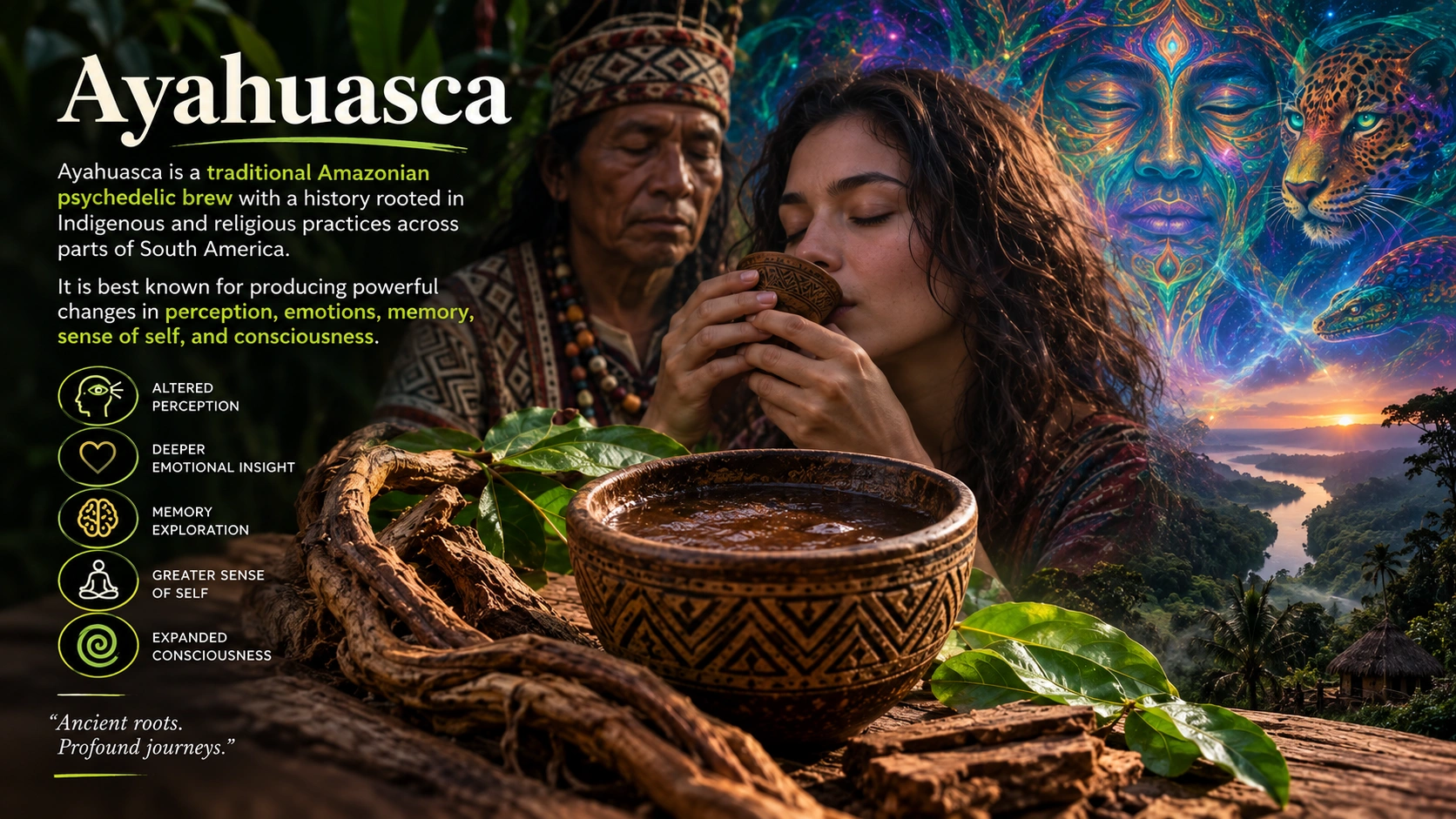
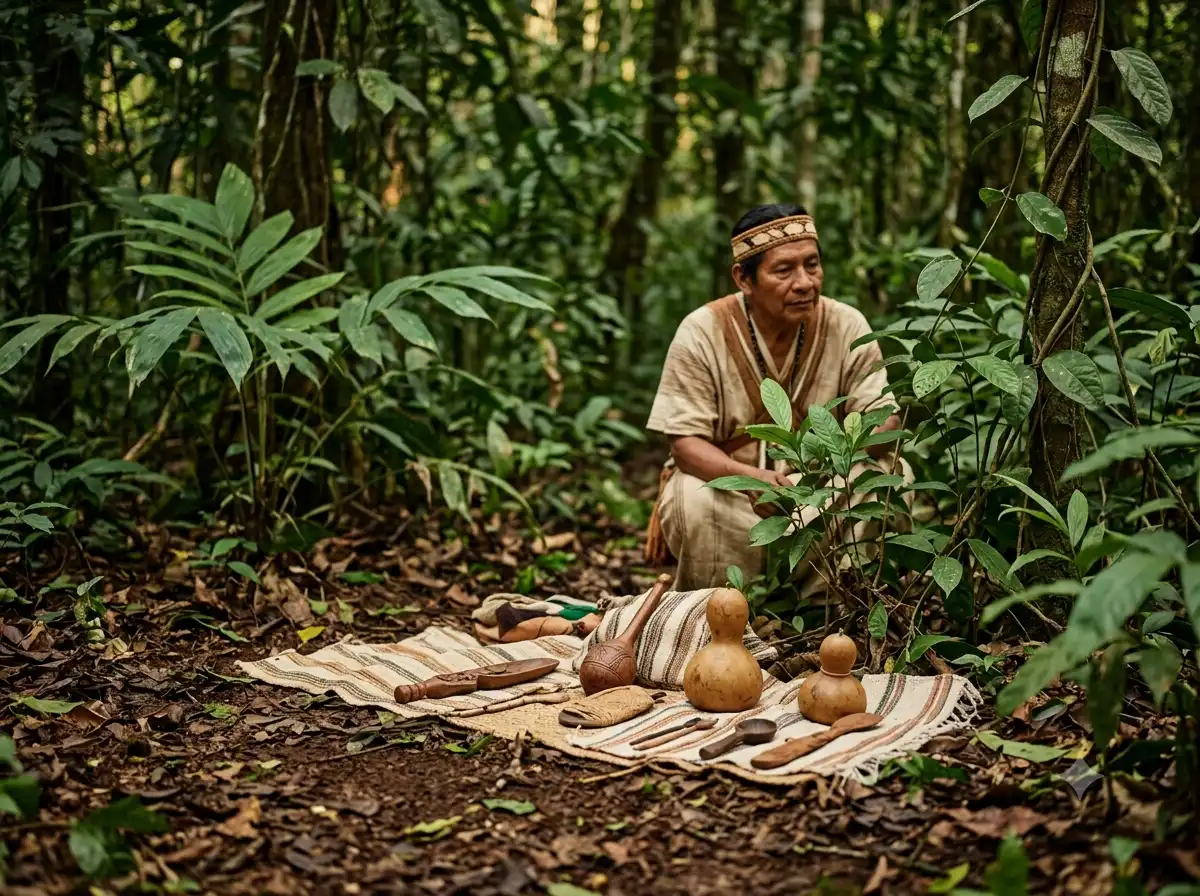
The exact origin of ayahuasca remains uncertain.
Its use is deeply rooted in the Amazon Basin, where Indigenous communities have incorporated plant medicines into healing, spiritual, social, and ceremonial traditions for generations.
Some researchers believe ayahuasca practices may be very ancient, potentially extending back thousands of years, while others argue that the modern ayahuasca tradition developed more recently through interactions among Indigenous cultures, colonial influences, and mestizo healing practices. The historical evidence does not allow researchers to identify a single “inventor” of ayahuasca. (pmc.ncbi.nlm.nih.gov)
There is no scientifically established discovery date.
Indigenous peoples were using ayahuasca long before European scientists documented it.
One of the earliest important Western scientific accounts came from the British botanist Richard Spruce, who encountered ayahuasca use during his Amazon expeditions between 1849 and 1864. (pmc.ncbi.nlm.nih.gov)
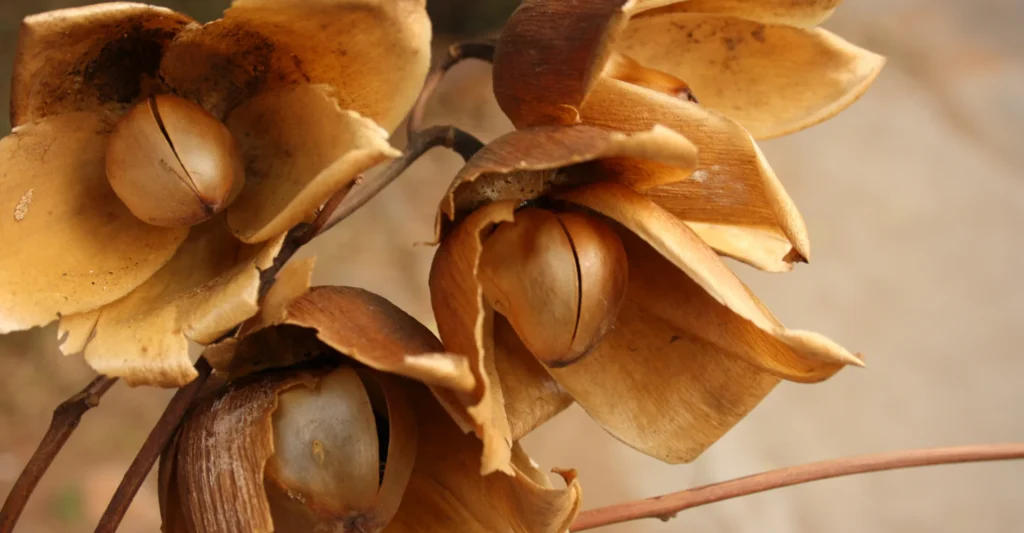
Spruce documented the Banisteriopsis vine and its ceremonial use.
His observations became an important part of the botanical history of ayahuasca.
However, understanding the plant’s traditional use and understanding its chemistry were two very different scientific steps.
DMT was synthesized and identified as a chemical compound in the twentieth century, but its connection with ayahuasca came later.
Researchers eventually established that some plants used in ayahuasca preparations contain DMT, while the Banisteriopsis caapi vine contains beta-carboline alkaloids that can inhibit monoamine oxidase.
That solved one of the biggest pharmacological puzzles surrounding ayahuasca:
How can DMT be active when taken orally?
The answer is the combination of DMT with MAO-inhibiting beta-carbolines. (pubmed.ncbi.nlm.nih.gov)
Ayahuasca gradually moved beyond Indigenous and mestizo communities into organized religious movements.
In Brazil, religious groups including Santo Daime, Barquinha, and União do Vegetal incorporated ayahuasca into spiritual practices during the twentieth century. (pmc.ncbi.nlm.nih.gov)
Its international popularity increased substantially from the late twentieth century onward.
Books, anthropology, documentaries, travel culture, online communities, and reports from people attending ceremonies in South America all contributed to growing Western interest.
One notable early cultural influence was William S. Burroughs’ The Yage Letters, which described his search for yagé, another name associated with ayahuasca preparations.
Since then, ayahuasca has become associated with concepts such as:
However, the growing popularity has also created concerns about commercialization, inexperienced facilitators, exploitation of Indigenous traditions, and unsafe retreat environments.
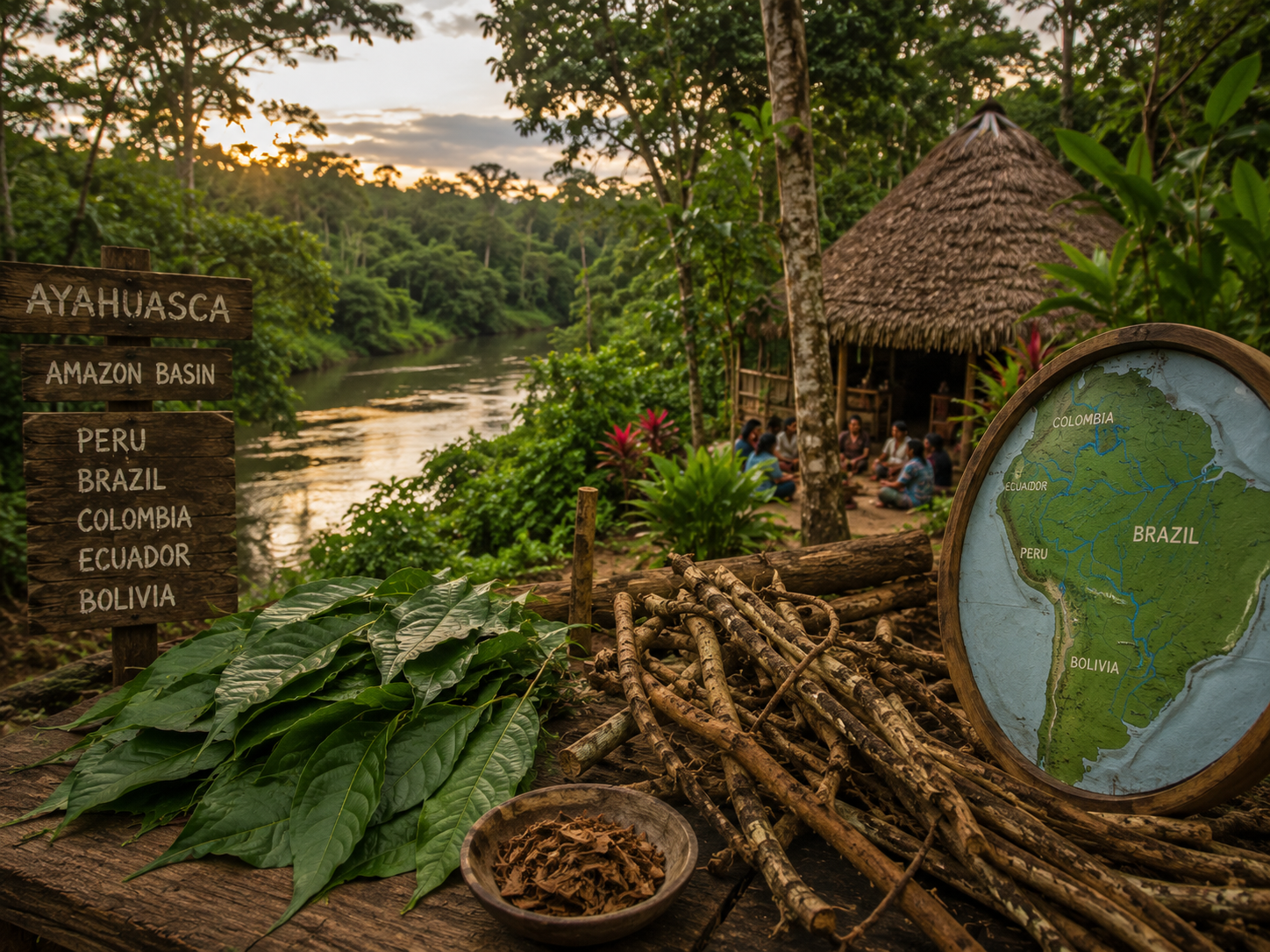
Ayahuasca is traditionally associated with the Amazon Basin, particularly areas of:
The plants used in ayahuasca preparations grow naturally across tropical South America, although different communities use different species and formulations. (pubmed.ncbi.nlm.nih.gov)
Peru has become one of the most internationally recognized destinations for ayahuasca ceremonies.
The practice is particularly associated with Indigenous and mestizo traditions in the Peruvian Amazon, including areas around Iquitos.
Shipibo-Conibo traditions have also become internationally recognized, especially for ceremonial healing practices involving plant medicines.
Brazil is particularly important because ayahuasca became incorporated into organized religious traditions.
Groups such as Santo Daime and União do Vegetal use ayahuasca as a sacrament within structured religious settings. (pubmed.ncbi.nlm.nih.gov)
Ayahuasca, sometimes referred to as yagé, has long-standing Indigenous traditions in Colombia and neighboring regions.
The plants and ceremonial practices can vary considerably between communities.
Today, ayahuasca ceremonies and retreats can be found in parts of North America, Europe, Australia, and elsewhere.
But the legal situation varies dramatically.
In the United States, DMT is federally classified as a Schedule I controlled substance, while certain religious organizations have received legal protection under specific circumstances. The legal status of ayahuasca itself can depend on its contents, context, jurisdiction, and applicable exemptions.
Therefore, claims that ayahuasca is simply “legal” or “illegal” everywhere are misleading.
Anyone considering its use should check the current laws of the specific country and state or region.
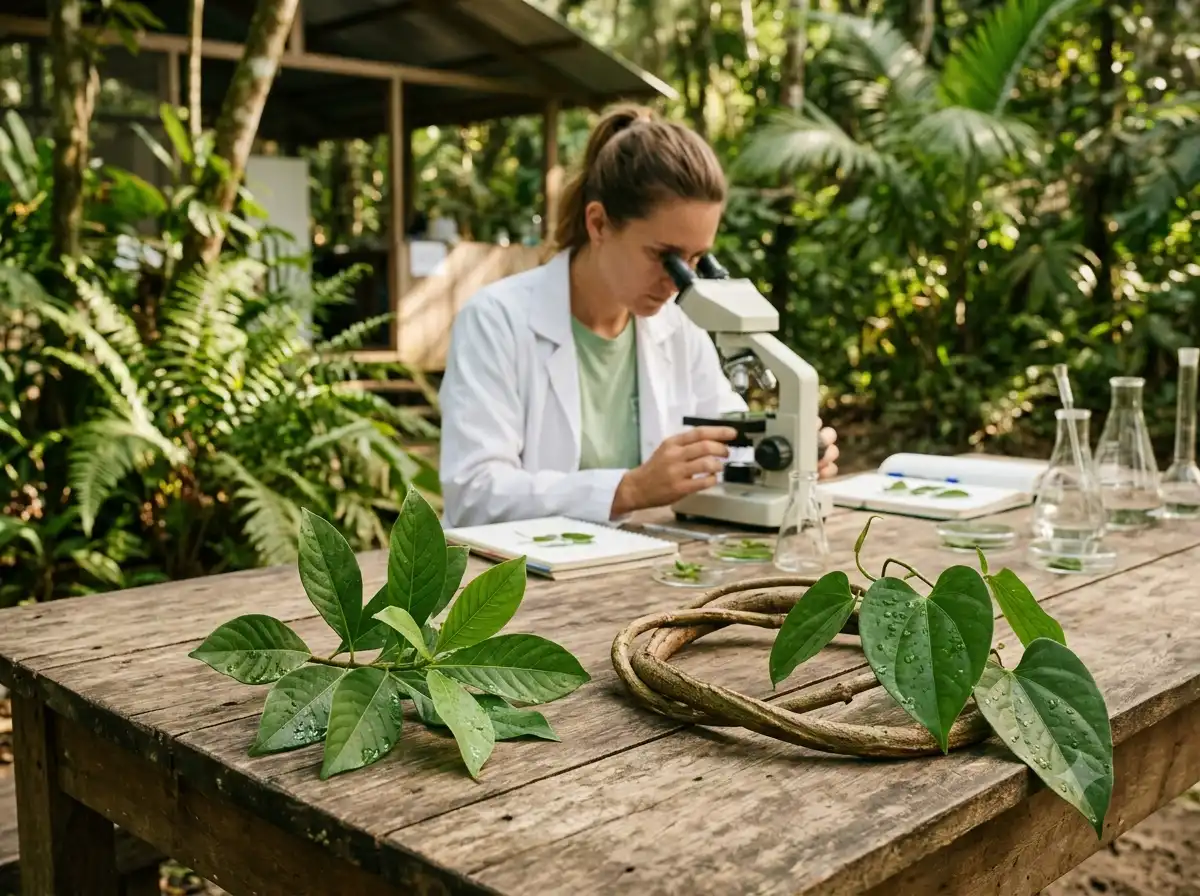
Ayahuasca is scientifically fascinating because its effects result from an interaction between multiple plant compounds.
The two major components are:
DMT
and
Beta-carboline alkaloids
The combination is what makes the traditional brew pharmacologically different from consuming DMT alone.
DMT is a naturally occurring tryptamine related chemically to serotonin.
It interacts with several serotonin receptors, with 5-HT2A being particularly important for its psychedelic effects.
Activation of these receptors can alter how the brain processes:
DMT is therefore capable of producing profound changes in consciousness.
Normally, MAO enzymes rapidly metabolize DMT.
This is why oral DMT by itself does not produce the same psychedelic effects.
The beta-carbolines in Banisteriopsis caapi, particularly harmine and harmaline, inhibit MAO activity.
This reduces the breakdown of DMT and allows more of it to become systemically available. (pubmed.ncbi.nlm.nih.gov)
This is sometimes described as a pharmacological partnership between the plants.
It is one of the most famous examples of how traditional plant combinations can have a pharmacological logic that researchers later investigate scientifically.
Another important beta-carboline is tetrahydroharmine, or THH.
It has additional effects on serotonin systems and may contribute to the overall pharmacological profile of ayahuasca.
This is one reason ayahuasca should not be thought of as simply “DMT in tea.”
The brew contains a mixture of compounds, and the precise chemical profile can vary substantially between preparations. (pubmed.ncbi.nlm.nih.gov)
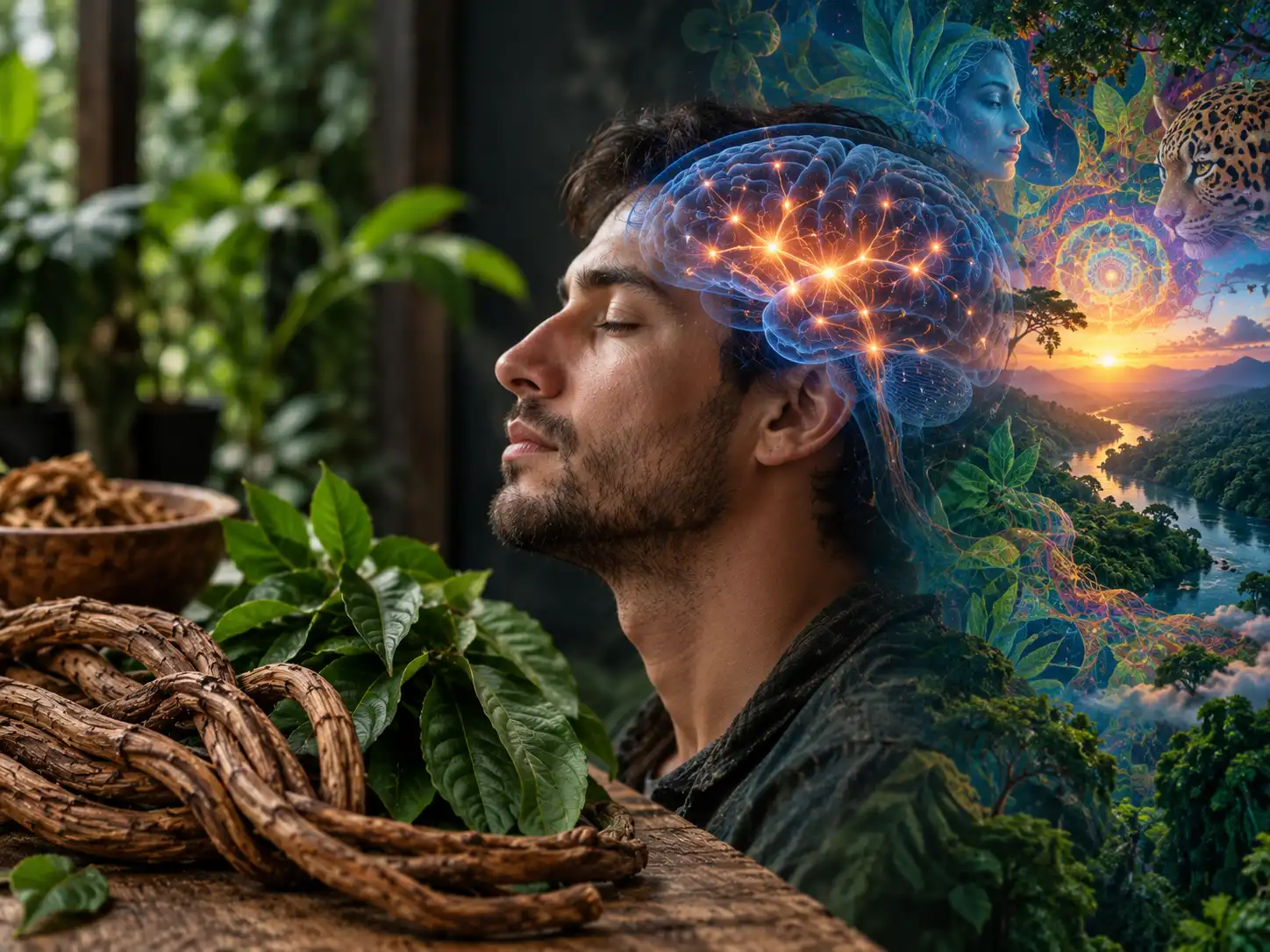
The brain effects of ayahuasca can be profound.
A person may experience vivid visual imagery, changes in emotional intensity, altered time perception, unusual autobiographical memories, changes in self-awareness, and a feeling that ordinary reality has temporarily changed.
One of the most recognizable effects is altered visual perception.
People may experience:
These effects are associated primarily with DMT’s activity at serotonin receptors.
But ayahuasca is not simply a visual experience.
Research suggests that ayahuasca can alter self-processing.
People may experience a reduced sense of the normal boundary between themselves and their environment.
Some describe this as ego dissolution or a feeling of interconnectedness.
Others may experience a much more uncomfortable form of depersonalization or loss of identity.
This is one reason the same substance can be described by one person as deeply meaningful and by another as frightening.
Ayahuasca can produce intense emotions.
People may experience:
Researchers are particularly interested in whether psychedelic experiences can alter how people relate to difficult memories and emotions.
Some clinical research suggests possible antidepressant effects, but this area remains experimental. (pubmed.ncbi.nlm.nih.gov)
Modern neuroimaging studies suggest that psychedelics can alter communication between brain networks involved in self-referential processing and perception.
Ayahuasca research has reported changes involving networks associated with the default mode network, which plays a role in internally directed thought, autobiographical memory, and aspects of self-processing.
Researchers are interested in whether temporary changes in these networks may contribute to the unusual sense of self and perspective reported during psychedelic experiences.
But it would be an oversimplification to say that ayahuasca simply “turns off the default mode network.”
Brain activity is more complicated than that, and the exact relationship between network changes and subjective experience remains an active research area.
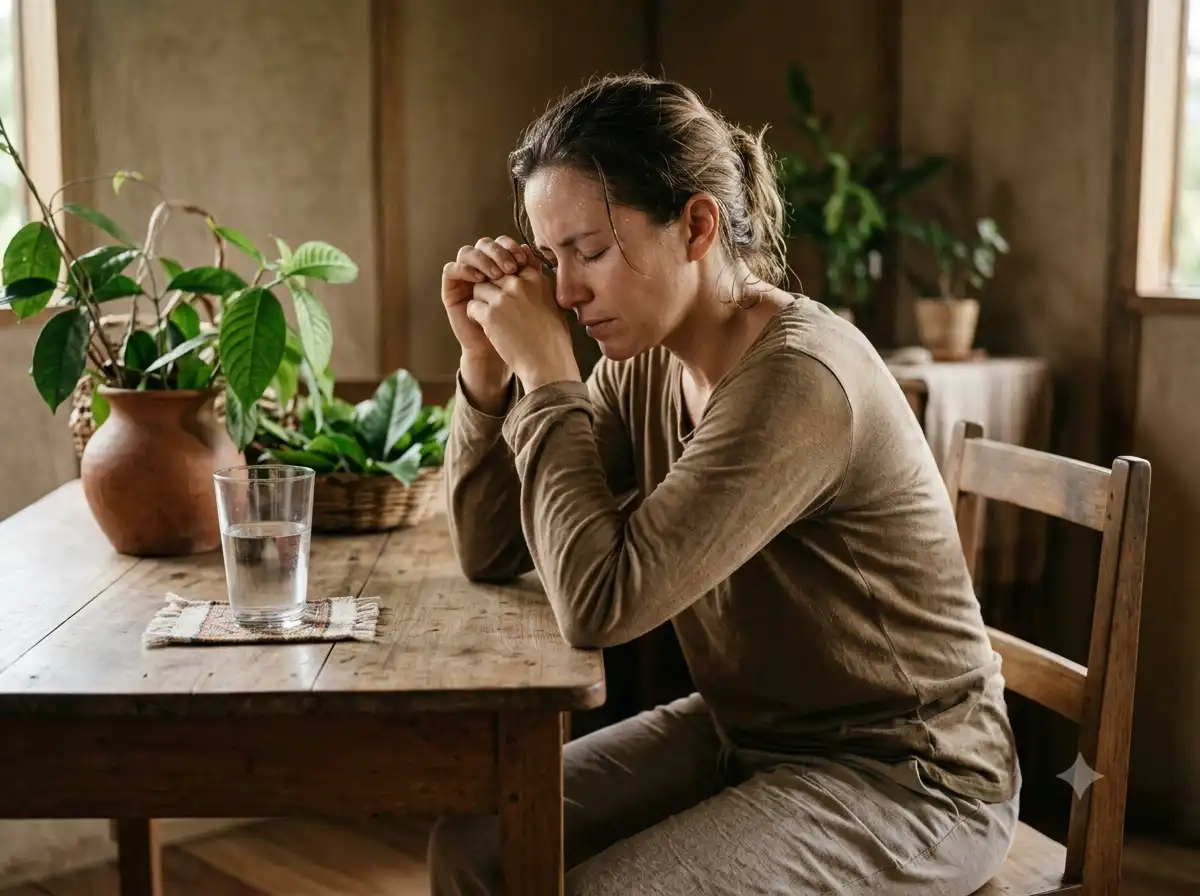
Ayahuasca does not only affect the brain.
It can produce noticeable physical effects.
The most famous is probably nausea and vomiting.
In traditional settings, vomiting may be interpreted spiritually or ceremonially, but from a physiological perspective it is also a predictable effect of the brew.
Reported effects include:
A systematic review of adverse events found that ayahuasca and DMT are generally well tolerated in controlled and traditional-use contexts, but adverse events have been documented and risks can increase with high doses, certain medications, and vulnerable individuals. (pubmed.ncbi.nlm.nih.gov)
The exact reason is not completely explained by a single mechanism.
The brew contains multiple biologically active compounds, and gastrointestinal effects can result from the plant material, serotonin-system activity, MAO inhibition, and individual sensitivity.
The vomiting associated with ayahuasca is therefore not evidence that toxins are being “purged” from the body.
That interpretation belongs to particular cultural or spiritual frameworks rather than established medical physiology.

The phrase “positive effects” needs to be used carefully.
Ayahuasca is not an approved treatment for depression or other psychiatric conditions, and many claimed benefits are based on personal reports rather than definitive clinical evidence.
Still, researchers have identified several areas worth investigating.
One of the most promising areas is depression.
Controlled human studies have reported rapid reductions in depressive symptoms after a single ayahuasca administration.
The research is still limited, but reviews describe the antidepressant findings as encouraging. (pubmed.ncbi.nlm.nih.gov)
This is particularly interesting because conventional antidepressants often require weeks before producing noticeable effects.
However, early psychedelic studies should not be interpreted as proof that ayahuasca is a replacement for standard depression treatment.
Some observational and clinical research has found improvements in anxiety-related symptoms following ayahuasca use.
Again, controlled evidence remains limited.
A major problem is that ceremonial participants often differ from non-users in lifestyle, beliefs, social environment, and expectations.
That makes it difficult to determine how much of the benefit comes from the pharmacological effects of ayahuasca itself.
Many people describe ayahuasca experiences as psychologically meaningful.
They may report gaining new perspectives on:
Research into psychedelic-assisted therapy is increasingly interested in this process.
But personal insight is not automatically accurate.
A powerful experience can feel meaningful without every interpretation being objectively true.
Ayahuasca and its compounds are being investigated for possible effects on substance-use disorders.
Researchers have proposed several mechanisms involving emotional processing, reward systems, psychological flexibility, and changes in habitual behavior.
A 2024 review noted increasing interest in ayahuasca for substance-use disorders, although controlled clinical evidence remains limited. (pubmed.ncbi.nlm.nih.gov)
For many Indigenous and religious communities, ayahuasca is not simply a recreational psychedelic.
It may be part of a broader spiritual practice involving:
This cultural dimension is essential to understanding ayahuasca.
Reducing it to “a DMT drink” misses much of its historical and social meaning.
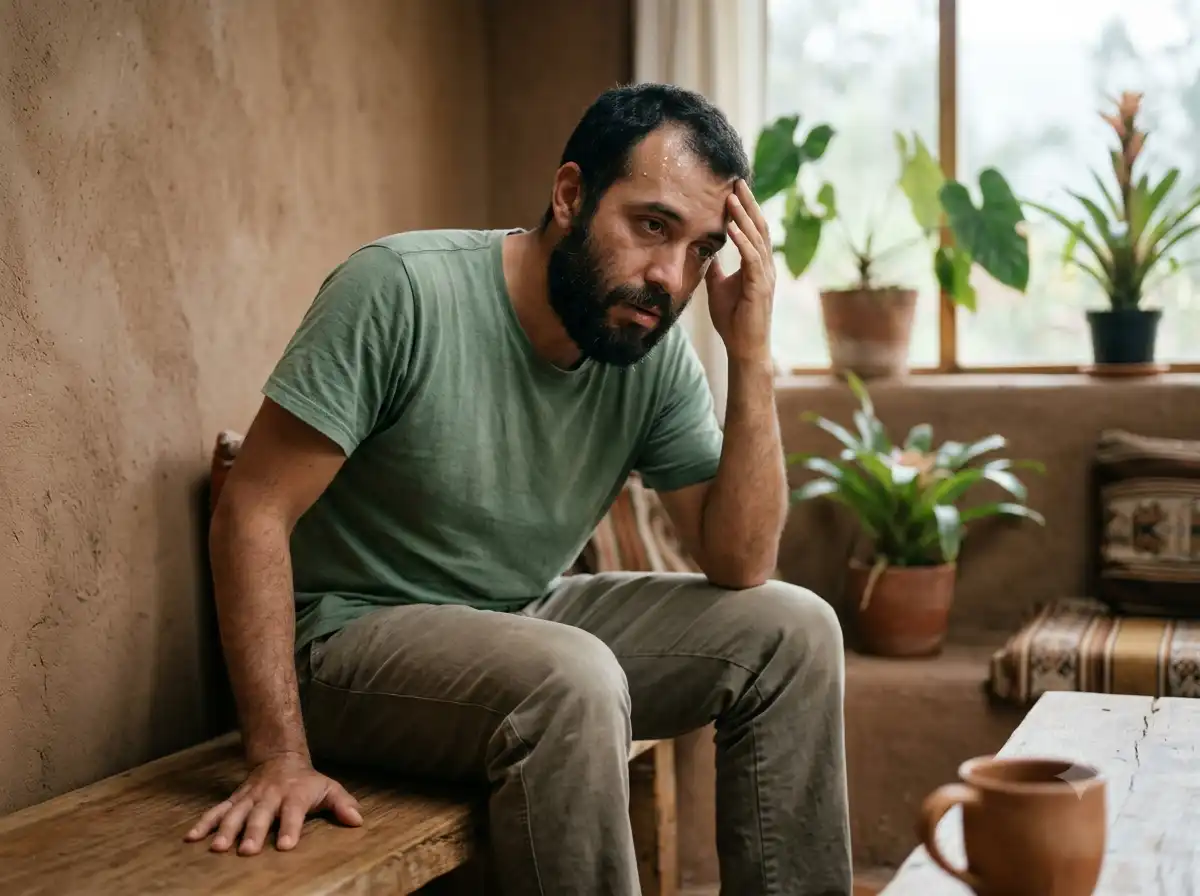
Ayahuasca can produce difficult psychological and physical reactions.
The most common problems are generally short-lived, but serious adverse events have been reported.
This is one of the most common physical effects.
For some participants, it is expected.
For others, it can be extremely unpleasant.
The psychedelic experience can become overwhelming.
A person may temporarily lose their normal ability to understand what is happening.
This can produce intense fear.
During the peak experience, perception of time, place, identity, and surroundings can become highly distorted.
That can make ordinary surroundings feel unfamiliar or threatening.
Rare cases of psychotic symptoms have been reported following ayahuasca and DMT use.
A systematic review identified case reports and case series involving psychosis, with many cases involving personal or family histories of psychotic illness, mania, or other drug use. (pubmed.ncbi.nlm.nih.gov)
Because of this, people with a personal or family history of psychotic disorders or nonpsychotic mania are considered higher-risk candidates for psychedelic exposure.
This is one of the most important safety issues.
The beta-carbolines in ayahuasca inhibit MAO.
That means ayahuasca can interact with medications and substances that affect serotonin, norepinephrine, dopamine, or other neurotransmitter systems.
Potentially concerning combinations can include certain:
Because the exact risk depends on the substance, dose, timing, health status, and ayahuasca composition, people taking prescription medication should not assume that a ceremonial setting makes the combination safe.
Ayahuasca can affect heart rate and blood pressure.
For healthy adults in controlled research settings, severe cardiovascular effects appear uncommon, but people with cardiovascular disease may have greater risk.
This is a major issue outside controlled research.
Ayahuasca is not a standardized pharmaceutical.
Different preparations can contain different plant species and different concentrations of DMT and beta-carbolines. (pubmed.ncbi.nlm.nih.gov)
That means the intensity and risk profile can vary considerably.
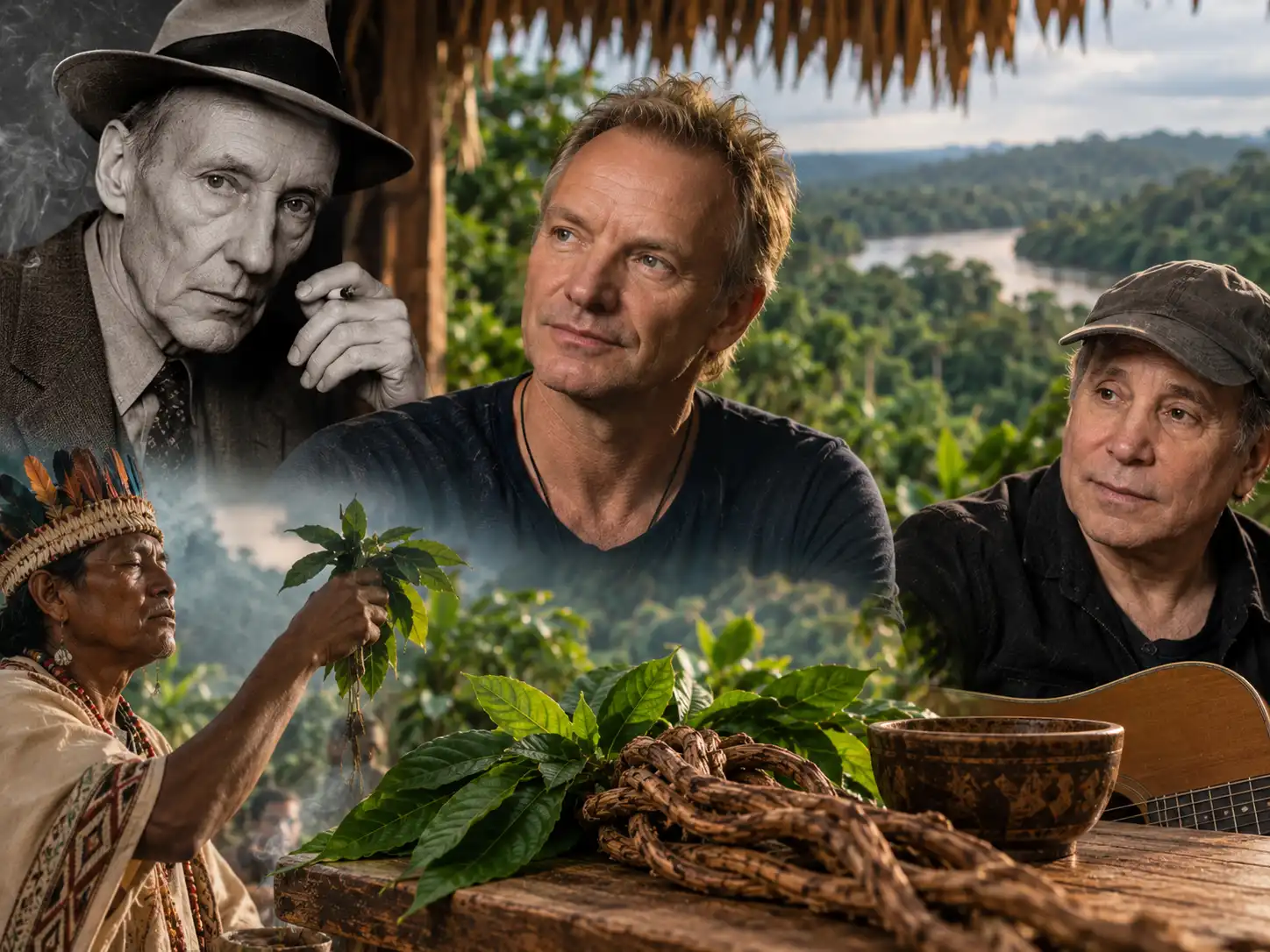
Ayahuasca has attracted considerable attention from writers, musicians, artists, entrepreneurs, and public figures.
One of the earliest famous literary connections is William S. Burroughs, who described his search for yagé in The Yage Letters.
The book helped introduce Western readers to Amazonian psychedelic traditions.
Musicians have also publicly discussed ayahuasca.
Research reviews have specifically noted cultural figures such as Sting and Paul Simon in discussions surrounding the modern international ayahuasca movement. (pmc.ncbi.nlm.nih.gov)
Other celebrities have spoken publicly about psychedelic experiences, although reports sometimes blur the difference between ayahuasca, DMT, mushrooms, and other psychedelics.
That distinction matters.
A celebrity saying they have used “psychedelics” does not necessarily mean they have used ayahuasca.
Celebrity stories can help explain why ayahuasca became culturally popular, but they should never be treated as scientific evidence of safety or effectiveness.
Ayahuasca is much more than a psychedelic beverage.
It is a traditional Amazonian plant medicine, religious sacrament, cultural practice, and subject of modern neuroscience research.
Its history is deeply connected with Indigenous communities across the Amazon Basin, particularly in countries such as Peru, Brazil, Colombia, and Ecuador.
There is no single person who discovered ayahuasca.
Indigenous communities were using plant preparations associated with ayahuasca long before Western scientists documented them. One of the earliest important scientific observers was British botanist Richard Spruce, who documented ayahuasca-related plants and practices during his Amazon expeditions in the nineteenth century. (pmc.ncbi.nlm.nih.gov)
The chemistry of ayahuasca is what makes it particularly fascinating.
Many preparations combine a source of DMT with Banisteriopsis caapi, whose beta-carboline alkaloids can inhibit monoamine oxidase.
That interaction allows orally consumed DMT to become psychoactive. (pubmed.ncbi.nlm.nih.gov)
Once active, DMT interacts strongly with serotonin systems, particularly the 5-HT2A receptor, producing major changes in perception, emotion, self-awareness, and consciousness.
The experience can be beautiful and meaningful for some people.
It can also be frightening, confusing, physically uncomfortable, or psychologically destabilizing for others.
That variability is important.
Modern research has produced some encouraging findings around depression, anxiety, psychological flexibility, and substance-use disorders. But the clinical evidence remains relatively young.
A 2024 review concluded that human studies suggest potential therapeutic effects, while emphasizing that many existing studies involve small samples, single administrations, and short follow-up periods. (pubmed.ncbi.nlm.nih.gov)
The research field is expanding rapidly.
A 2026 review of registered clinical trials identified 26 registered interventional trials involving ayahuasca and/or DMT, showing that the scientific field is moving from exploratory research toward more structured clinical development. However, most trials remain early-stage and emphasize safety, tolerability, and characterization of the psychedelic experience rather than definitive treatment outcomes. (pubmed.ncbi.nlm.nih.gov)
Safety remains an important part of the conversation.
Ayahuasca can cause nausea, vomiting, changes in cardiovascular function, intense anxiety, confusion, and temporary psychological distress.
Rare psychiatric reactions have also been reported, particularly among people with vulnerabilities such as a personal or family history of psychosis or mania. (pubmed.ncbi.nlm.nih.gov)
The MAO-inhibiting properties of ayahuasca also create potentially important medication interactions.
This is one of the biggest differences between ayahuasca and many ordinary supplements.
It is therefore misleading to describe ayahuasca simply as a “natural antidepressant” or “healing tea.”
It is a pharmacologically active psychedelic preparation.
Perhaps the most balanced way to understand ayahuasca is to look at it through three different lenses.
For Indigenous cultures, it represents a longstanding tradition involving healing, spirituality, community, and relationships with the natural world.
For neuroscience, it is a powerful tool for studying serotonin signaling, consciousness, perception, emotion, and the brain’s sense of self.
For modern psychiatry, it is an experimental psychedelic intervention with promising early findings but insufficient evidence to replace established treatments.
The future of ayahuasca research is therefore genuinely interesting.
Scientists are asking whether carefully controlled psychedelic experiences can help people change rigid patterns of thinking, process difficult emotions, reduce depressive symptoms, or break harmful behavioral cycles.
But those questions need to be answered through well-designed clinical research rather than celebrity stories, social-media testimonials, or commercial retreat claims.
The bottom line: Ayahuasca is a powerful Amazonian psychedelic brew whose effects come primarily from the interaction between DMT and beta-carboline MAO inhibitors. It has a deep Indigenous and religious history and is now being seriously studied for possible psychiatric applications. The early evidence is promising, but it is not yet strong enough to call ayahuasca a proven medical treatment.
Its potential is real.
So are its risks.
And understanding both is far more useful than treating ayahuasca as either a miracle medicine or simply a recreational drug.
No. DMT is one of the major psychoactive compounds in many ayahuasca preparations, but ayahuasca is a plant-based brew containing DMT together with beta-carboline compounds such as harmine and harmaline. (pubmed.ncbi.nlm.nih.gov).
The beta-carbolines in traditional ayahuasca inhibit monoamine oxidase, which helps protect orally consumed DMT from rapid breakdown. This allows DMT to become active after drinking the preparation. (pubmed.ncbi.nlm.nih.gov)
The experience generally lasts considerably longer than inhaled DMT, often for several hours, although the exact duration varies with the preparation and individual. Unlike a standardized pharmaceutical, ayahuasca preparations differ considerably in chemical composition.
Early clinical research is promising, but ayahuasca is not currently an established treatment for depression. Reviews report possible antidepressant effects, but many studies are small and short-term, and larger controlled trials are needed. (pubmed.ncbi.nlm.nih.gov)
It can be. Nausea, vomiting, anxiety, confusion, changes in heart rate and blood pressure, and psychological distress can occur. Rare psychiatric reactions have also been reported. Medication interactions are an important concern because of the MAO-inhibiting beta-carbolines. (pubmed.ncbi.nlm.nih.gov)
Rare cases of psychotic symptoms have been reported. Risk appears particularly concerning in people with personal or family histories of psychotic disorders or mania, although cases have also been reported in people without those known risk factors. (pubmed.ncbi.nlm.nih.gov)
The answer is complicated. DMT is federally controlled in the United States, while some religious organizations have obtained specific legal protections for sacramental ayahuasca use. State laws and circumstances vary, so ayahuasca should not simply be assumed to be legal because it is a traditional plant preparation.