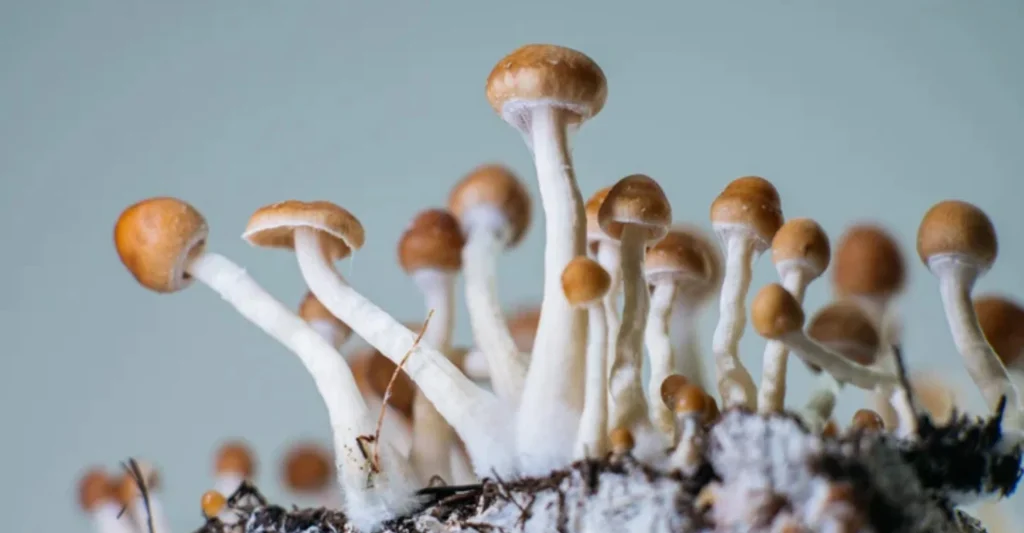
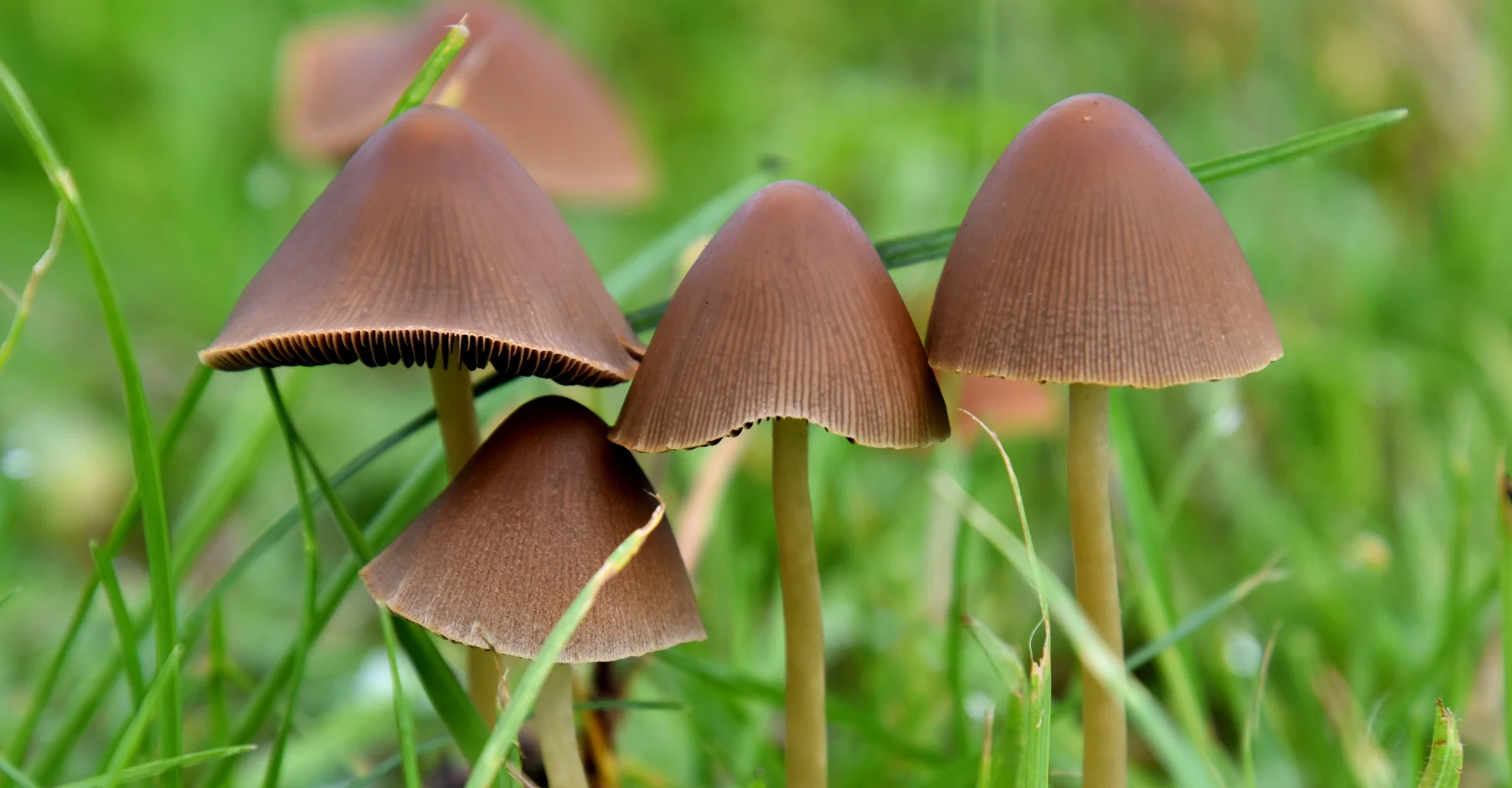
Psilocybe semilanceata, commonly known as the liberty cap mushroom, is one of the best-known wild psilocybin mushrooms in the world. Small, delicate and often overlooked, this species has attracted attention for centuries because it contains naturally occurring psychedelic compounds, primarily psilocybin and psilocin.
The scientific history of Psilocybe semilanceata goes back to the 19th century, but the story of people experiencing its psychoactive effects appears to be older.
The species was formally described by Swedish mycologist Elias Magnus Fries in the 19th century. Fries originally placed it in the large genus Agaricus as Agaricus semilanceatus. In 1871, German mycologist Paul Kummer transferred the species to the genus Psilocybe, producing the scientific name used today: Psilocybe semilanceata. NCBI currently lists Psilocybe semilanceata (Fr.) P. Kumm. as the accepted name and “liberty cap” as its common name.
There is an interesting historical complication here. The exact original publication year is sometimes given differently in modern sources because of historical bibliographic issues surrounding Fries’s work. The safest description is that the species was formally described by Fries in the early 19th century, with the Psilocybe combination established by Kummer in 1871.
One of the most remarkable stories associated with liberty caps dates to 1799, decades before the species received its modern scientific name.
A British family reportedly experienced unusual symptoms after eating mushrooms collected in London’s Green Park. Contemporary accounts described effects including enlarged pupils, laughter and delirium.
Later mycological analysis suggested that the mushrooms were consistent with what is now called Psilocybe semilanceata. Because the identification was made retrospectively, it is more accurate to call this the earliest reliable historical report associated with liberty-cap intoxication, rather than claiming that the species was scientifically identified at the time.
The modern scientific breakthrough came in the 1960s.
Swiss chemist Albert Hofmann, working with French mycologist Roger Heim, analyzed Psilocybe semilanceata specimens collected in Europe. Their work confirmed the presence of psilocybin, making liberty caps the first European mushroom species scientifically demonstrated to contain this psychedelic compound.
This was an important discovery.
Until then, psilocybin was mainly associated with mushrooms from Mexico and other regions. Finding it in a European species demonstrated that psychoactive fungi were more widely distributed than scientists had realized.
From the 1960s onward, liberty caps became increasingly well known among European psychedelic users, particularly in Britain.
Today, P. semilanceata remains one of the most recognized naturally occurring psilocybin mushrooms in Europe.
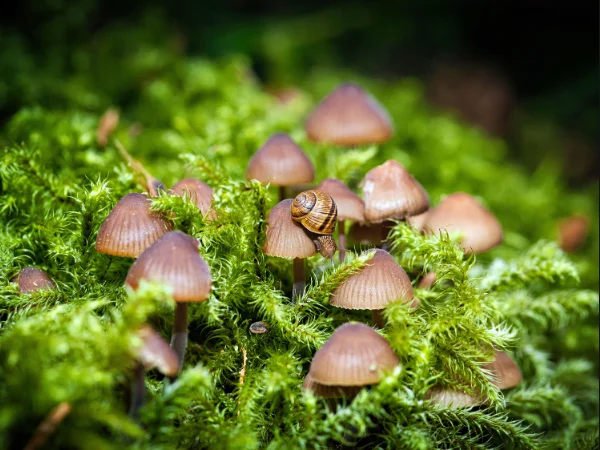
Psilocybe semilanceata is primarily a temperate grassland mushroom.
It is strongly associated with Europe and has also been documented in other temperate parts of the Northern Hemisphere, including areas of North America. Scientific reviews describe it as particularly common in cool temperate regions with maritime influence.
The species is associated with:
It has also been reported from parts of the Southern Hemisphere, although distribution records can be complicated by confusion with related species.
Unlike some other psilocybin mushrooms, P. semilanceata does not normally grow directly from animal dung.
This is an important difference between liberty caps and Psilocybe cubensis.
P. semilanceata is generally associated with grassy fields, meadows and pastures, particularly environments influenced by grazing animals.
Scientific literature describes it as saprobic and associated with decaying grass roots rather than directly feeding on dung.
Its preference for cool, wet grasslands also helps explain why the mushroom has become so strongly associated with the British Isles.
Wild mushrooms can be deceptively similar.
Many small brown mushrooms share overlapping characteristics, and some poisonous species can be mistaken for harmless or psychoactive mushrooms.
This is especially important with liberty caps because they are small and grow alongside numerous other grassland fungi.
For that reason, a general article about P. semilanceata should not be treated as a field-identification guide. Misidentifying a wild mushroom can lead to serious poisoning.

The psychedelic effects of Psilocybe semilanceata come primarily from psilocybin.
Psilocybin belongs to a group of compounds called tryptamines. Chemically, it is closely related to serotonin, an important neurotransmitter involved in mood, perception and numerous other brain functions.
When psilocybin enters the body, it is rapidly converted into psilocin, its principal psychoactive metabolite. Psilocin can cross into the central nervous system and interact with serotonin receptors, especially the 5-HT2A receptor.
This receptor is central to the psychedelic effects of psilocybin.
Research on classic psychedelics has shown that 5-HT2A receptor activation is strongly linked to the intensity of psychedelic effects.
The brain does not process every piece of information independently.
Different brain networks constantly communicate with one another to create our perception of the world, our memories and our sense of self.
Psilocybin temporarily changes this communication.
The result can include:
The intensity is unpredictable and depends on many factors, including the person, their psychological state, surroundings, previous experience and the amount of psilocybin involved.
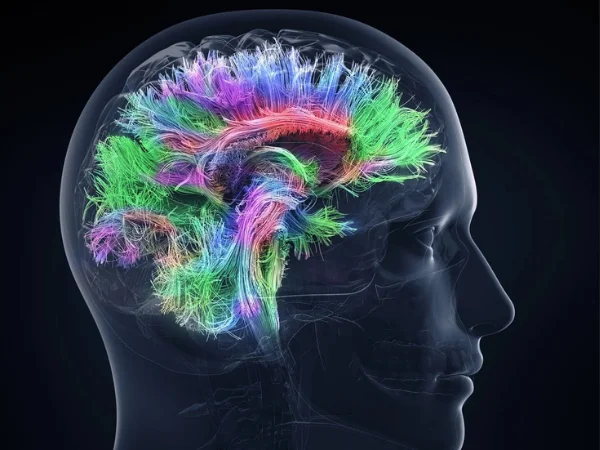
The most interesting effects of liberty caps occur in the brain.
Once psilocybin is converted into psilocin, serotonin receptors become activated in ways that temporarily change normal patterns of brain activity.
Modern research has provided a more detailed picture of what this means.
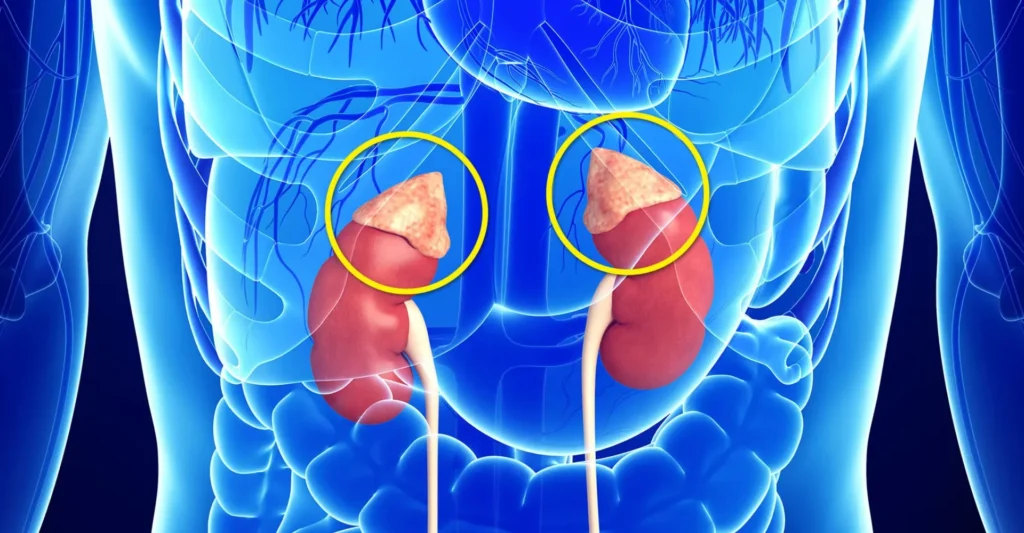
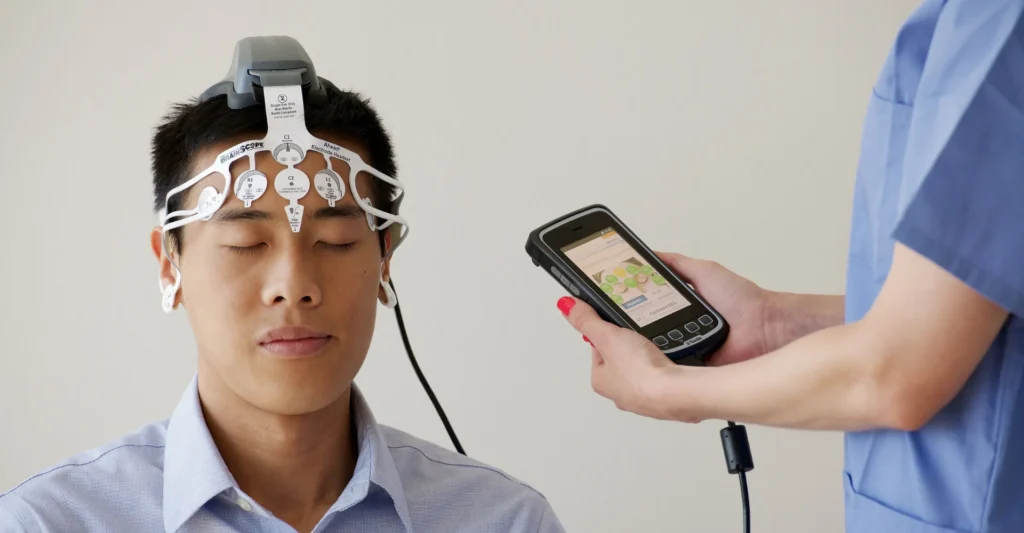
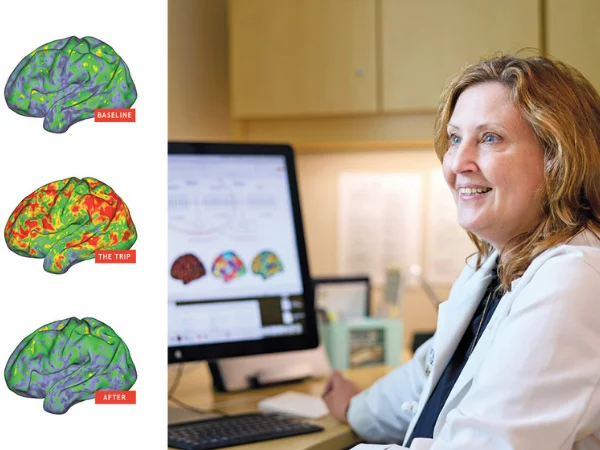
A 2024 NIH-highlighted study using functional MRI found that psilocybin produced substantial changes in functional connectivity throughout the brain. The changes affected the cerebral cortex, thalamus, hippocampus and cerebellum, with particularly notable effects involving the default mode network.
The default mode network is associated with internally directed thought and aspects of the normal sense of self.
During a psychedelic experience, the boundaries between normally distinct brain networks can become less rigid.
This may help explain why people sometimes describe:
Interestingly, the NIH reported that much of the brain’s activity returned toward baseline within days in the study, although some connectivity changes involving the default mode network and hippocampus persisted for at least three weeks.
That does not mean a person remains “high” for weeks. It means researchers observed measurable changes in brain connectivity after the acute psychedelic effects had ended.
This phrase is popular online, but it needs to be handled carefully.
Research suggests psychedelic compounds may influence neuroplasticity, the brain’s capacity to modify connections between neurons. Laboratory research has found mechanisms that may encourage the formation or strengthening of neural connections.
However, saying that liberty caps permanently “rewire” the brain is an oversimplification.
Scientists are still determining which changes are temporary, which persist, and which might be responsible for therapeutic effects.

The body also responds to psilocybin.
Physical effects can occur alongside the psychological experience. These may include:
Scientific sources describe the onset of psilocybin effects as variable, often occurring within a relatively short period after ingestion, with acute effects commonly lasting several hours.
The physical experience is not always unpleasant. Some people report sensations of lightness, relaxation or heightened sensory awareness.
Others experience significant nausea or physical discomfort.
The environment matters, too. A person who becomes confused or frightened can experience physical stress responses such as a rapid heartbeat and increased blood pressure.
This is why modern psychedelic research places substantial emphasis on set and setting, meaning the person’s mental state and the environment in which the experience occurs.
It is important to make one distinction before discussing potential benefits.
Most modern clinical research focuses on purified or standardized psilocybin, not wild Psilocybe semilanceata mushrooms.
Therefore, findings from psilocybin clinical trials should not automatically be presented as proof that eating liberty caps has the same medical effect.
Still, research into psilocybin provides important information about why P. semilanceata has attracted scientific attention.
Psilocybin-assisted therapy is being studied extensively for depression.
NCCIH reports that several studies have found reductions in depressive symptoms after psilocybin treatment combined with psychological support, although the studies have limitations and the duration of benefits varies.
This has made psilocybin one of the most closely watched compounds in modern psychedelic medicine.
Researchers have also investigated psilocybin-assisted therapy in people dealing with serious medical illnesses.
Some small studies have reported improvements in anxiety, depression and existential distress.
The results are promising but not definitive, partly because many studies have involved relatively small groups of participants.
Psilocybin is also being investigated for substance use disorders.
Research has explored its potential role in alcohol use disorder and tobacco addiction, among other conditions.
One theory is that the psychedelic experience can temporarily alter rigid patterns of thinking while psychotherapy helps patients use that period of increased psychological flexibility to make longer-term behavioral changes.
Again, this is a developing area of medicine, not a reason to consider wild liberty caps a self-treatment.
One of the most commonly reported subjective effects of psilocybin is a change in perspective.
Some people describe feeling less trapped in repetitive thought patterns or becoming more emotionally connected to their relationships and surroundings.
These experiences may be psychologically meaningful, but personal reports should not be treated as clinical proof.

Liberty caps can produce powerful psychological effects, and those effects are not always positive.
NCCIH lists several potential adverse effects associated with psilocybin, including increased heart rate and blood pressure, headache, nausea, dizziness, fatigue, anxiety, paranoia, hallucinations and, in some cases, persistent psychosis.
A difficult psychedelic experience can involve:
These experiences can become dangerous if a person loses awareness of their surroundings or makes unsafe decisions.
Psilocybin is not considered safe for everyone.
NCCIH specifically warns against its use in people with psychotic conditions such as schizophrenia and schizoaffective disorder and notes concerns involving severe bipolar disorder.
This is one reason clinical trials screen participants carefully.
Perhaps the most underappreciated risk is misidentification.
A person who believes they have found liberty caps may actually have collected a different mushroom.
Some poisonous mushrooms can cause severe gastrointestinal illness, organ damage or death.
The risk is not eliminated simply because the person has experience with mushrooms.
Another problem is that wild mushrooms are not standardized pharmaceutical products.
The amount of psilocybin can vary between specimens, and the consumer generally cannot know the precise concentration without laboratory analysis.
This makes the effects less predictable than a controlled clinical dose.

There are many celebrities who have talked publicly about psilocybin mushrooms, but there is an important limitation when the subject is specifically Psilocybe semilanceata.
There is not enough reliable public evidence to confidently claim that a particular celebrity consumed liberty caps specifically.
Many public figures have discussed psychedelic mushrooms generally, but identifying the exact species they consumed is often impossible.
That distinction matters because “magic mushrooms” can refer to dozens of species.
Writer Michael Pollan has become one of the best-known mainstream voices discussing psychedelics.
His book How to Change Your Mind examined the history, science and personal experience surrounding psychedelic drugs, including psilocybin.
However, his public discussions concern psilocybin experiences generally, not specifically Psilocybe semilanceata.
Former heavyweight boxing champion Mike Tyson has also spoken openly about psychedelic mushrooms and their role in his personal life.
Again, his public comments concern psychedelic mushrooms or psilocybin broadly rather than providing reliable evidence that he specifically consumed liberty caps.
For an evidence-based article, it is better to make that distinction than to attach a famous person’s name to a mushroom species without solid documentation.
Psilocybe semilanceata, better known as the liberty cap, is a small mushroom with an unusually important place in psychedelic science.
Its formal scientific history stretches back to the 19th century, while one of the earliest documented European incidents associated with its psychoactive effects dates to 1799. More than a century later, researchers including Roger Heim and Albert Hofmann confirmed that the species contains psilocybin, establishing it as the first European mushroom scientifically demonstrated to contain the psychedelic compound.
What makes liberty caps psychoactive is primarily their psilocybin content. Once inside the body, psilocybin is converted into psilocin, which interacts with serotonin receptors, particularly 5-HT2A receptors. This temporarily changes brain communication and can dramatically alter perception, emotion, memory, time and the sense of self.
Modern neuroscience has made the subject even more interesting. NIH-highlighted research shows that psilocybin can temporarily disrupt normal communication between brain networks, including the default mode network associated with aspects of self-related processing.
The medical potential is promising as well. Researchers are studying psilocybin-assisted therapy for depression, addiction, anxiety and existential distress. Some studies have produced encouraging results, but these findings should not be confused with evidence that wild liberty caps are a proven medical treatment.
There is also a serious risk side.
Psilocybin can produce panic, paranoia, confusion, nausea, increased blood pressure and heart rate, and other adverse effects. People with certain psychiatric conditions may face substantially greater risks. Wild mushroom misidentification adds another potentially life-threatening danger.
The biggest lesson is that natural does not automatically mean safe, and a promising psychedelic compound is not the same thing as an approved medicine.
For now, Psilocybe semilanceata remains scientifically fascinating because it connects mycology, chemistry, neuroscience, traditional knowledge and modern psychedelic medicine. The mushroom may be small, but what scientists are learning from its active compounds could have much larger implications for our understanding of the brain and mental health.
The most common English name is liberty cap. It is a species of Psilocybe known for containing psilocybin and psilocin. NCBI lists “liberty cap” as its common name.
Yes. P. semilanceata is a naturally occurring psilocybin mushroom, which is why it is commonly grouped with “magic mushrooms” or “psychedelic mushrooms.”
The species was formally described by Elias Magnus Fries in the 19th century under the name Agaricus semilanceatus. Paul Kummer later transferred it to Psilocybe in 1871.
Their psychedelic properties mainly come from psilocybin, which the human body converts into psilocin. Psilocin interacts strongly with serotonin receptors, especially 5-HT2A receptors in the brain.
Potency can vary substantially between mushrooms, so broad claims that one species is always “stronger” should be treated cautiously. P. semilanceata is widely regarded as a relatively potent wild psilocybin mushroom, but the concentration of active compounds varies between specimens and populations.
There is promising research on psilocybin-assisted therapy for depression, but that does not establish wild P. semilanceata as a medical treatment.
Clinical research uses controlled psilocybin doses, participant screening, psychological preparation, professional supervision and follow-up.
Psilocybin does not appear to produce the same physical dependence pattern associated with opioids, nicotine or alcohol. However, that does not make psychedelic mushroom use risk-free.
Repeated use, psychological reliance, impaired judgment and adverse mental health reactions remain possible.
No wild mushroom should be considered automatically safe simply because someone believes they have identified it correctly.
Poisonous mushrooms can resemble psychoactive species, and misidentification can cause severe poisoning. NCCIH specifically warns about the danger of confusing poisonous mushrooms with psilocybin-containing mushrooms.
Psilocybin remains federally controlled in the United States. Some states and local jurisdictions have adopted different policies around psychedelic research, decriminalization or regulated access.
Because laws can change, anyone researching the legal status of liberty caps should check the current laws in their specific state and locality.
Most acute brain effects gradually return toward baseline after the psychedelic experience. NIH-funded research found that much of the functional connectivity altered by psilocybin returned toward normal within days, although certain changes persisted longer in the study.
Researchers are still investigating whether some longer-lasting changes contribute to the therapeutic effects reported in clinical trials.