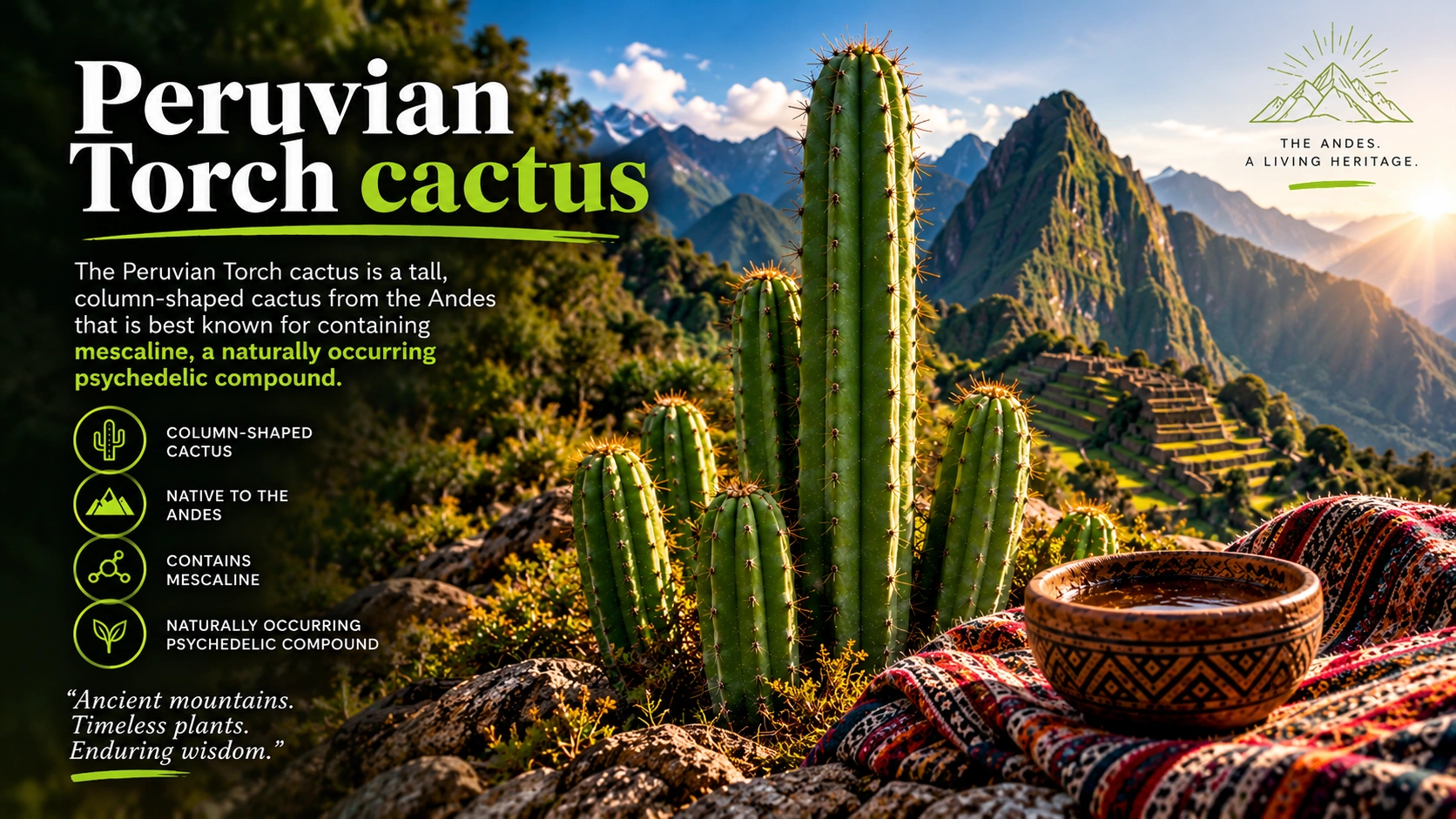
The Peruvian Torch cactus is a tall, column-shaped cactus from the Andes that is best known for containing mescaline, a naturally occurring psychedelic compound.
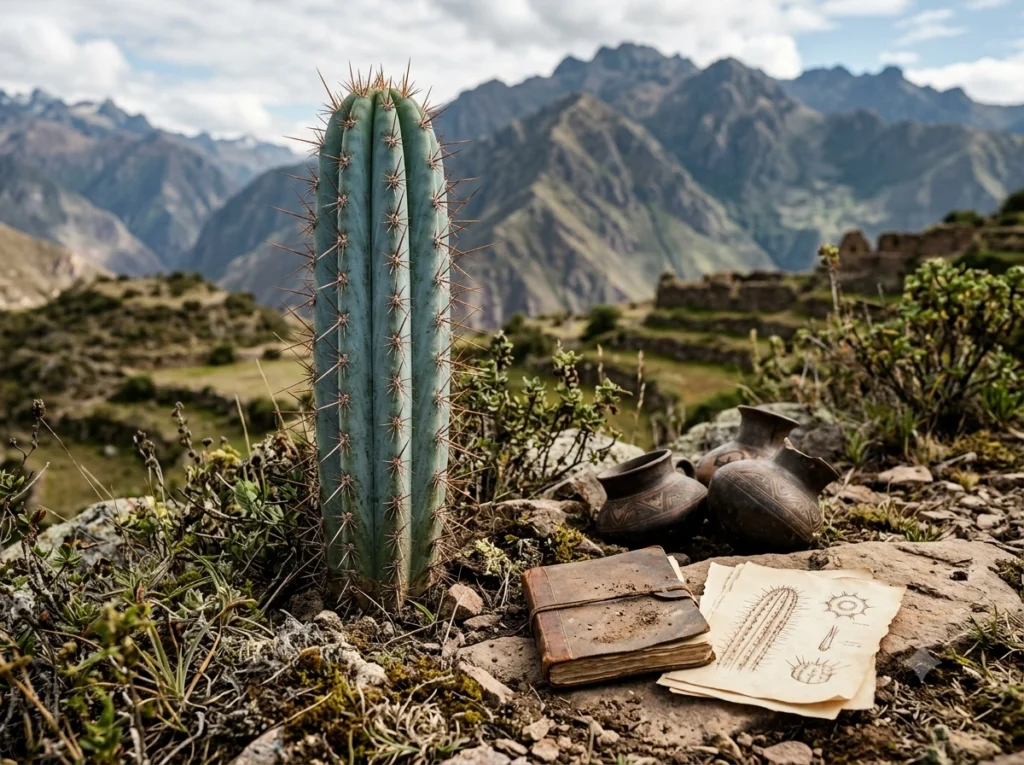
There is no single person who “discovered” Peruvian Torch.
Like peyote and San Pedro, its human history began with Indigenous knowledge rather than Western laboratory science.
People in the Andes had been working with psychoactive cacti long before European botanists classified them. Archaeological research indicates that mescaline-containing cacti have an extremely old history in the Americas, with evidence suggesting ceremonial use extending back thousands of years.
The Peruvian Torch belongs to a group of columnar cacti that have been associated with traditional healing practices in the Andes.
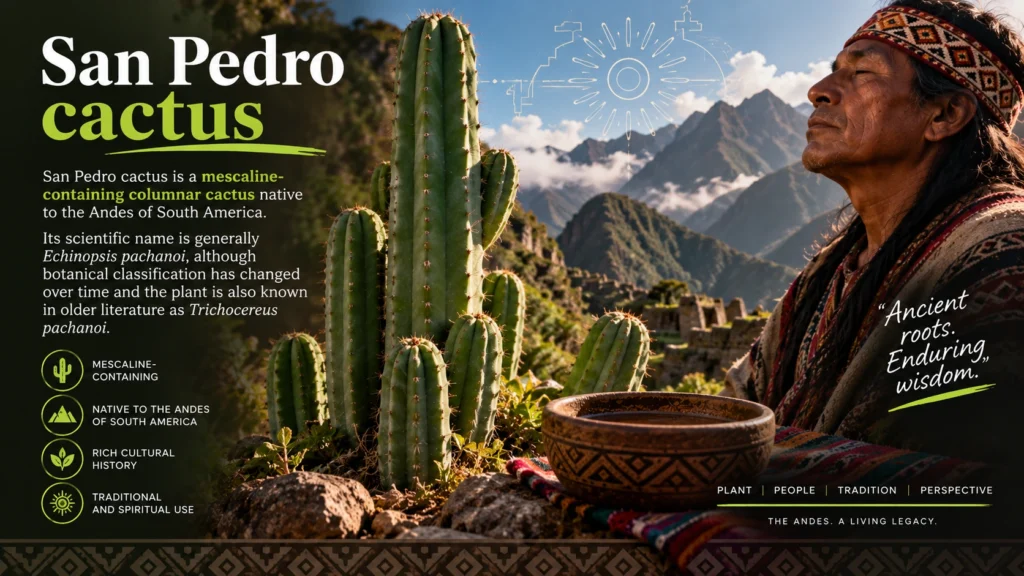
In historical and ethnographic literature, Trichocereus peruvianus has sometimes been identified with wachuma, although terminology varies between regions and traditions. Some sources also use “San Pedro” broadly for related Trichocereus or Echinopsis cacti.
This is one reason botanical names matter.
A plant sold under a common name may not always correspond perfectly to the species described in older scientific literature.
Traditional Andean practitioners used psychoactive cacti within ceremonies involving healing, spiritual interpretation, ritual cleansing, and divination. Research on northern Peru has documented the continued importance of San Pedro-type cactus traditions in contemporary curanderismo.
The history of Peruvian Torch’s psychoactive chemistry is closely connected to the history of mescaline.
German pharmacologist Arthur Heffter isolated mescaline from peyote in the late nineteenth century and demonstrated through experiments that it was responsible for the cactus’s major psychoactive effects. His work is widely regarded as a landmark in modern psychedelic pharmacology.
This distinction is important.
Heffter did not discover Peruvian Torch. He discovered and characterized mescaline through work on peyote.
Scientists later investigated whether related South American cacti contained the same compound.
A particularly important study appeared in 1977.
Researchers J. H. Pardanani, J. L. McLaughlin, R. W. Kondrat, and R. G. Cooks investigated Trichocereus peruvianus and isolated crystalline mescaline hydrochloride from the cactus, along with several other compounds.
This provided direct chemical evidence that the Peruvian Torch cactus could contain mescaline.
Later research continued to examine the chemistry of South American Echinopsis and Trichocereus cacti.
Its popularity developed through several overlapping paths.
First came ethnobotanical research, which documented Indigenous and traditional cactus use.
Then came psychedelic research, particularly interest in mescaline.
Later, global cactus cultivation and the internet made information about Peruvian Torch much more accessible.
Today, people encounter the plant through three very different worlds:
These should not be treated as the same thing.
For traditional practitioners, the cactus can carry spiritual and cultural meaning.
For a gardener, it may simply be a striking columnar cactus.
For neuroscience, it is interesting because some related cacti contain mescaline.
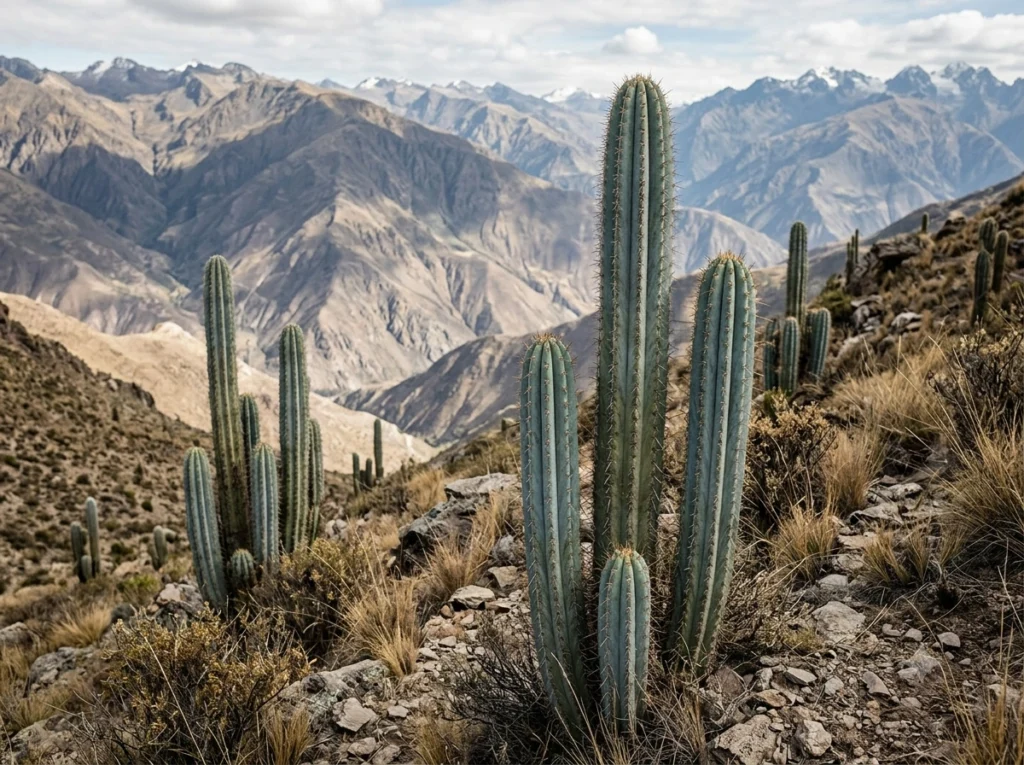
The Peruvian Torch is associated with the Andes of South America, particularly Peru and Bolivia.
Modern Kew taxonomy recognizes Echinopsis macrogona as an accepted species with a native range in western and southern Peru to Bolivia. Kew lists Echinopsis peruviana among its synonyms.
This region is home to a remarkable diversity of columnar cacti.
Peru is the country most strongly associated with the Peruvian Torch name and with the broader wachuma tradition.
The Andes provide a challenging environment for plants, with intense sunlight, dry conditions, seasonal rainfall, and large temperature differences.
Columnar cacti have evolved specialized adaptations that allow them to survive in these environments.
Peru is also historically important because psychoactive cactus traditions have continued there across generations.
Related Echinopsis populations extend into Bolivia.
Because cactus classification has changed considerably over the years, older scientific sources may use different names for plants that modern botanists classify differently.
This explains why the names Trichocereus peruvianus, Echinopsis peruviana, and Echinopsis macrogona can appear in different articles discussing similar plants.
Yes.
Related Echinopsis cacti are now cultivated throughout many parts of the world.
They are popular ornamental plants because they can grow relatively quickly and develop into impressive columnar specimens.
The international cactus trade has therefore made these plants much more accessible than their natural geographic range would suggest.
No.
This is one of the most important facts that is often missing from online discussions.
Chemical studies have found substantial variation in mescaline concentrations among different Echinopsis taxa and individual plants. A study examining 14 Echinopsis taxa and cultivars reported a wide range of mescaline concentrations.
Therefore, the cactus’s common name does not tell you its exact chemical composition.
This variability also makes comparisons such as “which cactus is strongest?” scientifically unreliable without laboratory analysis.
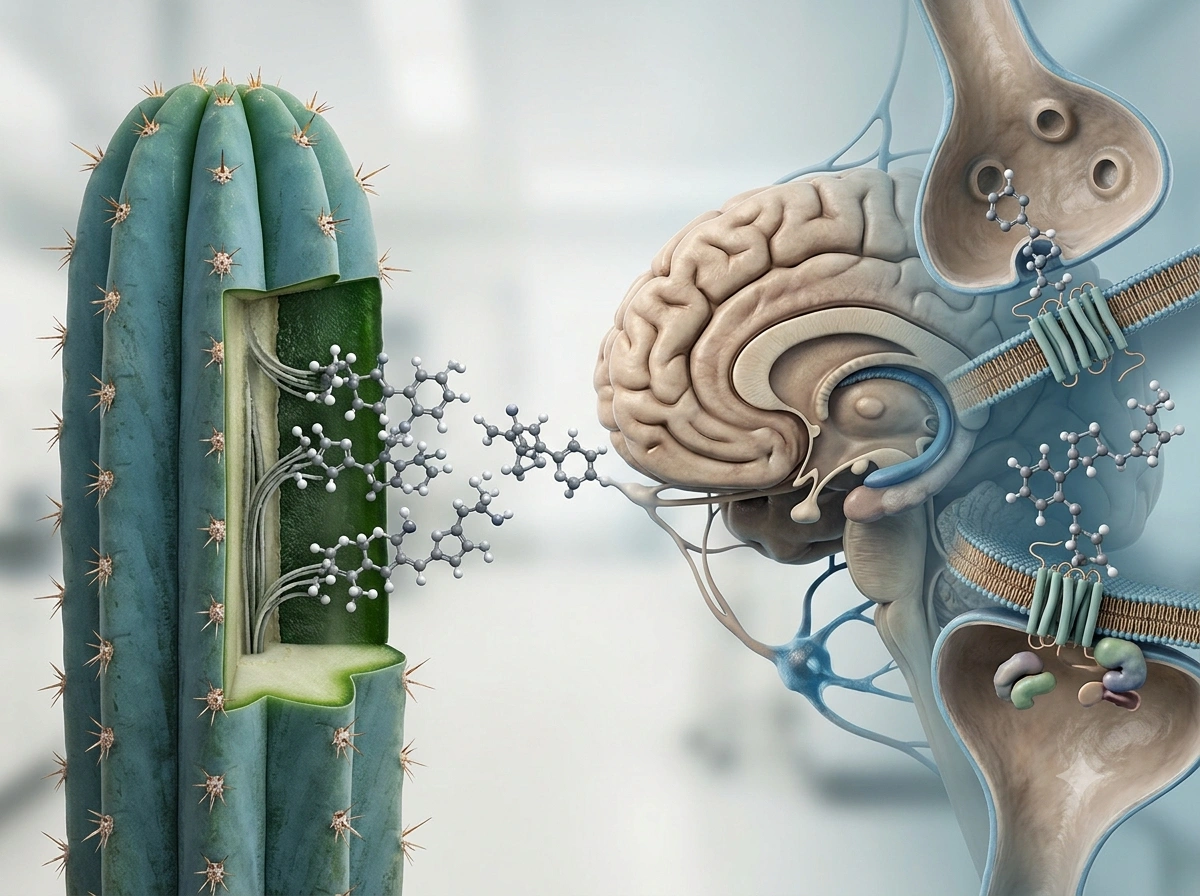
The primary compound responsible for the psychedelic effects of Peruvian Torch and related mescaline-containing cacti is mescaline.
Its chemical name is 3,4,5-trimethoxyphenethylamine.
Mescaline belongs to the phenethylamine family of psychedelic compounds.
Although its chemical structure is different from LSD or psilocybin, its main psychedelic mechanism overlaps with those substances.
Mescaline primarily acts as an agonist at the 5-HT2A serotonin receptor.
The 5-HT2A receptor plays an important role in psychedelic experiences and is found extensively in the cerebral cortex. Activation of this receptor changes neuronal signaling and the way the brain processes sensory and internally generated information.
Mescaline also interacts with other serotonin receptors and with certain adrenergic and dopamine receptors, which may contribute to its broader effects.
The brain does not simply record the world.
It continuously interprets incoming sensory information using previous experiences, expectations, emotions, and predictions.
Psychedelics can alter the balance between these processes.
Under the influence of mescaline, sensory information may become unusually intense or take on unusual meanings.
This can result in:
The experience goes beyond visual effects.
Mescaline can also alter thought patterns, emotions, time perception, memory, and the sense of self.
The cactus contains more than mescaline.
Research on Trichocereus peruvianus has identified other compounds, including tyramine and methoxy-phenethylamine derivatives.
The relative amounts can vary depending on the plant and its biological characteristics.
This is another reason it is scientifically inaccurate to treat the whole cactus as if it were a standardized pharmaceutical.
A pharmaceutical tablet can contain a precisely measured amount of an active compound.
A living cactus cannot be assumed to have the same chemical profile from one specimen to another.
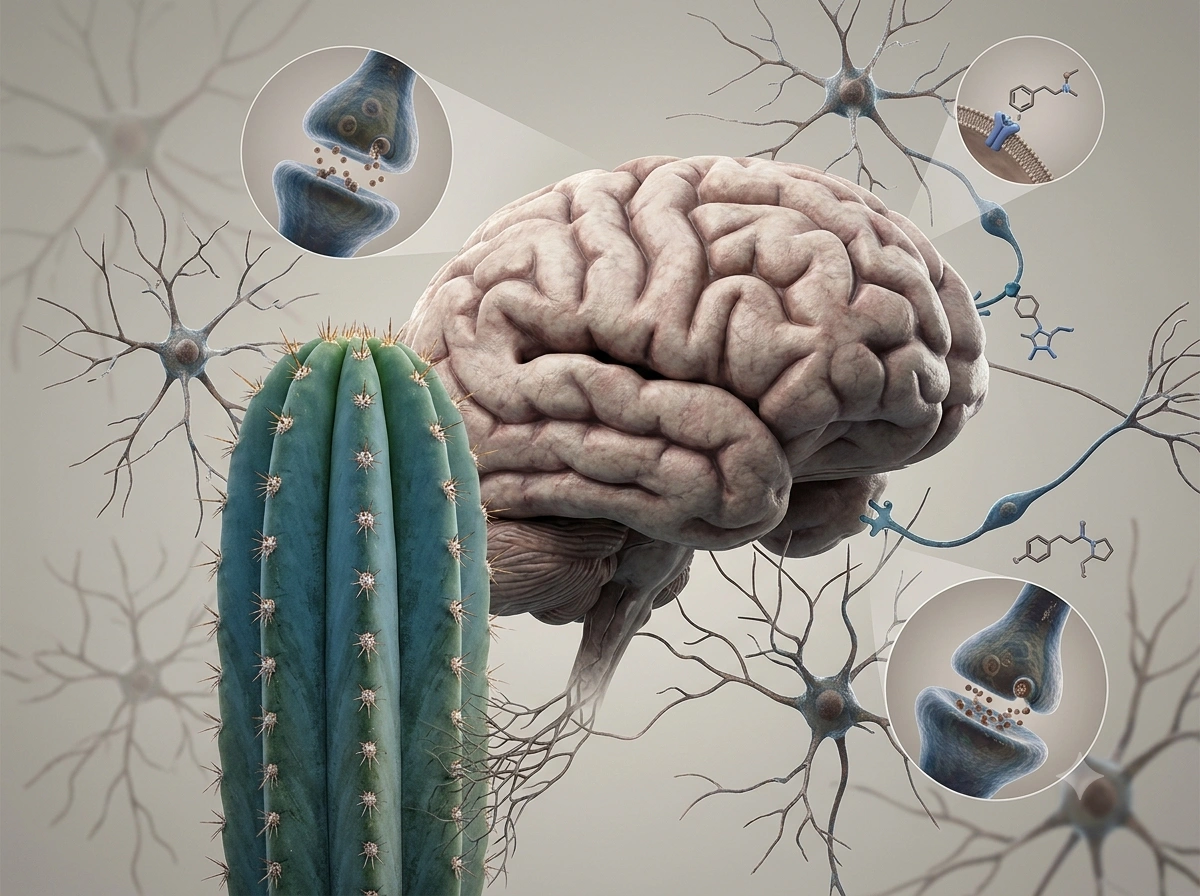
The brain effects of Peruvian Torch are primarily associated with mescaline.
Because mescaline is a classic psychedelic, its effects overlap with those of LSD and psilocybin, although the subjective experience and duration can differ.
Visual changes are among the most recognizable effects.
A person may perceive colors as unusually vivid.
Patterns may appear to move or change.
Textures can seem distorted.
Closed-eye imagery can become highly detailed.
These effects are associated with altered serotonin signaling and changes in how the brain processes sensory information.
Time can feel unusually slow or fast.
A period that objectively lasts a few minutes can feel much longer.
This phenomenon is reported with several classic psychedelics and may reflect changes in attention, sensory processing, and internal timing.
Normal thinking can become less linear.
Ideas may appear unusually connected.
A person may become deeply absorbed in a particular thought or memory.
At the same time, short-term attention can become less reliable.
This combination can feel insightful to some people and confusing to others.
Mescaline can intensify emotions.
People may experience:
There is no guarantee that an experience will be positive.
Psychedelics can amplify an existing emotional state, and anxiety can become particularly intense.
Another notable effect is a change in ordinary self-awareness.
Some people describe feeling deeply connected with nature or their surroundings.
Others describe a temporary reduction in the normal boundary between themselves and the external world.
Researchers sometimes describe these experiences using terms such as ego dissolution, although the intensity and interpretation vary greatly.
Modern psychedelic neuroscience suggests that mescaline and other classic psychedelics can change communication between large-scale brain networks.
The default mode network, which is involved in self-referential thought and autobiographical processing, is one area of interest.
However, it would be misleading to say that psychedelics simply “turn off” the default mode network.
The brain is more complicated than a single switch.
The current understanding is that psychedelics can alter the coordination and information flow between multiple neural systems, potentially contributing to unusual experiences of perception and selfhood.
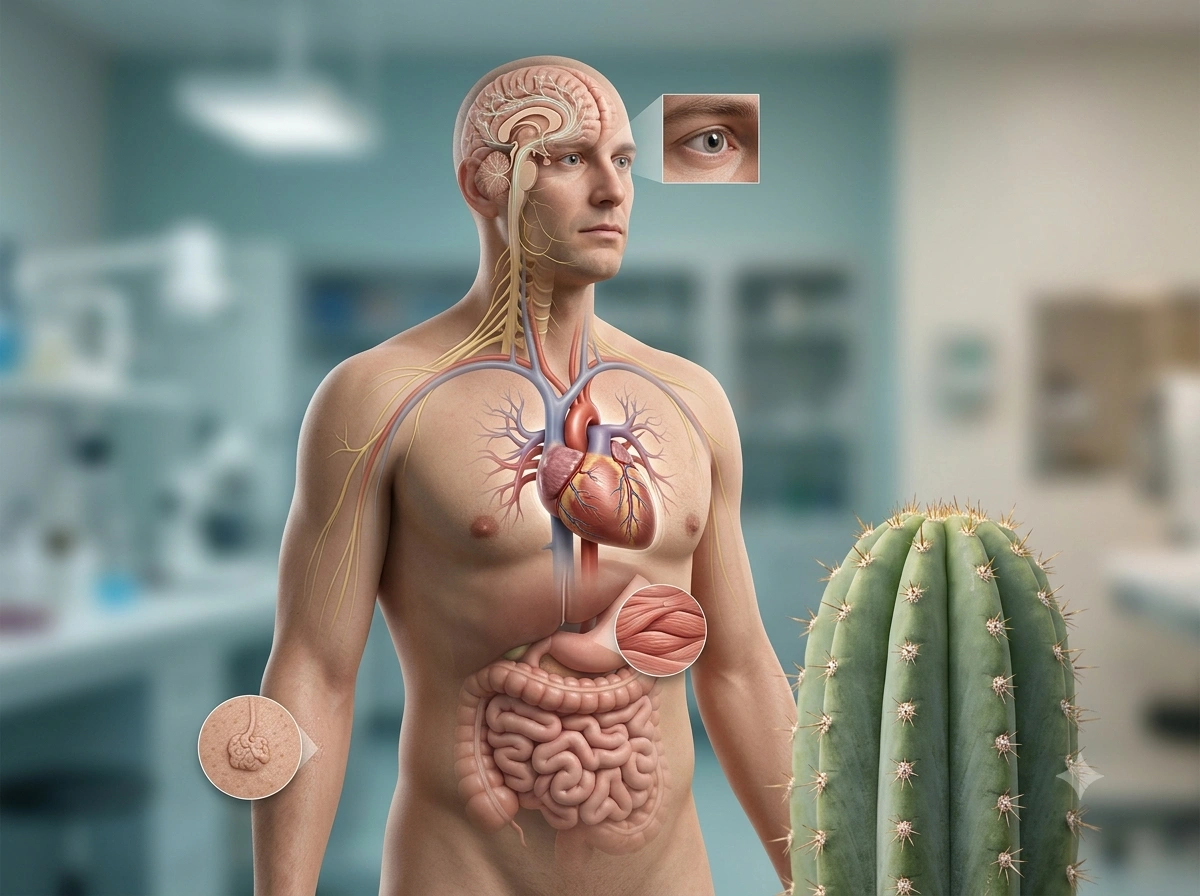
The physical effects of Peruvian Torch are largely associated with mescaline and other compounds present in the cactus.
Potential effects include:
Modern controlled human research into mescaline has found dose-dependent psychedelic effects accompanied by moderate, temporary autonomic stimulation in screened healthy participants.
Nausea is one of the most commonly discussed physical effects of mescaline-containing cacti.
Traditional Andean ceremonies may interpret vomiting within a spiritual or cleansing framework.
From a physiological perspective, however, nausea and vomiting are bodily responses.
It is important not to present vomiting as proof that the body is “detoxifying.” That is a cultural interpretation, not an established medical explanation.
Mescaline can temporarily increase cardiovascular activity.
This is particularly relevant for people with:
A recent clinical review notes that modern safety evidence is mostly based on healthy, screened volunteers. The safety profile in people with cardiovascular, metabolic, or psychiatric conditions remains less certain.
The psychological effects of mescaline can occur alongside impaired judgment and altered spatial perception.
That combination can increase the risk of accidents.
A person may not accurately judge:
This is an important reason why the term “natural psychedelic” should never be interpreted as “risk-free.”
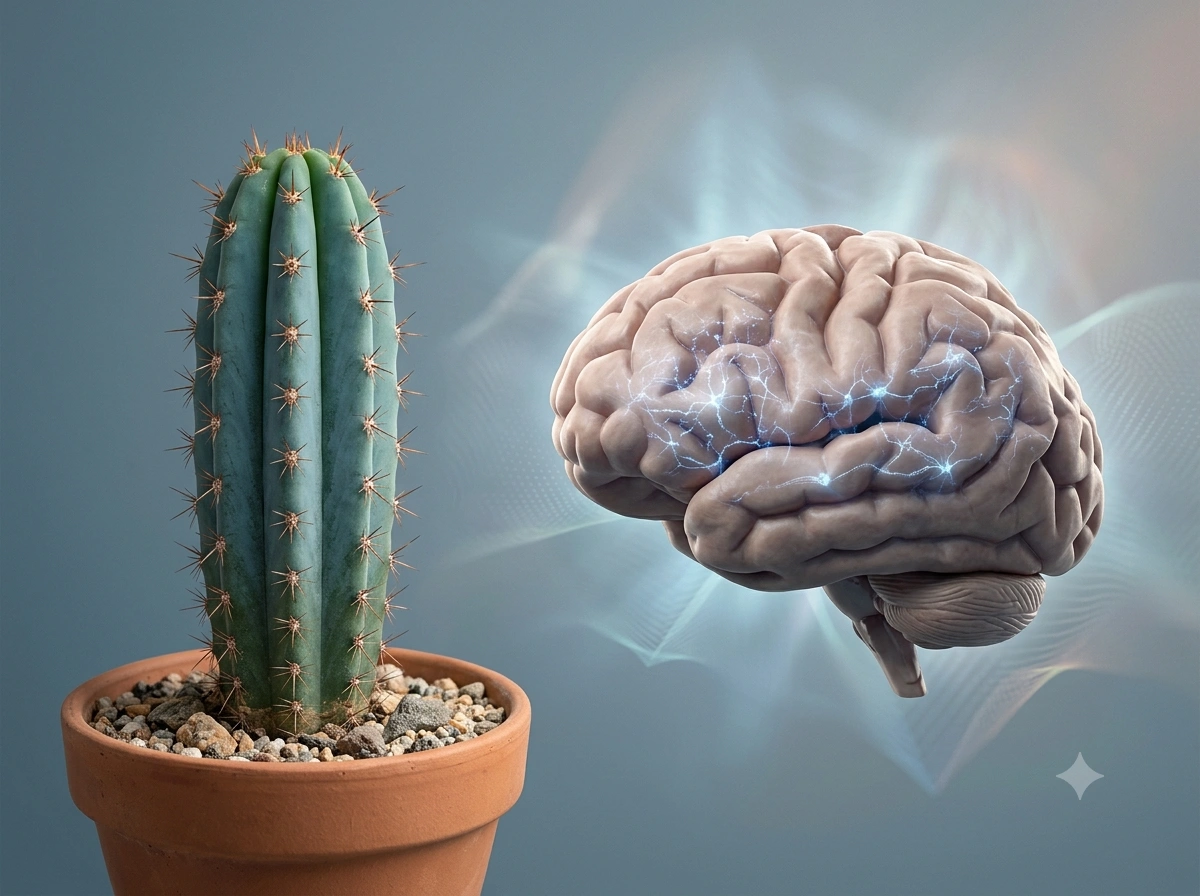
The phrase “positive effects” requires some context.
Peruvian Torch itself is not an FDA-approved medical treatment.
The strongest evidence concerns its psychoactive effects and the pharmacology of mescaline. Research into possible therapeutic applications is still developing.
The primary reason mescaline-containing cacti have been used ceremonially is their ability to produce an altered state of consciousness.
This can involve changes in:
For scientists, these effects provide a valuable model for studying consciousness.
Some people report using psychedelic experiences to reflect on their lives, relationships, emotions, and behavioral patterns.
This has helped drive interest in psychedelic-assisted psychotherapy.
However, feeling that an experience is deeply meaningful does not automatically mean every conclusion reached during it is objectively correct.
The broader Andean cactus tradition is associated with spiritual and healing practices.
Some people describe experiences involving:
These experiences are highly personal and are shaped by cultural expectations and the surrounding environment.
Modern interest in mescaline has increased as psychedelic research has expanded.
A 2026 clinical review notes that mescaline is attracting renewed scientific interest because of its possible role in psychedelic-assisted therapy, but emphasizes that controlled clinical trials in patient populations remain limited.
A broader review of mescaline research has also identified preliminary findings related to depression, well-being, substance use, and other psychiatric outcomes, but the evidence remains considerably smaller than the research base for psilocybin.
Therefore, it is too early to call Peruvian Torch a treatment for depression, anxiety, addiction, or any other medical condition.
One of the clearest benefits of studying Peruvian Torch is scientific.
Mescaline provides researchers with a naturally occurring compound for investigating serotonin receptors, perception, cognition, emotion, and altered states of consciousness.
It has also contributed to the broader understanding of how classic psychedelics affect the human brain.
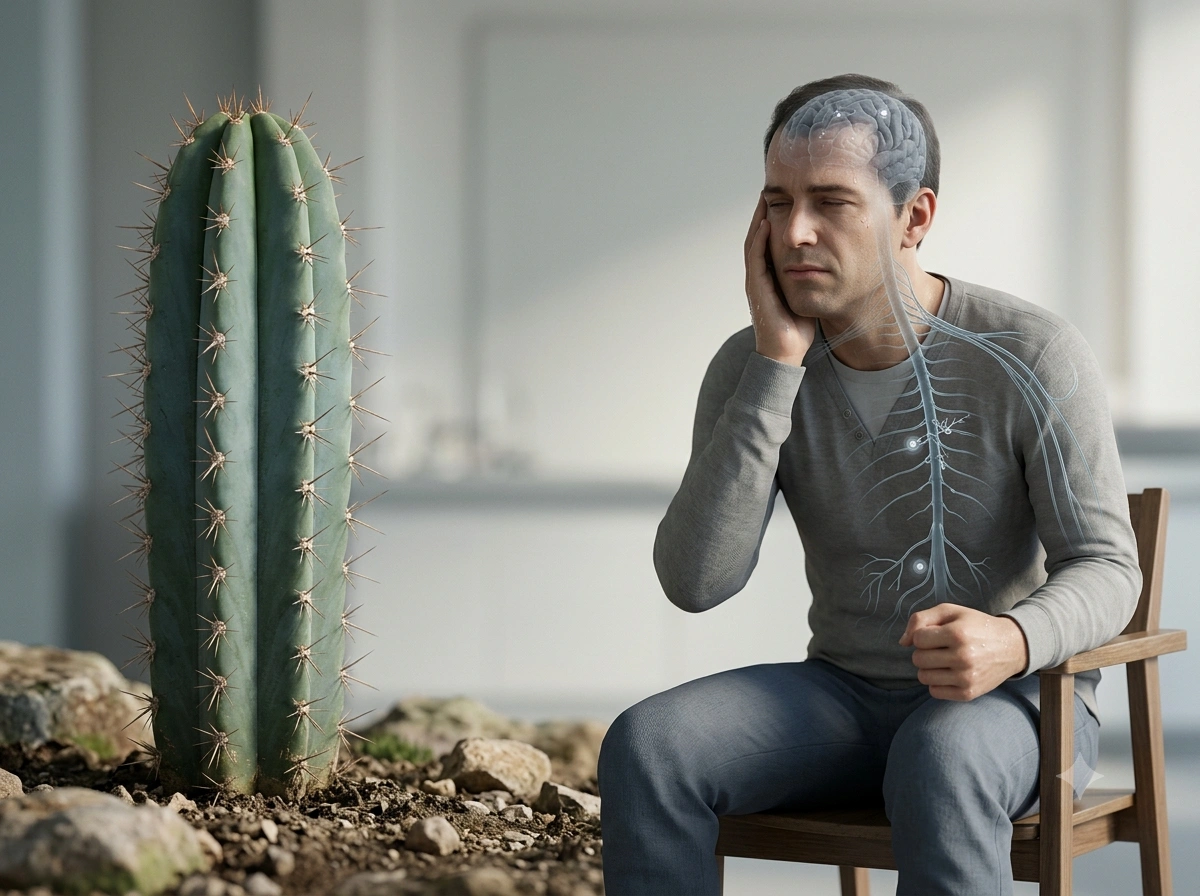
Peruvian Torch can produce difficult experiences as well as positive or meaningful ones.
Gastrointestinal discomfort is common with mescaline-containing cacti.
For some people, this may be one of the most unpleasant parts of the experience.
Mescaline can amplify emotional states.
If fear develops, it can become unusually intense because the person’s perception of reality is already altered.
A person may temporarily struggle to understand:
The cardiovascular effects of mescaline may be temporary in healthy people, but they can be more concerning in individuals with underlying heart conditions.
Changes in perception and coordination can increase the risk of accidental injury.
Psychedelics can produce temporary experiences that resemble psychosis, including paranoia, unusual beliefs, and severe perceptual changes.
People with a personal history of psychotic disorders or mania may be particularly vulnerable.
Importantly, modern mescaline research has largely involved screened healthy volunteers, so the safety profile cannot automatically be generalized to people with psychiatric or cardiovascular conditions.
Mescaline is relatively long-acting.
Modern controlled studies have found that subjective mescaline effects can persist for several hours, with duration increasing with dose.
This is important because an uncomfortable experience cannot simply be expected to disappear within a few minutes.
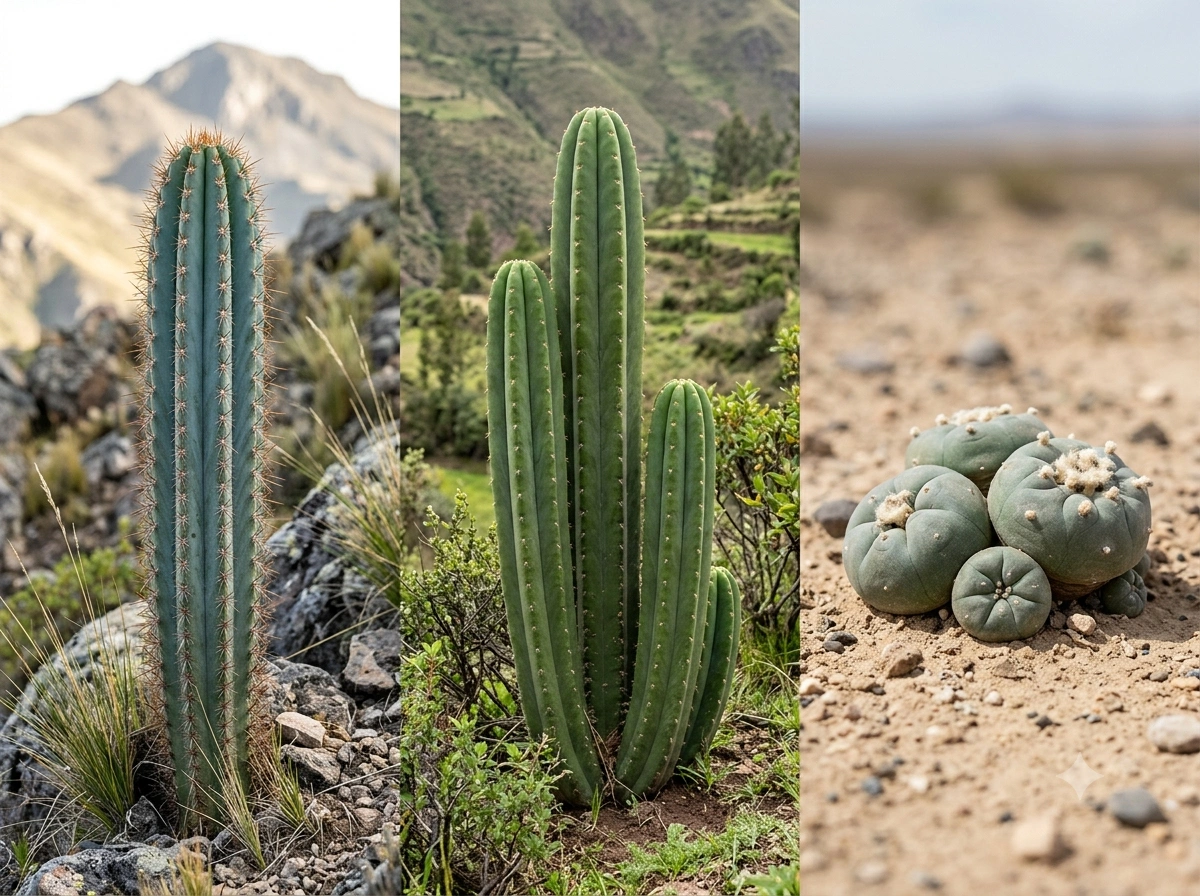
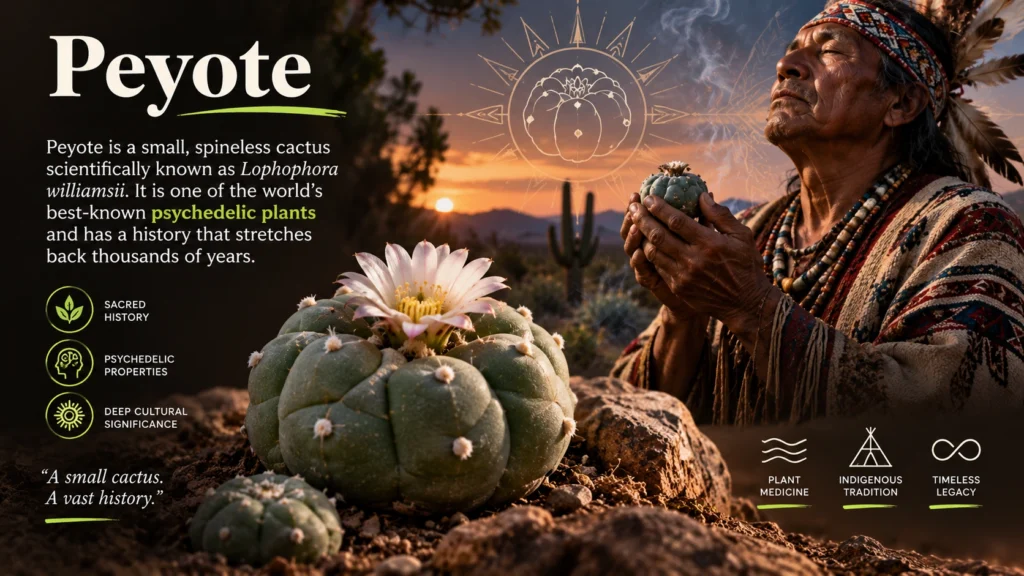
Peruvian Torch, San Pedro, and peyote are often discussed together because they can contain mescaline.
But they are different plants.
| Feature | Peruvian Torch | San Pedro | Peyote |
|---|---|---|---|
| Common scientific name | Echinopsis peruviana; currently treated by Kew as a synonym of Echinopsis macrogona | Echinopsis pachanoi | Lophophora williamsii |
| Growth form | Tall, columnar cactus | Tall, columnar cactus | Small, button-shaped cactus |
| Main psychedelic compound | Mescaline | Mescaline | Mescaline |
| Native region | Peru and Bolivia | Andes of South America | Northern Mexico and southern Texas |
| Traditional context | Andean cactus traditions | Andean wachuma traditions | Indigenous and Native American religious traditions |
| Growth pattern | Relatively fast-growing | Relatively fast-growing | Very slow-growing |
| Taxonomy | Complex and frequently revised | Also subject to taxonomic revisions | More clearly established |
| Conservation discussion | Depends on taxon | Varies by species/population | Significant concern |
The most important takeaway is simple:
Having the same active compound does not make the plants identical.
Their chemistry, history, appearance, traditional use, and ecological characteristics can differ.
Peruvian Torch does not have a well-documented celebrity culture comparable with LSD or ayahuasca.
The best-known Western cultural figure associated with mescaline is probably writer Aldous Huxley, whose 1954 book The Doors of Perception described his experience with mescaline.
However, Huxley’s experience should not be presented as a confirmed Peruvian Torch experience.
Huxley was discussing mescaline, and mescaline can come from several cactus sources.
That distinction is frequently lost in online articles.
There are also claims across forums and social media about celebrities consuming San Pedro, Peruvian Torch, or other mescaline-containing cacti. Most of these claims are difficult to verify through reliable primary sources.
For an evidence-based article, it is better to avoid turning rumors into facts.
The scientifically significant names in the history of mescaline are researchers such as Arthur Heffter, who identified mescaline’s role in peyote, and the researchers who later chemically investigated South American cacti such as Trichocereus peruvianus.
Peruvian Torch cactus is one of the most interesting plants in the world of psychedelic cacti and ethnobotany.
Usually associated with the name Echinopsis peruviana and older names such as Trichocereus peruvianus, its taxonomy has changed over time. Kew’s current botanical database treats Echinopsis peruviana as a synonym of Echinopsis macrogona, a columnar cactus native to western and southern Peru and Bolivia.
Its importance comes largely from one compound:
Mescaline.
Mescaline is a classic psychedelic and one of the oldest known psychoactive compounds used by humans.
Research has shown that mescaline primarily acts through the serotonin 5-HT2A receptor, producing profound changes in perception, thought, emotion, and consciousness.
Chemical studies have confirmed mescaline in Trichocereus peruvianus, the older scientific name associated with Peruvian Torch, along with several other alkaloids.
But one of the most important scientific findings is chemical variability.
Research examining 14 Echinopsis taxa and cultivars found mescaline concentrations spanning two orders of magnitude, from 0.053% to 4.7% of dry weight.
This means it is misleading to treat every Peruvian Torch cactus as chemically identical.
The plant’s traditional history is equally important.
Peruvian and other Andean communities have long worked with psychoactive cacti in traditional medicine and ceremonial practices.
Modern psychedelic culture sometimes removes these plants from that cultural context and presents them simply as sources of mescaline.
That is an incomplete picture.
For scientists, Peruvian Torch and related Echinopsis species are valuable because they provide naturally occurring examples of mescaline-containing plants and offer insight into the chemistry of psychedelic cacti.
For historians and anthropologists, they provide evidence of sophisticated relationships between humans and psychoactive plants.
For conservationists, they raise questions about sustainable collection and protection of Andean ecosystems.
And for modern neuroscience, mescaline provides another way to study how serotonin receptors influence perception and consciousness.
The potential therapeutic side is attracting renewed attention.
Recent reviews have identified preliminary research involving mescaline and outcomes such as depression, well-being, nicotine dependence, alcohol use, and obsessive symptoms. However, the evidence remains much smaller than the clinical literature surrounding better-studied psychedelics such as psilocybin.
This is where responsible health writing needs to avoid exaggeration.
Peruvian Torch is not a proven antidepressant, nootropic, anxiety treatment, or wellness supplement.
It is a psychoactive cactus containing a powerful psychedelic compound.
Its effects can include profound changes in perception and consciousness, along with nausea, vomiting, cardiovascular stimulation, anxiety, confusion, and impaired coordination.
The legal status also varies considerably by jurisdiction.
Perhaps the most interesting aspect of Peruvian Torch is therefore not simply its psychedelic reputation.
It is the combination of ancient Andean plant knowledge, modern chemistry, neuroscience, taxonomy, and psychedelic research.
The cactus demonstrates how one plant can have completely different meanings depending on the context.
In traditional settings, related Andean cacti have been associated with healing and ceremony.
In botany, they are fascinating examples of cactus diversity and adaptation.
In chemistry, they are natural sources of unusual alkaloids.
In neuroscience, their mescaline content offers researchers a tool for studying consciousness.
And in modern culture, they have become part of the growing conversation around psychedelics and mental health.
The most accurate conclusion is simple:
Peruvian Torch is a mescaline-containing Andean columnar cactus with a long ethnobotanical history and significant scientific interest. Its chemistry can vary considerably from plant to plant, its effects can be intense and long-lasting, and its potential medical applications remain an area of research rather than established medical fact.
That distinction is important.
The future of Peruvian Torch research may ultimately be less about the cactus itself and more about what its chemistry can teach us about the human brain, serotonin signaling, perception, emotional processing, and altered states of consciousness.
No, although the two are closely related. Peruvian Torch is commonly associated with Echinopsis peruviana and the older name Trichocereus peruvianus, while San Pedro is commonly associated with Echinopsis pachanoi. Both belong to the broader group of South American columnar cacti and may contain mescaline.
Yes, some plants identified under the Peruvian Torch name have been shown to contain mescaline. A 1977 chemical study of Trichocereus peruvianus isolated mescaline, while broader research has found considerable variation in mescaline concentrations among Echinopsis taxa.
Some Peruvian Torch plants can produce psychedelic effects because of their mescaline content. Mescaline primarily produces its classic psychedelic effects through activity at serotonin 5-HT2A receptors.
No. Peyote is Lophophora williamsii, while Peruvian Torch belongs to the Echinopsis group. Both can contain mescaline, but their appearance, geography, growth patterns, and cultural histories are very different.
It should not be considered risk-free. Mescaline can cause nausea, vomiting, increased heart rate and blood pressure, anxiety, confusion, impaired coordination, and intense perceptual changes. The risks may be greater for people with certain cardiovascular or psychiatric conditions.
Mescaline generally produces a long-lasting psychedelic experience compared with very short-acting psychedelics. Modern controlled research has found effects lasting several hours, although duration varies according to the compound, individual, and circumstances.
There is not enough clinical evidence to make that claim. Research into mescaline and mental health is developing, and early findings are interesting, but Peruvian Torch itself is not an established treatment for depression or other psychiatric disorders.
The conservation picture depends on the exact species and taxonomic classification. Kew currently lists Echinopsis peruviana as a synonym of Echinopsis macrogona and reports that taxon’s IUCN category as Least Concern.