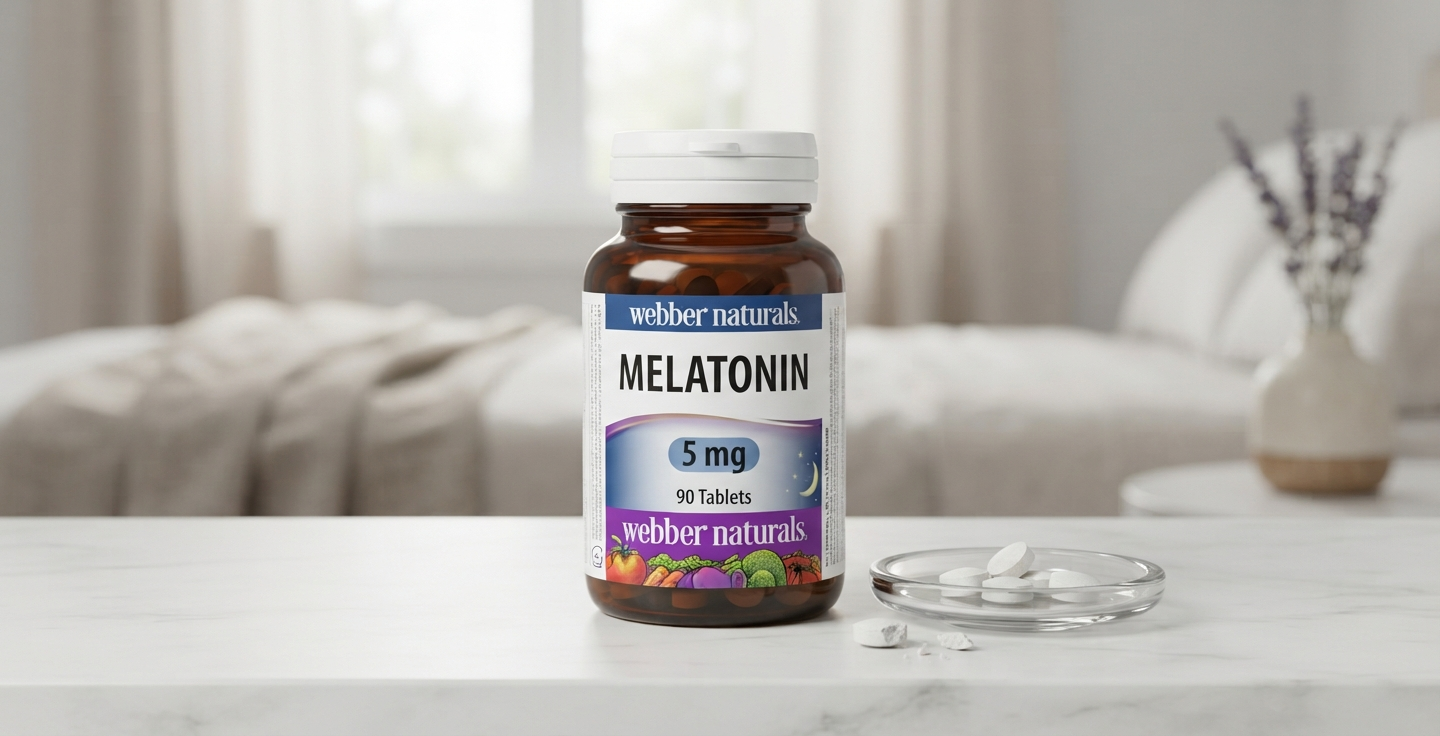
The brand is one of Canada’s longest-established names in vitamins and natural health products. Its distinctive purple cap has become a familiar sight in Canadian pharmacies, grocery stores, warehouse clubs and supplement aisles. Webber Naturals has been operating since 1948, and its parent company, WN Pharmaceuticals Ltd., has built a large supplement business around vitamins, minerals, herbal products and other natural health products.
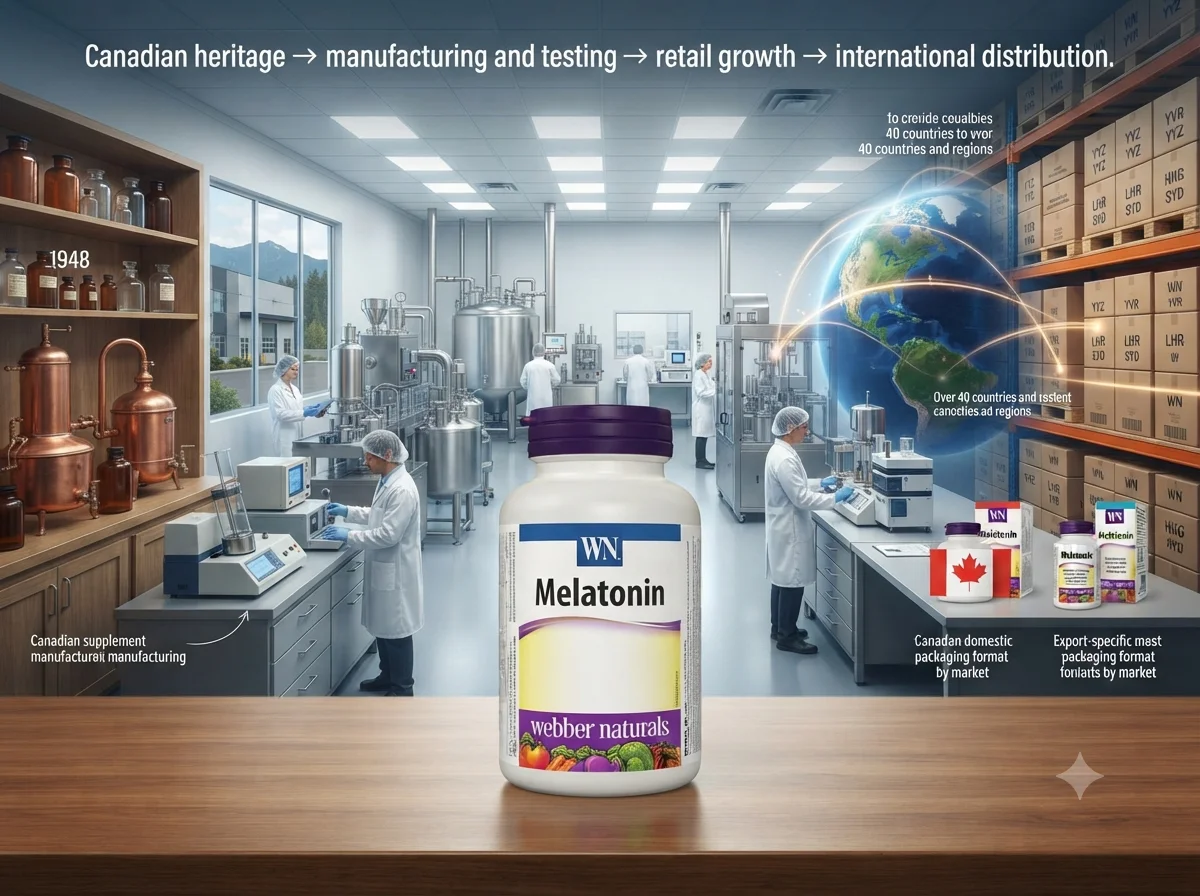
Webber Naturals traces its history to 1948, when the company began producing supplements in British Columbia.
There is an important distinction between the Webber Naturals brand and WN Pharmaceuticals Ltd.
Webber Naturals is the consumer-facing brand, while WN Pharmaceuticals Ltd. is the company behind the brand. WN Pharmaceuticals’ own corporate website identifies itself as the parent company of Webber Naturals, along with brands including Holista, MetaSlim, Multisure and WN Pharma.
The company is privately held, and detailed information about the original founder is surprisingly limited in current public corporate material. Unlike some modern supplement companies that prominently promote an individual founder, Webber Naturals’ official history emphasizes its Canadian heritage since 1948 rather than identifying a single founder as the face of the brand.
That distinction is important because many low-quality articles online repeat founder names without providing a reliable primary source.
WN Pharmaceuticals developed into a large Canadian manufacturer and distributor of natural health products.
A historical profile published in Costco Connection described WN Pharmaceuticals as employing approximately 2,500 people and operating its main facility in Coquitlam, British Columbia. The same profile highlighted the company’s extensive testing infrastructure and its relationship with Costco, including a retail partnership that had already lasted more than 20 years at the time of publication.
The company therefore did not grow simply by launching one successful melatonin product.
It built manufacturing capacity, testing capabilities and retail relationships across a much larger supplement portfolio.
The manufacturer behind the Webber Naturals brand is WN Pharmaceuticals Ltd.
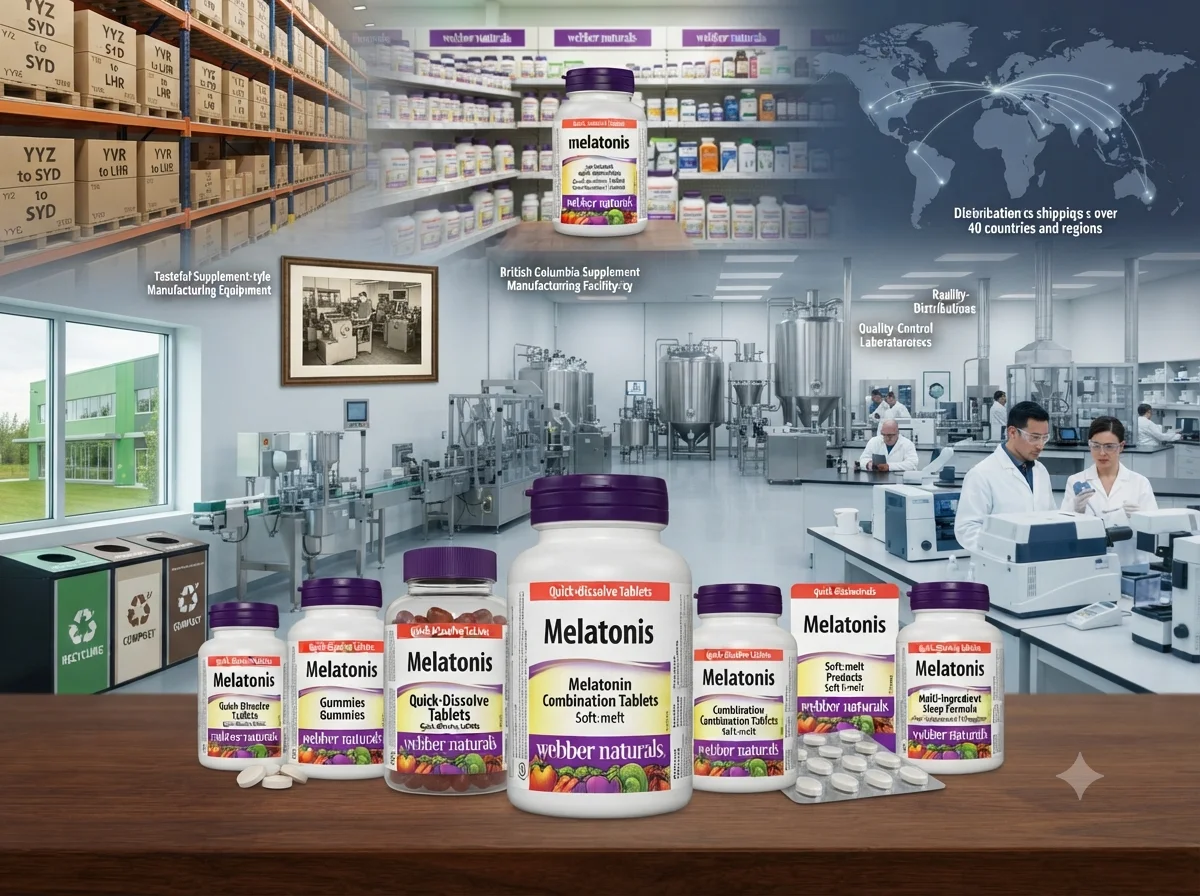
Webber Naturals states that its products are formulated, manufactured and tested in British Columbia, Canada. Its FAQ similarly says that manufacturing takes place at its facilities in British Columbia.
This is one of the brand’s strongest selling points.
Instead of importing finished melatonin products and simply placing them into branded packaging, Webber Naturals says it controls formulation, manufacturing and testing within Canada.
The company’s main corporate location is in Coquitlam, British Columbia, at 2000 Brigantine Drive. Current company and business records identify this location as the headquarters of WN Pharmaceuticals.
Webber Naturals says its products are manufactured in facilities in British Columbia.
A historical Costco Connection profile identified the company’s main facility in Coquitlam and described extensive laboratory and quality-testing operations there.
It is worth avoiding the common mistake of calling one location the manufacturing site for every Webber Naturals product. The company has stated that manufacturing occurs at its facilities in British Columbia, but its public consumer website does not provide a current product-by-product factory map.
Webber Naturals is strongly established in Canada, but the brand has also developed an international presence.
Company-related materials have described the brand as serving consumers in more than 40 countries and regions. A Chinese trade exhibition profile from 2021 described Webber Naturals as a Canadian brand supplying consumers across more than 40 countries and regions.
The company also maintains international-facing versions of its website for markets including the United States, France, China, Hong Kong, Taiwan, Japan, Korea and Spain.
Webber Naturals’ own FAQ confirms that products made for export can have different packaging and labeling from North American products because they must comply with regulations in the destination market.
That tells us something important about the business.
Webber Naturals is not simply a Canadian retail brand. It has developed an export and international distribution infrastructure around its product portfolio.
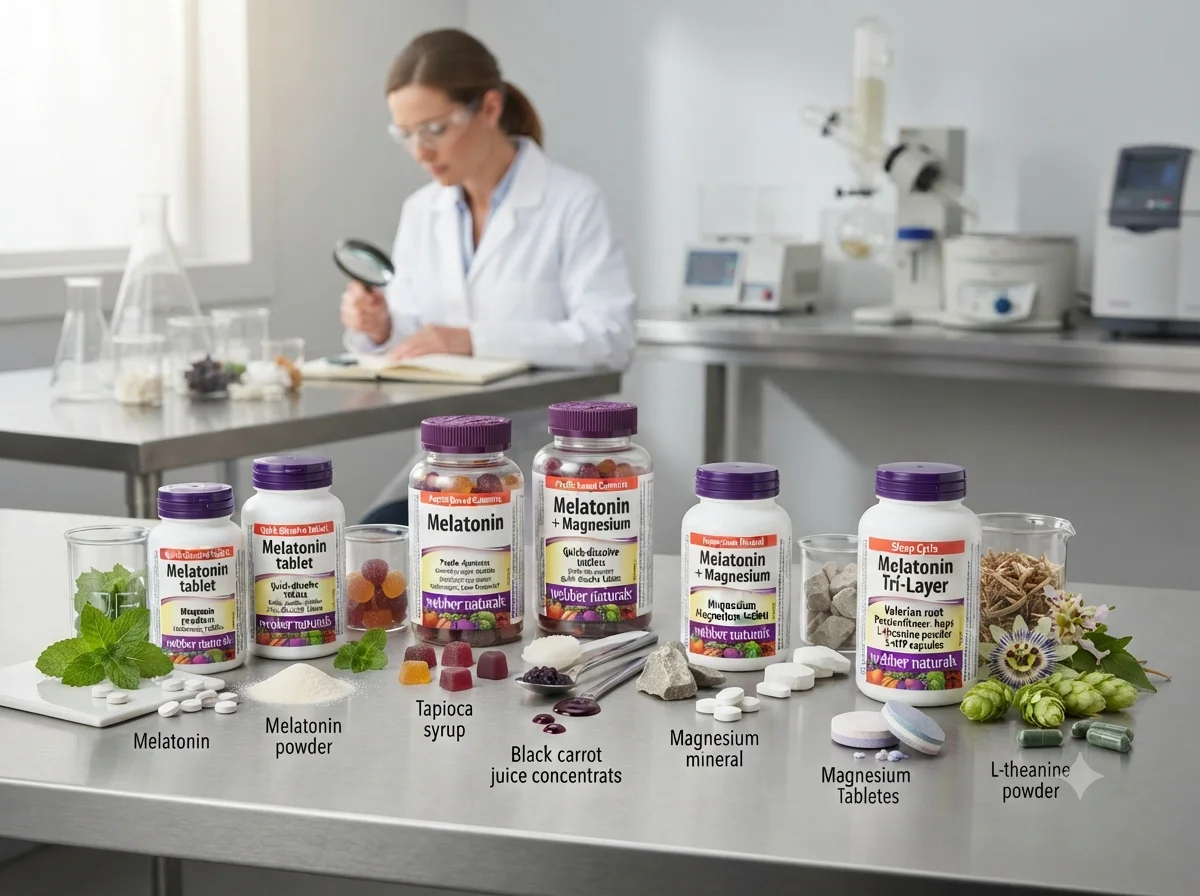
One of the biggest mistakes people make when researching “Webber Naturals melatonin” is assuming there is only one formula.
There isn’t.
The company sells multiple melatonin products, and the ingredients change depending on whether you choose a quick-dissolve tablet, gummy, magnesium combination or multi-ingredient sleep formula.
The 1 mg quick-dissolve tablet contains:
The tablet is designed to dissolve under the tongue. Webber Naturals markets it for uses including helping increase total sleep time during sleep restriction or altered schedules, jet lag and certain circadian rhythm-related sleep issues.
The 3 mg version uses the same general quick-dissolve approach.
Each tablet contains:
The company describes this as a standard-dose melatonin product designed for quick dissolution.
The 10 mg quick-dissolve product contains:
The tablet is placed under the tongue until dissolved. Webber Naturals describes this as a maximum-strength product.
It is worth making one distinction here: maximum strength is a marketing description, not a statement that 10 mg is medically better for everyone.
More melatonin does not automatically mean better sleep.
The 2.5 mg gummy contains:
Webber Naturals identifies this product as vegan and gelatin-free.
The use of pectin instead of gelatin is particularly relevant for consumers looking for a plant-based gummy.
The 5 mg gummy contains:
The product is marketed as a gelatin-free gummy.
The 10 mg version contains:
Webber Naturals calls this its maximum-strength gummy formula.
The company also sells combination products.
Its 10 mg melatonin and 150 mg magnesium tablet contains:
The product is marketed for sleep support and certain altered sleep schedules.
This is an important example of why consumers should read the label instead of searching only for the brand name.
“Webber Naturals melatonin” can refer to several different formulations.
This is one of the company’s more complex melatonin products.
Each tablet contains:
The tablet uses a tri-layer design intended to provide immediate and gradual release. Webber Naturals positions it for sleep, jet lag, shift work and altered sleep schedules.
This product demonstrates another reason Webber Naturals has remained competitive: it does not depend on one formula.
It can target consumers who want simple melatonin as well as people who prefer multi-ingredient sleep products.
The exact claims depend on the product and the regulatory environment in which it is sold.
For its Canadian melatonin products, Webber Naturals lists purposes including helping to:
These are product-specific claims and should not be confused with proof that melatonin cures insomnia.
Melatonin is primarily a circadian timing signal, and its usefulness depends heavily on why someone is having difficulty sleeping.

Webber Naturals’ marketing story is different from brands that become famous through one celebrity endorsement.
Its strongest strategy has been long-term brand recognition.
Perhaps the most effective piece of Webber Naturals branding is also the simplest:
the purple cap.
The company itself calls attention to the purple cap as a recognizable symbol of the brand in vitamin aisles.
That kind of visual branding is valuable in crowded supplement stores.
A shopper does not need to read the entire bottle to recognize the brand.
Webber Naturals has also built a significant part of its identity around being Canadian.
The company repeatedly describes itself as Canadian-owned and operated since 1948, with products formulated, manufactured and tested in British Columbia.
That message gives the brand an identity beyond individual ingredients.
Instead of competing only on “3 mg versus 5 mg,” the company also competes on:
Canadian heritage + local manufacturing + affordability + sustainability.
Retail distribution has been another major part of the growth strategy.
A Costco Connection profile reported that WN Pharmaceuticals had a relationship with Costco lasting more than 20 years and identified several Webber Naturals products among items sold at Costco.
That kind of distribution is extremely important for a supplement brand.
Being physically present where consumers already shop creates a major advantage over smaller supplement companies that rely entirely on direct-to-consumer websites.
Webber Naturals also provides a strong example of localized marketing.
Marketing agency GDK says that when Webber Naturals approached it, the brand was looking for better returns on its marketing investment. The agency developed a strategy that helped Webber Naturals reach second place in Quebec’s vitamin and natural-products sector, with nearly 100 products integrated into major pharmaceutical banners across Quebec.
That is a much more meaningful marketing success story than simply calling a social-media post “viral.”
It shows how distribution, local market strategy and retail placement can translate into sustained sales.
Webber Naturals is also using modern influencer and affiliate marketing.
Its current affiliate program allows partners to promote products through websites, blogs and social media using unique links and coupon codes.
The company’s current influencer campaign materials also show a strategy built around short-form video, Instagram collaborations, creator-generated content and paid amplification.
Although the campaign material currently visible on its website is for digestive-health products rather than melatonin, it demonstrates the broader marketing system Webber Naturals is now using to reach consumers.
This is an important shift from traditional pharmacy advertising.
The brand is moving from simply being seen on shelves to being discussed in consumers’ social feeds.
It would be too strong to say Webber Naturals “dominates” the global melatonin market.
There is no credible public data showing that Webber Naturals is the world’s No. 1 melatonin brand.
Its stronger claim is this:
Webber Naturals is a major Canadian natural-health brand with a long history, extensive retail distribution and a broad melatonin portfolio.
Several factors explain its success.
A brand that has been around since 1948 has something new supplement companies cannot buy overnight:
familiarity.
Consumers recognize the name.
Pharmacists recognize the brand.
Retailers know the company.
That lowers the barrier to purchase.
Webber Naturals offers several doses, including 1 mg, 3 mg, 5 mg and 10 mg products.
That allows the company to appeal to consumers with very different preferences.
Consumers can choose between:
This is important because convenience often influences supplement purchases just as much as the ingredient itself.
Webber Naturals says it formulates, manufactures and tests its products in British Columbia.
For consumers who prefer products manufactured domestically, this is a meaningful differentiator.
The company has invested heavily in quality-control and testing infrastructure.
Historical reporting from Costco Connection described a sophisticated laboratory operation and extensive internal testing at its Coquitlam facility.
Large-scale manufacturing also allows a company to spread production costs over a large product volume.
Webber Naturals says it is a carbon-neutral company and highlights sustainability, waste management and responsible sourcing as part of its brand identity.
That may appeal particularly to younger consumers who increasingly consider environmental factors when choosing wellness products.
The brand’s presence in more than 40 countries and regions gives Webber Naturals a larger potential market than a company operating solely in Canada.

The competitive landscape varies by country, but Webber Naturals faces several major supplement brands.
Jamieson is one of Webber Naturals’ most obvious Canadian competitors.
Both brands have deep Canadian roots, broad pharmacy distribution and multiple melatonin strengths.
A recent scientific review comparing commercially available melatonin products lists Jamieson alongside Webber Naturals and notes multiple melatonin dosage options for both brands.
Nature’s Bounty competes strongly in the broader North American melatonin market.
It offers multiple melatonin strengths and different delivery formats, giving consumers an alternative to Webber Naturals.
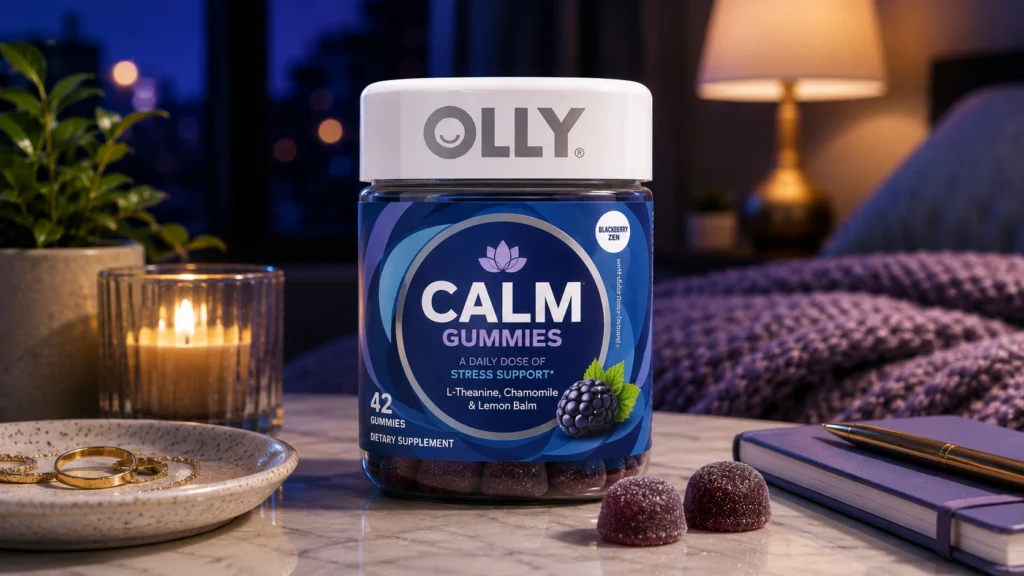
OLLY has become especially strong in the gummy supplement category.
Its lifestyle-oriented packaging and marketing give it a different consumer identity from Webber Naturals, but the two brands compete for consumers looking for convenient, flavored sleep supplements.
Nature Made is another major North American supplement brand.
Its reputation for mainstream vitamin and supplement products makes it a direct alternative for consumers shopping for melatonin.
NOW competes heavily on ingredient transparency, product range and supplement-industry credibility.
Its broad melatonin portfolio makes it relevant to consumers who are more interested in supplement formulations than lifestyle branding.
Within Canada, Webber Naturals also competes with brands such as:
The competitive landscape is therefore crowded.
Webber Naturals’ advantage is not necessarily that it has a unique melatonin molecule. It is that it combines brand age, manufacturing capacity, retail access, Canadian identity and a wide product portfolio.

This is one area where a lot of online articles become unreliable.
WN Pharmaceuticals is privately held, and there is no current audited public filing that provides a verified 2026 revenue figure for Webber Naturals alone.
That means websites claiming an exact annual revenue number should be treated carefully unless they identify a primary financial source.
We can verify the scale of the company through several indicators.
WN Pharmaceuticals has been described as a major Canadian supplement manufacturer, with historical reporting identifying approximately 2,500 employees and substantial retail distribution.
Its products are sold through major Canadian retail channels and international markets.
The company also maintains direct-to-consumer and affiliate infrastructure, showing that its sales model has expanded beyond traditional pharmacy distribution.
GDK Marketing says its work with Webber Naturals helped the brand reach second place in Quebec’s vitamin and natural-products sector, with nearly 100 products placed across major pharmaceutical banners.
That does not give us a company-wide revenue figure, but it provides useful evidence of commercial scale.
There are several reasons.
First, Webber Naturals is a private brand.
Second, WN Pharmaceuticals owns multiple brands.
Third, sales are generated through pharmacies, grocery stores, warehouse clubs, e-commerce and international distributors.
Fourth, the company does not publicly break out revenue by product category.
Therefore, it would be misleading to say something like “Webber Naturals made $X billion in 2026” without a verifiable financial filing.
The most accurate statement is:
Webber Naturals is a large, long-established Canadian supplement brand with substantial domestic and international distribution, but its standalone 2026 revenue and melatonin-specific sales are not publicly disclosed.
Webber Naturals is not a new supplement company chasing the latest sleep trend.
It has been operating since 1948, and its parent company, WN Pharmaceuticals Ltd., has developed into a major Canadian natural-health-products manufacturer. The company is headquartered in Coquitlam, British Columbia, and says its products are formulated, manufactured and tested in British Columbia.
Its melatonin business is particularly broad.
Rather than selling a single tablet, Webber Naturals offers multiple strengths and formats, including 1 mg, 3 mg, 5 mg and 10 mg melatonin, quick-dissolve tablets, gummies and combination products containing ingredients such as magnesium, L-theanine, 5-HTP, valerian, passionflower and hops.
Its brand strategy has been equally broad.
The purple cap, “Truly Canadian” identity, domestic manufacturing, major retail partnerships, affordability and sustainability messaging have helped make Webber Naturals recognizable in the Canadian supplement market.
The company has also adapted to modern marketing through affiliate programs, influencer campaigns and social-media content, rather than relying entirely on traditional pharmacy and grocery-store visibility.
Internationally, Webber Naturals has expanded beyond Canada, with company-related materials describing distribution across more than 40 countries and regions.
Its biggest melatonin competitors include Jamieson, Nature’s Bounty, Nature Made, OLLY and NOW Foods, along with several Canadian natural-health brands.
One final point deserves emphasis.
Webber Naturals may be a major Canadian supplement company, but there is not enough public evidence to accurately call it the global market leader in melatonin. Its real strength is more interesting: decades of Canadian manufacturing experience, a large retail footprint, a broad melatonin portfolio and a recognizable consumer brand.
And that combination explains why the purple cap continues to hold its place in the supplement aisle more than seven decades after the company’s beginnings.