Pure Encapsulations began in the early 1990s when brothers Raymond Hamel Jr. and Peter Hamel were looking for supplements that met a higher standard for purity and ingredient transparency. What began in a small watermill in Connecticut eventually became a professional supplement brand with more than 400 products and a presence in more than 15 countries. Today, Pure Encapsulations is owned by Nestlé Health Science.
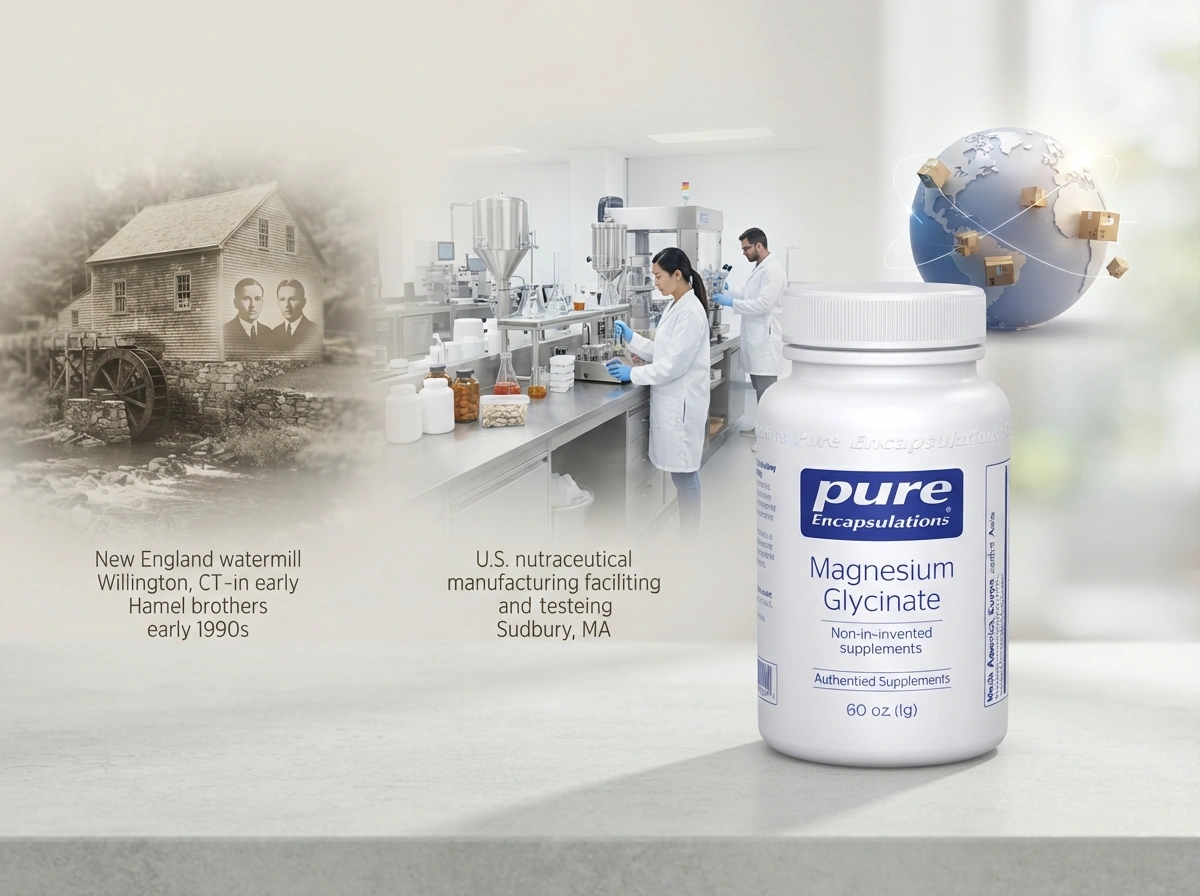
Pure Encapsulations was created in the early 1990s in Willington, Connecticut.
The company was founded by brothers Raymond Hamel Jr. and Peter Hamel, who were concerned about the quality and purity of supplements available at the time. According to the company’s history, the brothers believed that supplements should contain high-quality raw materials, clearly disclose their ingredients and avoid unnecessary additives and common allergens.
The company traces its first product to 1991, when it introduced a multivitamin developed with the assistance of two naturopathic doctors.
That early decision shaped almost everything Pure Encapsulations would become.
Instead of trying to compete immediately with mainstream vitamin brands in grocery stores, the company concentrated on healthcare professionals and their patients.
This was a smart positioning strategy.
A consumer walking into a supermarket might compare two magnesium bottles based primarily on price and dosage. A practitioner, on the other hand, might care more about the source of the ingredient, excipients, allergen profile, manufacturing controls and documentation.
Pure Encapsulations built its business around that second audience.
The founding brothers were Raymond Hamel Jr. and Peter Hamel.
The company also worked with naturopathic doctors Jacqueline Germain, ND, and Enrico Liva during its early development. Recent industry reporting identifies the Hamel brothers as co-founders and notes the important role of Germain in building relationships within the naturopathic practitioner community.
That practitioner connection became one of the company’s biggest competitive advantages.
It also explains why the brand’s marketing has historically looked very different from mass-market supplement advertising.
One of the more unusual parts of Pure Encapsulations’ history is its original setting.
The company started inside a New England watermill in Willington, Connecticut.
It did not stay there for long.
As demand increased, the company moved to Sudbury, Massachusetts, near Boston. Pure Encapsulations says its Sudbury operation became the base for its professional-grade manufacturing and its continuing focus on quality control.
Today, the company’s U.S. manufacturing facility is located at:
490 Boston Post Road, Sudbury, Massachusetts 01776.
Pure Encapsulations says its products are researched, developed and manufactured in its own state-of-the-art facility in Sudbury.
Pure Encapsulations is owned by Nestlé Health Science.
The ownership story has two important steps.
In 2004, the founding brothers sold Pure Encapsulations to Atrium Innovations. The transaction was reported at more than $37 million.
Then, in 2017, Nestlé agreed to acquire Atrium Innovations for approximately $2.3 billion. The acquisition was completed in 2018. Atrium’s portfolio included Pure Encapsulations and Garden of Life.
This transformed Pure Encapsulations from a specialized practitioner supplement company into part of one of the world’s largest nutrition and health businesses.
The brand’s current company information says Pure Encapsulations offers more than 400 products and that its products are used by more than 50,000 healthcare professionals in more than 15 countries.
Its country presence includes markets such as:
Nestlé Health Science also operates a much larger global network, with products sold in more than 140 countries, although that figure refers to Nestlé Health Science overall and should not be confused with the number of countries where Pure Encapsulations itself is sold.
The current manufacturer information identifies Pure Encapsulations in Sudbury, Massachusetts.
The company says its own facility handles manufacturing and that its quality system includes extensive testing. Pure Encapsulations describes its Sudbury operation as an FDA-inspected facility, NSF-GMP registered, certified gluten-free and GMP certified in Canada.
This is an important distinction.
The company does source raw materials from suppliers around the world. Manufacturing in Massachusetts does not mean every raw material originates in the United States.
Pure Encapsulations says it selectively partners with suppliers globally and tests raw materials and finished products through accredited third-party laboratories.
That combination of global sourcing and controlled U.S. manufacturing is central to its business model.
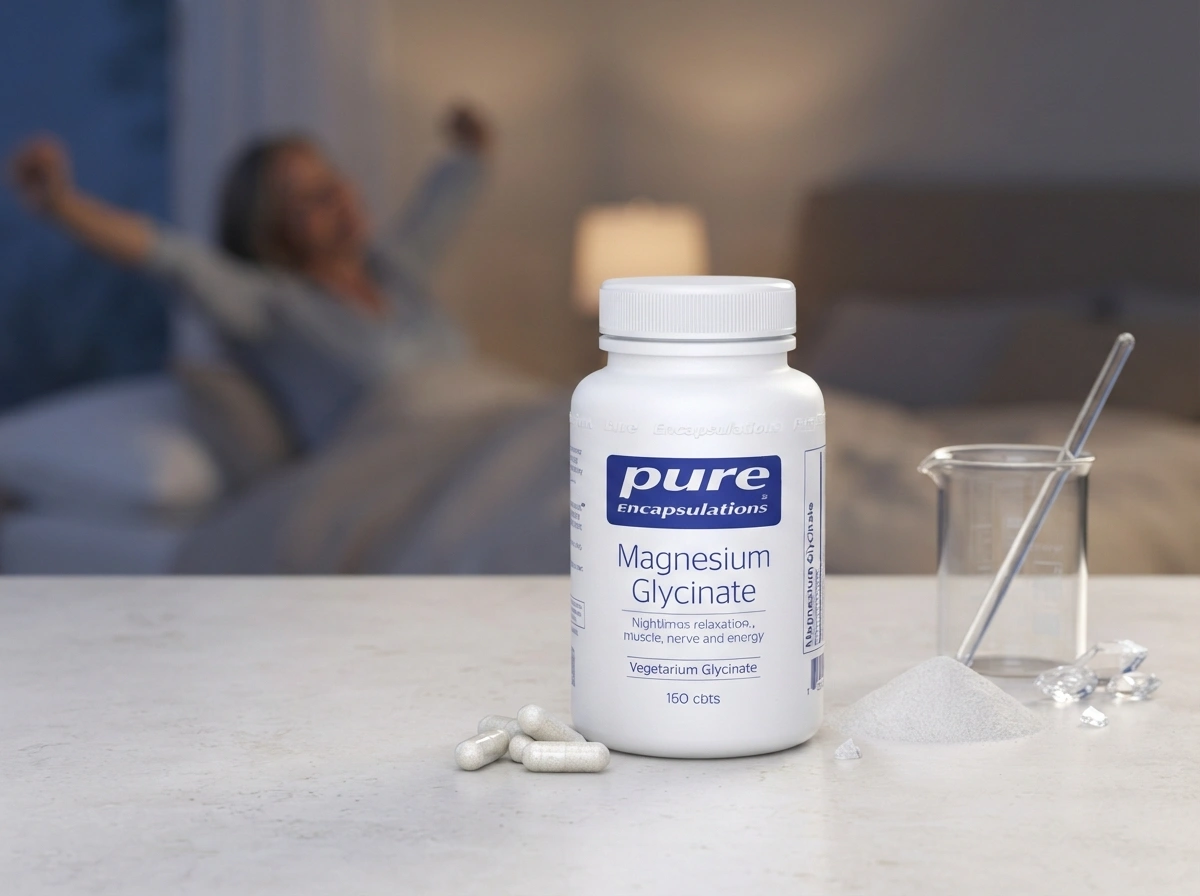
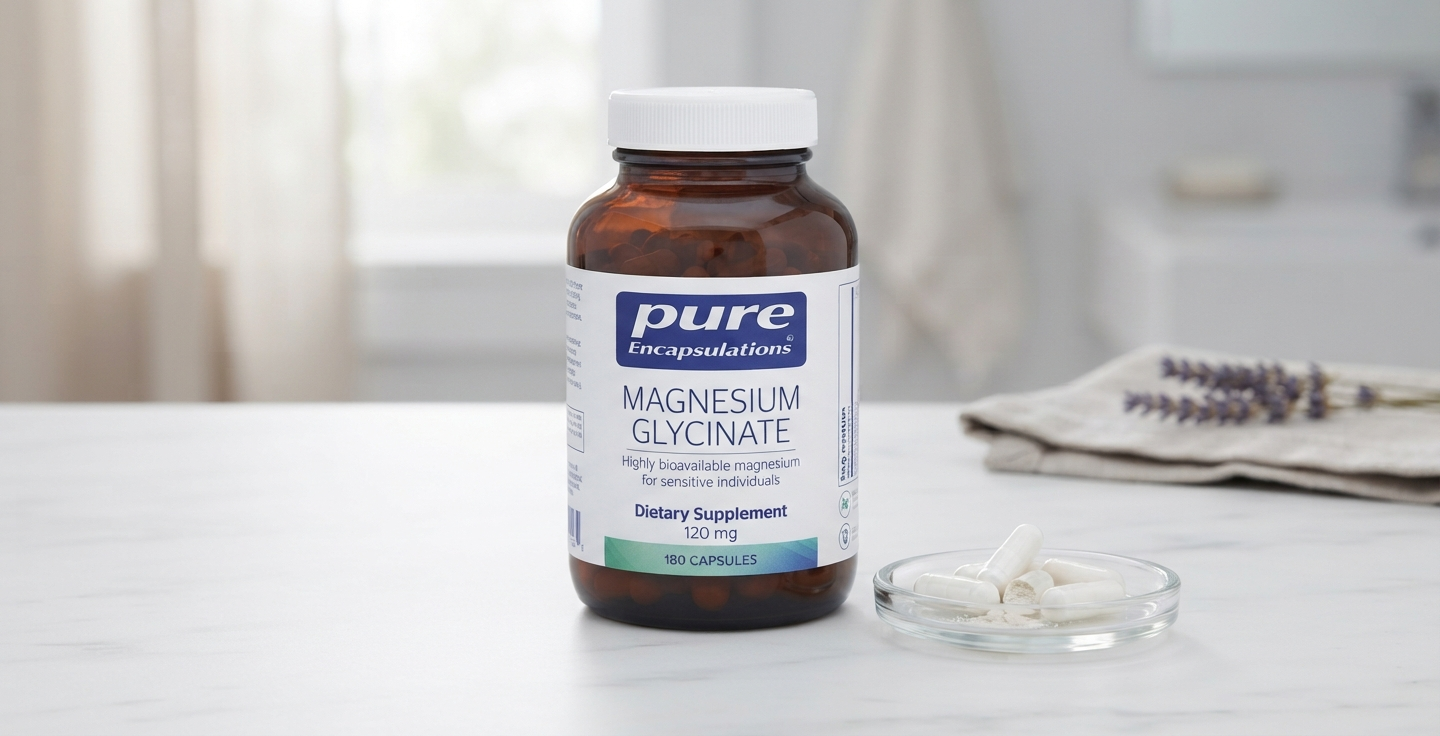
Pure Encapsulations Magnesium Glycinate is unusually straightforward when you look at its Supplement Facts panel.
For the current U.S. formulation, one vegetarian capsule provides 120 mg of magnesium as magnesium glycinate, equal to 29% of the U.S. Daily Value.
| Ingredient | Amount | What it does |
|---|---|---|
| Magnesium, as magnesium glycinate | 120 mg | Supplies elemental magnesium |
| Vegetarian capsule | Not separately listed | Cellulose and water form the capsule shell |
| Ascorbyl palmitate | Not separately listed | Used as a formulation aid/stabilizer |
The product contains no long proprietary blend, making it relatively easy to see exactly what you are taking.
Magnesium glycinate is magnesium bound to glycine, an amino acid.
You may also see the term magnesium bisglycinate used for essentially the same type of chelated magnesium compound.
The advantage of this formulation is not that magnesium glycinate is a completely different mineral from magnesium citrate or magnesium oxide. The mineral itself is magnesium. The difference is the compound used to deliver it.
The NIH Office of Dietary Supplements explains that the absorption of magnesium varies among different supplemental forms and that the label’s magnesium amount refers to elemental magnesium, not the total weight of the magnesium-containing compound.
That is why a bottle might say “magnesium glycinate” while the Supplement Facts panel says Magnesium 120 mg.
Pure Encapsulations describes magnesium glycinate as a highly bioavailable chelated form and says it is less likely to cause loose stools in sensitive individuals than some other magnesium forms.
This is one of the biggest reasons consumers choose glycinate.
Some other magnesium forms, particularly certain forms commonly used for their laxative effects, can cause gastrointestinal discomfort at higher supplemental doses.
Research comparing magnesium formulations suggests that organic forms can have better bioavailability than some inorganic forms, although the evidence is not strong enough to say that one formulation is universally “best” for every person.
Magnesium is an essential mineral involved in hundreds of biochemical reactions.
The NIH Office of Dietary Supplements says magnesium is involved in more than 300 enzyme systems, including processes related to protein synthesis, muscle and nerve function, blood glucose control and blood pressure regulation.
That means magnesium is not simply a “sleep mineral.”
It plays roles throughout the body.
Pure Encapsulations lists support for:
These are nutrient-function claims rather than claims that the product treats or cures a medical condition.
This is one of the most searched questions about magnesium glycinate.
The answer is: it may help some people, but the evidence is still developing.
A randomized, double-blind, placebo-controlled trial published in 2025 studied 155 adults with self-reported poor sleep. Participants receiving 250 mg of elemental magnesium as magnesium bisglycinate had a modestly greater improvement in insomnia severity than those receiving placebo after four weeks. The researchers described the effect as small and called for further studies.
That is useful evidence, but it does not prove that every magnesium glycinate product will improve sleep.
It also does not prove that someone who already gets enough magnesium will experience a dramatic difference after taking a supplement.
The strongest practical takeaway is that magnesium is important for normal nervous-system and muscle function, while research into magnesium supplementation for sleep remains an active area.
The manufacturer’s listed recommendation is 1 to 4 capsules daily with food, or as directed by a healthcare professional.
At 120 mg per capsule, that means:
This is where consumers need to pay attention.
The NIH’s current 2026 magnesium fact sheet says the upper limit for magnesium from dietary supplements and medications is 350 mg per day for adults. This limit does not include magnesium naturally found in food.
Therefore, the manufacturer’s four-capsule serving can exceed the general U.S. supplemental upper limit.
That does not automatically mean the product is unsafe when used at the manufacturer’s suggested range. The upper limit is a population-level safety benchmark, and healthcare professionals may use higher supplemental amounts in specific situations.
Still, consumers should not interpret “1 to 4 capsules” as “everyone should take four.”
It can.
Excessive supplemental magnesium can cause:
Extremely high magnesium levels can be much more serious, particularly in people with impaired kidney function.
Magnesium can also interact with medicines.
For example, magnesium can interfere with absorption of some antibiotics and oral bisphosphonates. The NIH recommends separating magnesium from certain antibiotics by specific intervals and separating it from oral bisphosphonates by at least two hours.
Anyone with kidney disease, anyone taking prescription medicines, or anyone who is pregnant or breastfeeding should discuss supplementation with a healthcare professional.
Pure Encapsulations is an interesting example of a supplement brand that became successful without depending on traditional mass-market advertising first.
Its most powerful marketing strategy was the brand itself.
The company’s current brand message is:
“Zero Compromises, Pure Results.”
Its website emphasizes high-quality ingredients, verifiable science, ingredient transparency and the exclusion of unnecessary additives and many common allergens.
This is more than a slogan.
It reflects the positioning that the company established in the 1990s.
Rather than saying, “Our product is cheaper,” Pure Encapsulations effectively says:
You are paying for what is inside the capsule.
That is particularly powerful in the practitioner supplement market.
Pure Encapsulations spent decades building relationships with doctors, naturopathic physicians, nutrition professionals and other healthcare practitioners.
The company says more than 50,000 healthcare professionals in more than 15 countries use its products.
That creates a very different customer-acquisition model from social-media advertising.
If a healthcare professional recommends a product and the patient has a positive experience, the recommendation can repeat.
The practitioner effectively becomes part of the distribution and education system.
Pure Encapsulations has repeatedly promoted its position as the No. 1 most recommended professional supplement brand by healthcare professionals.
The current company material cites Nutrition Business Journal research from 2016, 2020 and 2023 for this claim.
This is an important marketing asset because “recommended by healthcare professionals” is much more powerful for a premium supplement than simply saying “popular online.”
However, the wording matters.
It is a claim within the surveyed professional supplement category, not evidence that Pure Encapsulations is the world’s best supplement company.
One of the biggest recent marketing and distribution moves came in 2024, when Pure Encapsulations entered physical retail through The Vitamin Shoppe and Super Supplements.
The launch placed a curated selection of Pure Encapsulations products in more than 700 locations.
This was strategically significant.
For years, the brand had concentrated heavily on healthcare professionals and selected e-commerce channels.
Retail expansion allowed Pure Encapsulations to reach people who knew the brand but did not have access to it through a practitioner.
The Vitamin Shoppe also emphasized the role of its trained “Health Enthusiasts,” which fitted neatly with Pure Encapsulations’ education-driven brand positioning.
This was not simply another store listing.
It represented a change in distribution philosophy.
Pure Encapsulations could preserve its professional, science-led identity while gaining access to mainstream supplement shoppers.
That balance is difficult.
Move too far toward mass retail and a professional brand can lose some of its exclusivity. Stay entirely within professional channels and growth can become limited.
The Vitamin Shoppe partnership offered a middle ground.
There are hundreds of magnesium supplements available in the United States.
So why does this particular product attract attention?
The label is one of the easiest parts to understand.
There is no proprietary magnesium blend.
There are no added herbs.
There are no artificial colors.
There is one active nutrient: magnesium from magnesium glycinate.
Pure Encapsulations spent decades building its reputation among healthcare professionals.
That history gives the brand credibility that newer social-media supplement brands cannot easily reproduce.
The brand was built specifically around reducing unnecessary additives and common allergens.
Its product line is marketed as hypoallergenic, gluten-free and non-GMO, although consumers should always check the individual product label because formulations can change.
Pure Encapsulations says it manufactures its own supplements in Sudbury rather than simply outsourcing the finished product.
The company also says its raw materials and finished products undergo third-party testing for purity and potency.
The company says it lists every ingredient, including trace ingredients, on its labels.
That approach has been part of the brand since its earliest days.
For consumers who read supplement labels closely, that is a major advantage.
The Nestlé connection gives Pure Encapsulations access to the resources of a global health and nutrition company while allowing the brand to retain its specialized identity.
Nestlé describes Pure Encapsulations as part of its vitamins, minerals and supplements portfolio.
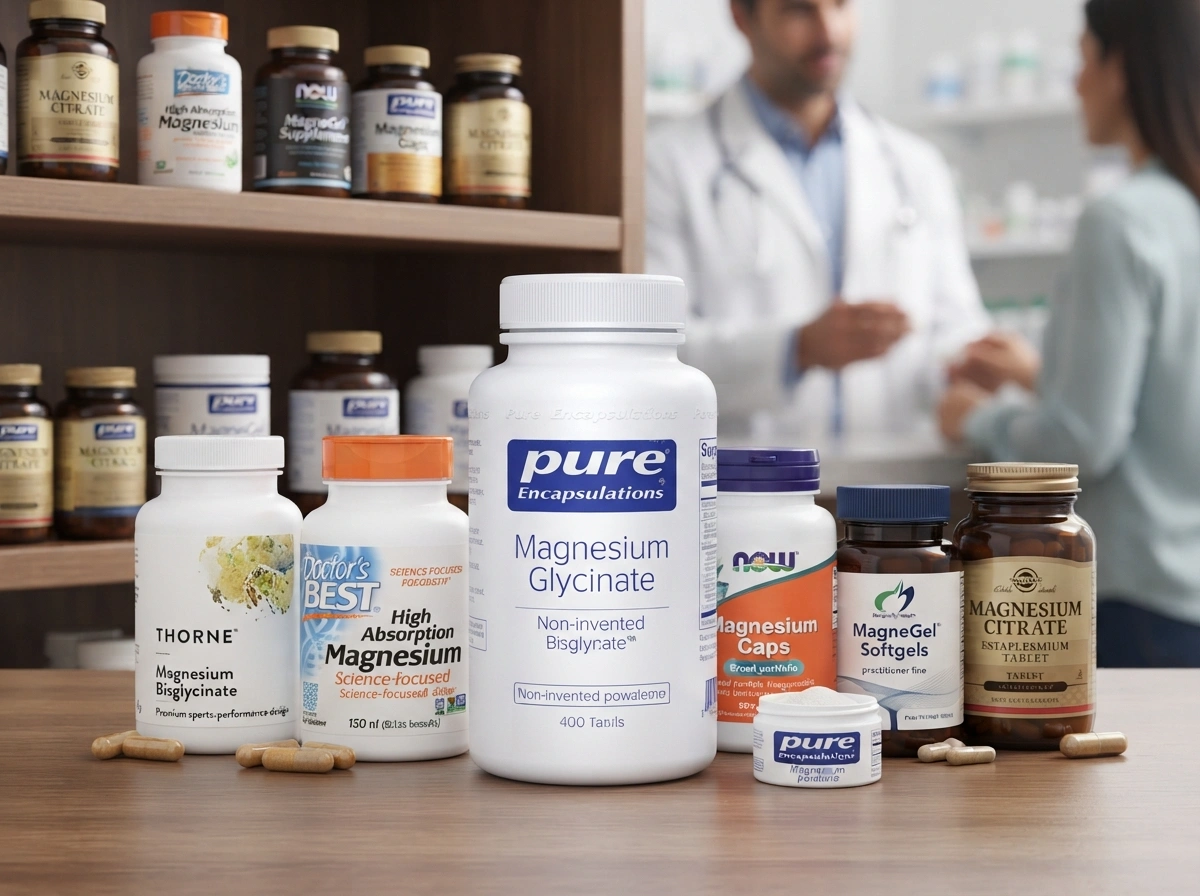
Pure Encapsulations does not operate in an empty market.
Magnesium glycinate has become one of the most competitive categories in the supplement industry.
Some of its strongest direct competitors include Thorne, Doctor’s Best, NOW Foods, Designs for Health and Solgar.
Thorne’s magnesium bisglycinate is a particularly close competitor because it uses the same basic form of magnesium.
Its current powder provides 200 mg of magnesium as magnesium bisglycinate per scoop and uses citric acid and monk fruit concentrate as other ingredients. Thorne positions it around relaxation and restful sleep.
Thorne’s professional and sports-performance reputation makes it a serious competitor to Pure Encapsulations among health-conscious consumers.
Doctor’s Best uses magnesium lysinate glycinate chelate, supplied through Albion’s TRAACS technology.
Its standard formulation provides 200 mg of magnesium per two tablets.
Doctor’s Best competes aggressively on science, chelation technology and value.
NOW Foods offers magnesium bisglycinate tablets providing 200 mg of elemental magnesium per two-tablet serving.
The company says the product is made and quality-tested in the United States using globally sourced ingredients.
NOW has a major advantage in this category: scale and a very broad supplement portfolio.
Designs for Health is especially relevant because it competes in the same practitioner and functional-medicine channel.
Its Magnesium Glycinate Complex uses a buffered chelated formulation and is specifically marketed toward people looking for magnesium support with consideration for digestive tolerance.
This makes Designs for Health one of the more direct competitors to Pure Encapsulations among healthcare professionals.
Solgar is another major Nestlé Health Science brand and competes in the broader premium supplement category.
The competitive relationship is unusual because both brands are ultimately part of the same corporate portfolio.
This illustrates how large supplement companies can own several brands targeting different consumer segments.
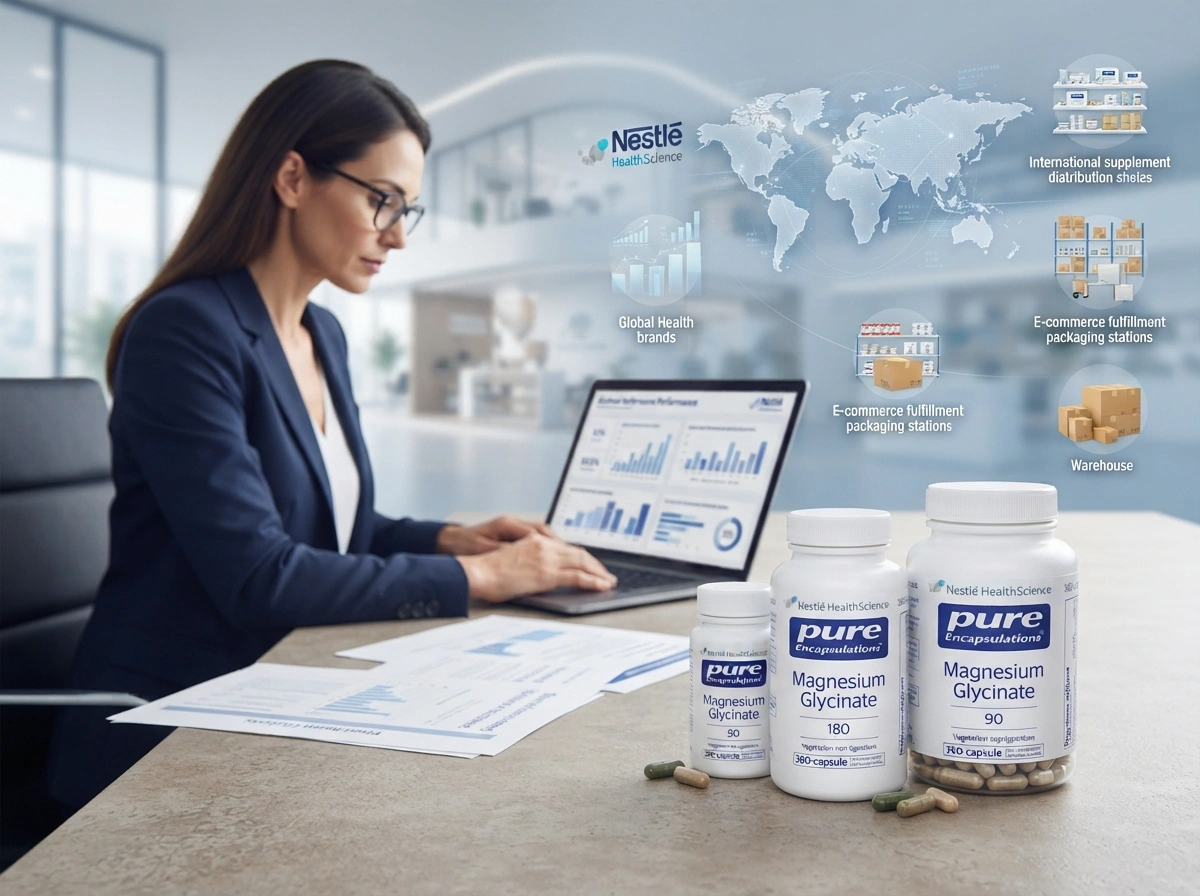
This is where careful research is essential.
Pure Encapsulations does not publicly disclose a standalone 2026 revenue figure for the Magnesium Glycinate product.
It also does not publish a separate annual revenue figure for the Pure Encapsulations brand in Nestlé’s public financial reporting.
Therefore, websites giving an exact figure such as “Pure Encapsulations made $X billion in 2025” should be treated cautiously unless they can provide a primary financial filing.
Pure Encapsulations is part of Nestlé Health Science.
Nestlé reported that Nestlé Health Science generated CHF 6.6 billion in sales in 2025, down 2.8% on a reported basis, while organic growth was 3.2%.
The important detail is that this is Nestlé Health Science revenue, not Pure Encapsulations revenue.
Nestlé reported that its vitamins, minerals and supplements business delivered positive growth in 2025, with growth driven by premium brands including Pure Encapsulations and Solgar.
That gives us a meaningful current sales signal.
Pure Encapsulations is contributing to a VMS division that is still growing organically, but Nestlé does not break out the brand’s exact dollar sales in its public results.
When Nestlé acquired Atrium Innovations, the transaction included Pure Encapsulations along with other brands.
Nestlé’s 2018 half-year reporting stated that the Atrium business contributed CHF 260 million in sales during the portion of the year included in Nestlé’s results.
But again, that figure covered Atrium as a whole, not Pure Encapsulations alone.
This distinction is important.
There is no reliable public figure showing how many bottles or dollars of Pure Encapsulations Magnesium Glycinate were sold globally in 2025 or 2026.
The product’s current retail presence does provide evidence of growing accessibility.
The Vitamin Shoppe currently lists Pure Encapsulations Magnesium Glycinate in 90-, 180- and 360-capsule formats, showing that the product has become part of the brand’s expanding consumer retail assortment.
Current listed U.S. retail prices at The Vitamin Shoppe are around $29.99 for 90 capsules, $54.99 for 180 capsules and $99.99 for 360 capsules at the time of the current listing. Prices can change and should not be treated as permanent MSRP.
The combination of professional distribution, direct e-commerce and expanding retail access suggests a larger addressable market than the brand had during its practitioner-only years.
Pure Encapsulations Magnesium Glycinate is more than another magnesium supplement.
It is a product that reflects the company’s entire business philosophy.
Pure Encapsulations began in 1991, when brothers Raymond Hamel Jr. and Peter Hamel set out to make supplements with cleaner formulations, transparent labeling and higher manufacturing standards. The company started in a watermill in Connecticut before moving to Sudbury, Massachusetts.
Today, it is owned by Nestlé Health Science, following Nestlé’s acquisition of Atrium Innovations. The brand has grown to more than 400 products, with more than 50,000 healthcare professionals in more than 15 countries using its products, according to company information.
The Magnesium Glycinate formula itself is refreshingly simple.
Each capsule supplies 120 mg of elemental magnesium from magnesium glycinate, with a vegetarian cellulose-and-water capsule and ascorbyl palmitate as the other listed ingredients.
The main appeal of magnesium glycinate is its chelated form and generally good tolerability. Research on magnesium absorption shows that different magnesium compounds behave differently, while newer clinical research suggests magnesium bisglycinate may offer a modest improvement in insomnia severity for some adults with poor sleep.
However, magnesium glycinate should not be treated as a cure for insomnia or other medical conditions.
The company’s success has also been driven by marketing, but not traditional mass advertising alone. Pure Encapsulations built its reputation through healthcare professionals, science-based education, transparent labels, hypoallergenic positioning and quality testing. Its “Zero Compromises, Pure Results” message continues that strategy.
The biggest recent commercial development was the brand’s 2024 entry into The Vitamin Shoppe and Super Supplements, giving it access to more than 700 retail locations and moving it beyond its traditional practitioner-focused distribution model.
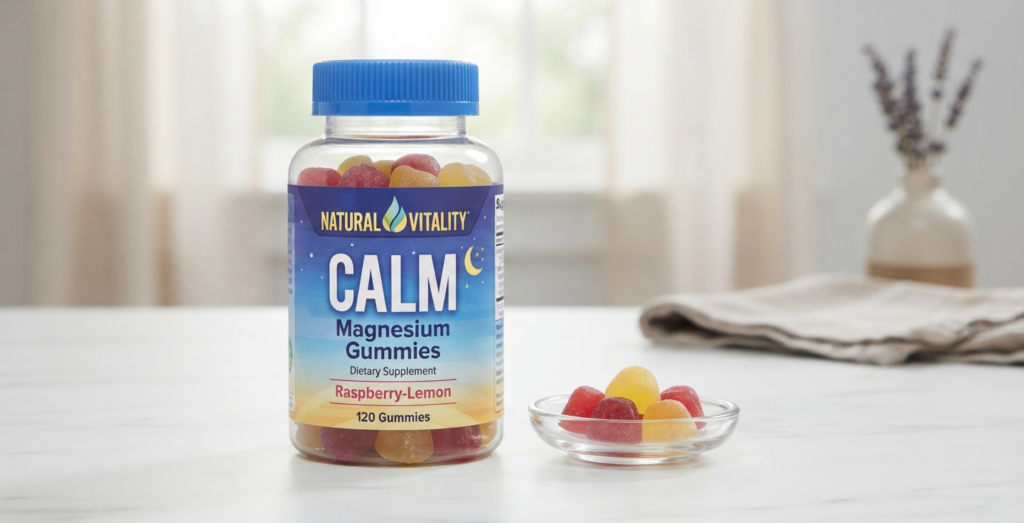
Its major competitors in magnesium glycinate include Thorne, Doctor’s Best, NOW Foods and Designs for Health, with each competing on different combinations of dosage, price, ingredient technology, professional reputation and product format.
Financially, the most important current figure is not a made-up Pure Encapsulations revenue estimate.
Nestlé reported CHF 6.6 billion in 2025 sales for Nestlé Health Science, with the vitamins, minerals and supplements category showing positive growth driven in part by premium brands including Pure Encapsulations and Solgar. Nestlé does not publicly provide a separate 2025 or 2026 revenue figure for Pure Encapsulations Magnesium Glycinate.
That lack of product-level revenue disclosure is worth stating clearly.
Pure Encapsulations Magnesium Glycinate has built its reputation less through flashy marketing and more through a combination of professional trust, simple formulations, manufacturing control and ingredient transparency.
And in a supplement category filled with increasingly complicated formulas, that may be exactly why a product with essentially one active ingredient continues to attract so much attention.
Important: This article is for educational purposes and is not a substitute for medical advice. The current U.S. product label lists 120 mg of elemental magnesium per capsule and a suggested use of 1 to 4 capsules daily. Because supplemental magnesium has an adult upper limit of 350 mg per day under NIH guidance, and because magnesium can interact with certain medicines, readers should check their total supplemental magnesium intake and speak with a doctor or pharmacist when appropriate.