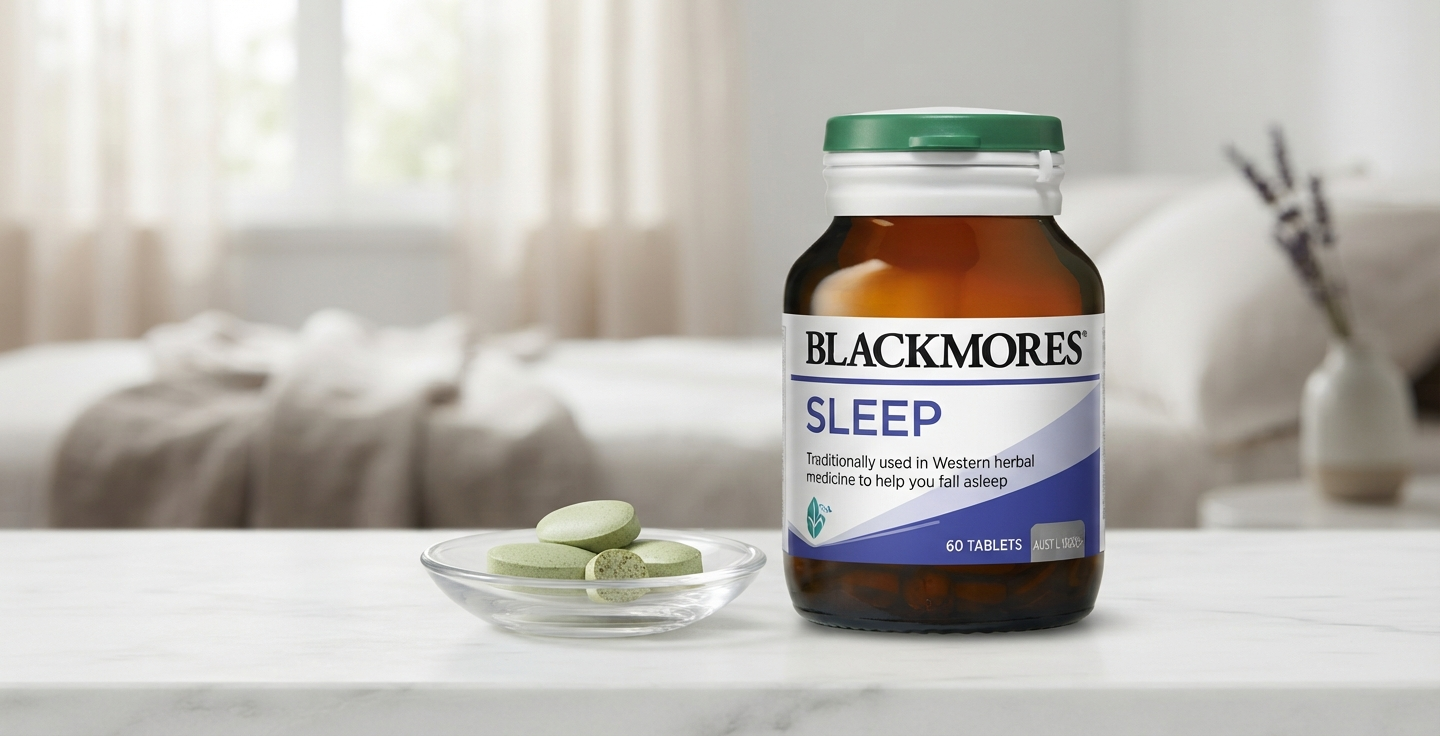
Blackmores Sleep is not one single formula worldwide. Blackmores has developed a broader sleep portfolio that includes products such as Blackmores Deep Sleep, Fall Asleep, Beauty Sleep, Stress & Sleep and Sleep Sound Magnesium. In Australia, the company has also registered Blackmores Deep Sleep Melatonin Chewable, a melatonin and theanine product listed on the Australian Register of Therapeutic Goods (ARTG).
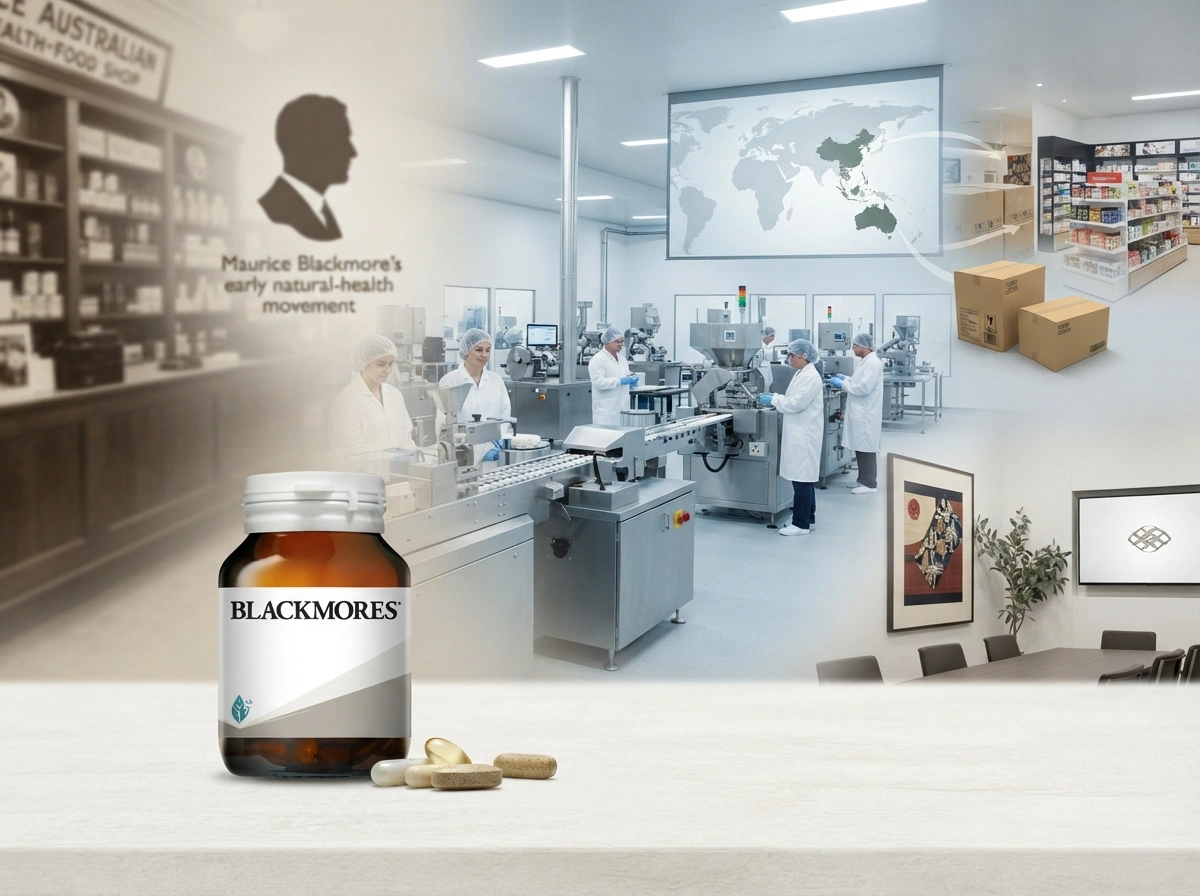
The history of Blackmores begins with Maurice Blackmore, an English immigrant who founded the company in Australia in 1932.
Maurice Blackmore was born in 1906 and developed a strong interest in naturopathy, preventative health and natural medicine. Blackmores’ official history says he helped establish some of Australia’s early health food stores, naturopathic colleges and professional associations.
His philosophy was simple for its time: people should have more choice in how they manage their health, with an emphasis on natural approaches and preventative care.
That philosophy became the foundation of the Blackmores brand.
Blackmores did not become a major international supplement company overnight.
The business spent decades developing its reputation in Australia before expanding into Asia.
That long history became one of its biggest commercial advantages. Consumers were not buying a completely unknown supplement company. They were buying a brand that had already built decades of familiarity in pharmacies, health-food stores and other retail channels.
Blackmores’ current corporate history describes the company as having a 90-plus-year heritage and says its products now reach consumers across many countries.
The answer today is Blackmores, operating within the Blackmores Group under the ownership of Kirin Holdings.
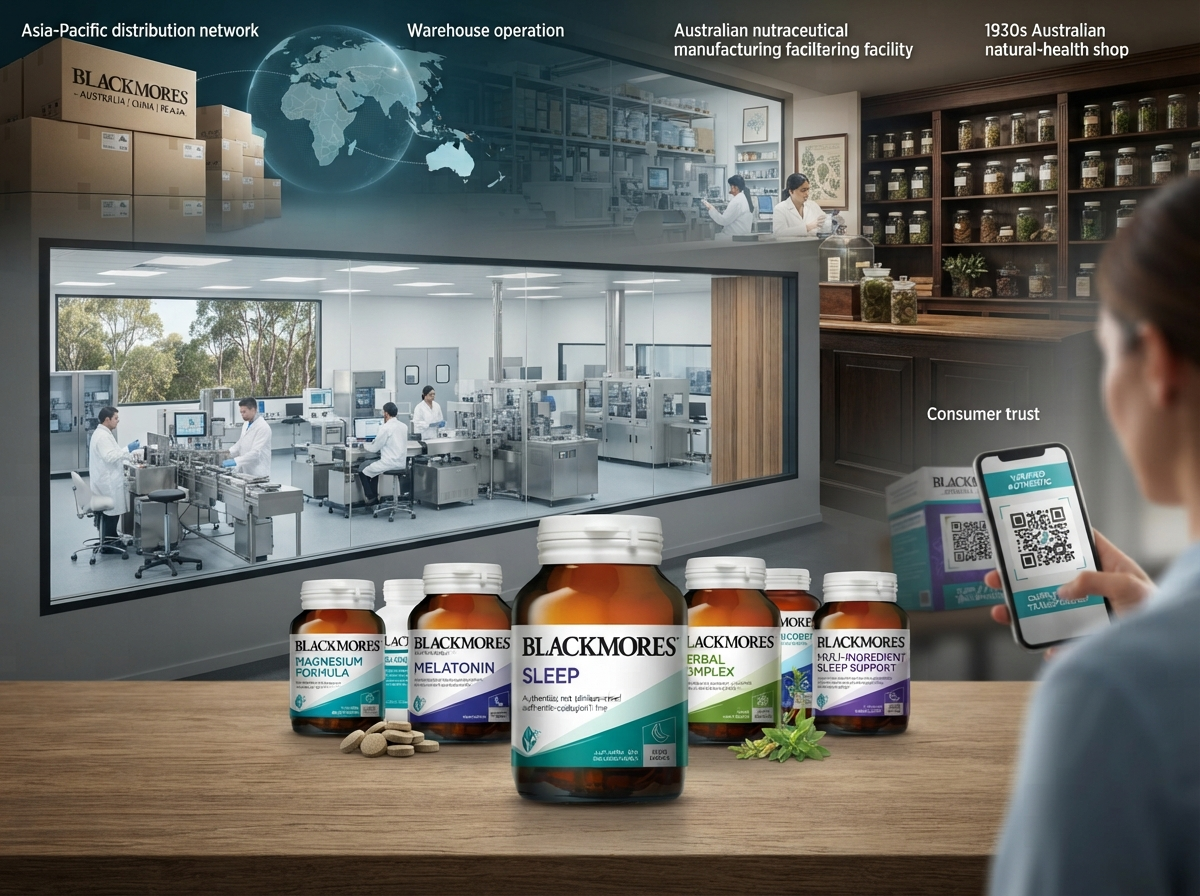
The company operates its own manufacturing infrastructure in Australia.
Blackmores says its state-of-the-art tablet and soft-gel capsule manufacturing facility is located in Braeside, Victoria, and produces around 3 billion tablets and capsules per year.
That is a significant manufacturing operation.
It also means it is misleading to describe Blackmores as simply a brand that buys finished products from an unidentified overseas factory and puts them into branded bottles.
The company has substantial manufacturing capabilities of its own.
The Braeside facility became particularly important after Blackmores brought significant tablet and capsule manufacturing capabilities in-house.
Its 2021 annual report recorded approximately 2.6 billion tablets and capsules produced at Braeside during the first full year of operation as a manufacturer, alongside 31 million units bottled at its Warriewood packing facility.
The latest Blackmores corporate information now describes Braeside as producing approximately 3 billion tablets and capsules annually.
This scale is important when evaluating the company’s competitive position.
Large manufacturing capacity allows Blackmores to control more of the supply chain, support high-volume products and maintain greater oversight of manufacturing standards.
Blackmores is no longer an independently listed Australian company.
Kirin Holdings acquired Blackmores in 2023.
Under the acquisition arrangement, Blackmores shareholders were offered A$95 per share, with the maximum aggregate cash consideration stated at approximately A$1.858 billion before considering the special dividend structure.
The acquisition was strategically important for Kirin because Blackmores gave the Japanese company a large established health-science platform in Australia and Asia-Pacific.
Kirin said the acquisition would expand access to its ingredients and health-science capabilities through Blackmores’ distribution network, reaching hundreds of millions of consumers in the Asia-Pacific region.
Blackmores is particularly strong across the Asia-Pacific region.
The company has developed significant business in:
Kirin’s latest 2026 fact book shows that in 2025, Blackmores generated:
That gives a combined Blackmores Group revenue figure of approximately A$724 million, with the published total rounded to A$726 million.
This geographic spread helps explain why Blackmores has become much more than an Australian vitamin brand.
This is where readers need to be careful.
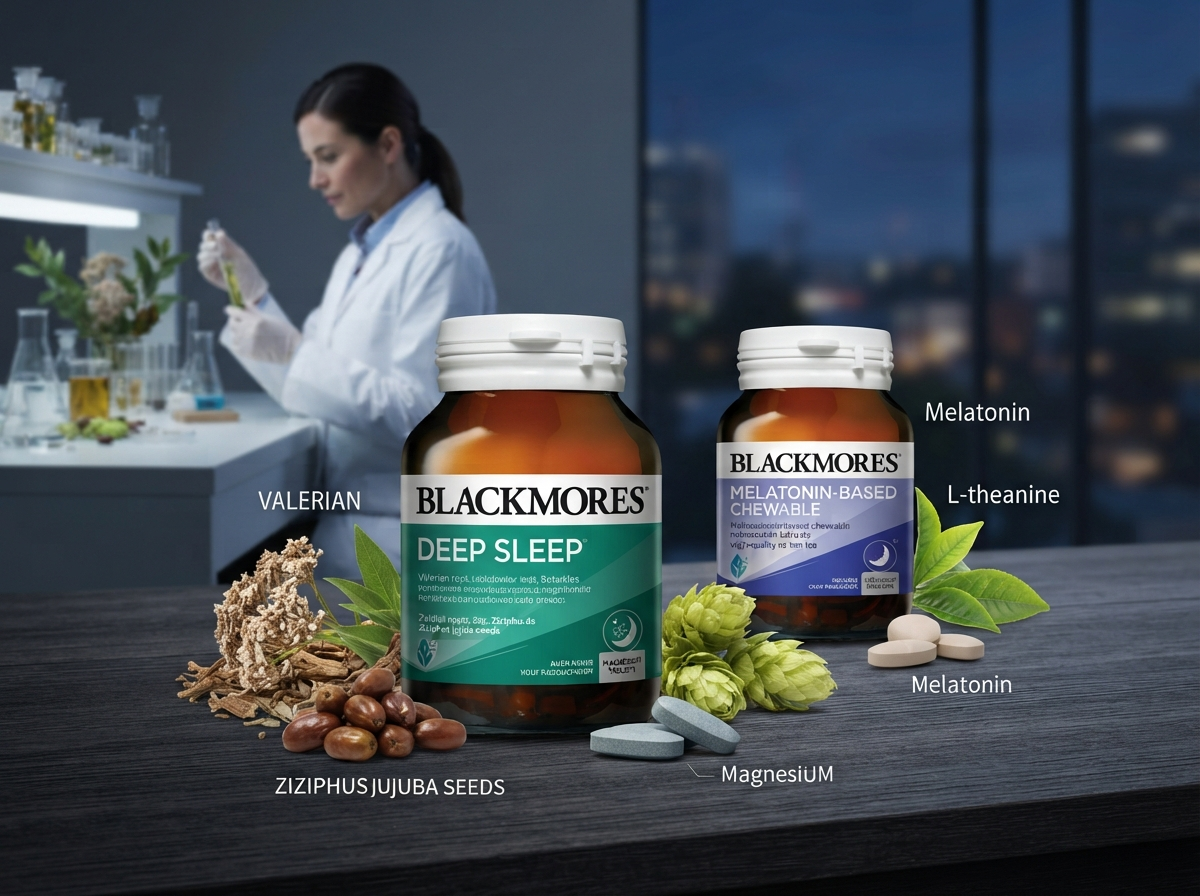
There is no single universal “Blackmores Sleep” ingredient list.
The company has a range of sleep products, and some contain melatonin while others do not.
The standard Blackmores Deep Sleep formula currently sold in Australia is based on a combination of herbal extracts and magnesium rather than melatonin.
Per tablet, the listed active ingredients include:
Blackmores describes the formula as supporting sleep quality, deep sleep, relaxation and healthy sleeping patterns. Valerian, hops and ziziphus have traditional uses in Western and Chinese medicine related to sleep and relaxation.
Valerian is one of the best-known traditional herbal ingredients used in sleep products.
Blackmores uses a concentrated extract of Valeriana officinalis in Deep Sleep.
The company’s product information states that valerian is traditionally used to reduce the time taken to fall asleep and support refreshing sleep.
Ziziphus is less familiar to many Western consumers.
Blackmores uses Ziziphus jujuba var. spinosa, with the ingredient traditionally associated with calming and sleep support in Chinese medicine.
Hops may be best known as an ingredient associated with brewing beer, but it has also been used traditionally in herbal preparations.
Blackmores uses Humulus lupulus extract in its sleep products.
In Blackmores Beauty Sleep, for example, hops is described as traditionally used to relieve sleeplessness, restlessness, nervous tension and disturbed sleep.
Magnesium is included in Deep Sleep at an equivalent dose of 75 mg per tablet.
Blackmores says magnesium supports nervous-system function and general health, while its sleep products use it as part of a broader sleep-support formulation.
Importantly, magnesium is not a sleeping pill. Its potential role in sleep is an area of ongoing research, and benefits are not guaranteed for every person.
This is where the Blackmores Sleep story becomes particularly interesting.
Blackmores has also developed Deep Sleep Melatonin Chewable, which the Australian TGA lists as an active medicine.
The TGA’s ARTG record, dated 20 September 2024, identifies the ingredients as:
and lists Blackmores Ltd as the sponsor.
International product information for Blackmores Deep Sleep with Melatonin + Theanine identifies the formulation as containing:
The product is a chewable tablet intended for adult use.
This formulation is marketed around several sleep-related benefits, including improving sleep quality, supporting deeper sleep and helping with altered sleep schedules such as jet lag.
Melatonin is a hormone naturally produced by the body, particularly in response to darkness.
Its main role is helping regulate the body’s sleep-wake timing.
Supplemental melatonin can therefore be particularly relevant when the body’s internal clock is out of sync, such as with jet lag or some altered sleep schedules.
That does not mean higher doses automatically produce better sleep.
In fact, more melatonin is not necessarily better for everyone.
L-theanine is an amino acid commonly associated with tea leaves.
It is included in the Blackmores melatonin formulation as part of the product’s dual-action approach.
The concept is straightforward: melatonin provides a sleep-timing signal while theanine is positioned around relaxation.
Consumers should still follow the product label and consult a healthcare professional when they have medical conditions, take other medicines or use multiple sleep products.
If you want to understand why Blackmores Sleep became commercially successful, one campaign deserves special attention.
It was called:
“Sleep Well, Feel Alive.”
This was not simply a product advertisement.
Blackmores developed the campaign around a larger consumer insight: people often recognize that they are tired but do not necessarily take action to address their sleep problems.
Kirin’s 2024 integrated report describes how Blackmores used data and AI-based consumer research to identify widespread sleep problems and then developed a broader sleep product range around those needs.
Rather than focusing only on the negative consequences of poor sleep, Blackmores positioned the campaign around what people could gain from sleeping better.
That led to the message:
Sleep Well, Feel Alive.
The campaign promoted the transformative side of good sleep rather than simply warning consumers about being tired.
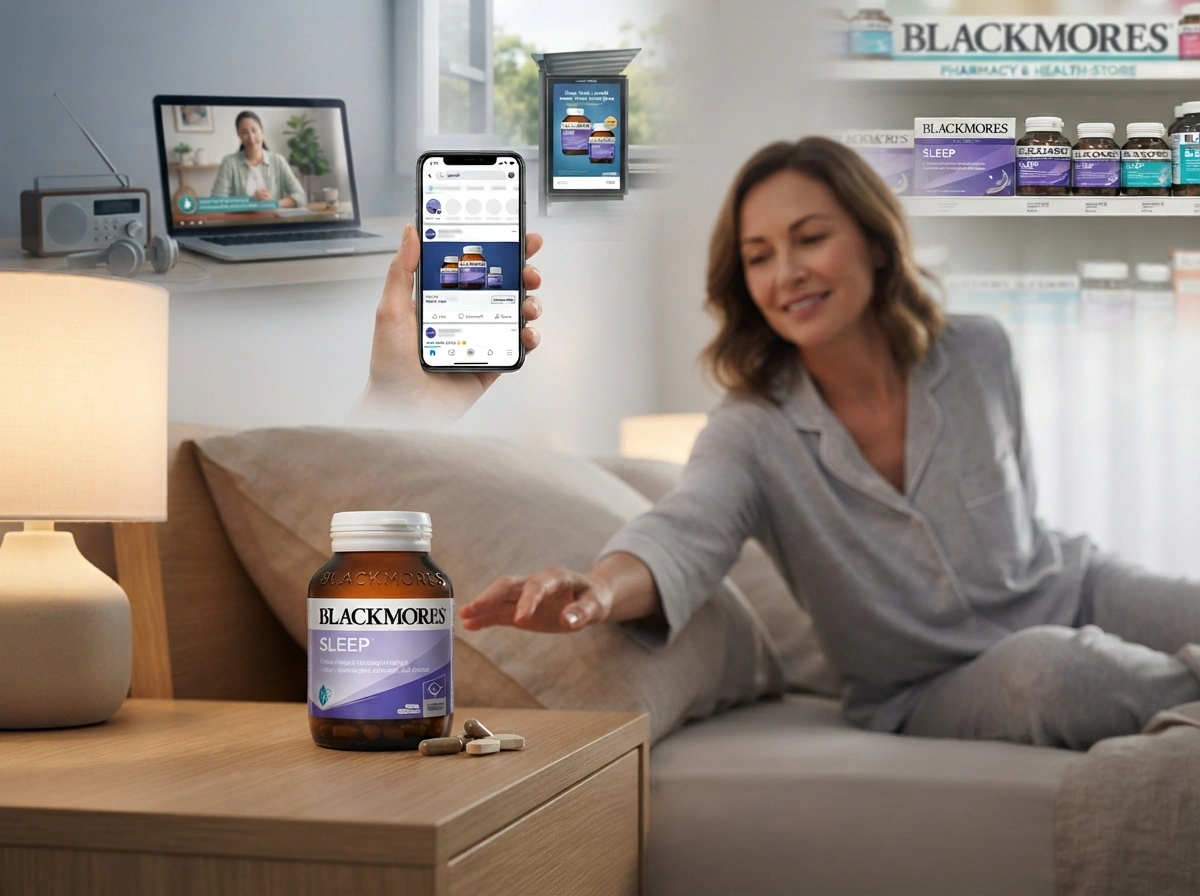
Blackmores did not rely on one advertising channel.
The campaign included:
According to Kirin’s report, the campaign ran for nine weeks and reached more than 18.5 million Australians.
That is significant because the campaign connected traditional advertising with digital discovery and physical retail.
Someone could see the campaign on a train, encounter it on YouTube, search for sleep products online and then find Blackmores in a pharmacy.
According to Blackmores’ own reported campaign results, yes.
The company reported that during the campaign:
These are company-reported results, so they should be presented as such rather than as independently verified market statistics.
Still, the campaign provides unusually strong evidence that Blackmores successfully turned sleep into a broader consumer-health conversation.
It would be inaccurate to say that Blackmores “dominates the global sleep market.”
The global sleep supplement industry is highly fragmented, with hundreds of brands competing across melatonin, magnesium, herbs, gummies and prescription medicines.
But Blackmores has several major advantages.
Few supplement companies can compete with Blackmores’ history.
The brand dates back to 1932, giving it a level of consumer familiarity that newer direct-to-consumer supplement companies cannot easily reproduce.
Blackmores has built its reputation around Australian natural-health expertise.
That identity is especially valuable in Asian markets, where Australian-origin health products have historically enjoyed strong consumer recognition.
The Braeside facility gives Blackmores considerable manufacturing capability.
The company says the site produces around 3 billion tablets and capsules annually.
Instead of betting everything on melatonin, Blackmores offers different approaches.
Its current sleep category includes:
This allows the company to target consumers looking for herbal formulas, magnesium, melatonin or combinations of ingredients.
Kirin’s strategy documents emphasize increasing Blackmores’ accessibility and relevance across China and Southeast Asia. The company’s 2025 revenue data confirms the importance of these regions.
Kirin’s Blackmores brand snapshot reports that “brand I trust” was the leading brand attribute in its cited research, while Blackmores held a top-three market-share ranking in five markets.
That is a major competitive advantage in supplements, where consumers often struggle to judge product quality simply by looking at the ingredient list.
Blackmores has also invested in supply-chain transparency.
The company has piloted serialized QR codes on selected products that allow consumers to trace product provenance and verify authenticity. Blackmores says this initiative was partly driven by concern about counterfeit supplements in Asian markets.
For a premium supplement brand operating internationally, that is more important than it might initially sound.
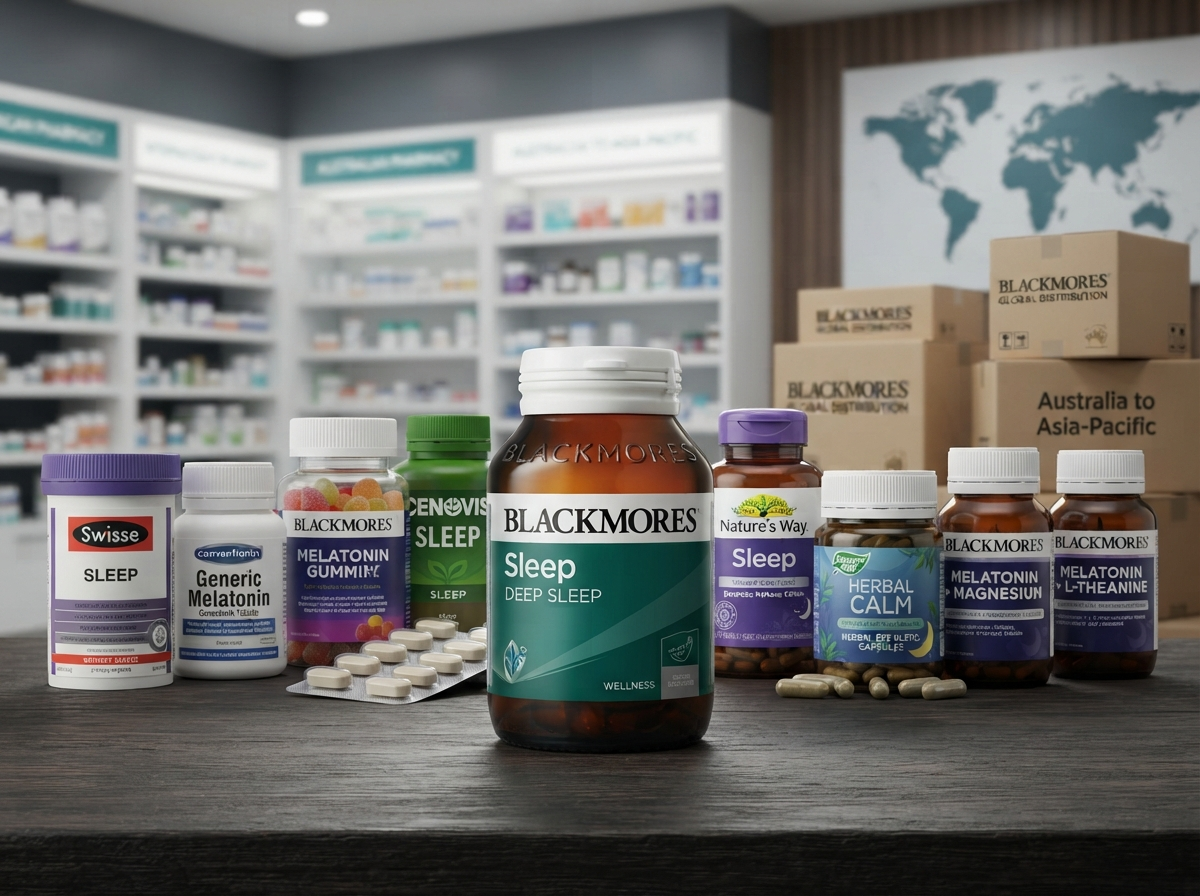
Blackmores competes against different brands depending on the market and the type of sleep product being compared.
Swisse is perhaps the most obvious Australian competitor.
Like Blackmores, Swisse has built a large international vitamin and supplement business and has a particularly strong presence across Australia and Asia.
The Australian government has historically identified Blackmores and Swisse among the country’s largest vitamin and supplement companies. A government report based on 2018 market data put Blackmores at 18.9% and Swisse at 19.9% of Australian vitamin, mineral and supplement retail sales.
Those figures are historical, not 2026 market shares, but they illustrate how closely the two brands have competed.
Nature’s Own is another major Australian supplement brand and competes with Blackmores across vitamins, minerals and natural health products.
Cenovis competes in Australia’s pharmacy and supplement market, including products aimed at sleep and relaxation.
Nature’s Way has a substantial supplement portfolio and is another competitor in the natural-health category.
The competition becomes even stronger when the comparison moves specifically to melatonin.
Here Blackmores faces brands selling:
The important point is that Blackmores is not competing against one company.
It is competing against an entire category of sleep solutions.
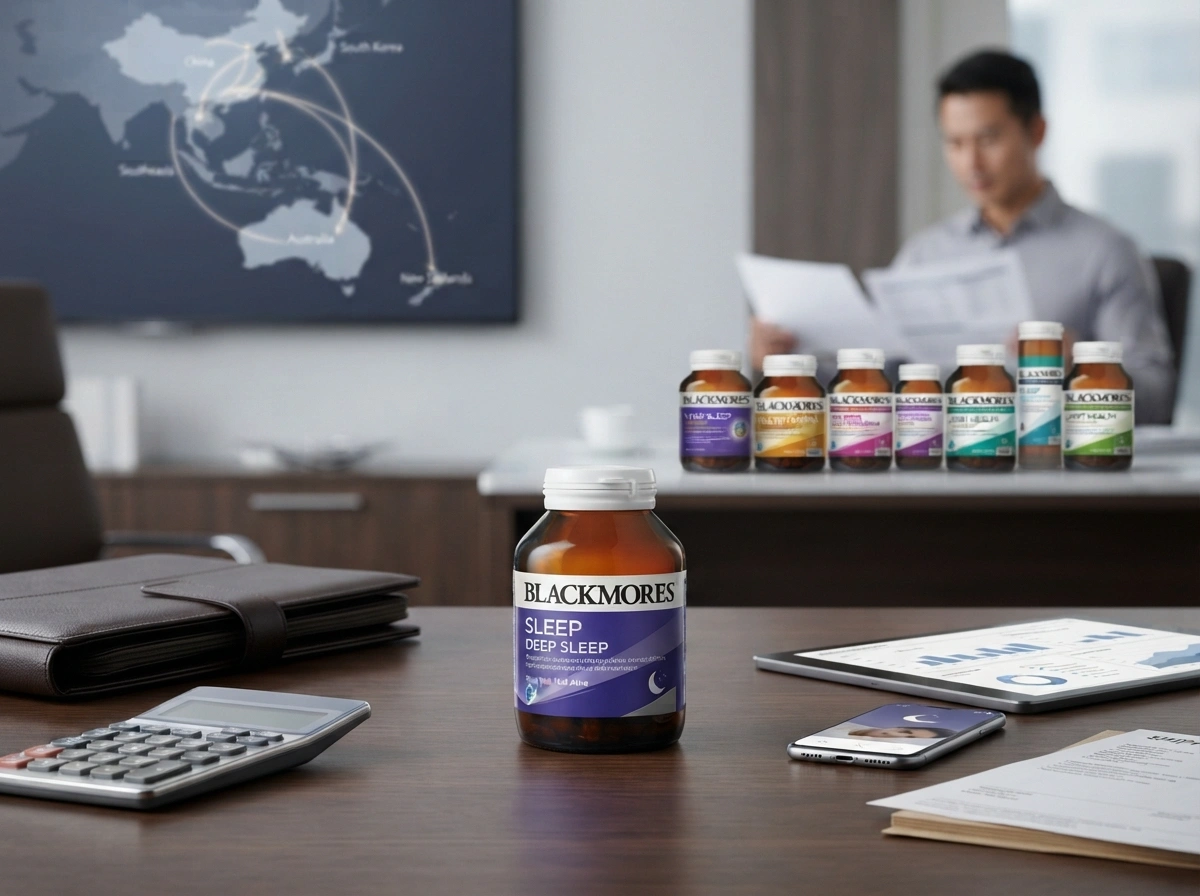
This is one of the areas where current information provides a much clearer picture than it did a few years ago.
Because Blackmores is now owned by Kirin Holdings, financial information is reported through Kirin.
Kirin’s 2026 fact book reports that Blackmores generated A$726 million in revenue in 2025.
The same source reports normalized operating profit of A$65 million, giving a normalized operating margin of approximately 8.8%.
The 2025 regional breakdown was approximately:
| Region | 2025 Revenue |
|---|---|
| Australia & New Zealand | A$324 million |
| Southeast Asia & South Korea | A$196 million |
| China | A$204 million |
| Total Blackmores Group | A$726 million |
The small difference between the regional arithmetic and the reported total is attributable to rounding.
Kirin’s historical data shows:
The 2023 number should not be compared directly with a full-year figure because Blackmores was consolidated by Kirin partway through that year.
This is where we need to be careful.
Blackmores does not publicly disclose a standalone global revenue figure for its Sleep range.
So it would be inaccurate to say that Blackmores Sleep generated a specific amount of money in 2025 or 2026 unless the company publishes such a figure.
We do have campaign-level evidence showing that the Sleep range significantly exceeded its sales target during the “Sleep Well, Feel Alive” campaign, with Blackmores reporting sales 109% above target globally for the Sleep range and 143% above target in Australia in the cited campaign results.
That demonstrates strong commercial performance without allowing us to invent a precise sleep-product revenue number.
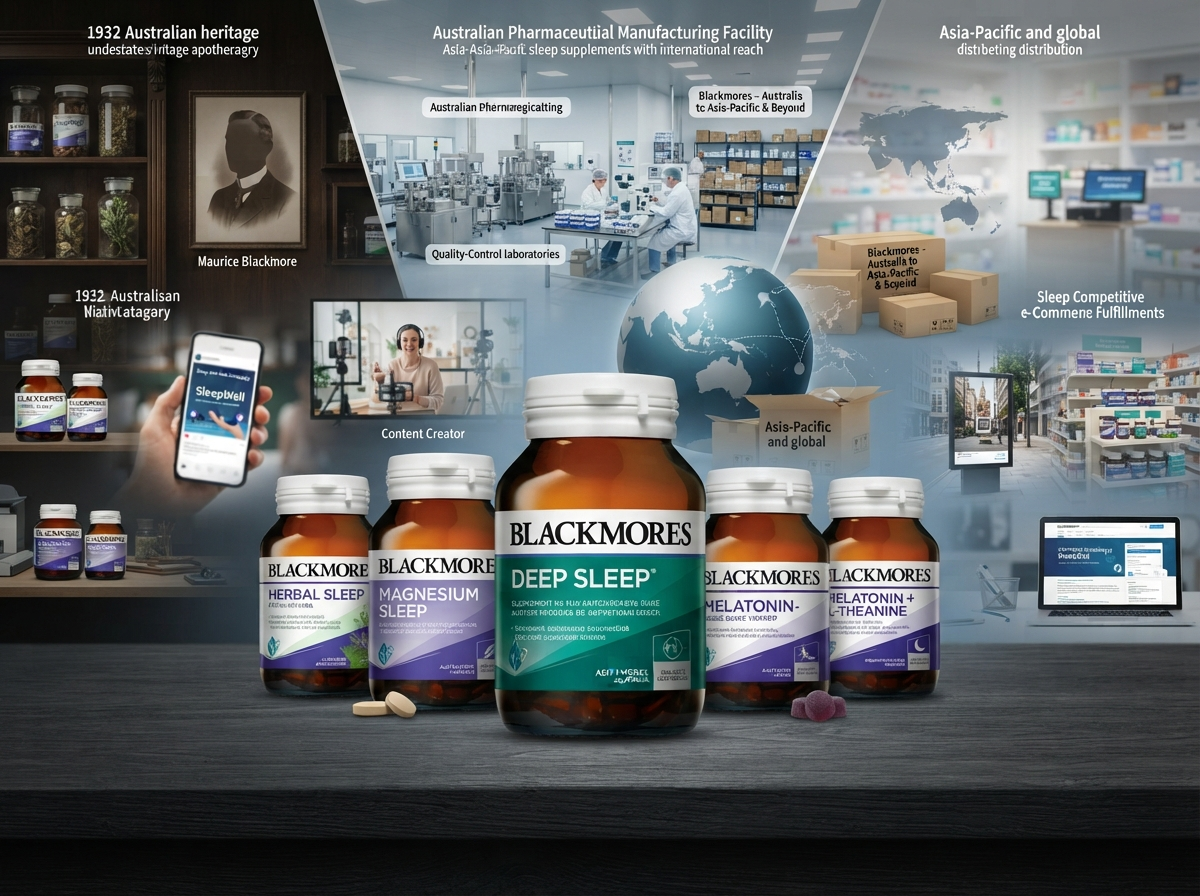
Blackmores Sleep is backed by one of Australia’s longest-established natural-health companies. Founded by Maurice Blackmore in 1932, the business has grown from an Australian naturopathic enterprise into a major Asia-Pacific health and wellness group.
Today, Blackmores operates under Kirin Holdings and has substantial manufacturing capabilities, including its large Braeside facility in Victoria. Its sleep portfolio is also broader than a single melatonin product, covering herbal formulas, magnesium-based products and melatonin-and-theanine formulations.
The brand’s marketing has played an important role in that growth. The “Sleep Well, Feel Alive” campaign combined digital advertising, social media, influencers, outdoor advertising, search and retail activation to reach more than 18.5 million Australians in nine weeks. Blackmores reported significant increases in sleep-segment sales and market share during the campaign.
Its competitive advantage comes from a combination of brand history, Australian heritage, manufacturing scale, distribution, consumer trust and a broad product portfolio. However, calling Blackmores the world’s dominant sleep supplement brand would go too far. The international sleep market remains highly competitive, with companies such as Swisse, Nature’s Own, Cenovis, Nature’s Way and numerous specialist melatonin brands competing for consumers.
Financially, the latest available information gives Blackmores Group revenue of approximately A$726 million for 2025, with Australia and New Zealand, China, Southeast Asia and South Korea representing its major regional markets.
For consumers, the most important takeaway is that “Blackmores Sleep” does not refer to one universal formula. Different products contain different active ingredients, and some contain melatonin while others rely on herbal ingredients or magnesium. Checking the exact product label is therefore essential before comparing one Blackmores Sleep product with another.
Blackmores Sleep is best understood as a portfolio rather than one product.
The Blackmores sleep range includes herbal, mineral and melatonin-based products, with formulations varying by market.
The standard Australian Blackmores Deep Sleep formula contains magnesium, valerian, ziziphus and hops, while Blackmores has also registered Deep Sleep Melatonin Chewable with the Australian TGA, containing melatonin and theanine.
The company behind these products has a remarkable history.
Maurice Blackmore founded Blackmores in 1932, and the business has grown from an Australian naturopathic enterprise into a major Asia-Pacific health-science company.
Today, Blackmores is owned by Kirin Holdings, following the 2023 acquisition valued at approximately A$1.86 billion in maximum scheme consideration.
Its manufacturing footprint is also substantial. Blackmores operates a major tablet and soft-gel manufacturing facility in Braeside, Victoria, which the company says produces around 3 billion tablets and capsules each year.
The brand’s biggest sleep-marketing success has been the “Sleep Well, Feel Alive” campaign. Rather than simply telling people that poor sleep is bad, Blackmores marketed the positive lifestyle benefits of better sleep across television-style video, YouTube, social media, audio, search, outdoor advertising, influencers and retail. The company reported reaching more than 18.5 million Australians and achieving significant growth in its sleep segment during the campaign.
Financially, Blackmores is now a substantial international health-science business. Kirin reported A$726 million in Blackmores revenue for 2025, with Australia and New Zealand contributing A$324 million, Southeast Asia and South Korea A$196 million, and China A$204 million.
However, Blackmores does not publicly disclose a separate 2026 revenue figure for its Sleep range.
That may actually be the most important takeaway.
Blackmores’ strength is not one magical sleep ingredient. Its advantage comes from the combination of 90-plus years of brand history, Australian manufacturing, naturopathic expertise, product innovation, retail distribution, strong Asian-market penetration and increasingly sophisticated consumer marketing.
And when it comes to melatonin specifically, Blackmores has now moved beyond its traditional herbal sleep positioning with a regulated melatonin-and-theanine chewable product, giving the company another way to compete in the rapidly expanding global sleep-support category.
Editorial note: Product formulations and regulatory status can change by country and over time. The ingredient information above refers to the specific products and Australian records identified in the cited sources, rather than assuming every product sold under the Blackmores Sleep name has the same formula. Always check the current package label and local regulator information before publishing a product-specific dosage or ingredient claim.