Natural Vitality dates back to 1982, when Peter Gillham founded the company and developed what became Natural Vitality CALM. The original product was a water-soluble magnesium drink mix. Over more than four decades, the brand expanded into powders, gummies, capsules and newer products combining different forms of magnesium.
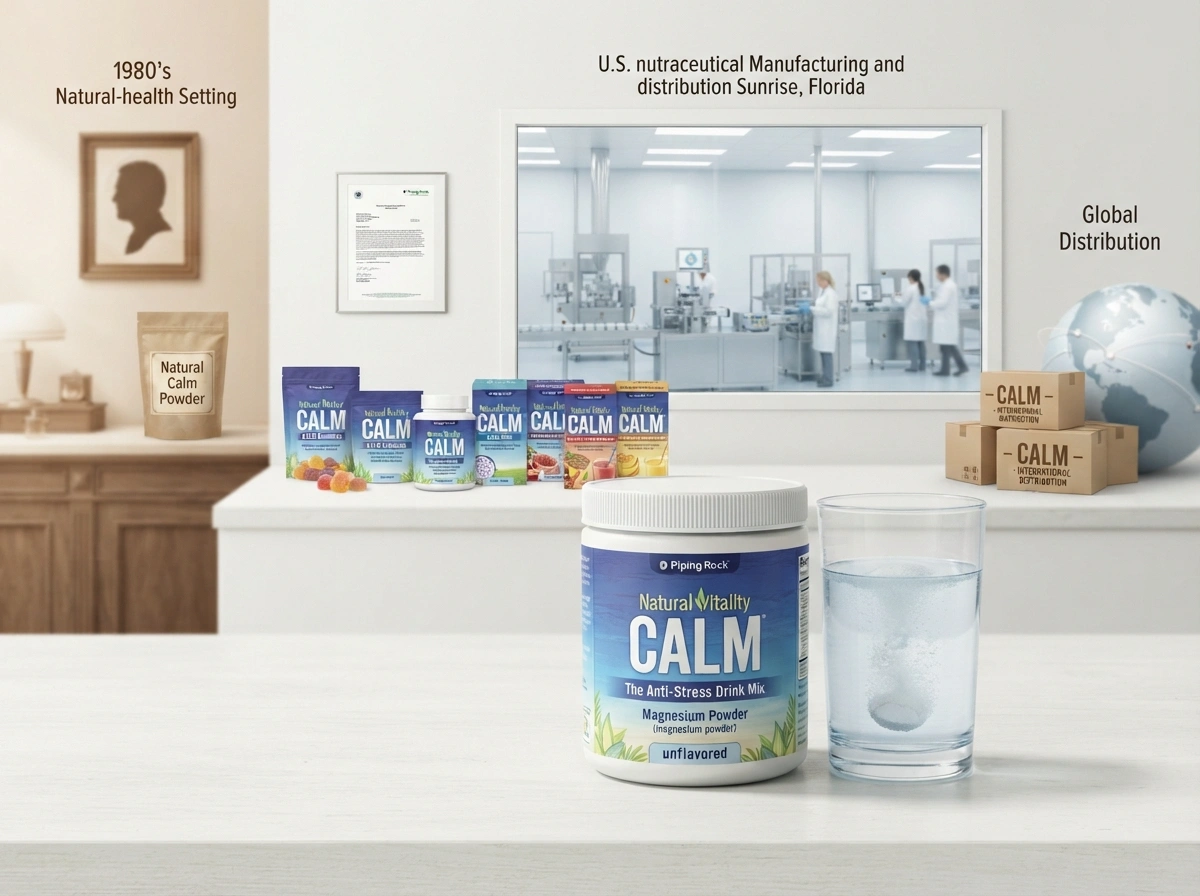
Natural Vitality’s story begins in 1982 with Peter Gillham.
Gillham was interested in natural health and magnesium, eventually developing the original CALM formula. Natural Vitality’s own history identifies Gillham as the company’s founder and the developer of Natural Calm.
The original concept was quite different from today’s gummies.
CALM began as a water-soluble magnesium powder designed to be mixed into a drink. The company says the formula was based on ionic magnesium citrate and was developed to make magnesium supplementation convenient and easy to incorporate into a daily routine.
That format became the foundation for the brand.
The early success of Natural Vitality was built around a simple consumer problem.
People knew vitamins such as vitamin C and minerals such as calcium, but magnesium was far less familiar to the average shopper.
Natural Vitality made magnesium easier to understand.
Instead of presenting magnesium only as a nutrient involved in hundreds of biochemical processes, the CALM brand connected it with an everyday emotional benefit: calmness.
That was a smart branding decision.
The word “CALM” was short, memorable and directly connected to the lifestyle problem the product was trying to address.
Over time, Natural Vitality expanded the original powder concept into multiple formats, including:
The company says CALM has helped millions of people and has been a leader in magnesium supplementation since 1982.
This is one of the most important updates for anyone publishing an article about the brand in 2026.
Natural Vitality is not currently owned by Clorox.
Clorox acquired Nutranext in 2018, bringing Natural Vitality into its portfolio. But Clorox later decided to exit the Better Health Vitamins, Minerals and Supplements business.
On September 10, 2024, Clorox completed the sale of the entire business to an affiliate of Piping Rock Health Products, LLC.
The divested portfolio included:
This is confirmed in Clorox’s SEC filings and corporate announcements.
That means articles still describing Natural Vitality as a Clorox-owned brand are outdated.
The Clorox divestiture specifically included associated manufacturing and distribution facilities in Sunrise, Florida.
Clorox’s SEC filing states that the Better Health VMS business included these facilities as part of the transaction with Piping Rock.
This is the clearest publicly available information on the main manufacturing and distribution infrastructure associated with the business.
However, there is an important distinction between brand ownership, manufacturing location and raw-material sourcing.
A product can be branded and manufactured within a company’s U.S. manufacturing network while its individual ingredients are sourced from multiple suppliers.
Therefore, it would be inaccurate to claim that every ingredient in CALM Gummies is grown or produced in the United States.
Yes.
Natural Vitality has expanded well beyond its original U.S. market.
The brand’s international websites and distribution channels show availability across multiple markets, while iHerb describes Natural Vitality as a brand with more than four decades of history and identifies it as a leading magnesium powder brand.
However, the United States remains particularly important.
That is also where the company makes some of its strongest market-share claims.
As of 2026, Natural Vitality’s website describes CALM as the #1 magnesium gummy brand, based on U.S. natural-channel SPINS data. The latest website footnote references data ending May 17, 2026.
That claim should be understood as a specific market-channel measurement rather than proof that CALM dominates every magnesium gummy market worldwide.
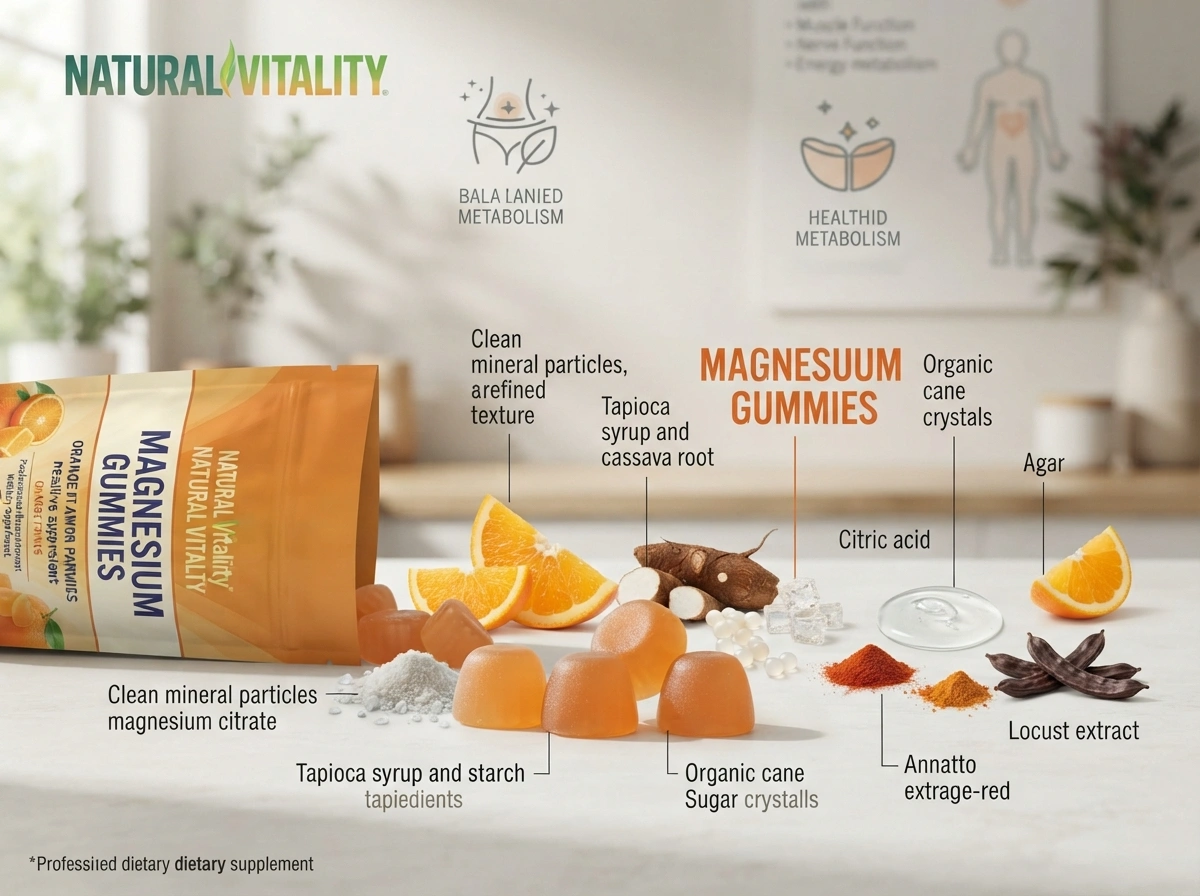
One reason CALM Gummies have become popular is that the active formula is relatively simple.
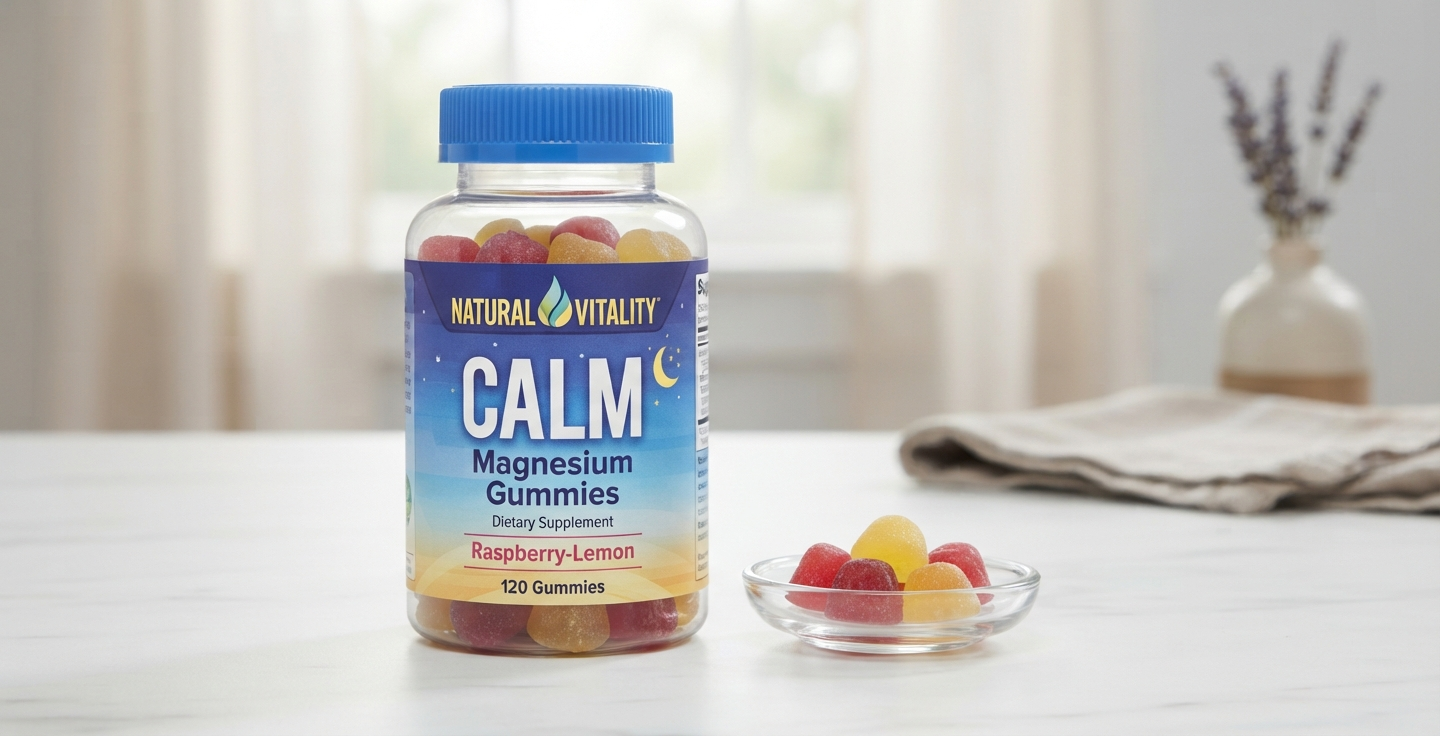
The current Orange Flavor CALM Gummies provide magnesium in the form of magnesium citrate.
For the current orange formulation, the ingredients are:
| Ingredient | Purpose |
|---|---|
| Magnesium as magnesium citrate | Active mineral |
| Organic tapioca syrup | Sweetener and gummy base |
| Organic cane sugar | Sweetener |
| Water | Gummy formulation |
| Citric acid | Flavor and acidity |
| Agar | Gelling agent |
| Organic tapioca starch | Texture and structure |
| Natural flavors | Orange flavor |
| Organic annatto extract | Natural color |
| Locust bean gum | Texture/stabilizer |
The current Vitamin Shoppe listing, updated January 15, 2026, confirms the formula and identifies 83 mg of magnesium per gummy.
Natural Vitality’s own product page lists the same basic ingredient structure.
The dosage is particularly important because the product can be used by different age groups.
One gummy contains 83 mg of magnesium.
For adults and people aged 13 and older, the current directions allow up to four gummies per day, providing:
83 mg × 4 = 332 mg
The label rounds this to 330 mg of magnesium, or 79% of the Daily Value.
For children ages 4 through 12, the recommended amount is one gummy daily. The product should not be treated as an unrestricted candy simply because it comes in gummy form.
Natural Vitality specifically advises consumers to discuss supplements and medications with a child’s pediatrician.
Magnesium comes in many supplemental forms.
Some common examples include:
Natural Vitality uses magnesium citrate as the primary magnesium source in the traditional CALM Gummies.
The company describes citrate as highly absorbable compared with magnesium oxide.
It is worth adding some scientific context here.
The body does not simply absorb every magnesium compound equally. The form of magnesium influences how much magnesium becomes available for absorption.
The National Institutes of Health notes that absorption varies among magnesium supplements, and that some forms are more readily absorbed than others.
Magnesium is an essential mineral involved in hundreds of biological processes.
It contributes to normal:
That is why a magnesium supplement is not technically a “stress supplement” in the same way that a prescription medication may be.
It is supplying a mineral the body needs.
Natural Vitality positions CALM around relaxation, stress support and replenishing magnesium levels. Those are structure/function claims, not claims that the product treats an anxiety disorder or another medical condition. The company’s product pages also carry the standard FDA disclaimer that dietary supplements are not intended to diagnose, treat, cure or prevent disease.
The non-magnesium ingredients are mostly there to make the product taste and feel like a gummy.
Tapioca syrup and cane sugar provide sweetness and help create the gummy texture.
Agar is a plant-based gelling ingredient that helps give the gummy its structure.
Tapioca starch contributes to texture.
Citric acid provides the characteristic tartness associated with many fruit-flavored gummies.
Natural flavors provide the orange taste.
Annatto extract supplies color.
Locust bean gum is used as a texture and stabilizing ingredient.
None of these ingredients is the primary source of the product’s magnesium or its intended nutritional benefit.
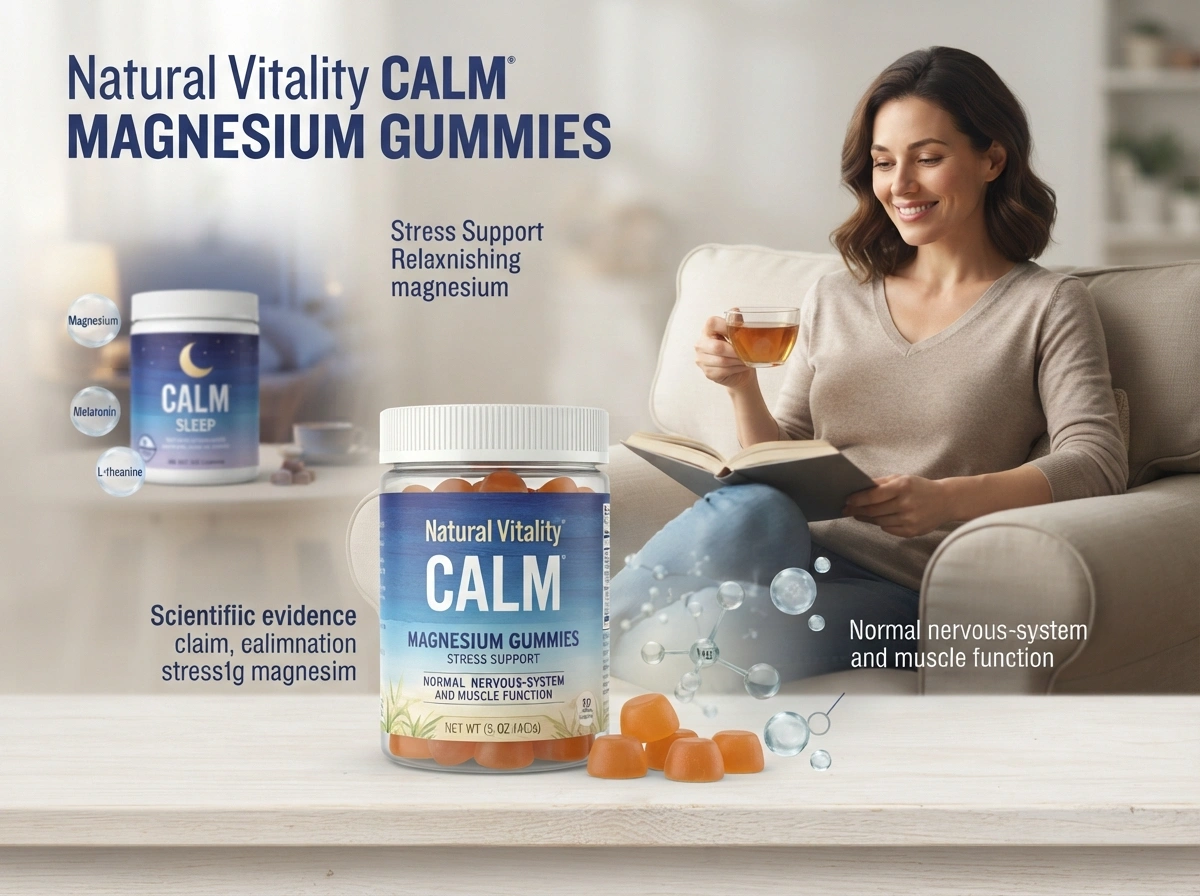
This is where marketing language and scientific evidence need to be separated.
Magnesium is important for normal nervous-system and muscle function. If someone does not consume enough magnesium, correcting inadequate intake is beneficial.
But it would be too strong to say that taking CALM Gummies will automatically eliminate stress.
Natural Vitality itself uses more careful wording, describing the product as helping consumers replenish magnesium and support a sense of calm.
The word “calm” is therefore partly a brand identity.
It should not be interpreted as a medical claim.
Natural Vitality has a separate CALM Sleep range.
Some current CALM Sleep products contain magnesium citrate along with melatonin and L-theanine. The company says its Sleep Gummies combine these ingredients to support restful sleep.
That is different from standard CALM Magnesium Gummies.
This distinction matters for SEO and factual accuracy.
CALM Magnesium Gummies are primarily a magnesium product.
They should not be described as a melatonin supplement unless you are specifically discussing the separate CALM Sleep formula.
Marketing is arguably one of the biggest reasons CALM became so recognizable.
The product could easily have been marketed as another magnesium supplement.
Instead, Natural Vitality turned magnesium into a lifestyle concept.
One of the strongest campaigns was built around the message:
“Feel the Power of Calm.”
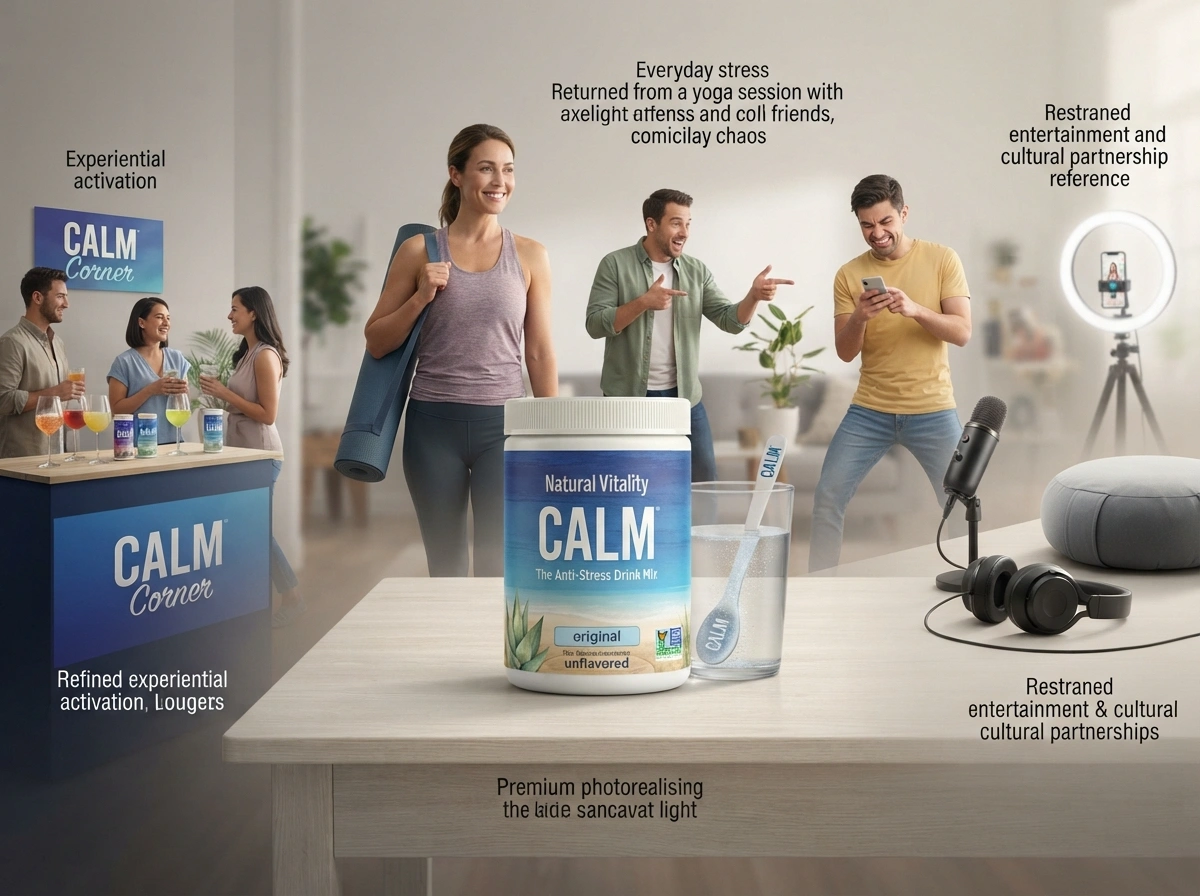
The creative strategy focused on showing stressful everyday situations and then introducing CALM as a simple way to create a moment of relaxation.
A 2021 television commercial, for example, showed a woman returning from yoga and being surprised by friends and family, creating an unexpected stressful situation. She stepped away to drink Natural Vitality CALM and decompress.
The campaign made an abstract concept like magnesium supplementation easy to understand.
You see stress.
You see the product.
You see a moment of calm.
That is much easier for a mass audience to remember than a technical explanation about magnesium metabolism.
The campaign also used the memorable line:
“When life gives you stress, make some CALM.”
According to the creative agency behind the campaign, Natural Vitality and agency Yard developed the campaign to bring the “feel the power of CALM” positioning to life through video and social content.
The approach used humor rather than fear.
That was important.
Most wellness advertising talks about everything that can go wrong.
CALM often talked about ordinary chaos and the small ways people try to manage it.
Natural Vitality also worked with comedian and actor Maya Rudolph in a series of social videos built around “stress secrets.”
The campaign used humor to explore unusual ways people deal with everyday stress.
The agency behind the work says Rudolph filmed the short social videos with her own team during the pandemic, helping the brand maintain a human and entertaining voice at a time when stress was already a major cultural topic.
This was a clever fit.
CALM needed to reach people who might not naturally think about magnesium.
Maya Rudolph gave the brand a way to talk about stress without sounding like a clinical supplement advertisement.
Natural Vitality also experimented with experiential marketing.
One particularly interesting example came during the 2022 U.S. election period, when the company created a New York activation called “The Calm Corner.”
People were asked about what was stressing them and how they managed it.
According to Clorox, the activation generated more than 350 online responses and became the highest sales week Natural Vitality had recorded on naturalvitality.com at that point.
That is one of the more useful examples of the brand turning a cultural moment into a direct marketing opportunity.
Natural Vitality later took an even more unconventional route by partnering with Lil Jon.
The partnership was designed to connect magnesium and mental wellness with a younger audience.
The campaign centered around Lil Jon’s transition from his high-energy entertainment persona toward mindfulness and meditation.
The campaign included an album-launch retreat, paid media, influencer content, social media and public relations.
The brand also pledged $100,000 toward more than 1,500 hours of free therapy and support for hiring three therapists of color. The campaign was later recognized as a finalist in the Shorty Awards’ brand partnership category.
This was more than an influencer campaign.
It attempted to change the meaning of the CALM brand.
CALM was no longer simply “a magnesium drink.”
It became part of a broader conversation about mental well-being.
Natural Vitality also used experiential marketing at Natural Products Expo West 2024.
The brand created a CALMtails mocktail bar, serving beverages made with CALM magnesium powder.
The activation included influencer sampling and branded kits sent to hundreds of influencers.
This is a particularly good example of product demonstration.
Instead of telling someone that the powder can be mixed into a drink, the brand created an actual experience around it.
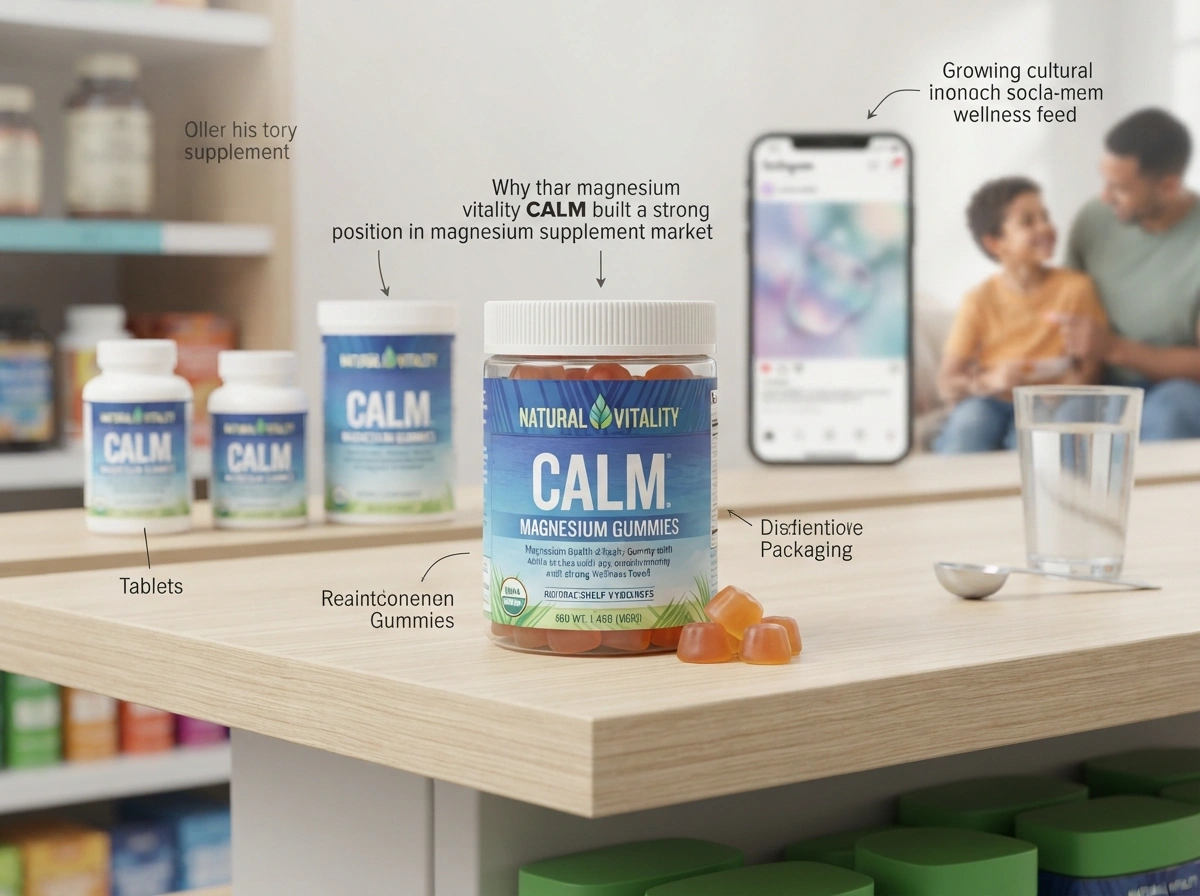
The word “dominate” needs some qualification.
CALM does not own the entire global magnesium market.
But the brand has built a particularly strong position in magnesium, especially in the U.S. natural-products channel.
Natural Vitality currently claims CALM is the #1 magnesium gummy brand, based on SPINS data for the U.S. natural channel. The latest company website references data ending May 17, 2026.
Several factors explain that position.
Natural Vitality did something many supplement companies struggle to do.
It gave the consumer an easy reason to remember the product.
You do not have to remember a chemical compound.
You remember:
CALM = magnesium = relaxation.
That association is extremely valuable.
Natural Vitality has been selling magnesium products since 1982.
That gives it a significant head start over newer gummy brands entering the market because magnesium suddenly became popular on social media.
Traditional magnesium supplements often come as:
CALM Gummies remove some of the friction.
There is no water.
There is no measuring spoon.
There is no mixing.
You simply chew the gummy.
Natural Vitality specifically highlights this convenience in its marketing.
The current standard gummies are positioned for both adults and children age 4 and older, subject to label directions.
That gives the brand a much broader audience than a product designed exclusively for adults.
The bright, colorful CALM packaging and flavored-gummy concept make the product easy to recognize.
This matters enormously in retail.
A customer does not need to read the entire label from across a store.
The CALM identity does much of the work.
Magnesium has moved from being a relatively overlooked mineral into a major wellness conversation.
A 2026 Spate trend report predicts 35.1% year-over-year growth in interest in magnesium gummies, based on Google, TikTok and Instagram U.S. data. It also identifies Natural Vitality as the leading brand in its tracked brand-interest comparison.
That does not mean every consumer is buying CALM.
But it does show that the category is benefiting from a larger cultural trend.
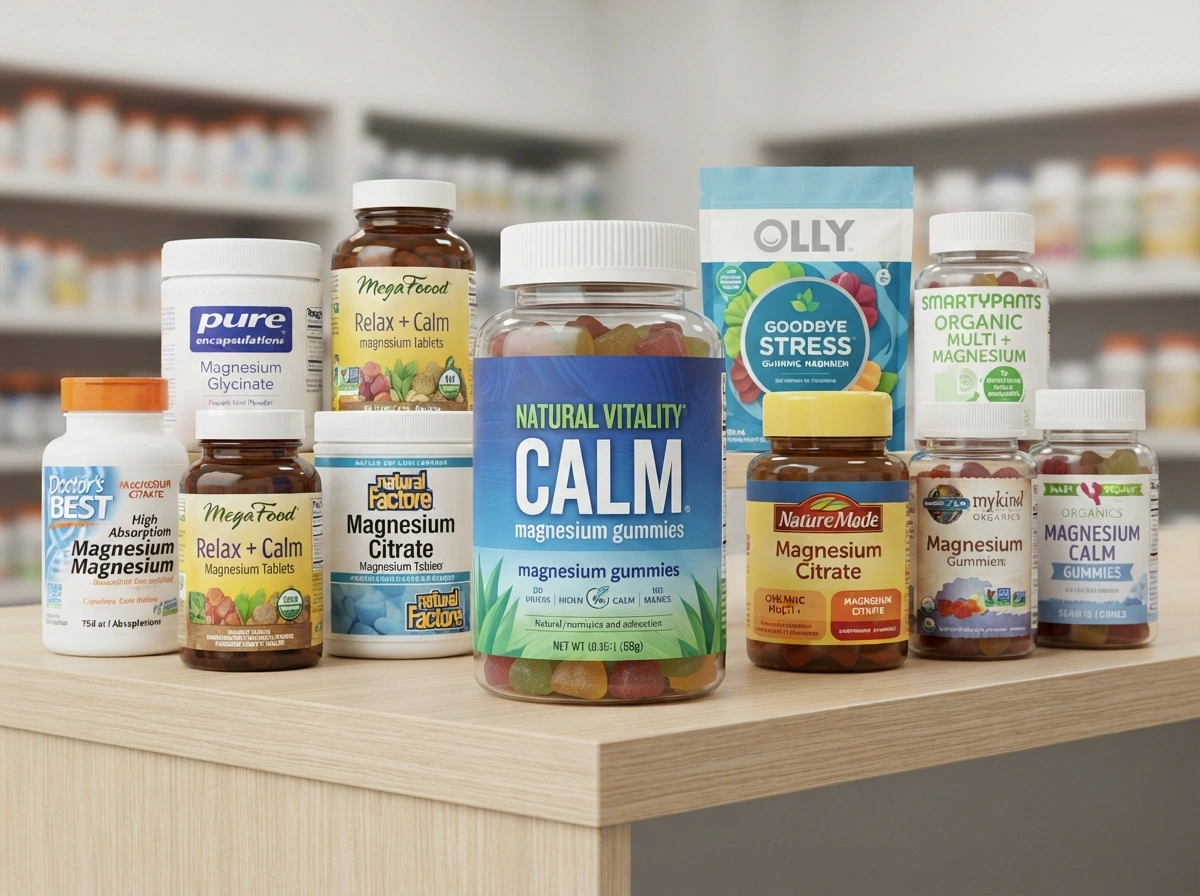
The competitive landscape depends on whether we are comparing gummies, powders or magnesium supplements overall.
Some of the strongest global competitors include:
Nature Made is one of the biggest mainstream vitamin and supplement brands in the United States.
Its advantage is scale, widespread retail distribution and strong consumer recognition.
Garden of Life competes in the premium and natural supplement space and has a strong organic and clean-label reputation.
MegaFood has a strong natural-health identity and competes for consumers who prioritize food-based or whole-food-oriented supplements.
Natural Factors offers multiple magnesium products and competes across the natural-health retail category.
MaryRuth Organics has become particularly relevant in the gummy and liquid supplement space, especially among younger wellness-oriented consumers and families.
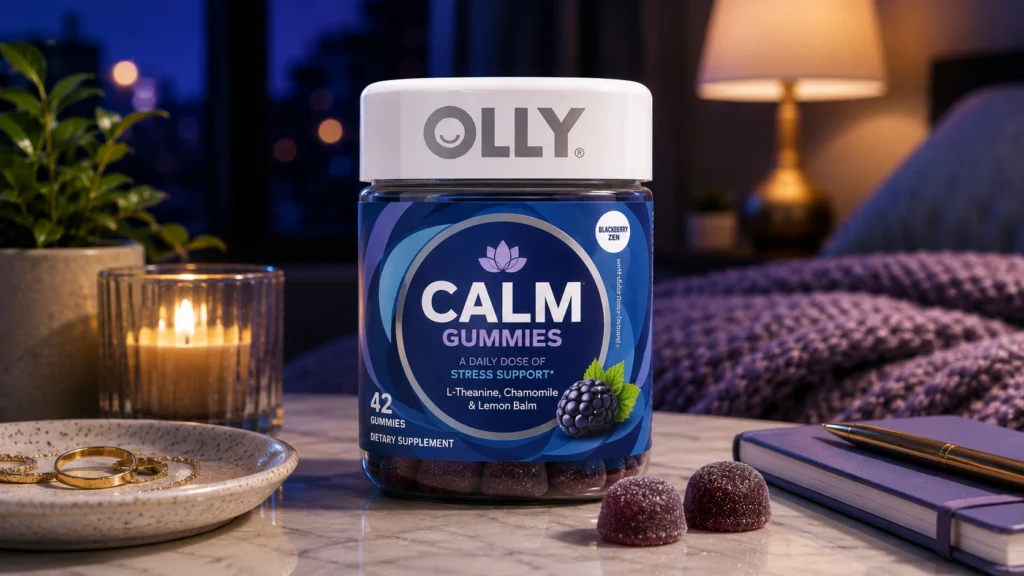
OLLY is a major competitor when the comparison is specifically about gummies.
Its colorful packaging, lifestyle branding and strong retail distribution make it one of the brands most likely to compete for the same consumer attention.
SmartyPants is another gummy-heavy supplement brand with strong family and children’s positioning.
Doctor’s Best is particularly relevant for consumers who are less interested in gummies and more interested in magnesium dosage and specific forms such as chelated magnesium.
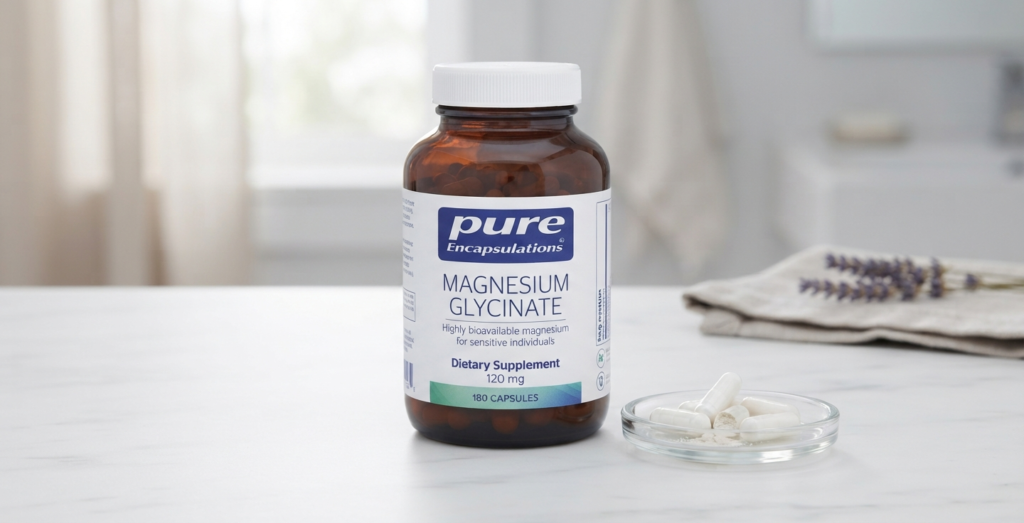
Pure Encapsulations competes at the premium end, particularly among consumers who prefer capsules, minimal formulas and practitioner-oriented supplement brands.
The competition is therefore broader than “other magnesium gummies.”
CALM competes against different brands depending on whether the consumer prioritizes taste, price, magnesium form, clean-label positioning, convenience or practitioner credibility.
This is one area where responsible reporting matters.
Natural Vitality does not publicly disclose a standalone 2026 revenue figure for CALM Gummies.
It also does not publicly provide a current audited annual revenue number for Natural Vitality as an individual brand.
There is a good reason for that.
Natural Vitality is a privately held brand within the Piping Rock business following the 2024 divestiture from Clorox.
Clorox’s financial statements historically included Natural Vitality inside its broader Better Health VMS business.
That segment also included brands such as NeoCell, Rainbow Light and RenewLife.
When Clorox sold the business in September 2024, it transferred the entire portfolio rather than reporting Natural Vitality as a separately listed public company.
As a result, there is no reliable public filing showing:
“Natural Vitality CALM Gummies generated $X million in 2025.”
Any website claiming a precise product-level revenue figure without a primary financial source should be treated cautiously.
There are several useful indicators.
First, Natural Vitality currently describes CALM as the #1 magnesium gummy brand, based on U.S. natural-channel SPINS data.
Second, the brand’s official website says it has accumulated 60,000-plus five-star Amazon reviews across its products. That is a large consumer-review footprint, although reviews are not the same thing as sales.
Third, third-party Amazon analytics show substantial sales activity around CALM products. For July 2026, ASINSight estimated roughly 20,000 monthly units for one Natural Vitality CALM magnesium powder listing and around 10,000 monthly units for one CALM gummies listing within its tracked search results. These are third-party estimates, not audited company sales figures.
The distinction is important.
Estimated Amazon sales are not the same as total company revenue.
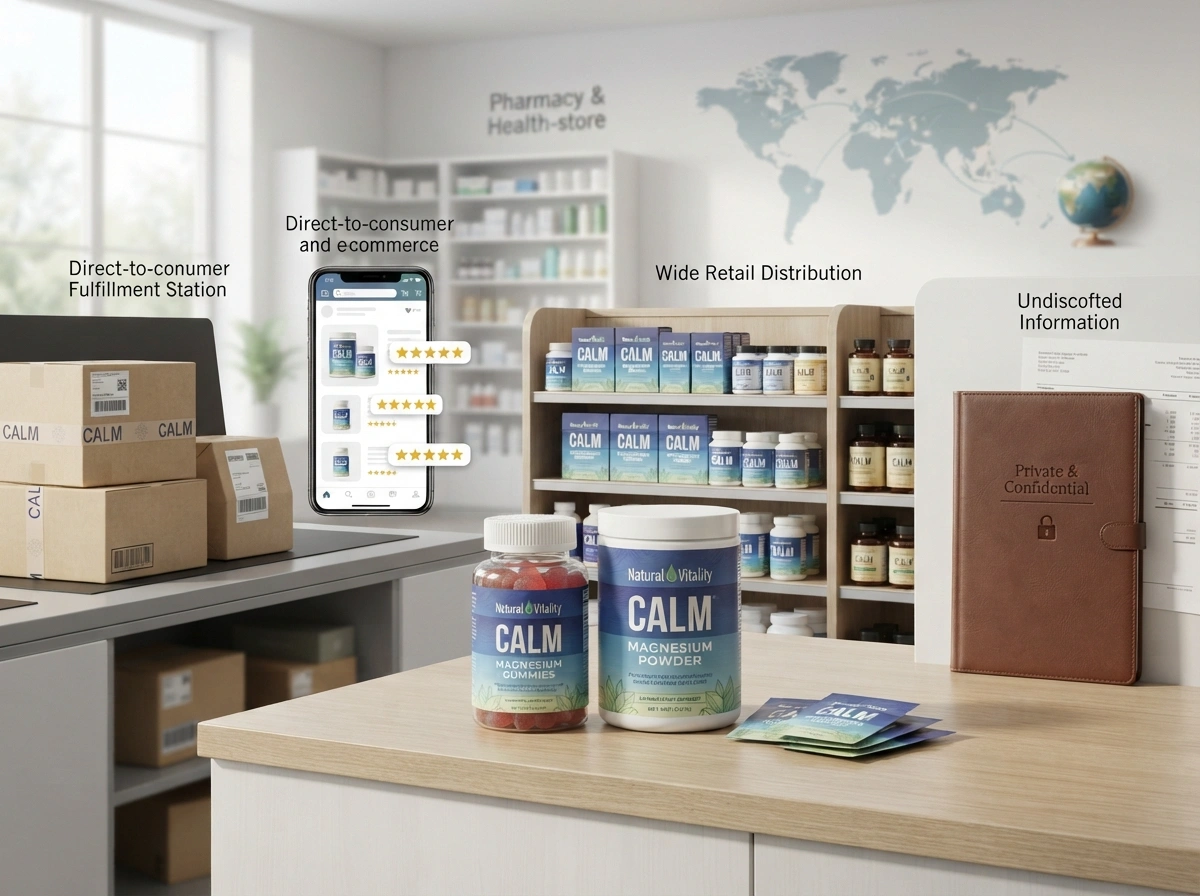
Natural Vitality also sells through its own website, retailers, natural-food stores, pharmacies and international distributors.
Natural Vitality’s official website currently lists its 120-count orange CALM Gummies at around $25.82 for a one-time purchase, with a lower subscription price.
Prices can vary by retailer, flavor, package size and promotions.
The current Vitamin Shoppe listing also confirms the 120-count orange product and its 83 mg-per-gummy formulation.
So while the exact revenue number is private, the combination of strong brand recognition, retail distribution, large online review volume and high category-level sales suggests CALM remains a significant player in the magnesium supplement market in 2026.
The biggest difference is not necessarily the magnesium itself.
It is the consumer experience.
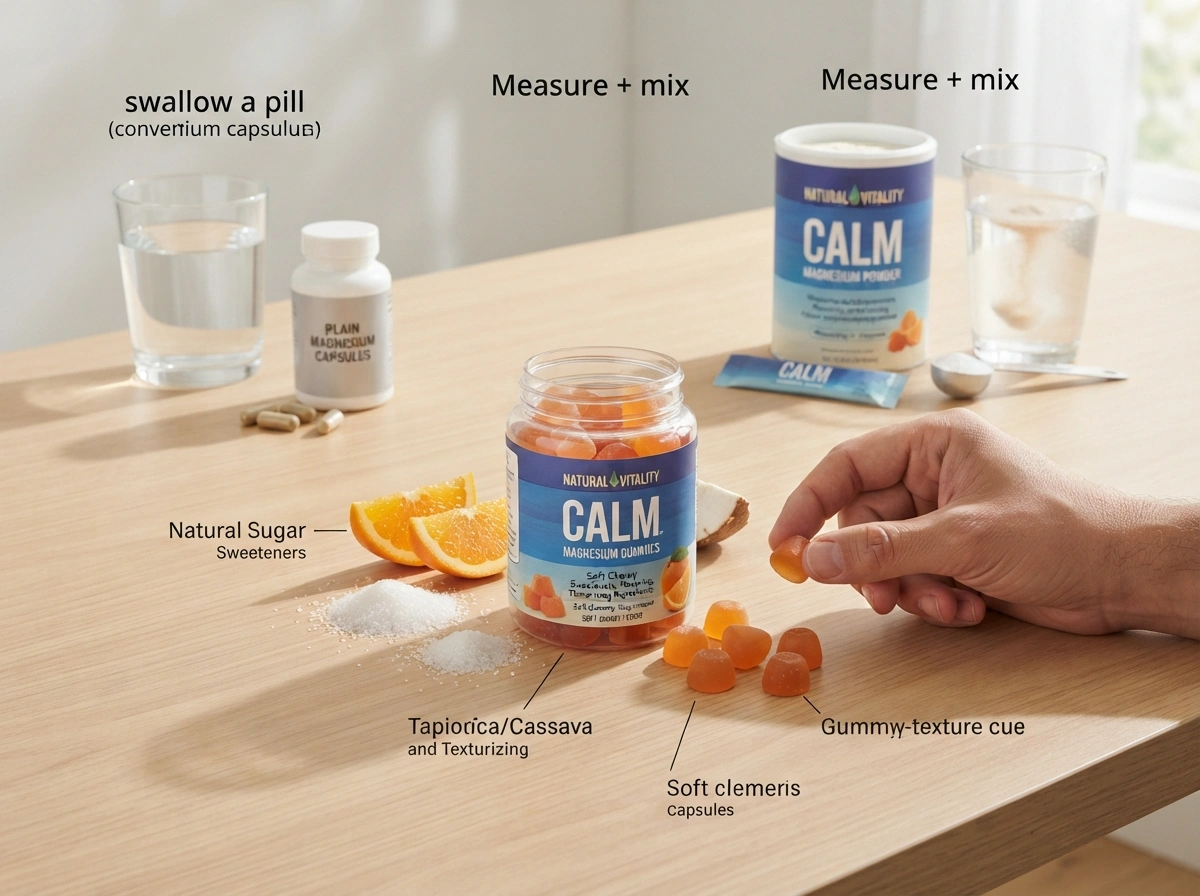
A conventional magnesium capsule asks the consumer to swallow a pill.
A CALM powder asks the consumer to measure and mix.
A CALM gummy turns the process into a simple chewable routine.
That matters because adherence is often one of the biggest challenges with supplements.
If a person dislikes swallowing pills or hates mixing powders, they may simply stop taking the product.
A gummy removes that barrier.
The trade-off is that gummies typically need sweeteners, flavoring and texturizing ingredients to achieve the desired taste and consistency.
CALM Gummies therefore contain sugar and carbohydrate ingredients that would not be present in a plain magnesium capsule.
This is not necessarily a flaw.
It is simply the formulation trade-off that comes with a gummy delivery format.
Natural Vitality CALM Gummies are dietary supplements, not prescription medicines.
The current label provides 83 mg of magnesium per gummy and allows up to four gummies per day for adults and people aged 13 and older.
Four gummies provide approximately 330 mg of supplemental magnesium.
That number is worth knowing because the National Institutes of Health sets the adult upper limit for magnesium from supplements and medications at 350 mg per day. Magnesium naturally present in food is not included in that upper limit.
Too much supplemental magnesium can cause:
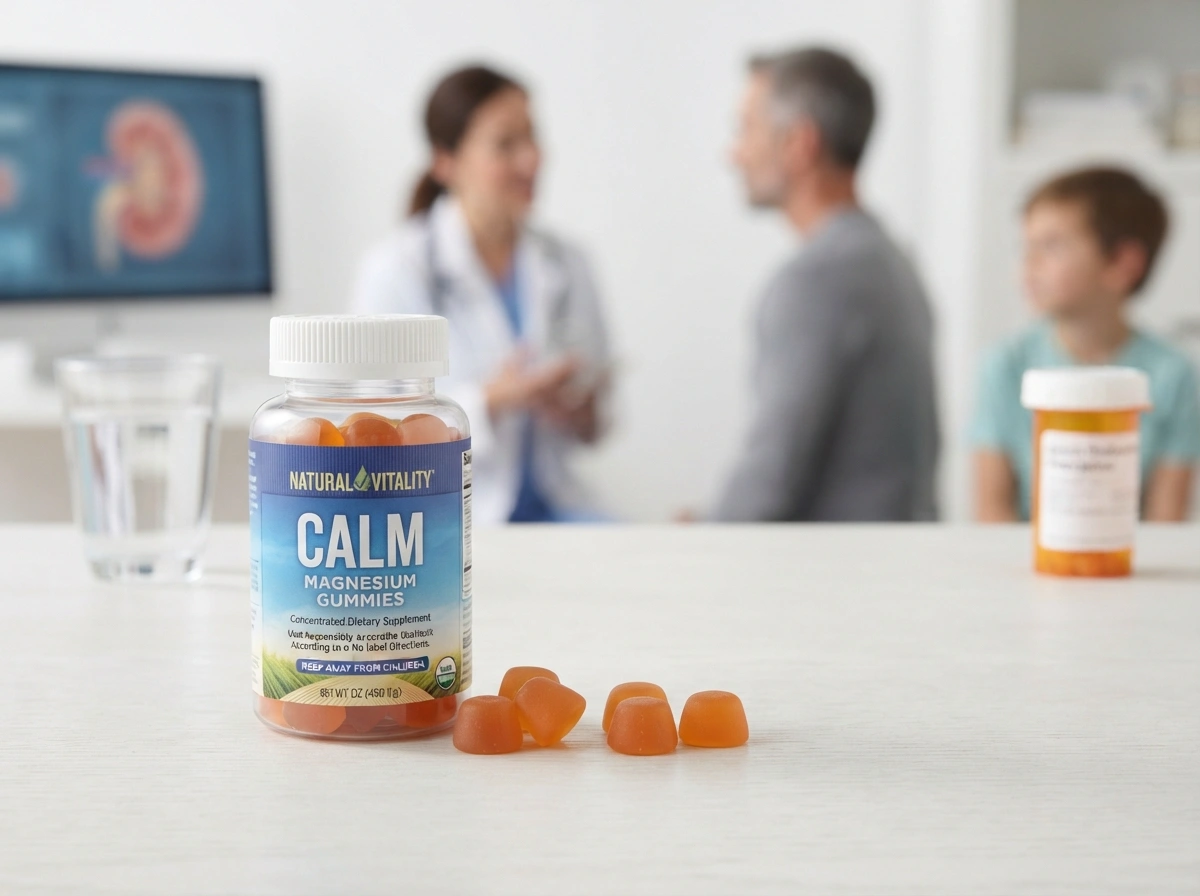
People with kidney problems need particular caution because the kidneys play an important role in removing excess magnesium.
Magnesium can also interact with certain medications, including some antibiotics and osteoporosis medicines.
The Natural Vitality label advises people with medical conditions, people taking medications and pregnant or breastfeeding individuals to consult a healthcare professional.
And because these are gummies, they should be kept away from young children.
A gummy may look like candy, but it is still a concentrated dietary supplement.
Natural Vitality CALM Magnesium Gummies are the result of more than four decades of magnesium-focused branding.
The company was founded in 1982 by Peter Gillham, who developed Natural Vitality CALM around magnesium supplementation. The original product was a water-soluble magnesium drink mix, long before magnesium gummies became a mainstream wellness product.
The brand eventually expanded into gummies, capsules, powders and specialized formulas.
The biggest recent corporate change came in 2024, when The Clorox Company sold its Better Health Vitamins, Minerals and Supplements business to an affiliate of Piping Rock Health Products, LLC. Natural Vitality was included in that transaction along with NeoCell, Rainbow Light and RenewLife. The deal also included associated manufacturing and distribution facilities in Sunrise, Florida.
The current standard CALM Gummies formula is relatively simple.
Each gummy contains 83 mg of magnesium as magnesium citrate. The remaining ingredients are primarily there to create sweetness, flavor, color and gummy texture. The current orange formulation uses tapioca syrup, cane sugar, water, citric acid, agar, tapioca starch, natural flavors, annatto extract and locust bean gum.
The brand’s real competitive advantage, however, is not just the ingredient list.
It is branding.
Natural Vitality transformed magnesium from a relatively obscure mineral into a recognizable wellness concept called CALM.
Campaigns such as “Feel the Power of Calm,” “When life gives you stress, make some CALM,” Maya Rudolph’s stress-themed social content, the “Calm Corner” experiential activation and the later Lil Jon mental-wellness partnership helped the company make magnesium culturally relevant.
The brand has also adapted to changing consumer behavior.
Powders appealed to people who liked customizable drinks.
Gummies appealed to people looking for convenience.
Capsules appealed to consumers who wanted a traditional supplement format.
Newer products combine magnesium citrate and glycinate, while CALM Sleep products add ingredients such as melatonin and L-theanine.
This ability to keep the CALM brand identity while changing the delivery format is one of the strongest reasons behind its longevity.
As of 2026, Natural Vitality claims CALM is the #1 magnesium gummy brand in the U.S. natural channel, based on SPINS data ending May 17, 2026. The brand also reports more than 60,000 five-star Amazon reviews across its products.
However, there is no publicly disclosed audited figure for Natural Vitality CALM Gummies’ 2026 revenue.
That is important.
The brand is now privately held, so precise product-level sales cannot be confirmed from public company filings. Third-party Amazon analytics provide useful estimates, but they should not be presented as official company revenue.
Ultimately, the success of CALM Gummies comes down to a very simple business idea: make an important but unfamiliar mineral easier to understand, easier to consume and easier to remember.
Natural Vitality did exactly that.
It took magnesium, gave it a memorable name, built an emotional benefit around it, created a recognizable product experience and then spent decades expanding that idea into powders, gummies, capsules and broader mental-wellness products.
That is why Natural Vitality CALM Magnesium Gummies remain one of the most recognizable magnesium gummy products in the U.S. market in 2026.
Medical and editorial note: CALM Gummies are dietary supplements and should not be described as treatments for anxiety, insomnia, stress disorders or other diseases. Ingredient formulas, serving sizes and packaging can change. For publication, always verify the physical package and current manufacturer label, especially when discussing children’s use, pregnancy, kidney disease, medications or dosage.