If you have ever looked at the ingredients in an energy drink or sports supplement, you have probably seen the word taurine.
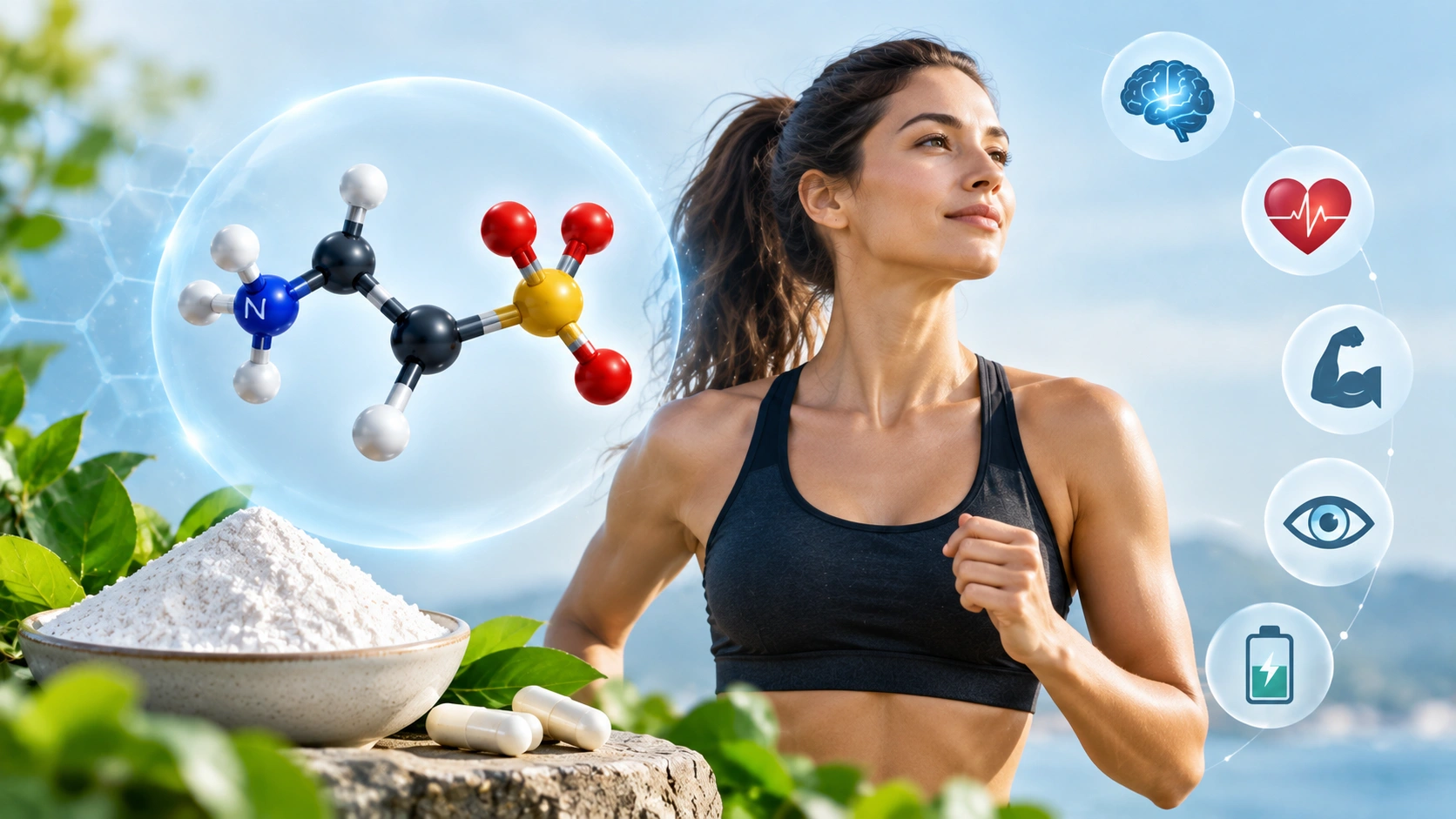

Taurine is one of the most abundant free amino-acid-related compounds in the human body.
Unlike protein-building amino acids, taurine is not incorporated into proteins. Instead, it works more like a cellular regulator.
It helps cells manage fluids and electrolytes, supports calcium handling, participates in bile acid formation, and interacts with several systems involved in the nervous system, cardiovascular function, metabolism, and muscle activity.
One of taurine’s basic jobs is helping cells maintain the right amount of water.
This process is known as osmoregulation.
Cells constantly have to balance water and electrolytes. If too much water enters a cell, it can swell. If too much water leaves, the cell can shrink.
Taurine helps cells adapt to changes in their surrounding environment.
This is especially important in tissues that experience frequent changes in electrical activity and fluid balance, including the brain, heart, and muscles.
Taurine is also involved in calcium regulation.
Calcium is not only important for bones and teeth. It is essential for muscle contraction, nerve signaling, heart rhythm, and many cellular processes.
Heart and skeletal muscle cells need extremely precise control over calcium.
Research suggests taurine can influence calcium handling and help support normal muscle and cardiovascular function.
This is one reason taurine has attracted attention in sports nutrition and cardiovascular research.
The heart contains substantial amounts of taurine.
Researchers have investigated taurine for its possible effects on heart rate, blood pressure, vascular function, and cardiac muscle performance.
A 2024 meta-analysis of 20 randomized controlled trials involving 808 participants found that taurine supplementation was associated with modest reductions in heart rate and blood pressure and an improvement in left ventricular ejection fraction, a measure of how effectively the heart pumps blood.
That sounds impressive, but it needs context.
The studies were relatively small, and participants had different health conditions. Taurine is therefore not a replacement for prescribed treatment for high blood pressure or heart disease.
Still, the cardiovascular findings are one of the more interesting areas of human taurine research.
Taurine is found in high concentrations in the brain and nervous system.
It can influence neuronal activity and interacts with neurotransmitter systems, including pathways involving GABA and glycine.
This is one reason taurine is sometimes described as having calming or neuroprotective properties.
But taurine should not be confused with a sedative.
Taking taurine does not necessarily make you sleepy, and it does not work like prescription anxiety or sleep medications.
Researchers are still investigating its effects on brain health, cognition, mood, and neurological function.
Taurine is highly concentrated in the retina.
This makes sense because retinal cells have high metabolic demands and are particularly sensitive to oxidative and metabolic stress.
Animal and laboratory studies suggest taurine plays an important role in maintaining retinal structure and function.
This has led researchers to investigate taurine in relation to retinal degeneration and eye health.
However, there is not enough human evidence to say that taurine supplements can prevent common eye diseases.
Your skeletal muscles contain a large amount of taurine.
Taurine is involved in fluid balance, calcium handling, membrane stability, and other processes important for muscle function.
This is why taurine is common in pre-workout and sports supplements.
Human research on exercise performance is mixed but becoming more interesting.
A 2025 meta-analysis of 23 randomized trials found that a single dose of taurine was associated with a small-to-moderate improvement in overall exercise performance, although results differed depending on the type of exercise and participant characteristics.
So taurine may help performance in some situations, but it should not be described as a guaranteed performance enhancer.
Taurine is also involved in metabolic processes.
Researchers have studied its relationship with insulin sensitivity, blood glucose, triglycerides, cholesterol, and metabolic syndrome.
A 2025 meta-analysis of 34 randomized controlled trials found that taurine supplementation was associated with improvements in several cardiometabolic markers, including fasting glucose, HbA1c, triglycerides, total cholesterol, blood pressure, and insulin resistance.
These results are encouraging, but supplementation should not replace standard treatment for diabetes, high cholesterol, or hypertension.

Taurine has been known to science for almost 200 years.
It was first isolated in 1827 by German scientists Friedrich Tiedemann and Leopold Gmelin.
They isolated the substance from ox bile.
The name taurine eventually came from the Latin word taurus, meaning bull or ox.
The connection makes sense because taurine was originally isolated from ox bile.
Interestingly, the compound was not initially understood to have all the biological roles we associate with taurine today.
For many years, scientists mainly viewed taurine as a chemical found in animal tissues.
Later research showed that taurine was present throughout the bodies of mammals and concentrated in important tissues such as the heart, brain, muscles, and retina.
Scientists also discovered that humans can produce taurine from sulfur-containing amino acids.
This helped establish that taurine is not simply something we obtain from food. It is also part of normal human metabolism.
The modern taurine story took another major turn in 2023, when researchers published a widely discussed study investigating taurine and aging.
The researchers found that circulating taurine concentrations declined with age in humans and several animal species. They then tested taurine supplementation in mice, worms, and other experimental models.
In mice, taurine supplementation improved several markers associated with health and aging and increased lifespan.
The human portion of the research was much more limited and observational.
That means the study generated an important scientific hypothesis, but it did not prove that taking taurine will make humans live longer.
That question still needs properly designed long-term human clinical trials.

There is an important difference between low taurine intake, low blood taurine, and a true taurine deficiency.
There is currently no universally accepted taurine deficiency test or standard daily requirement for healthy adults.
Your body can make taurine, and most healthy people can obtain additional taurine from food.
For this reason, severe taurine deficiency is not considered a common nutritional problem in healthy adults.
However, taurine levels can be influenced by diet, age, health status, metabolism, and other factors.
One of the most interesting findings from recent research is that taurine levels appear to decline with age.
The 2023 animal and human research that brought taurine into the longevity spotlight found substantial age-related declines in circulating taurine.
Researchers then asked whether restoring taurine levels could improve health.
In animals, the results were striking.
But this does not mean that every older adult is taurine deficient or that aging is simply caused by a lack of taurine.
Aging involves many interconnected biological systems.
Because skeletal muscle contains substantial taurine, researchers are interested in whether lower taurine availability could affect muscle function.
Some studies have linked taurine with muscle performance and healthy aging.
However, fatigue or muscle weakness should not automatically be blamed on low taurine.
Low iron, vitamin B12 deficiency, thyroid problems, inadequate calories or protein, sleep disorders, medications, and many medical conditions can cause similar symptoms.
Researchers have also investigated whether taurine status is associated with cardiovascular health.
Taurine participates in calcium handling, cell membrane stability, oxidative balance, and other processes relevant to the cardiovascular system.
Some observational studies have found associations between taurine levels and cardiovascular outcomes.
Again, this does not prove that low taurine is the cause of cardiovascular disease.
Certain populations may have different taurine requirements or metabolism.
Infants, people with certain medical conditions, and individuals with very low intake of animal foods may have different taurine exposure than healthy omnivorous adults.
This does not mean everyone in these groups needs taurine supplements.
People with specific medical conditions should discuss supplementation with their healthcare provider rather than assuming that a low-taurine diet is the cause of their symptoms.

Taurine is generally considered well tolerated at the doses commonly used in human studies.
But that does not mean that unlimited amounts are beneficial.
Your body regulates taurine levels through absorption, tissue storage, metabolism, and kidney excretion.
Excess taurine that the body does not need can be eliminated, primarily through the kidneys.
There is no official Recommended Dietary Allowance for taurine.
A 2008 risk assessment reviewed available human clinical studies and identified 3 grams per day as an observed safe level for healthy adults based on the evidence available at the time.
More recent clinical research has studied doses ranging from approximately 0.5 grams to 6 grams per day, generally for relatively short periods.
A 2025 review reported that human trials using 1 to 6 grams per day have generally not shown major adverse effects, although long-term safety data remain much more limited than short-term data.
This is an important distinction.
A dose that appears safe for several weeks or months does not automatically establish that taking the same amount every day for decades is safe.
There is no well-established pattern of toxicity from ordinary supplemental doses in healthy adults.
However, extremely high doses have not been adequately studied for long-term use.
There is also another issue.
Taurine is frequently added to energy drinks, which can contain large amounts of caffeine and sugar.
When someone experiences rapid heartbeat, anxiety, sleep problems, or other symptoms after consuming an energy drink, taurine may not be the main cause. Caffeine and other stimulants may be much more relevant.
Taurine itself should therefore not automatically be blamed for effects caused by an entire energy-drink formulation.
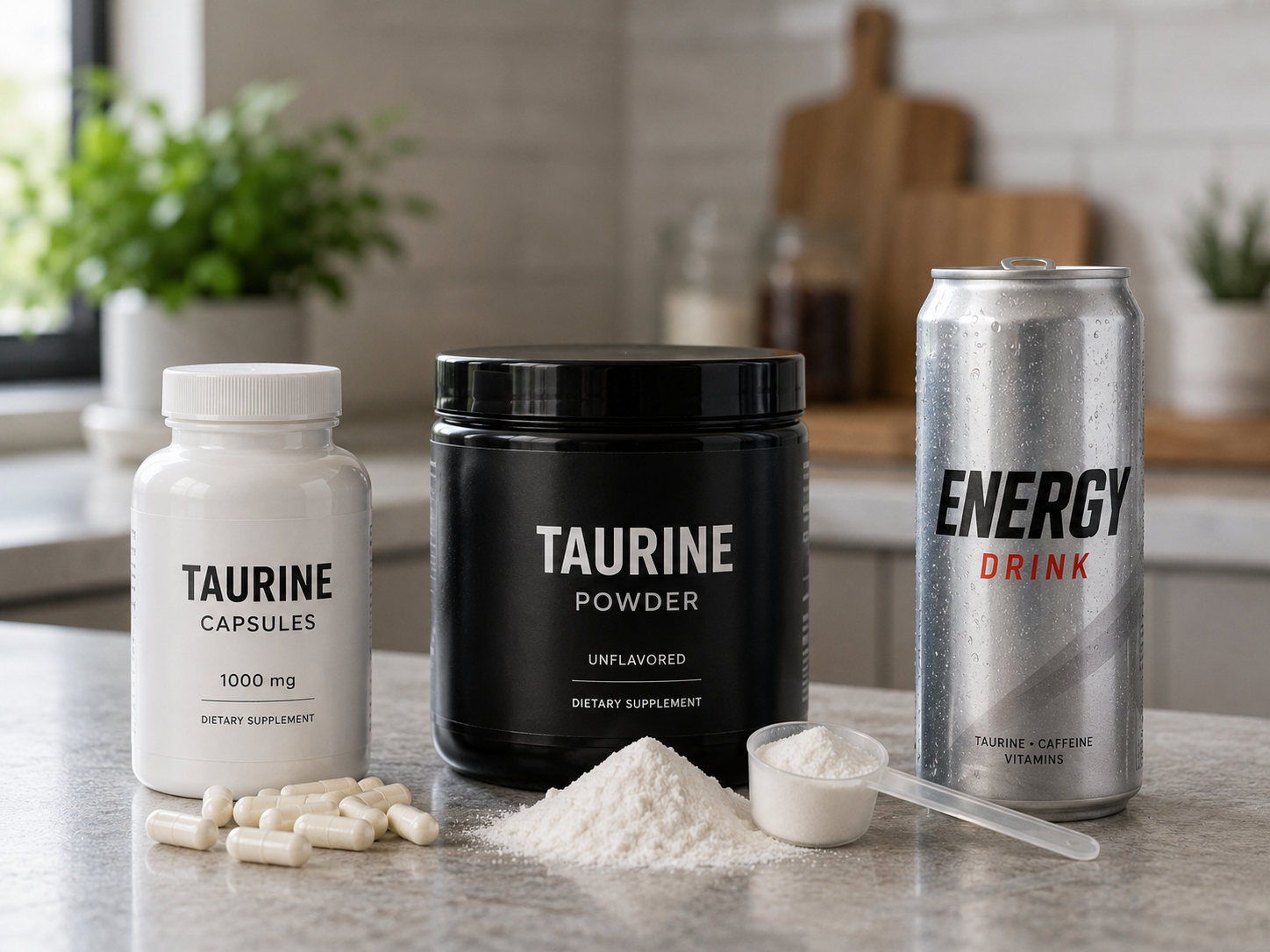
Unlike some compounds that can only be obtained through food, taurine can be obtained in three ways:
Your body can make it, you can get it from food, or you can take it as a supplement.
Commercial taurine supplements generally contain synthetically produced taurine, which is chemically identical to the taurine naturally found in the body.
Capsules are one of the easiest ways to take a consistent amount.
Common products provide 500 mg or 1,000 mg per serving.
This makes it easier to control your intake than with food, where taurine concentrations vary considerably.
Powder allows users to measure their own serving.
This can be convenient for people who want to take gram-level doses, particularly in sports nutrition.
However, powder requires accurate measurement.
A kitchen teaspoon is not a reliable way to measure a precise gram amount because powder density can vary.
Taurine is also commonly added to energy drinks.
This is technically another way of consuming taurine, but it is important to separate taurine from the rest of the beverage.
An energy drink may contain caffeine, sugar, other stimulants, and additional ingredients.
If your goal is simply to consume taurine, a standalone taurine supplement avoids unnecessary caffeine and sugar.
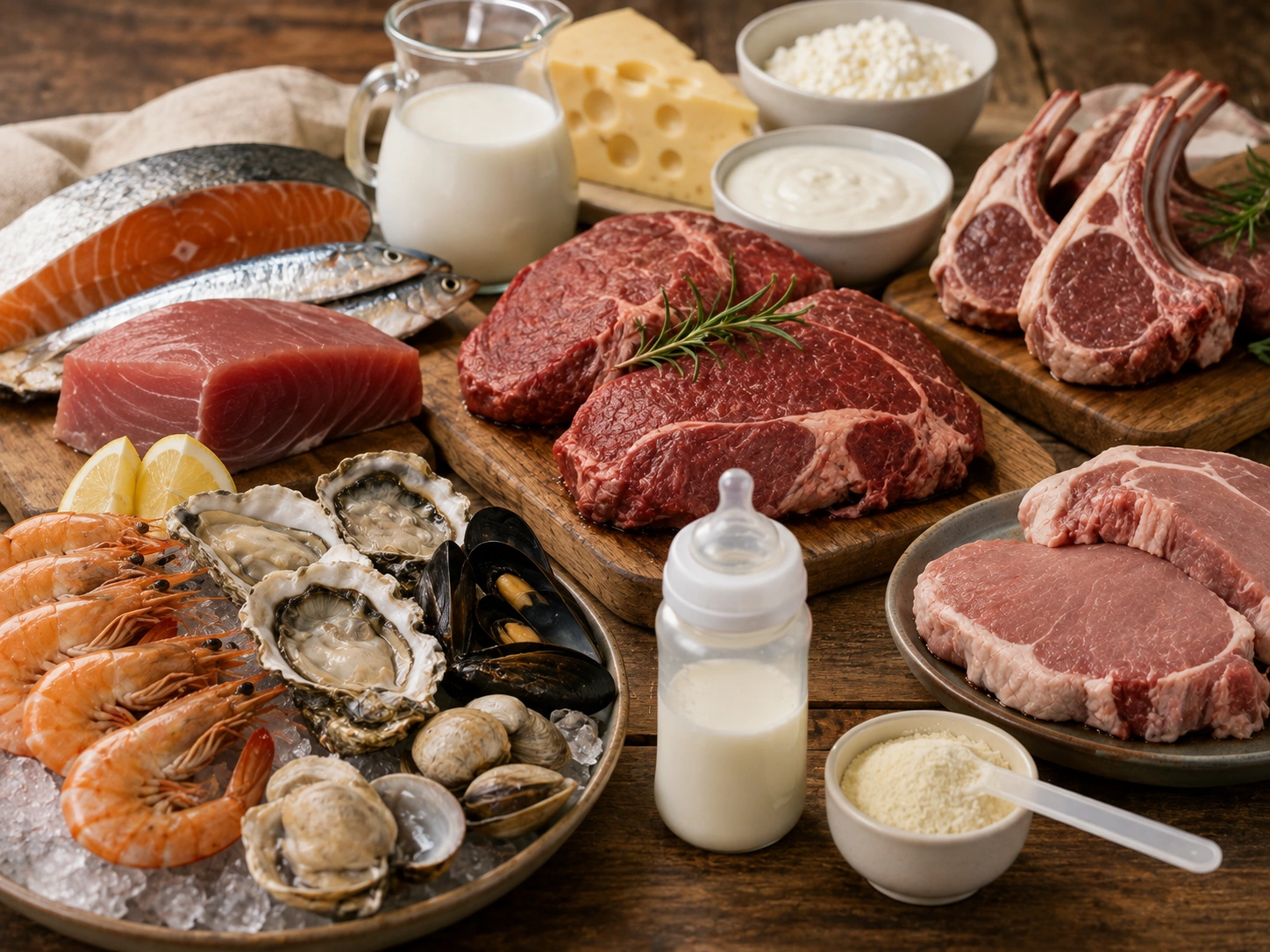
Taurine occurs naturally in many animal-derived foods.
Unlike taurine supplements, dietary sources provide taurine along with protein, vitamins, minerals, and other nutrients.
Seafood is one of the richest dietary sources of taurine.
Shellfish such as shrimp, oysters, mussels, and clams can contain substantial amounts.
One food-analysis study found particularly high taurine concentrations in crustaceans and mollusks.
The exact amount varies considerably depending on species and preparation.
Fish can also provide taurine.
The amount differs between species, but seafood generally provides considerably more taurine than most plant foods.
Fatty fish such as salmon, sardines, and tuna are already valuable foods because they provide protein and, depending on the species, omega-3 fatty acids.
Beef contains taurine, particularly in muscle tissue and certain organ meats.
The amount can vary depending on the cut and preparation.
Lamb is another dietary source of taurine.
Like other meats, it provides taurine alongside high-quality protein and several essential nutrients.
Pork also contains taurine.
Research measuring common foods has found taurine concentrations in pork and other meats, although amounts vary substantially from one food to another.
Milk and dairy products contain smaller amounts of taurine compared with many meats and seafood.
Dairy can still contribute to total dietary taurine intake.
Taurine is particularly important during early development and is naturally present in human breast milk.
It is also included in many infant formulas because of its recognized role in infant nutrition.
This is where taurine differs from many other nutrients.
Most terrestrial plant foods contain little or no taurine.
That means people following a vegan diet may have much lower dietary taurine intake than people who consume meat and seafood.
However, this does not automatically mean vegans are taurine deficient.
Humans can synthesize taurine from sulfur-containing amino acids, although the amount produced varies between individuals.
Cooking can affect taurine content.
Research has found that cooking methods involving substantial contact with water can cause more taurine to move out of food and into the cooking liquid.
Boiling, for example, can result in greater taurine loss than cooking methods that use little or no water.
If you boil seafood or meat and throw away the cooking liquid, some taurine may be lost with it.
This is one reason food-composition numbers should always be treated as estimates rather than exact values.
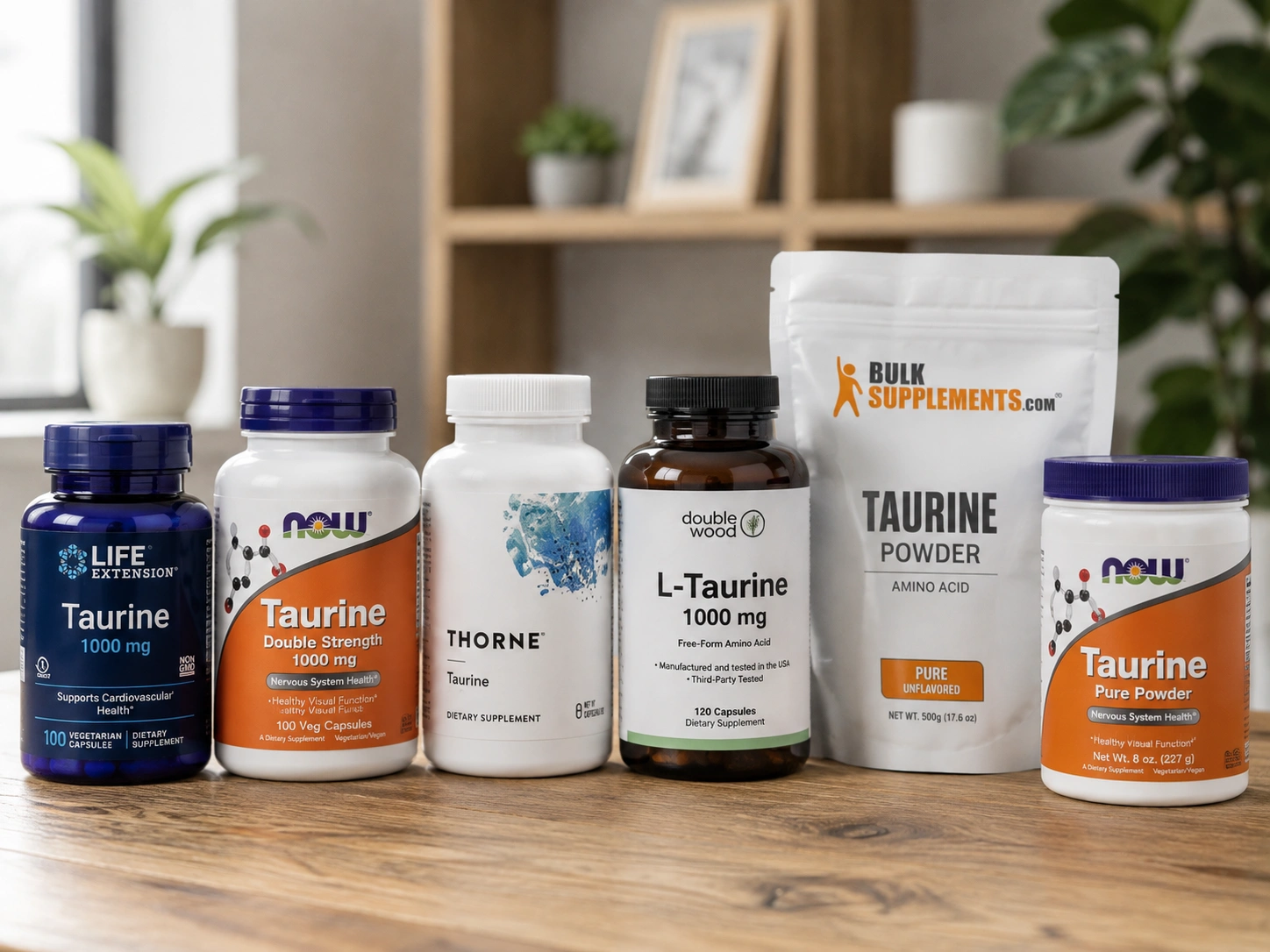
When choosing a taurine supplement, look for a clearly labeled dose, a reputable manufacturer, appropriate quality controls, and a formulation that does not add unnecessary ingredients.
There is no official Recommended Dietary Allowance for taurine, and higher doses are not automatically better. Human studies have commonly used doses in the 1 to 3 gram range, while some research has tested higher amounts.
Taurine is much more than an ingredient found on the back of an energy-drink can.
It is a naturally occurring sulfur-containing compound that is found throughout the human body, especially in the heart, brain, skeletal muscles, eyes, and nervous system.
Your body can make taurine from other sulfur-containing compounds, and you can also obtain it from foods such as seafood, fish, beef, lamb, pork, and dairy products.
Taurine helps regulate cell hydration, calcium movement, electrolyte balance, bile acid formation, nervous system activity, and several processes involved in cardiovascular and muscle function.
Scientists first isolated taurine in 1827, when Friedrich Tiedemann and Leopold Gmelin obtained it from ox bile.
Almost two centuries later, taurine has become a major research topic in healthy aging.
The biggest reason is the discovery that taurine levels appear to decline with age. Animal research has shown that restoring taurine levels can improve several measures of healthspan and, in some animal models, lifespan.
But this is where it is important to separate exciting science from established fact.
Taurine has not been proven to extend human lifespan.
Human studies are much more encouraging in some areas than others. Recent meta-analyses suggest taurine may modestly improve blood pressure, certain cholesterol and triglyceride measures, glucose control, insulin sensitivity, and some aspects of cardiovascular function. Research also suggests it may improve exercise performance in certain situations.
At the same time, these studies do not mean taurine can replace medication, exercise, a healthy diet, or medical treatment.
For most healthy adults, taurine is already part of normal biology.
You can get it naturally from seafood, meat, and dairy, while your body can also synthesize it.
If you choose a supplement in the United States, commonly studied amounts are generally in the 1 to 3 gram range, although research has tested doses both below and above this range. There is no official daily requirement for taurine, so taking more is not automatically better.
The most sensible way to look at taurine is as a promising compound involved in cardiovascular, metabolic, nervous-system, and muscle biology that may have a role in healthy aging.
It is not a magic energy booster, it is not made from bulls, and it is not yet a proven longevity pill.
The research is worth watching, especially as larger and longer human clinical trials become available.
For now, the basics still matter more: eat a nutrient-dense diet, exercise regularly, sleep well, maintain a healthy weight, avoid tobacco, and manage blood pressure and blood sugar.
Taurine may eventually become an important part of healthy-aging research.
But today, it is best viewed as an interesting and biologically important nutrient-like compound with promising human research, rather than a guaranteed shortcut to better health or a longer life.
No. This is one of the most common taurine myths.
The name comes from the Latin word taurus, meaning bull or ox, because taurine was originally isolated from ox bile in 1827.
Modern commercial taurine supplements are generally manufactured synthetically. They are not made from bulls.
Not directly like caffeine does. Taurine participates in cellular and metabolic processes, but it is not a stimulant. Energy drinks often contain taurine alongside caffeine, which is much more directly responsible for the immediate feeling of alertness.
Taurine is commonly called an amino acid, but technically it is a sulfur-containing amino acid derivative. Unlike protein-building amino acids, taurine is not incorporated into proteins.
Possibly. Human research is mixed, but a 2025 meta-analysis found that acute taurine supplementation may produce small-to-moderate improvements in overall exercise performance. The effect was not consistent across every type of exercise.
There is not enough good human evidence to say that taurine reliably increases testosterone. Some animal and laboratory research may sound promising, but this should not be turned into a general testosterone-boosting claim.
It may have a modest effect in some people. Several randomized trials and meta-analyses have reported small reductions in systolic and diastolic blood pressure with taurine supplementation. However, taurine is not a replacement for blood-pressure medication or lifestyle treatment.
Research suggests taurine may improve some blood-sugar and insulin-related markers, but it is not a treatment for diabetes. Recent meta-analyses have reported improvements in glucose control and insulin resistance, but more research is needed before taurine can be considered part of standard diabetes treatment.
It has not been proven to extend human lifespan. The major longevity findings came largely from animal research, while human evidence remains much more limited. Taurine is an interesting longevity research target, not a proven life-extension treatment.
Research suggests they can. The 2023 taurine-aging study found age-related declines in circulating taurine in humans and several animal species. However, the meaning of that decline for human aging and whether supplementation can reverse it are still being investigated.
Taurine appears to be well tolerated at commonly studied supplemental doses in healthy adults. Human trials have used doses ranging from hundreds of milligrams to several grams per day, but long-term safety at high doses remains less certain.