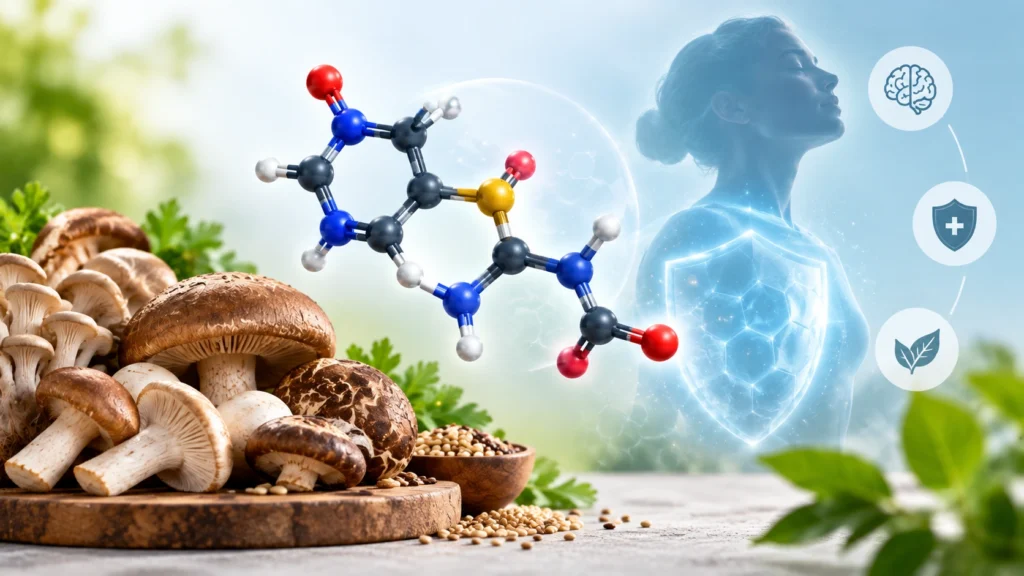
If you have been looking into mitochondrial health, brain health, energy, healthy aging, or longevity, you may have come across a strange-looking name: PQQ, short for pyrroloquinoline quinone.
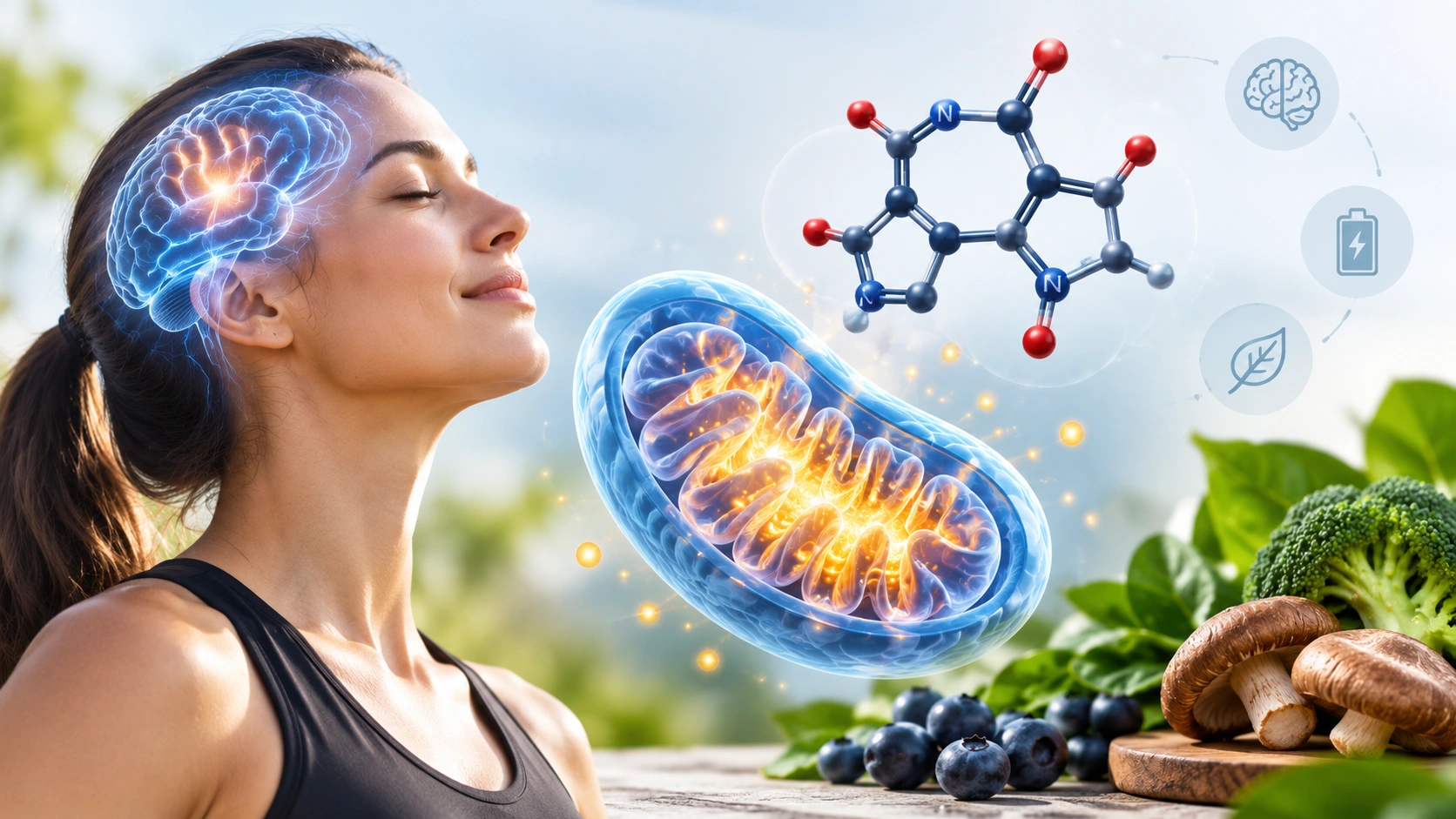

The easiest way to understand PQQ is to start with your mitochondria.
Almost every cell in your body contains mitochondria. They are often called the “powerhouses of the cell” because they help produce ATP, the main chemical form of energy your cells use.
Your brain, heart and muscles have especially high energy demands, which means they depend heavily on healthy mitochondrial function.
PQQ appears to interact with mitochondria in several ways.
One of the most interesting areas of PQQ research is its potential effect on mitochondrial biogenesis.
Mitochondrial biogenesis is the process through which cells make new mitochondria.
Why does that matter?
As cells age or experience metabolic stress, mitochondrial function can become less efficient. Scientists are therefore interested in compounds that may help cells maintain or replace healthy mitochondria.
Research suggests PQQ may influence signaling pathways involving proteins and genes such as PGC-1α, NRF-1, NRF-2 and TFAM, which are involved in mitochondrial production and maintenance.
This does not mean that taking PQQ automatically creates large numbers of new mitochondria in your body. Much of the mechanistic evidence comes from laboratory and animal studies, while human evidence is still developing.
Your cells naturally produce reactive molecules during normal metabolism.
These molecules are not always bad. Your body uses some of them for normal signaling and immune functions.
The problem occurs when oxidative processes become excessive relative to the body’s ability to control them.
PQQ has redox properties and has been studied for its antioxidant activity. Researchers are interested in whether PQQ can help protect cells and mitochondria from oxidative stress.
This is one reason PQQ is often included in supplements marketed for cellular or mitochondrial health.
The brain requires a tremendous amount of energy, so researchers have naturally become interested in whether mitochondrial-supporting compounds could influence cognitive function.
Several small human studies have reported improvements in certain measures of memory, attention or cognitive performance after PQQ supplementation.
For example, a randomized, placebo-controlled study involving 64 healthy adults found that approximately 21.5 mg of PQQ per day for 12 weeks was associated with improvements in several cognitive measures compared with placebo.
Another study involving adults aged 20 to 65 used 20 mg of PQQ daily for 12 weeks and reported improvements in composite and verbal memory, with some effects appearing at different times in younger and older participants.
These findings are interesting, but they should not be interpreted as proof that PQQ prevents Alzheimer’s disease or reverses cognitive decline.
PQQ has also been studied in relation to inflammation.
In an early human crossover study, researchers gave participants PQQ and observed changes in inflammatory markers including C-reactive protein and interleukin-6, along with changes in urinary metabolites associated with mitochondrial metabolism.
The study was very small, however, with only 10 participants.
That makes it useful as an early signal for further research, but not strong enough to establish PQQ as an anti-inflammatory treatment.
Because PQQ is connected to mitochondrial biology, it is often marketed as an energy supplement.
But there is an important difference between supporting mitochondrial function and feeling an immediate energy boost.
PQQ is not a stimulant like caffeine.
If PQQ helps mitochondrial function, its effects would be expected to occur through cellular processes rather than by producing the immediate alertness associated with coffee or energy drinks.
This is also why claims such as “PQQ gives you instant energy” should be treated cautiously.

PQQ has an interesting scientific history.
The compound was first identified in 1979, when researchers reported a new redox cofactor associated with bacterial enzymes.
PQQ was initially studied mainly because of its role in microorganisms. Scientists later discovered that tiny amounts of PQQ could also be found in foods and mammalian tissues.
This raised a much bigger question:
Could PQQ have a nutritional role in humans and other mammals?
Researchers began investigating what happened when animals were fed diets lacking PQQ.
Animal studies produced findings involving growth, immune function, reproduction and mitochondrial-related processes, which helped fuel interest in PQQ as a possible vitamin-like nutrient.
But PQQ has an important distinction from established vitamins.
It is not currently classified as an essential human vitamin.
Some researchers have proposed that PQQ could eventually be recognized as a vitamin-like nutrient or conditional nutrient, but the evidence is not sufficient for it to be placed alongside established vitamins such as vitamin C, vitamin D or vitamin B12.
Over the following decades, PQQ research expanded from bacterial biochemistry into nutrition, mitochondrial biology, neuroscience, aging and human clinical research.

This is where we need to be careful with terminology.
There is currently no universally accepted clinical test or reference range for “PQQ deficiency” in healthy humans.
Your body contains very small amounts of PQQ, and dietary studies have shown that PQQ can be found in a variety of foods.
But researchers have not established a standard blood level that doctors use to diagnose PQQ deficiency in the general population.
Animal studies have produced some interesting findings.
PQQ-depleted diets in rodents have been associated with changes in growth, immune function, reproductive outcomes and mitochondrial-related processes.
These findings suggest that PQQ may have biological importance.
However, it would be a mistake to take an animal study and conclude that humans who consume little PQQ automatically become deficient or develop a specific disease.
Human nutrition is more complicated.
Possibly, but this remains an area of research.
PQQ interacts with pathways related to mitochondrial function, and experimental studies suggest that insufficient PQQ can influence mitochondrial content and mitochondrial-related gene expression.
But there is currently no established medical diagnosis called “PQQ deficiency” that explains common symptoms such as fatigue, brain fog or low energy.
If you are tired all the time, there are many more common possibilities, including inadequate sleep, iron deficiency, thyroid problems, sleep apnea, depression, medication effects, diabetes and other medical conditions.
Taking PQQ without investigating the actual cause could delay appropriate care.

More PQQ is not automatically better.
This is particularly important because some PQQ supplements provide 20 mg per serving, while natural dietary exposure is measured in much smaller amounts.
Food-analysis studies have found PQQ in foods at concentrations generally measured in nanograms per gram or nanograms per milliliter, meaning dietary exposure can be dramatically lower than supplemental doses.
Available human research suggests that commonly studied doses, particularly around 20 mg per day, have generally been tolerated in short-term studies.
The European Food Safety Authority evaluated PQQ disodium salt and considered a proposed intake of 20 mg per day for healthy adults, excluding pregnant and breastfeeding women, to be safe under the conditions assessed.
In the United States, the FDA has also issued “no questions” responses to several GRAS notices involving PQQ disodium salt for specified food uses.
That does not mean that taking unlimited amounts is safe.
Long-term human safety data are much more limited than short-term data, and there is no established reason for healthy adults to take very high doses.
High-dose and long-term human research is limited, so it is better not to speculate about specific toxicity symptoms that have not been well established.
The practical rule is simple:
Do not assume that 40 mg, 60 mg or 100 mg will provide twice or five times the benefit of 20 mg.
Some U.S. products do sell higher-dose PQQ, but higher dosage should not be confused with better evidence.
Anyone who is pregnant or breastfeeding, taking medications, or managing a medical condition should discuss PQQ supplementation with a healthcare professional before using it.

The most practical artificial way to increase PQQ intake is through dietary supplements.
PQQ supplements usually contain PQQ disodium salt, a stable form used in commercial products.
PQQ used in supplements is generally produced through a fermentation process involving microorganisms rather than being extracted from large quantities of food.
Capsules are the most common form.
Many products provide 10 mg or 20 mg of PQQ per capsule.
Human clinical studies have frequently used doses around 20 mg per day, making that amount particularly relevant when comparing products.
This does not mean 20 mg is an official recommended daily allowance. There is currently no established RDA or Daily Value for PQQ.
Some supplements combine PQQ with Coenzyme Q10 (CoQ10).
There is a scientific reason for the pairing.
PQQ is primarily studied for its effects on mitochondrial signaling and antioxidant protection, while CoQ10 is directly involved in the mitochondrial electron transport chain and cellular energy production.
Some studies have investigated the combination, and researchers have suggested that the two compounds may complement each other.
However, combination products can make it harder to determine which ingredient is responsible for an effect.
Some products combine PQQ with:
There is nothing inherently wrong with a combination formula, but simpler products are often easier to evaluate.
If you are specifically trying PQQ for the first time, a product containing a clearly labeled PQQ dose can make it easier to understand how you respond.

Unlike some vitamins, PQQ does not have a widely recognized recommended daily intake.
Still, PQQ occurs naturally in food.
Researchers have detected PQQ in a variety of foods, although the amount can vary substantially depending on the food, growing conditions, processing methods and analytical technique.
Kiwi is one of the fruits that has been studied as a dietary source of PQQ.
It also provides vitamin C, fiber and other beneficial plant compounds, making it a useful food regardless of its PQQ content.
Soybeans and fermented soy foods have been studied for their PQQ content.
Foods such as tofu and other soy products can therefore contribute to dietary PQQ intake.
Green peppers are another food in which PQQ has been detected.
They also provide vitamin C and various plant compounds.
PQQ has been detected in several vegetables and plant foods.
Parsley, carrots, spinach and celery are among the foods commonly discussed in PQQ research.
Some research has found PQQ in foods associated with microorganisms and fermentation.
Because PQQ is produced by certain bacteria, fermentation can influence PQQ content in some foods.
However, you should not assume that every fermented food contains a meaningful amount.
This is one of the most important distinctions.
The amount of PQQ found naturally in foods is generally tiny compared with the amount in supplements.
One food-analysis study found free PQQ in foods at approximately 3.7 to 61 ng/g or ng/mL, while another analytical method reported concentrations ranging from about 0.19 to 7.02 ng/g or ng/mL depending on the food.
So eating PQQ-containing foods is a good part of a healthy diet, but it is not equivalent to taking a 20 mg PQQ capsule.
There is also no evidence that you need to consume a particular food every day specifically to maintain a “normal PQQ level.”

When choosing a PQQ supplement, focus on the actual PQQ dose, ingredient form, manufacturing quality, and whether the product uses a formulation similar to those studied in human research. Around 20 mg is a commonly studied supplemental amount, although there is no established Daily Value for PQQ.
PQQ, or pyrroloquinoline quinone, is a small compound that has attracted attention because of its possible role in mitochondrial function, oxidative stress, cellular signaling and brain health.
Unlike established vitamins, PQQ is not currently recognized as an essential human vitamin. It was first identified in bacteria in 1979, and researchers later discovered that small amounts occur naturally in foods and human tissues.
The most interesting part of PQQ research involves mitochondria.
Laboratory and animal studies suggest PQQ can influence pathways associated with mitochondrial biogenesis and cellular protection. Human studies have also produced encouraging findings, including changes in inflammatory markers and improvements in certain measures of memory and attention.
But PQQ is not a miracle supplement.
The strongest claims you may see online, such as “PQQ reverses aging,” “PQQ prevents dementia,” or “PQQ dramatically increases energy,” go beyond what current human evidence can prove.
Natural PQQ can be found in foods such as kiwi, soy products, green peppers, parsley and other plant foods, but the quantities are tiny compared with supplemental doses.
For people in the United States who choose to supplement, 20 mg per day is a commonly studied amount, although there is no official RDA or Daily Value for PQQ. Life Extension, Jarrow Formulas and NOW Foods all currently sell PQQ products in this general range.
The bigger picture is more important than the capsule.
Your mitochondria depend on far more than one compound. Regular exercise, adequate sleep, a nutrient-dense diet, healthy blood sugar and blood pressure, not smoking, and maintaining cardiovascular health all have strong evidence behind them for supporting healthy aging.
PQQ is an interesting piece of the mitochondrial puzzle, and future research may tell us much more about its role.
For now, the most accurate way to describe PQQ is this:
PQQ is a promising, vitamin-like compound with interesting mitochondrial and cognitive research behind it, but it is not yet a proven longevity or disease-prevention supplement.
No, PQQ is not currently recognized as an essential human vitamin. Some researchers have described it as a vitamin-like or vitamin-associated compound because of its biological effects and research findings, but it has not been officially established as an essential vitamin.
PQQ may influence pathways involved in mitochondrial biogenesis, but the claim needs context. Laboratory and animal research provides substantial evidence for this mechanism, and human research has found changes in mitochondrial-related markers. However, saying that a PQQ supplement simply “creates new mitochondria” in everyone is an oversimplification.
Not in the way caffeine does. PQQ is not a conventional stimulant. Its proposed benefits are related to mitochondrial biology and cellular signaling. If someone experiences an improvement in energy, that does not necessarily mean PQQ acts like a stimulant.
Some small clinical trials suggest that PQQ may improve certain measures of memory and cognitive performance. For example, randomized trials using approximately 20 to 21.5 mg per day for 12 weeks have reported improvements in several cognitive measures. However, the evidence is still limited, and PQQ has not been proven to prevent or treat dementia.
Yes, PQQ has redox and antioxidant properties. But describing it only as an antioxidant misses part of the scientific interest surrounding it. Researchers are also studying its effects on mitochondrial signaling and biogenesis.
You can get PQQ from food, but the amounts are extremely small compared with supplements. PQQ has been detected in fruits, vegetables, soy products and other foods, but there is no established daily requirement that tells you how much you need.
There is no good evidence that doubling the dose automatically doubles the benefit. Many human studies have used around 20 mg per day, while long-term evidence for higher doses is more limited. More is not necessarily better when a nutrient or bioactive compound is involved.
PQQ has been studied in connection with aging and mitochondrial health, but it has not been proven to extend human lifespan. Calling it a “longevity supplement” is stronger than the current human evidence supports.
No. PQQ is being studied for mitochondrial effects, but it is not an established treatment for inherited mitochondrial disorders or other mitochondrial diseases.
No supplement should be assumed to be safe for everyone. Short-term human studies of commonly used doses have generally been reassuring, and regulatory assessments have found certain proposed uses safe. However, long-term human safety data are less extensive. Pregnant or breastfeeding people and those taking medications or managing medical conditions should consult a healthcare professional before using PQQ.
Watch expert-inspired short videos on health, nutrition, fitness, prevention,
wellness, and healthy living in minutes.





Explore expert-reviewed articles on brain function, healthy habits, nutrition, age-related cognitive changes, and practical strategies to keep your mind sharp and resilient.