If you have spent any time reading about healthy aging, longevity, or the science of staying healthier as you get older, you may have come across a protein with a rather unusual name: Klotho.

Klotho is a protein involved in several biological pathways, but one of its best-understood jobs is helping regulate phosphate and vitamin D metabolism.
To understand why that matters, it helps to know that phosphate is essential for life. Your body uses phosphate in bones and teeth, energy production, cell membranes, DNA, and many other processes.
But phosphate levels need to stay within a healthy range. Too much circulating phosphate, particularly in people with kidney disease, can contribute to harmful changes such as vascular calcification.
Klotho is an important part of the system that helps keep this balance under control.
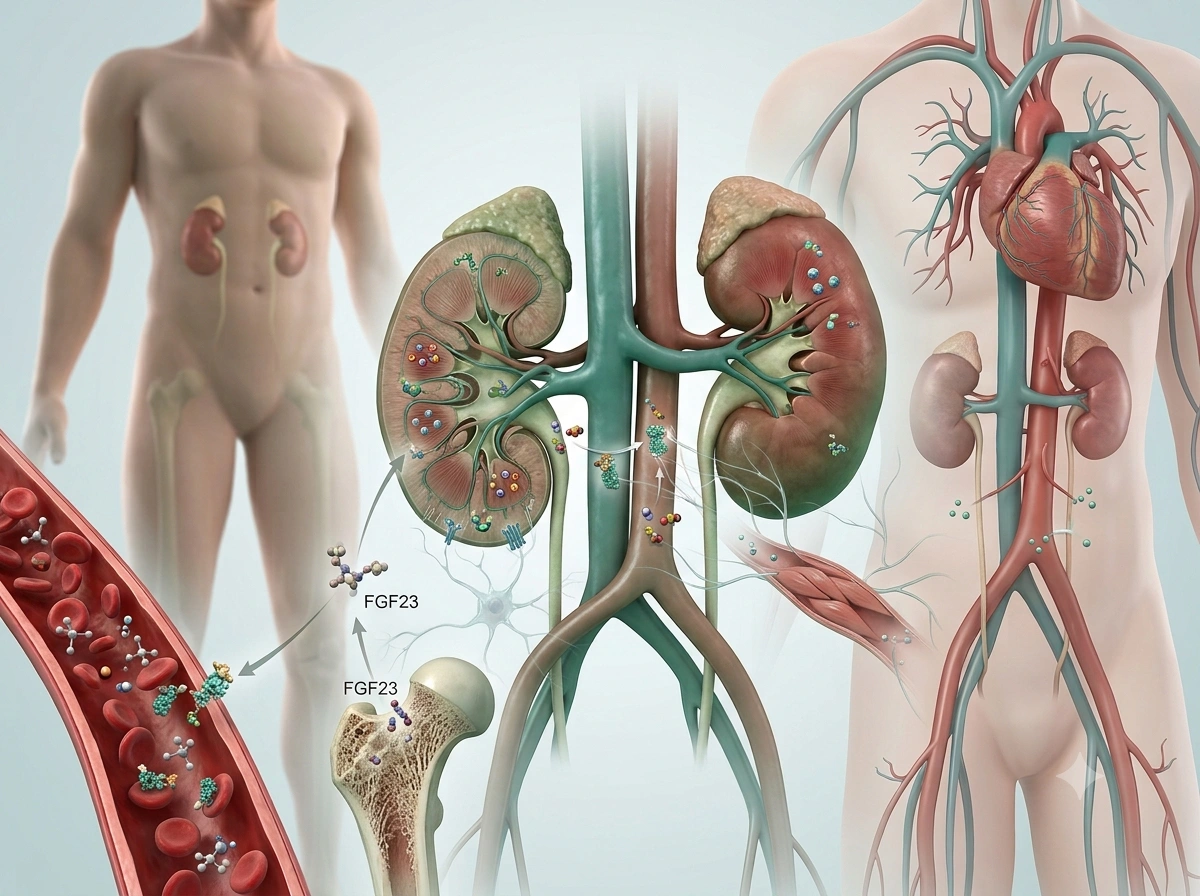
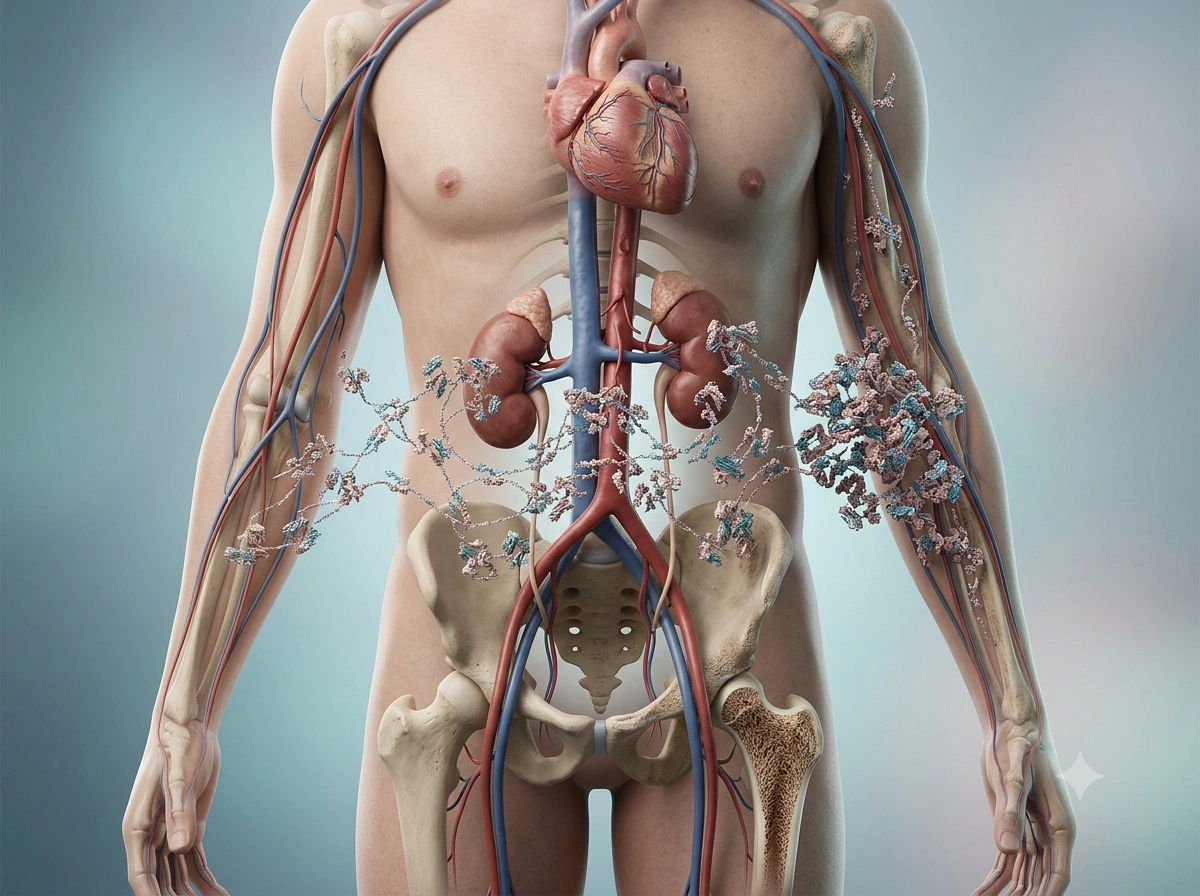
One of Klotho’s most important partners is a hormone called fibroblast growth factor 23, or FGF23.
FGF23 is produced mainly by bone cells. It travels through the bloodstream and communicates with the kidneys.
The problem is that FGF23 does not work effectively on certain kidney cells without Klotho acting as a co-receptor.
In simple terms, you can think of Klotho as part of the “receiver” that allows the kidney to respond properly to FGF23.
When this system is working correctly, FGF23 helps the kidneys increase phosphate excretion and influences the production and breakdown of active vitamin D.
This connection between bone, kidney, FGF23, and Klotho is one of the most important parts of Klotho biology.
The kidneys are particularly important to Klotho because they produce large amounts of it.
Klotho is found on the surface of kidney cells and can also be released into the bloodstream in a soluble form.
This soluble Klotho is often called soluble Klotho, or s-Klotho.
Researchers have found that Klotho expression can decrease in chronic kidney disease. This is one reason Klotho has become such an important research topic in nephrology.
The relationship is complicated, though. A decrease in Klotho may be part of the progression of kidney disease, but that does not mean low Klotho is the only cause of kidney damage.
This is where Klotho became famous.
When researchers first disrupted the Klotho gene in mice, the animals developed several unusual characteristics that resembled accelerated aging. They had a shortened lifespan and developed problems involving the bones, blood vessels, skin, lungs, and other tissues.
That discovery led scientists to ask an important question:
Could Klotho be one of the biological systems that influences how we age?
The answer appears to be more complicated than a simple yes or no.
Klotho is clearly connected to aging biology, but human aging involves hundreds or thousands of interacting processes. Genetics, inflammation, metabolism, physical activity, sleep, nutrition, kidney function, hormones, and environmental exposures all play a role.
Klotho is one piece of that much larger puzzle.
Scientists are also studying Klotho in relation to cardiovascular health.
Lower Klotho levels have been associated with cardiovascular disease and vascular calcification, particularly in people with chronic kidney disease.
One possible explanation involves phosphate regulation. When kidney function declines, the body may have more difficulty controlling phosphate. Persistently high phosphate can promote abnormal mineralization of blood vessels.
Researchers are also investigating whether Klotho itself has protective effects on heart and blood vessel cells.
This research is promising, but it is important not to turn an association into a treatment claim. Having higher Klotho in a study does not automatically mean that taking something to increase Klotho will prevent heart disease.

Klotho was discovered in 1997 by Japanese researchers led by Makoto Kuro-o.
The discovery came from research involving genetically modified mice.
The scientists found that when the Klotho gene was disrupted, the mice developed a collection of abnormalities that looked surprisingly similar to several features associated with aging.
These mice had a shortened lifespan and developed problems including arteriosclerosis, osteoporosis, skin atrophy, emphysema, and other abnormalities.
The researchers published their findings in the journal Nature in November 1997.
The name Klotho has an interesting origin.
It comes from Clotho, one of the three Fates in Greek mythology. Clotho was said to spin the thread of life.
The name was chosen because of the gene’s apparent connection with lifespan and aging.
Later research identified the human Klotho gene and helped scientists understand that Klotho exists in different forms.
The discovery changed the way researchers thought about the pineal gland? No. That is melatonin.
Instead, Klotho opened a completely different field of research involving kidneys, bones, phosphate, vitamin D, hormones, cardiovascular health, and aging.
Over the years, researchers discovered that Klotho works closely with FGF23 and plays an important role in mineral metabolism.
That relationship is now considered one of the best-established functions of the protein.
This is one of the most commonly searched questions about Klotho, but there is an important point to understand first.
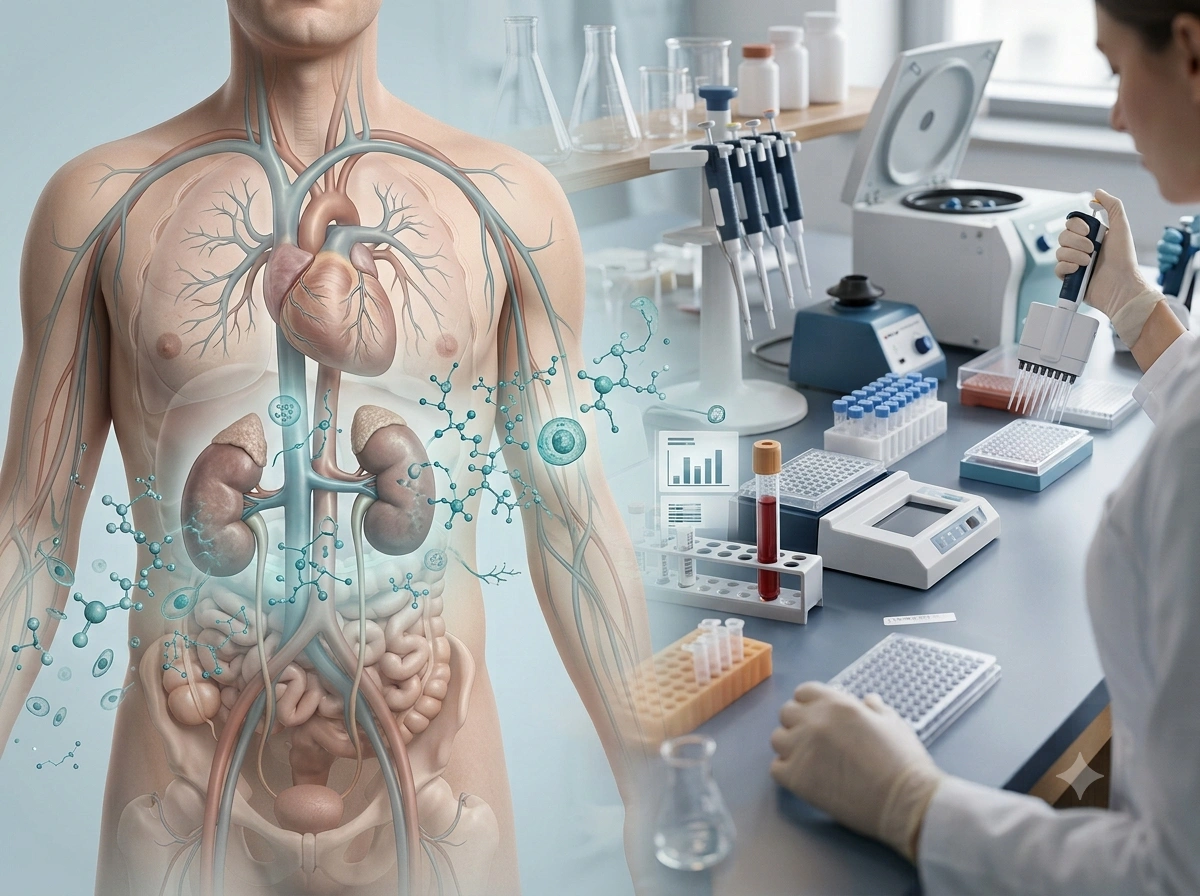
There is no universally accepted “normal Klotho level” that doctors use to diagnose Klotho deficiency in healthy people in the same way they might diagnose a vitamin deficiency.
Klotho measurements can also vary depending on the testing method, the population being studied, and whether researchers are measuring circulating soluble Klotho or tissue expression.
So, having a low Klotho measurement does not automatically mean that someone has a Klotho deficiency that needs treatment.
That said, lower Klotho activity or expression has been associated with several conditions.
Because Klotho is part of FGF23 signaling, reduced Klotho can interfere with normal phosphate regulation.
This becomes especially important when kidney function is impaired.
The kidneys normally help remove excess phosphate from the blood. When kidney disease progresses, phosphate regulation becomes more difficult, and changes in the FGF23-Klotho system can occur.
Klotho levels and expression often decrease during chronic kidney disease.
Researchers are particularly interested in this because Klotho reduction may occur relatively early in kidney disease, potentially before there is a major loss of kidney function.
Scientists are investigating whether restoring Klotho could improve phosphate handling or protect organs in people with kidney disease.
But this remains an area of research. Klotho is not currently a standard treatment for chronic kidney disease.
Low Klotho has also been linked to vascular calcification.
Vascular calcification happens when calcium and phosphate accumulate abnormally in the walls of blood vessels.
This is especially concerning in people with advanced kidney disease.
However, it would be inaccurate to say that low Klotho alone causes vascular calcification. The process involves phosphate, calcium, kidney function, inflammation, hormones, and other biological factors.
Studies in animals have produced some of the strongest evidence linking Klotho to aging.
Klotho-deficient mice can develop multiple aging-like characteristics.
Human studies have also found associations between lower circulating Klotho and conditions such as frailty, cardiovascular disease, impaired physical function, and other age-related outcomes.
But an important distinction remains:
Lower Klotho may be a marker of biological stress or disease without being the single cause of those conditions.
This distinction matters because it prevents us from jumping from interesting research to unsupported anti-aging claims.
If low Klotho is potentially harmful, it is natural to ask whether having extremely high Klotho is beneficial.
The answer is not that simple.
Unlike some vitamins and minerals, there is no established target range that tells healthy people to push Klotho as high as possible.
Klotho works as part of a tightly controlled biological system involving FGF23, phosphate, calcium, vitamin D, and kidney function.
Changing one part of that system could affect the others.
This is why the idea that “more Klotho is always better” has not been established in humans.
Most of the exciting evidence about increasing Klotho comes from animal studies or laboratory research. Researchers have found that increasing Klotho expression in certain experimental models can produce beneficial effects.
But an experimental increase in Klotho is not the same as taking a high-dose Klotho product.
The human body is more complicated than a single longevity switch.
There is also currently no established medical recommendation for healthy adults to deliberately raise Klotho above normal physiological levels.
This is an important point to include in any discussion of Klotho because the internet often presents Klotho as if it were the next supplement everyone should be taking.
The science is not there yet.

This section needs more caution than it does with melatonin.
You cannot currently treat Klotho like a normal dietary supplement.
Klotho is a protein produced by your own cells. Researchers are investigating whether Klotho-based therapies could eventually be used to treat disease, but this is very different from taking a conventional pill.
Scientists can produce Klotho protein for research.
Researchers have investigated whether supplying Klotho protein could have therapeutic effects in experimental models.
This approach is scientifically interesting because it attempts to replace or increase Klotho directly.
However, proteins are biologically complicated molecules. Researchers need to understand how they are delivered, how long they remain active, which tissues they reach, what dose is appropriate, and whether there are unwanted effects.
That is why experimental Klotho therapy should not be confused with a commercially marketed anti-aging supplement.
Another area of research involves increasing Klotho production through genetic or molecular approaches.
These techniques are still experimental.
They may eventually become useful for specific diseases, but they are not established anti-aging treatments for healthy adults.
Some research has investigated medications, natural compounds, and other molecules that may influence Klotho expression.
This has created an opportunity for supplement companies to market products as “Klotho boosters.”
The problem is that a laboratory finding involving an individual ingredient does not prove that a finished supplement will meaningfully increase Klotho in humans.
If a product claims to boost Klotho, look for a well-designed human clinical trial showing that the actual finished product changes Klotho levels and improves a meaningful health outcome.
Without that evidence, the claim should be treated as preliminary.

Unlike melatonin, Klotho is not something you can reliably “get” by eating a particular food.
Your body makes Klotho itself.
The better question is:
What lifestyle habits may support healthy Klotho biology?
Research in humans suggests that several factors are worth paying attention to.
Exercise is probably the most interesting lifestyle factor when it comes to Klotho.
Multiple human studies have reported increases in circulating soluble Klotho following exercise training.
A recent 2026 systematic review and meta-analysis examined 41 studies involving more than 2,700 participants and found that exercise was associated with increases in circulating Klotho. The authors also noted that the quality of evidence varied, meaning the findings should be interpreted with some caution.
Earlier systematic-review research reached a similar conclusion, finding that longer-term exercise training was associated with increased circulating Klotho.
The takeaway is not that you need a special “Klotho workout.”
A much more practical takeaway is that regular physical activity is one of the strongest lifestyle candidates for supporting healthy Klotho biology.
Walking, cycling, swimming, aerobic exercise, resistance training, and other forms of regular physical activity can all contribute to healthy aging.
Because the kidneys are a major source of Klotho, kidney health is especially relevant.
You can support kidney health by managing blood pressure, keeping blood sugar under control, avoiding unnecessary use of certain medications, staying appropriately hydrated, and getting medical care for conditions that can affect the kidneys.
People who already have kidney disease should follow individualized medical and dietary advice rather than copying a generic “longevity diet.”
Metabolic health appears to be connected with Klotho biology.
Obesity and metabolic dysfunction have been associated with lower Klotho levels in some studies.
This does not prove that losing weight directly increases Klotho, but maintaining a healthy body weight has well-established benefits for cardiovascular health, blood pressure, blood sugar, and kidney function.
There is currently no proven “Klotho diet.”
Be skeptical of websites claiming that one particular food can dramatically increase Klotho and reverse aging.
Instead, focus on a generally healthy dietary pattern that includes vegetables, fruits, legumes, whole grains, nuts, seeds, and appropriate protein sources.
If you have kidney disease, your diet may need to be different. In particular, phosphorus, potassium, protein, sodium, and fluid intake may need to be adjusted based on your individual condition.
Smoking damages blood vessels, increases oxidative stress, and contributes to kidney and cardiovascular disease.
Even if smoking’s direct effect on Klotho is still being studied, quitting smoking is clearly beneficial for healthy aging.
You do not need to prove that a lifestyle habit increases Klotho before adopting it if the habit already has strong evidence for protecting your health.
Sleep is an important part of overall metabolic and cardiovascular health.
Research specifically connecting sleep to Klotho is still developing, so it would be an exaggeration to say that sleeping more directly “boosts Klotho.”
But good sleep supports many of the systems involved in healthy aging, making it a sensible part of any longevity strategy.

This is where Klotho is very different from melatonin.
There are no established Klotho supplements in the United States with a clinically proven dose for increasing human lifespan or reversing aging.
You may find products marketed as “Klotho activators,” “Klotho boosters,” or longevity formulas.
That does not mean the products have been proven to work.
The U.S. dietary supplement market contains many products that make claims based on individual ingredients, animal studies, laboratory research, or preliminary human studies.
A product containing an ingredient that has been associated with Klotho in a laboratory does not prove that taking the product will increase Klotho in your bloodstream or make you healthier.
For now, there is not enough high-quality evidence to recommend a specific Klotho supplement as the “best” option for healthy adults.
That may change as human research develops.
For anyone considering a supplement marketed around Klotho, look for:
Be especially careful with products promising that they can “activate your longevity gene” or make you biologically younger.
Those phrases may sound scientific, but they do not establish clinical effectiveness.
For now, exercise, metabolic health, kidney health, nutrition, sleep, and other proven health habits have a much stronger foundation than commercial Klotho-boosting products.
Klotho is one of the most fascinating proteins being studied in the science of aging.
It was first identified in 1997, when researchers found that disrupting the Klotho gene in mice caused a collection of abnormalities resembling accelerated aging.
Since then, scientists have discovered that Klotho plays an important role in the body’s regulation of phosphate, vitamin D, FGF23 signaling, and kidney function.
Klotho is particularly important because it helps the kidneys respond to FGF23, a hormone involved in phosphate regulation. When Klotho expression declines, especially in chronic kidney disease and aging, this system can become disrupted.
Researchers have also found associations between lower Klotho and cardiovascular disease, frailty, reduced physical function, and other age-related conditions.
But there is an important line between promising science and proven treatment.
Klotho has not been shown to be a magic switch that controls human aging. There is currently no established Klotho pill that has been proven to extend human lifespan.
The good news is that you do not need a Klotho supplement to take advantage of the research.
Regular exercise is one of the most promising lifestyle factors associated with higher circulating Klotho. Protecting kidney health, maintaining a healthy body weight, eating a balanced diet, avoiding smoking, getting enough sleep, and managing chronic conditions are also sensible ways to support the broader biological systems connected with healthy aging.
Perhaps the most useful way to think about Klotho is this:
It is not a shortcut to living forever. It is a window into how the human body regulates health and aging.
Researchers are still working to understand whether increasing Klotho can eventually become a safe and effective treatment for kidney disease, cardiovascular disease, neurodegeneration, and other age-related conditions.
For now, the science is exciting, but the strongest longevity strategy remains surprisingly simple: move your body, protect your kidneys and heart, eat well, sleep well, avoid tobacco, and manage the health problems you can actually control.
Klotho is strongly connected to aging research, but “anti-aging protein” is a simplified description. Klotho-deficient mice develop several features resembling accelerated aging, and human studies have linked lower Klotho with several age-related conditions. However, Klotho has not been proven to stop or reverse human aging.
There is currently no good evidence that taking Klotho makes humans live longer. Researchers are investigating Klotho-based therapies, but most therapeutic approaches remain experimental.
Research suggests that regular exercise can increase circulating soluble Klotho. Human systematic reviews and meta-analyses have reported increases after exercise training, although the studies vary in design and quality. Exercise is therefore promising, but it should not be described as a guaranteed Klotho-boosting treatment.
Not necessarily. Lower Klotho is associated with aging and several diseases, but Klotho is only one part of a much larger biological system. A low Klotho measurement does not by itself tell you how quickly your body is aging.
Klotho is technically a protein rather than a conventional hormone. It can exist as a membrane-bound protein and as soluble Klotho that circulates through the body. Because soluble Klotho can act as a signaling molecule, some sources loosely describe it as a hormone or anti-aging hormone.
Your body makes Klotho; it is not a nutrient that you obtain from food. Eating a healthy diet may support the systems involved in healthy Klotho function, but there is no established food that supplies Klotho or guarantees a major increase in your Klotho level.
No. Klotho is being investigated as a possible therapeutic target in kidney disease, but there is currently no established Klotho treatment that reverses chronic kidney disease.
The relationship between vitamin D and Klotho is real but complicated. Vitamin D signaling can influence Klotho expression, while Klotho also plays an important role in vitamin D metabolism. This does not mean that taking extra vitamin D will automatically raise Klotho or improve longevity.
There is no established FDA-approved Klotho supplement for anti-aging or longevity. Dietary supplements in the United States are regulated differently from FDA-approved drugs, and a product being sold legally does not mean it has been proven to extend lifespan or treat disease.
Watch expert-inspired short videos on health, nutrition, fitness, prevention,
wellness, and healthy living in minutes.





Explore expert-reviewed articles on brain function, healthy habits, nutrition, age-related cognitive changes, and practical strategies to keep your mind sharp and resilient.