If you have been researching healthy aging, brain health, antioxidants, or longevity, you may have recently come across a compound with a rather unusual name: ergothioneine.
The easiest way to understand ergothioneine is to think of it as a cell-protective compound that your body actively chooses to absorb and retain.
Your body does not manufacture ergothioneine. Instead, you get it from your diet, and a specialized transporter helps move it into cells.
That is unusual.
Most nutrients are absorbed and distributed through a variety of transport systems, but the body has a particularly strong and specific system for ergothioneine.
Your cells constantly produce reactive molecules as part of normal metabolism.
These molecules are not automatically harmful. Your body actually uses some reactive molecules for normal cell signaling and immune functions.
The problem arises when oxidative processes become excessive and begin damaging proteins, lipids, DNA, or cellular structures.
Ergothioneine has strong antioxidant properties in laboratory experiments and can react with several reactive oxygen and nitrogen species. Researchers are interested in whether this helps protect cells against oxidative stress in real-world human physiology.
However, there is a useful scientific distinction here.
Ergothioneine clearly behaves as an antioxidant in laboratory settings, but researchers still debate whether direct antioxidant activity is its main function inside the human body. A major review has pointed out that the evidence for ergothioneine’s antioxidant activity being its primary physiological role remains limited.
That makes ergothioneine more interesting, not less.
Its role may involve several different cellular pathways rather than simply “fighting free radicals.”
Ergothioneine can accumulate in tissues throughout the body.
Research has found it in blood, organs and other tissues, with particularly important uptake occurring in cells that express high levels of its transporter.
The body also appears capable of retaining ergothioneine rather than rapidly eliminating it. This has led researchers to investigate whether the compound serves as a kind of cellular reserve that can be called upon during periods of oxidative or inflammatory stress.
The brain is particularly vulnerable to oxidative stress because it consumes a large amount of oxygen and contains large amounts of easily oxidized fats.
That has made ergothioneine an interesting candidate for brain-health research.
Observational studies have found associations between lower blood ergothioneine levels and cognitive impairment, neurodegenerative disease, frailty, and other age-related outcomes.
Some small human trials have also produced encouraging results.
In one randomized study involving older adults with mild cognitive impairment, participants receiving 25 mg of ergothioneine three times per week for one year showed no concerning changes in standard safety markers, although the study was small and was not large enough to establish a disease-prevention effect.
This is promising research, but it does not mean ergothioneine can prevent Alzheimer’s disease.
Researchers are also studying ergothioneine’s relationship with inflammation.
Laboratory research suggests it may influence inflammatory signaling and protect cells under certain conditions.
Human evidence is still developing, however. It would be premature to describe ergothioneine as an established anti-inflammatory treatment.
Mitochondria are the energy-producing structures inside your cells.
Because mitochondria are particularly sensitive to oxidative damage, scientists are investigating whether ergothioneine can help protect mitochondrial structures and function.
This is one reason ergothioneine frequently appears in longevity and mitochondrial-health supplements.
Again, the science is promising, but the strongest evidence still comes from mechanistic, observational, and early clinical research rather than large long-term human trials.

Ergothioneine has actually been known to scientists for more than a century.
It was discovered in 1909 by French chemist Charles Tanret.
Tanret isolated the compound from ergot, a fungus that grows on rye and other grains. He initially described it as a new substance obtained from ergot.
The name “ergothioneine” reflects this origin.
The “ergo” part comes from ergot, while the “thione” portion relates to its sulfur-containing chemical structure.
For many decades after its discovery, ergothioneine was considered an interesting but somewhat mysterious compound.
Scientists knew it existed, but its exact role in human physiology was unclear.
A major breakthrough came much later.
In 2005, researchers identified the human transporter responsible for the highly efficient uptake of ergothioneine into cells. This transporter was originally known as OCTN1 and is encoded by the SLC22A4 gene. Researchers found that ergothioneine was its key physiological substrate.
This discovery changed the scientific conversation.
If the human body has a specialized system specifically designed to absorb and retain a dietary compound, researchers naturally began asking an important question:
Why does the body need it?
That question is still being investigated today.

There is an important point to understand before discussing low ergothioneine levels.
There is currently no universally accepted clinical definition of “ergothioneine deficiency” in humans.
Unlike iron, vitamin B12, or vitamin D, there is no standard blood test range that doctors routinely use to diagnose ergothioneine deficiency in the general population.
Scientists can measure ergothioneine in blood and tissues, but researchers are still working to establish what levels should be considered optimal.
Research has found that ergothioneine concentrations can change with age.
Some studies have reported lower circulating ergothioneine levels in older adults, and observational research has linked lower levels with frailty, cognitive impairment, cardiovascular conditions and mortality.
But there is a major scientific question:
Does low ergothioneine contribute to these conditions, or is it partly a marker of poor health?
At this point, researchers cannot confidently answer that question.
An association does not prove cause and effect.
Because humans cannot manufacture ergothioneine, dietary intake matters.
People who rarely eat mushrooms and consume few other ergothioneine-containing foods may have lower dietary exposure.
This has led some scientists to question whether modern diets, particularly diets low in mushrooms, may provide less ergothioneine than humans historically consumed.
The idea is interesting, but there is currently no established daily requirement telling healthy adults how much ergothioneine they need.
Researchers are investigating whether low ergothioneine may be associated with:
But these are research associations, not diagnostic conclusions.
If someone experiences fatigue, memory problems, weakness, or other symptoms, low ergothioneine should not automatically be blamed.
There are many much more established medical causes that should be considered first.

The good news is that human research so far has not identified major safety concerns at commonly studied supplemental doses.
However, this does not mean that extremely high doses are automatically safe or beneficial.
There is currently much more research on short-term supplementation than on taking large amounts every day for decades.
Human studies have used several different amounts.
Research has included doses around 5 mg per day, 25 mg doses given several times per week, and other experimental protocols.
In one 2024 randomized trial involving older adults with mild cognitive impairment, participants received 25 mg three times weekly for one year, and researchers reported no concerning changes in blood counts, kidney function, or liver function during the study.
That is reassuring, but one small study cannot establish lifetime safety.
There is no evidence that taking extremely high amounts produces proportionally greater benefits.
This is important because some supplements contain doses considerably higher than the amount naturally consumed through an ordinary diet.
Ergothioneine has a dedicated transporter, and cells can actively accumulate it. That does not mean there is no upper limit to useful intake.
The sensible approach is to stay within doses that have actually been studied rather than assuming that higher amounts are better.
Human studies so far have generally reported good tolerance at commonly studied doses.
Still, long-term evidence remains limited.
Anyone who is pregnant or breastfeeding, taking prescription medication, managing kidney or liver disease, or undergoing medical treatment should speak with a healthcare professional before beginning a new supplement.
Because the human body cannot make ergothioneine, there are two practical ways to obtain it:
Food and supplements.
Supplemental ergothioneine is generally provided as L-ergothioneine, the naturally occurring form.
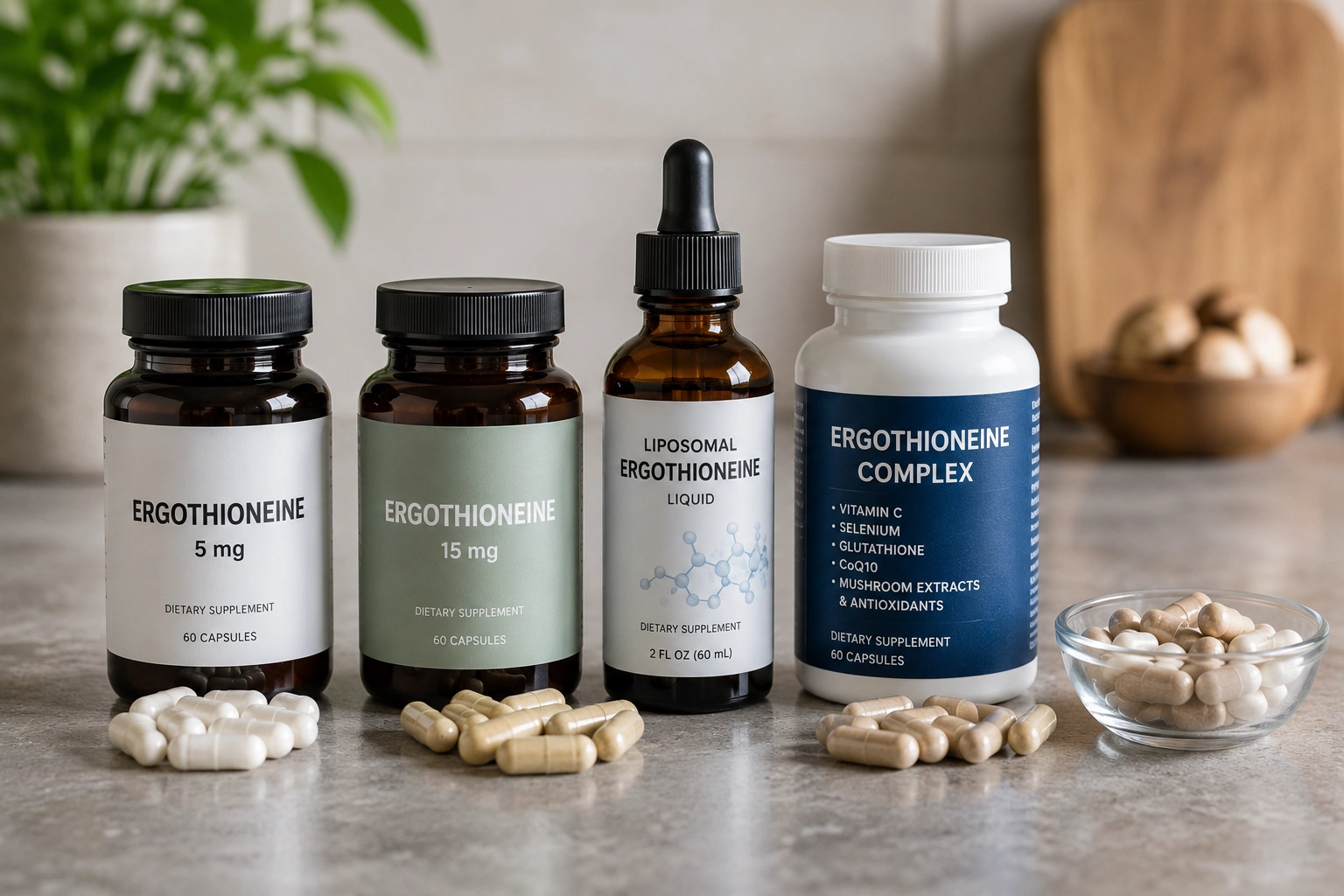
Capsules are the most common supplemental form.
Products in the United States commonly provide between about 5 mg and 30 mg per serving.
A 5 mg dose is particularly interesting because it is close to amounts used in some human research involving mushroom-derived ergothioneine.
Some products provide ergothioneine in liquid or liposomal formulations.
These are marketed as potentially improving delivery or absorption, although consumers should be careful not to assume that a “liposomal” label automatically means better clinical results.
The product’s actual human evidence matters more than the delivery terminology.
Some supplements combine ergothioneine with:
Combination formulas may be useful for someone who wants broader antioxidant support, but they also make it harder to know which ingredient is responsible for any effect.
For people trying ergothioneine for the first time, a simple formula can make evaluation easier.
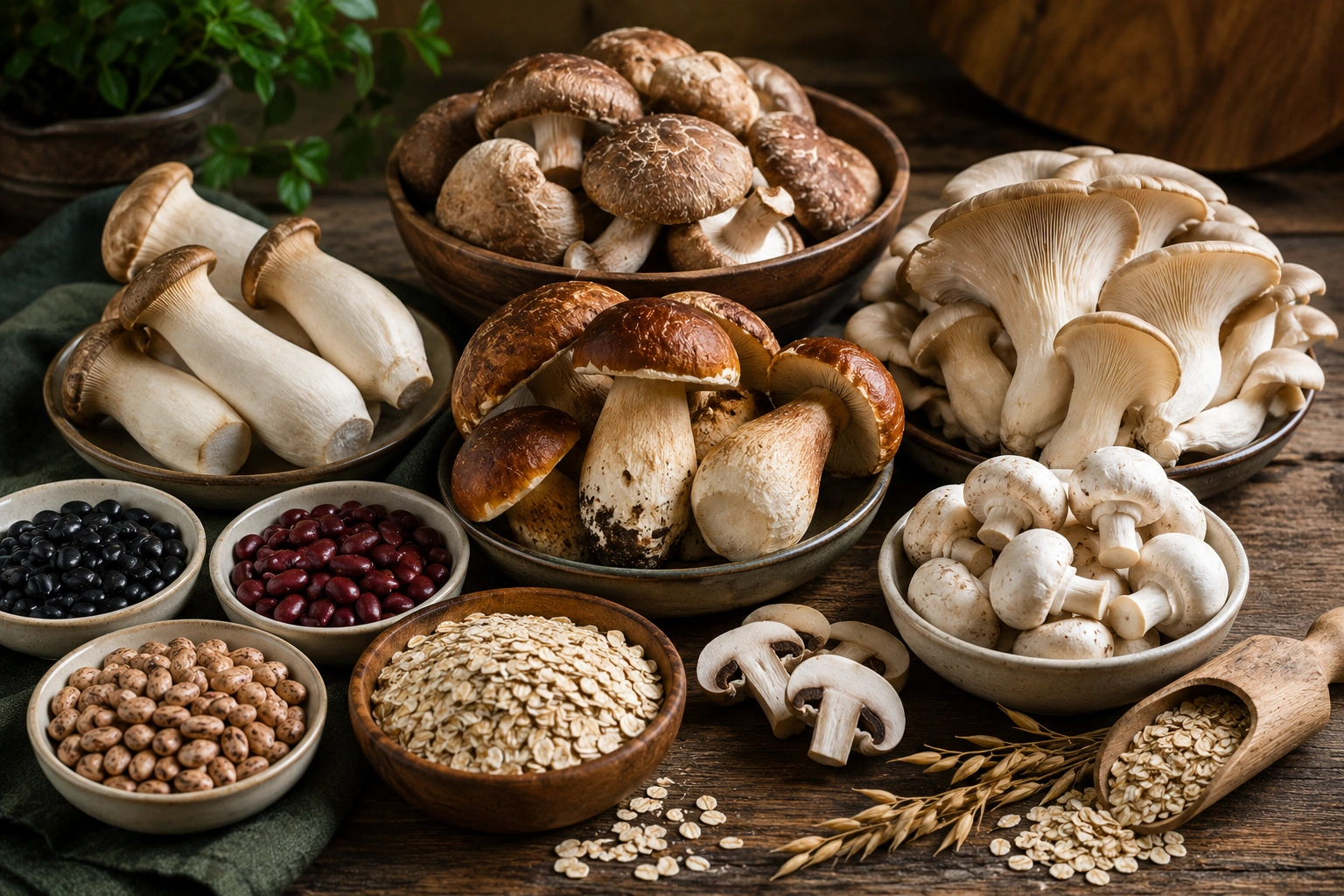
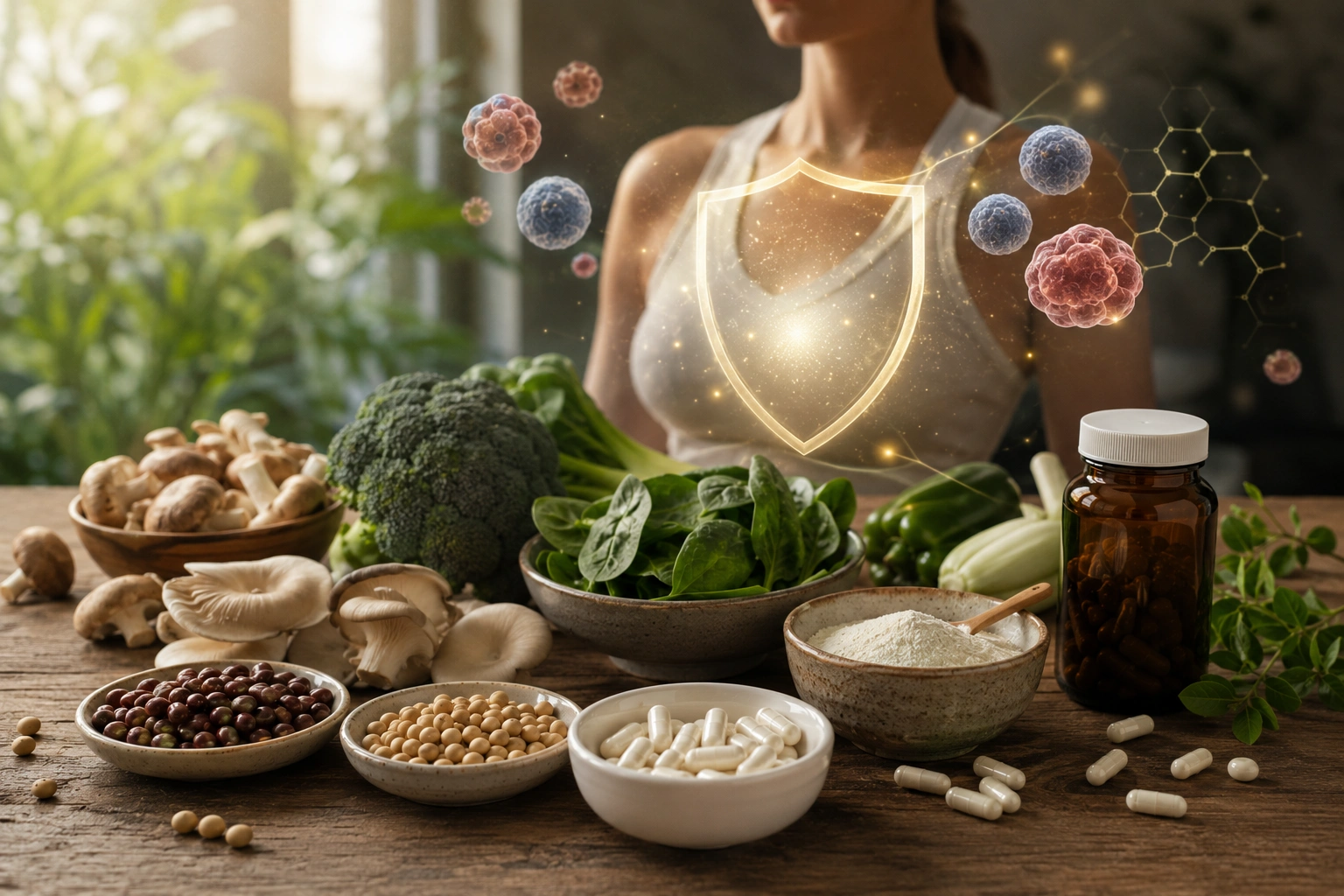
The most natural way to get ergothioneine is through food.
And there is one food group that stands out clearly:
Mushrooms.
Ergothioneine is produced by certain fungi and bacteria, which is why mushrooms can contain much higher concentrations than most other foods.
Shiitake mushrooms are among the better-known dietary sources of ergothioneine.
They are also rich in other nutrients and bioactive compounds, making them useful as part of a balanced diet.
Oyster mushrooms can also provide meaningful amounts of ergothioneine.
Their exact content can vary depending on the variety, growing conditions and processing.
King oyster mushrooms are another dietary source.
Different mushroom species can contain dramatically different amounts of ergothioneine, so it is not accurate to assume that all mushrooms provide the same quantity.
Porcini mushrooms have been identified as a particularly rich source of ergothioneine.
They are widely used in cooking and can provide a concentrated source when consumed in dried form.
The common white button mushroom also contains ergothioneine.
It may not have the same concentration as some specialty mushrooms, but it is inexpensive, widely available, and easy to add to everyday meals.
Ergothioneine is not limited to mushrooms.
Research has detected it in foods including black beans, red beans, kidney beans, oats, and oat bran, although concentrations are generally much lower than in many mushrooms.
Processing and cooking can influence the amount of ergothioneine available in food.
The exact effect depends on the food and cooking method.
This is another reason it is difficult to give people a precise “eat X mushrooms to get Y milligrams” recommendation.
Food composition varies naturally.
This is where supplementation becomes interesting.
A supplement gives you a standardized amount.
Food gives you ergothioneine along with fiber, protein, minerals, vitamins and other beneficial compounds.
For most healthy people, eating mushrooms and maintaining a varied diet is an excellent starting point.
A supplement is an option for someone who wants a consistent, measurable amount of ergothioneine.
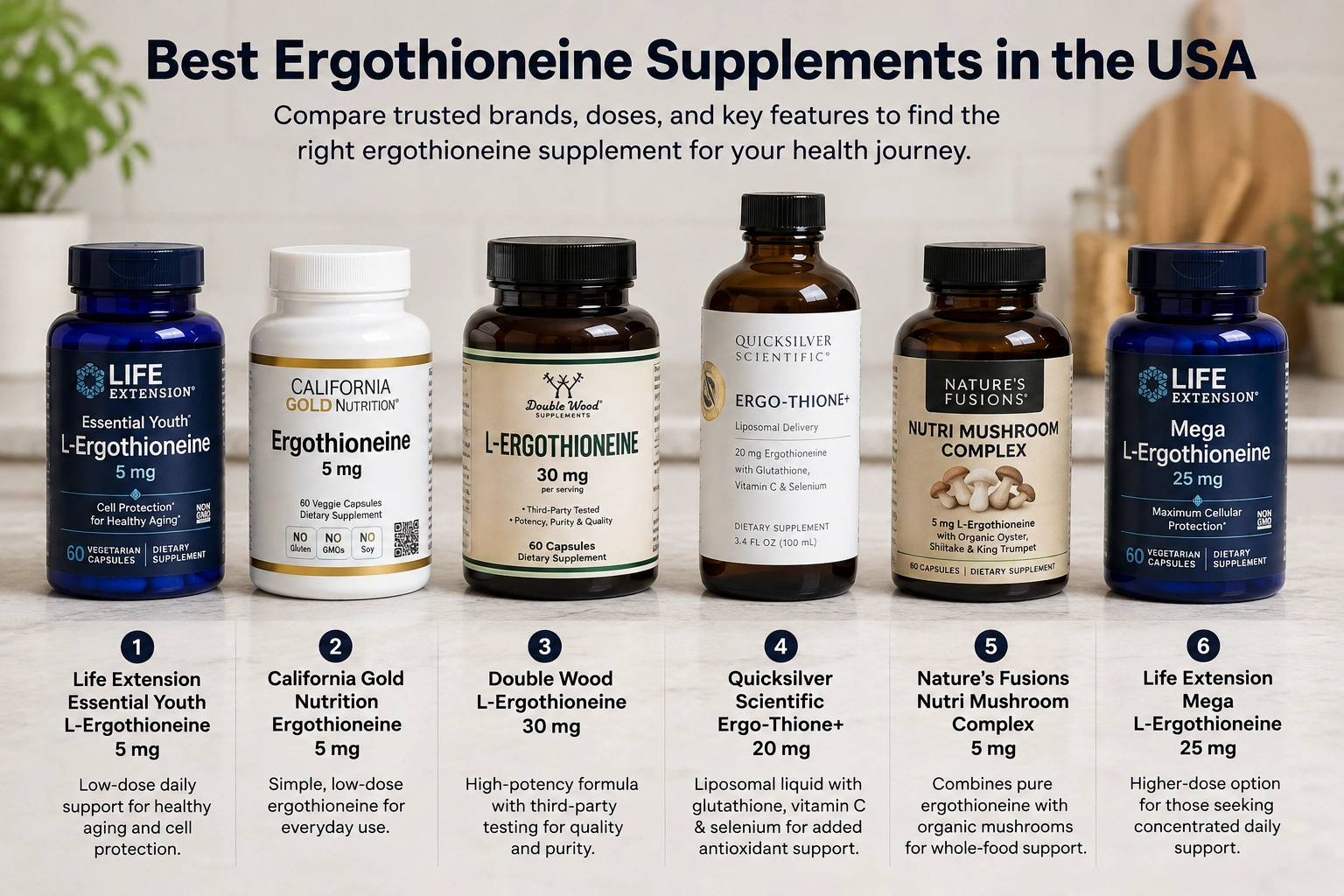
When choosing an ergothioneine supplement, look at the actual L-ergothioneine dose, ingredient quality, testing practices, formulation, and whether the dose falls within amounts studied in human research.
The FDA has records of ergothioneine ingredients receiving “no questions” responses through its GRAS notification process, including a 2026 notice for L-ergothioneine intended for use in specified foods. This should not be confused with FDA approval of an ergothioneine supplement for treating or preventing disease.
The products above differ substantially.
For someone who simply wants a modest daily dose, a 5 mg capsule may be more appropriate than immediately choosing a 25 or 30 mg product.
For someone looking for a combination formula, Quicksilver Scientific’s product includes other antioxidant ingredients.
And if independent testing is a major priority, Double Wood publishes lot-specific testing information for its product, including potency and contaminant testing.
There is no universally established “best” dose of ergothioneine for healthy adults, so supplement selection should not be based solely on choosing the product with the largest number on the label.
Ergothioneine is a fascinating nutrient that has been quietly present in the scientific literature for more than 100 years.
It was discovered in 1909 by Charles Tanret, who isolated it from ergot. But it took almost another century for scientists to uncover one of the most important clues about its biological role: the human body has a highly specific transporter that actively takes up and retains ergothioneine.
That discovery helped transform ergothioneine from an obscure chemical into a serious area of nutritional and aging research.
Today, scientists are studying ergothioneine for its potential relationship with oxidative stress, inflammation, mitochondrial function, brain health, cardiovascular health, and healthy aging.
Some of the findings are genuinely encouraging.
Lower blood ergothioneine levels have been associated with cognitive impairment, frailty, cardiovascular conditions, neurodegenerative disease and mortality. Early clinical trials have also suggested that supplementation may influence cognitive performance and other biological markers.
But there is still a gap between association and proof.
We do not yet know whether raising ergothioneine levels in healthy people will prevent major diseases or extend lifespan.
That distinction is particularly important because ergothioneine has quickly become popular in the longevity supplement market.
The good news is that you can obtain it naturally.
Mushrooms are by far the most important dietary source, with shiitake, oyster, porcini, king oyster and other varieties providing meaningful amounts. Beans and some grains also contain smaller amounts.
For people who want a standardized intake, supplements are another option. Current U.S. products range from approximately 5 mg to 30 mg per serving, with several products using doses that have been investigated in human research.
The smartest approach is not necessarily to choose the highest-dose product.
Instead, look for a transparent label, reputable manufacturer, appropriate dose, and good quality-control practices.
Most importantly, do not think of ergothioneine as a magic anti-aging pill.
It may turn out to be an important part of the body’s defense system against cellular stress, but researchers are still working to understand exactly how much humans need and whether increasing intake produces meaningful long-term health benefits.
For now, the simplest strategy is also one of the most practical:
Eat a varied diet, include mushrooms if you enjoy them, stay physically active, sleep well, and treat ergothioneine supplementation as an optional addition rather than a replacement for proven healthy-aging habits.
Ergothioneine may eventually earn a much bigger place in nutritional science. For now, it is best viewed as a promising dietary compound with an unusually sophisticated relationship with the human body, rather than a proven longevity cure.
Not officially. Ergothioneine is sometimes called a “longevity vitamin” because of its dietary importance and potential role in healthy aging, but it is not currently classified as an essential human vitamin with an established Recommended Dietary Allowance.
There is no proof that ergothioneine supplementation extends human lifespan. Observational studies have linked higher ergothioneine levels with healthier aging outcomes, but larger long-term clinical trials are needed to determine whether supplementation actually increases lifespan.
No. Mushrooms are the richest and most important dietary source, but ergothioneine has also been detected in foods such as beans, oats, and other foods that can acquire it through microorganisms in the environment.
No. Humans do not synthesize ergothioneine, so it must come from dietary sources or supplements.
It has strong antioxidant properties in laboratory studies, but its exact role inside the human body is more complicated. Researchers believe its physiological benefits may involve antioxidant, anti-inflammatory, cellular-protective, and other mechanisms.
No. Research has found interesting associations between ergothioneine and cognitive health, and early supplementation studies are promising, but ergothioneine has not been proven to prevent or treat Alzheimer’s disease.
Possibly. People who regularly eat mushrooms can obtain ergothioneine naturally. Whether a particular person’s dietary intake is “enough” is difficult to define because there is currently no established daily requirement for ergothioneine.
Not necessarily. Higher doses have not been proven to provide proportionally greater benefits. Human studies have used several different doses, and long-term evidence for high-dose supplementation remains limited.
Early human research is generally reassuring, but long-term safety data are still developing. A one-year trial using 25 mg three times weekly reported no concerning changes in several standard safety measures, but larger studies are still needed.
There is not enough evidence to call ergothioneine an energy booster. It may support cellular protection and mitochondrial health, but it does not act as a stimulant like caffeine.
Watch expert-inspired short videos on health, nutrition, fitness, prevention,
wellness, and healthy living in minutes.





Explore expert-reviewed articles on brain function, healthy habits, nutrition, age-related cognitive changes, and practical strategies to keep your mind sharp and resilient.