
GABA stands for gamma-aminobutyric acid. It is the main inhibitory neurotransmitter in the central nervous system, meaning it generally helps reduce excessive activity between nerve cells. When GABA binds to its receptors, it makes it harder for neurons to fire. This calming effect is essential for keeping brain activity under control.
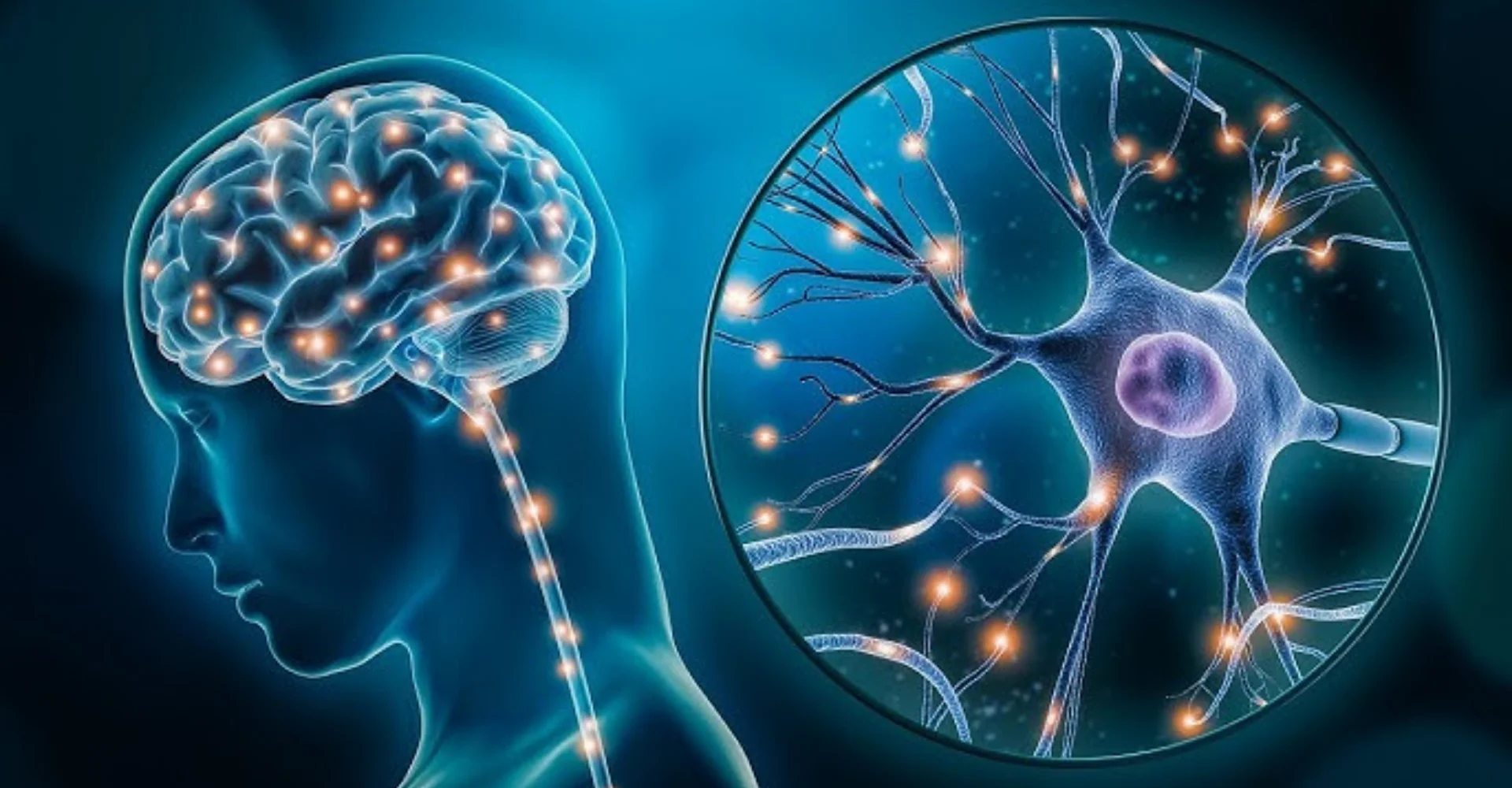
GABA’s primary job is to reduce excessive neuronal activity.
Think of your nervous system like a car. Excitatory signals are similar to the accelerator, while inhibitory signals act more like the brake. You need both. A nervous system without enough braking would become dangerously overactive, while too much inhibition could interfere with normal alertness, movement, and consciousness.
GABA works mainly through three receptor types: GABA-A, GABA-B, and GABA-C. GABA-A receptors are ion channels that respond quickly, while GABA-B receptors work through slower signaling mechanisms.
When GABA activates its receptors, it generally makes neurons less likely to fire.
This is one of the reasons GABA is so important. Your brain contains billions of neurons constantly communicating with one another. Without inhibitory control, those signals could become excessively synchronized or uncontrolled.
GABA helps maintain the right level of neuronal activity.
This balancing role is particularly important in areas such as the cerebral cortex, hippocampus, thalamus, basal ganglia, hypothalamus, and brainstem.
GABA is strongly associated with relaxation because increased GABAergic activity can reduce neuronal excitability.
Several medications used for anxiety and other neurological conditions work by increasing or mimicking GABA-related signaling.
But there is a difference between GABA activity and simply having more GABA in your bloodstream.
Your brain regulates neurotransmitters very precisely. Taking an oral GABA supplement does not necessarily reproduce the effects of prescription medications that act on GABA receptors.
GABA plays an important role in sleep regulation.
The brain needs to reduce wake-promoting activity as you transition into sleep. GABAergic neurons participate in the networks that help quiet wakefulness and promote sleep.
This has made GABA a popular ingredient in sleep supplements.
However, the evidence for taking GABA itself as an oral sleep aid is not nearly as strong as supplement advertising sometimes suggests.
A systematic review of 14 placebo-controlled human studies found limited evidence for stress-related benefits and very limited evidence for sleep benefits from oral GABA.
GABA is also closely connected with anxiety.
A healthy inhibitory system helps prevent excessive neural activation. Researchers have therefore studied GABA receptors and GABA-modulating medications as part of anxiety treatment.
This does not mean that every person with anxiety has “low GABA.”
Anxiety is a complex condition involving brain circuits, neurotransmitters, hormones, genetics, behavior, environment, sleep, and other factors.
GABA is one part of that system.
GABA helps regulate motor activity by controlling the excitability of neurons involved in movement.
This is one reason that medications affecting GABA receptors can produce muscle-relaxing effects.
For example, baclofen is a GABA-B receptor agonist used clinically for certain forms of muscle spasticity.
The effect is not simply “more GABA equals relaxed muscles.” It depends on where the receptors are activated and how strongly the signaling system is affected.
GABA’s inhibitory function is especially important for controlling excessive electrical activity in the brain.
Because seizures involve abnormal and excessive neuronal firing, the GABA system has long been an important target in epilepsy research and treatment.
Several antiseizure medications influence GABA-related pathways.
This is also why artificially manipulating GABA signaling can have powerful effects and should not be treated casually.
It may sound strange that a “braking” neurotransmitter could be involved in learning.
But learning requires balance.
Too much neuronal activity can be disruptive, while too much inhibition can also interfere with information processing.
GABA helps shape the timing and strength of neuronal signals, allowing neural circuits to operate efficiently.
So GABA is not simply a sleep chemical. It is part of the normal machinery that allows the brain to process information.

The history of GABA goes back further than its discovery as a neurotransmitter.
GABA had been synthesized chemically before scientists understood its role in the nervous system. Researchers also knew that it occurred in plants and microorganisms.
The major breakthrough came in 1950, when Eugene Roberts and Jorge Awapara independently reported large amounts of GABA in mammalian nervous tissue.
At first, scientists did not immediately recognize GABA as a neurotransmitter.
That took additional research.
In the 1950s, Ernst Florey and other researchers investigated substances from brain tissue that appeared to inhibit neuronal activity. Florey’s experiments helped demonstrate that GABA-related substances could produce inhibitory effects in the nervous system.
Research by Takashi Hayashi and Nagai in the mid-1950s also contributed to understanding GABA’s inhibitory effects on the brain. Later electrophysiological experiments provided increasingly strong evidence that GABA was an actual neurotransmitter.
By the 1960s, GABA had become established as a major inhibitory neurotransmitter in the mammalian central nervous system.
The discovery was important because it fundamentally changed scientists’ understanding of how the brain maintains control.
Neurons do not simply need signals telling them to fire. They also need signals telling them when not to fire.
GABA became one of the clearest examples of this inhibitory side of brain communication.
The phrase “low GABA” is common online, but it needs some clarification.
There is no simple blood test that can tell you whether your brain has “too little GABA.”
GABA is produced and used in different parts of the nervous system, and its effects depend on specific neural circuits and receptors.
So symptoms such as anxiety, poor sleep, irritability, or difficulty relaxing do not automatically mean that you have a GABA deficiency.
If GABAergic inhibition is impaired in certain brain circuits, neurons can become more excitable.
The consequences depend on the specific area affected.
Possible manifestations of abnormal GABA signaling can include:
These are not symptoms that prove someone has “low GABA.” They are possible consequences of disruptions in inhibitory signaling.
The relationship between GABA and seizures is particularly important.
The brain requires a balance between excitation and inhibition. If inhibitory mechanisms are impaired, neural circuits can become more vulnerable to uncontrolled electrical activity.
However, epilepsy has many causes, and GABA dysfunction is only one part of its biology.
That is why someone experiencing seizures needs a medical evaluation rather than simply trying to increase GABA with supplements.
Some studies have found differences in GABA-related signaling among people with anxiety disorders.
But this does not mean anxiety is caused by a simple shortage of GABA.
The human brain is not a bucket where you can measure the amount of one chemical and identify a disorder.
Instead, researchers look at neurotransmitter systems, receptors, neural circuits, genetics, stress responses, and other factors.
Because GABA helps regulate sleep-promoting networks, changes in GABA signaling may contribute to sleep disturbances.
But insomnia has many possible causes.
Poor sleep habits, stress, shift work, medications, caffeine, alcohol, sleep apnea, depression, anxiety, restless legs syndrome, and numerous medical conditions can all interfere with sleep.
Therefore, taking GABA because you have trouble sleeping may not address the actual cause.

GABA is essential, but more is not always better.
Excessive GABAergic activity can suppress nervous-system activity too much.
Possible effects of excessive inhibitory signaling include:
The actual effects depend on how GABA signaling becomes excessive.
This is an important distinction because having a high amount of GABA in the blood is not necessarily equivalent to excessive GABA activity in the brain.
Some medications enhance GABA signaling.
Benzodiazepines, for example, increase the effects of GABA at GABA-A receptors.
These drugs can produce sedation and relaxation, but they can also cause impaired coordination, dependence, tolerance, and potentially dangerous respiratory depression when combined with other central nervous system depressants.
This is why prescription GABA-related drugs should never be treated like ordinary supplements.
Alcohol interacts with several neurotransmitter systems, including GABA-related pathways.
Its effects are much more complicated than simply “alcohol increases GABA.”
Alcohol also affects glutamate, dopamine, endogenous opioids, and other signaling systems.
This is one reason alcohol can initially produce relaxation and reduced inhibition while also impairing judgment and coordination.
Regular heavy alcohol use can cause the nervous system to adapt, which contributes to withdrawal symptoms when alcohol intake suddenly stops.
The answer is not straightforward.
Human research on oral GABA is limited, and it remains unclear how much orally consumed GABA reaches the brain and how strongly it changes central GABA signaling.
A U.S. Pharmacopeia safety review found no serious adverse events associated with GABA in the clinical studies it evaluated, including some short-term high-dose studies, but it also noted potential concerns such as blood-pressure reduction and the lack of pregnancy and lactation safety data.
That does not mean every dose is automatically safe for everyone.
People taking blood-pressure medications or other drugs that affect the nervous system should be particularly cautious.
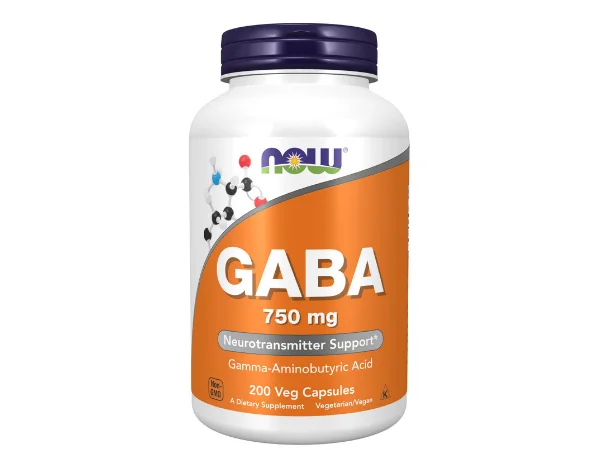
There are several ways medicine can increase GABA-related signaling, but these should not be confused with simply taking a GABA supplement.
GABA is available as an ingredient in dietary supplements in the United States.
However, the central question is whether oral GABA can significantly increase GABA activity inside the brain.
Historically, researchers have questioned whether GABA crosses the blood-brain barrier efficiently. Studies have produced inconsistent results, and the exact mechanism behind any effects from oral GABA remains uncertain.
This is why claims that a GABA supplement “floods the brain with GABA” should be treated skeptically.
Benzodiazepines are prescription medications that enhance GABA-A receptor activity.
Examples include medications such as diazepam, lorazepam, and alprazolam.
They can reduce anxiety and produce sedation, but they also carry risks including dependence, tolerance, withdrawal, impaired coordination, and dangerous interactions with other sedating substances.
They should only be used under medical supervision.
Baclofen is a prescription medication that activates GABA-B receptors.
It is primarily used to treat muscle spasticity.
Because it directly affects the nervous system, it can cause drowsiness, weakness, dizziness, and other side effects.
Again, it is not a general-purpose “GABA booster.”
This is a common misconception.
Despite its name, gabapentin does not work simply by increasing GABA or acting as a GABA receptor agonist.
It was designed as a GABA-related compound, but its main pharmacological actions involve voltage-gated calcium channels rather than directly activating GABA receptors.
This distinction matters because many online articles incorrectly place gabapentin in the same category as a GABA supplement.
Several medications used in neurology, psychiatry, and anesthesia influence GABAergic signaling.
These drugs can be very effective when appropriately prescribed because they alter specific receptors or enzymes rather than simply adding large quantities of GABA.
This is another reason why neurotransmitter biology is more complicated than “more GABA equals more calm.”

Unlike some vitamins, GABA is not an essential nutrient that you need to obtain from food.
Your body makes it naturally.
The brain produces GABA primarily from glutamate through the action of glutamic acid decarboxylase.
However, GABA also occurs naturally in certain foods.
Fermentation can increase GABA content because certain microorganisms are capable of converting glutamate into GABA.
Research has found GABA in a variety of fermented foods and beverages, and lactic acid bacteria are particularly important producers.
Examples can include certain:
The exact GABA content varies considerably depending on the food, microorganism, fermentation process, temperature, and storage conditions.
Germination can increase GABA concentrations in certain plant foods.
Research has examined germinated rice and other grains as sources of naturally enriched GABA.
One small randomized controlled trial involving people with insomnia symptoms found that fermented rice germ containing GABA improved some sleep measures over four weeks, but the study was small and should not be interpreted as proof that GABA-rich foods treat insomnia.
GABA naturally occurs in plant foods, although concentrations can vary significantly.
Foods that have been studied as sources include potatoes, tomatoes, melons, and other plant materials. FDA documentation also notes that GABA occurs naturally in foods such as melons, potatoes, and tomatoes.
Eating foods containing GABA does not necessarily mean that the GABA will enter your brain and act like a neurotransmitter.
The digestive system breaks down and handles nutrients and signaling molecules in complex ways.
For overall nervous-system health, a balanced diet rich in vegetables, fruits, whole grains, adequate protein, healthy fats, and minimally processed foods is a much better strategy than trying to consume large amounts of one neurotransmitter.
There is another way to think about “getting GABA.”
Instead of consuming GABA directly, you can support the biological systems that regulate inhibitory neurotransmission.
Regular exercise, adequate sleep, stress management, and good nutrition all contribute to healthy nervous-system function.
These habits do not necessarily produce a simple, measurable “GABA boost.” Their benefit comes from supporting the entire regulatory system.
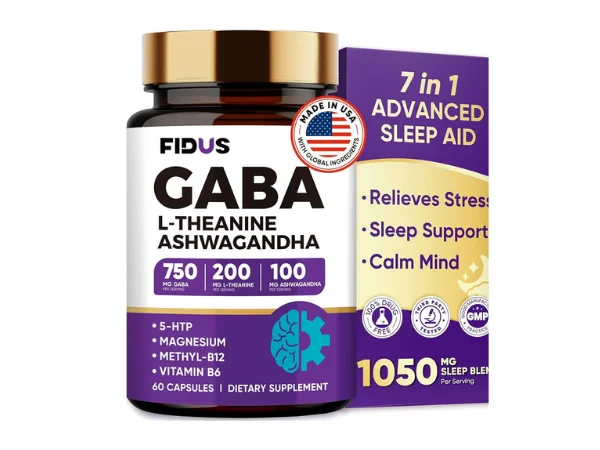
GABA supplements are widely available in the United States, but there is no need to treat them like prescription medication.
The bigger question is whether they actually work for the goal you have in mind.
Standalone GABA supplements are the most direct option.
They generally contain synthetic or fermentation-produced GABA.
Some users report feeling calmer or sleeping better, but clinical evidence remains mixed.
A systematic review of controlled human studies concluded that evidence for stress benefits was limited and evidence for sleep benefits was very limited.
This does not mean GABA supplements are useless.
It means that the evidence is not strong enough to promise that they will reliably reduce anxiety or improve sleep in everyone.
You may also encounter PharmaGABA on supplement labels.
It refers to a form of GABA produced through fermentation using microorganisms rather than conventional chemical synthesis.
Some studies have investigated fermented GABA products, but the existence of a branded or specialized form does not automatically mean it has clinically proven advantages over other GABA products.
Look at the actual human evidence rather than relying on marketing language.
Some U.S. supplements combine GABA with ingredients such as:
These combinations can make it difficult to determine which ingredient is responsible for an effect.
Some herbal ingredients have evidence suggesting they may influence GABA-related pathways, but the quality and amount of human evidence vary considerably.
The FDA does not approve dietary supplements for safety and effectiveness before they reach the market. Consumers therefore need to evaluate supplement products carefully.
Look for:
Be especially cautious with products promising to “raise brain GABA instantly,” “cure anxiety,” or replace prescription treatment.
Also avoid confusing phenibut with ordinary GABA.
Phenibut is a different compound with significant pharmacological effects and dependence and withdrawal concerns. In 2026, the FDA warned consumers about a supplement product containing undeclared phenibut and other unlawful ingredients.
If you take medication for anxiety, sleep, seizures, blood pressure, pain, or other neurological conditions, talk with a healthcare professional before using a supplement that affects the nervous system.
GABA, or gamma-aminobutyric acid, is one of the most important neurotransmitters in the human nervous system.
Its primary role is inhibition. In simple terms, GABA helps keep neurons from becoming excessively active. This makes it essential for maintaining the delicate balance between excitation and inhibition that allows the brain to function normally.
GABA is involved in sleep, relaxation, anxiety regulation, movement, learning, memory, muscle control, and seizure prevention. It also has functions outside the brain, and scientists continue to study its role in areas such as blood pressure, endocrine signaling, metabolism, and the gut-brain connection.
The scientific history of GABA dates back more than a century, but the major breakthrough came in 1950, when Eugene Roberts and Jorge Awapara independently identified large amounts of GABA in mammalian nervous tissue. Later work by Ernst Florey, Takashi Hayashi, and many other researchers helped establish GABA as a true inhibitory neurotransmitter.
When GABA signaling is impaired, the nervous system can become abnormally excitable. This can contribute to neurological problems, but “low GABA” should not be treated as a diagnosis for everyday anxiety, poor sleep, or stress.
The same principle applies to excessive GABA.
More GABA activity is not automatically better. Excessive inhibition can lead to drowsiness, impaired coordination, weakness, and reduced alertness. Prescription medications that manipulate GABA receptors can be extremely useful medically, but they also demonstrate why the GABA system should not be pushed indiscriminately.
GABA can be obtained from food, particularly certain fermented foods and germinated grains, and your body produces it naturally from glutamate.
As for GABA supplements, the evidence is more complicated than many marketing pages suggest.
Human research on oral GABA has produced mixed results. A systematic review found limited evidence for effects on stress and very limited evidence for sleep benefits.
One reason for the uncertainty is that scientists are still working to understand exactly how much orally consumed GABA influences the brain. The blood-brain barrier and the complex regulation of GABA receptors make the situation far more complicated than simply swallowing GABA and expecting the brain to become calmer.
For most healthy people, the best approach is not to chase a higher GABA level.
Instead, focus on the basics that support normal nervous-system function: consistent sleep, regular physical activity, a balanced diet, reasonable caffeine and alcohol intake, stress management, and treatment of underlying health problems when needed.
If you decide to try a GABA supplement in the United States, choose products with transparent labels and realistic claims. Remember that dietary supplements are not FDA-approved for safety and effectiveness before marketing.
And be particularly careful with products that promise dramatic effects or contain multiple sedating ingredients.
The biggest takeaway is simple:
GABA is not merely the brain’s “sleep chemical.” It is part of the nervous system’s braking and balancing system.
Your brain does not need the maximum possible amount of GABA. It needs the right amount, in the right place, at the right time.
That balance is what allows you to relax without becoming unconscious, sleep without losing basic brain function, move without excessive muscle activity, and remain alert without letting your nervous system become overwhelmed.
GABA’s real role is therefore not about making the brain “slow.” It is about helping the brain stay under control.
That is an oversimplification. GABA is the main inhibitory neurotransmitter in the central nervous system, and its activity can reduce neuronal excitability. But GABA is involved in much more than relaxation, including movement, cognition, sleep, and neurological regulation.
Not necessarily. GABA participates in the brain circuits involved in anxiety, but anxiety is not simply caused by having too little GABA. Genetics, stress, brain networks, other neurotransmitters, sleep, hormones, and environmental factors all play roles.
It is not fully settled. Traditional thinking has held that GABA crosses the blood-brain barrier poorly, but research on oral GABA has produced inconsistent findings. Scientists still do not have a clear answer explaining how oral GABA produces any reported effects in humans.
It might, but it is not guaranteed. Some people report relaxation or sleep benefits, but controlled human evidence is limited. A systematic review found very limited evidence for sleep benefits from oral GABA.
No. The names are related, but they are different compounds. Gabapentin does not work simply by increasing GABA in the brain. Its primary pharmacological effects involve voltage-gated calcium channels.
No. GABA supplements should not be marketed as a cure for anxiety disorders. If anxiety is persistent, severe, or interfering with daily life, it deserves a proper medical or mental-health evaluation.
No. Excessive inhibitory activity can cause drowsiness, impaired coordination, reduced alertness, and other problems. The brain needs a balance between excitation and inhibition.
Yes. GABA occurs naturally in several plant foods and can be produced during fermentation. However, the amount varies widely between foods, and eating GABA-containing foods does not necessarily produce the same neurological effects as directly manipulating GABA receptors.
Magnesium is involved in many aspects of nervous-system function, but saying that magnesium simply “raises GABA” is too simplistic. If you have inadequate magnesium intake, correcting the deficiency can support normal physiology, but taking more magnesium does not necessarily produce a clinically meaningful GABA increase.
Not necessarily. “Natural” does not automatically mean safer. Prescription drugs that influence GABA can have powerful and predictable effects because they act on specific receptors. Supplements can also interact with medications and may vary in quality.